
Table of Contents
Botanical drawing is one of the oldest reasons people picked up a pen at all, long before flowers were decorative subjects, they were recorded carefully because identifying them correctly mattered. That inheritance is why floral coloring pages sit apart from most printables: they’re closer to a quiet hour with a subject than an activity to fill time.
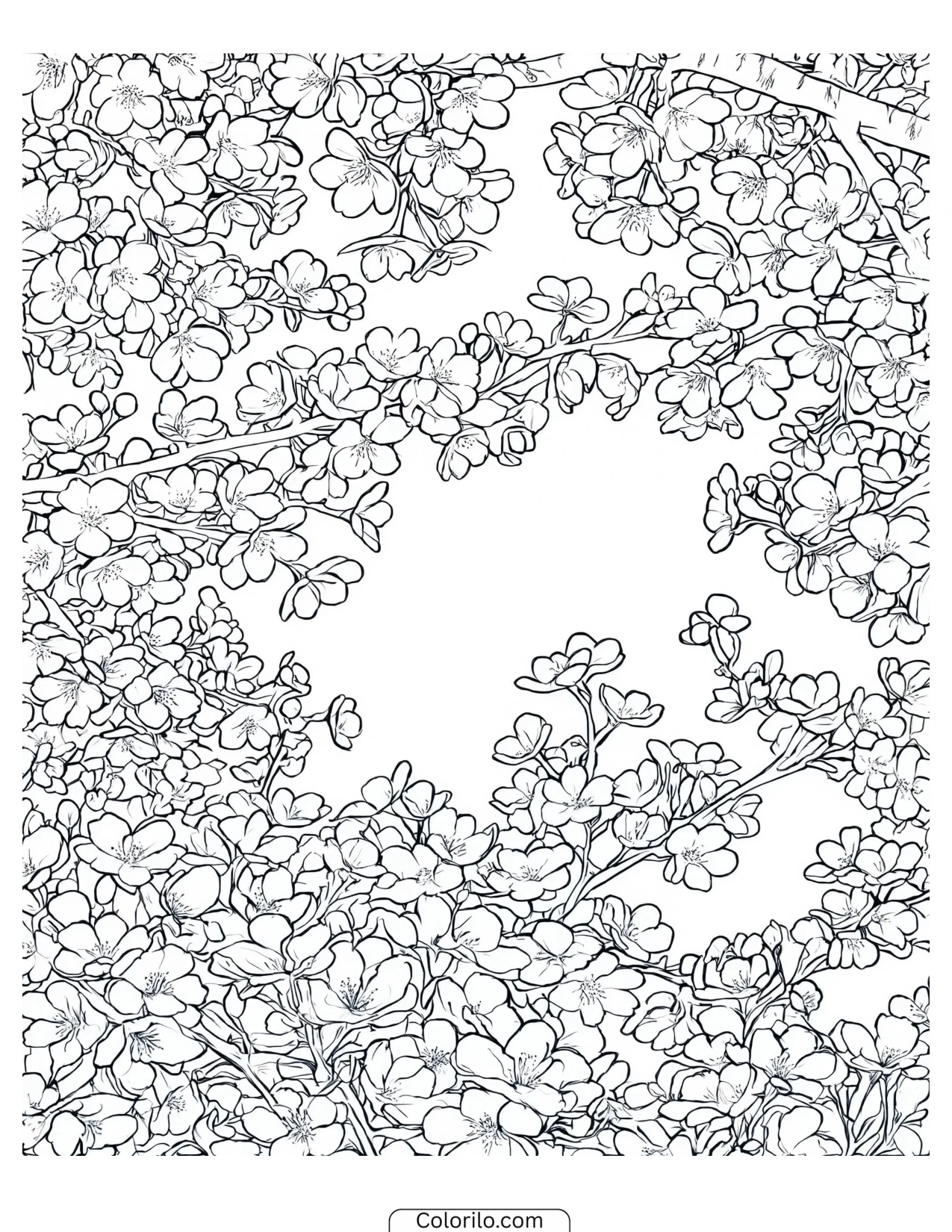
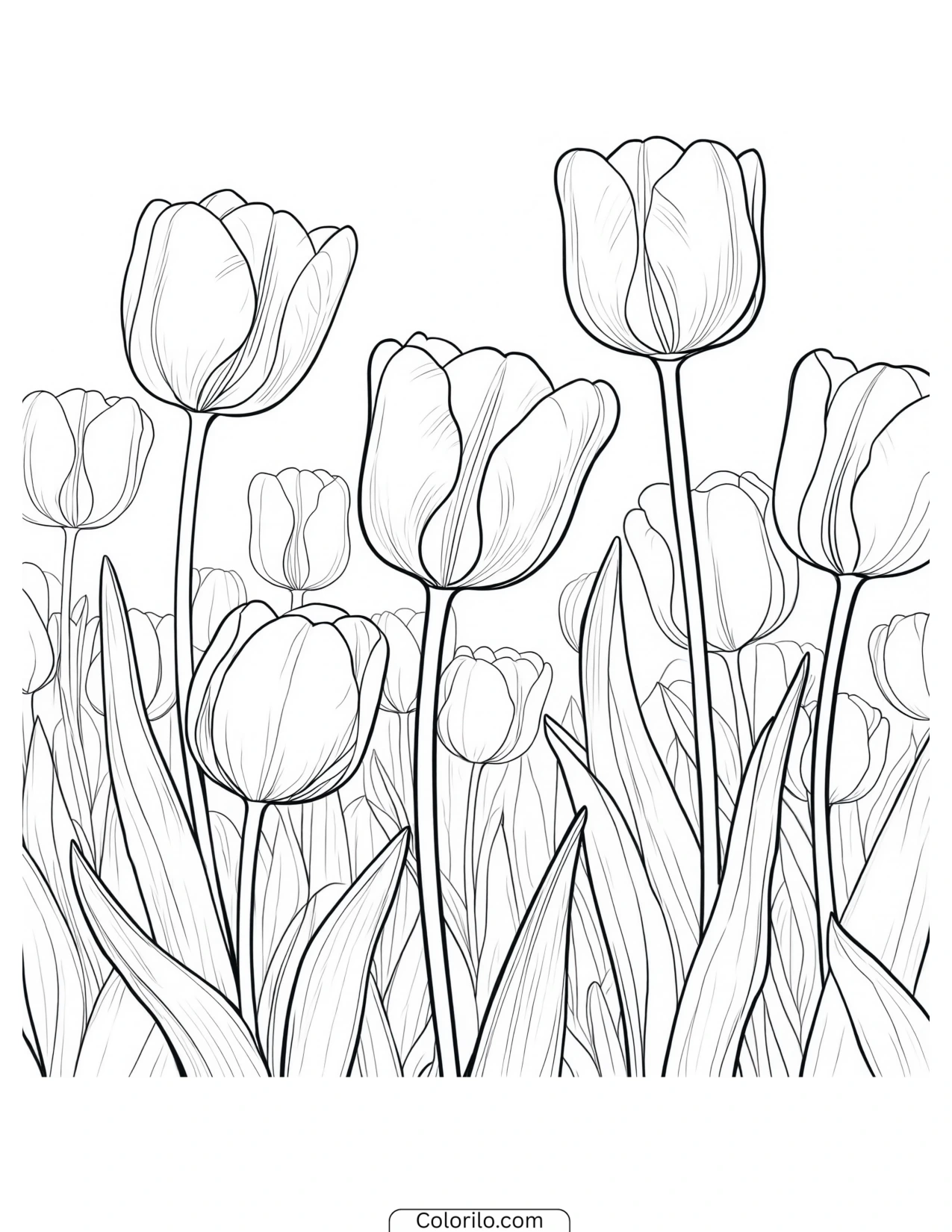
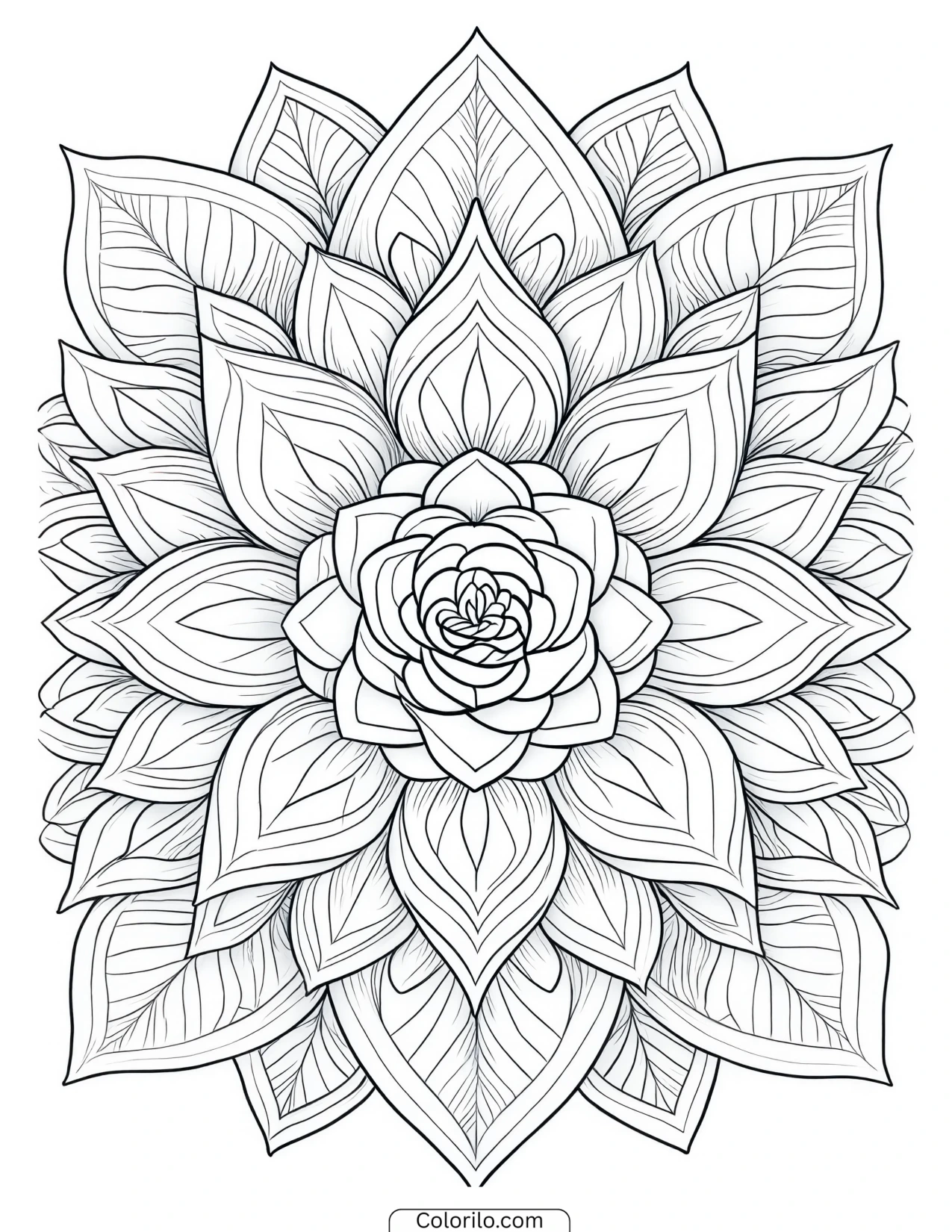
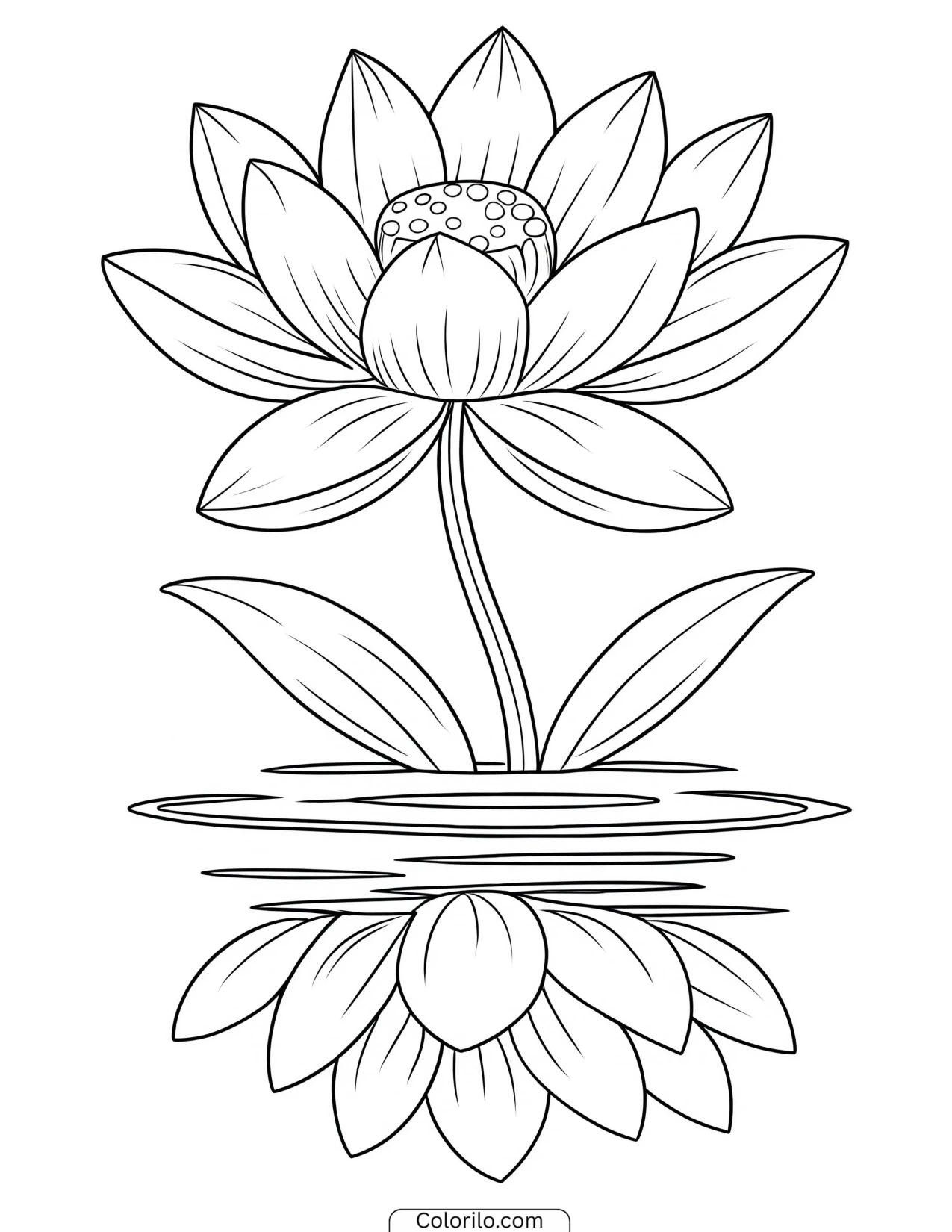
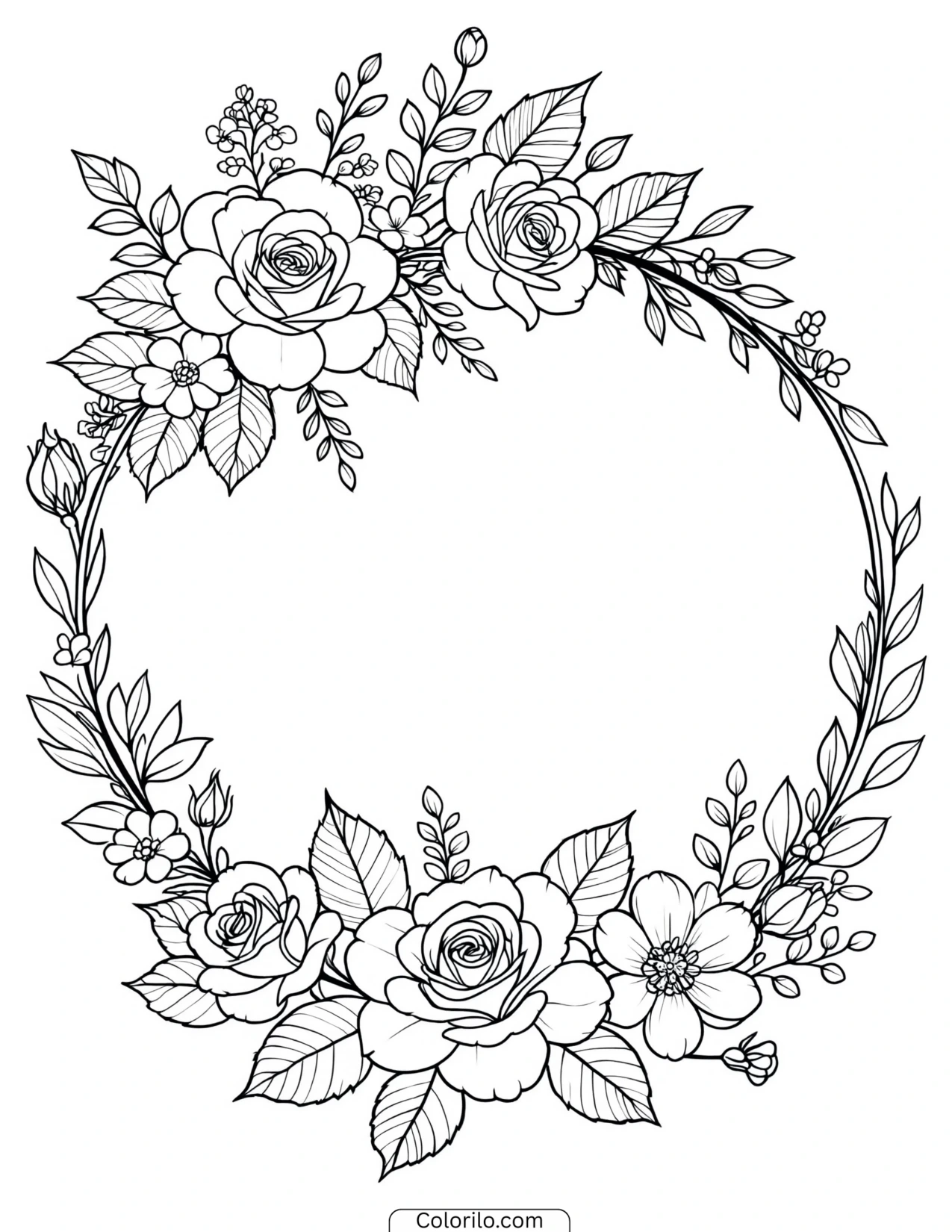
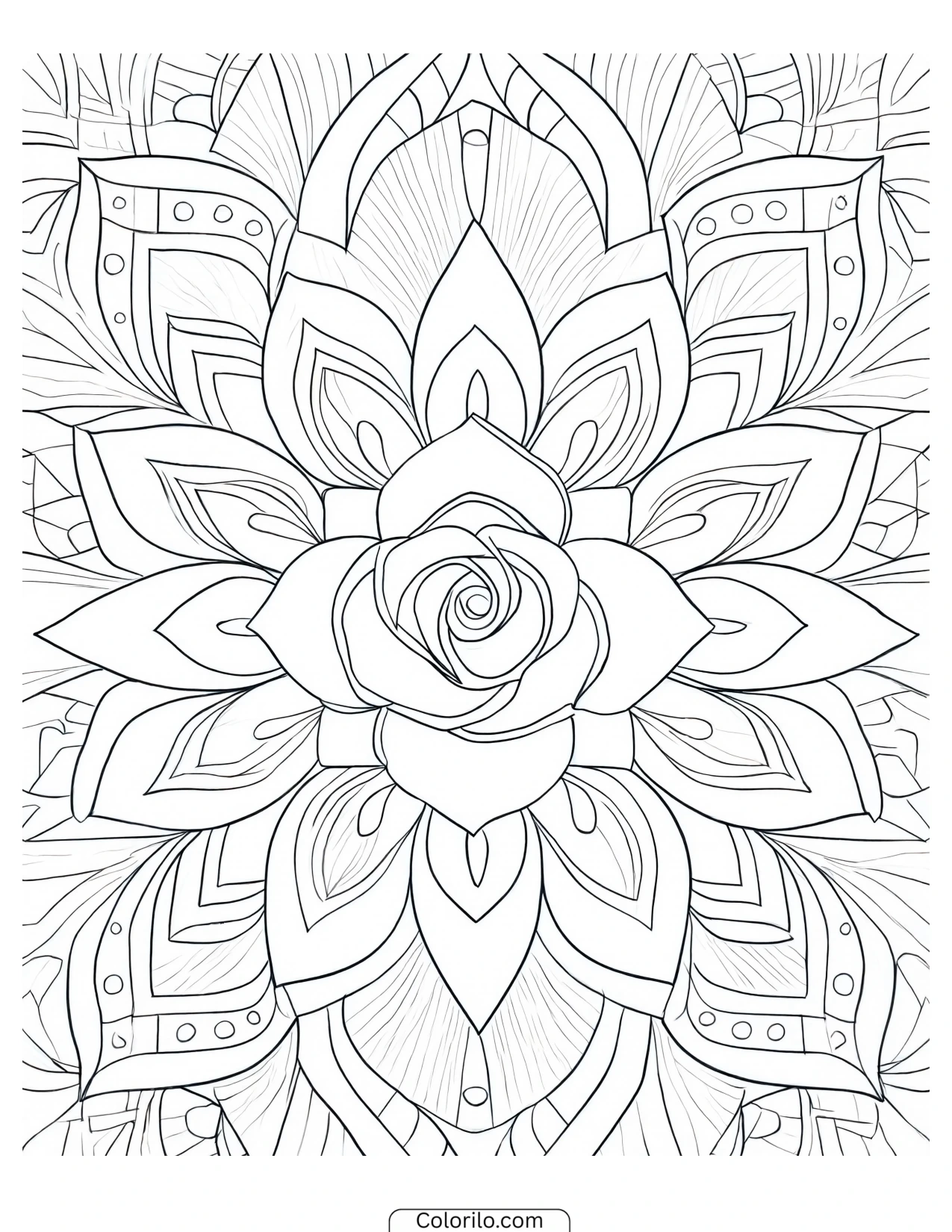
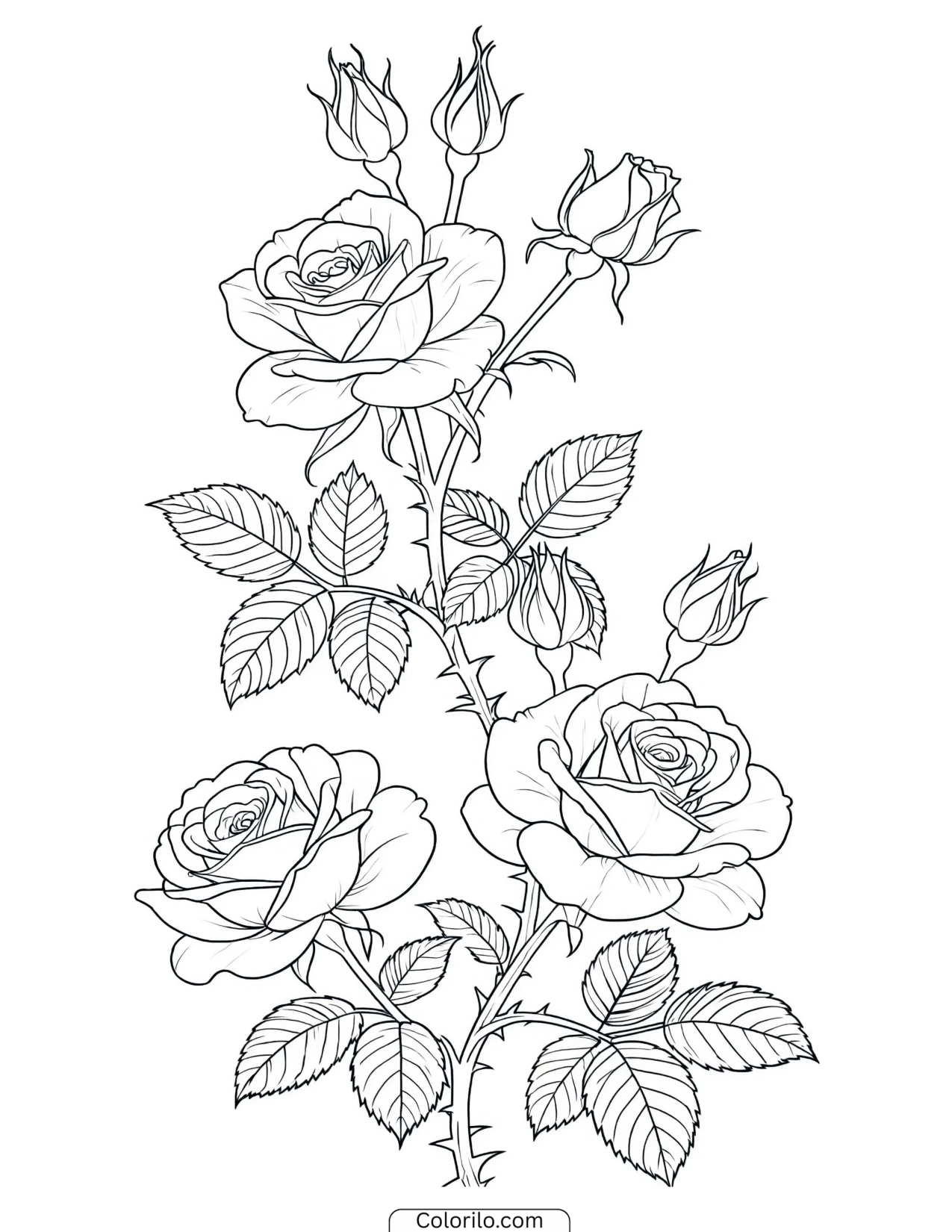
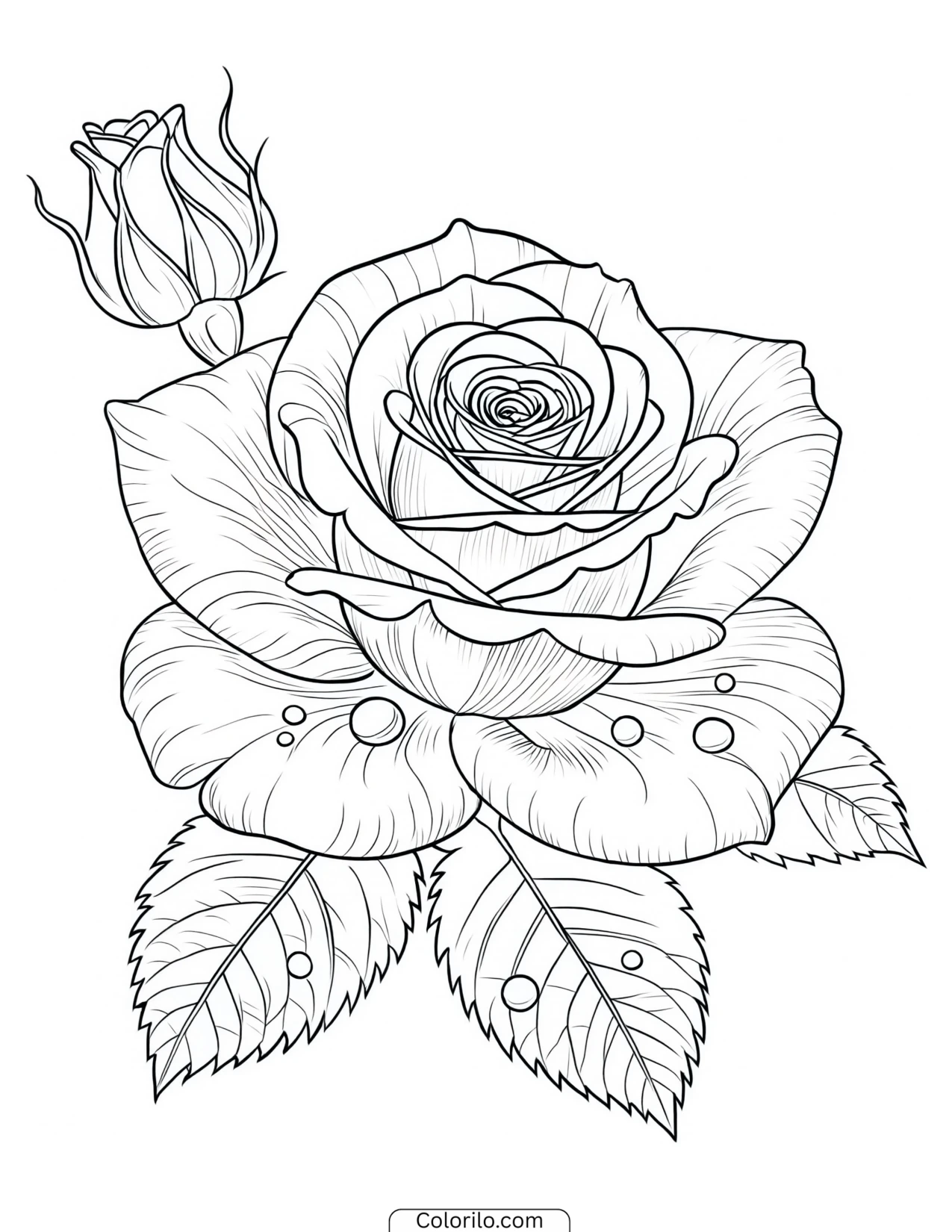
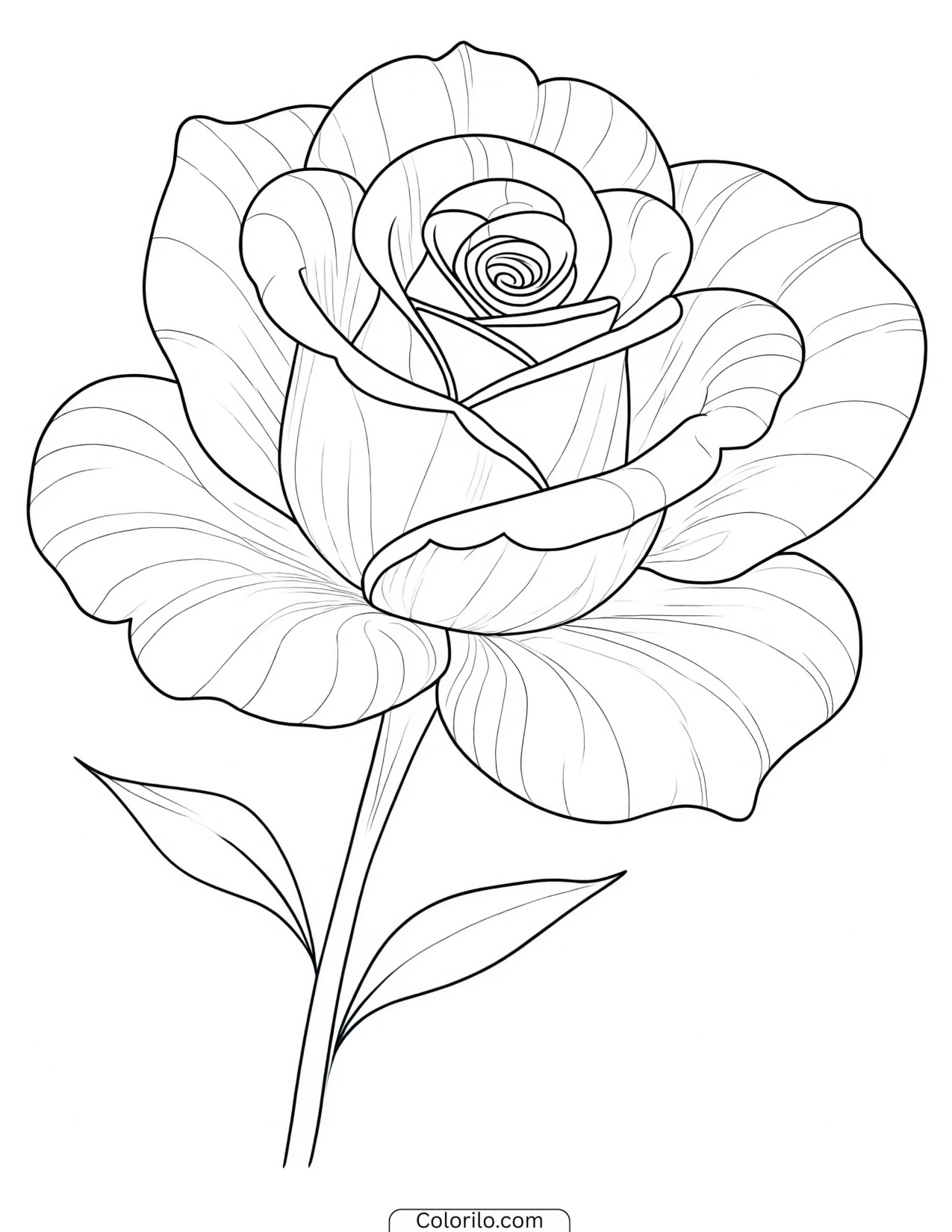
This collection has 73 free designs, and it’s organised by flower rather than by scene. Roses appear eight times, from a single simple bloom to a detailed study with dewdrops, plus a wreath and a rose mandala. Daisies get seven, sunflowers six, peonies six, hibiscus six, and tulips five, including a full field. There are five cherry blossom designs, two of them page borders rather than single subjects, and four lotus pages: on open water, among lily pads, and one reflected in still water.
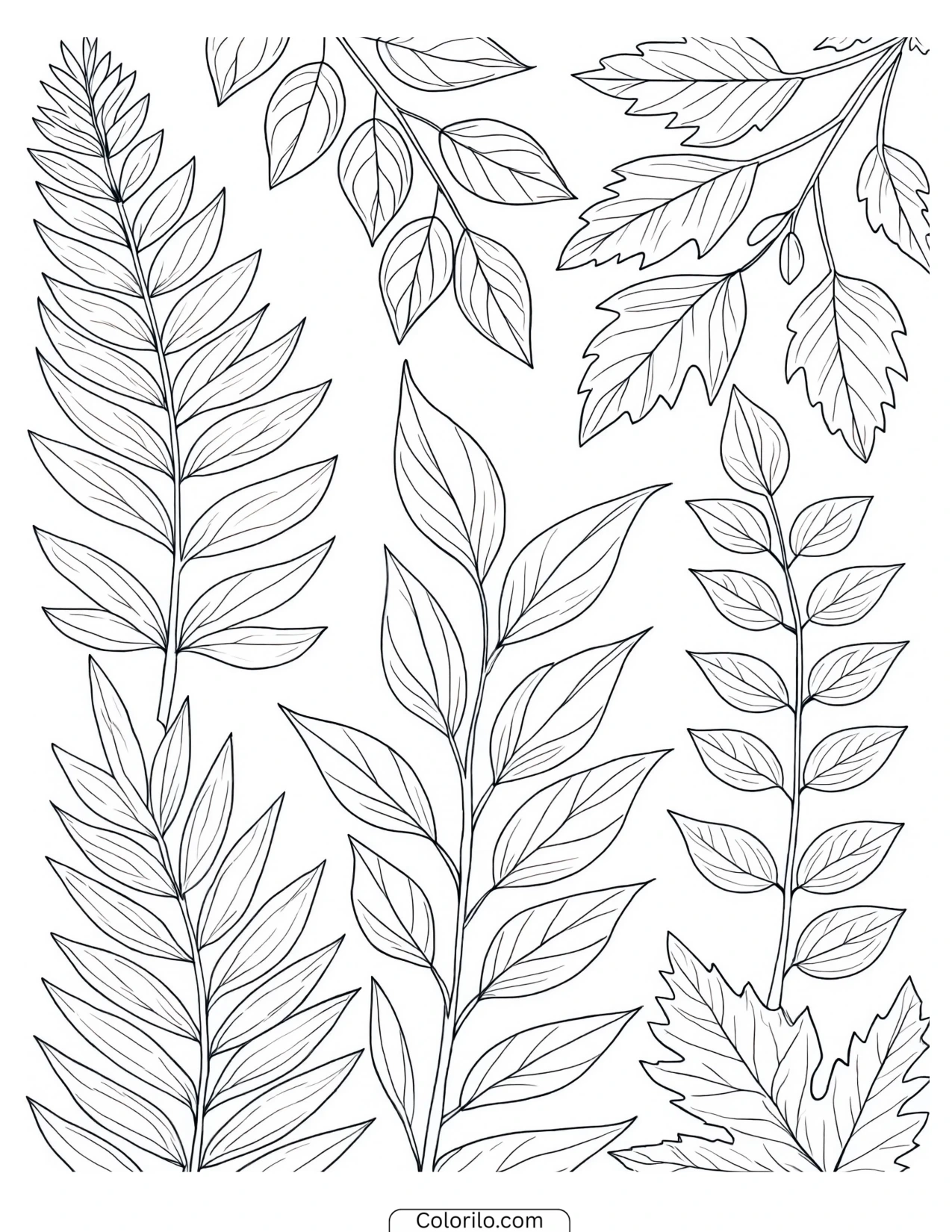
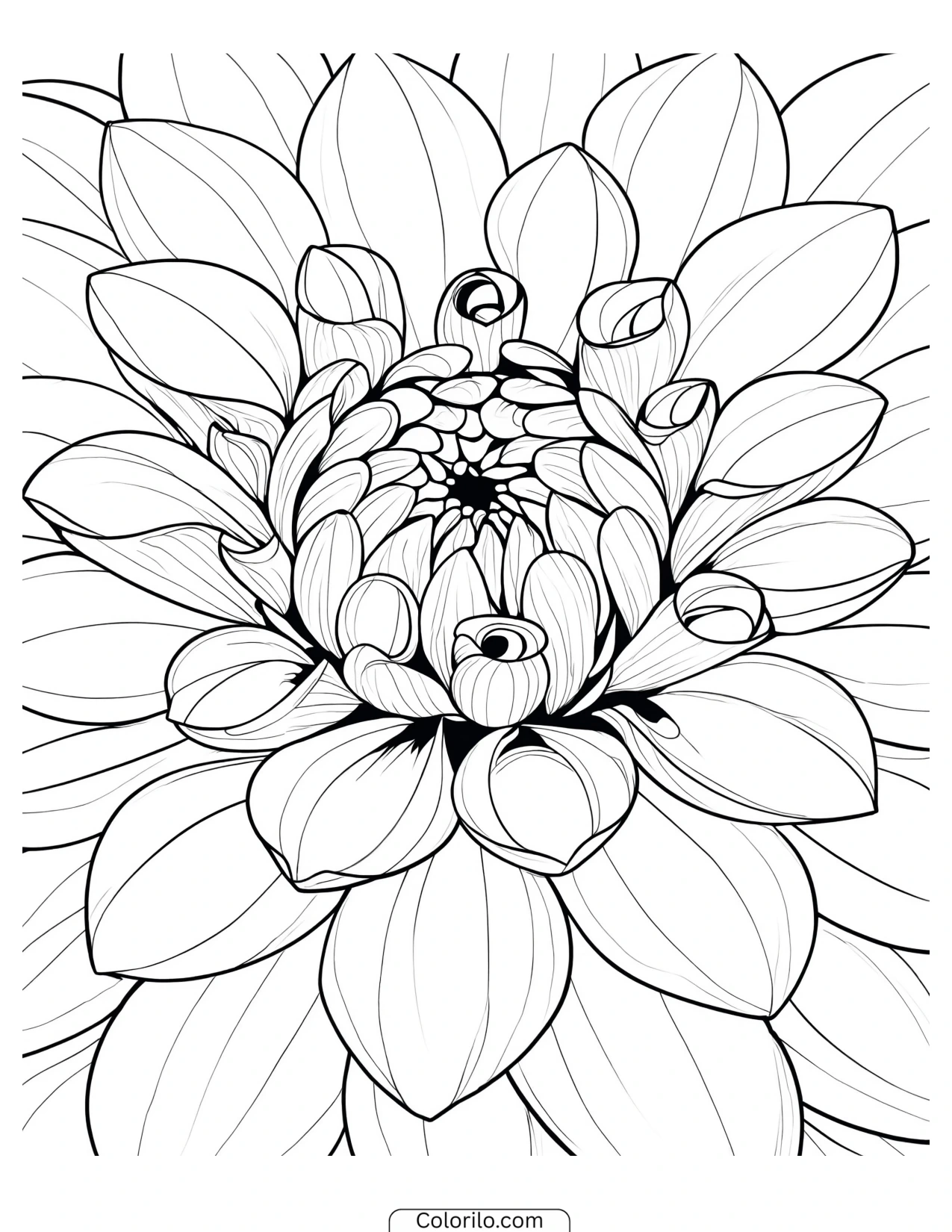
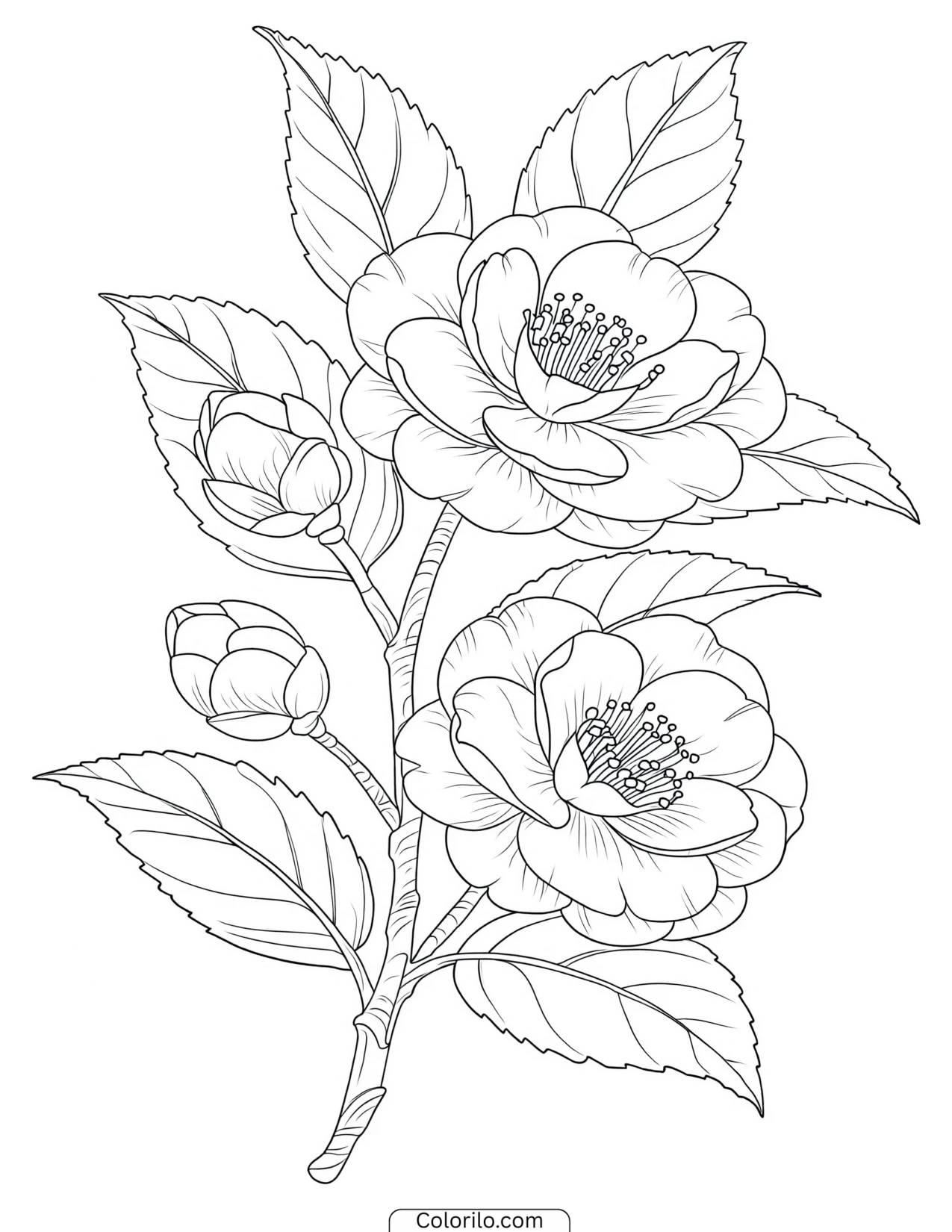
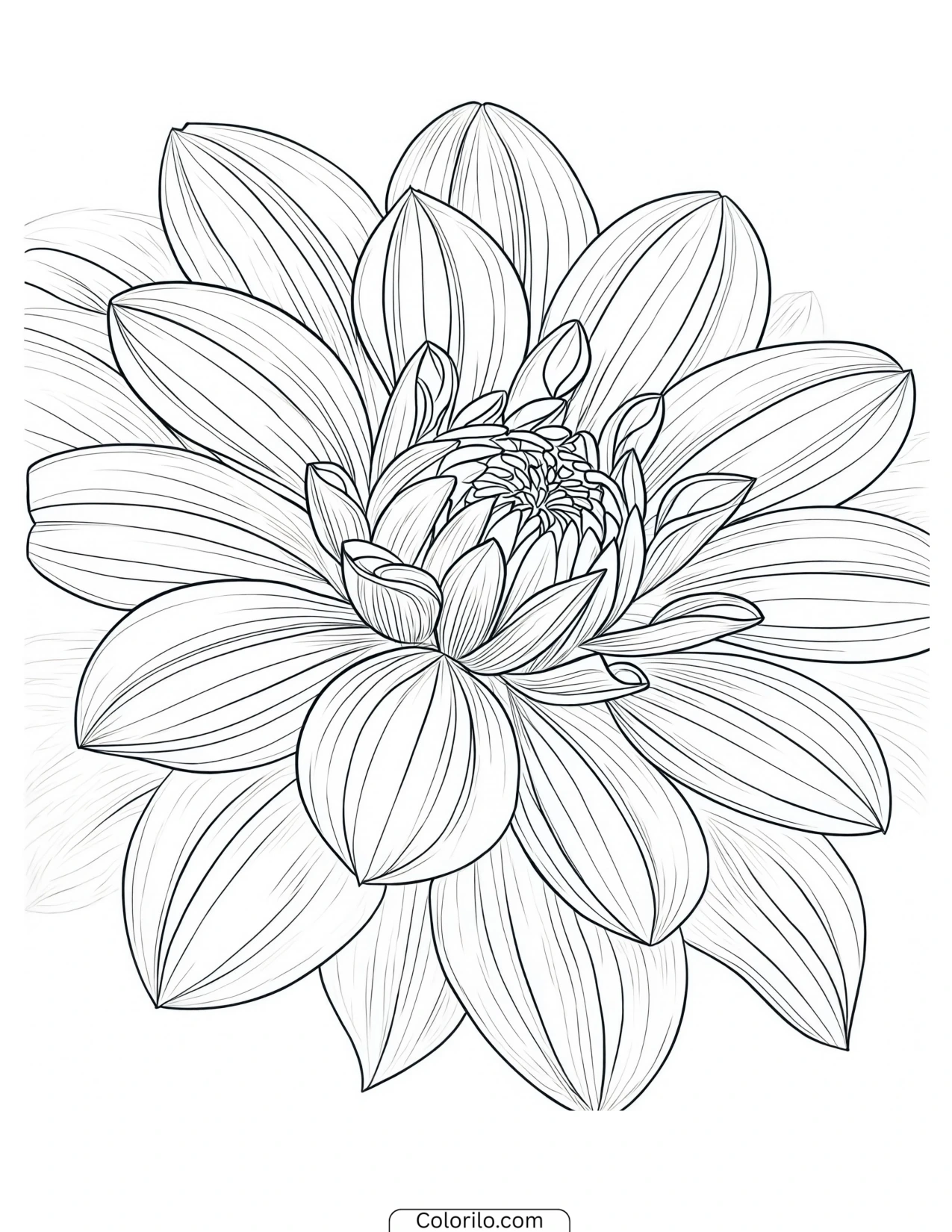
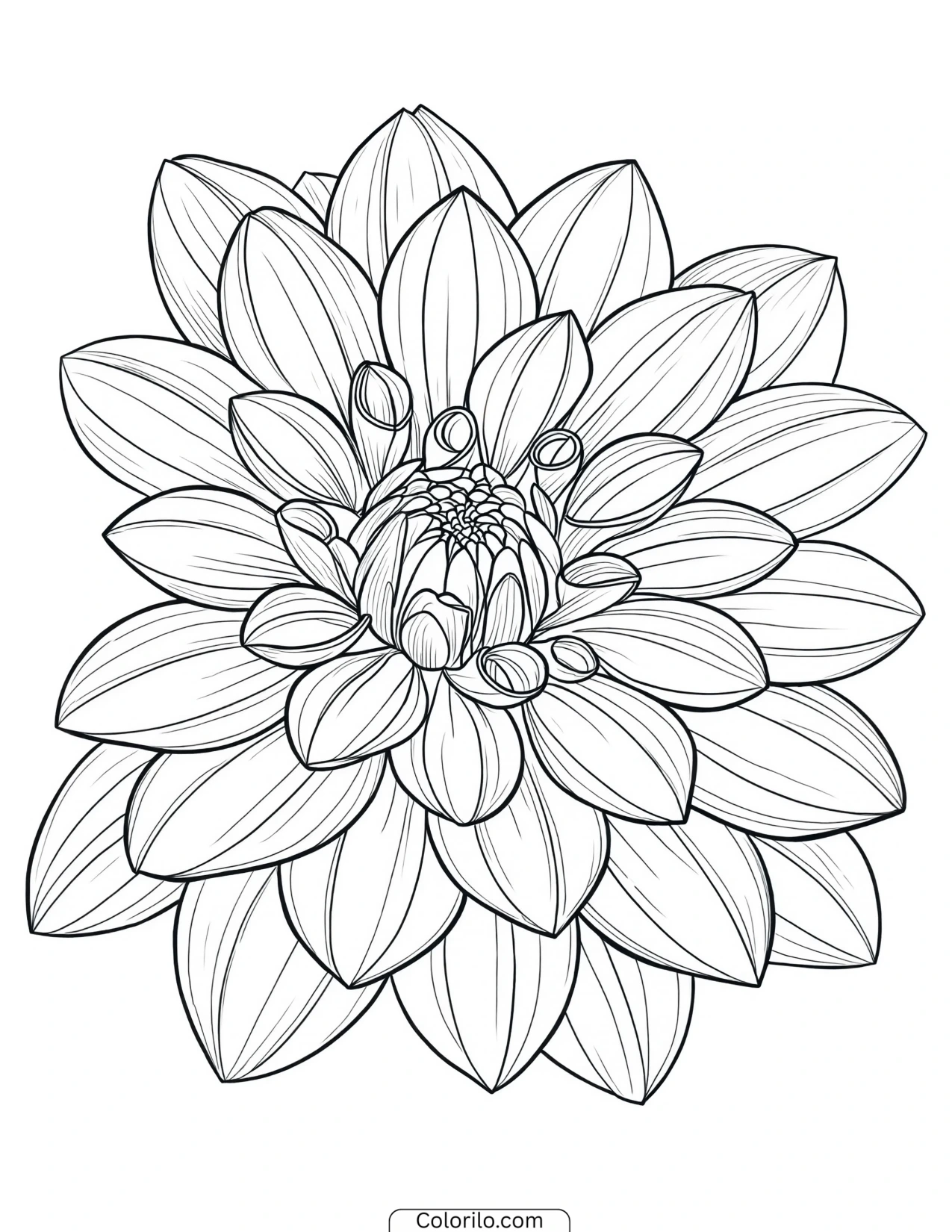
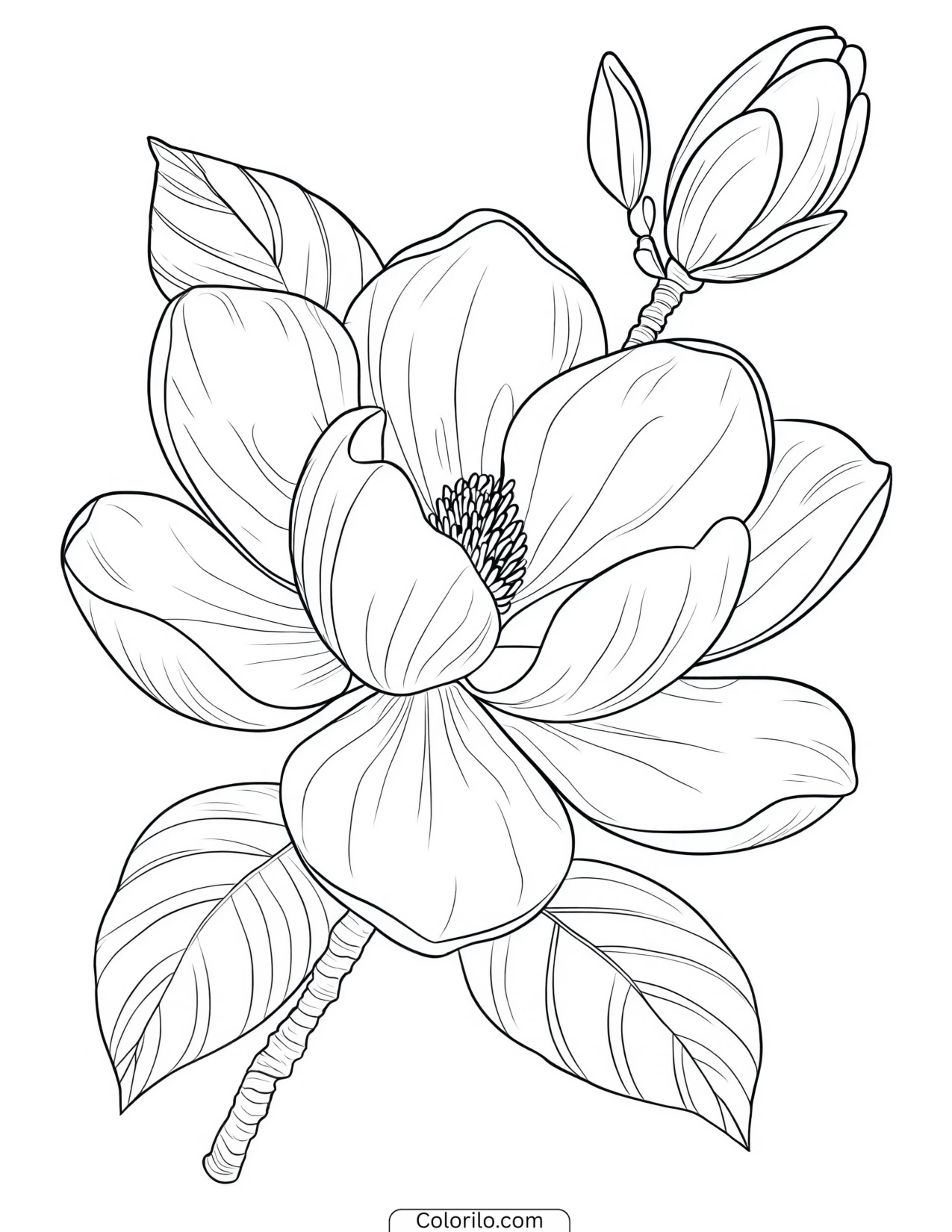
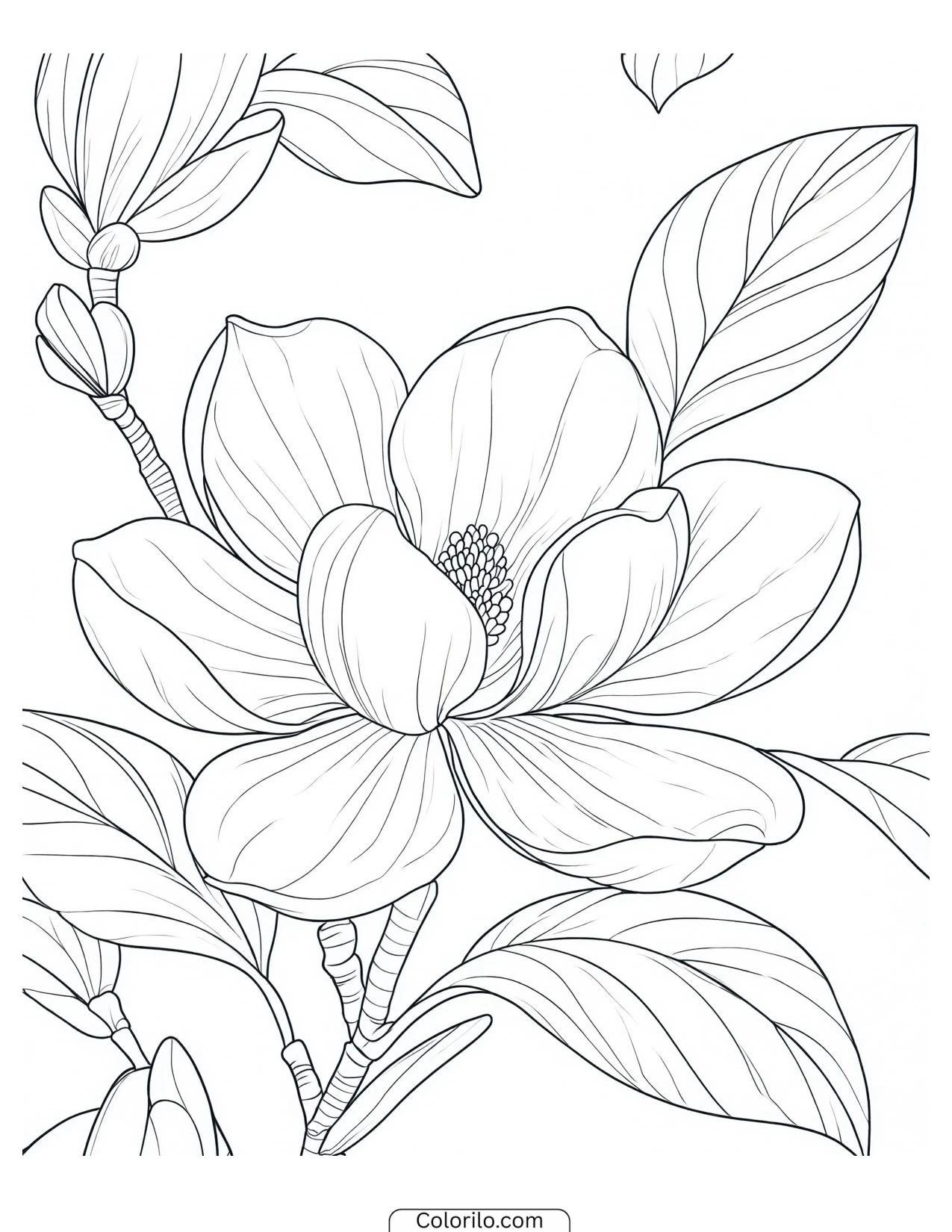
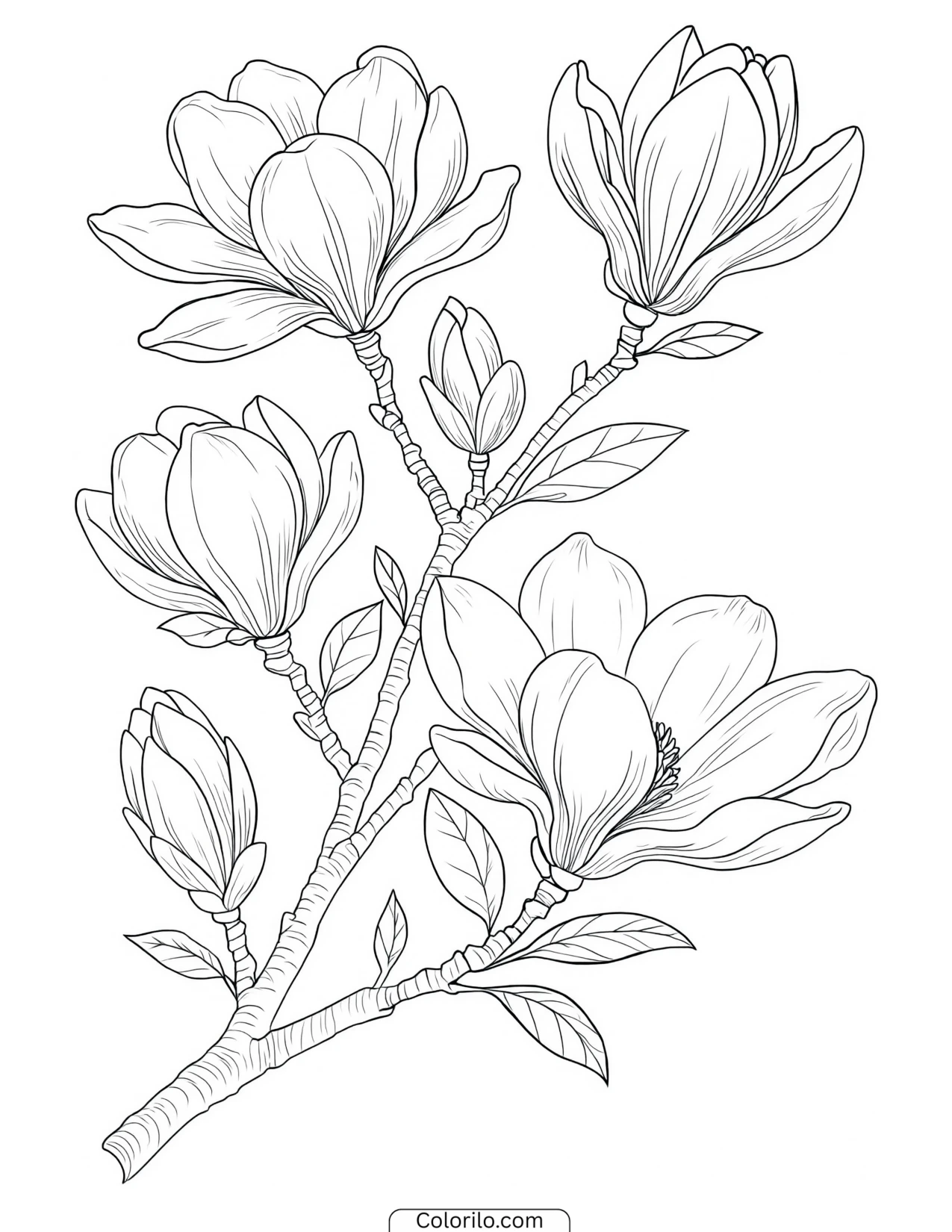
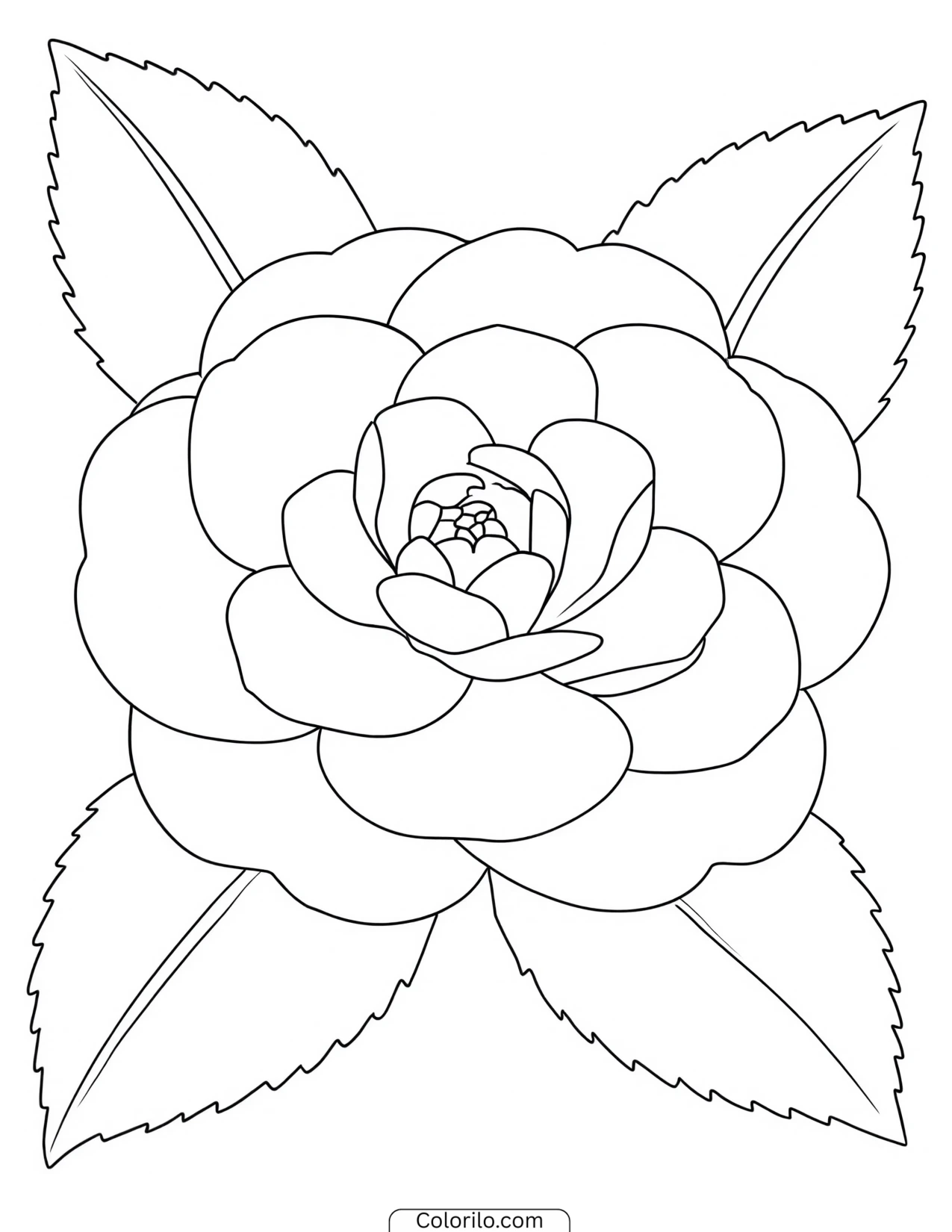
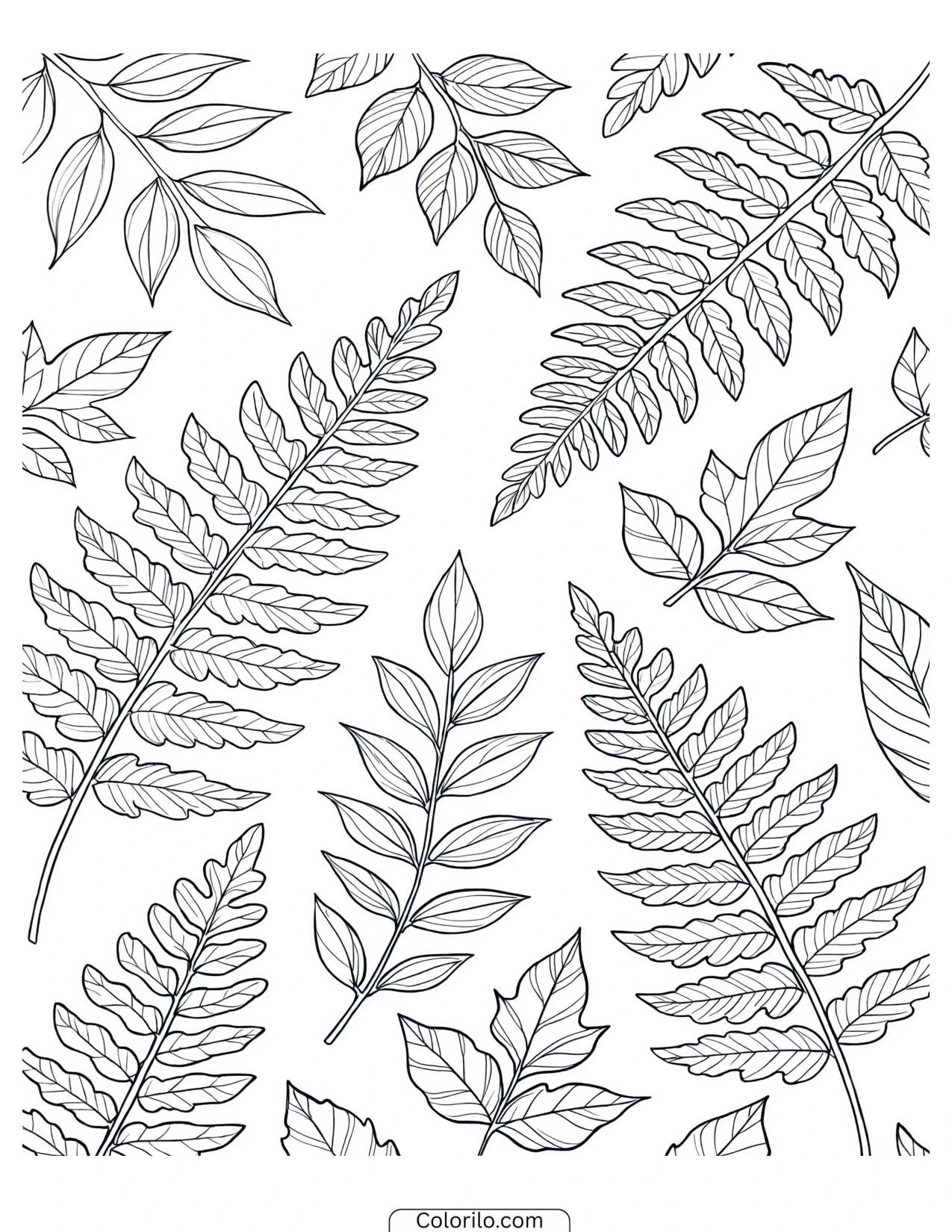
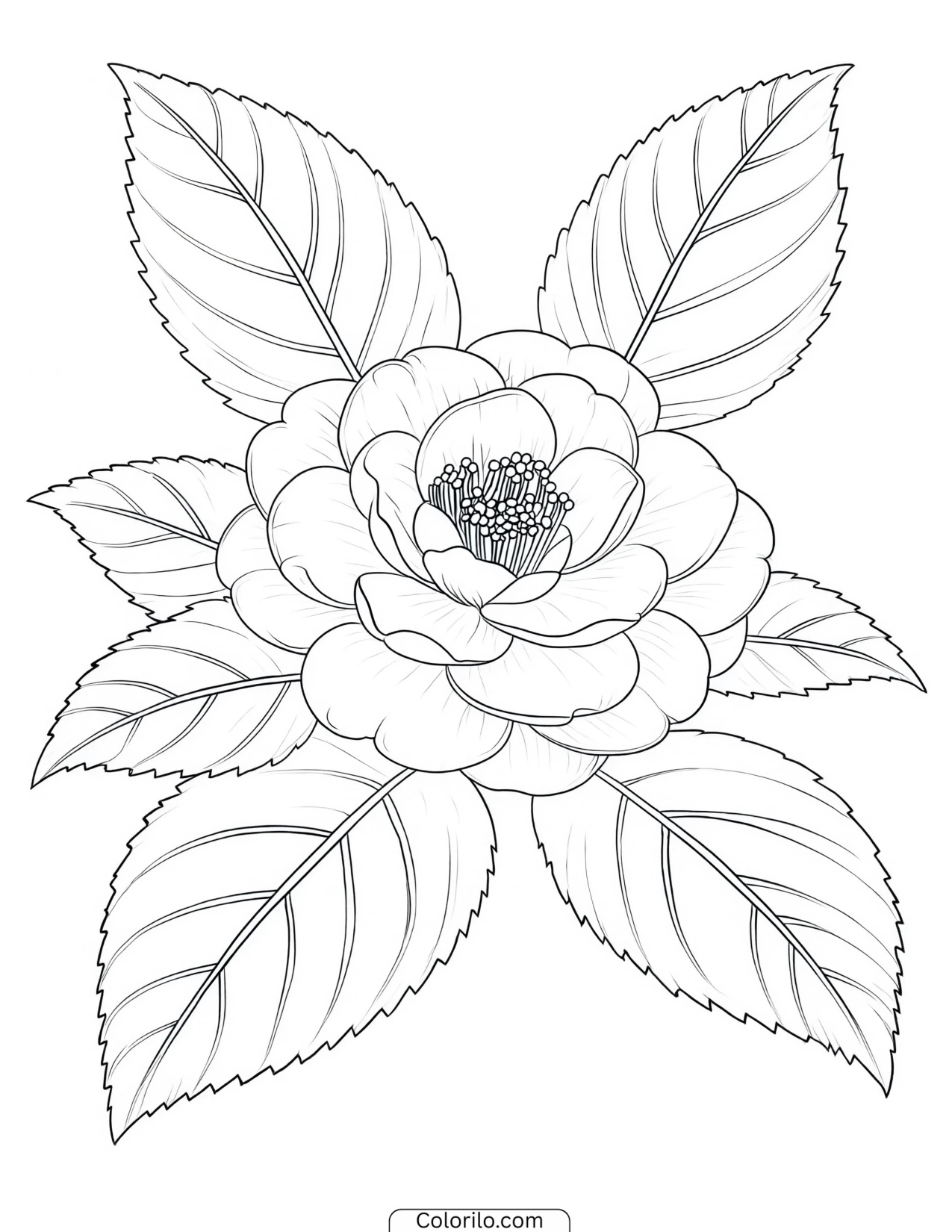
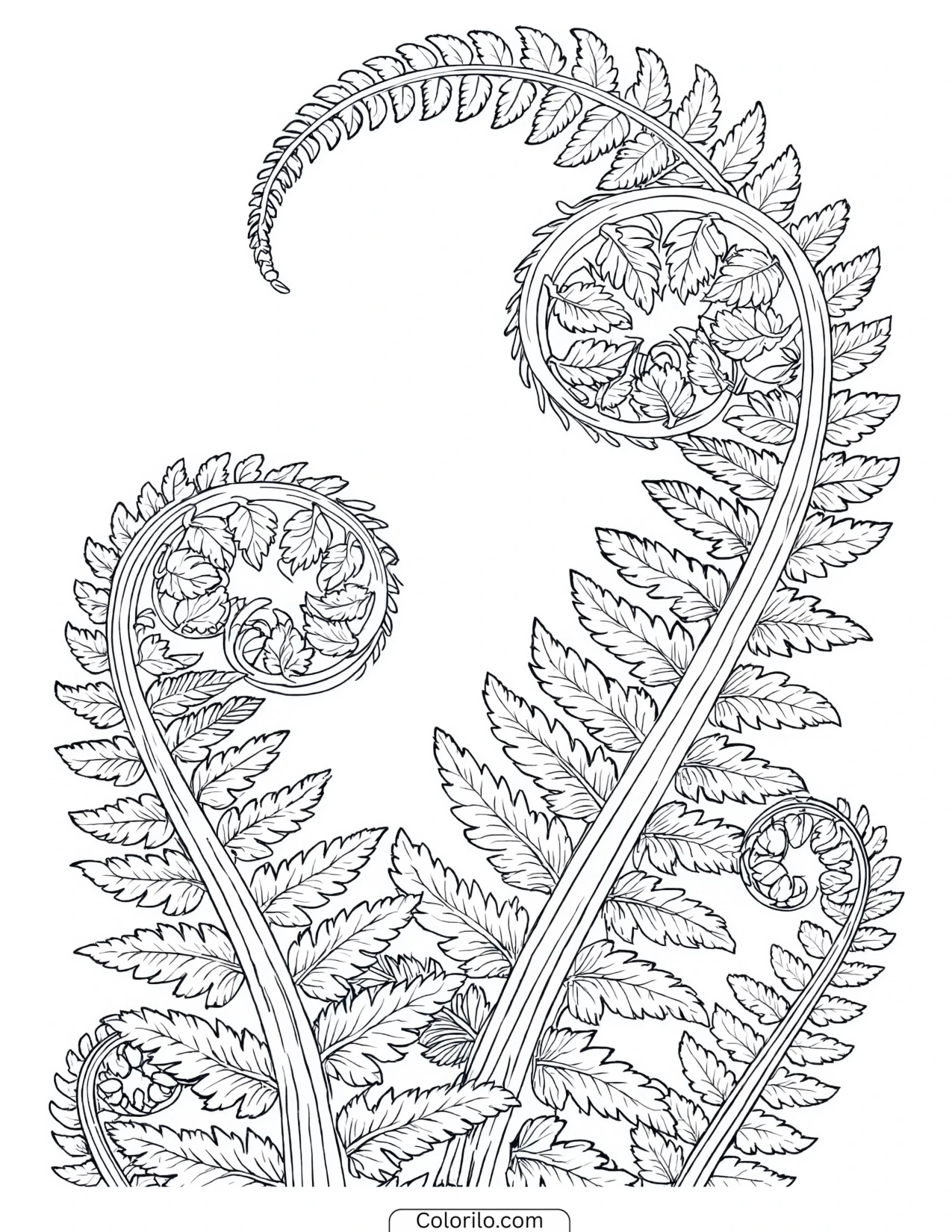
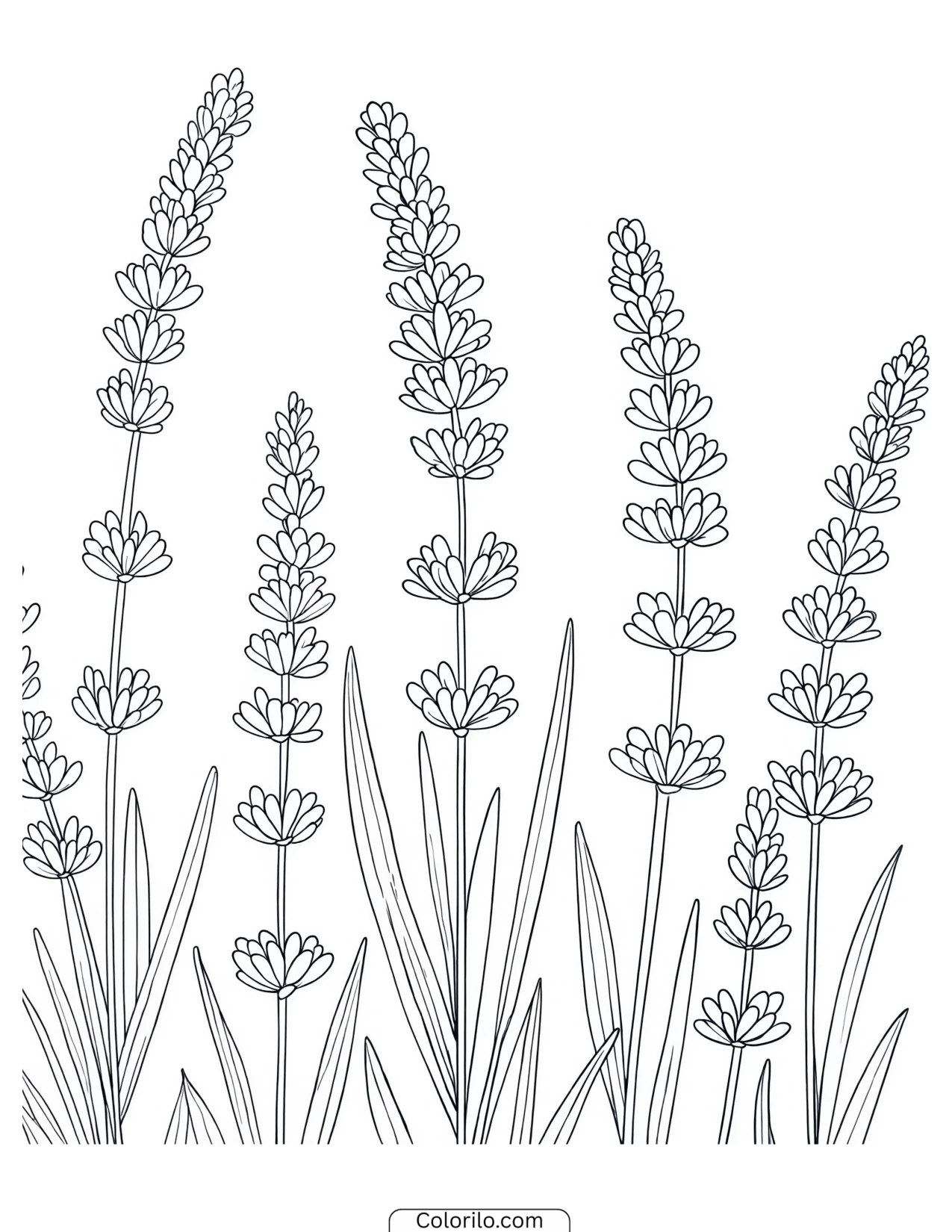
The less common flowers are where this set earns its length. Magnolia branches, hydrangea clusters, orchid stems both potted and cut, poppies, lavender tied in a bundle, a camellia branch in bud, lily of the valley, anemones in a wreath with peonies, and dahlias drawn twice, once in bold outline, once with every petal separated. There are also fern fronds, one uncurling from its coil, and a page of assorted botanical leaves for anyone who prefers foliage to flowers.
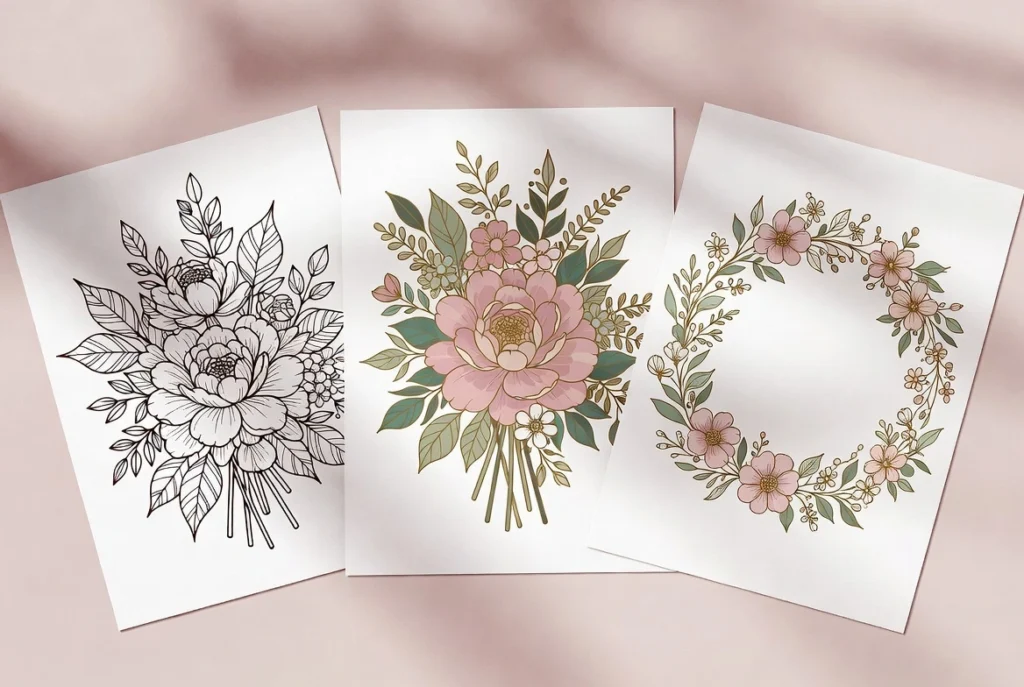
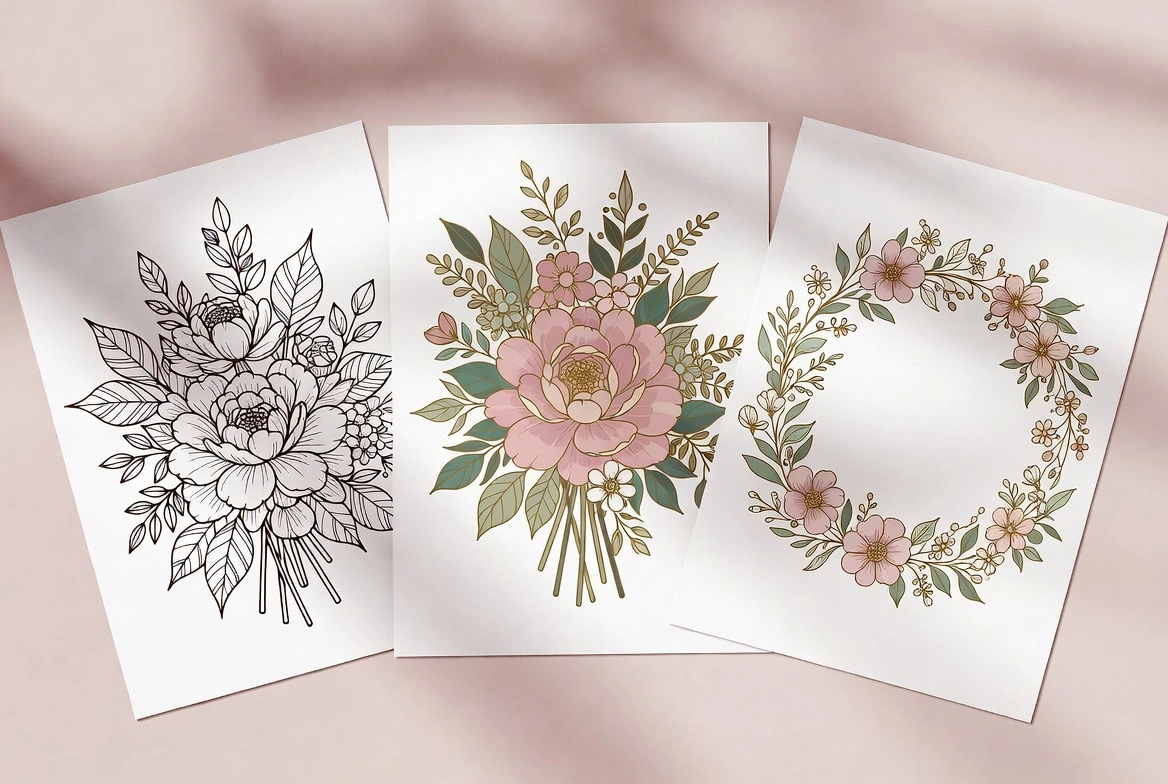
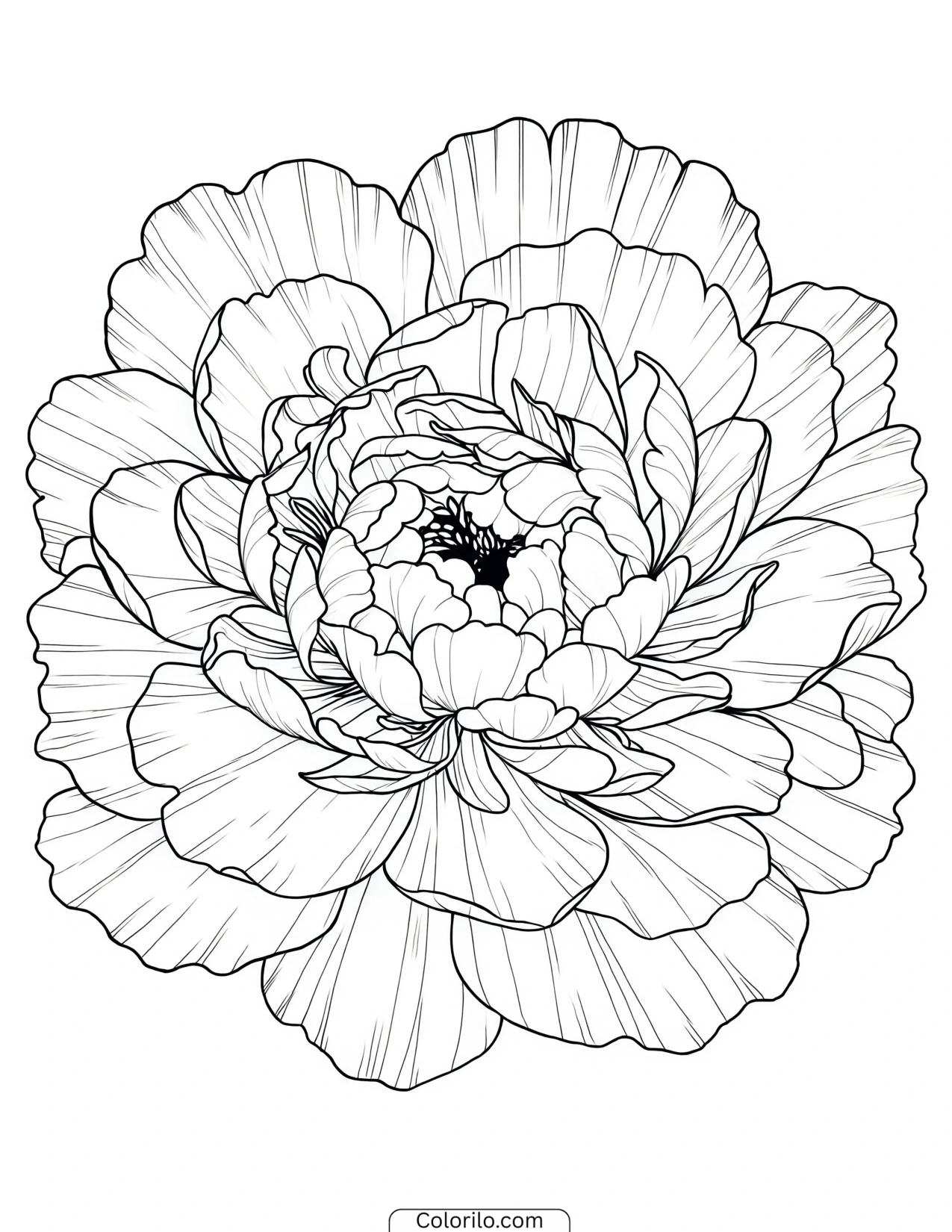
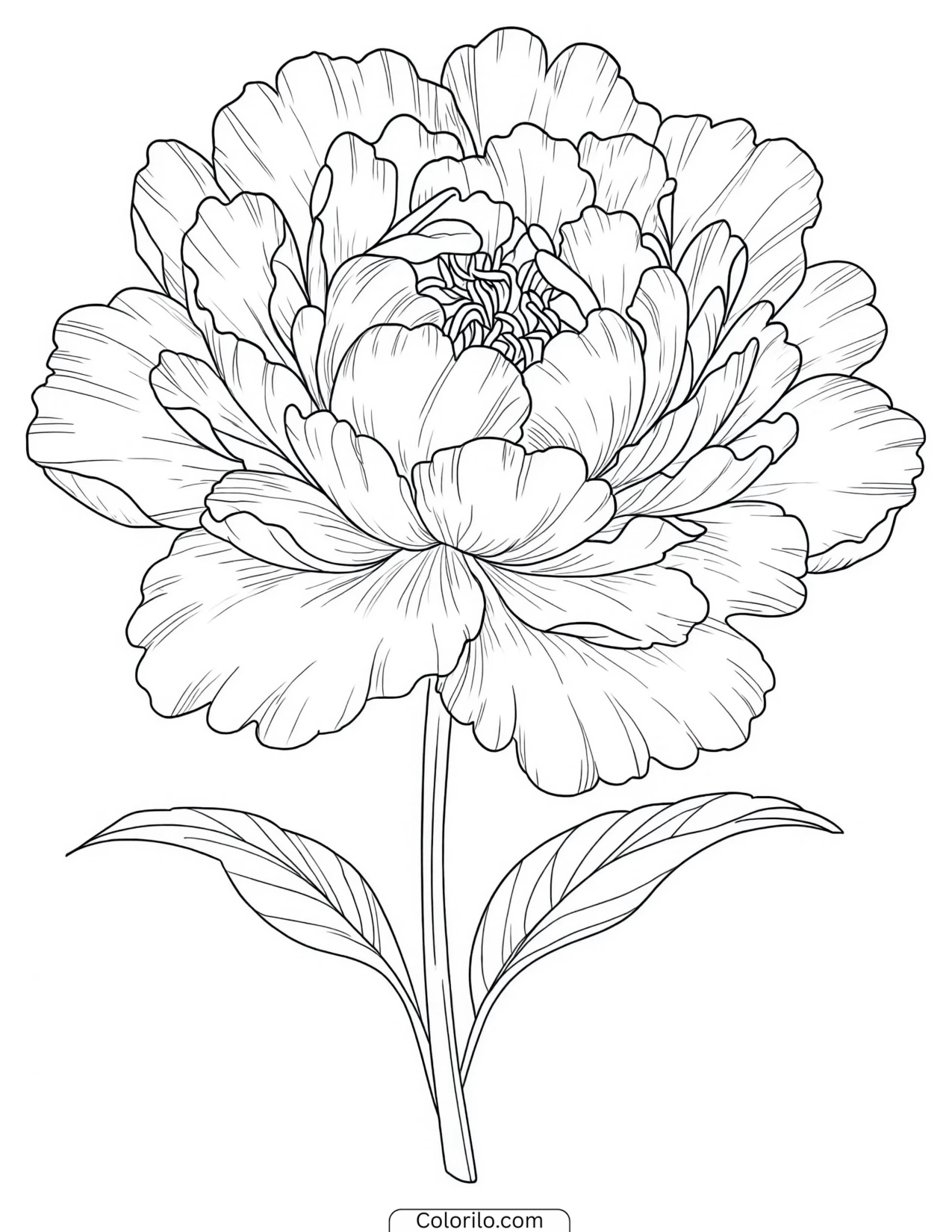
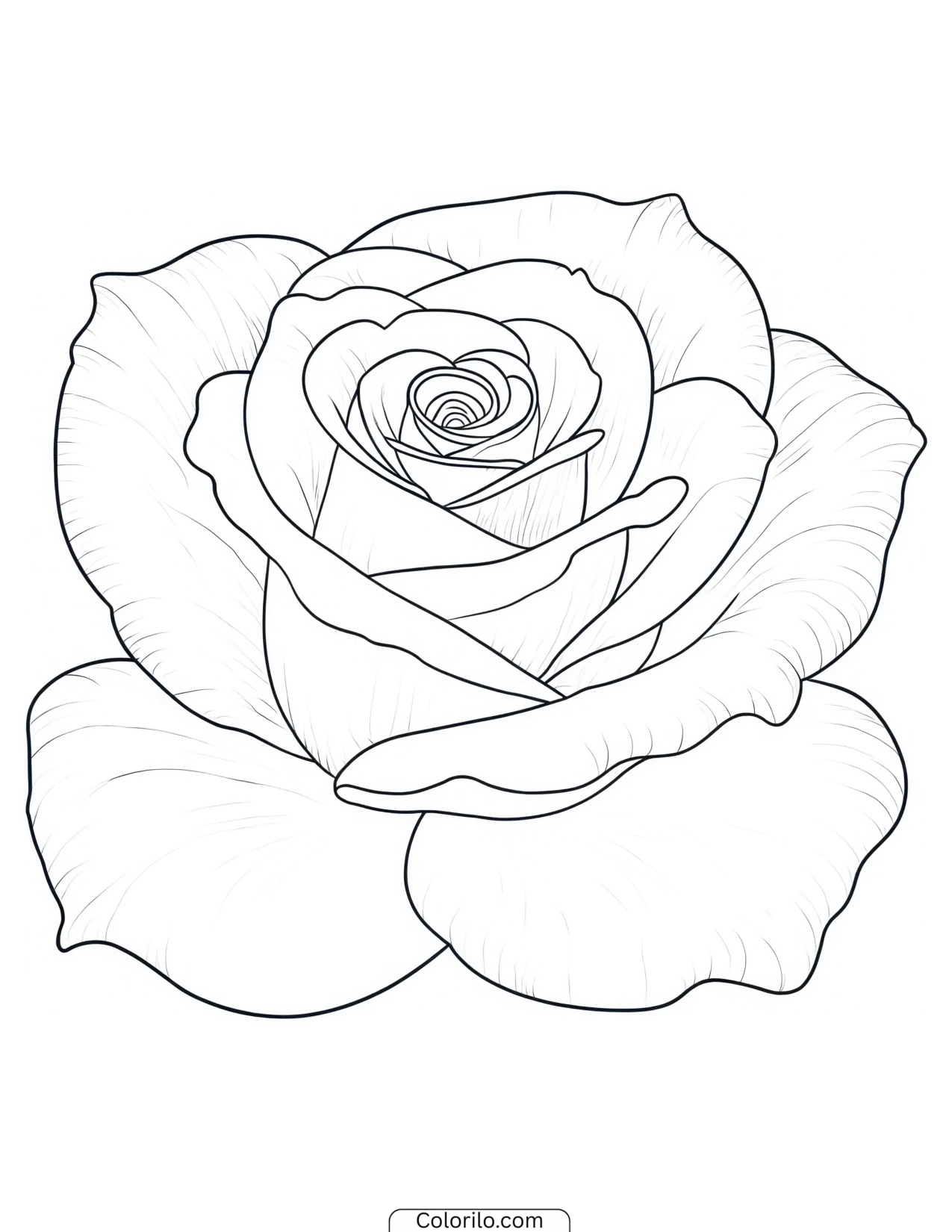
Difficulty spans the whole range. The bold dahlia outline and the single rose have large open shapes that suit a beginner or a child. The detailed peony, the hydrangea cluster, and the cherry blossom frame have hundreds of small segments and will take an evening. Both kinds are worth having, and it’s worth choosing deliberately rather than working through in order.
Every one of these floral coloring pages is free, prints on standard US letter paper, and needs no sign-up. Click any design below to open the full-size PDF.
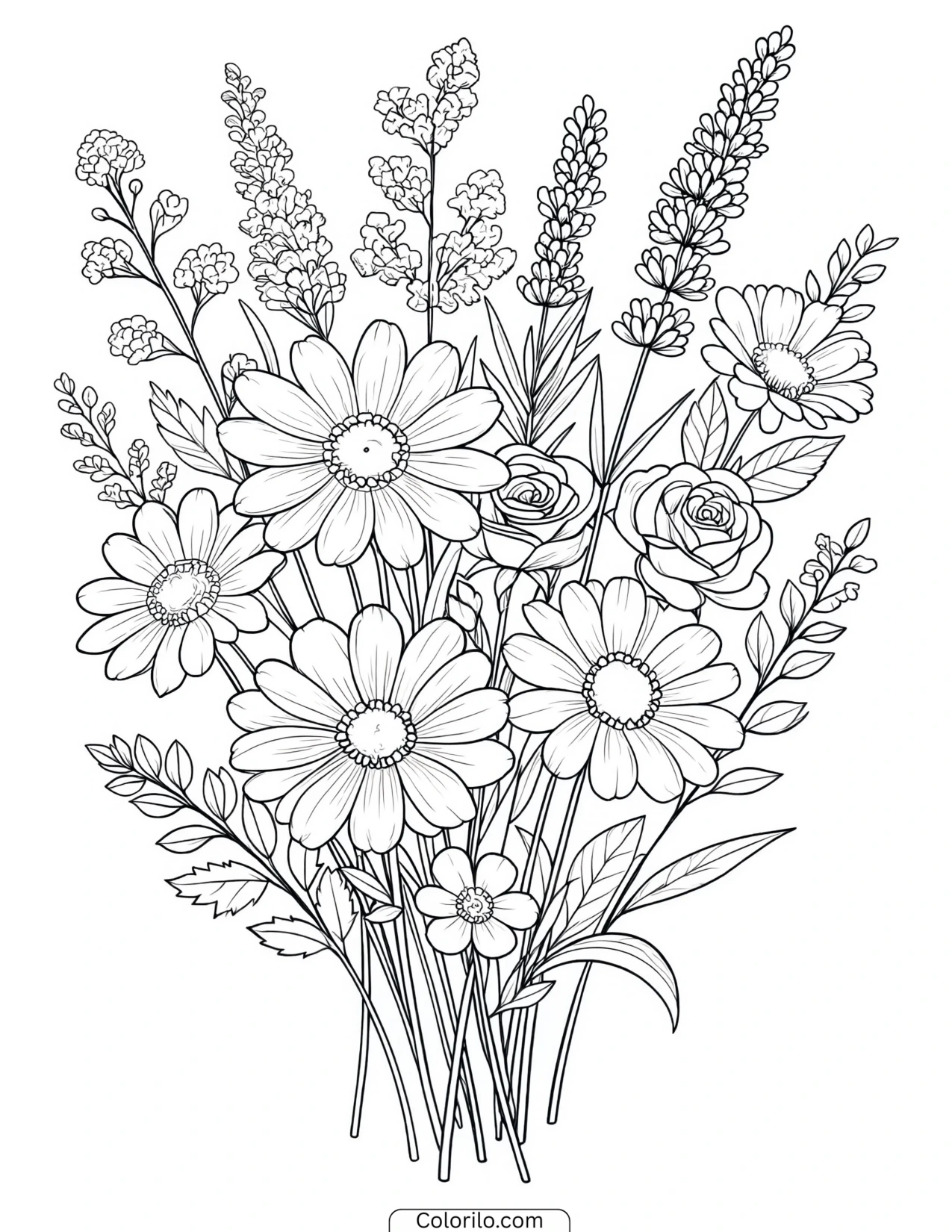
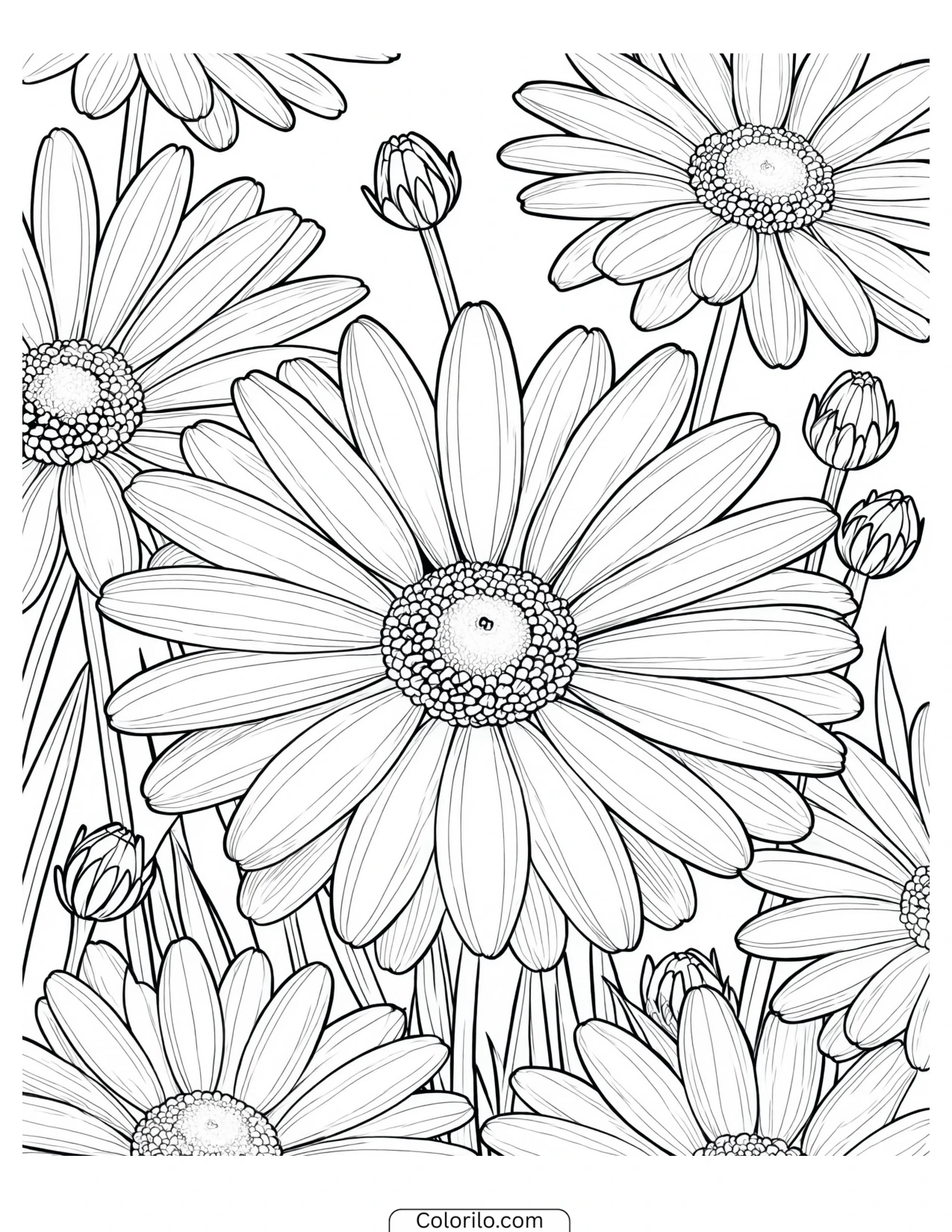
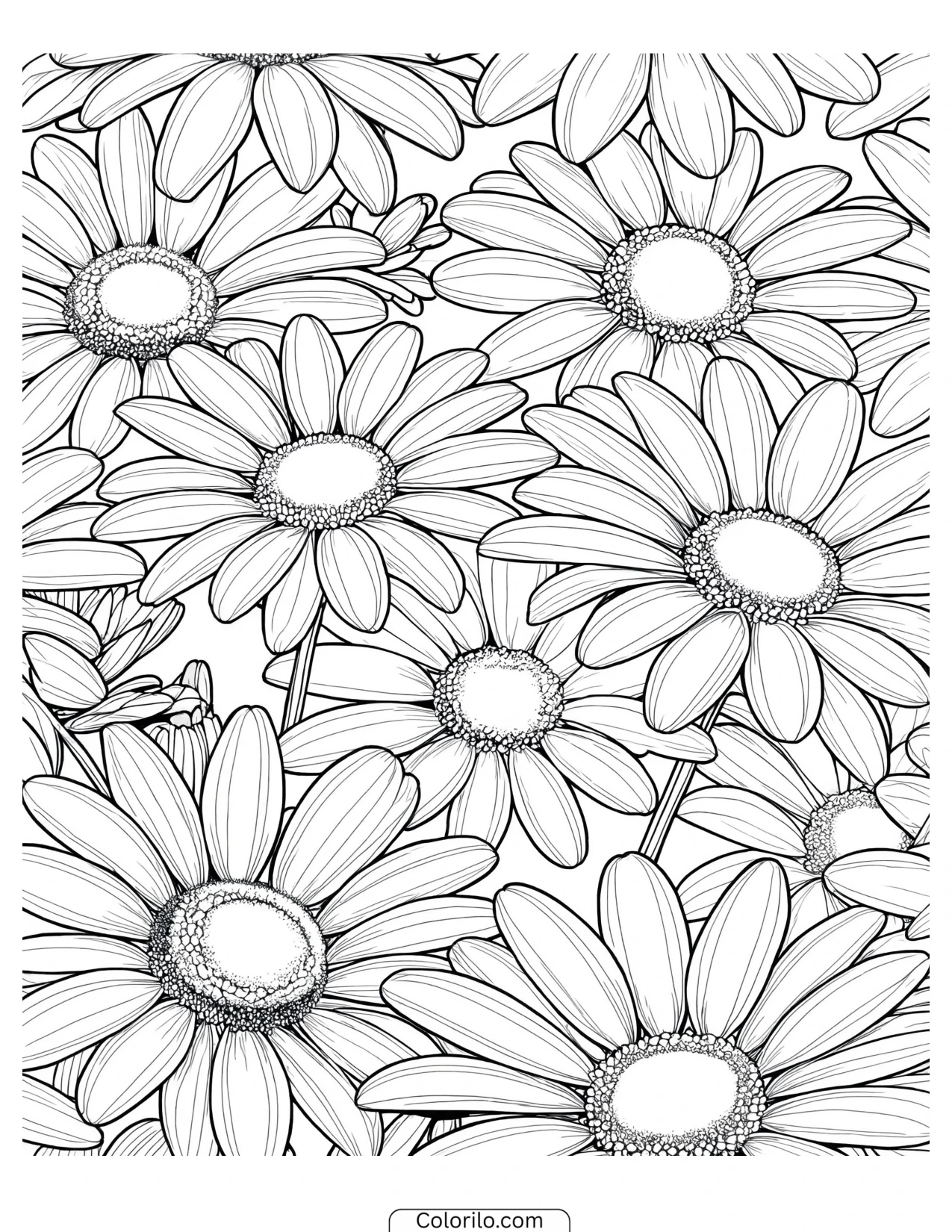
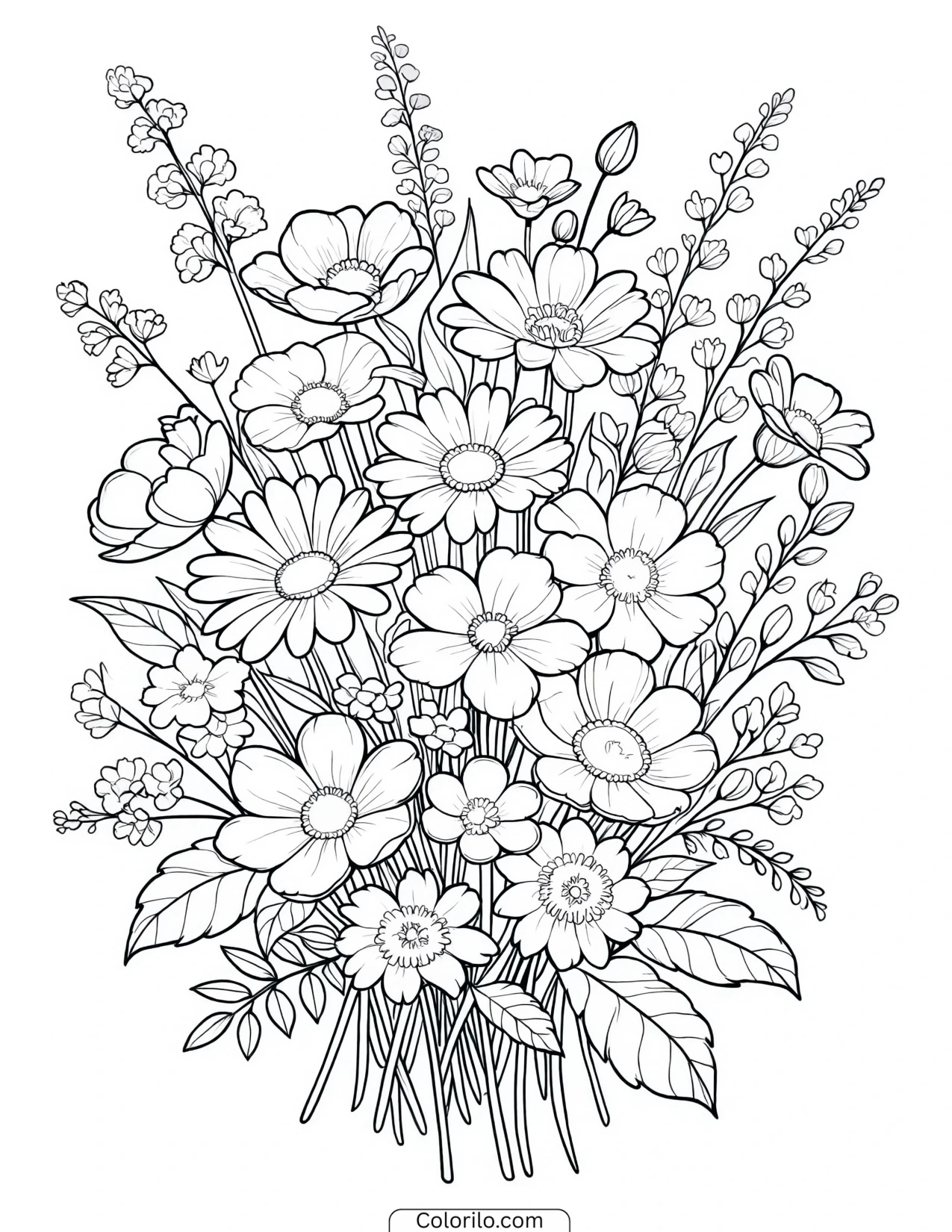
The Flowers in This Collection
Rose
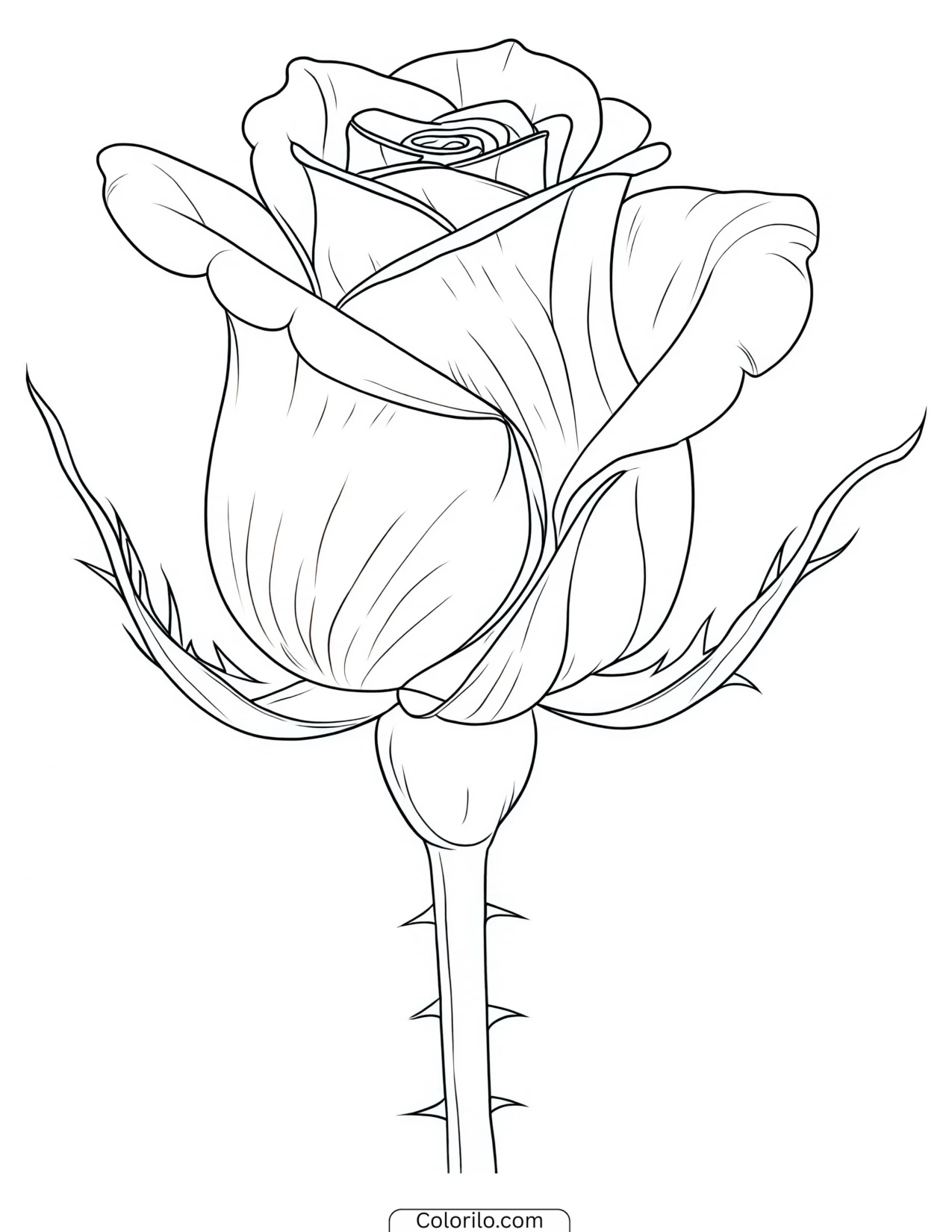
Eight designs. The tight spiral at a rose’s centre is what makes it hard to draw and rewarding to color, since each petal wraps behind the last. Roses have been cultivated for at least 5,000 years, and the ones we buy today are almost all hybrids developed since the 1800s.
Sunflower
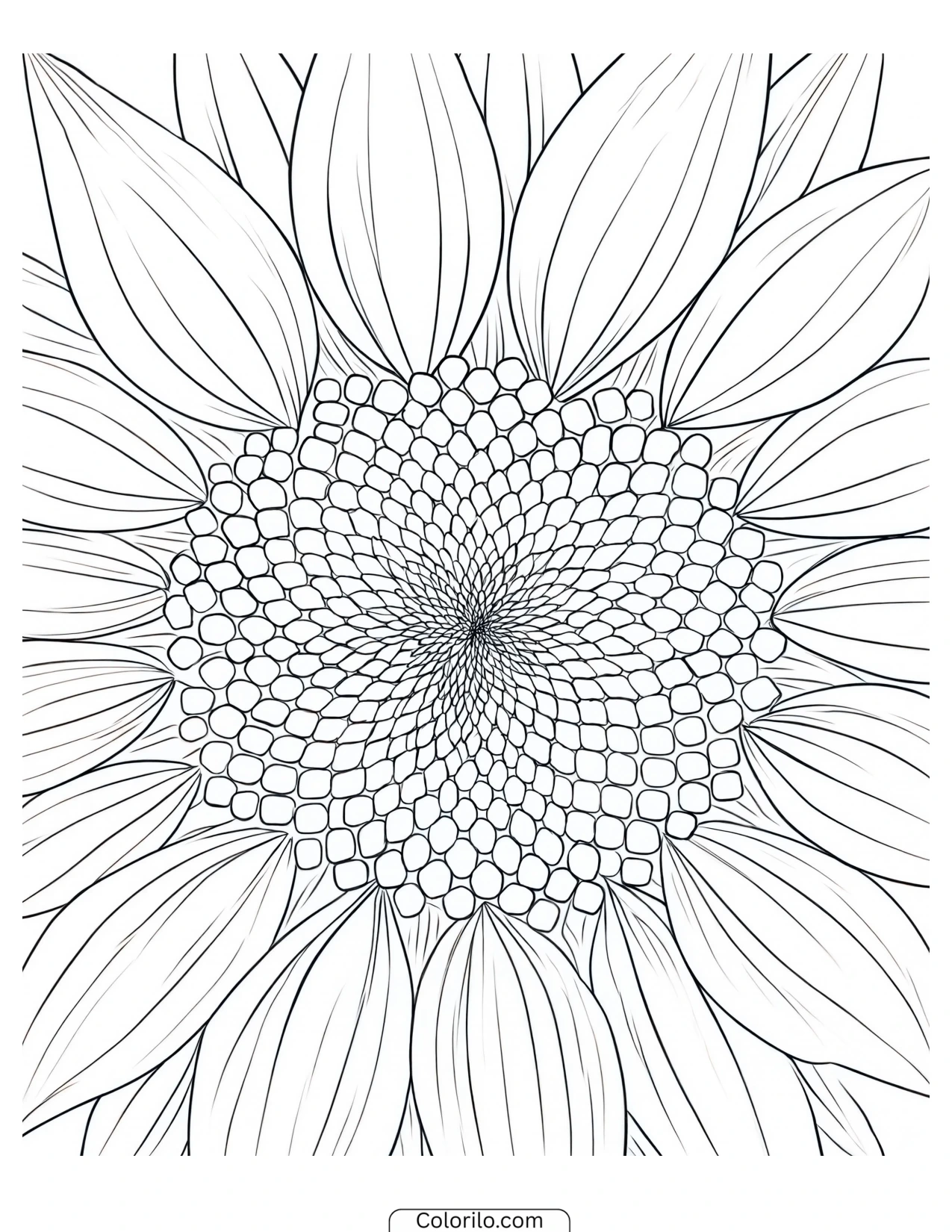
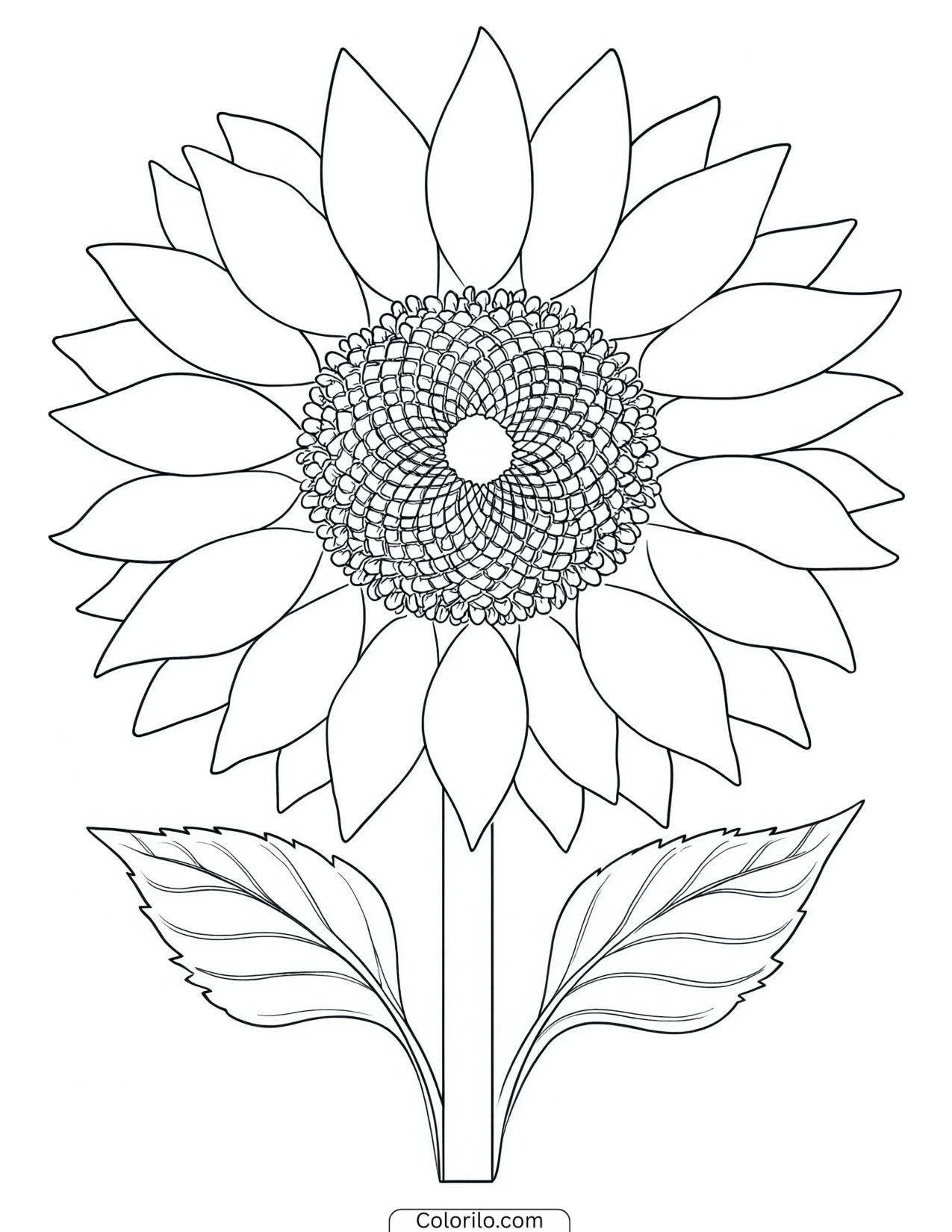
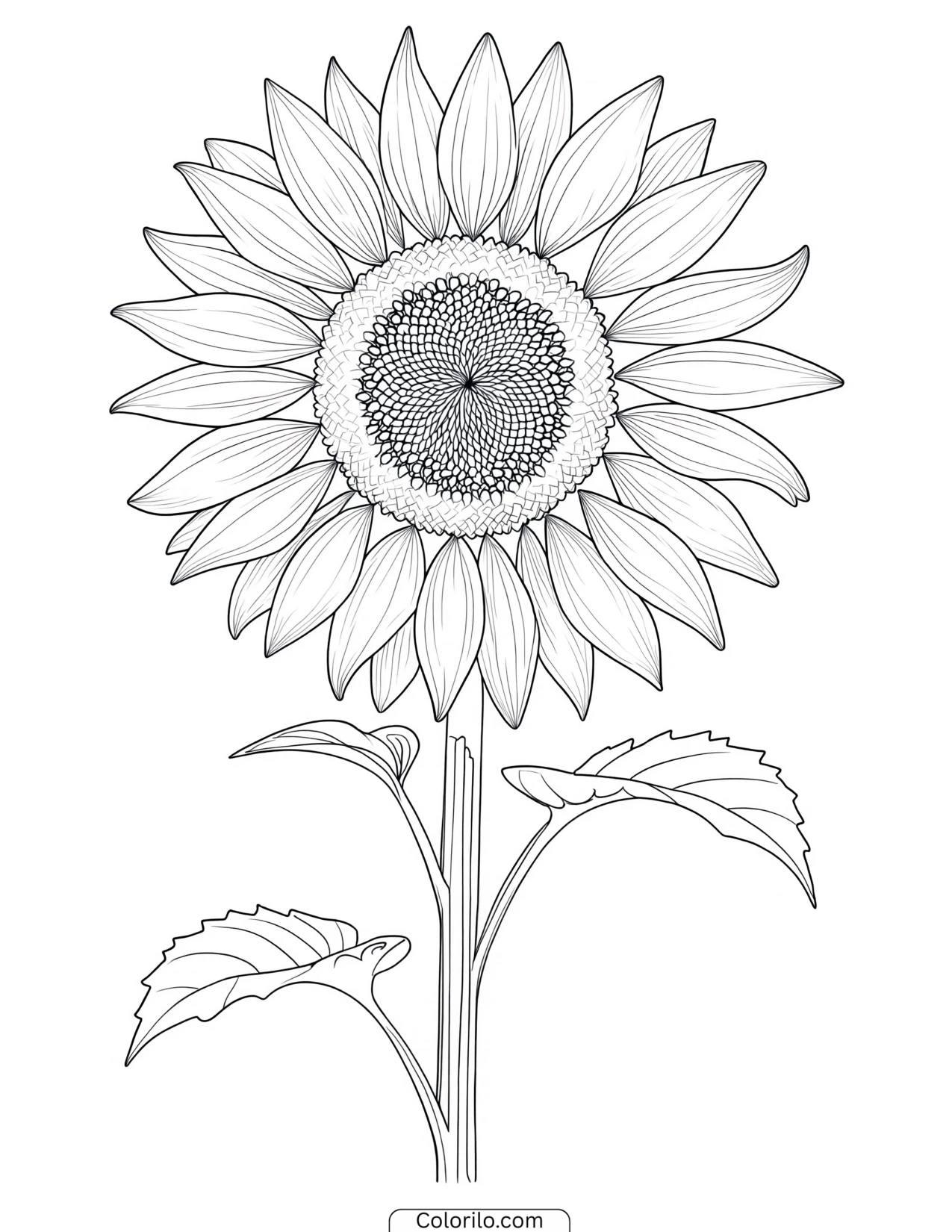
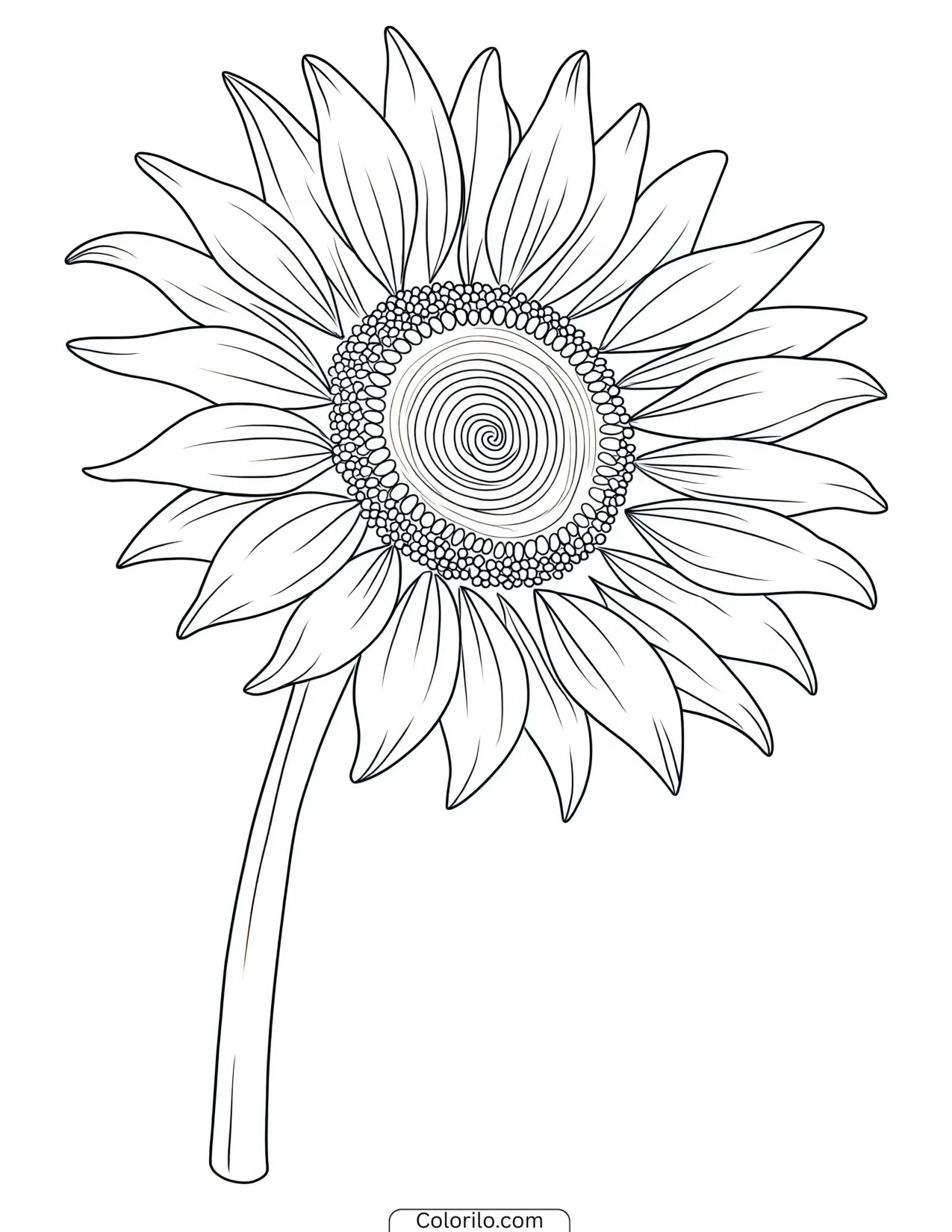
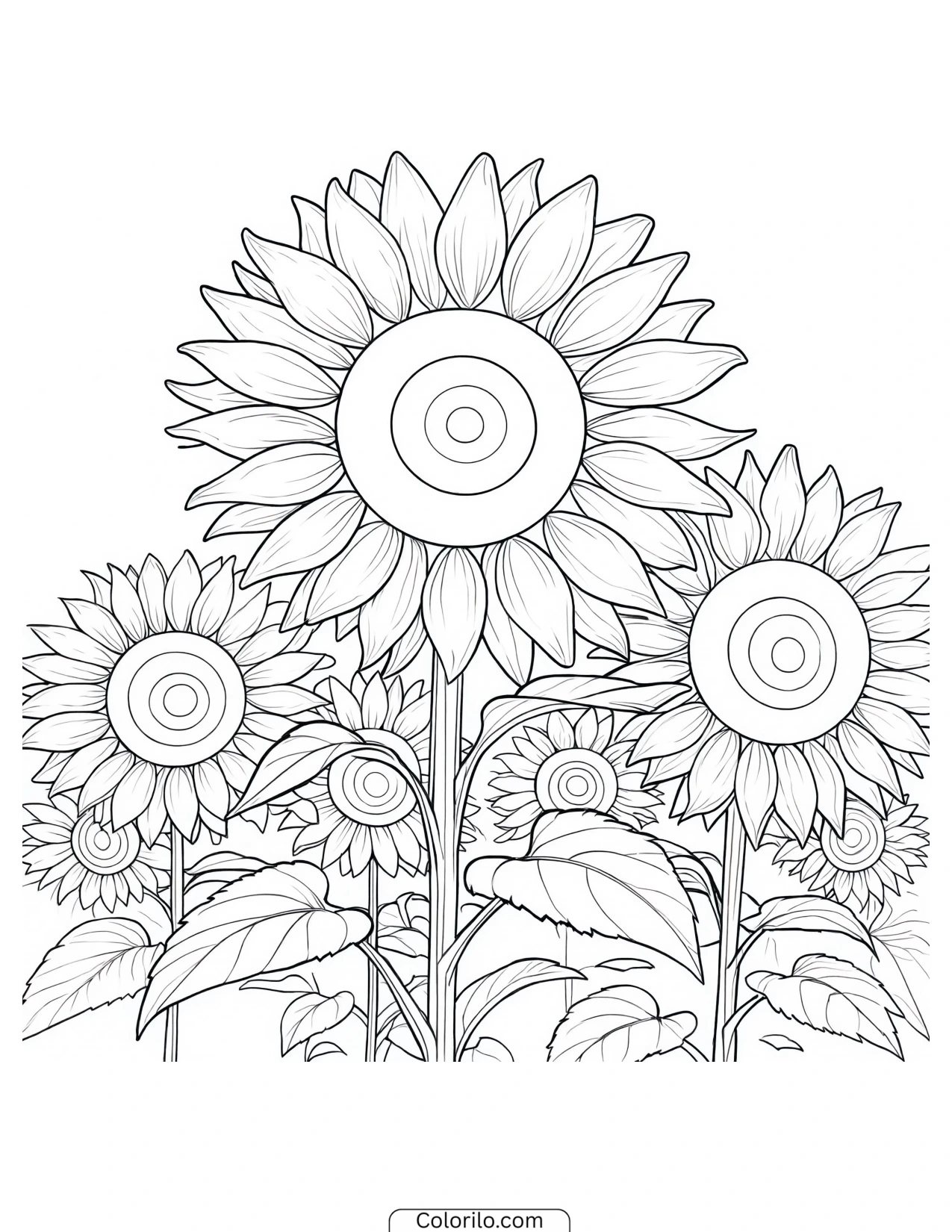
Six designs, including one close view of the head. The seeds spiral in two directions at once, in counts that follow the Fibonacci sequence, usually 34 one way and 55 the other. Young sunflowers track the sun across the sky; mature ones stop and face east permanently.
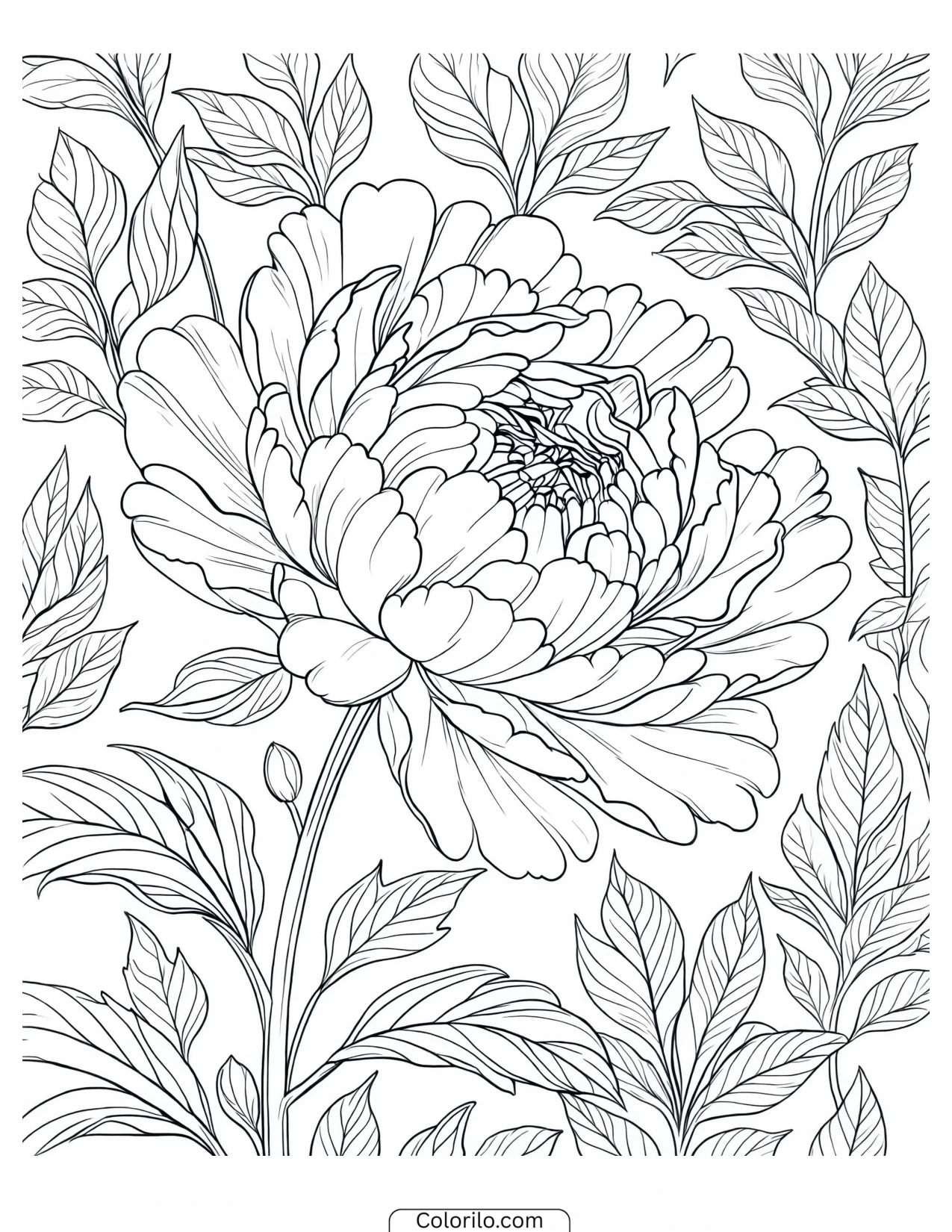
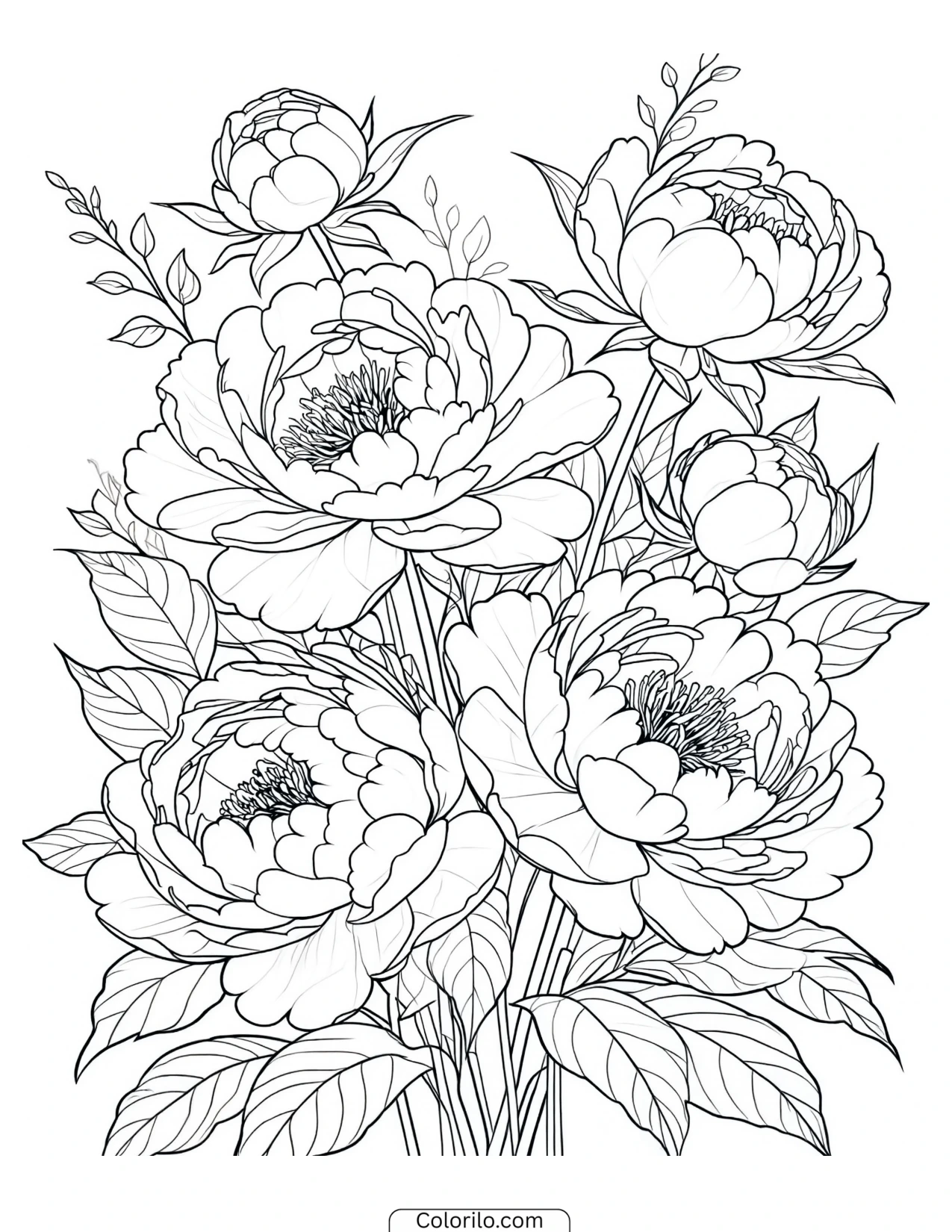
Peony
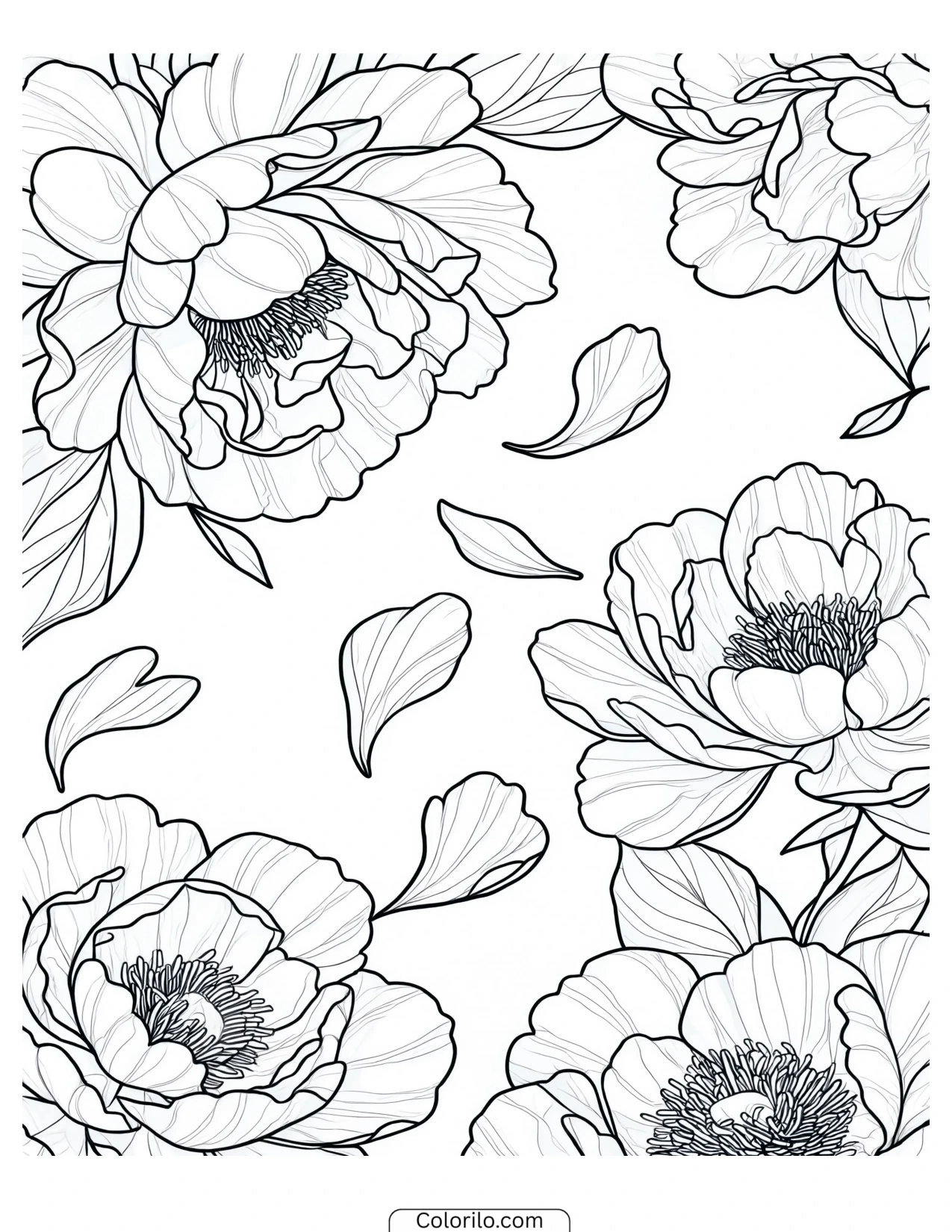
Six designs. Among the densest flowers to color, with dozens of overlapping petals, which is why one page here shows petals already falling. In Chinese tradition the peony is the flower of wealth and honour, and it was cultivated in imperial gardens for over a thousand years.
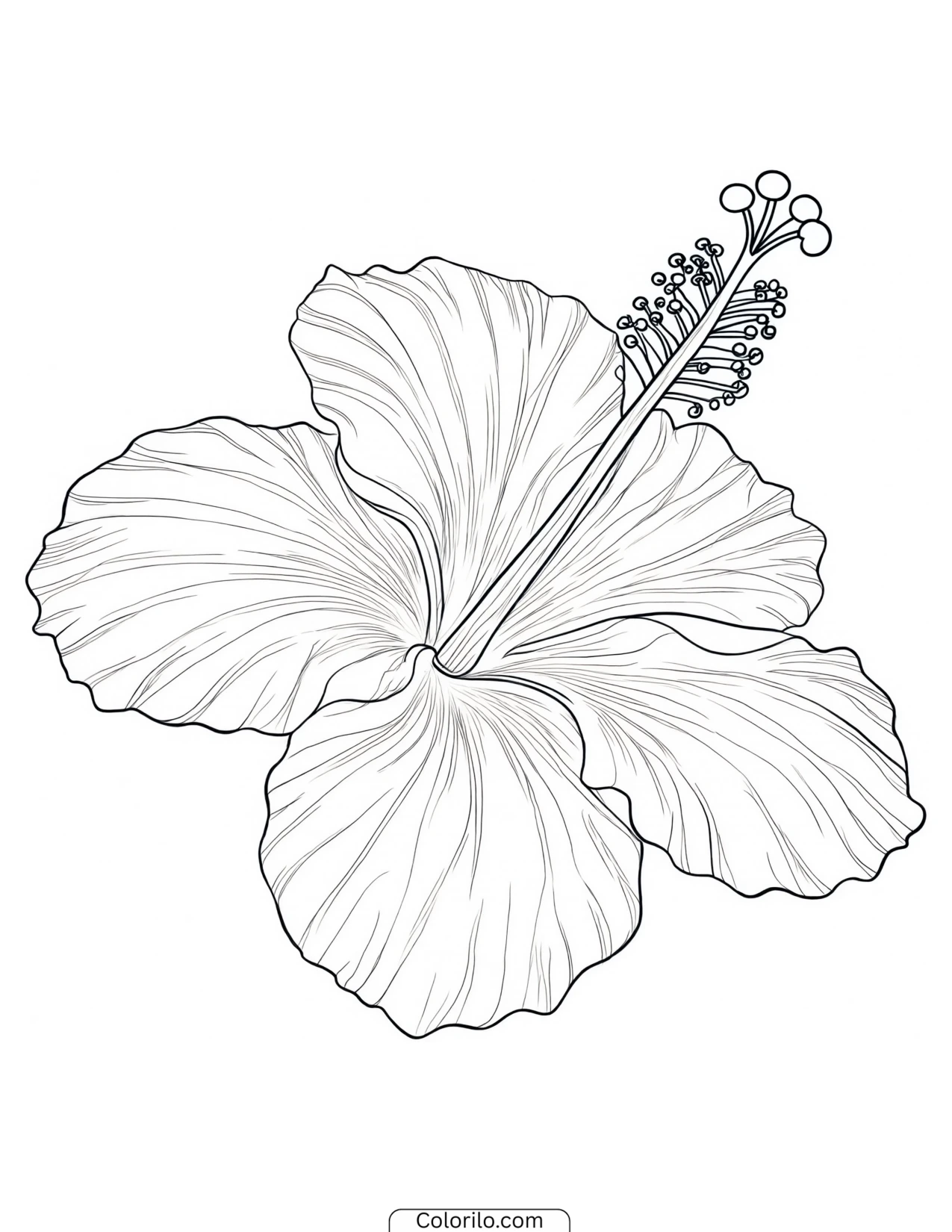
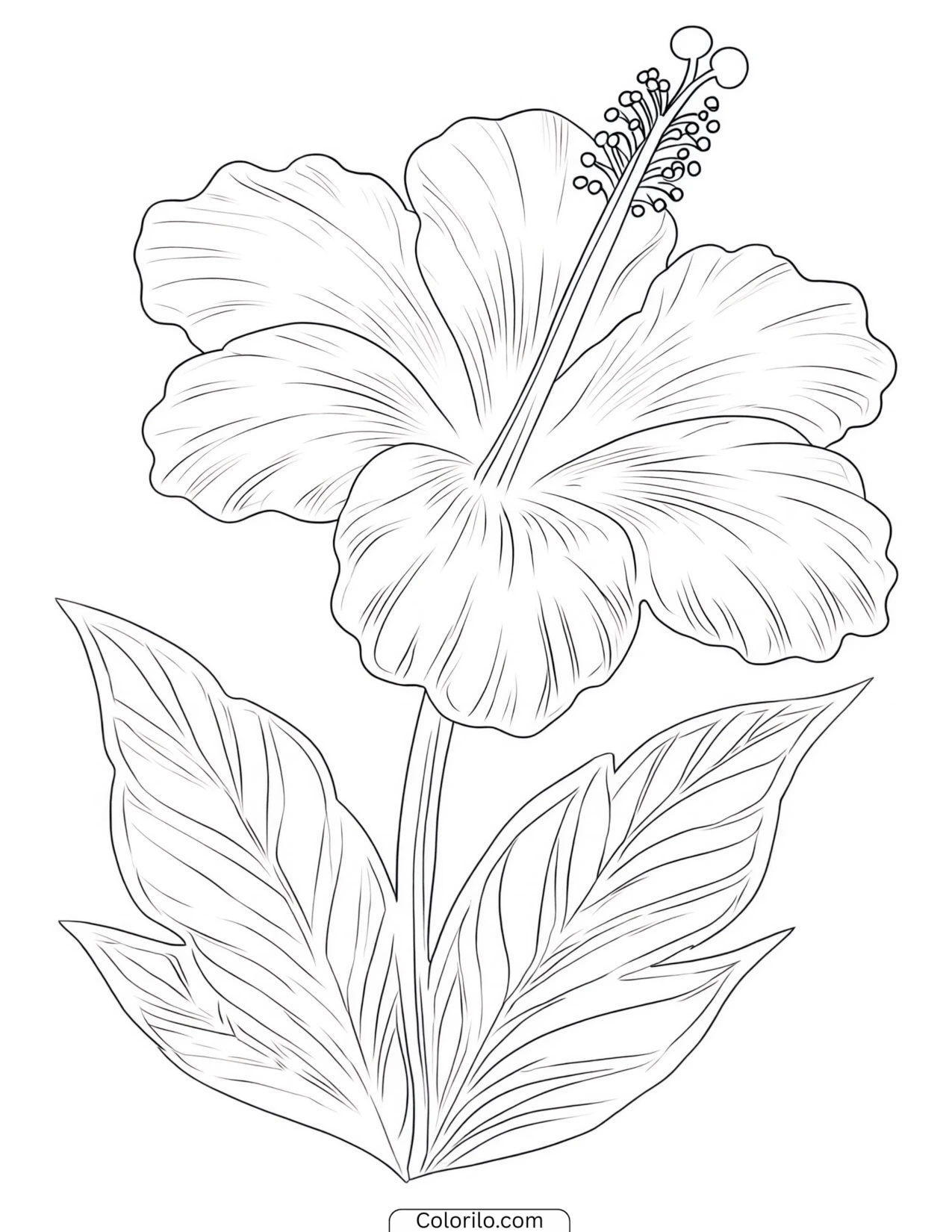
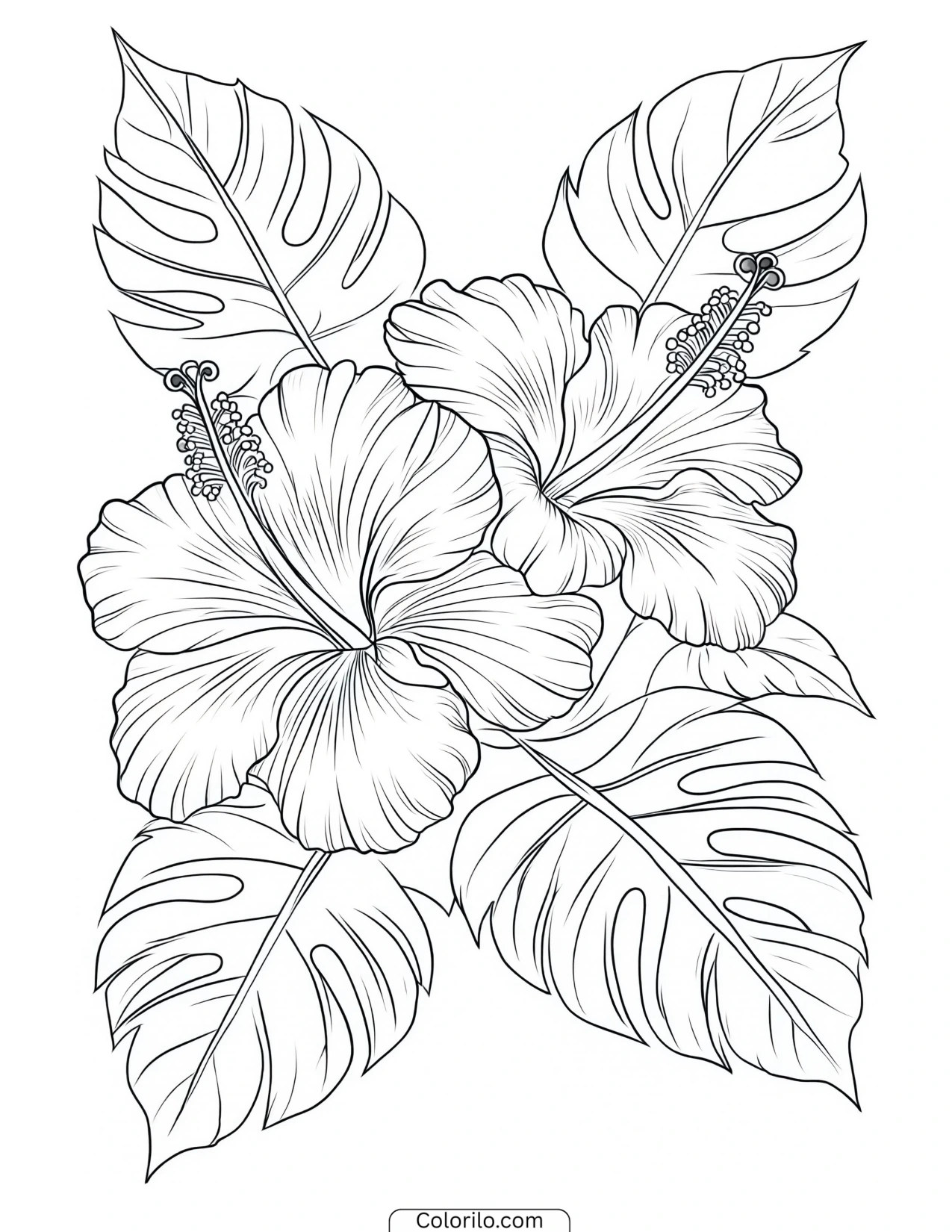
Hibiscus
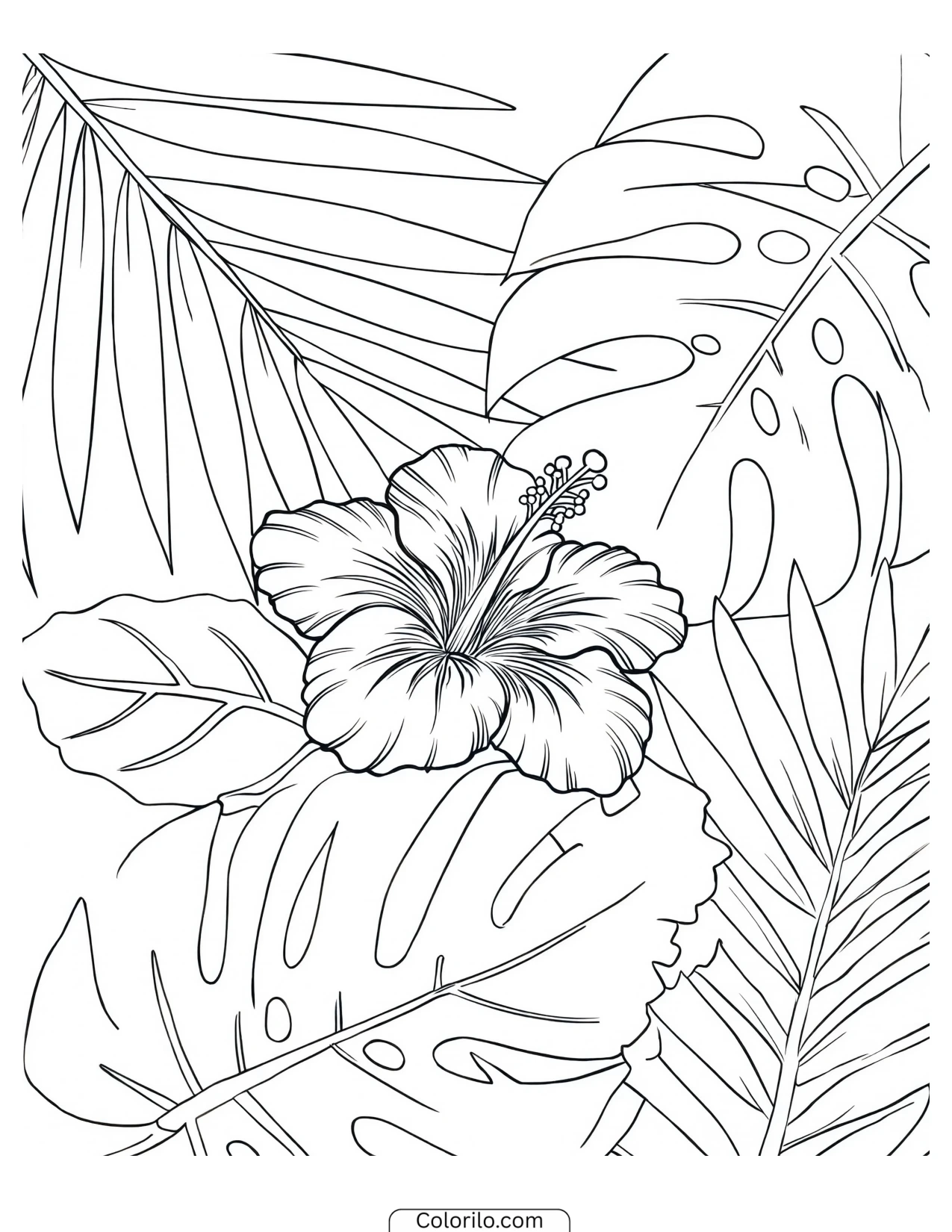
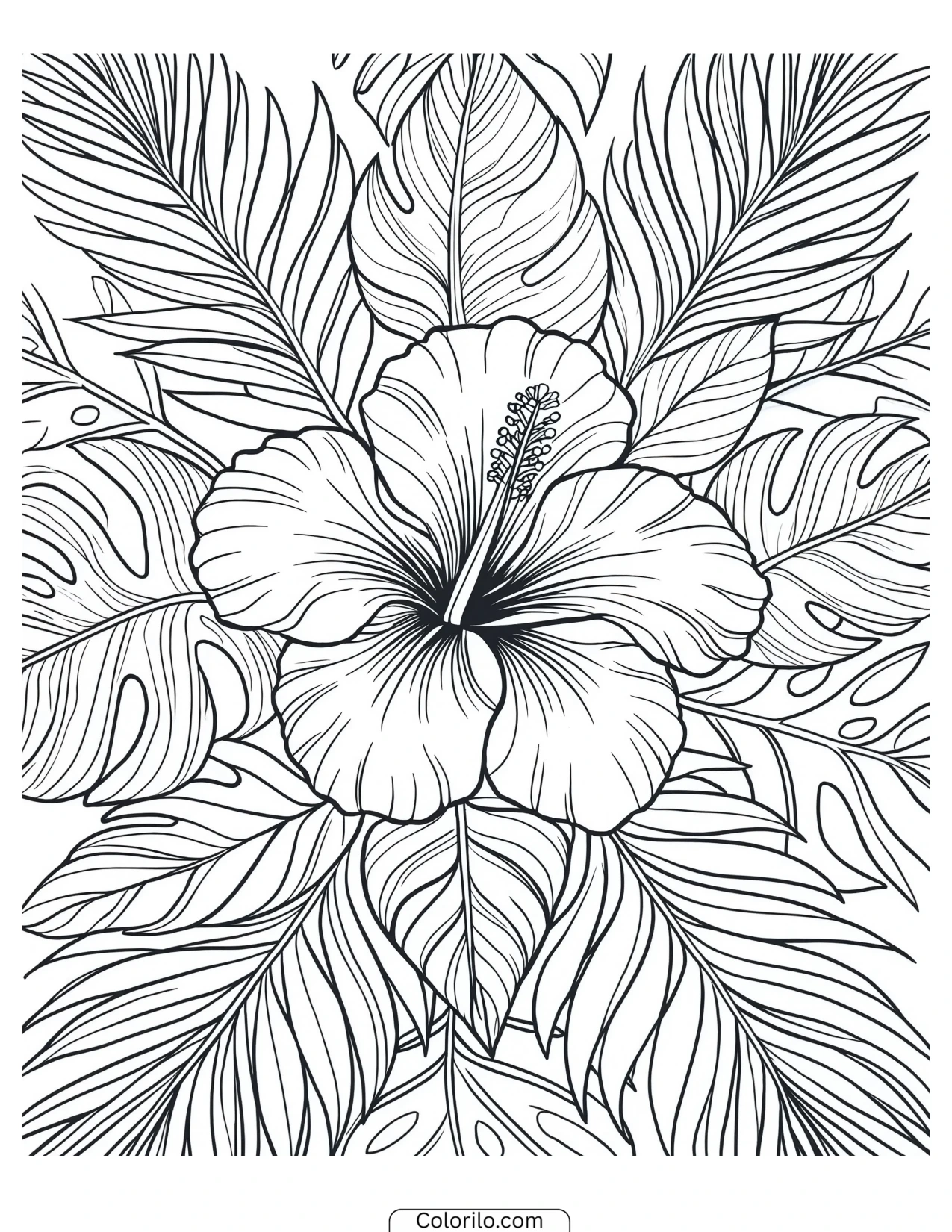
Six designs, several set among tropical foliage including monstera leaves. Each hibiscus bloom typically lasts a single day. The long central column is the giveaway feature and worth colouring last.
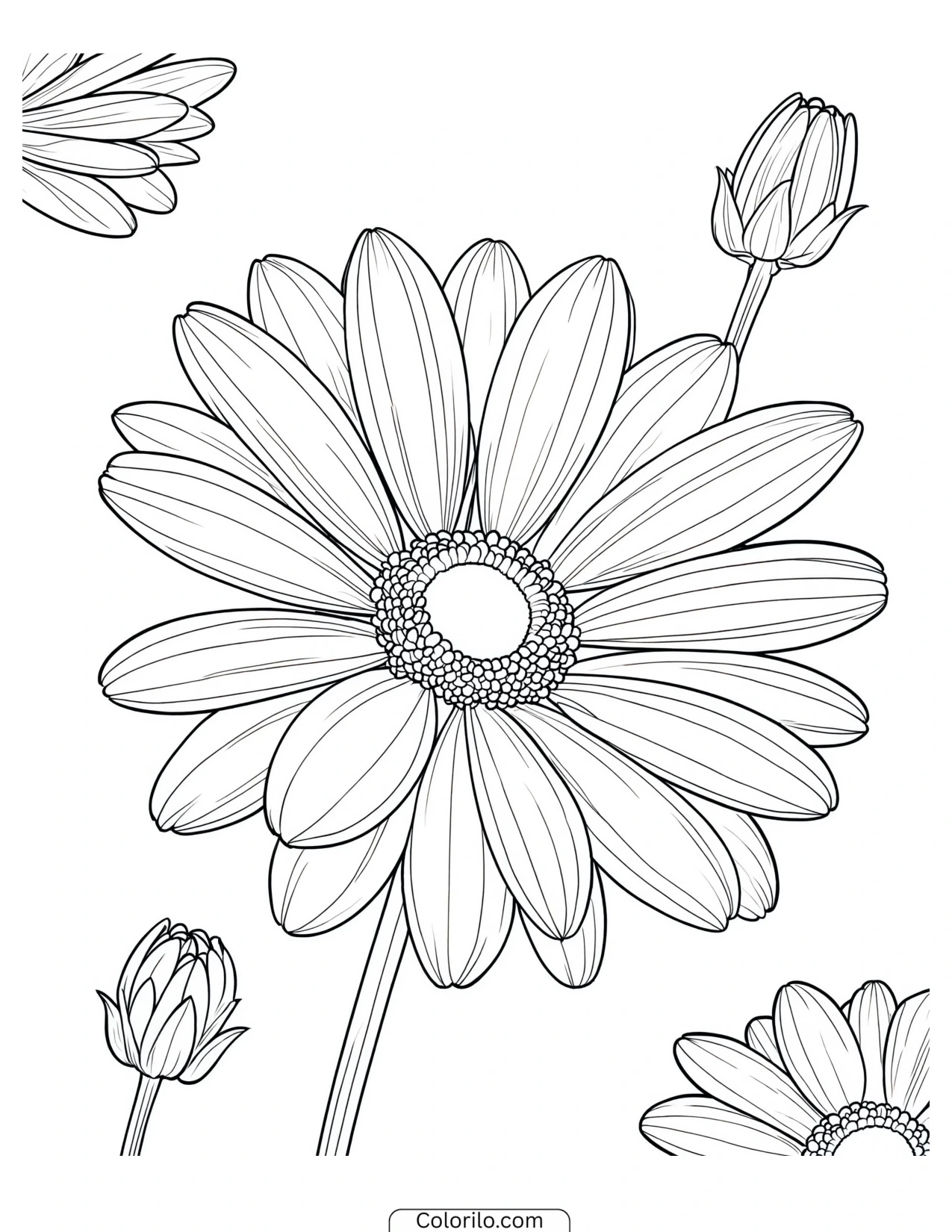
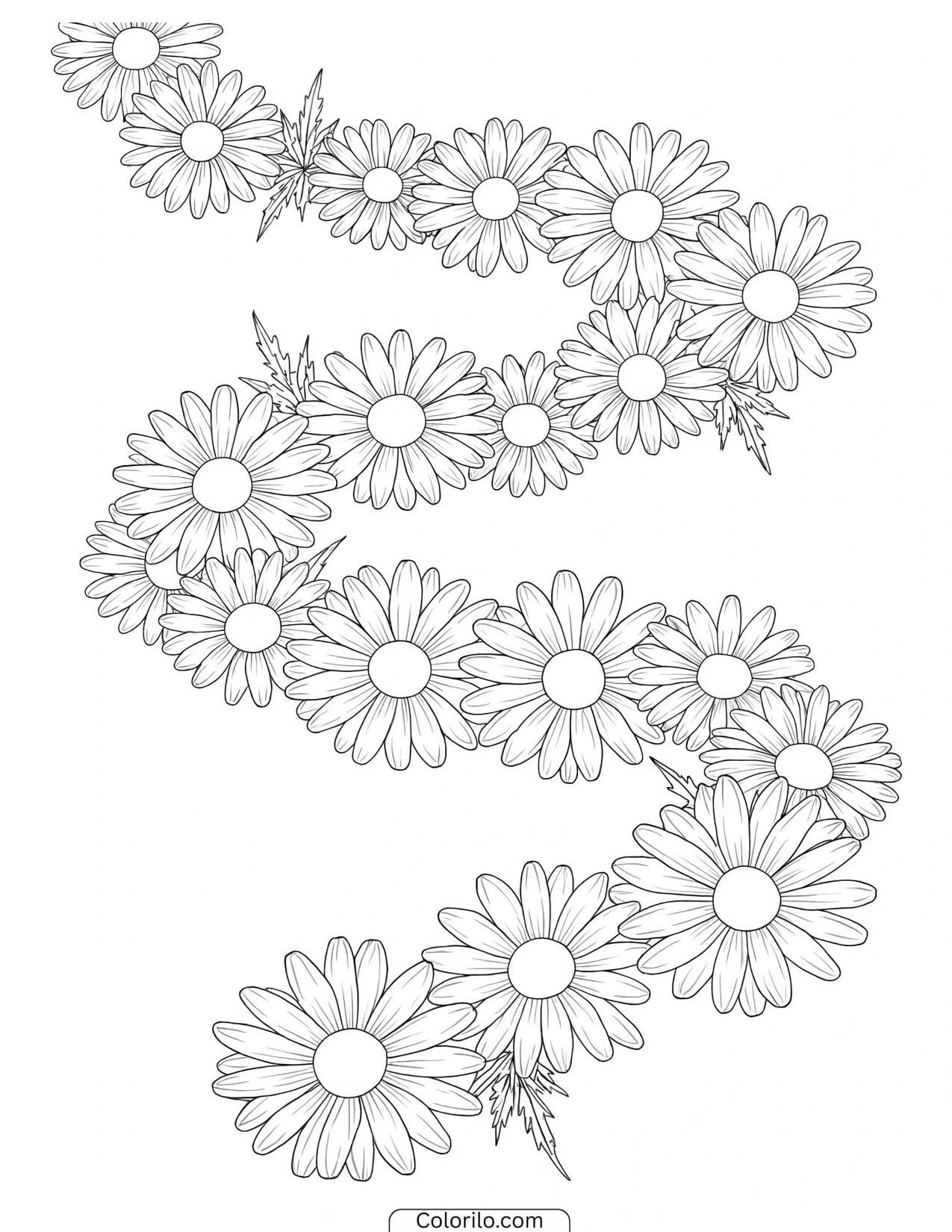
Daisy
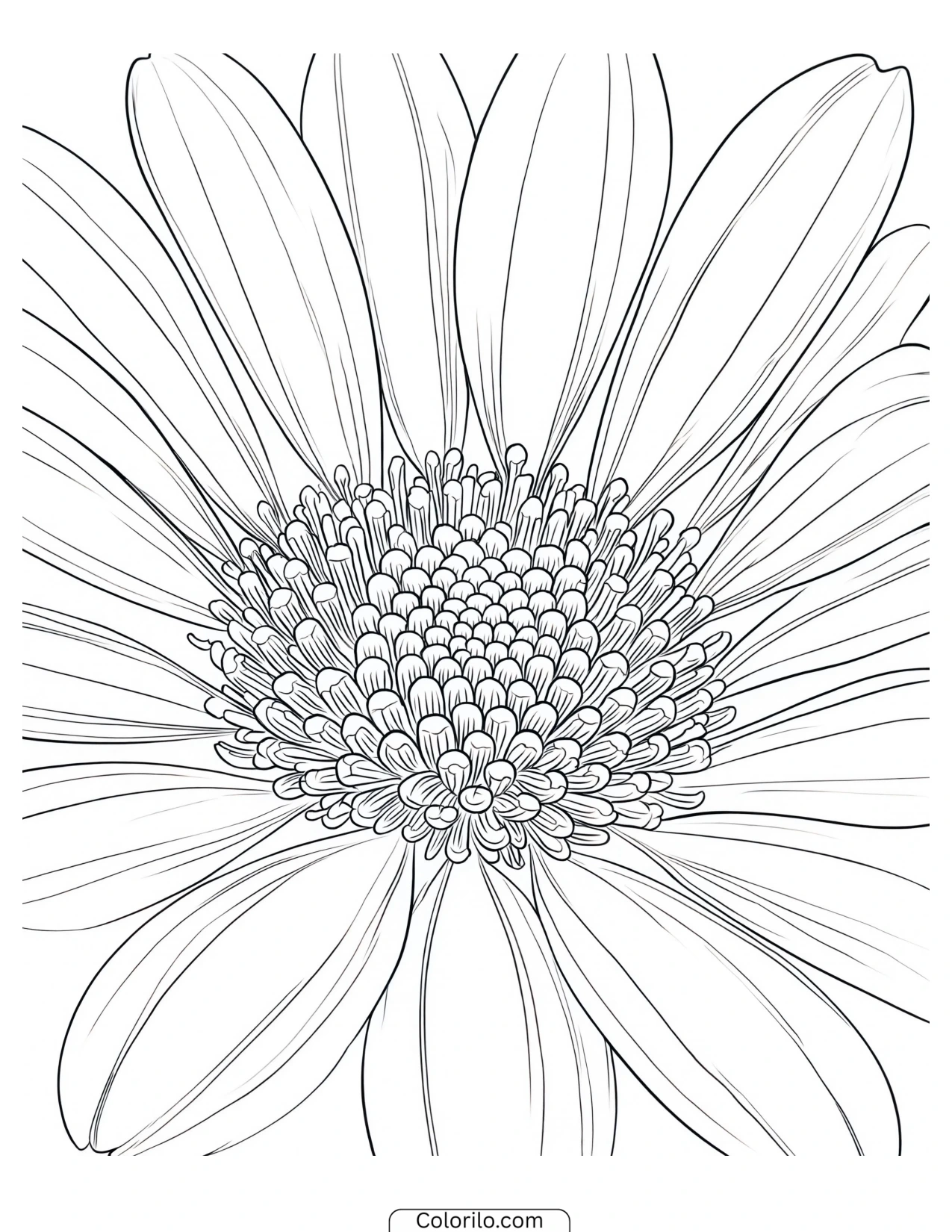
Seven designs. What reads as one flower is actually many: the yellow centre is a cluster of tiny individual florets, each a complete flower. Simple shapes make these the most beginner-friendly pages in the set.
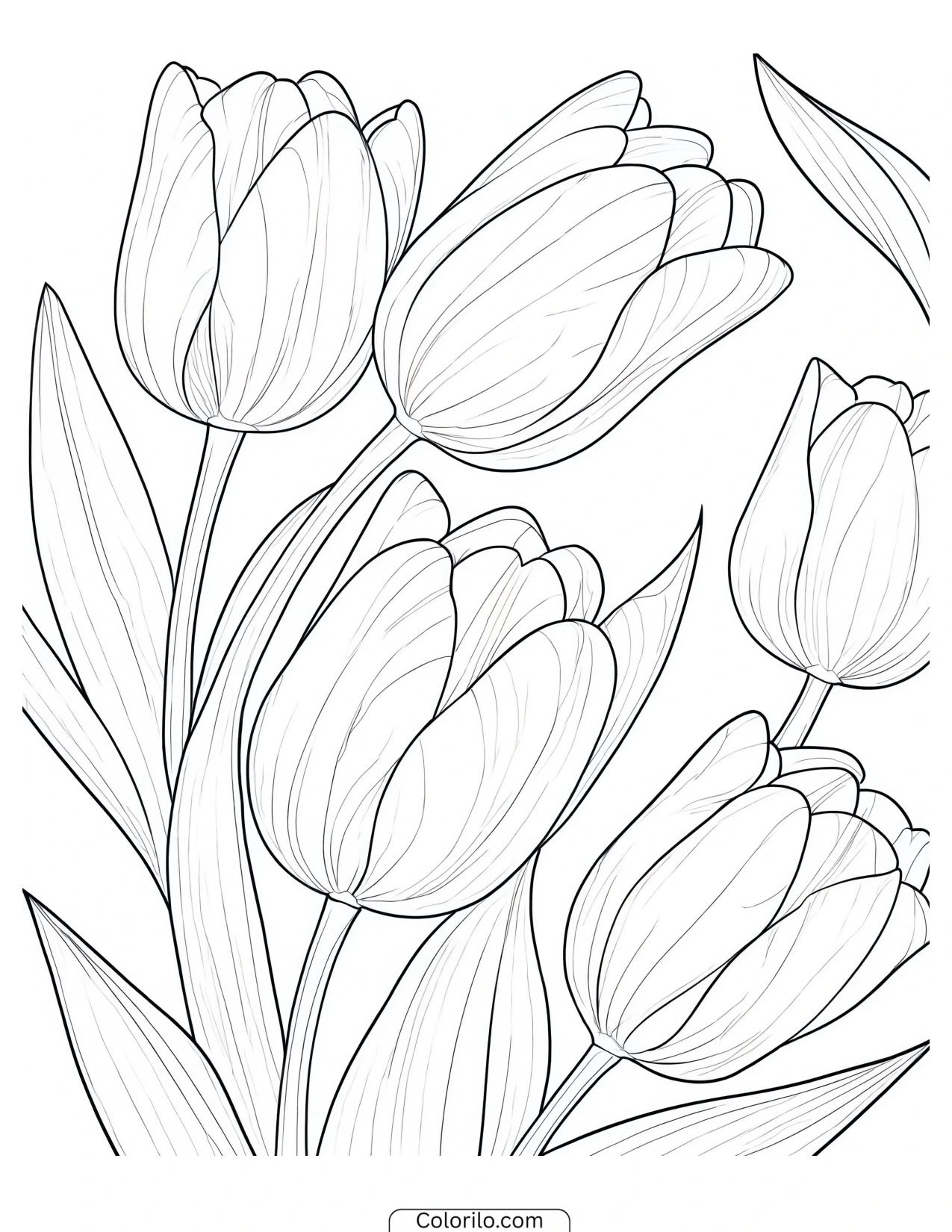
Tulip
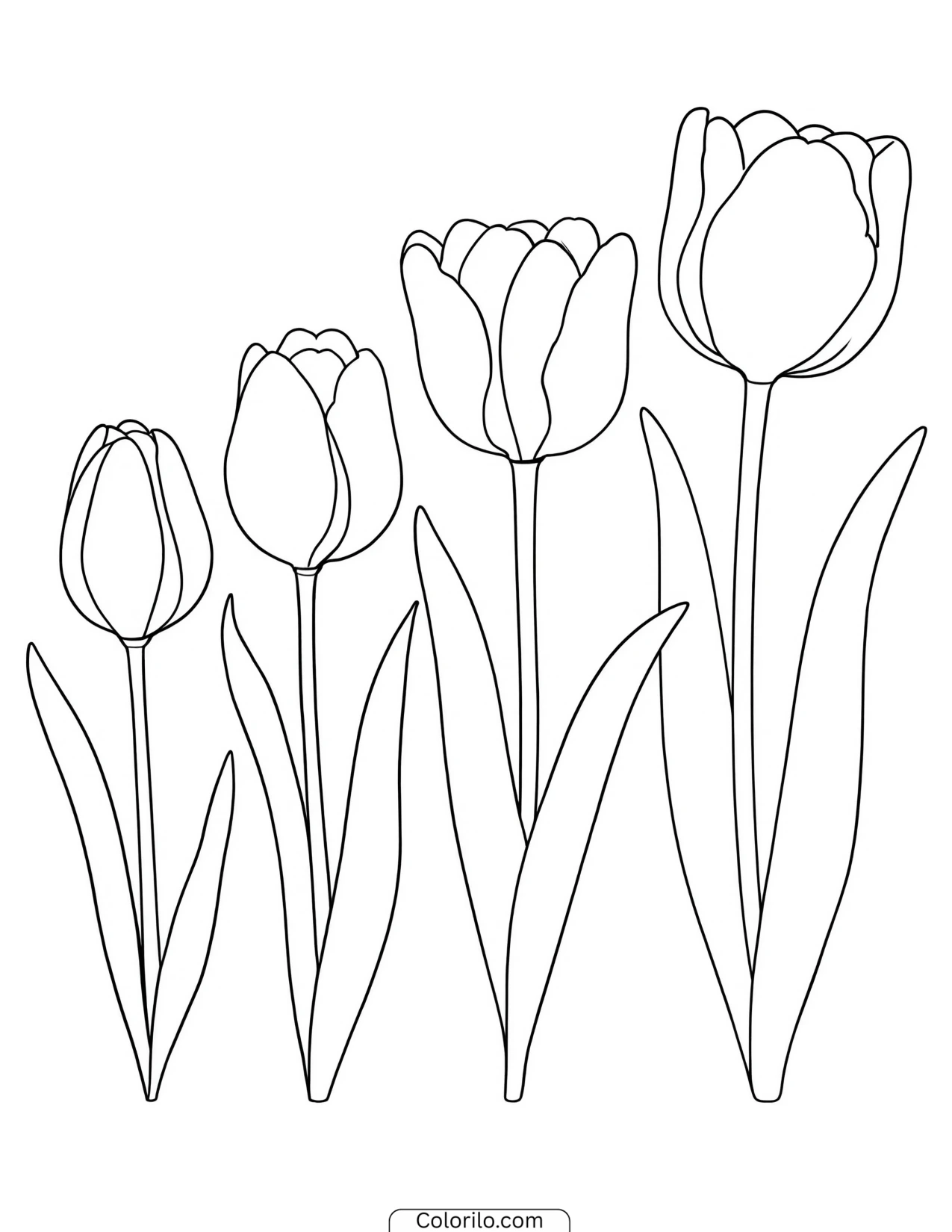
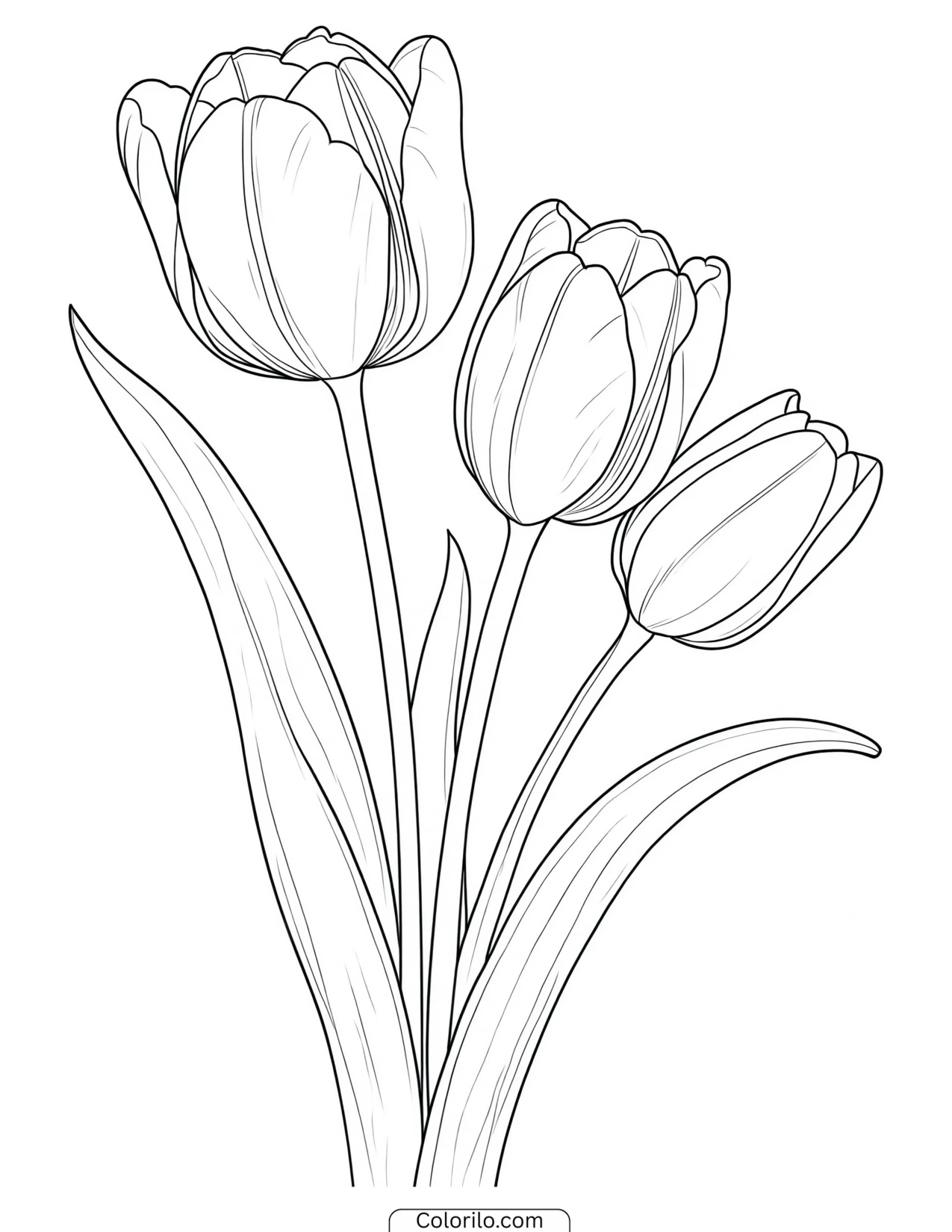
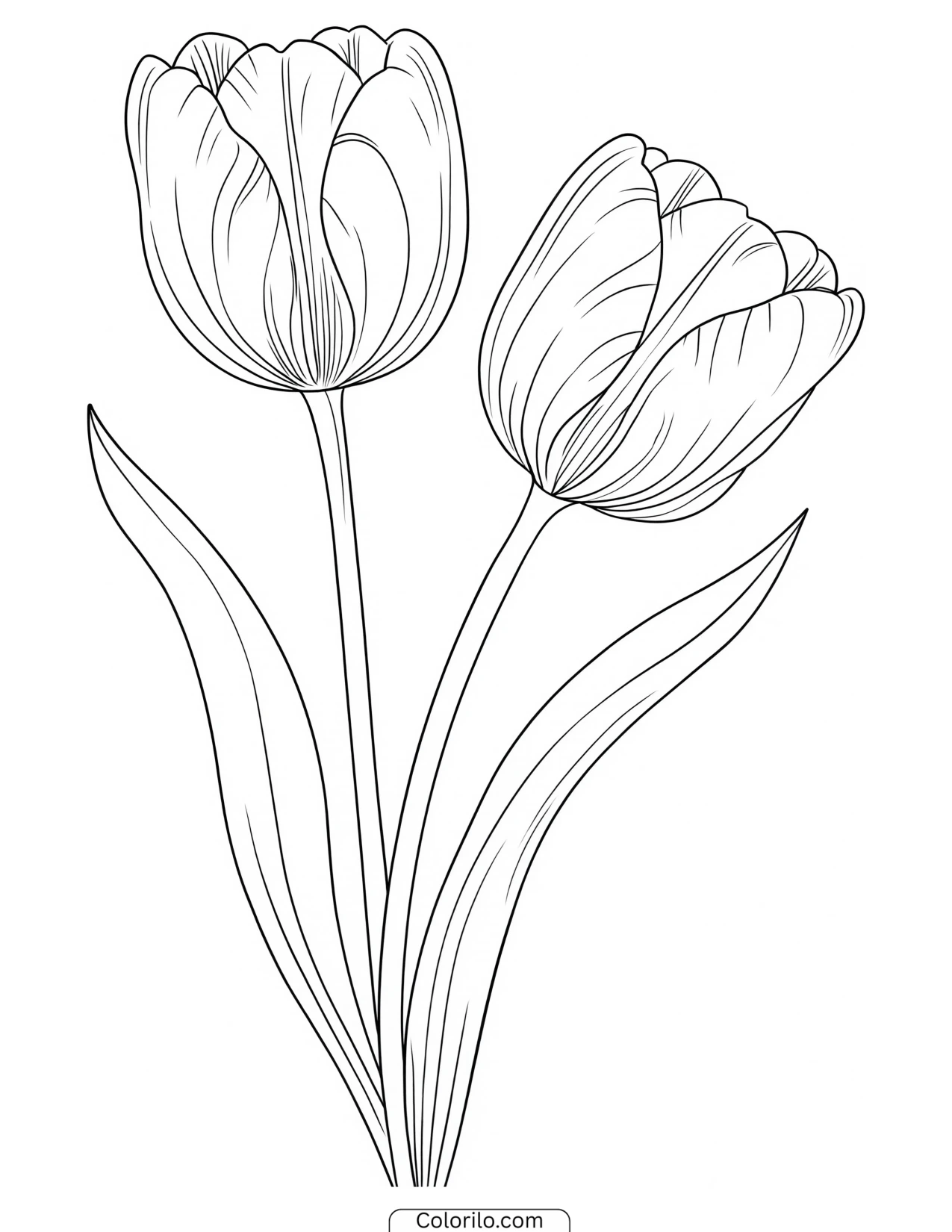
Five designs. Tulips triggered the first recorded speculative market collapse, in the Dutch Republic in 1637, when single bulbs briefly traded for the price of a house. The clean cup shape colors easily in flat blocks.
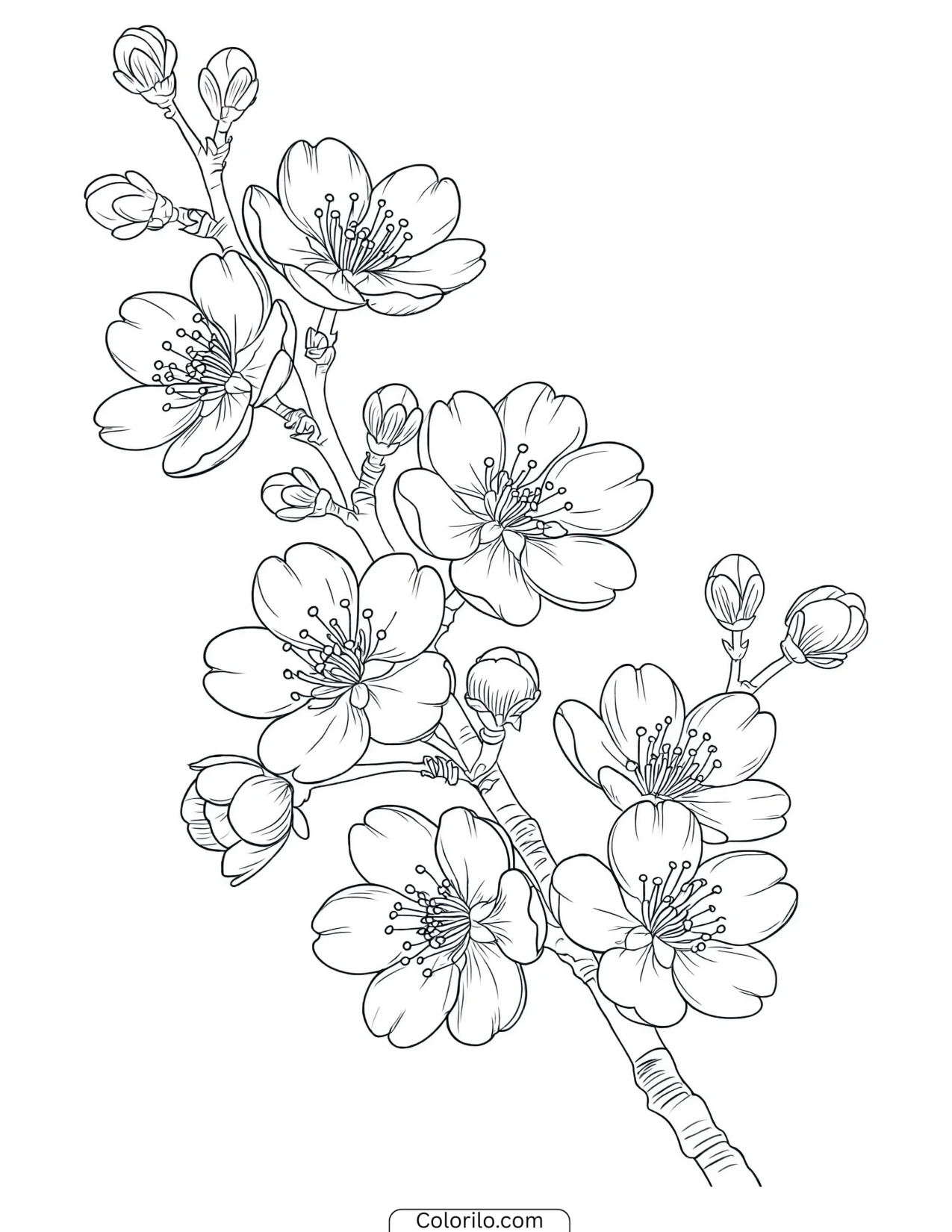
Cherry blossom
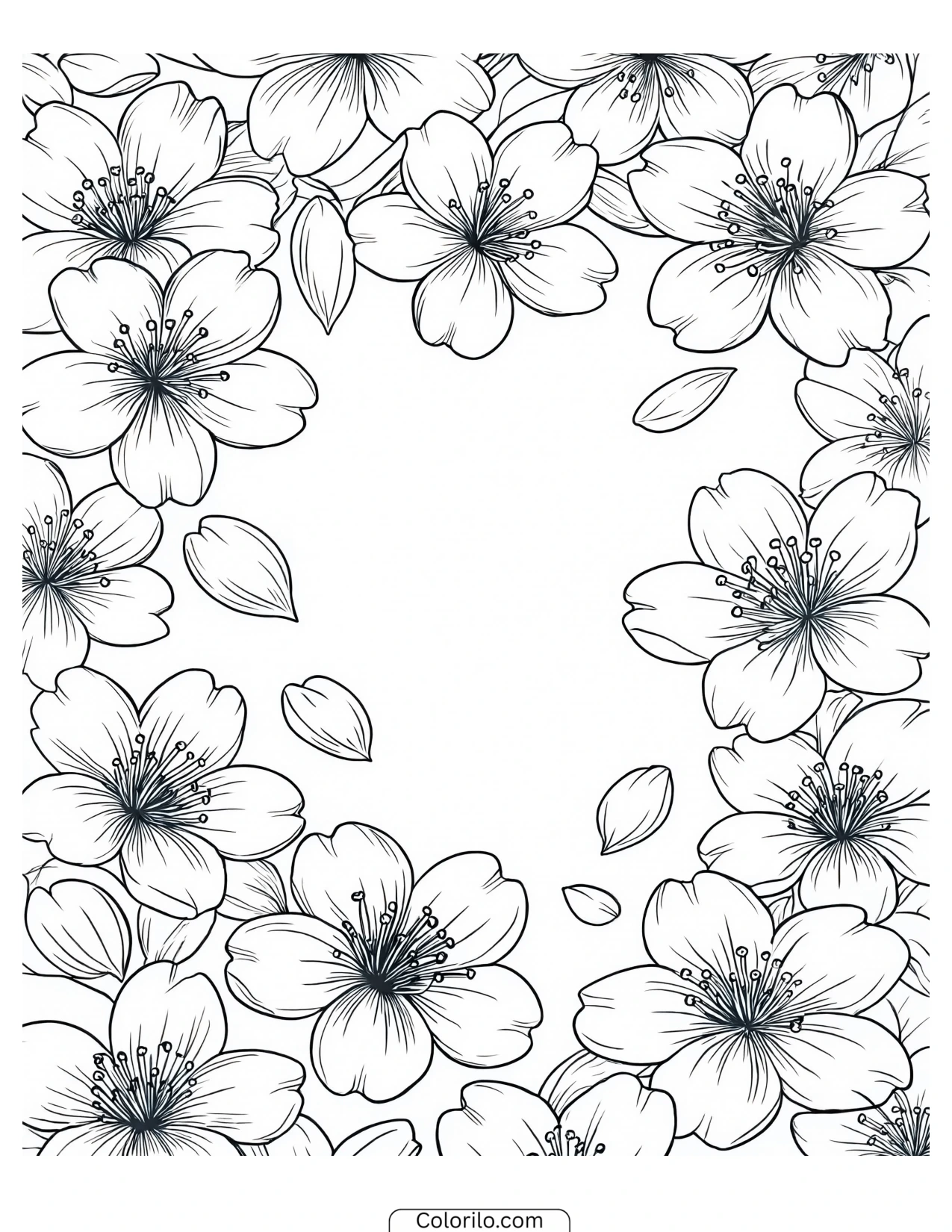
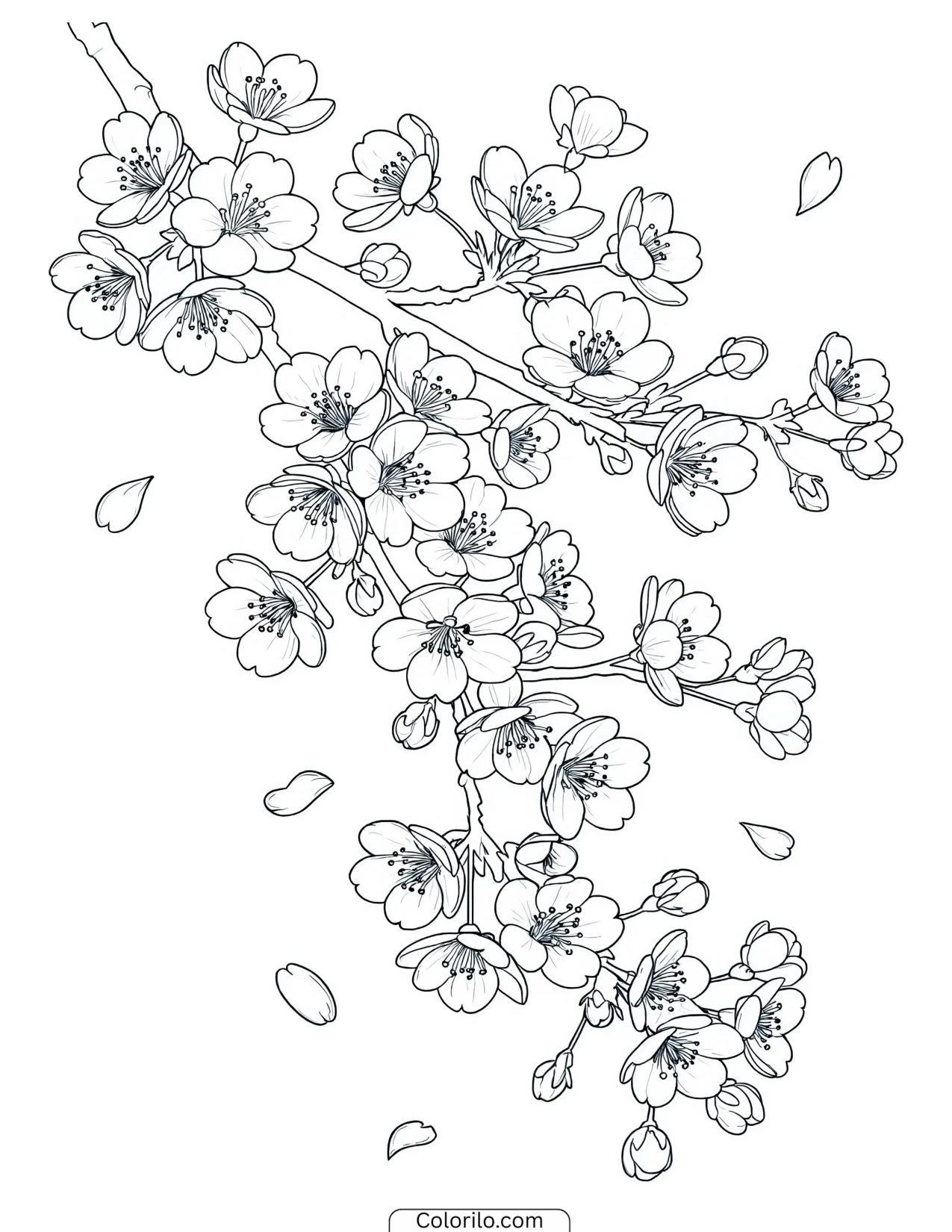
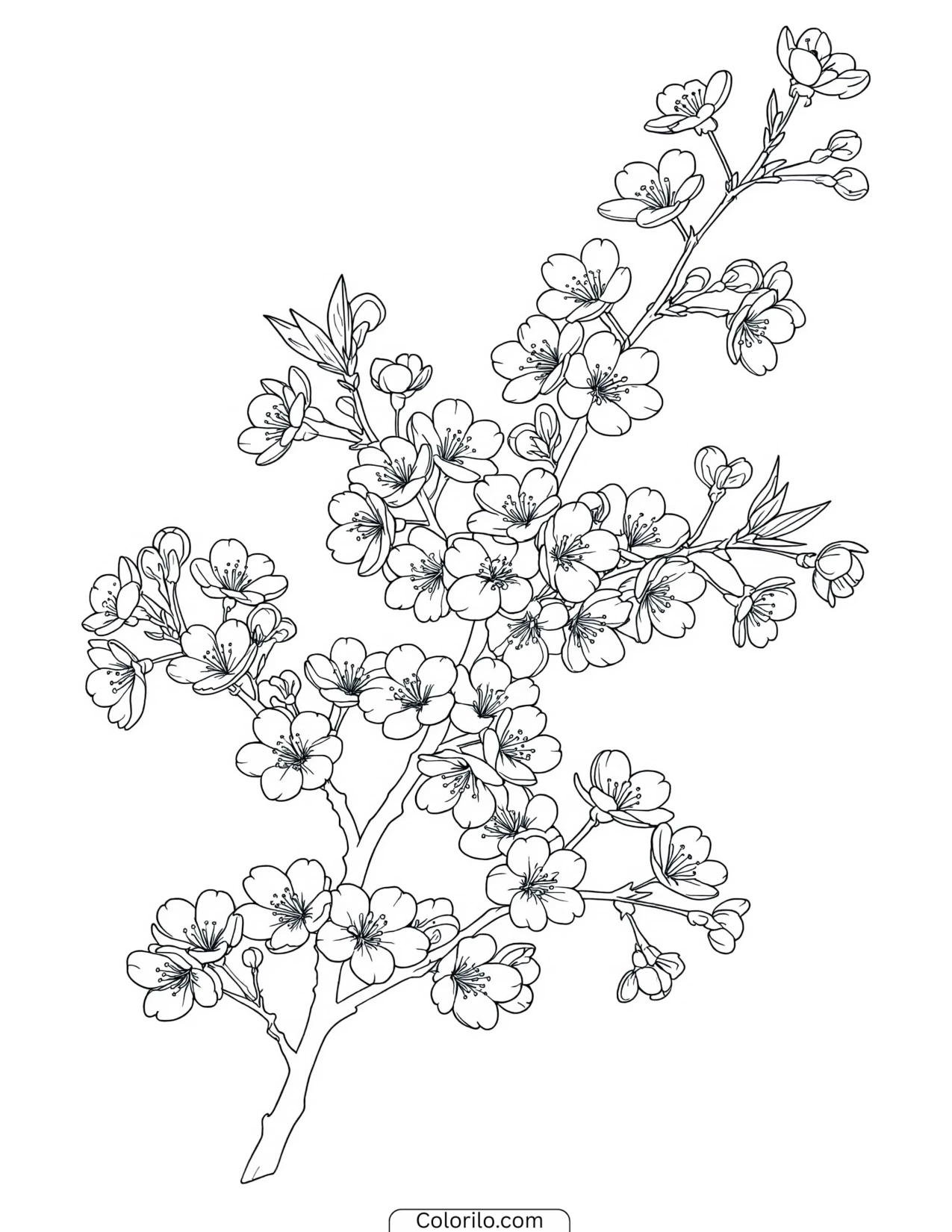
Five designs, two as page borders. Called sakura in Japan, where their brief flowering, often little more than a week, became a centuries-old symbol of how quickly beautiful things pass.
Lotus
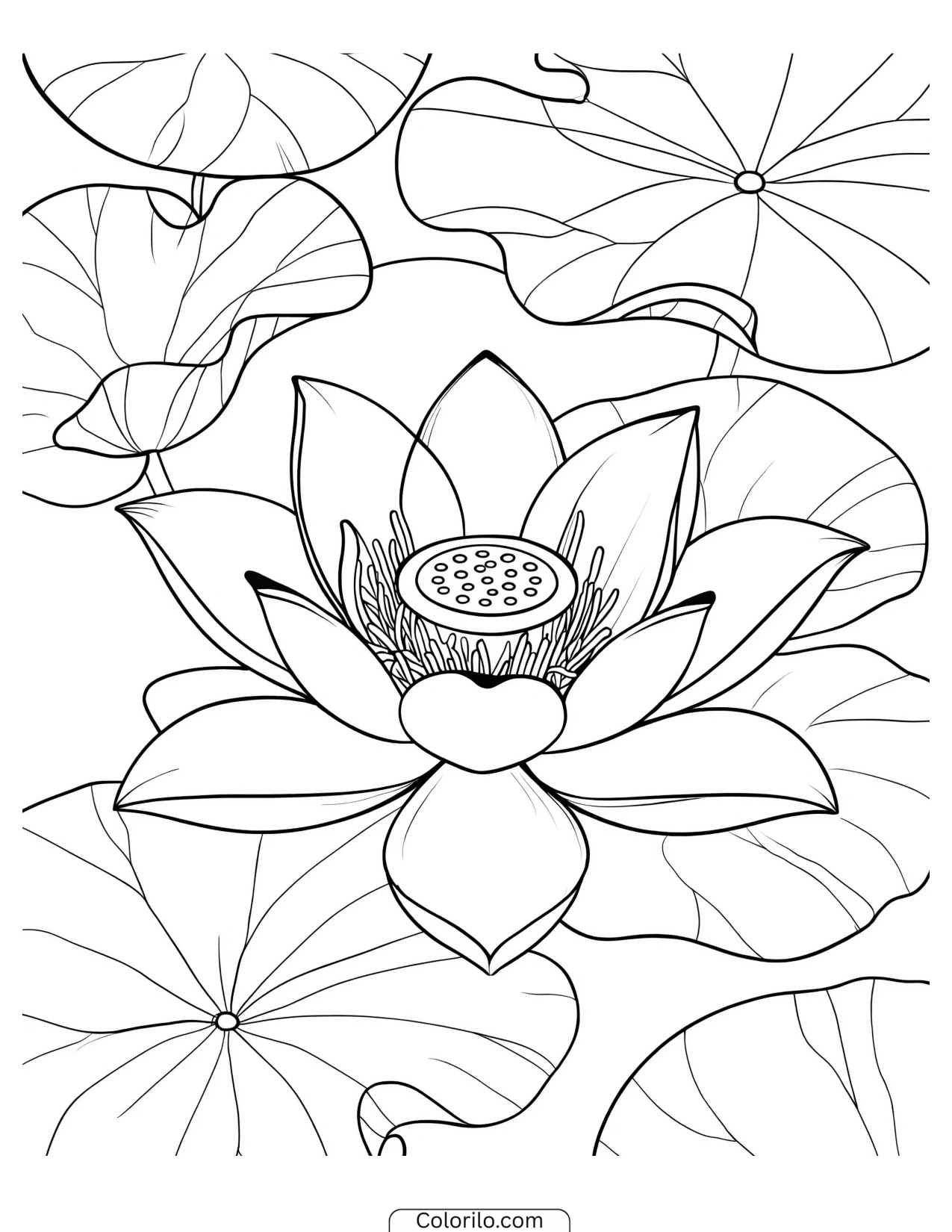
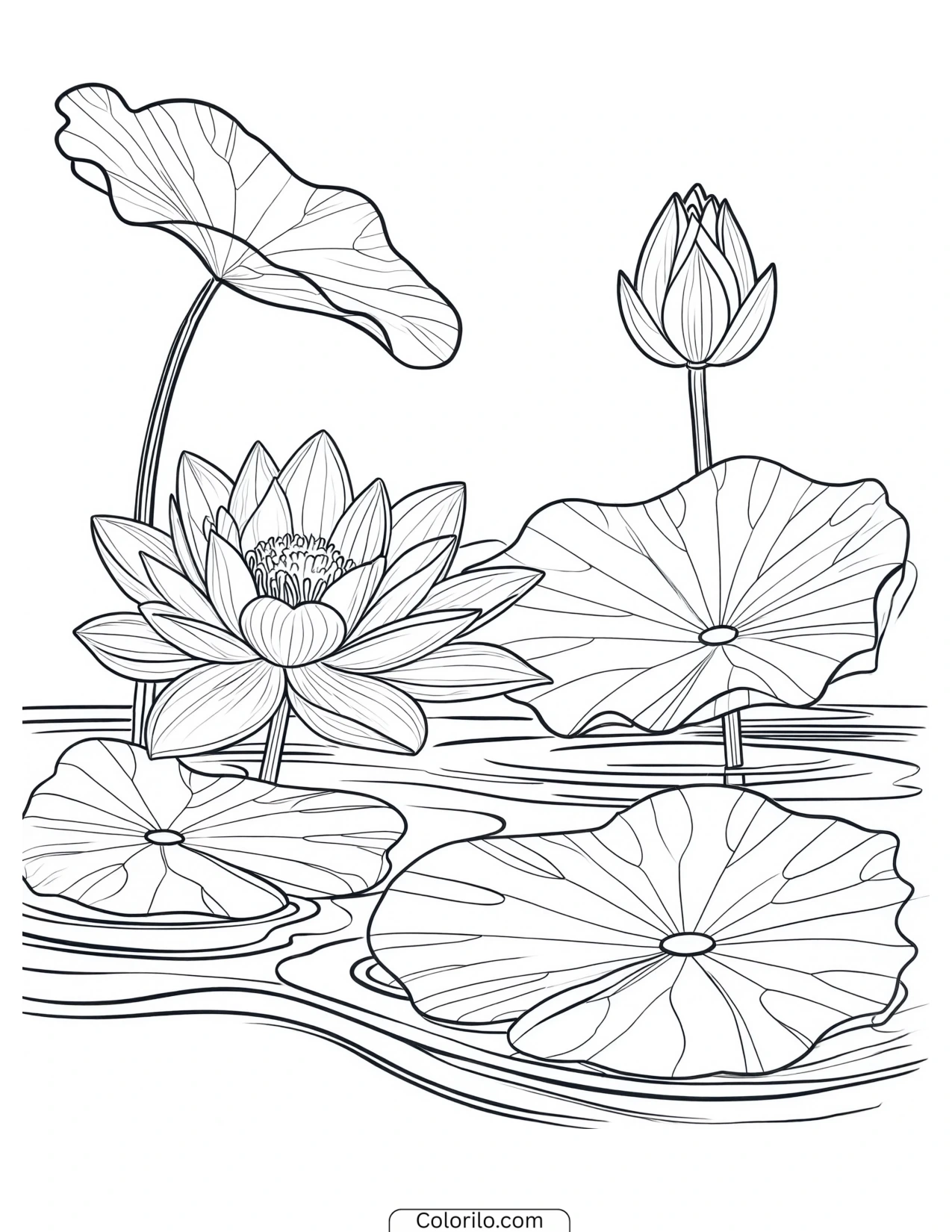
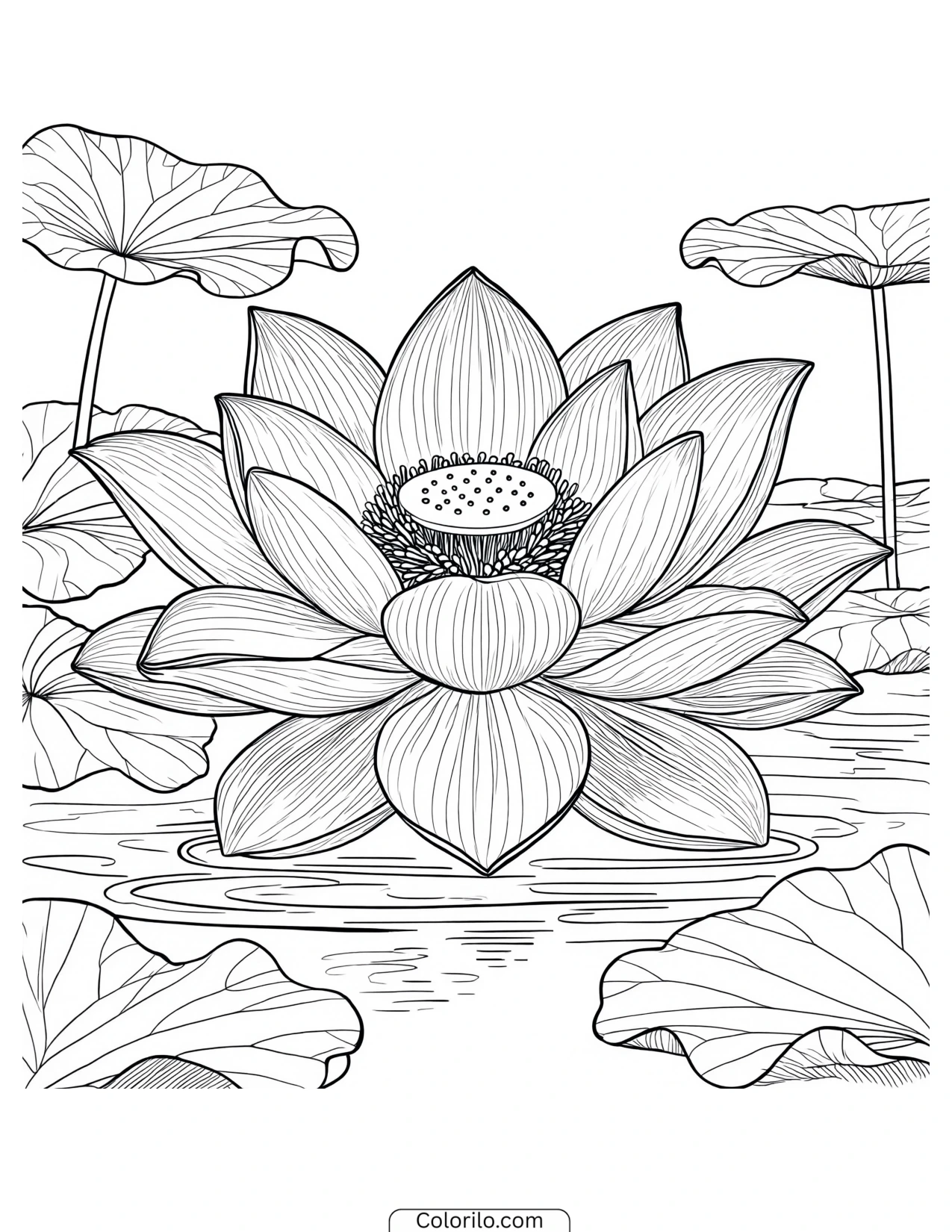
Four designs. Lotus flowers rise out of muddy water and open clean, which underpins their symbolism across Buddhist and Hindu traditions. Their leaves are so water-repellent that the effect is now studied and copied in materials science.
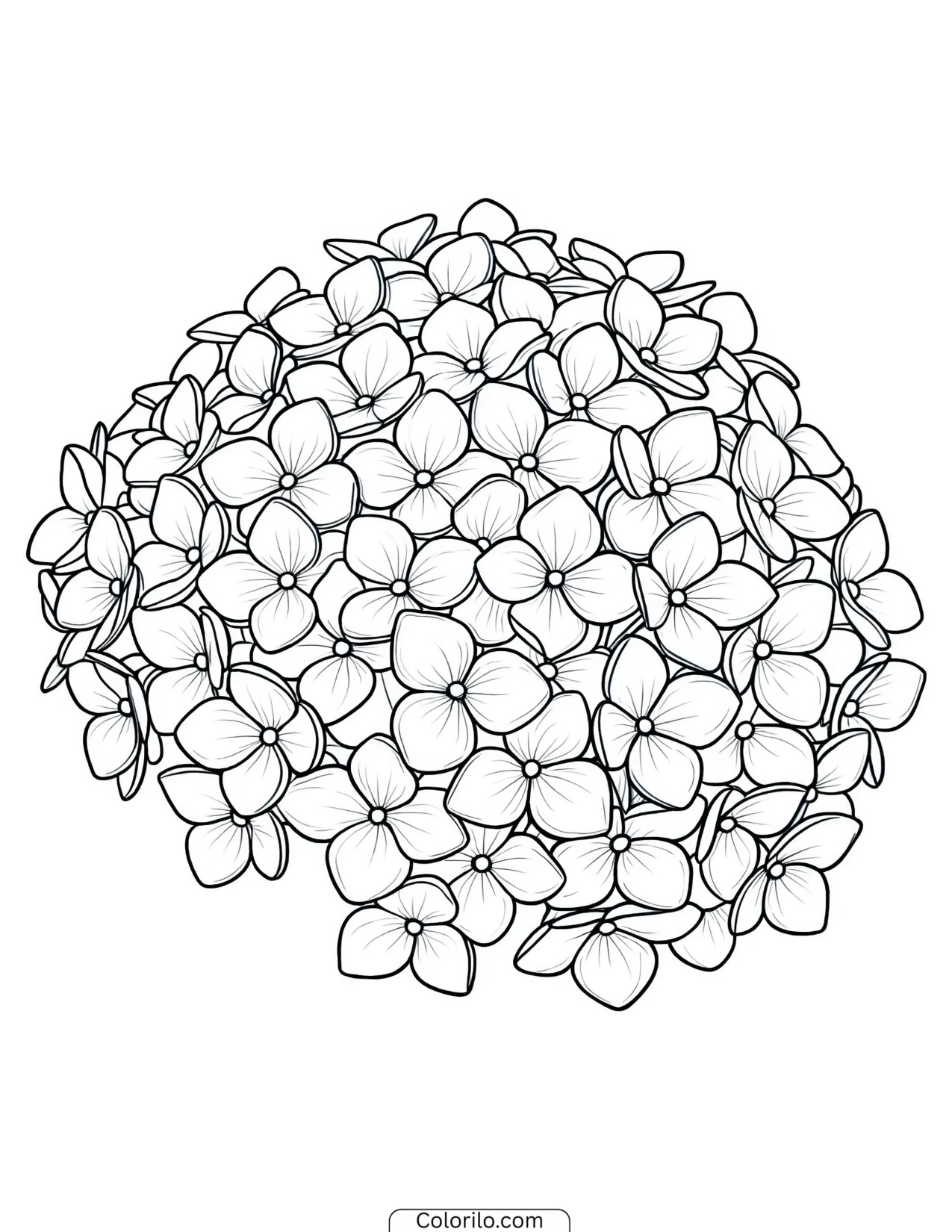
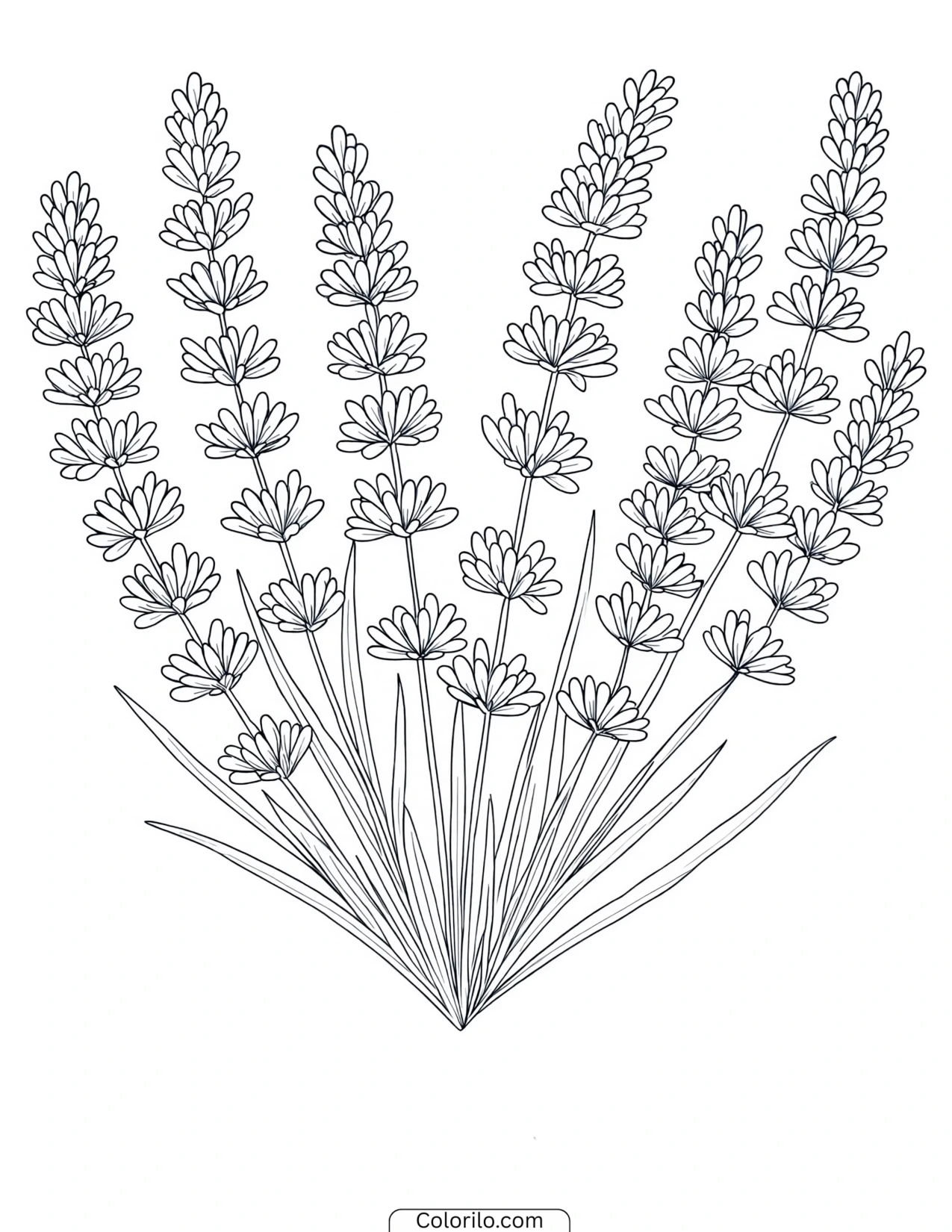
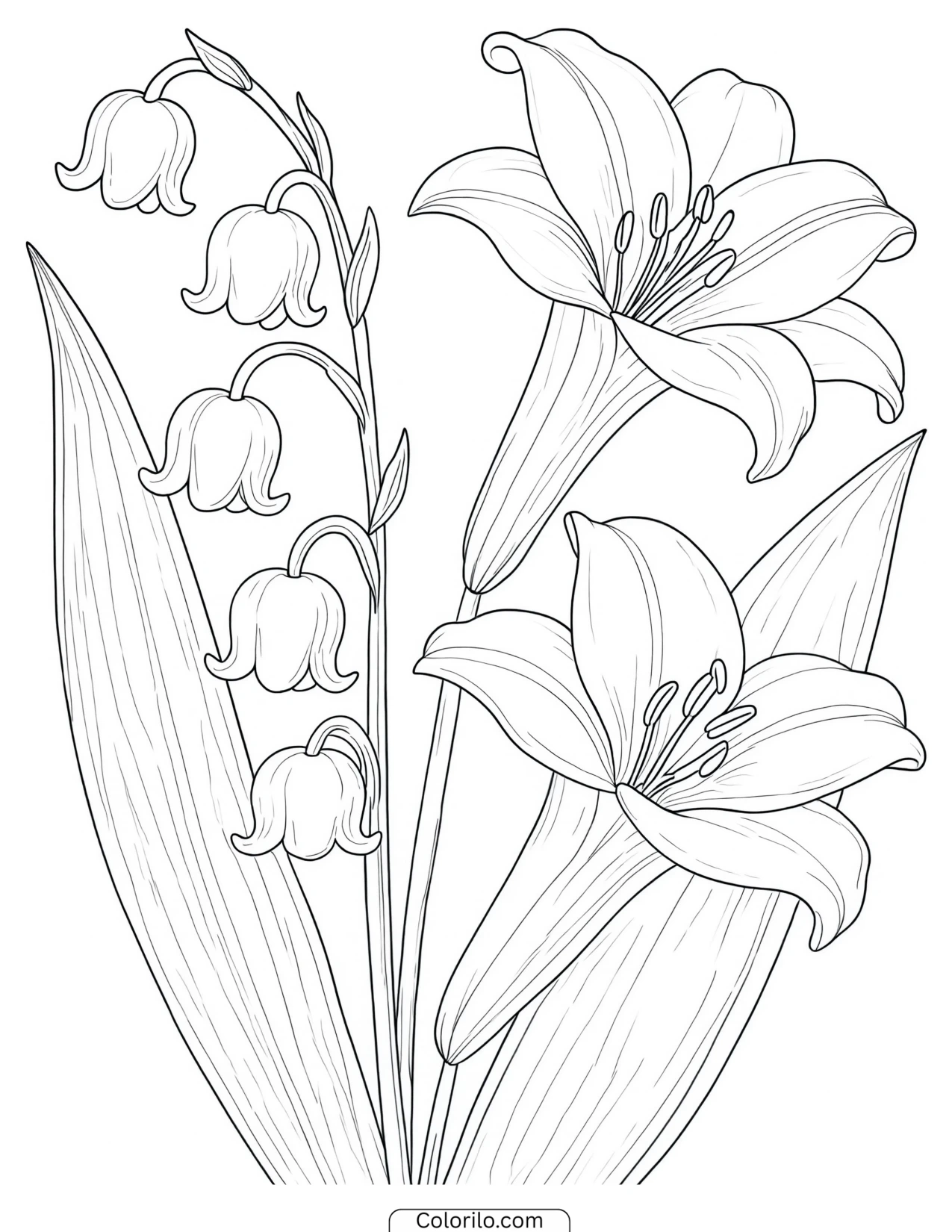
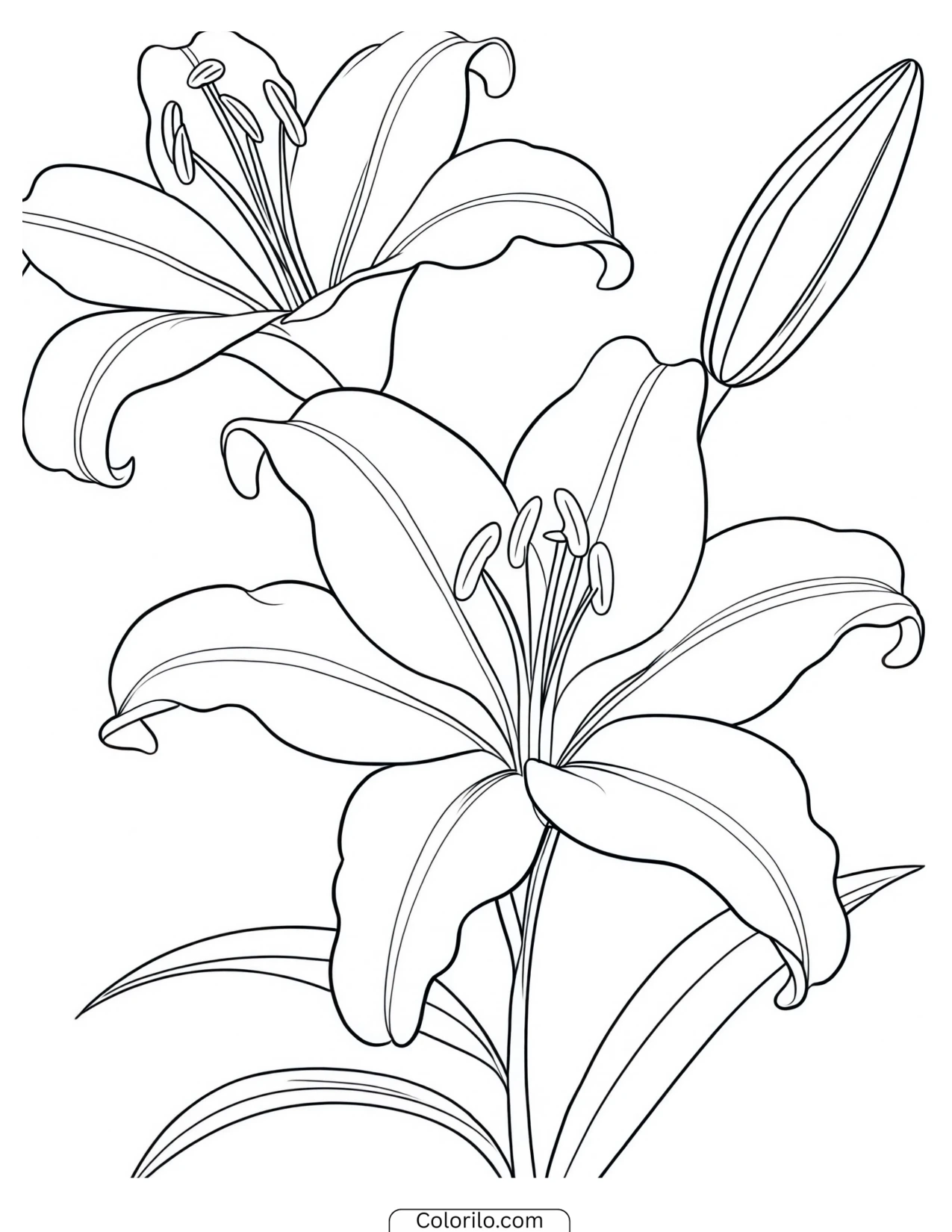
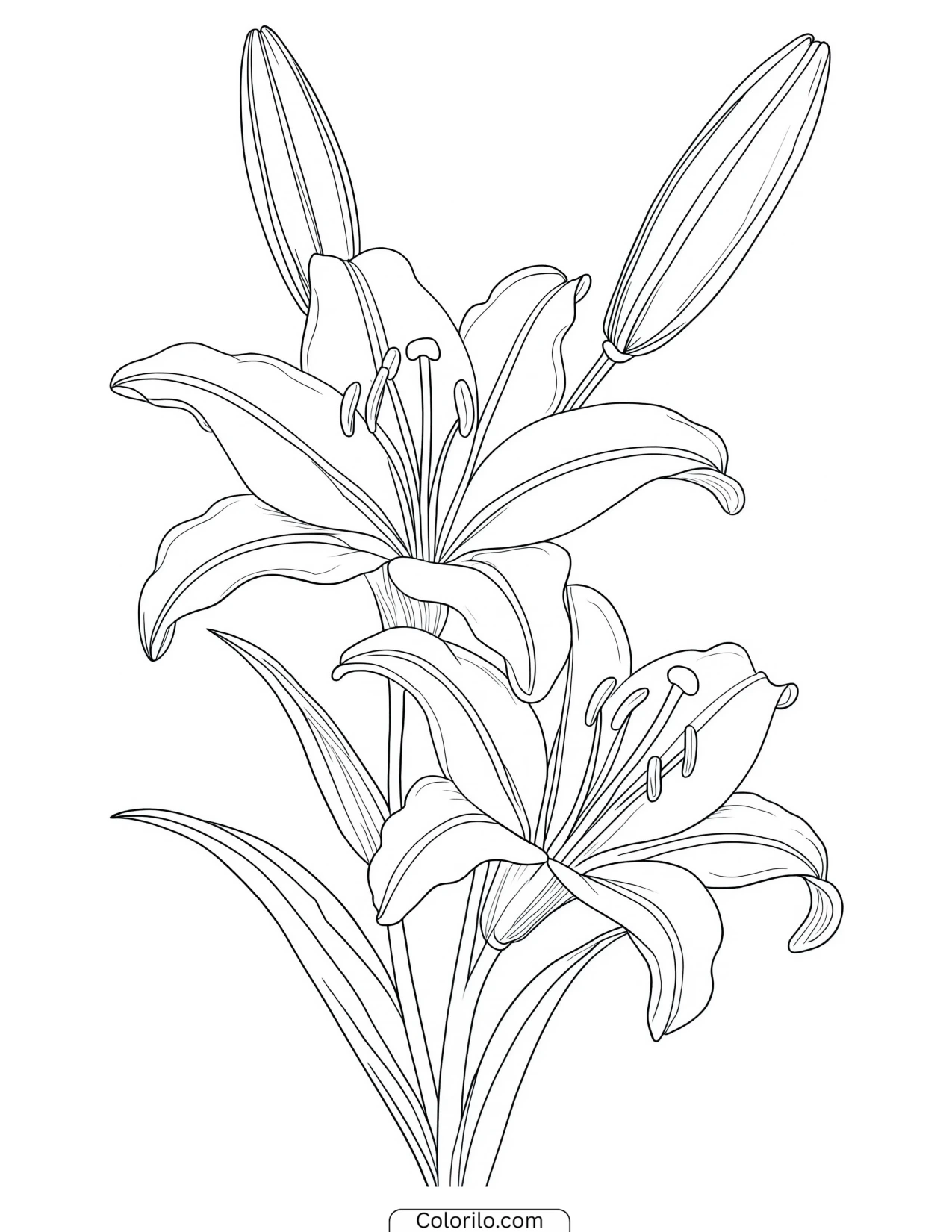
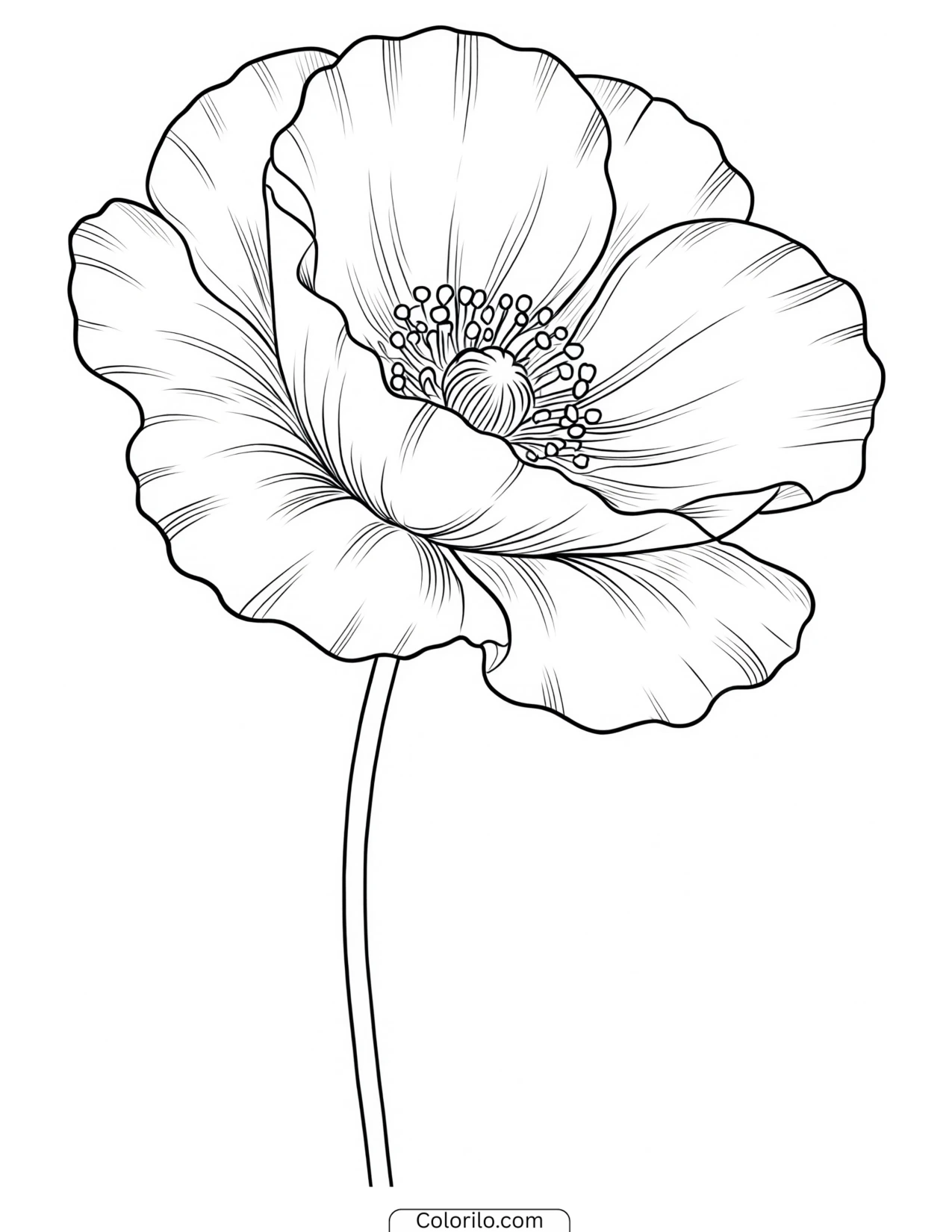
Poppy, lavender, dahlia, hydrangea, lily, camellia, anemone
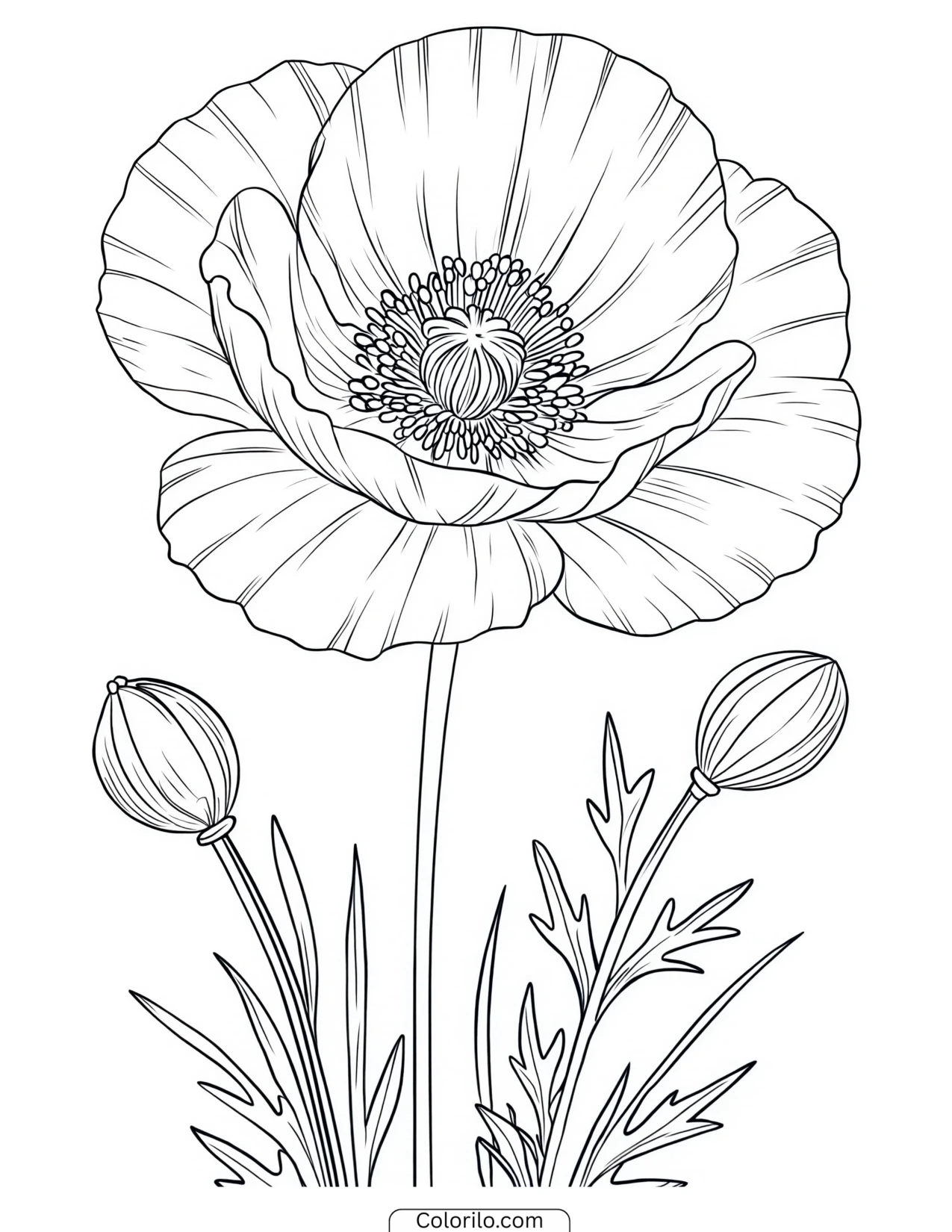
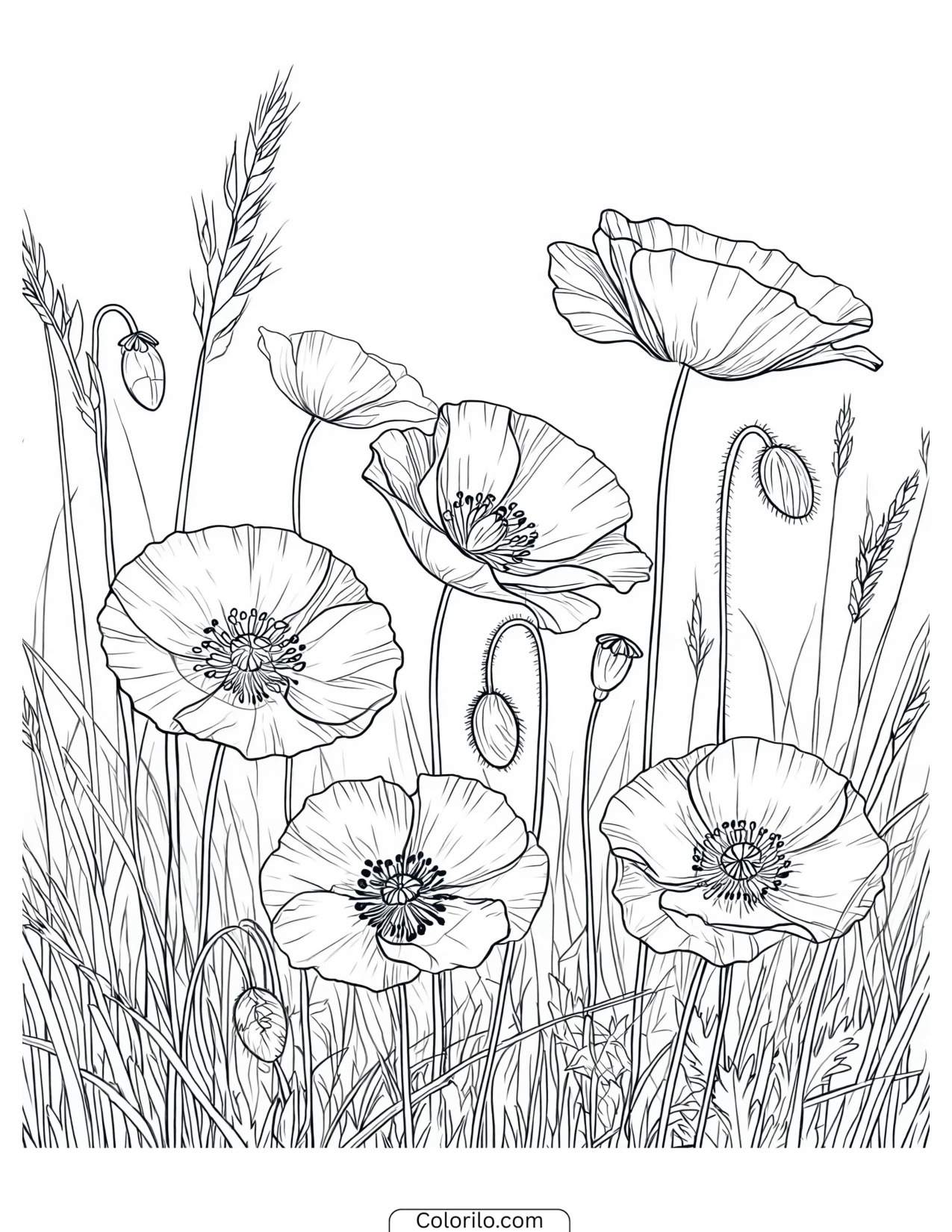
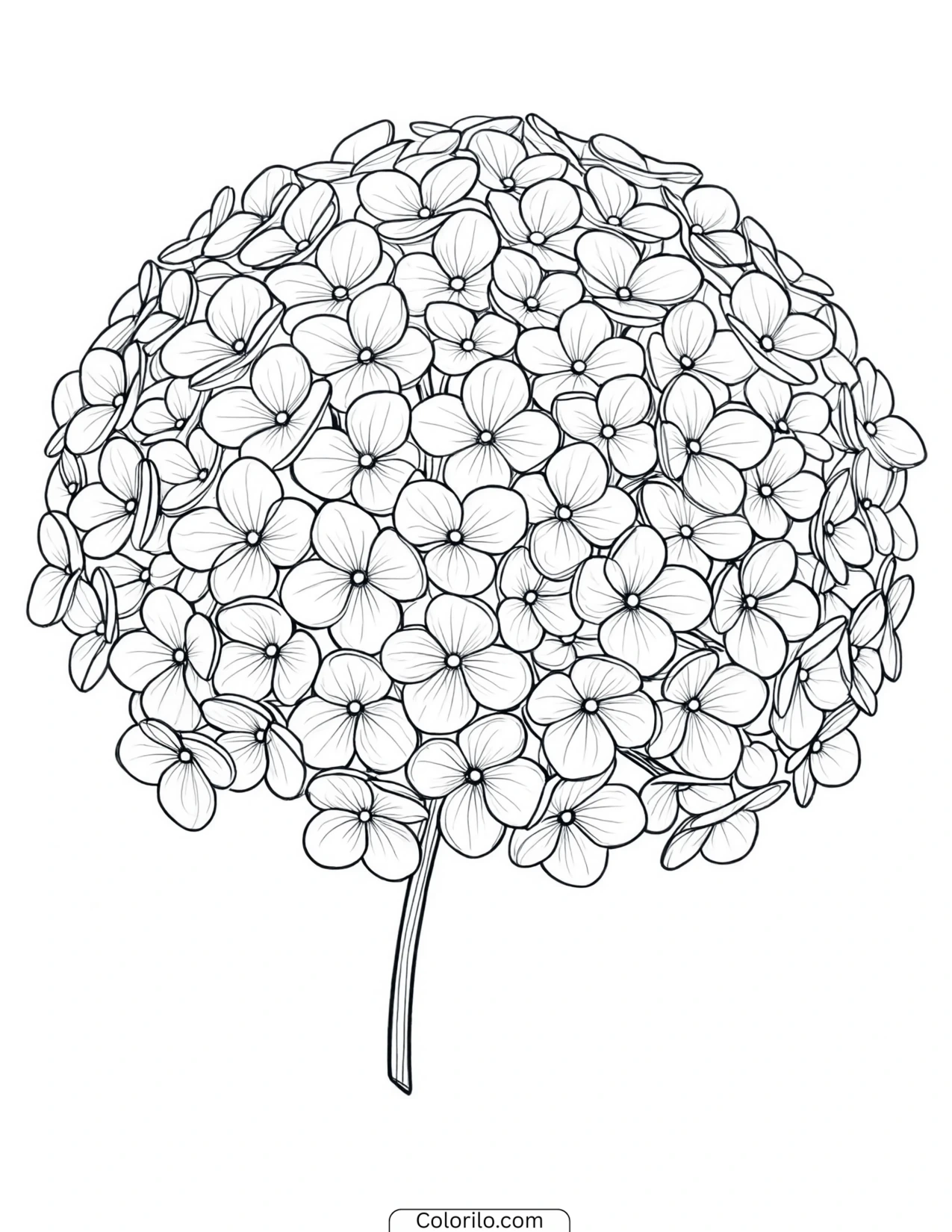
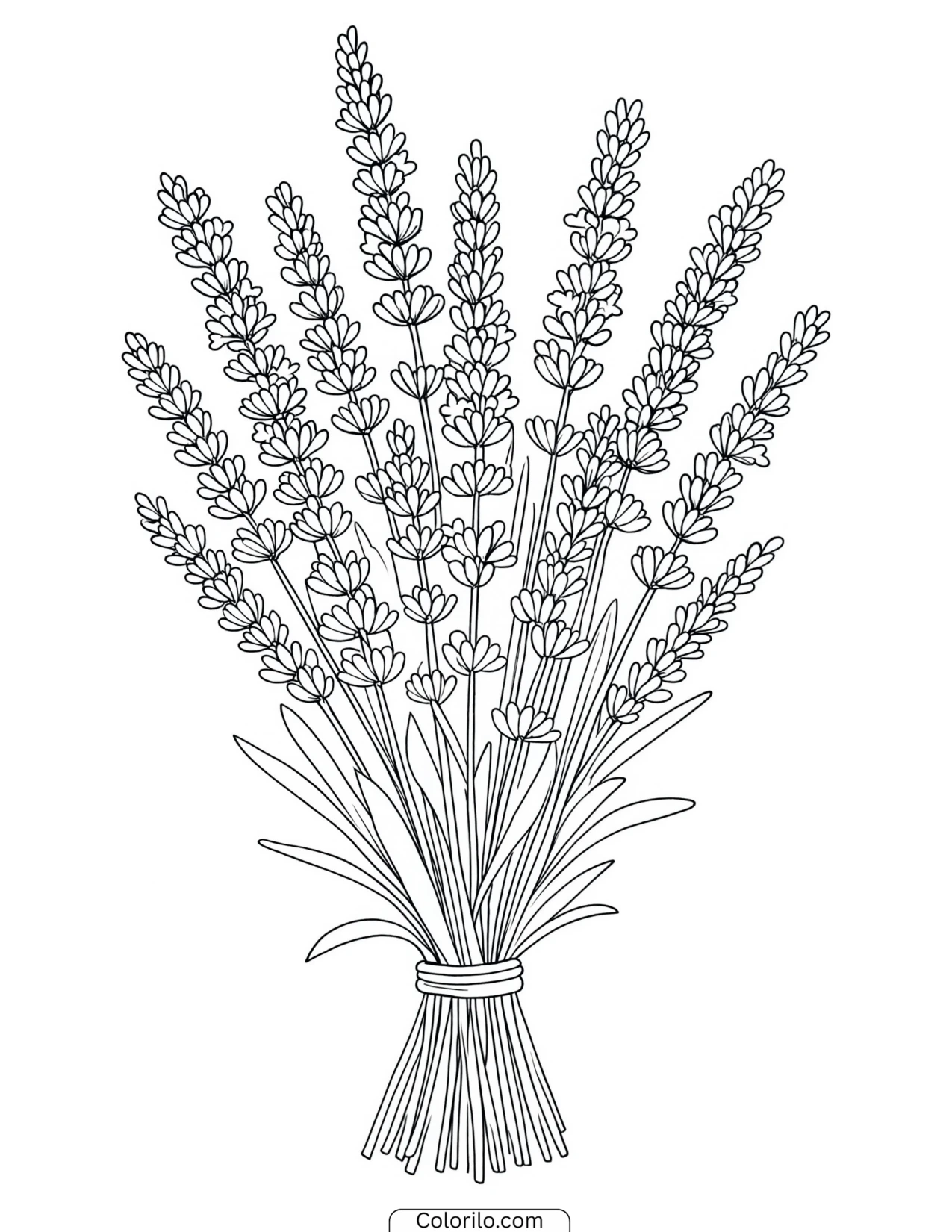
Two or three designs each, filling out the range. The hydrangea is the technical one: its heads are made of dozens of small four-petalled florets, and its colour in a real garden shifts from pink to blue depending on how acidic the soil is.
Magnolia
Three designs. Among the oldest flowering plants on Earth, appearing in the fossil record before bees existed, which is why they’re pollinated by beetles instead.
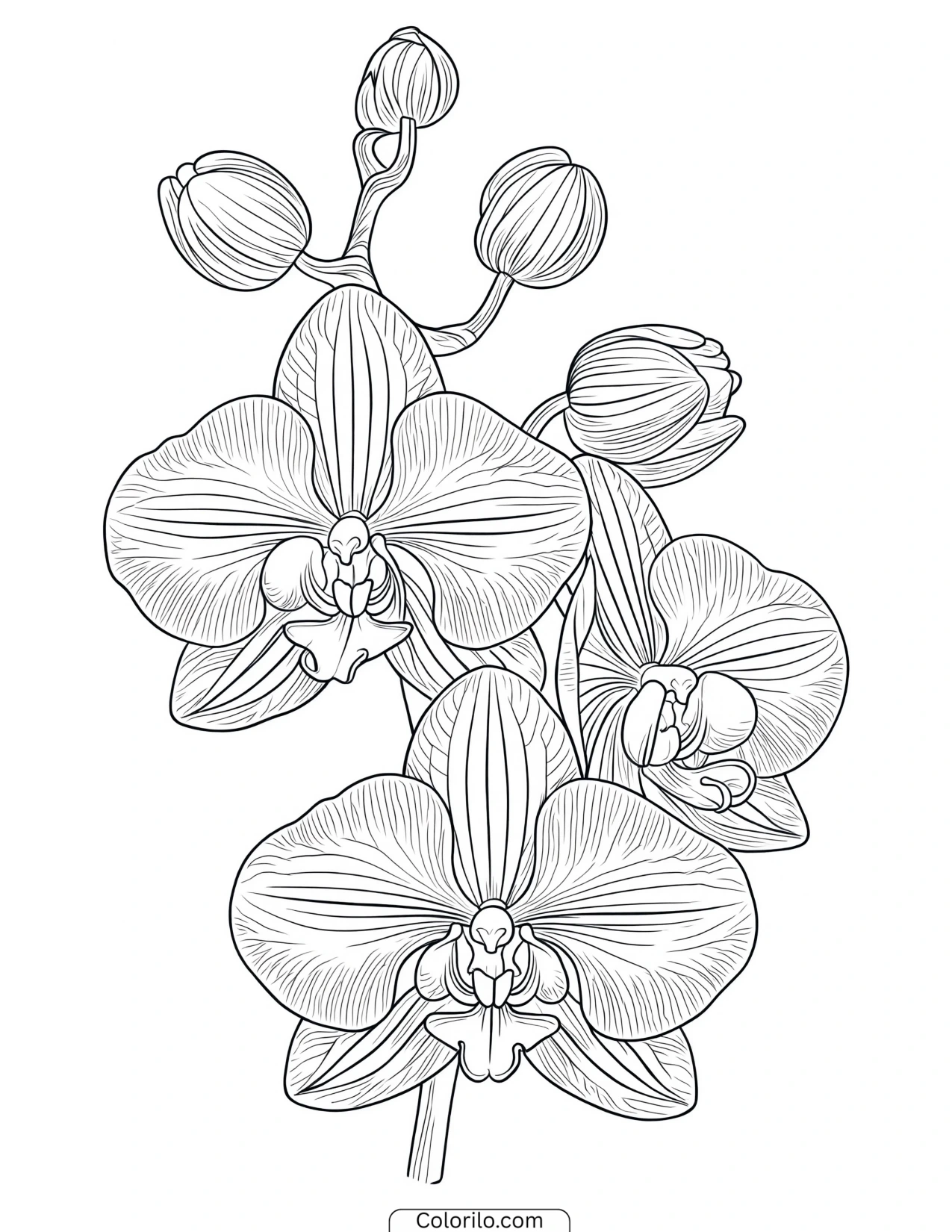
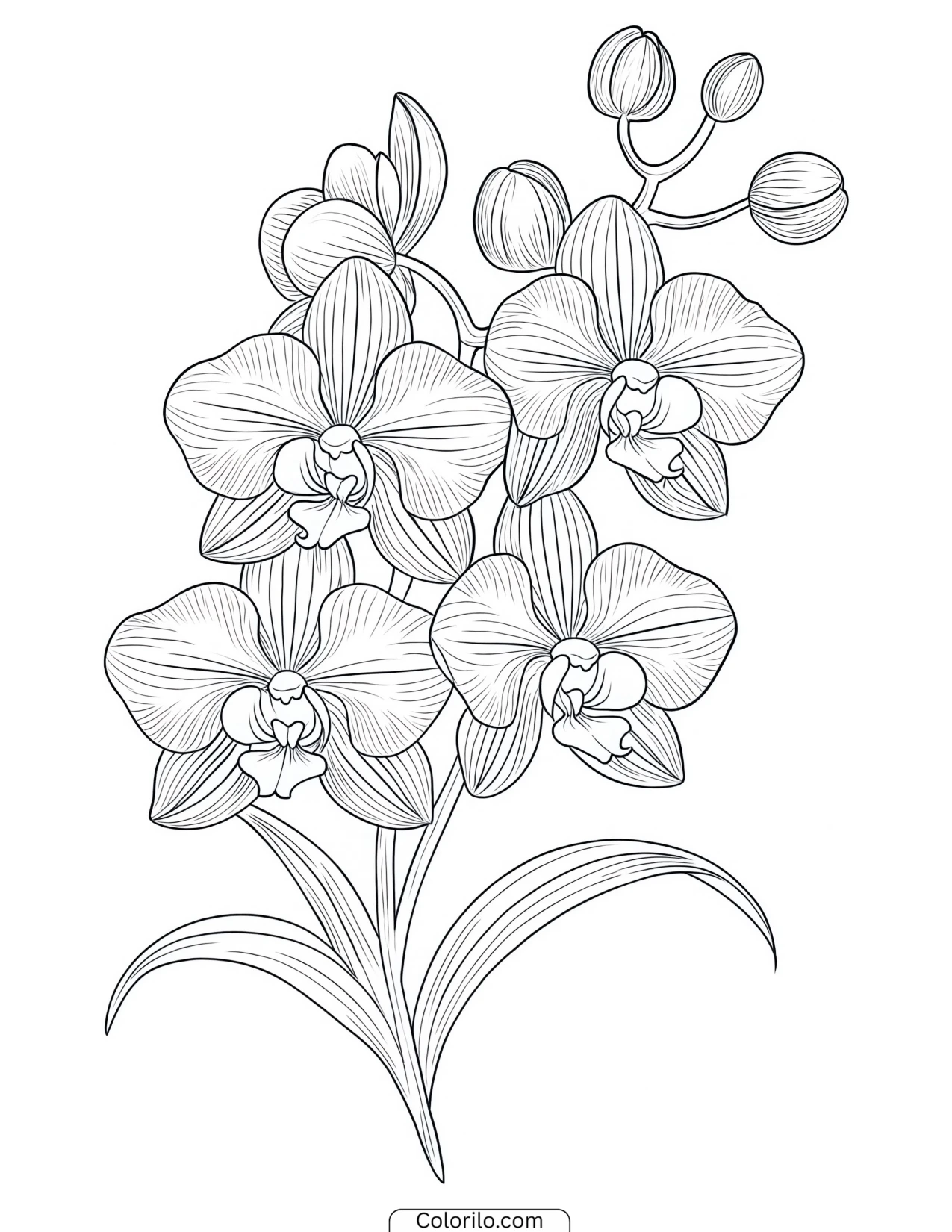
Orchid
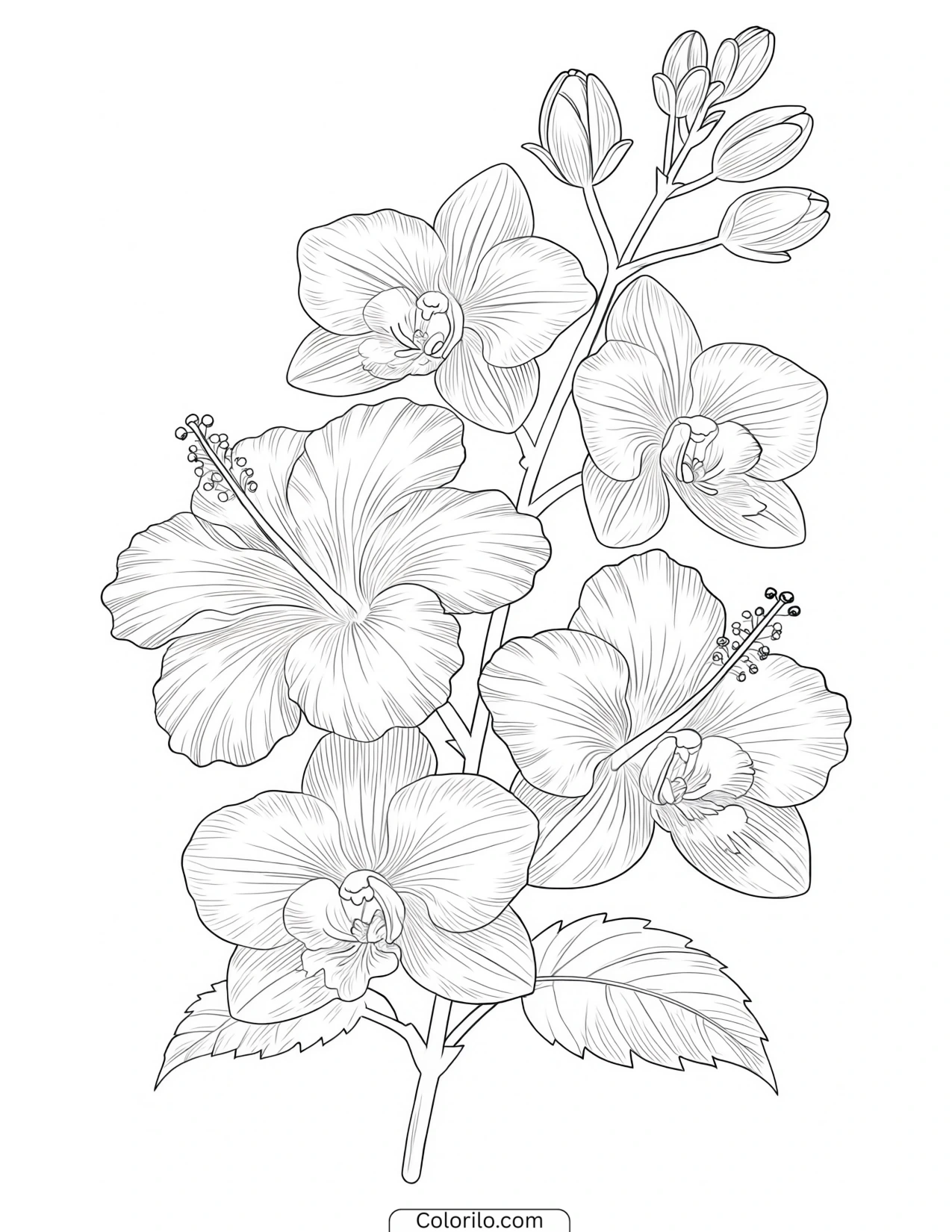
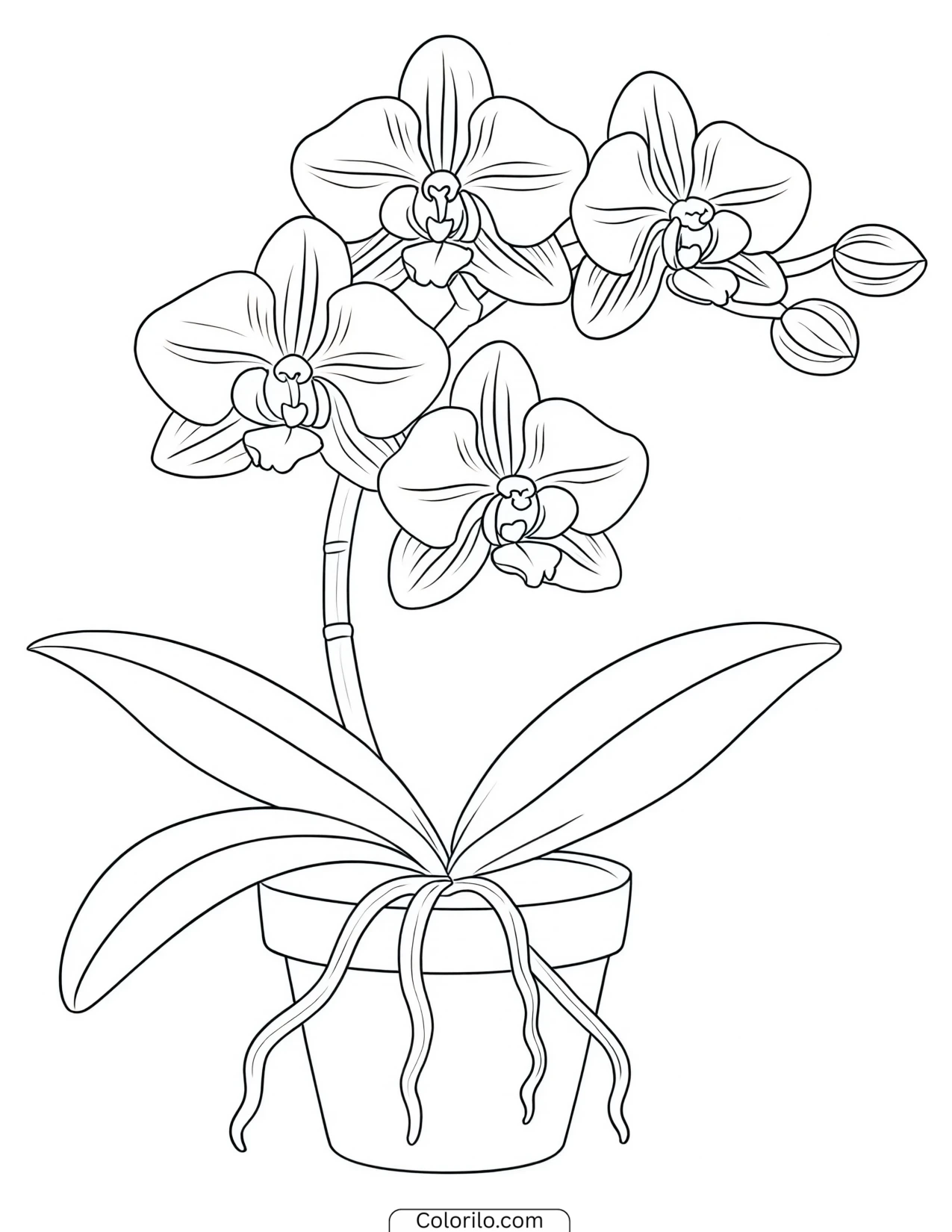
Three designs, plus one paired with hibiscus. The largest plant family in the world, with over 25,000 species. The arching stem is what makes them recognisable in outline.
Ferns and foliage
Three pages with no flowers at all, including a frond uncurling from its coil. Ferns predate flowering plants by roughly 200 million years.
Coloring Tips
Layer instead of filling. Real petals are almost never one flat colour, they’re pale at the base and stronger at the edge, or the reverse. Two passes of the same pencil, heavier toward the tip, does more for a bloom than any single perfect colour choice.
Choose your greens deliberately. Foliage is where most floral pages go wrong. Leaves in one uniform mid-green flatten everything. Warm yellow-green for new growth, blue-green for shadowed leaves.
Pick the flower you actually know. If you’ve grown hydrangeas or bought tulips, start there. Familiarity with how a flower really looks improves the result more than technique does.
Colored pencils for the dense pages. The detailed peony, the hydrangea, and the cherry blossom frame have segments too narrow for a marker. The bold dahlia outline and single rose take markers happily.
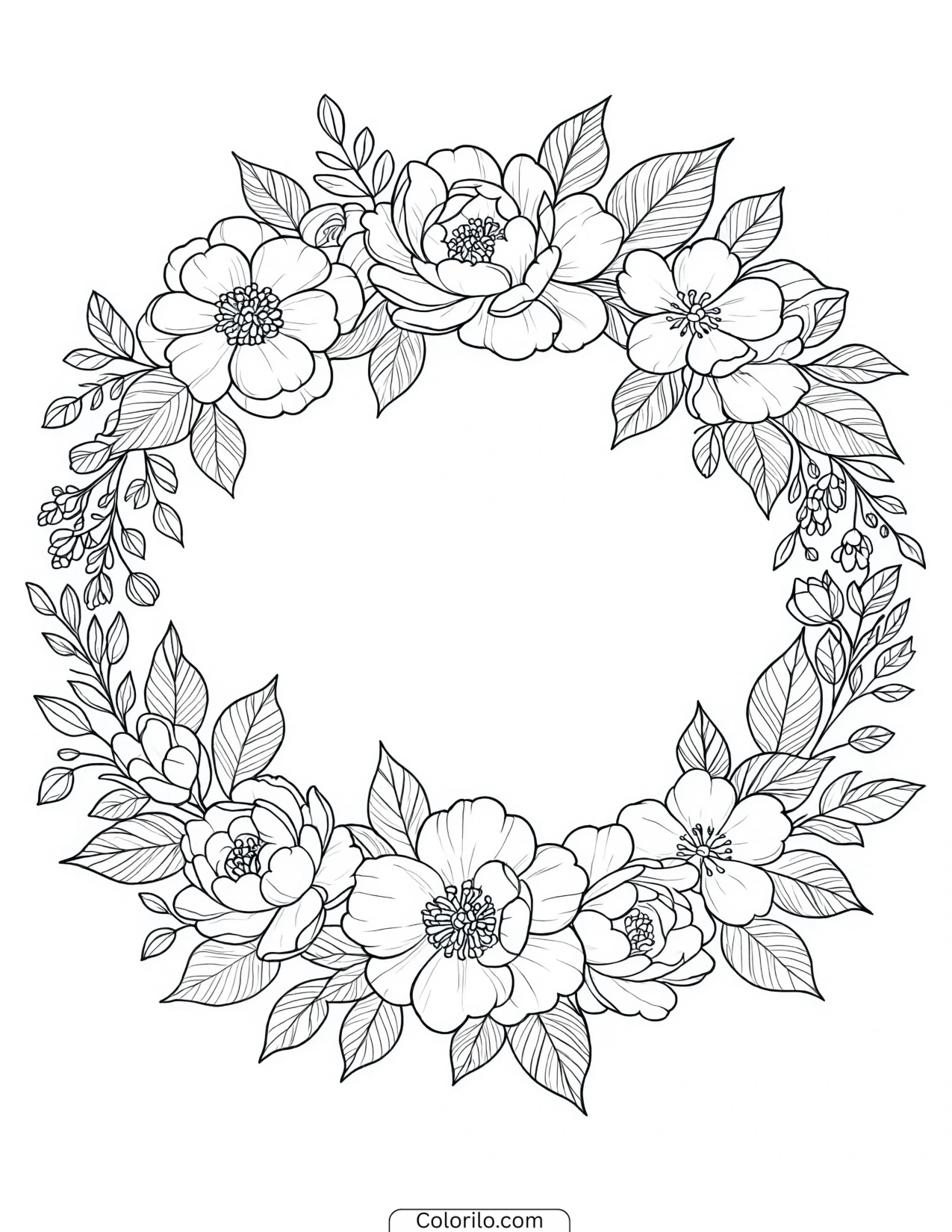
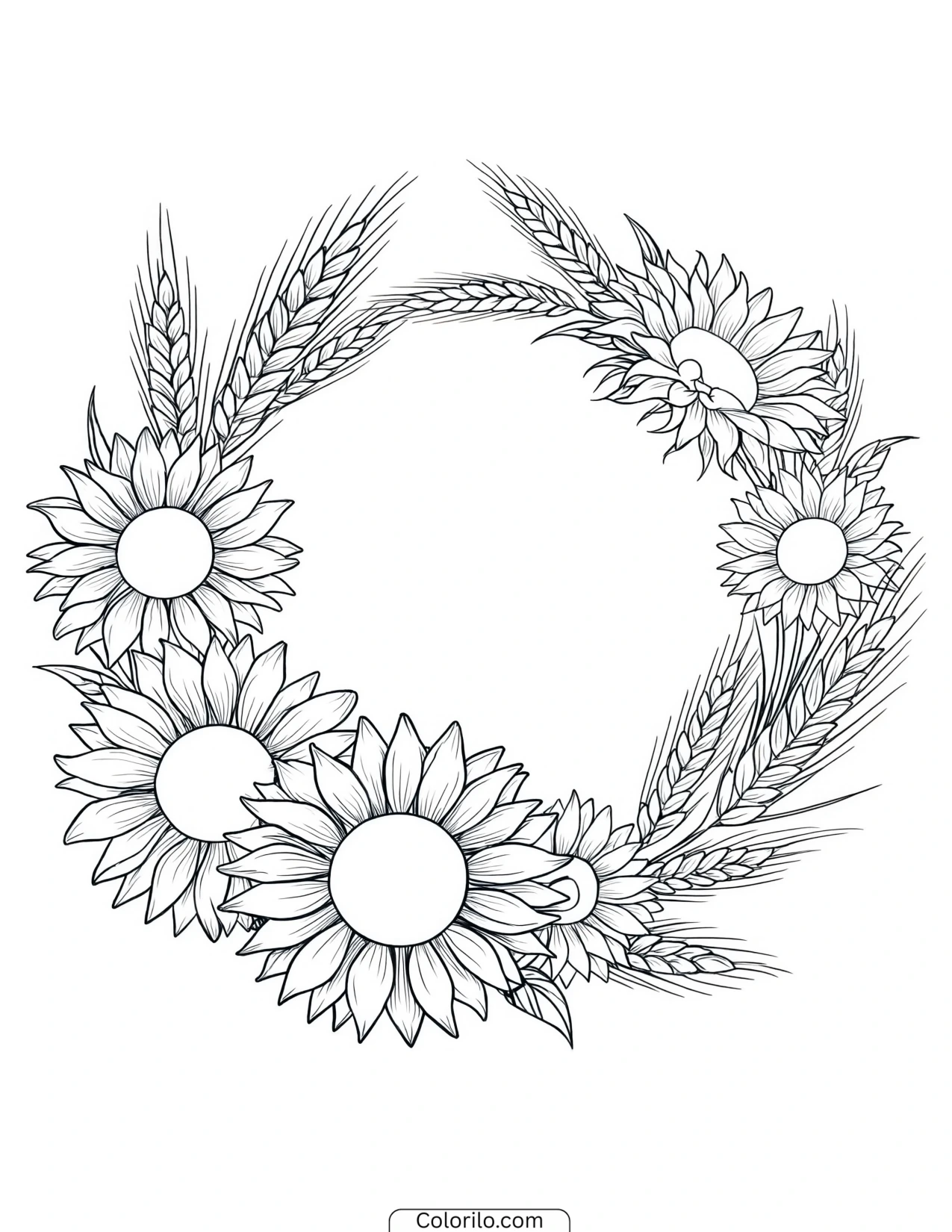
The wreaths and borders want a light centre. The rose wreath, the sunflower and wheat wreath, and both cherry blossom borders frame empty space. Leaving that space white, or adding a name or short message, turns the page into a card or a piece of framed lettering.
Try a monochrome page. Pick one flower and color it entirely in tints of a single colour. It removes every decision except value, which is the fastest way to learn shading.
Frequently Asked Questions
Are these floral coloring pages really free?
Yes, all 73 are free to download and print. Click any design to open the PDF. No account, no email, no payment.
Who are these suitable for?
Mostly teenagers and adults, though the set covers more ground than that suggests. The bold dahlia, the single rose, the daisies, and the tulips have simple shapes children around six and up manage easily. The detailed peony, hydrangea, and cherry blossom frame are aimed at experienced colorists.
Which flowers are included?
Rose, sunflower, peony, hibiscus, daisy, tulip, cherry blossom, lotus, magnolia, orchid, poppy, lavender, dahlia, hydrangea, lily, lily of the valley, camellia and anemone, plus ferns and botanical leaves.
Can I use these for cards or framed art?
Yes, for personal use. The wreath and border designs are the ones to look at first, since both leave a clear centre for a name or message. Free for personal, educational, and classroom use, not for resale.
Can I print more than one copy?
As many as you like. Several of these are worth doing twice in different palettes.
Why is coloring flowers considered relaxing?
The evidence is genuinely mixed and often overstated, but the pattern that shows up in studies is that structured, repetitive tasks with clear boundaries occupy attention without demanding decisions, which is what makes them settling. Botanical subjects add something specific: shading a petal means looking closely at how light actually falls on a curved surface, and that kind of close attention tends to crowd out everything else. It isn’t a treatment for anything. Plenty of people simply find it a good way to spend an hour.

Leave a Reply