
Table of Contents
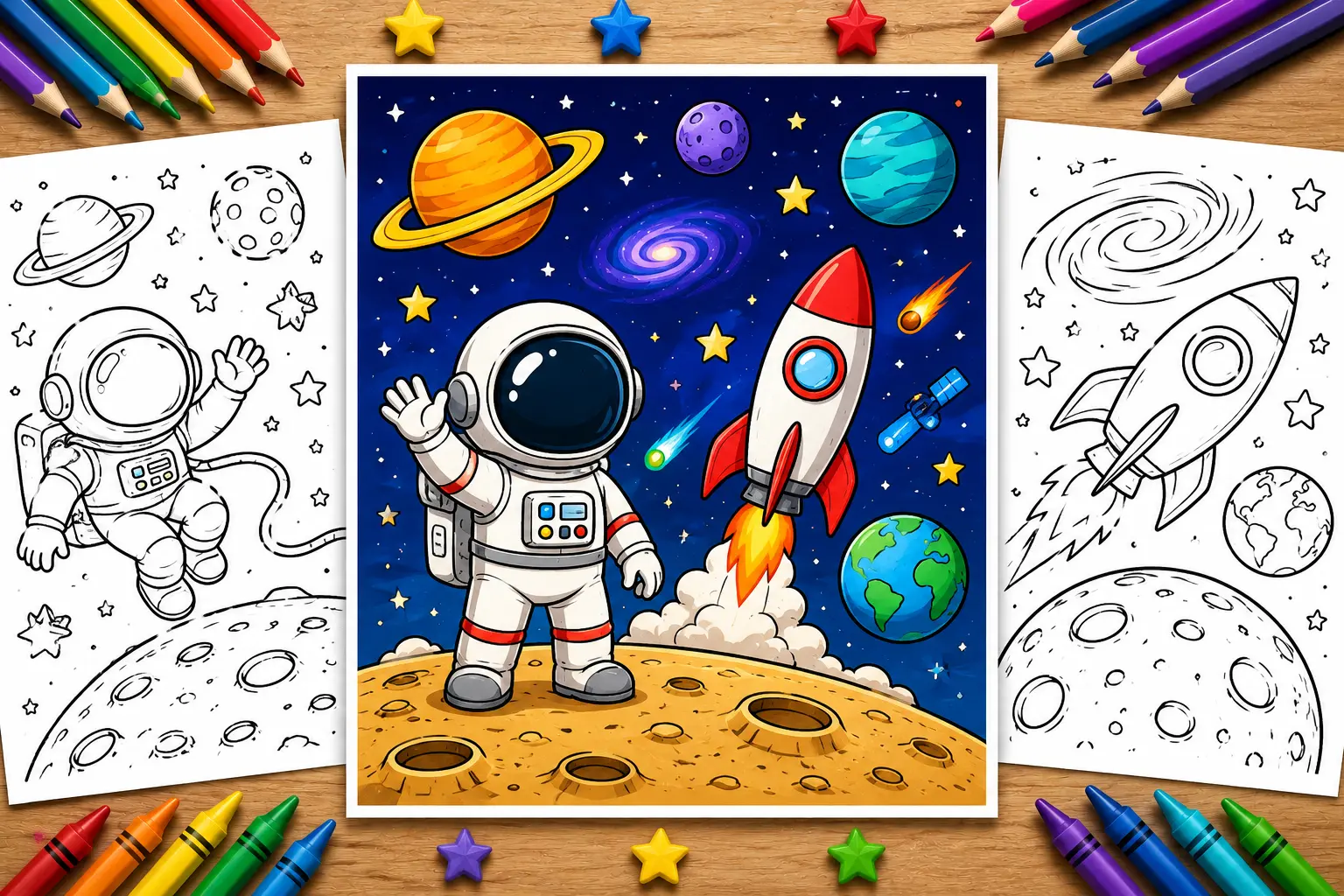
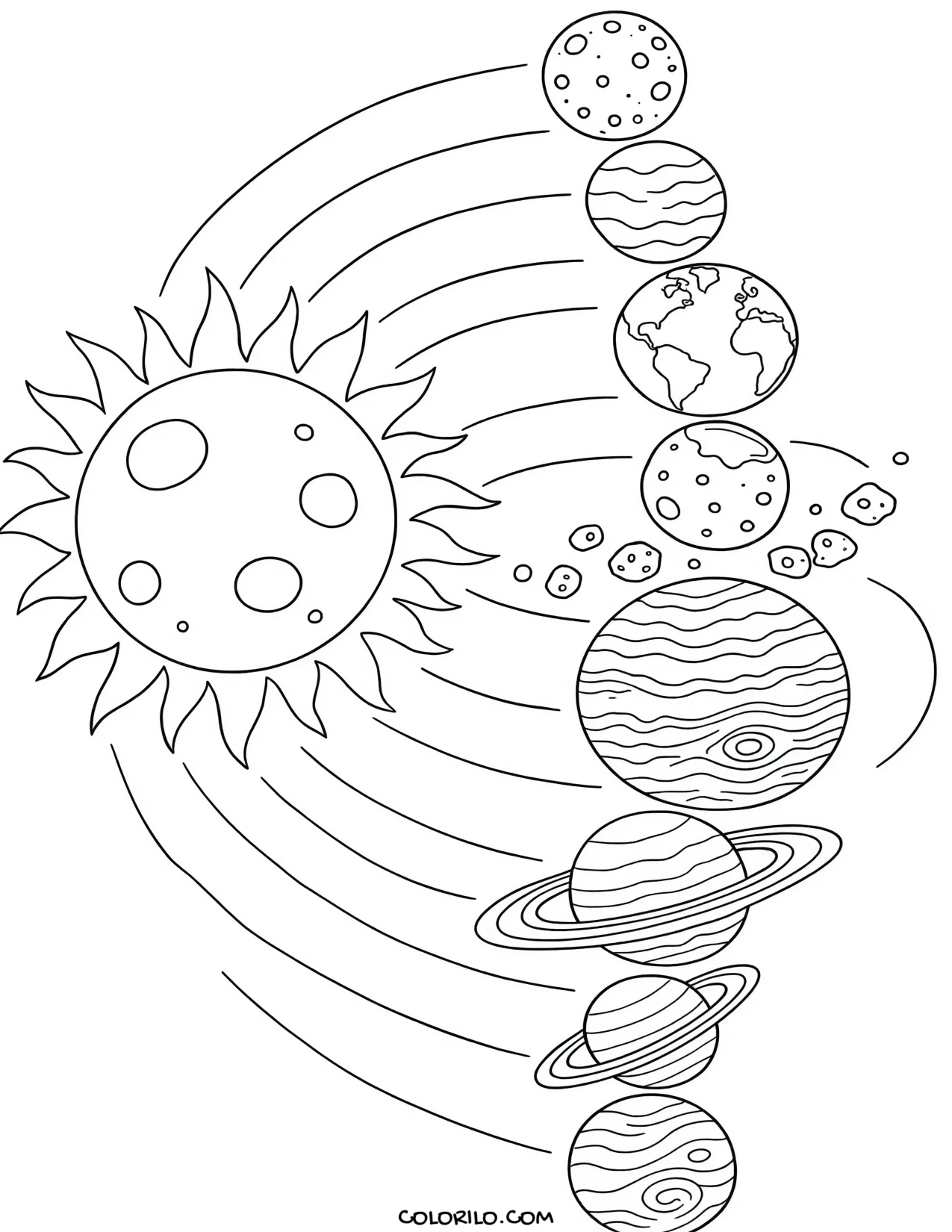
Most space coloring pages give you a rocket and a few stars. This set names things. All eight planets plus Pluto, four real moons, the Hubble and James Webb telescopes, the Voyager probe, the Parker Solar Probe and the mission to the asteroid Bennu. Fifty-nine designs, and a good half of them are of something that actually exists.
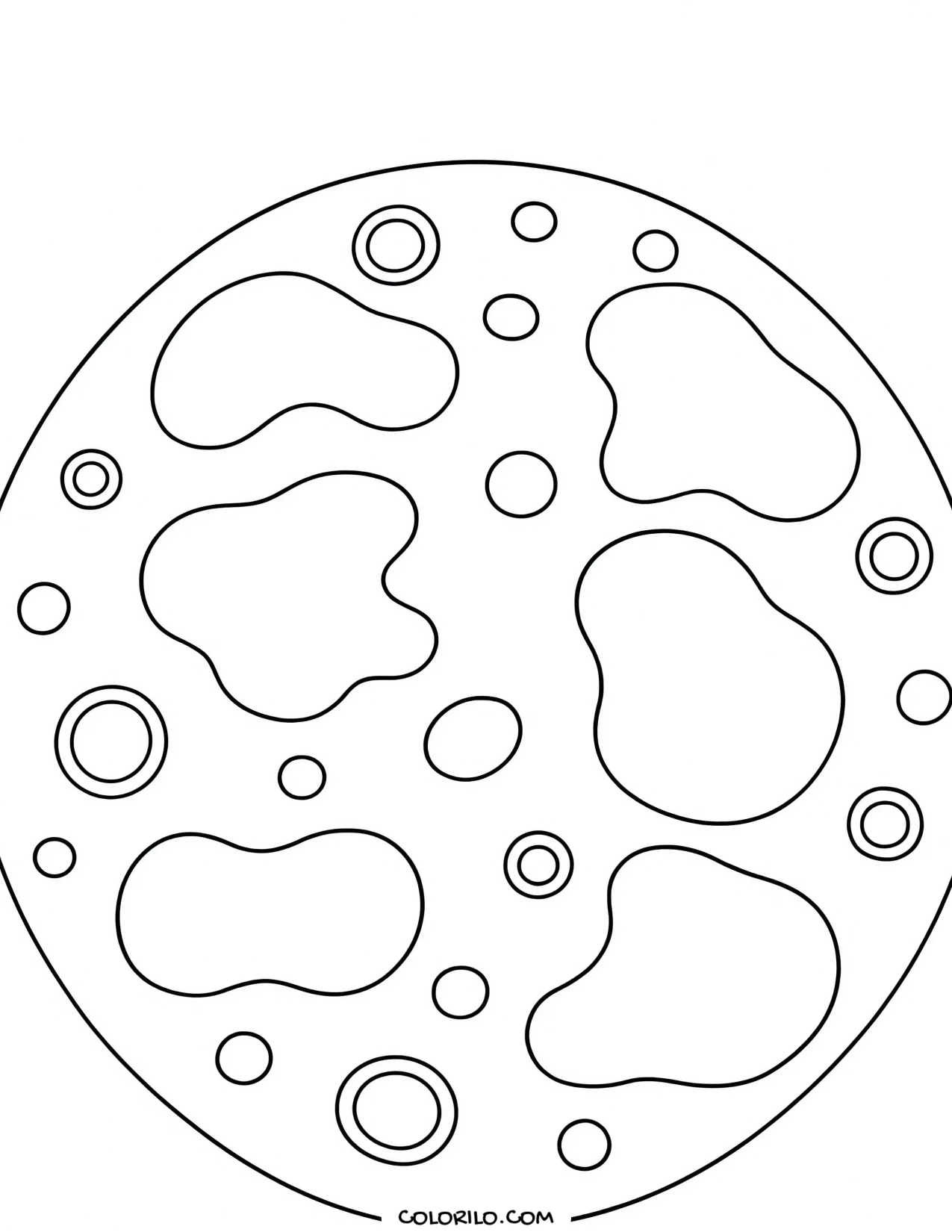
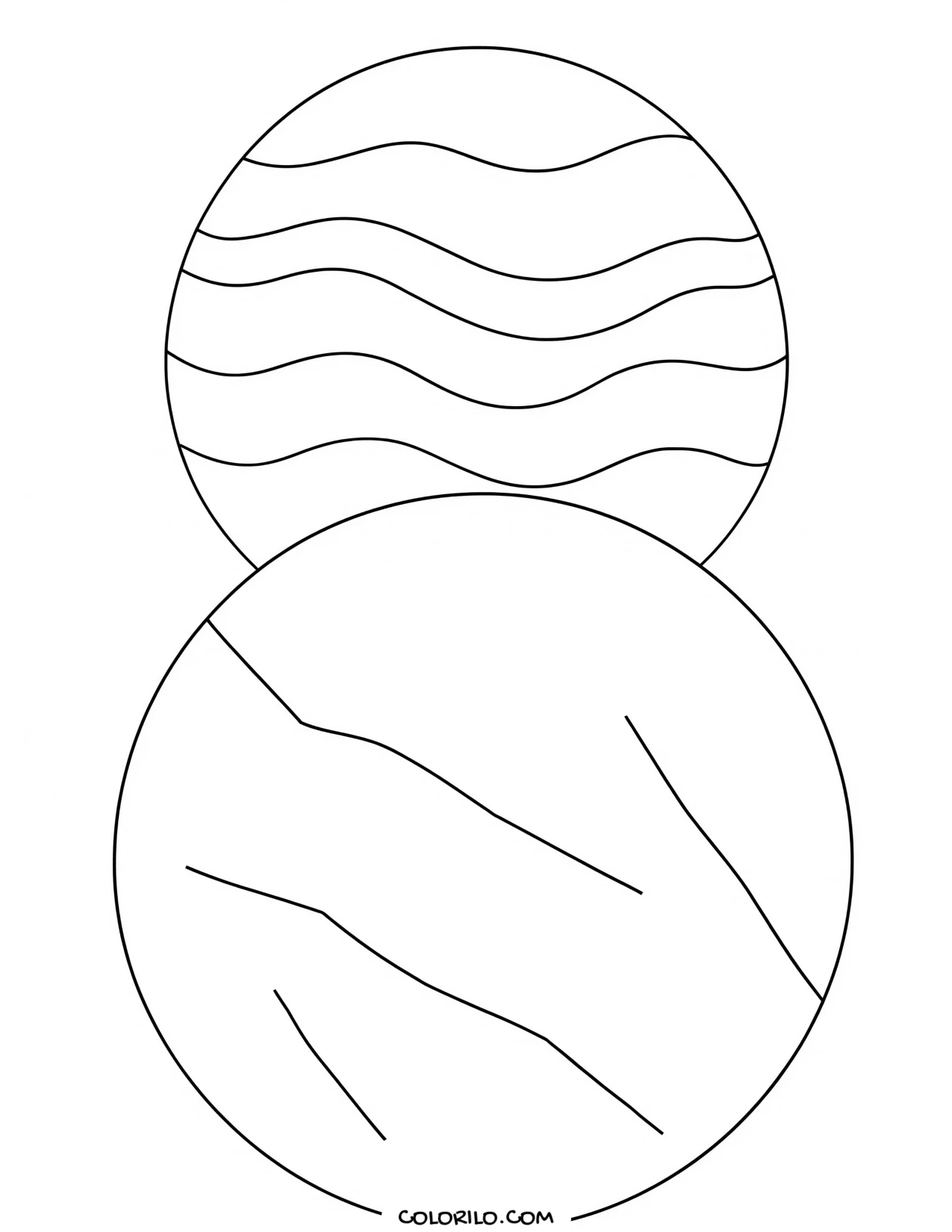
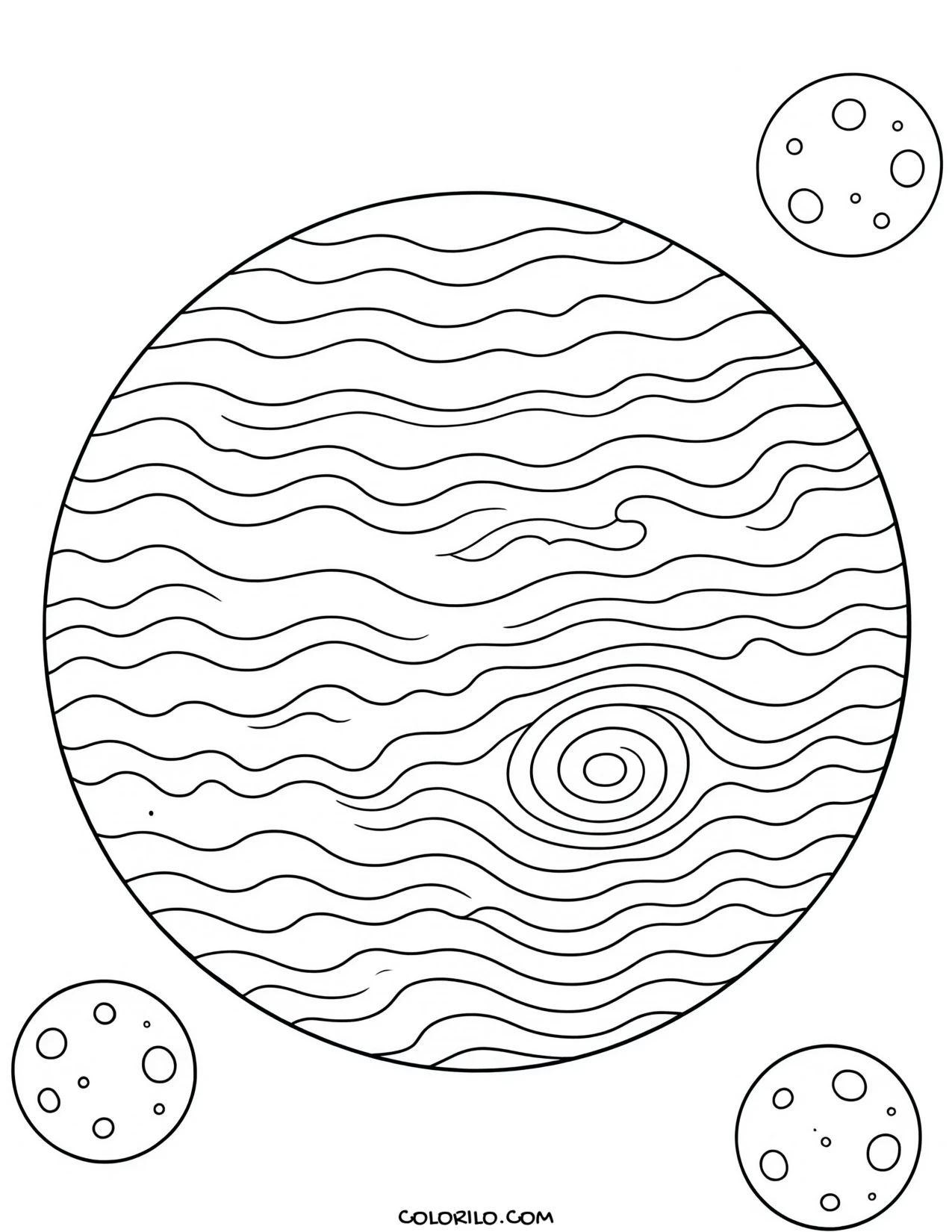
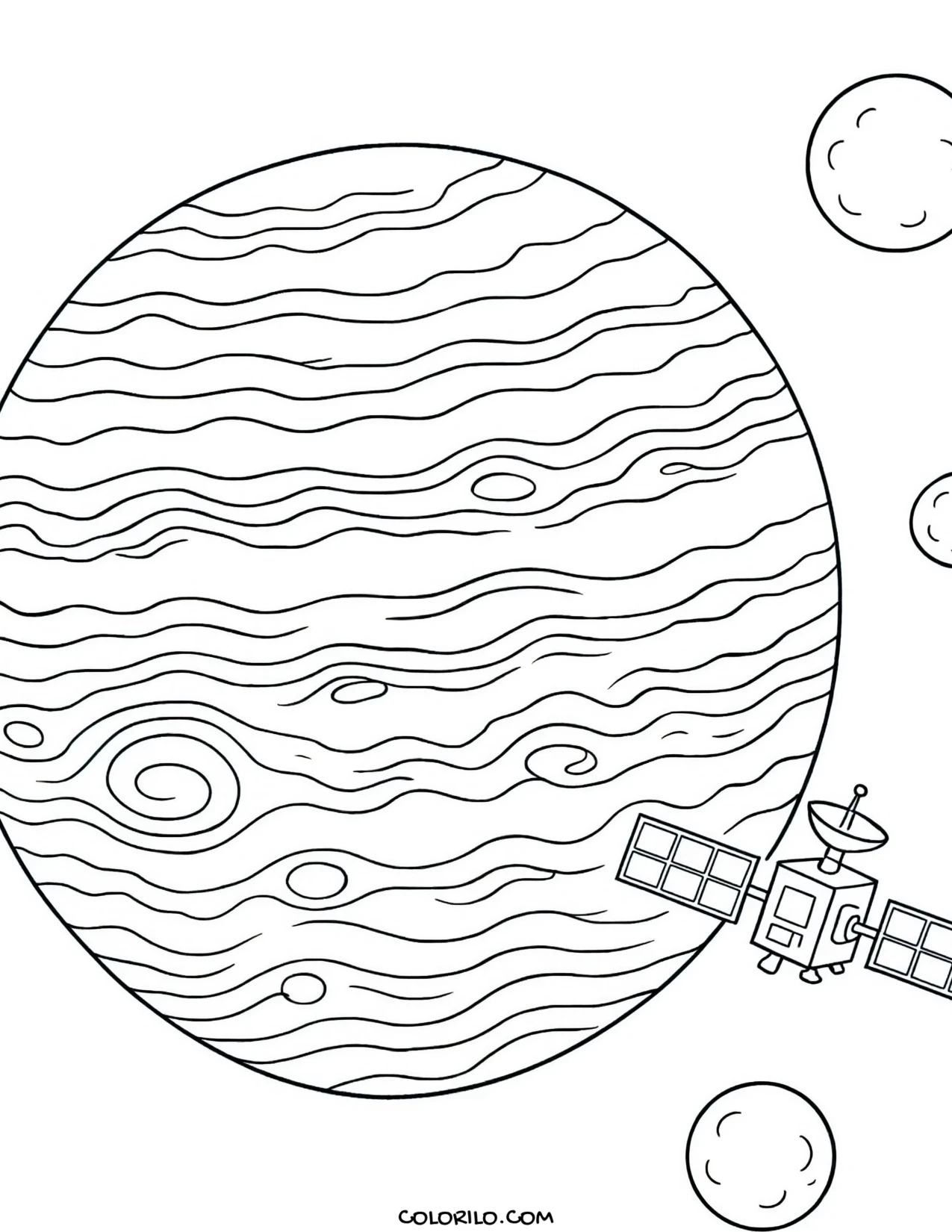
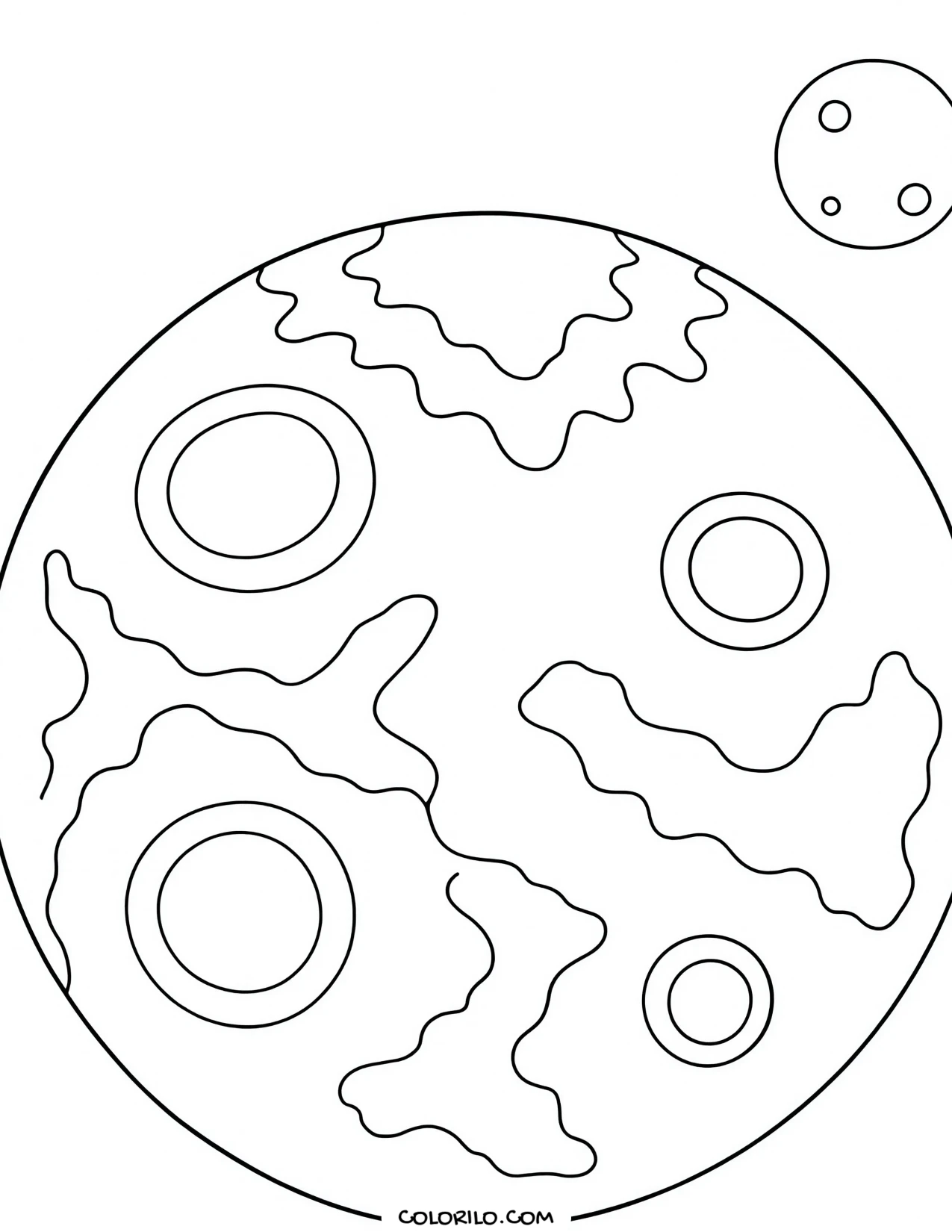
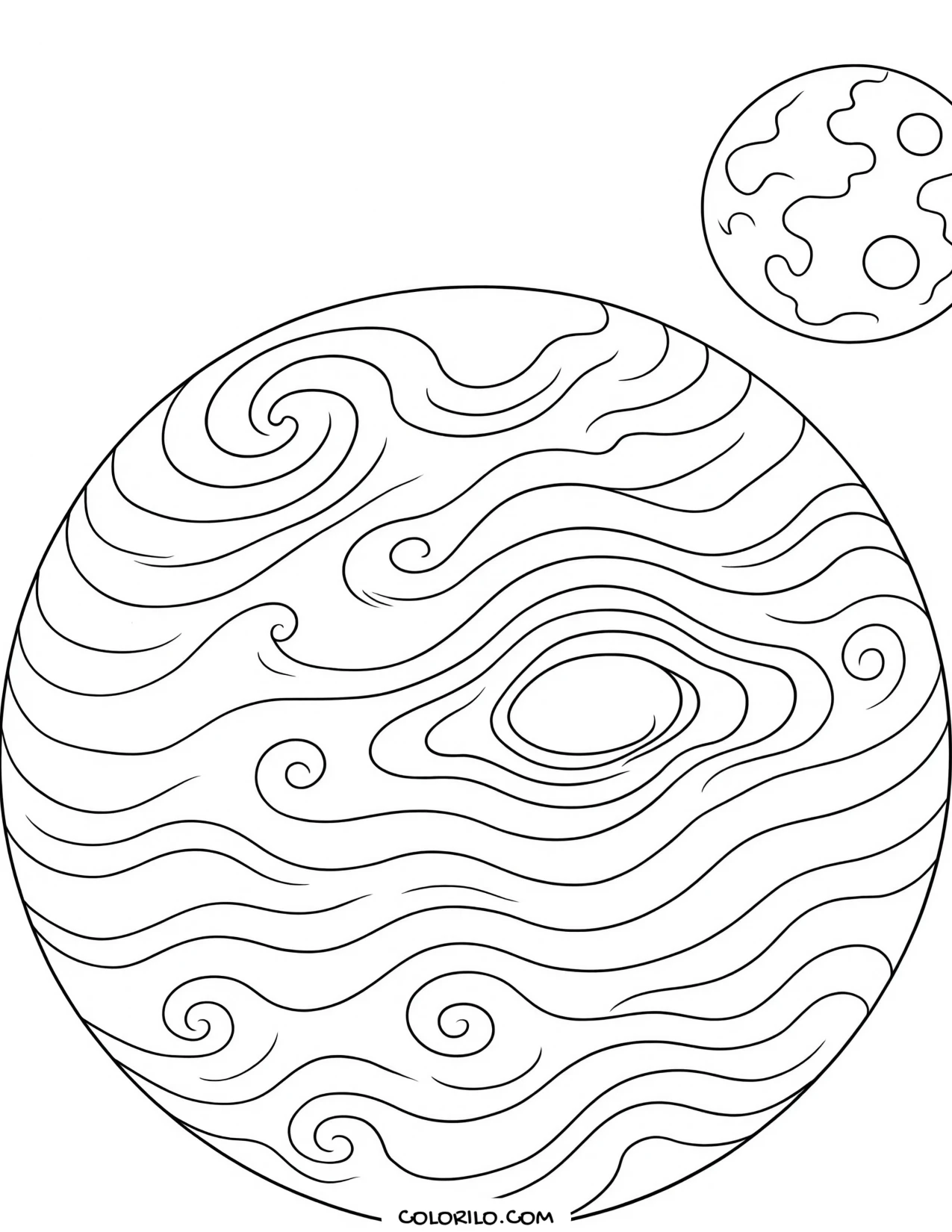
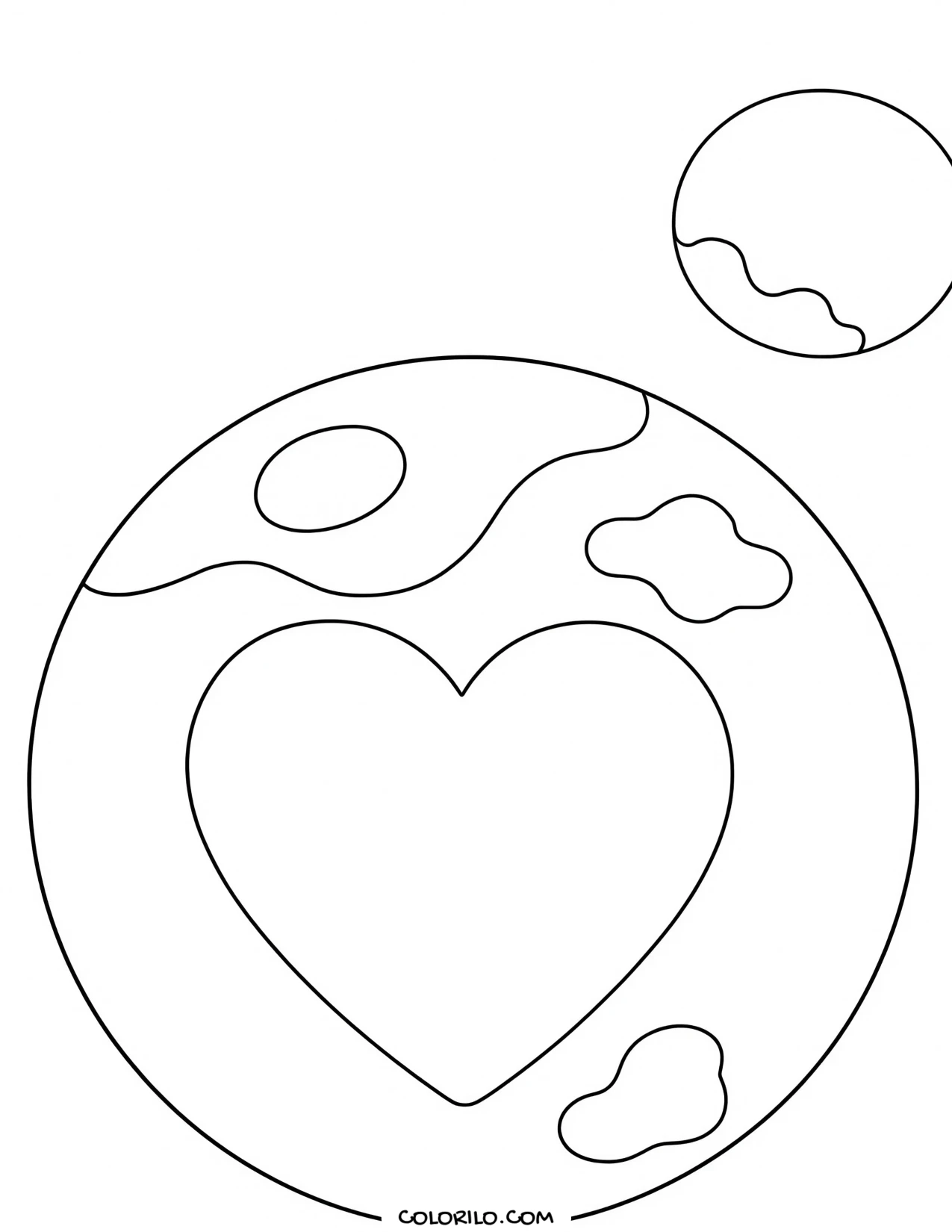
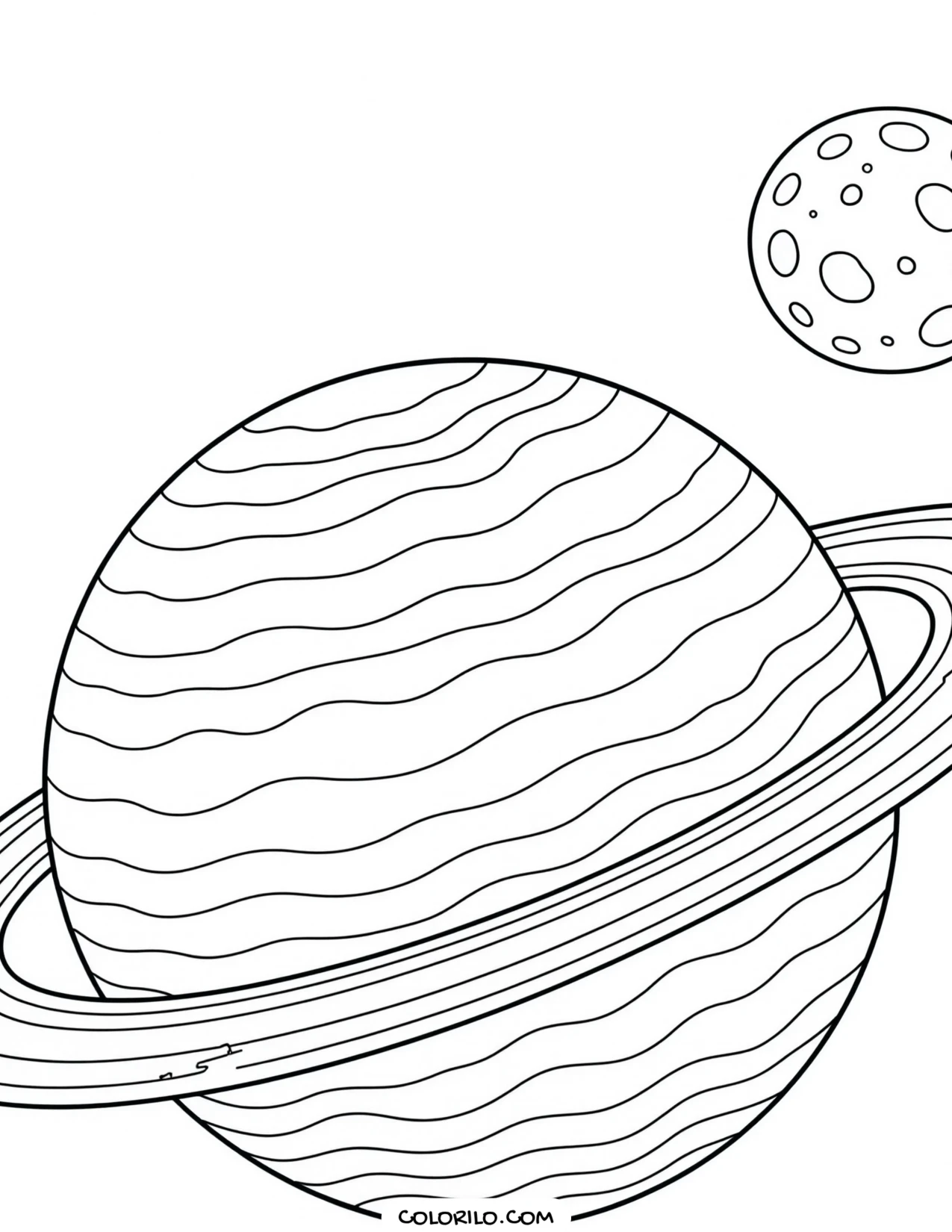
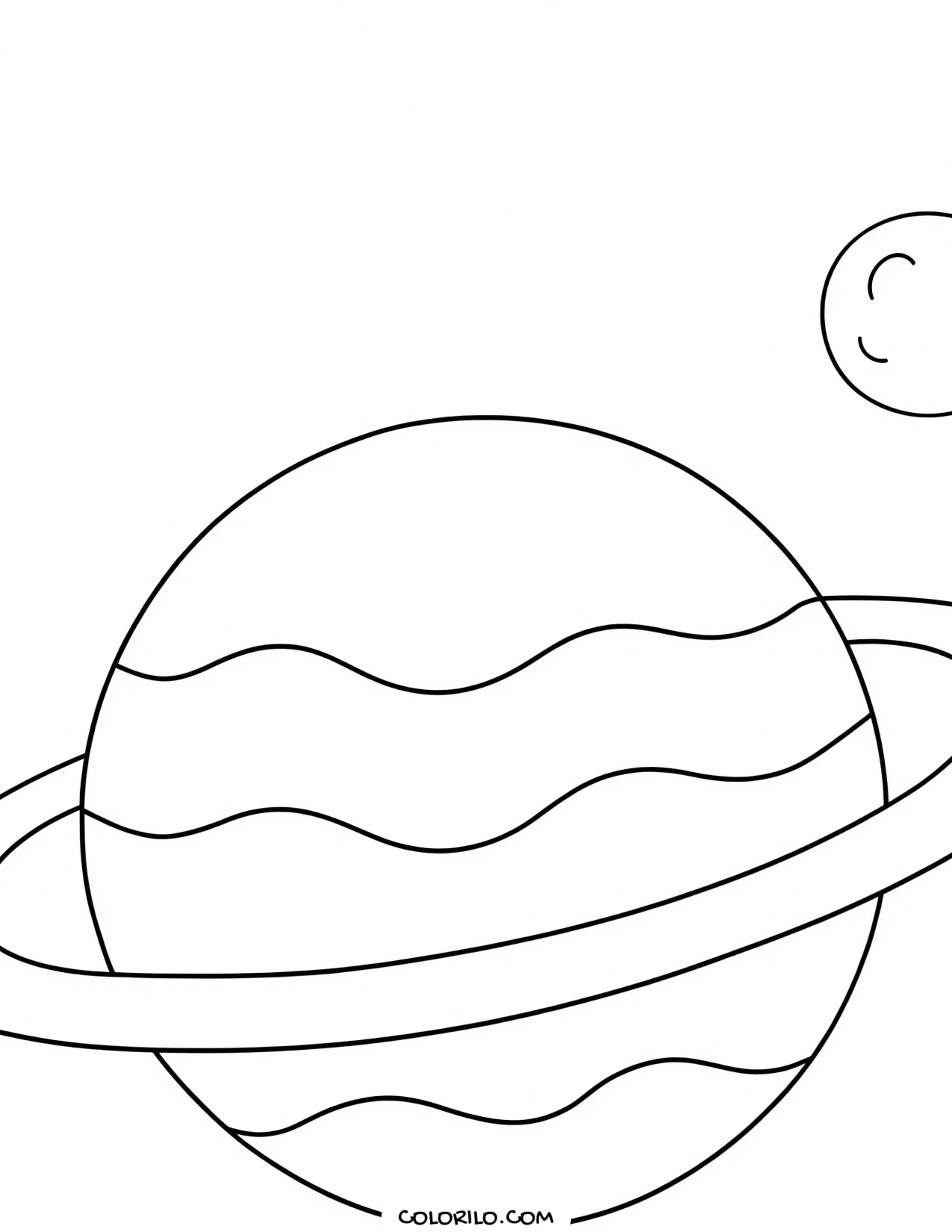
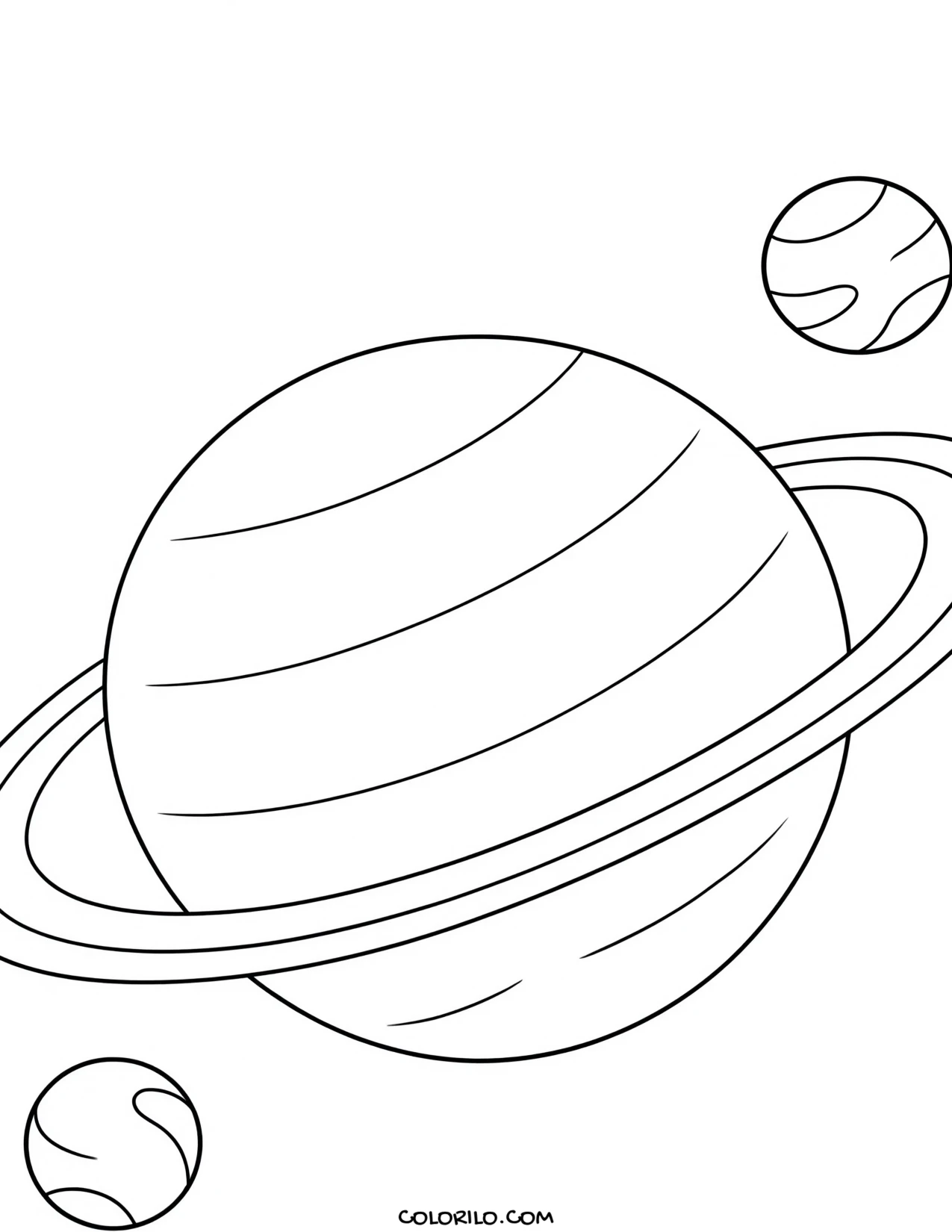
The planets each get their own page with the feature that makes them recognisable, Jupiter’s Great Red Spot, Saturn’s rings drawn twice including a close view, Mars with its polar caps, Neptune’s dark spot, Venus under swirling cloud, Mercury’s craters, Uranus on its tilted side, and Pluto with the heart-shaped plain across its surface.
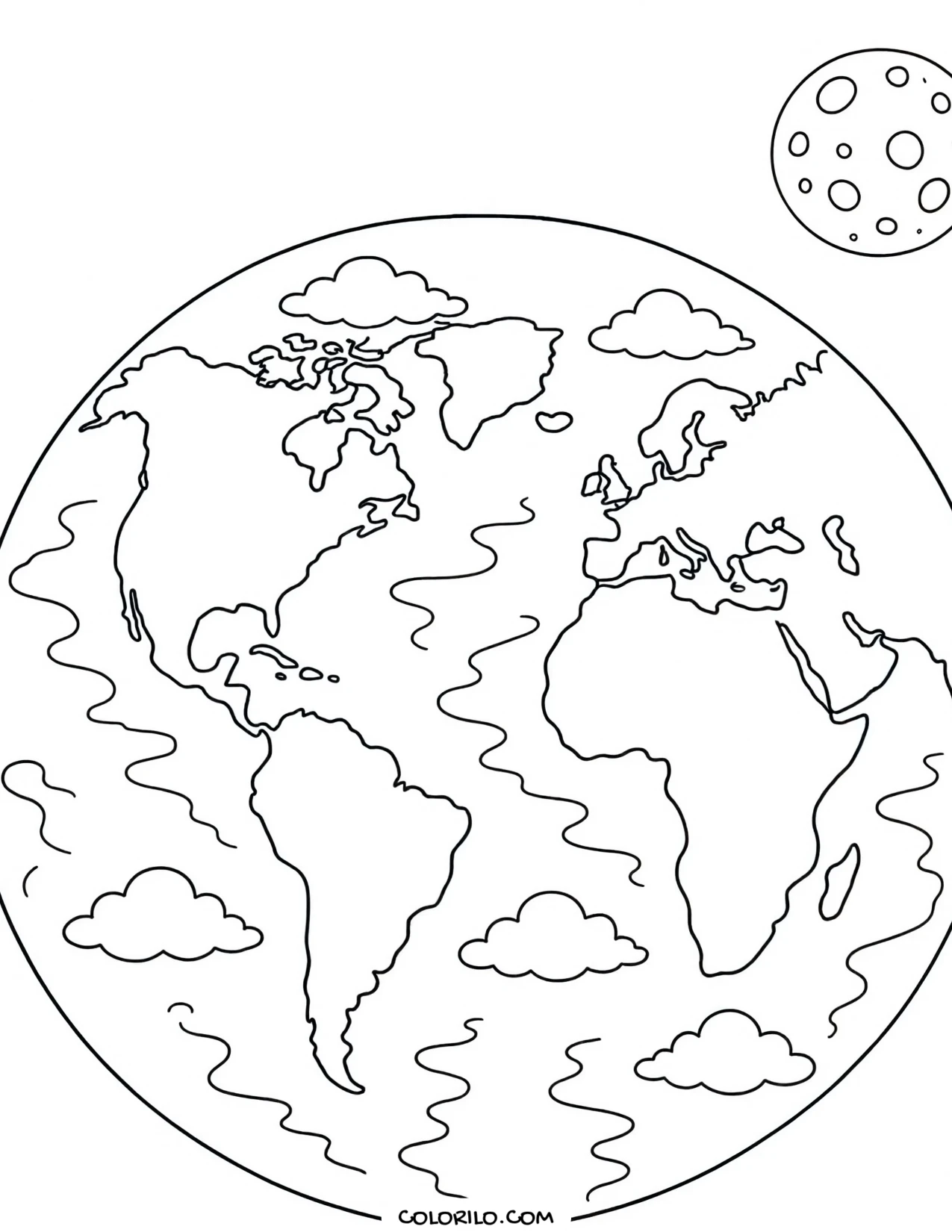
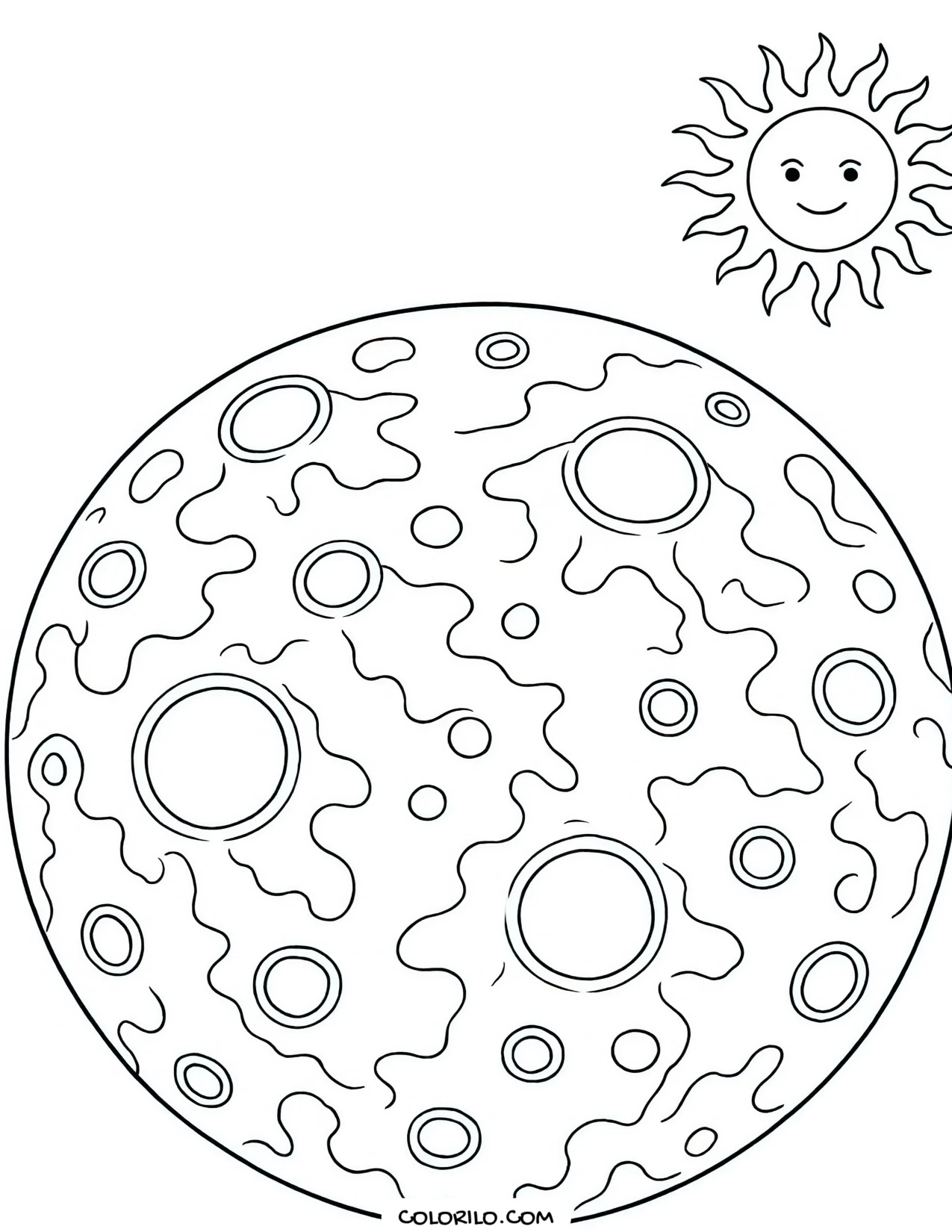
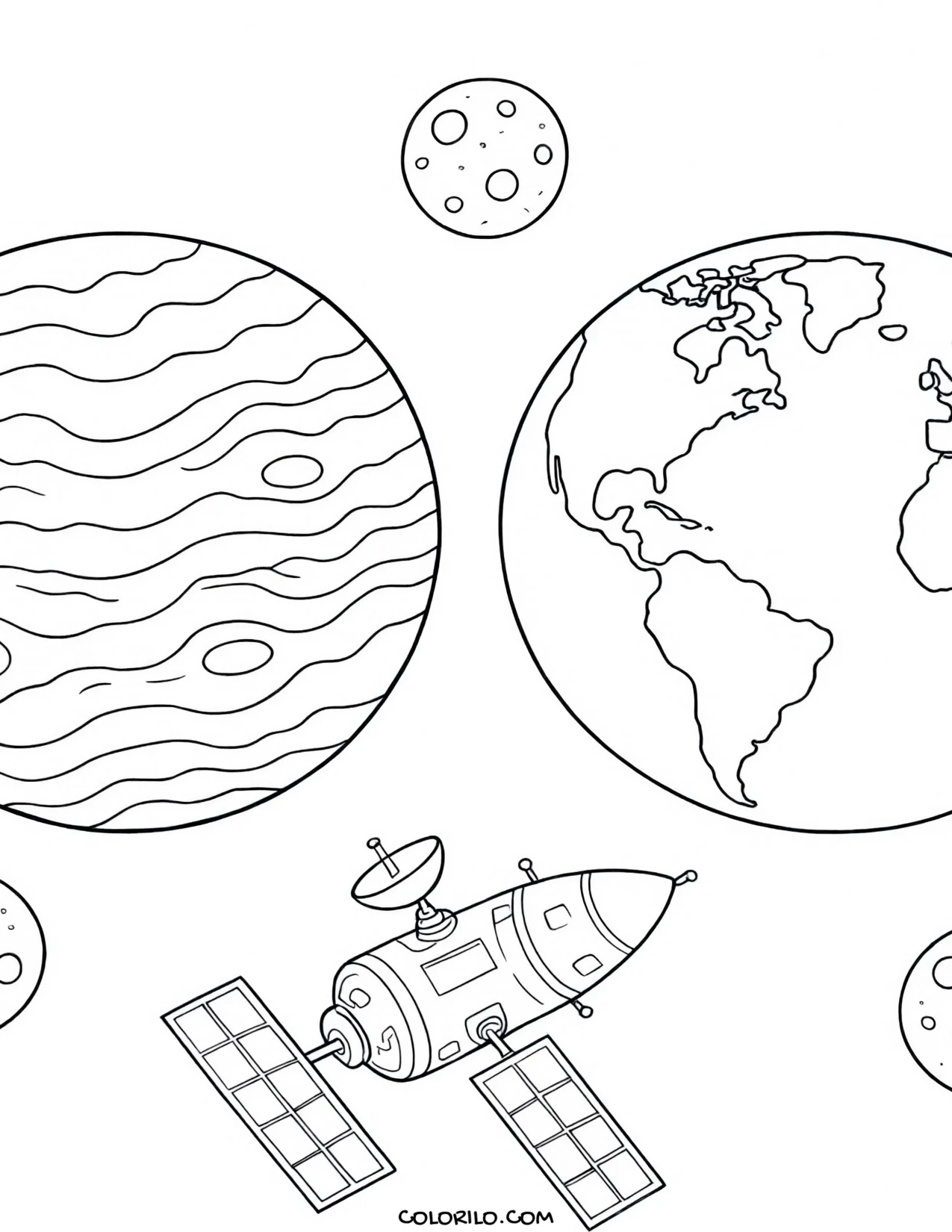
Four moons appear as well, which is unusual for a set like this. Europa’s cracked ice, Io covered in volcanoes, Titan with its lakes, and our own Moon drawn full and cratered. Earth is here too, seen from orbit with the continents showing.
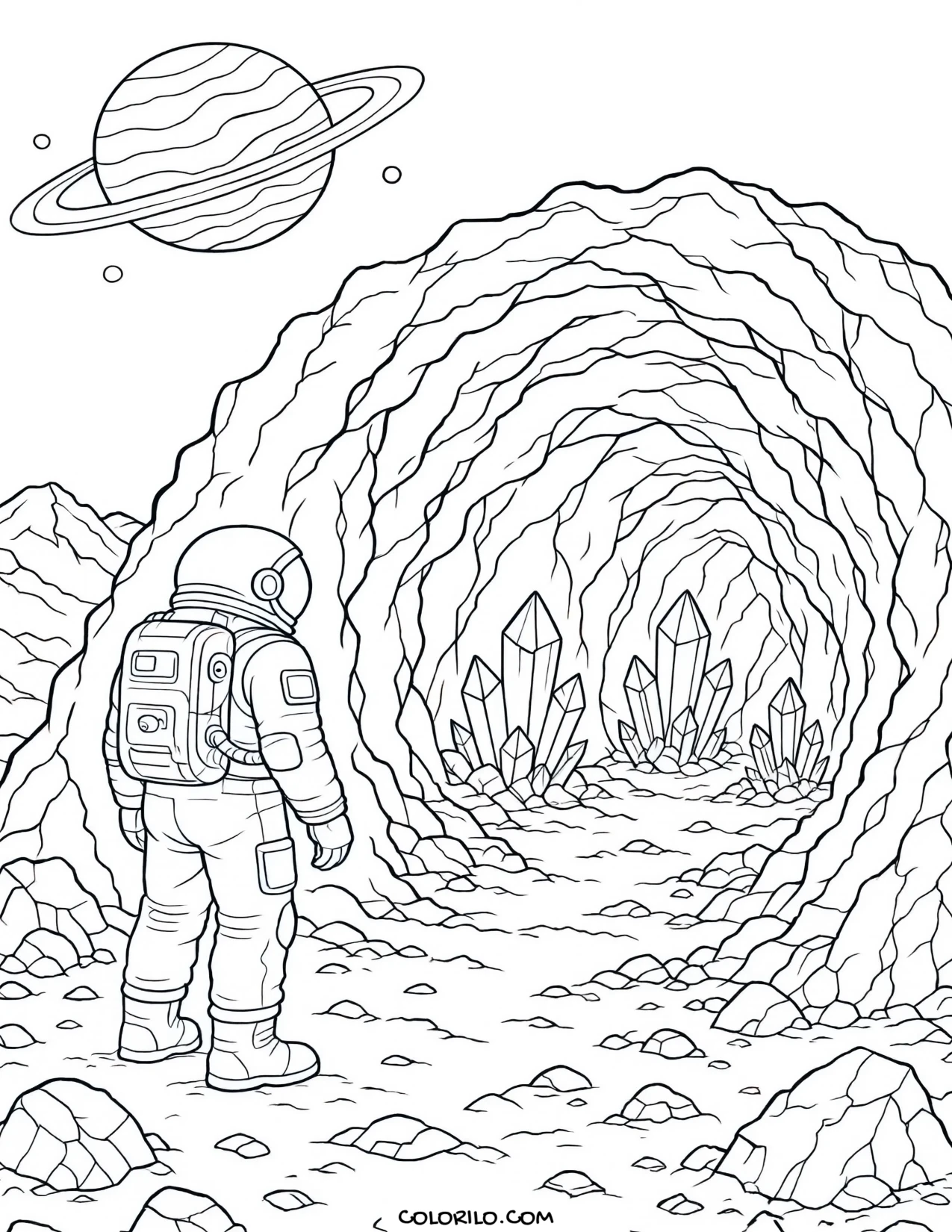
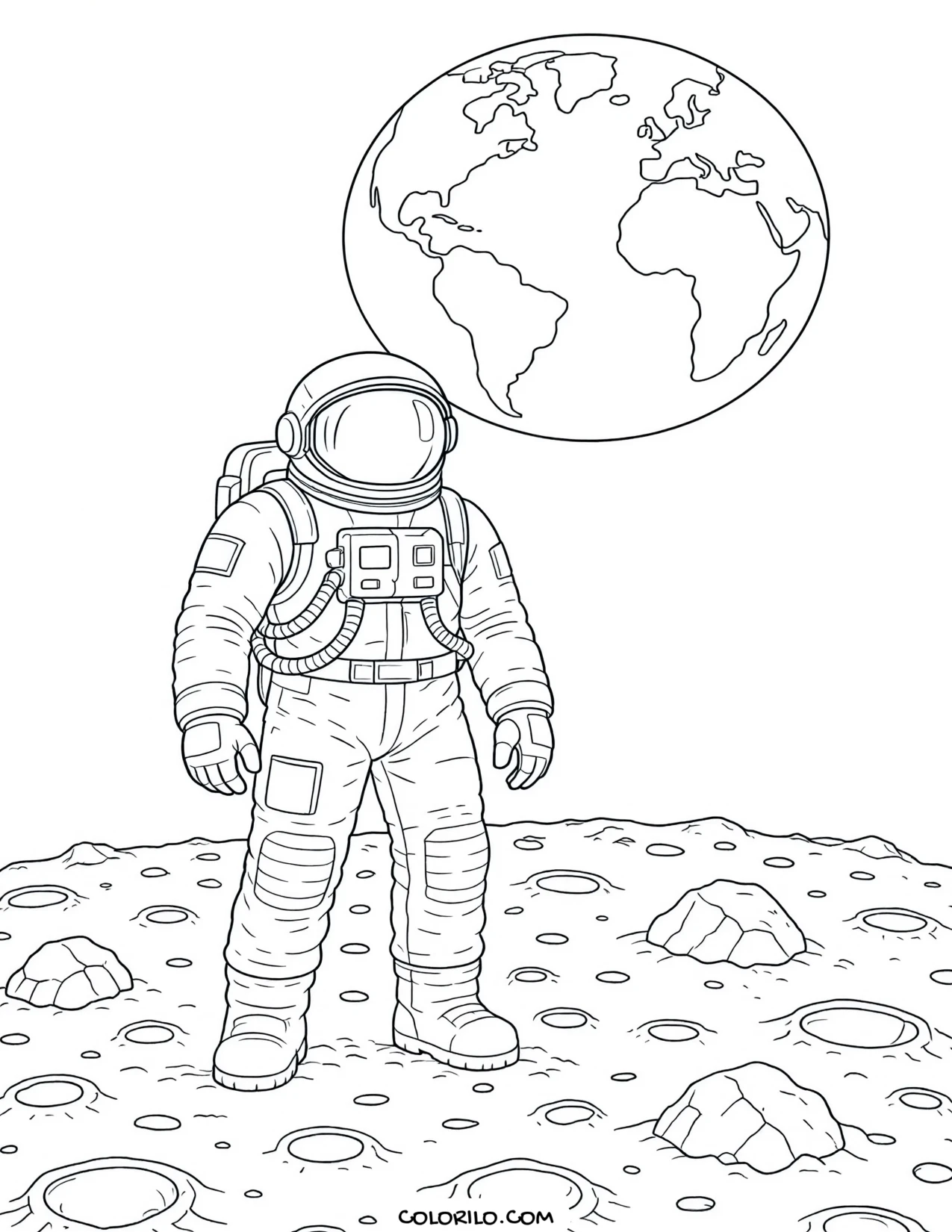
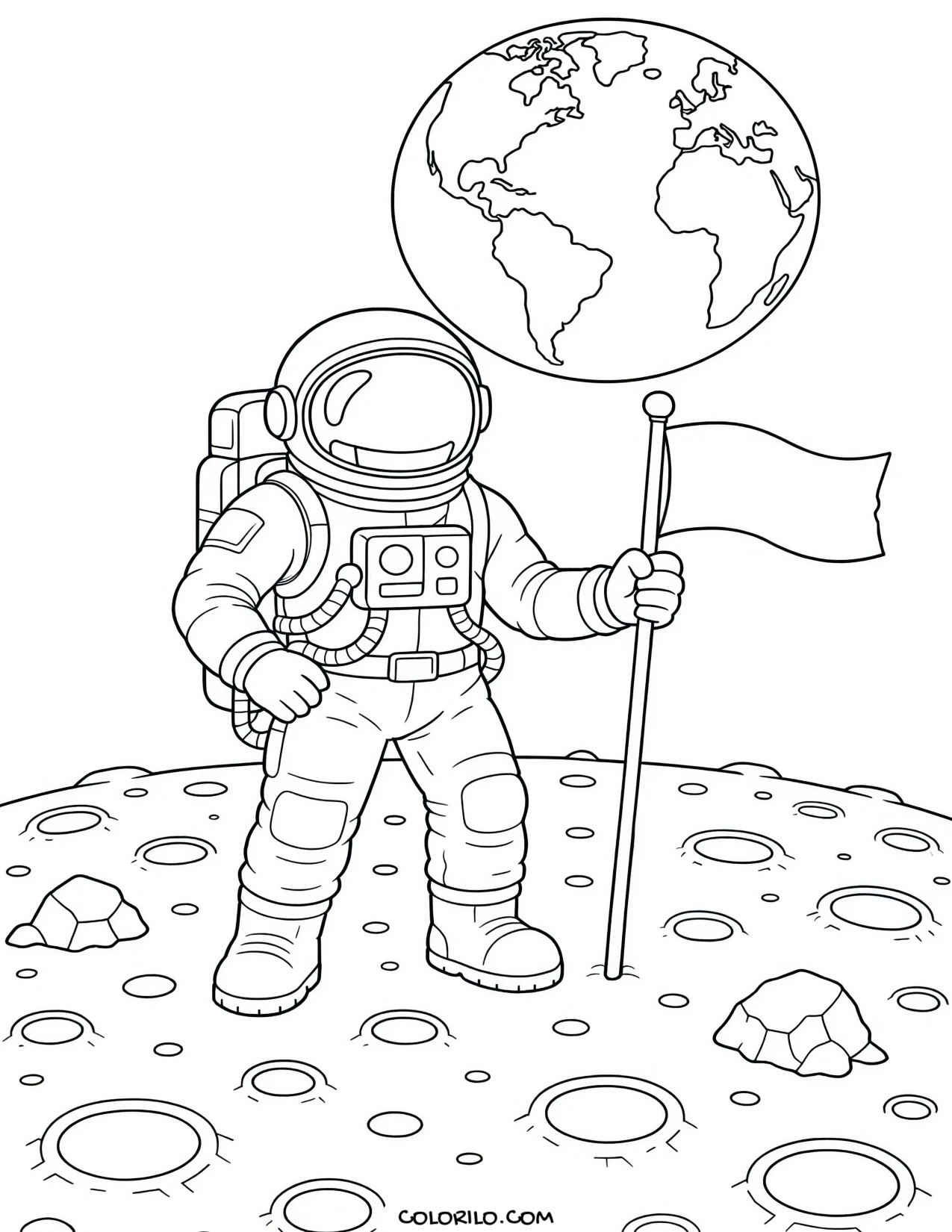
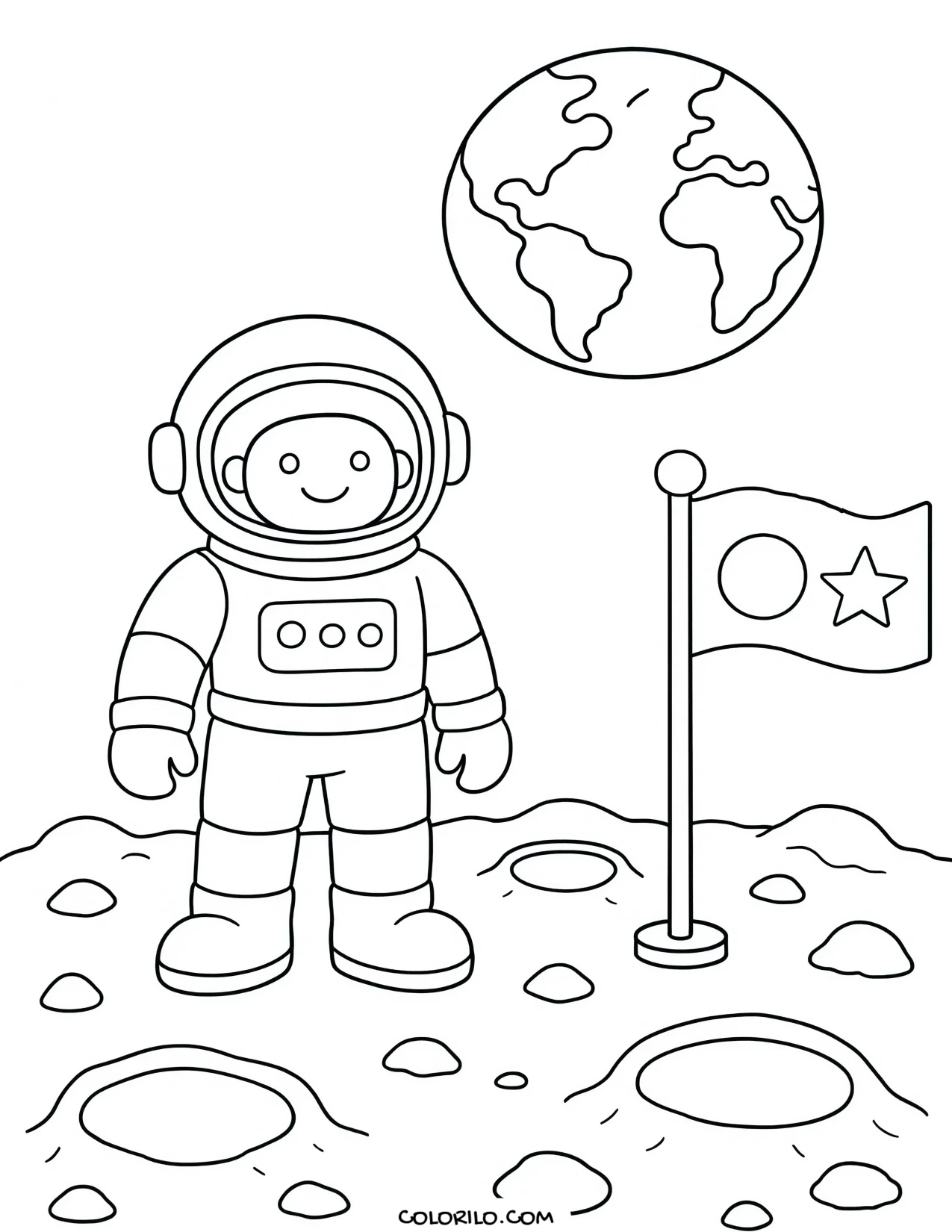
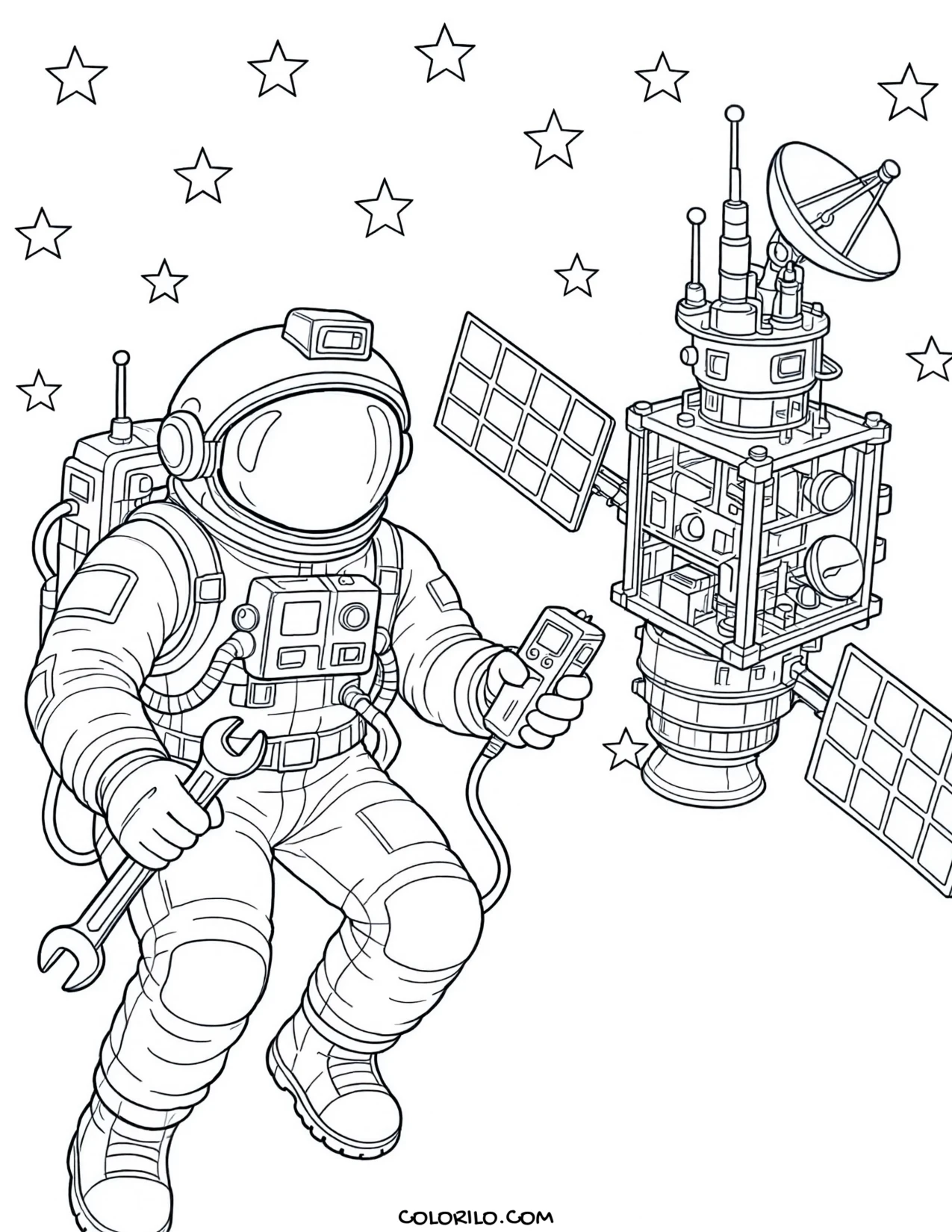
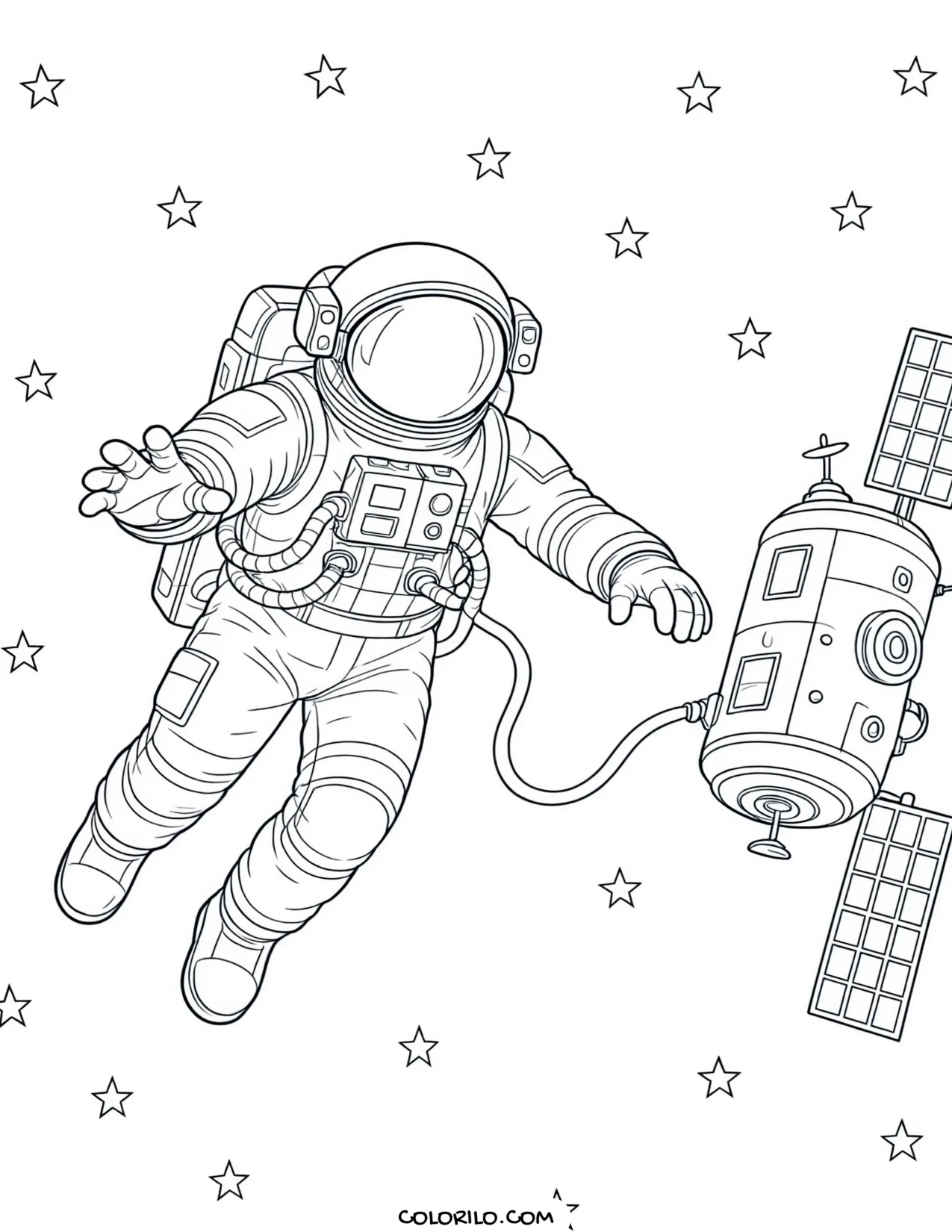
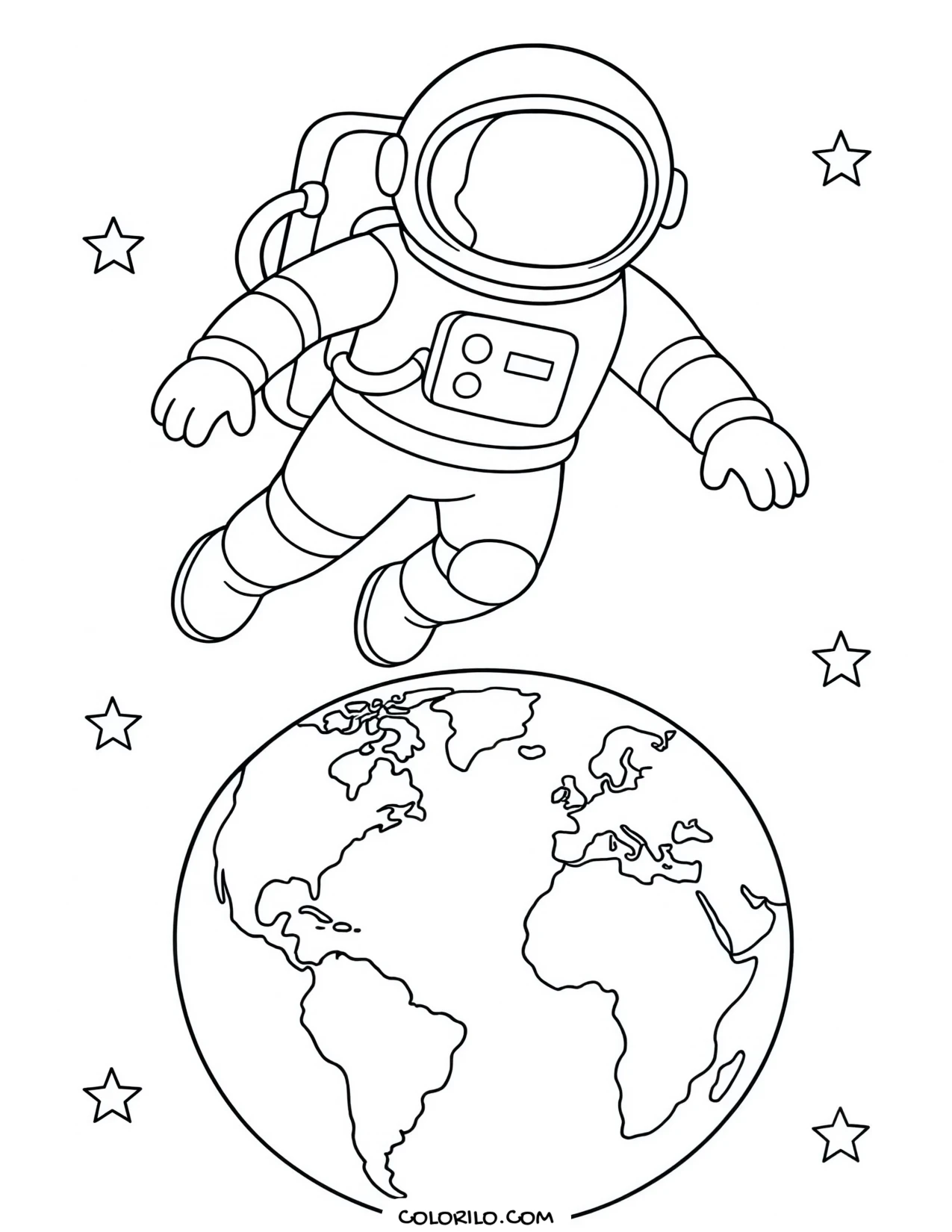
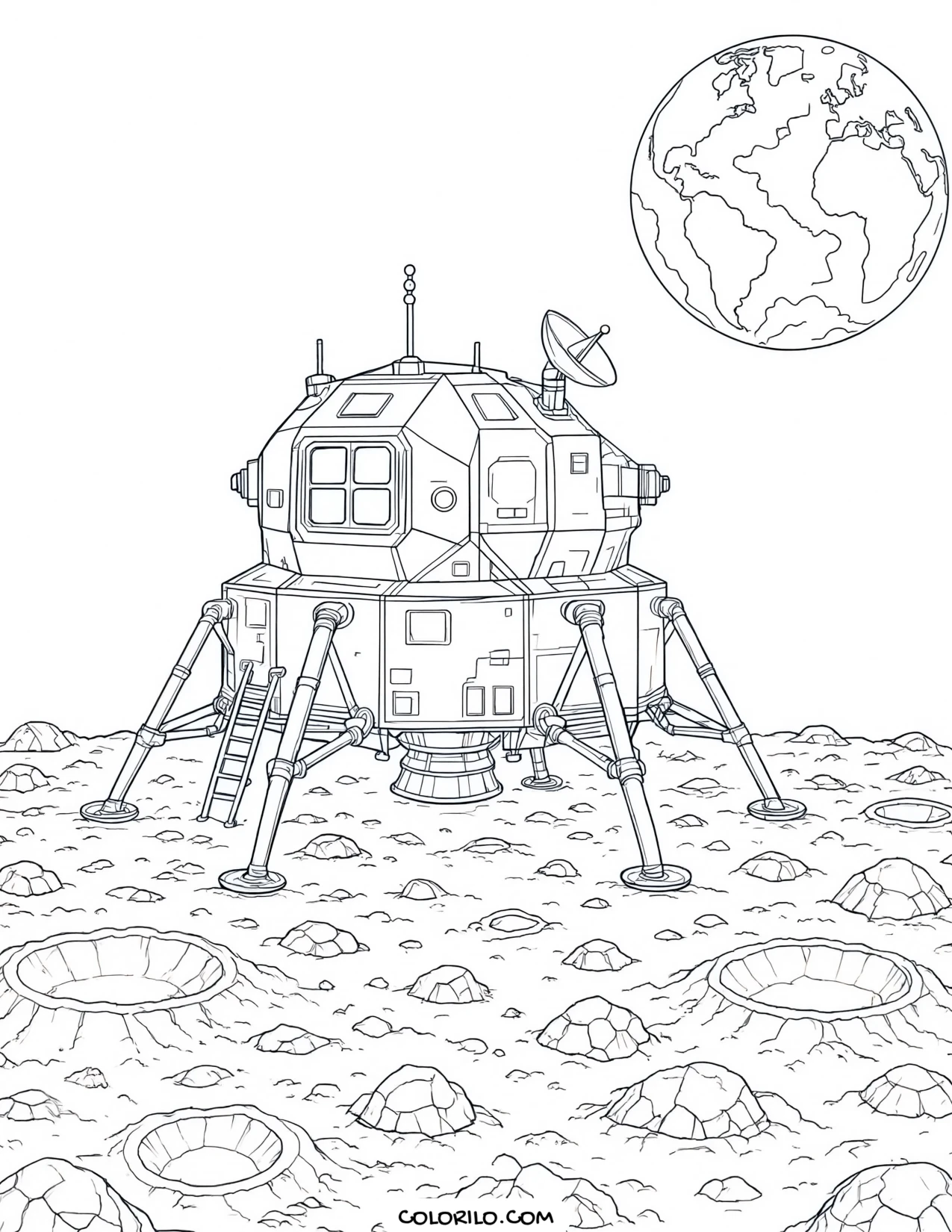
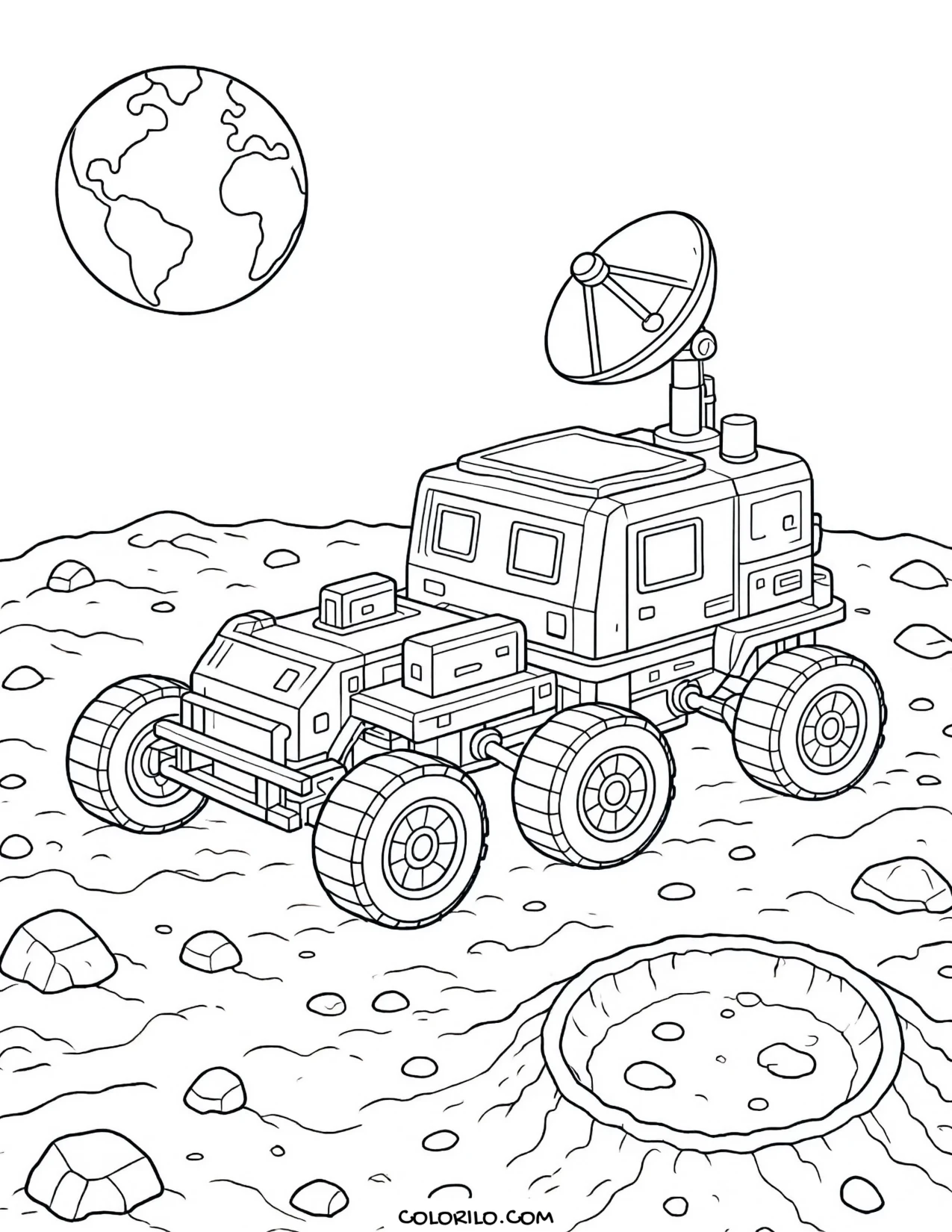
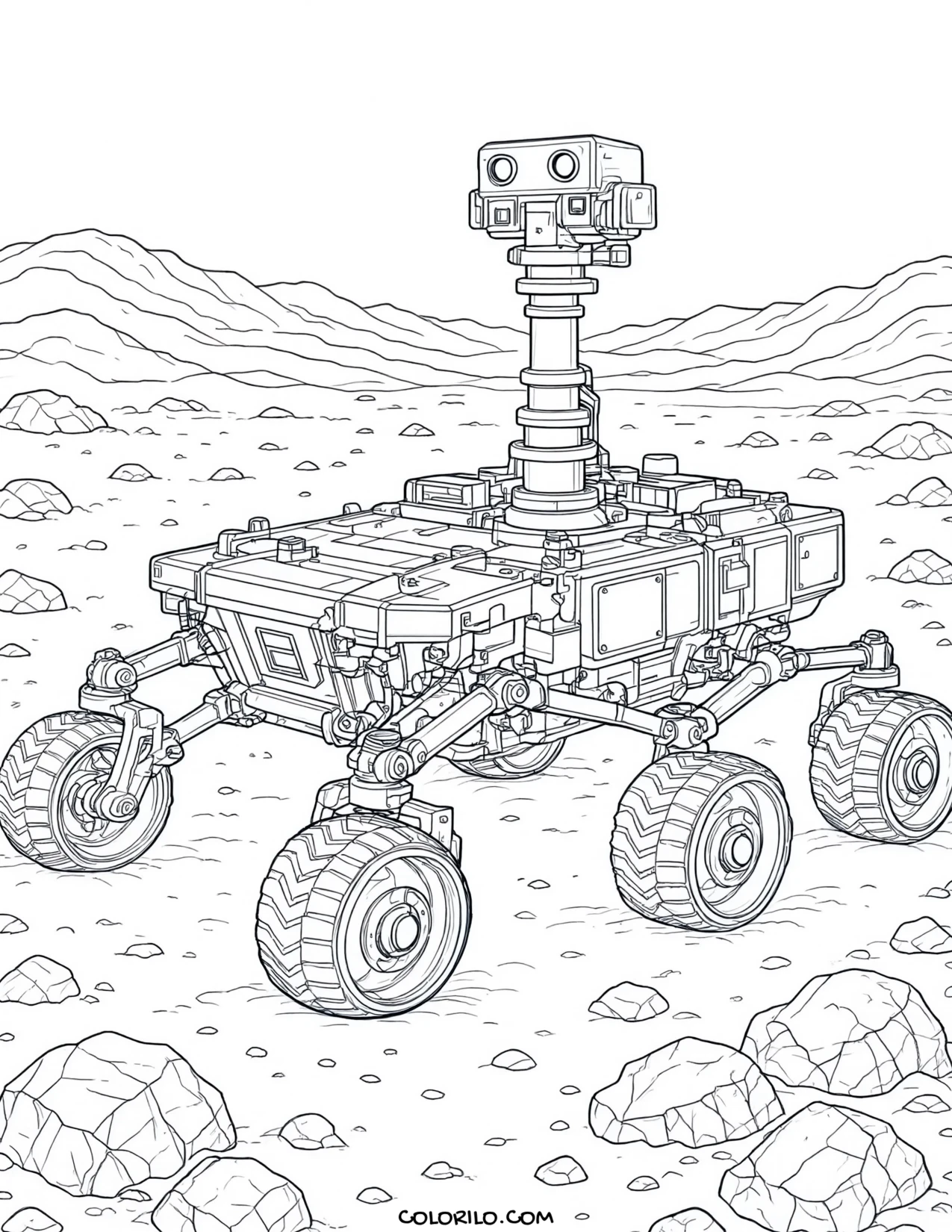
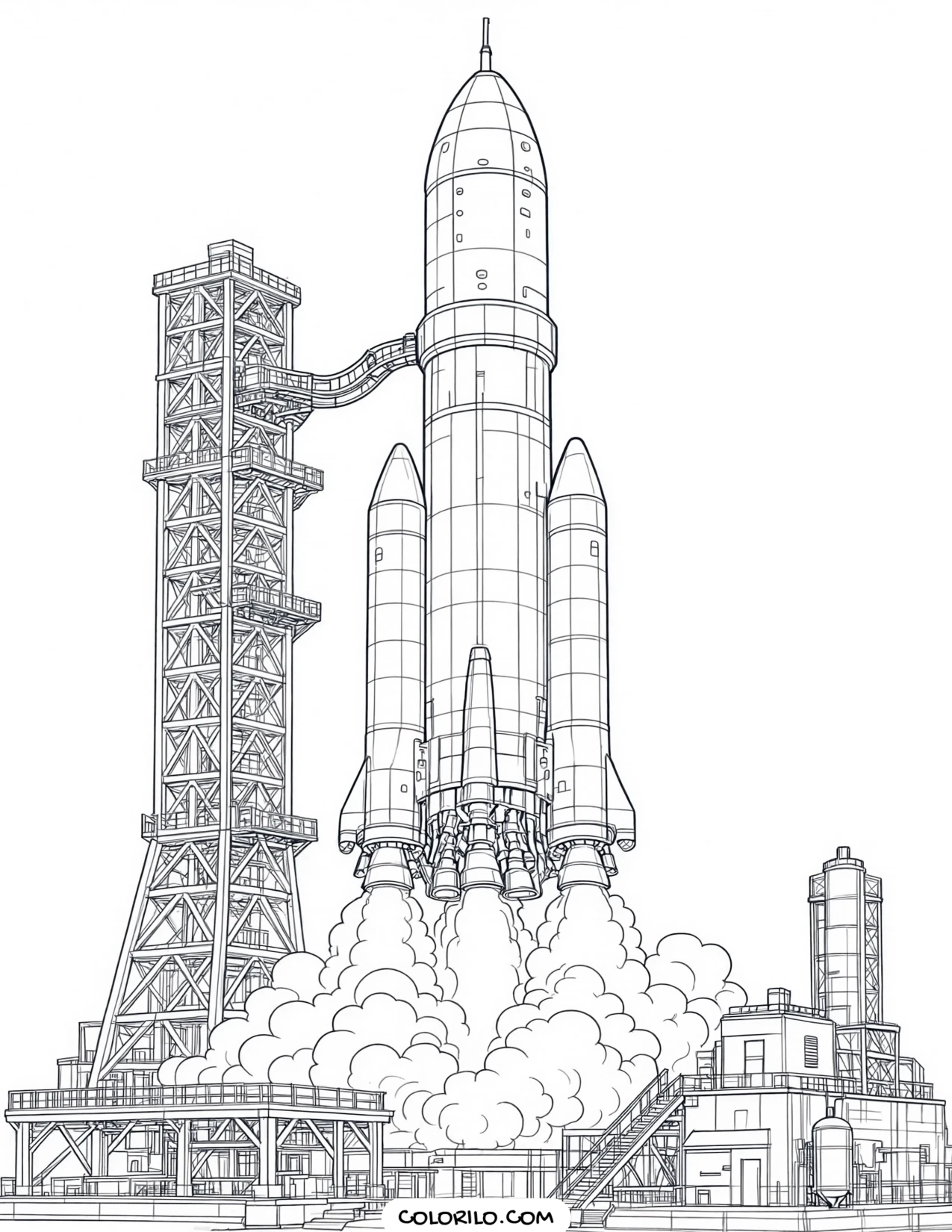
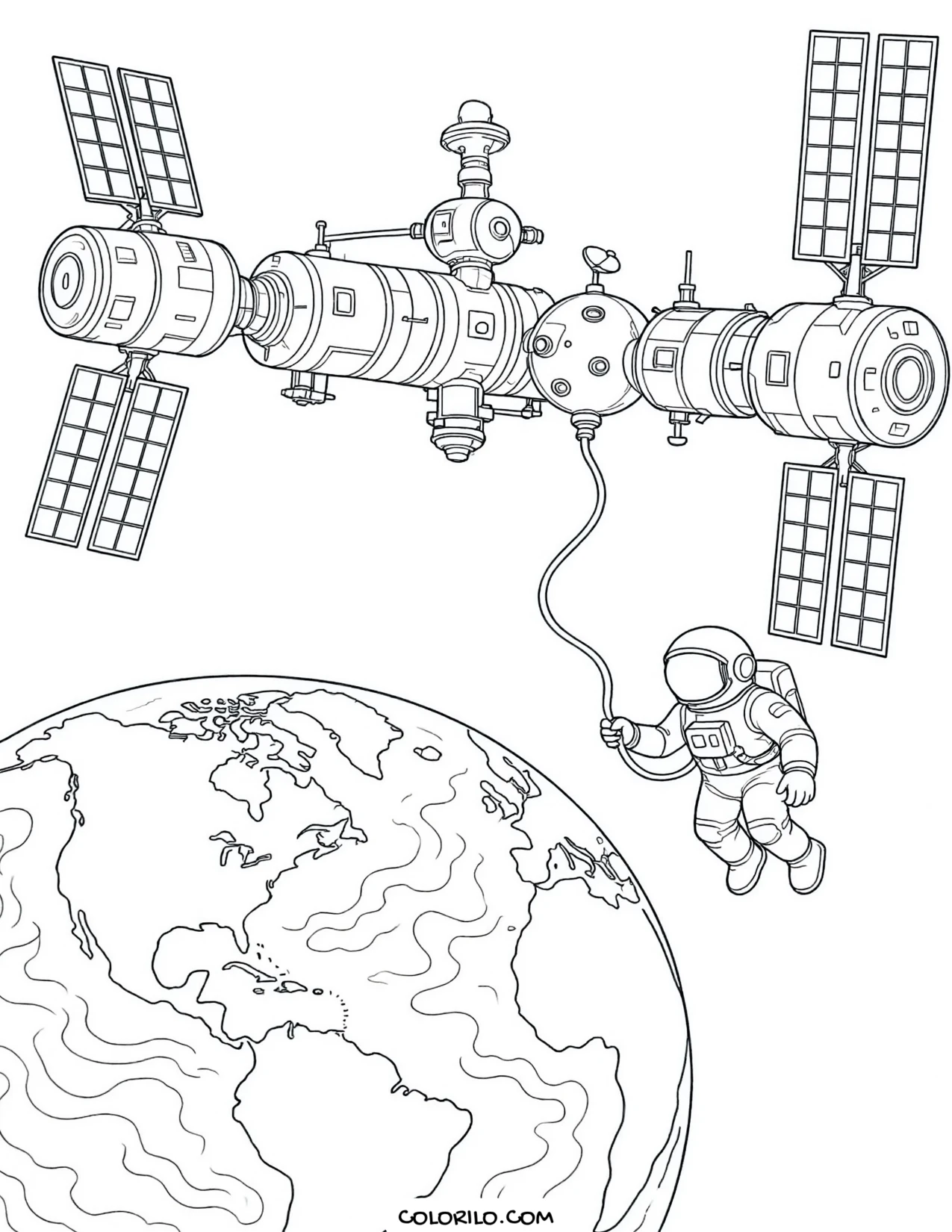
The astronaut pages are the ones children reach for: walking on the lunar surface, planting a flag, floating above Earth, repairing something on a spacewalk, working on a satellite, exploring a crystal cave. Alongside them sit the machines, a Saturn rocket lifting off, a rocket on its launch tower, the lunar landing module, a lunar rover, two Mars rovers.
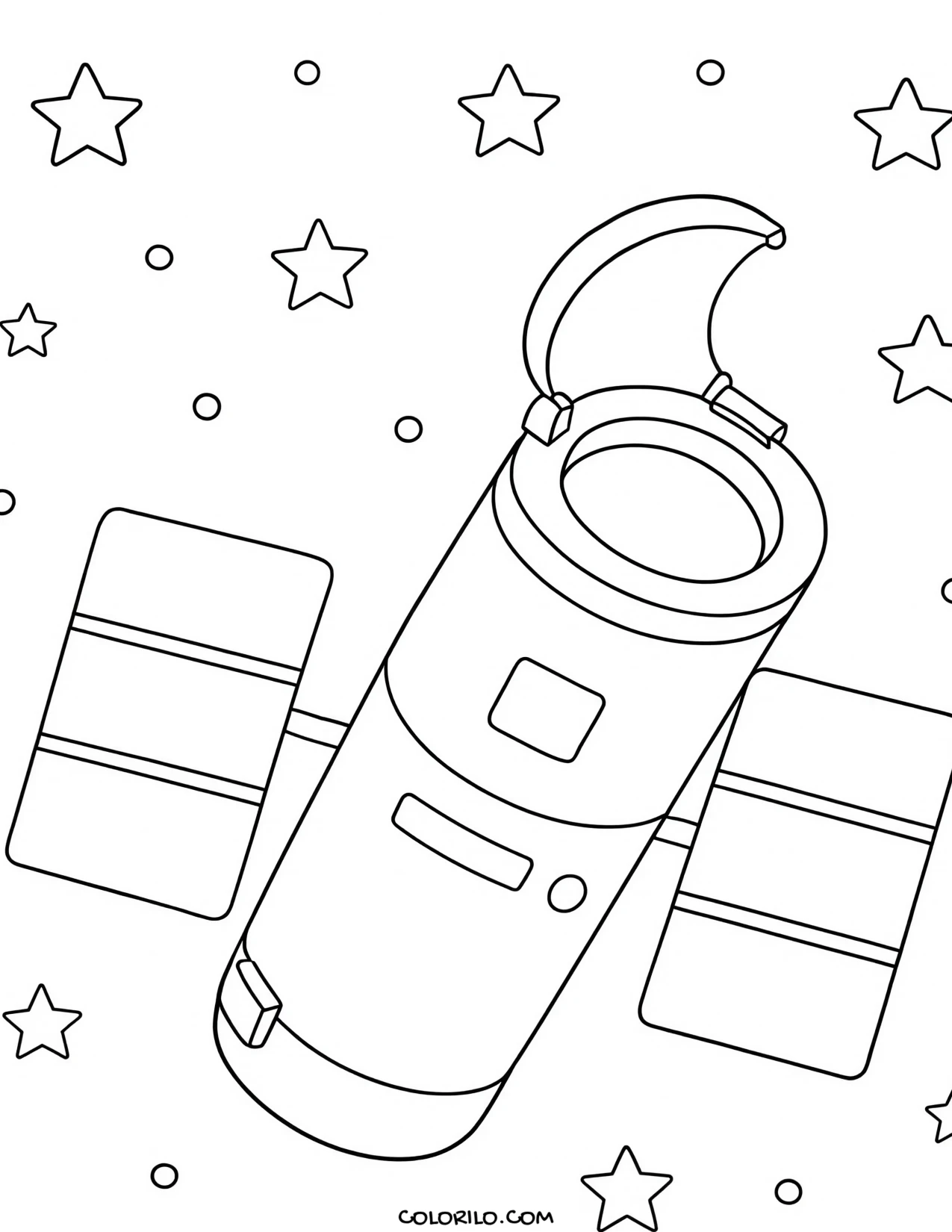
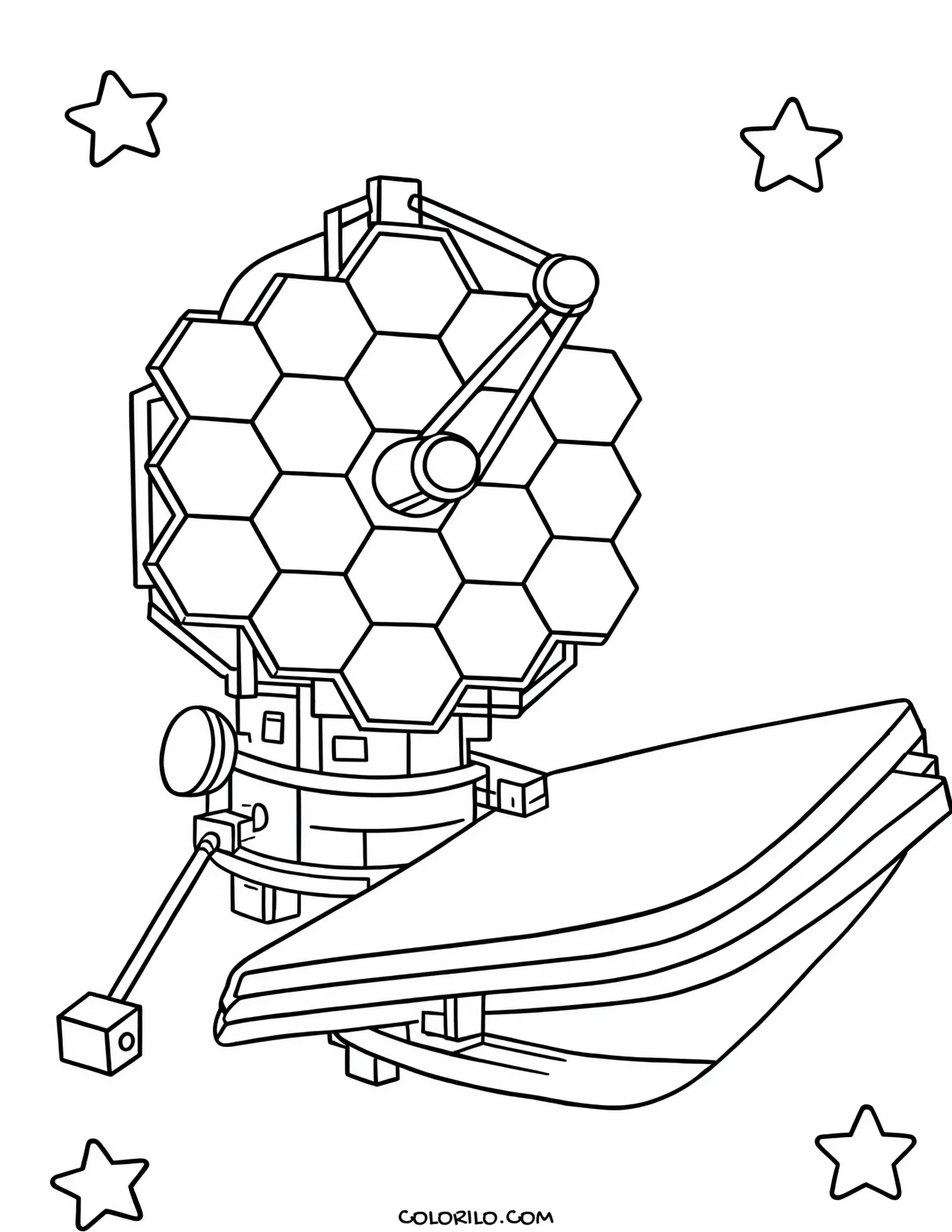
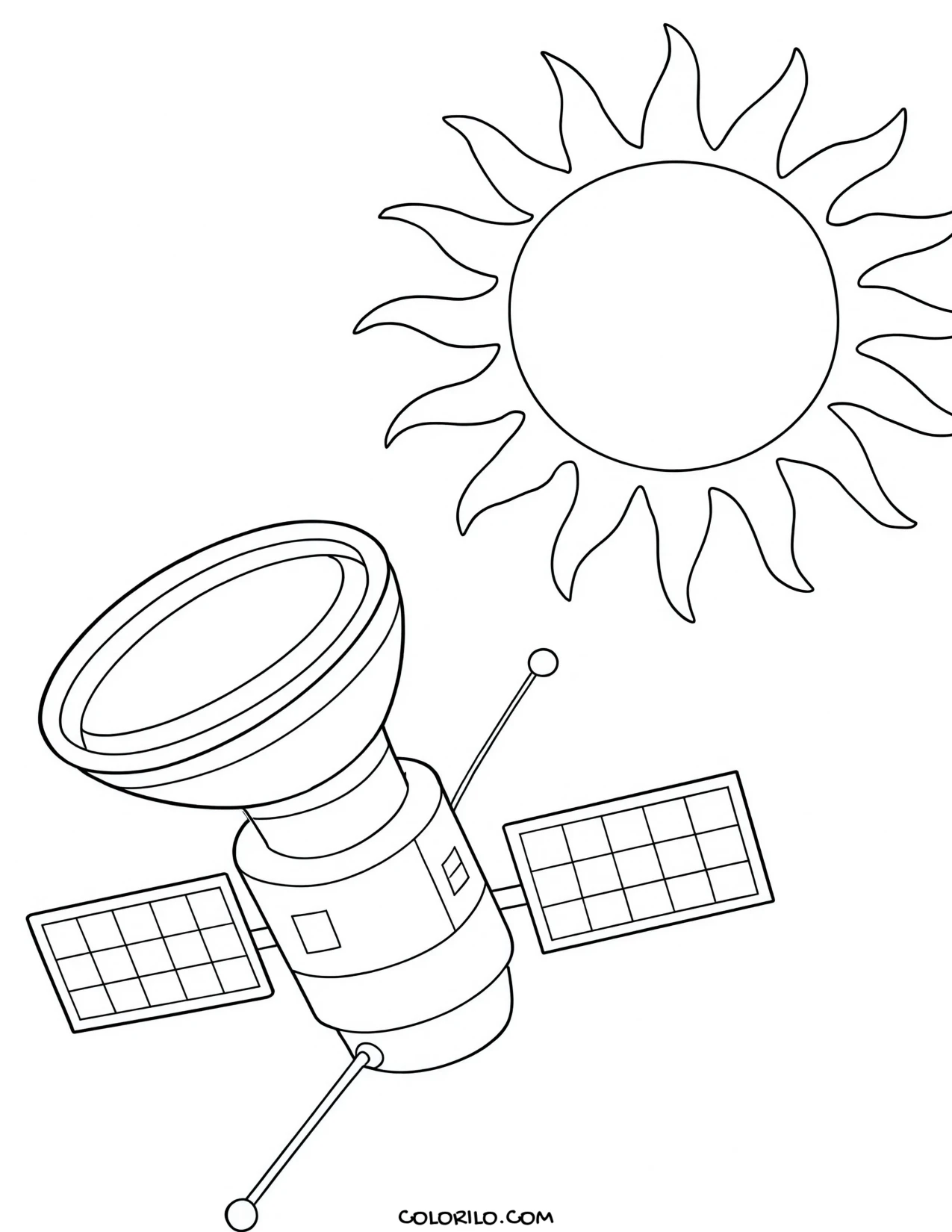
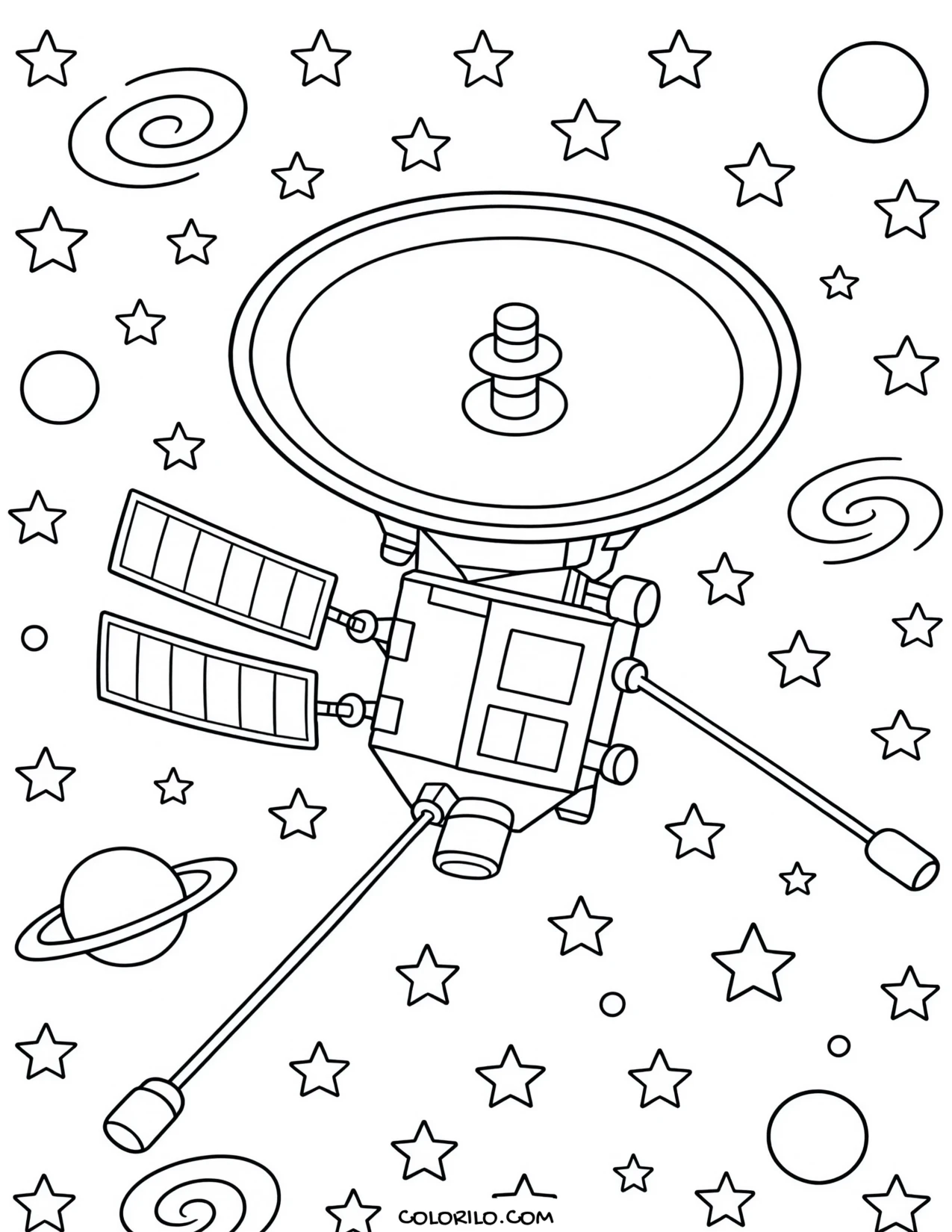
The real spacecraft are worth pointing out. Hubble, which has been working since 1990. James Webb, which sees infrared and looks further back in time than anything before it. Voyager, launched in 1977 and now beyond the solar system entirely. And the Parker Solar Probe, which flies through the Sun’s outer atmosphere.
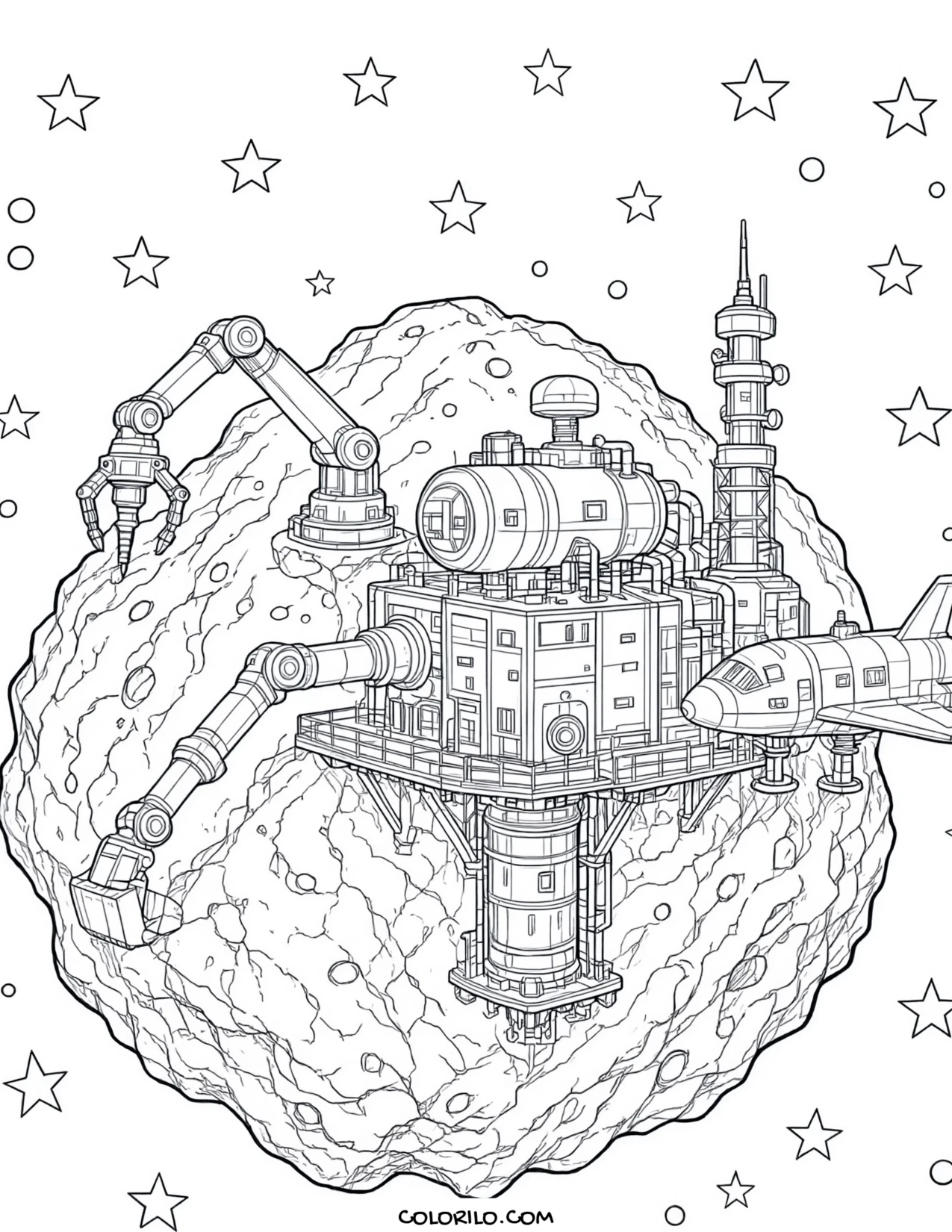
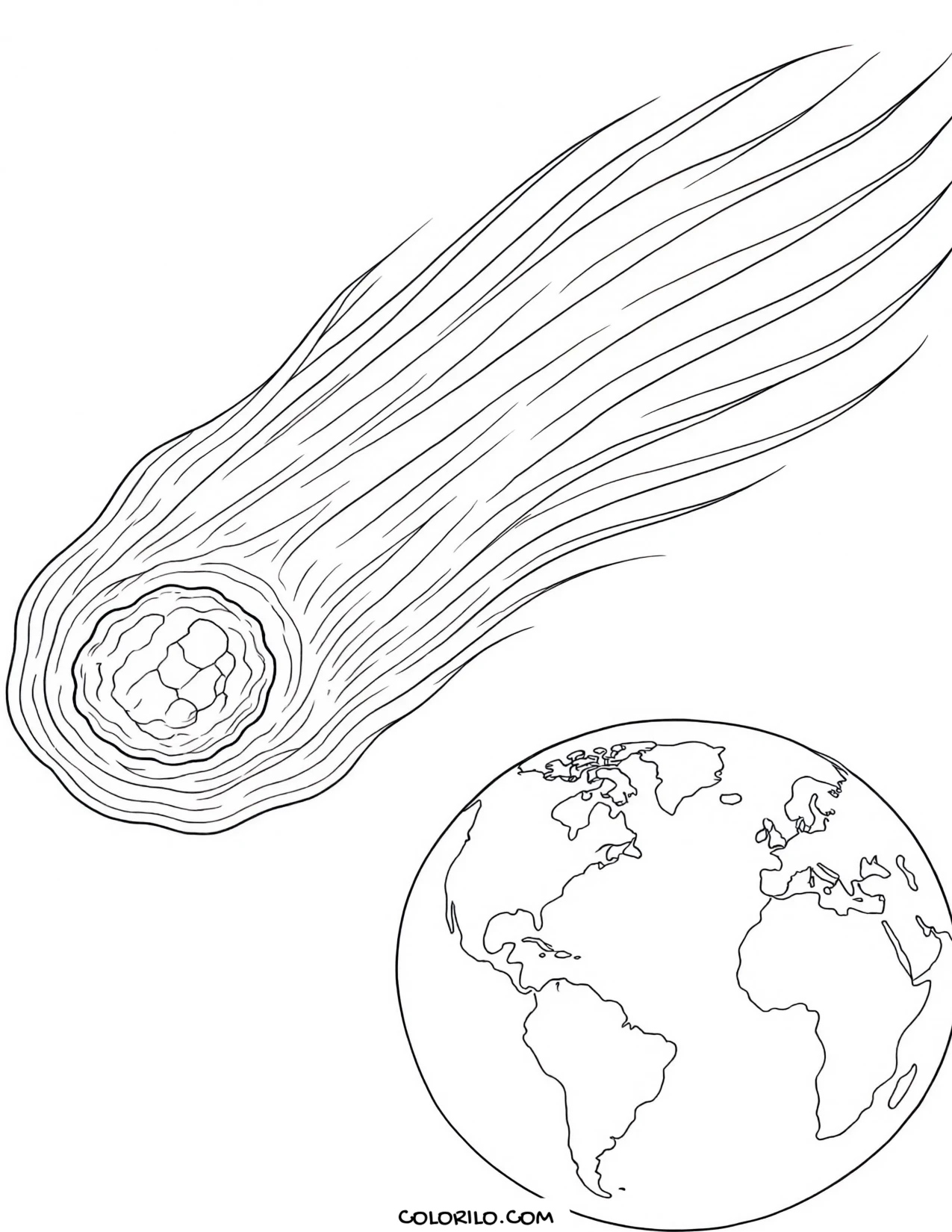
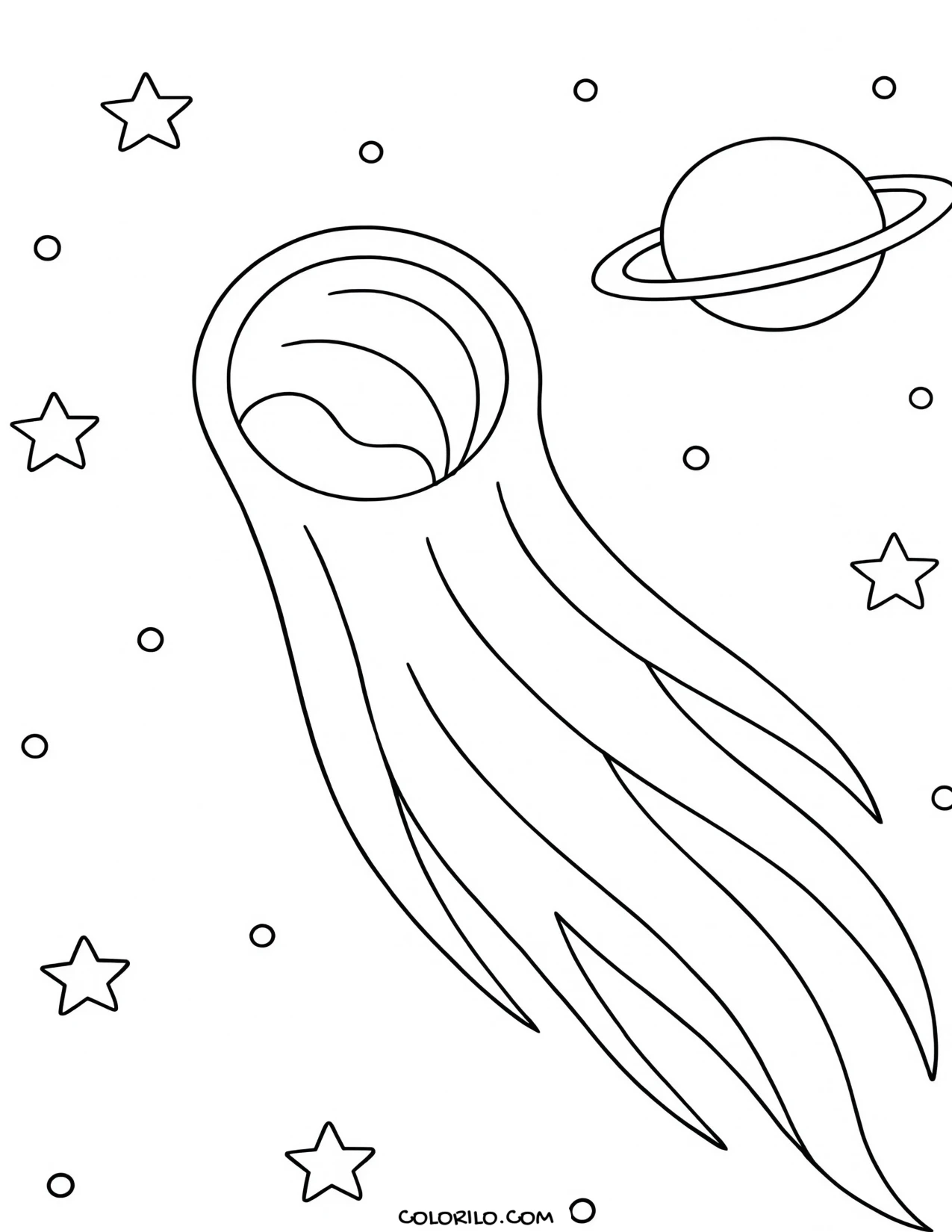
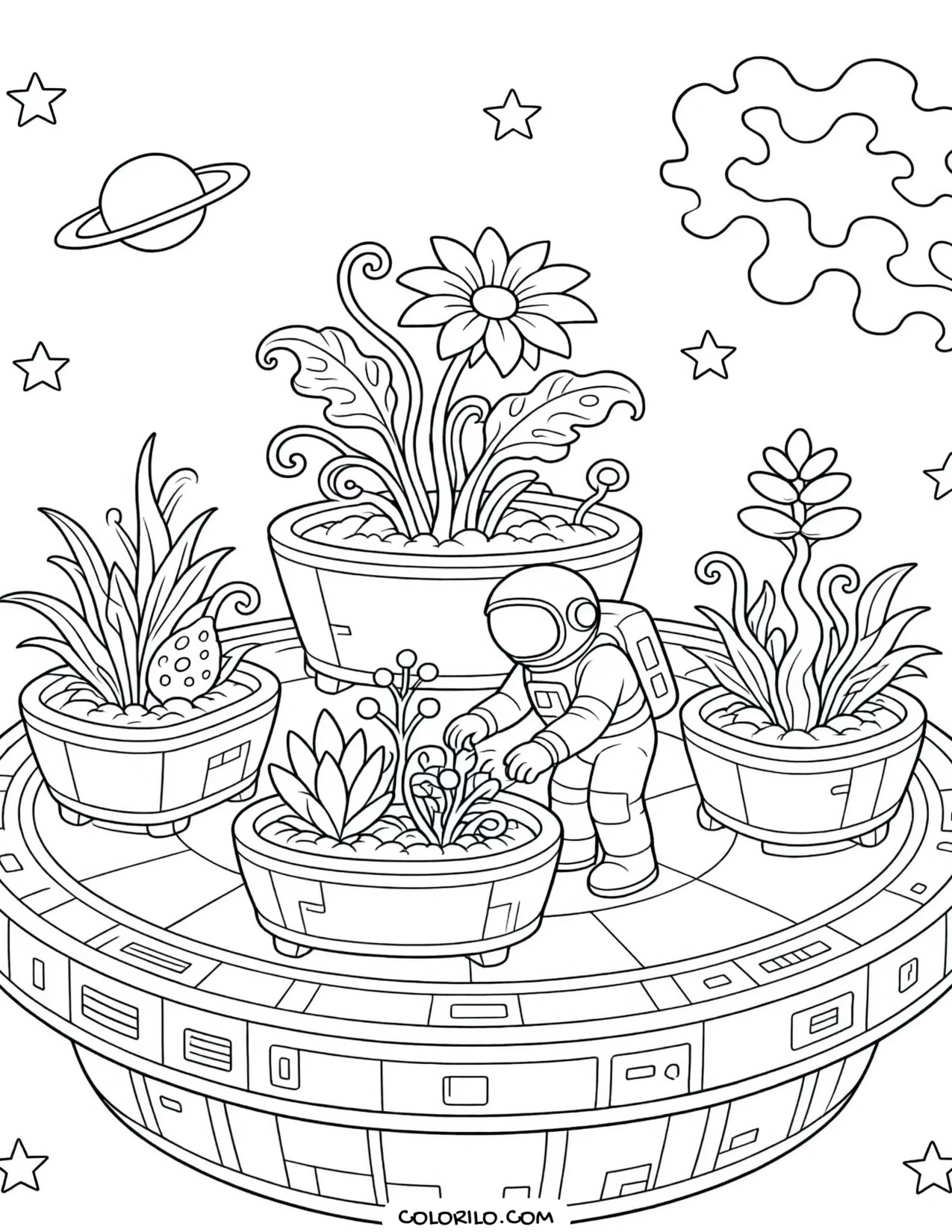
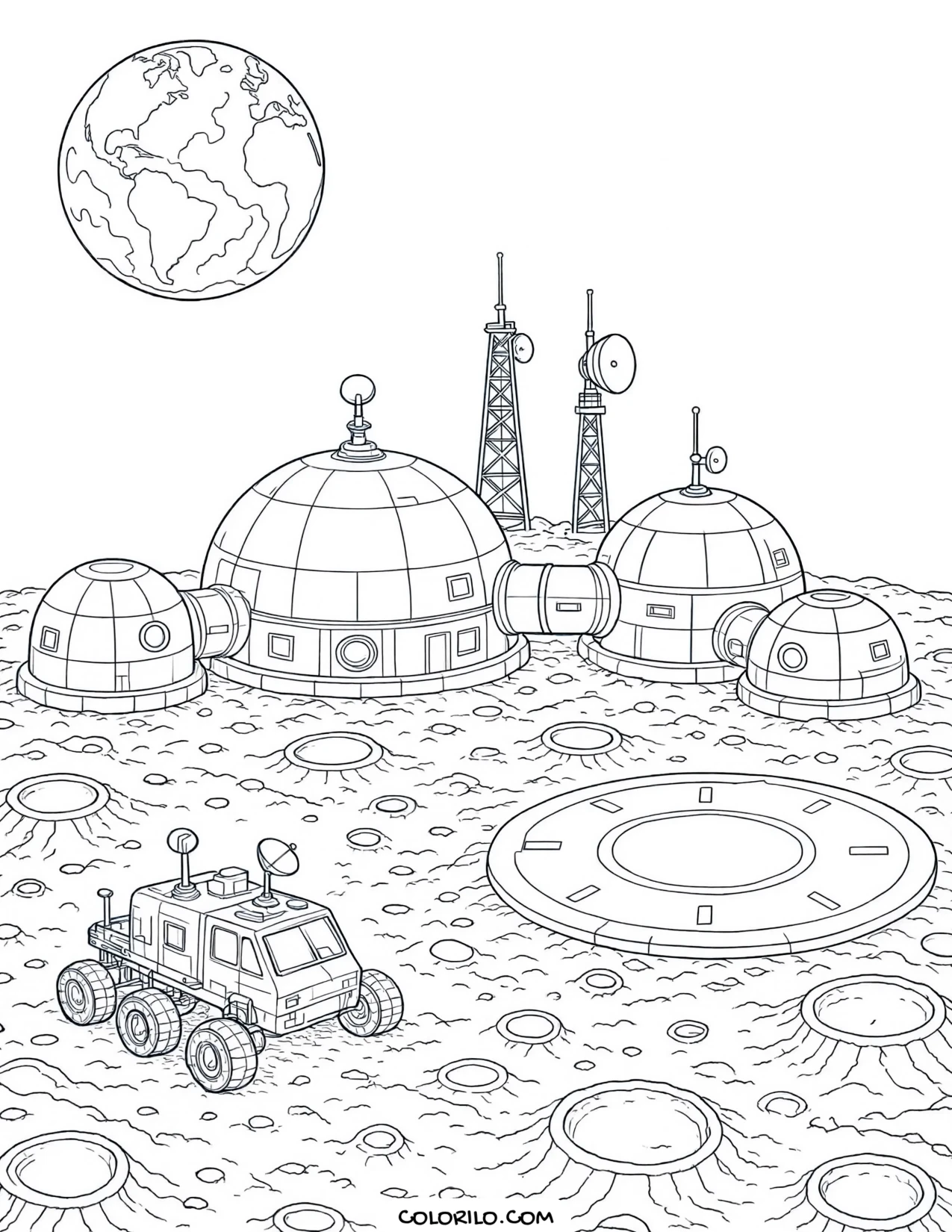
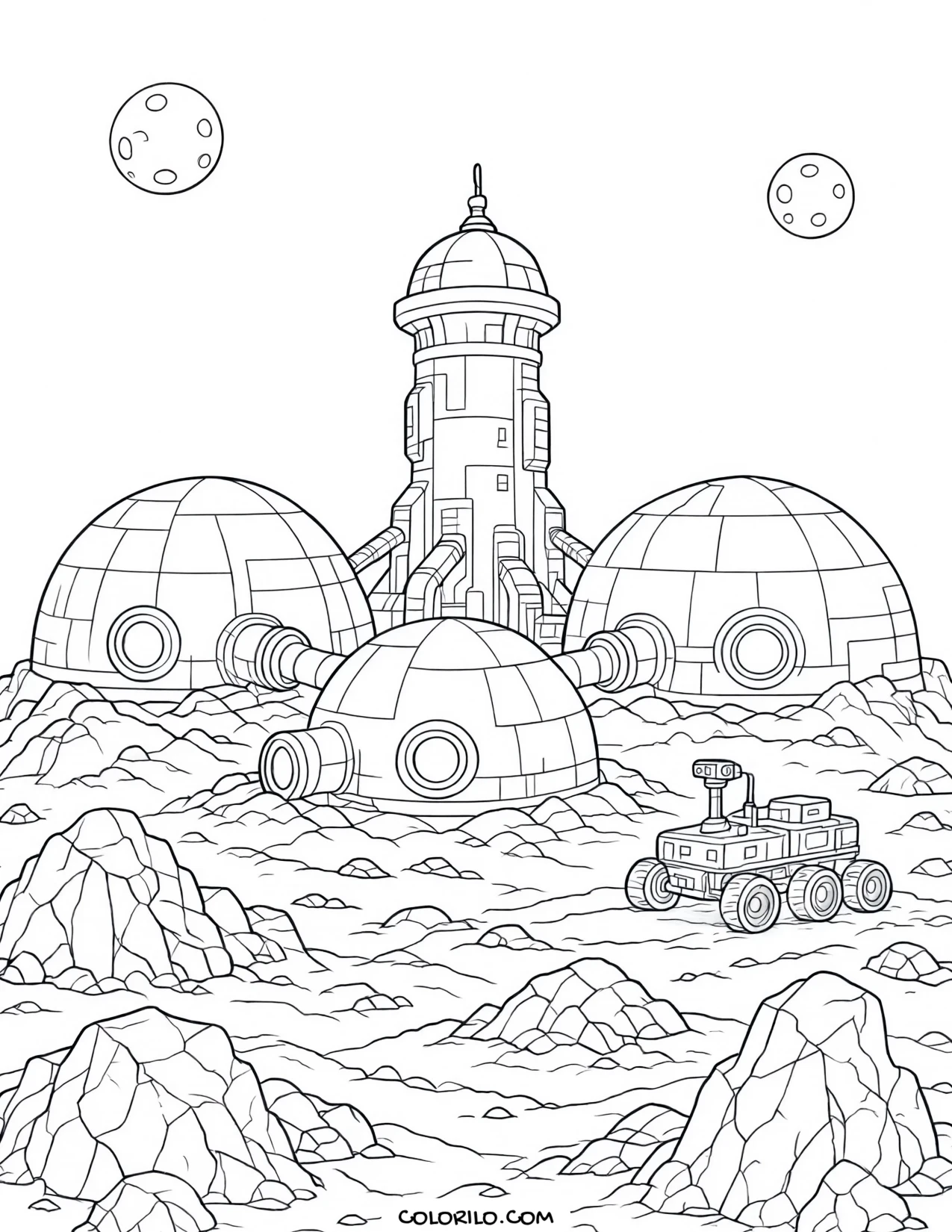
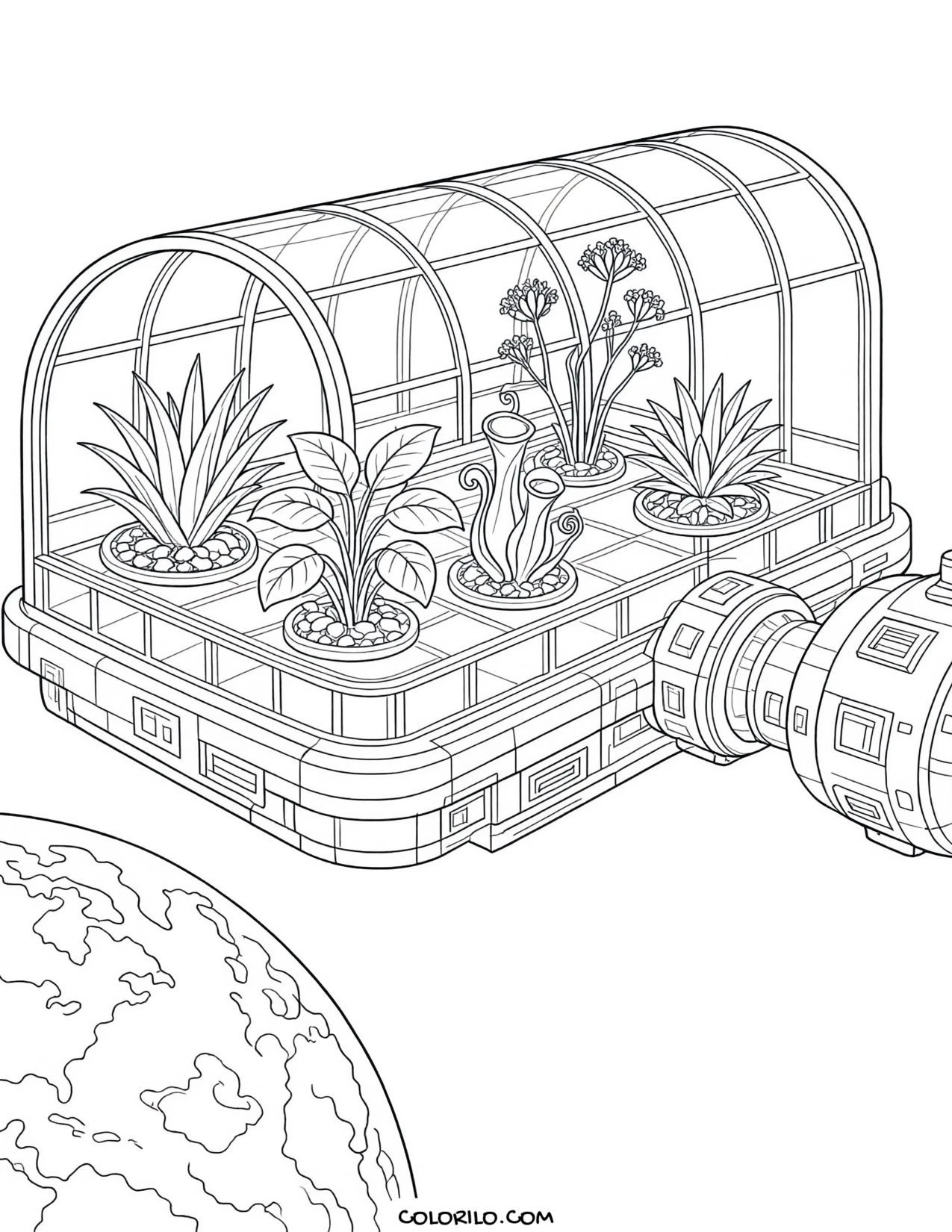
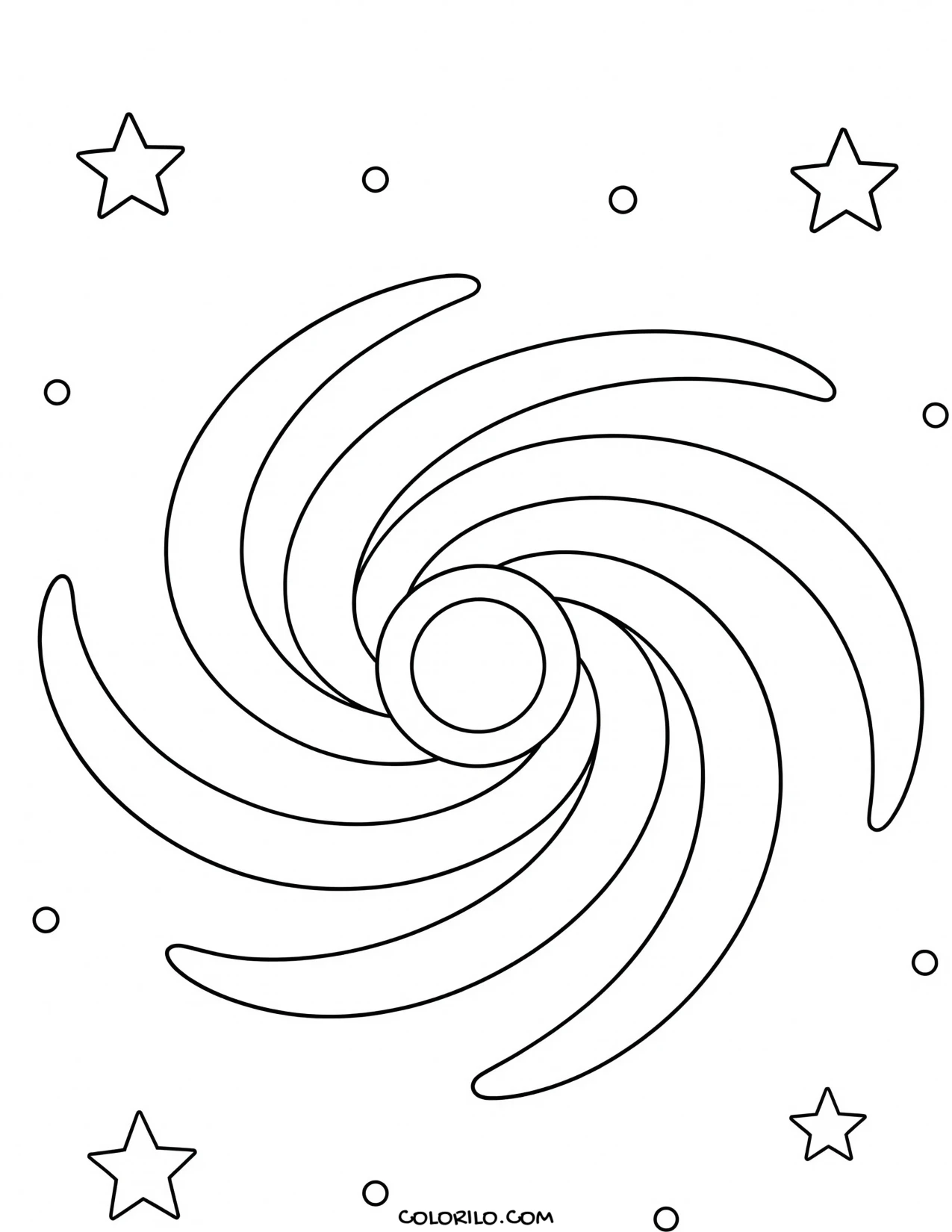
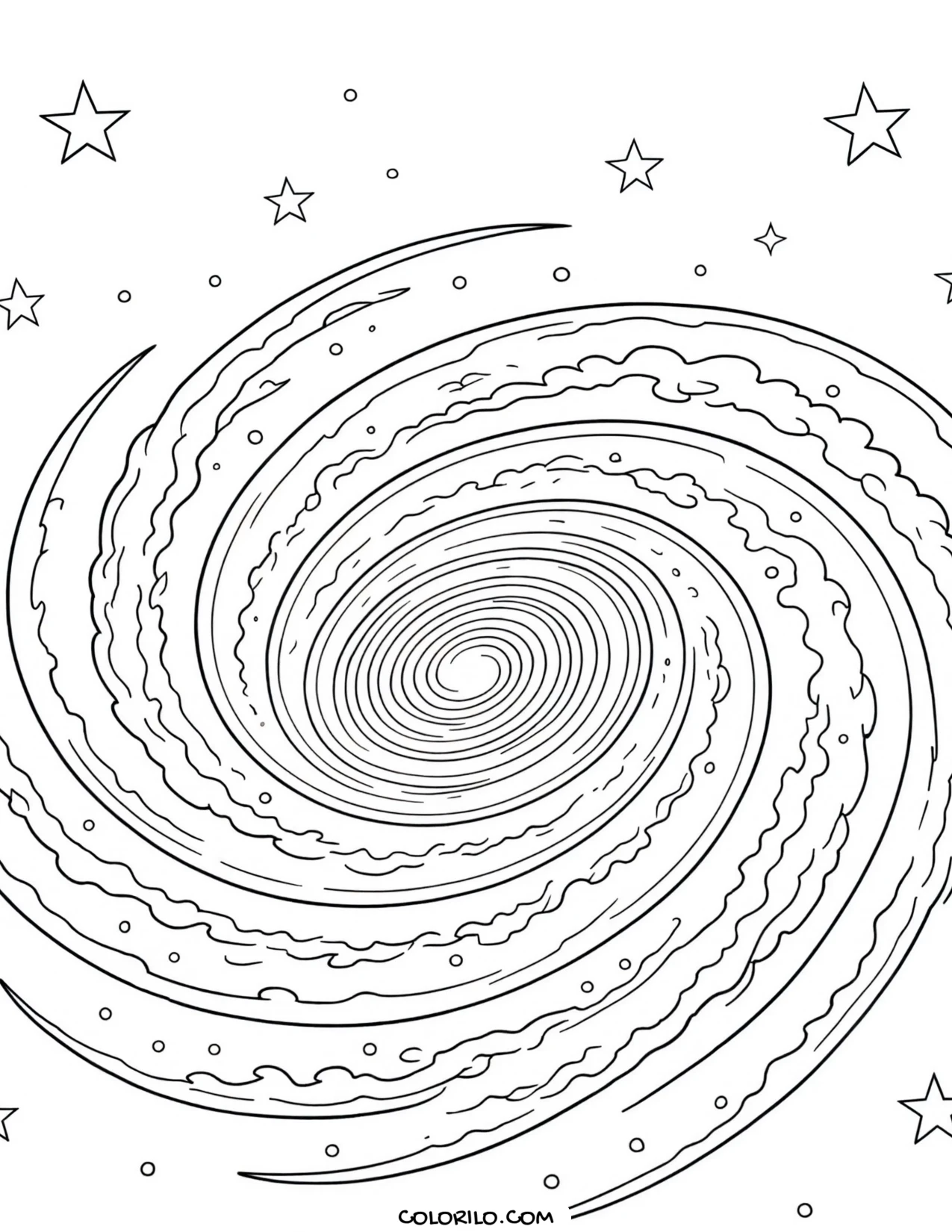
There are imagined places too, a lunar base, Mars habitat domes, a rotating space habitat, an orbital greenhouse, an asteroid mining outpost, a floating garden, plus a black hole, two spiral galaxies, a nebula, comets, and four alien designs for anyone who wanted something less factual.
Every one of these space coloring pages is free, prints on standard US letter paper, and needs no sign-up. Click any design below to open the full-size PDF.
What’s in This Collection
The planets
All eight, plus Pluto. Each is drawn with the feature that identifies it, which makes them useful for learning as well as colouring. Saturn’s rings are mostly ice, some pieces the size of a house, and they are only about ten metres thick despite being 280,000 kilometres across.
Moons
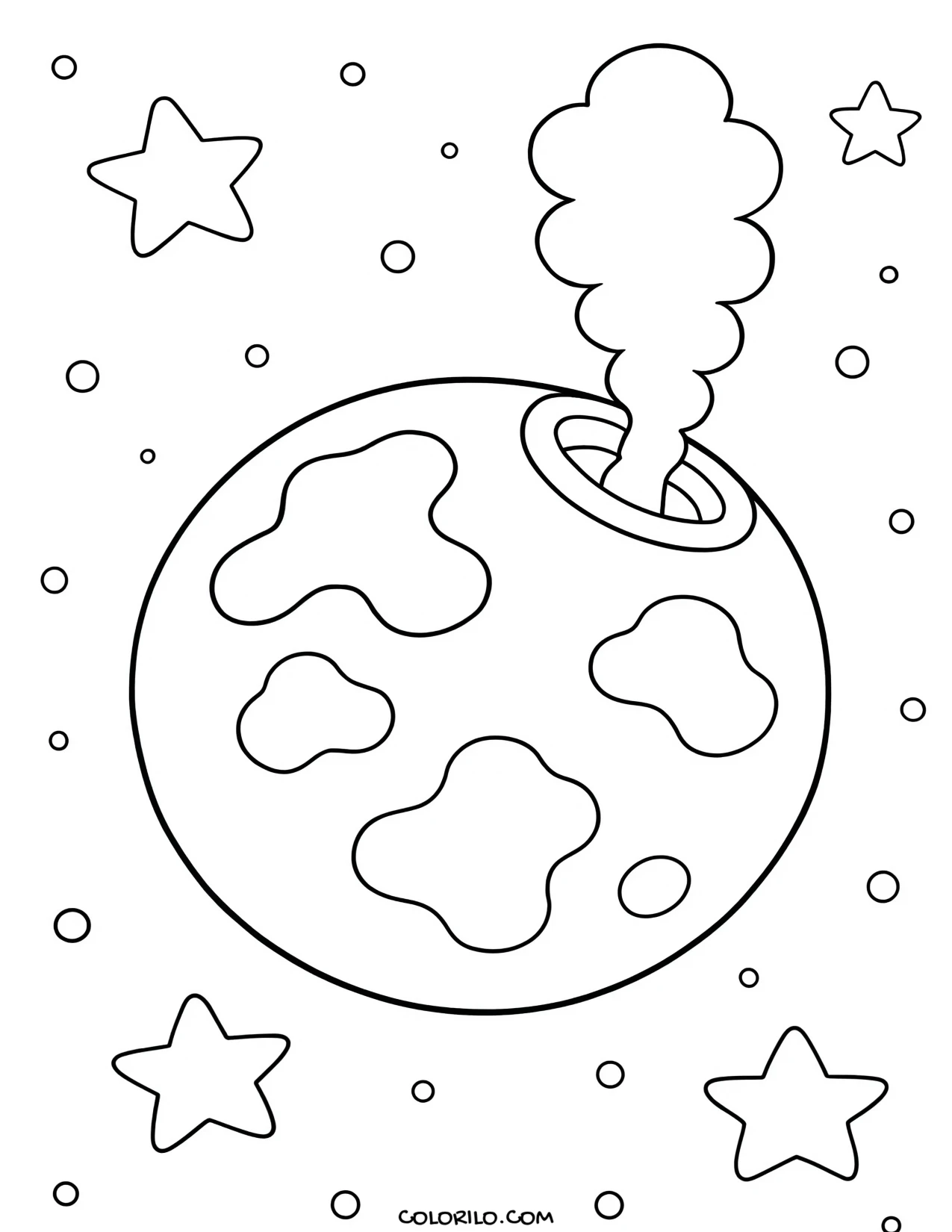
Europa, Io, Titan and our own. Europa has an ocean of liquid water under its ice, probably more than all of Earth’s oceans combined, and is one of the likeliest places to find life. Io is the most volcanically active body in the solar system. Titan has rivers and lakes, but of liquid methane rather than water.
Astronauts
Six designs, on the lunar surface, planting a flag, floating above Earth, repairing on a spacewalk, working on a satellite, and in a crystal cave. A spacesuit costs several million dollars and is effectively a spacecraft shaped like a person.
Rockets and landers
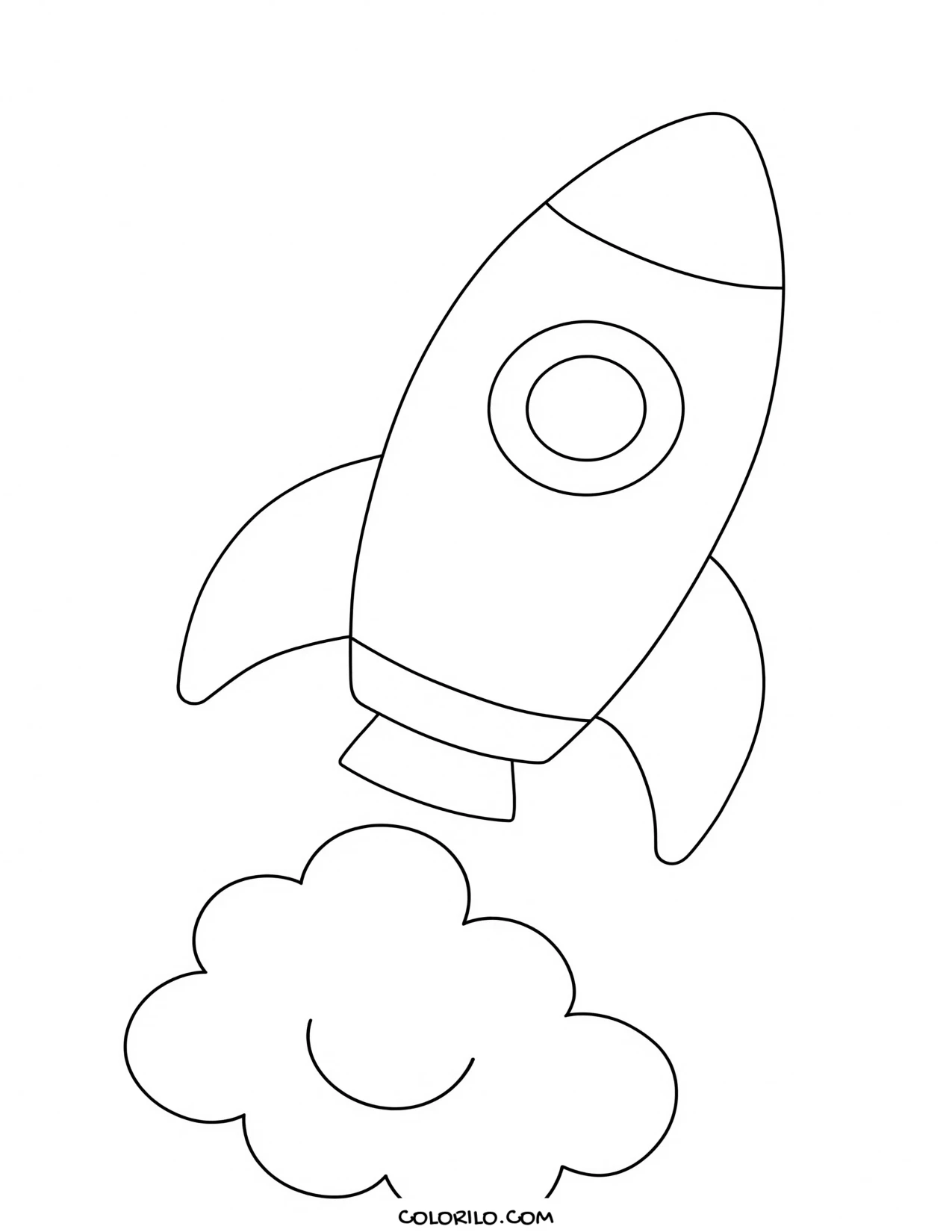
A Saturn rocket at launch, a rocket on its tower, the lunar landing module, a simple rising rocket. The Saturn V remains the most powerful rocket ever flown successfully, and the guidance computer aboard it had less processing power than a modern washing machine.
Rovers
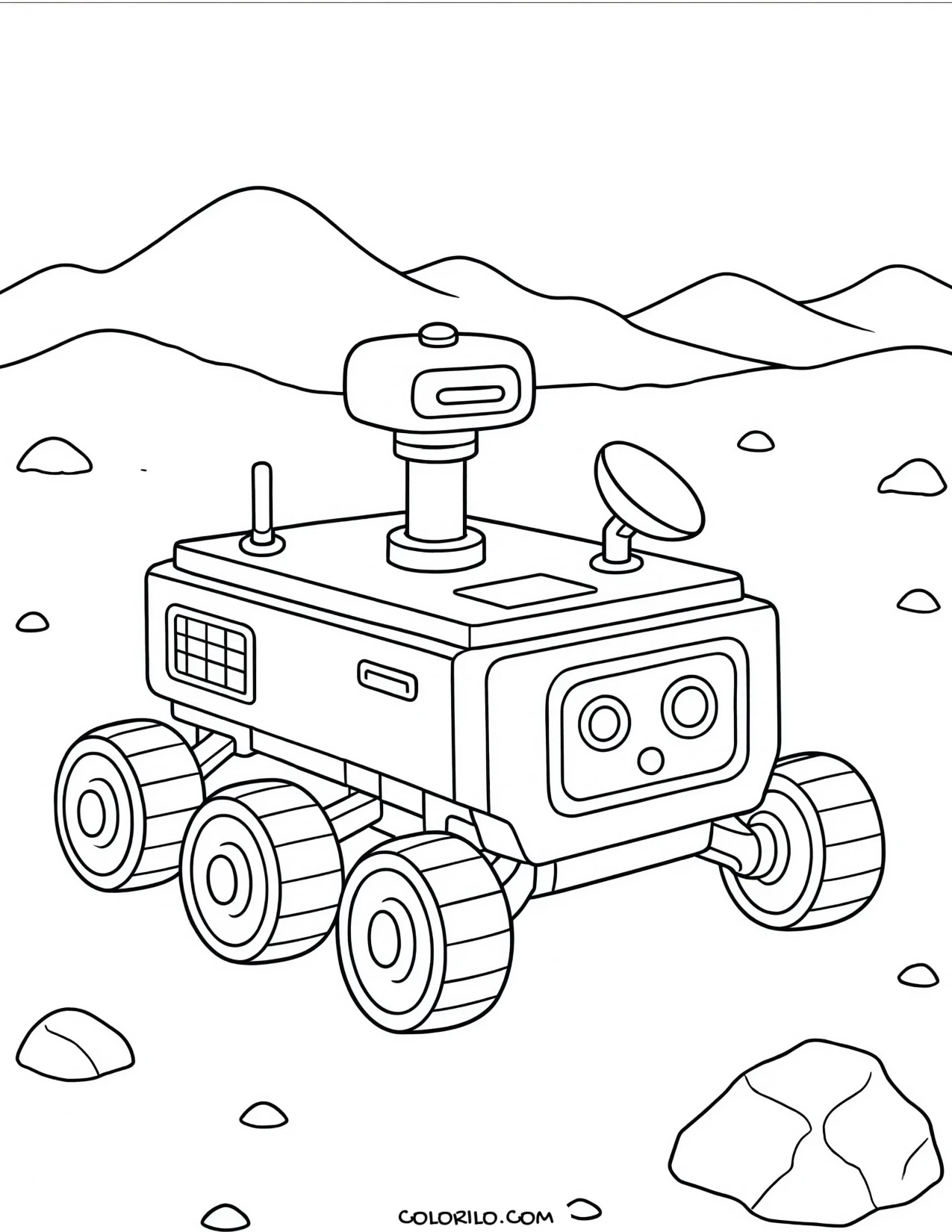
Two Mars rovers and a lunar rover. The Opportunity rover was designed to last 90 days on Mars and kept going for fifteen years.
Real spacecraft
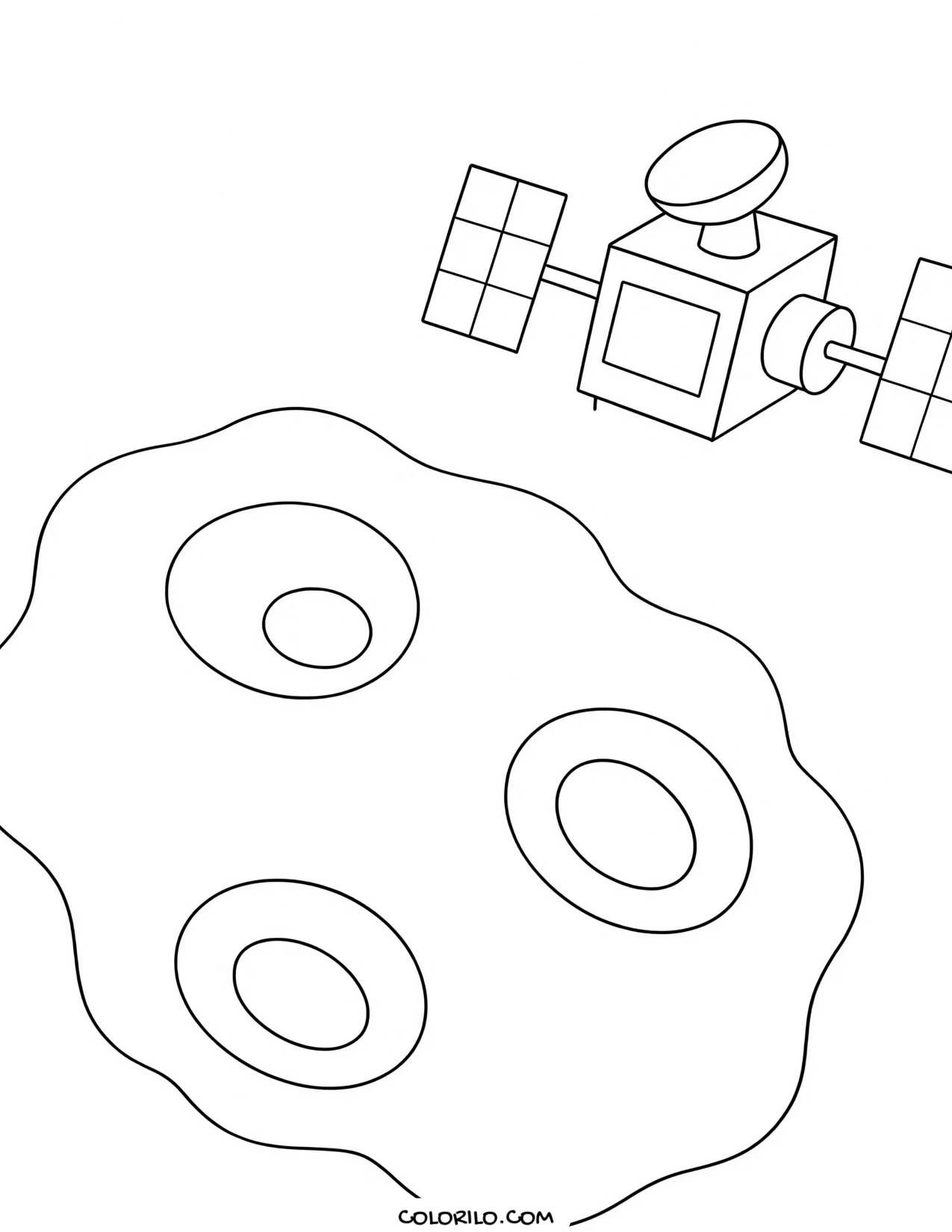
Hubble, James Webb, Voyager, the Parker Solar Probe and the Bennu asteroid mission. Voyager 1 has been travelling since 1977, is now more than 24 billion kilometres away, and still sends back data, though a signal takes over 22 hours to reach us.
Space stations and future bases
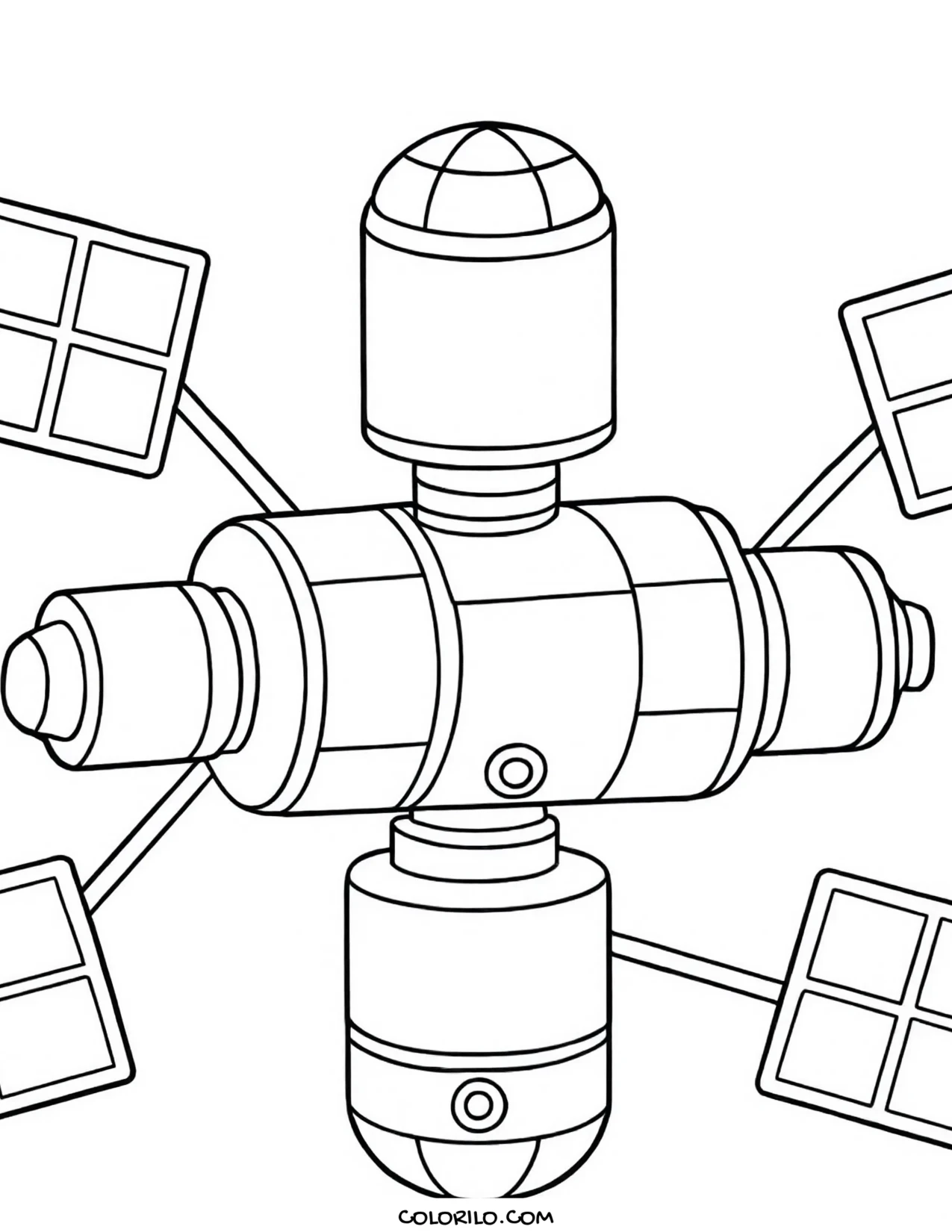
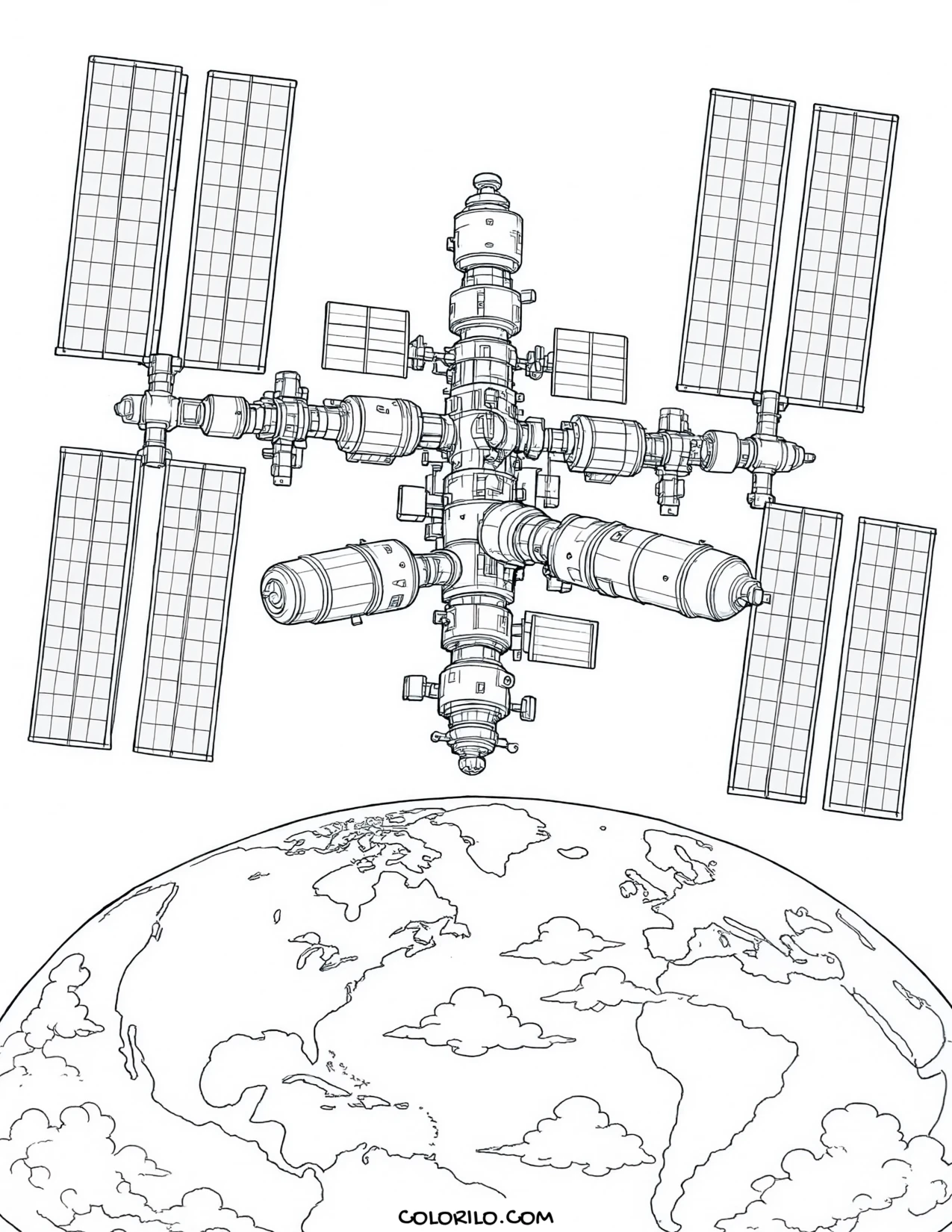
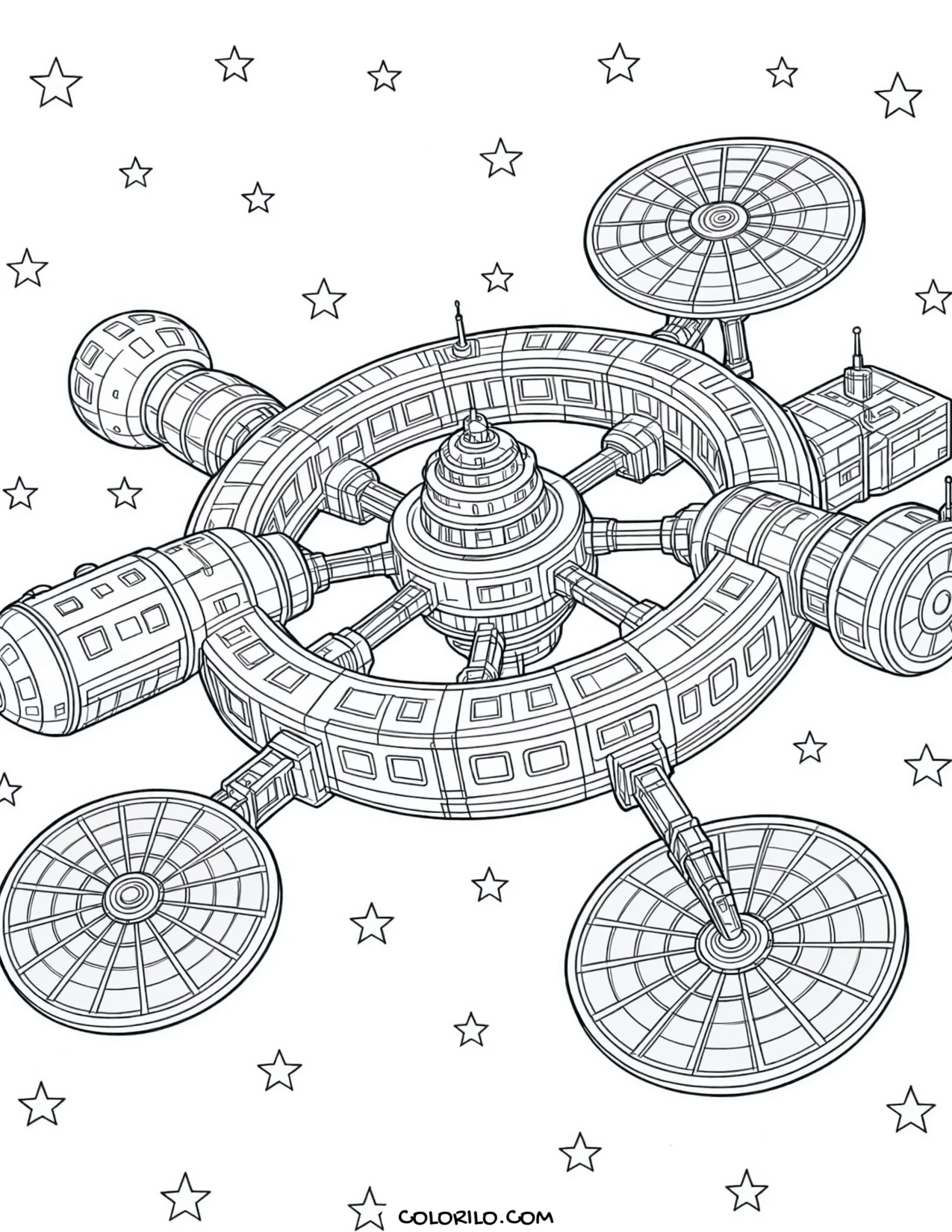
An orbital station, a station above Earth, a simple station, a lunar base, Mars habitat domes, a rotating habitat, an orbital greenhouse, an asteroid mining outpost and a floating garden. Nine designs of places people might live rather than places that exist.
Deep space
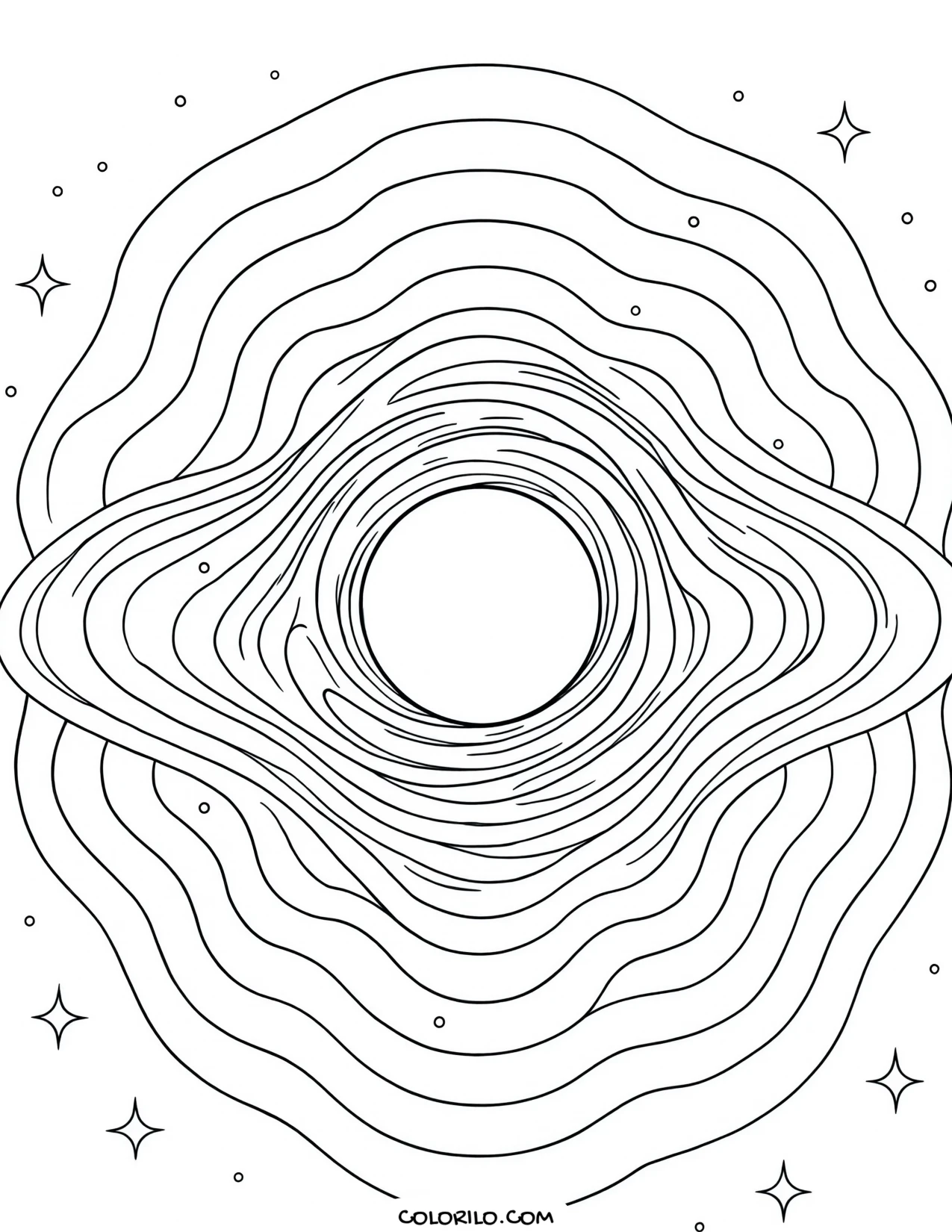
A black hole with its accretion disc, two spiral galaxies, a nebula, two comets, a ringed exoplanet and a twin planet system. The most detailed pages in the set.
Aliens
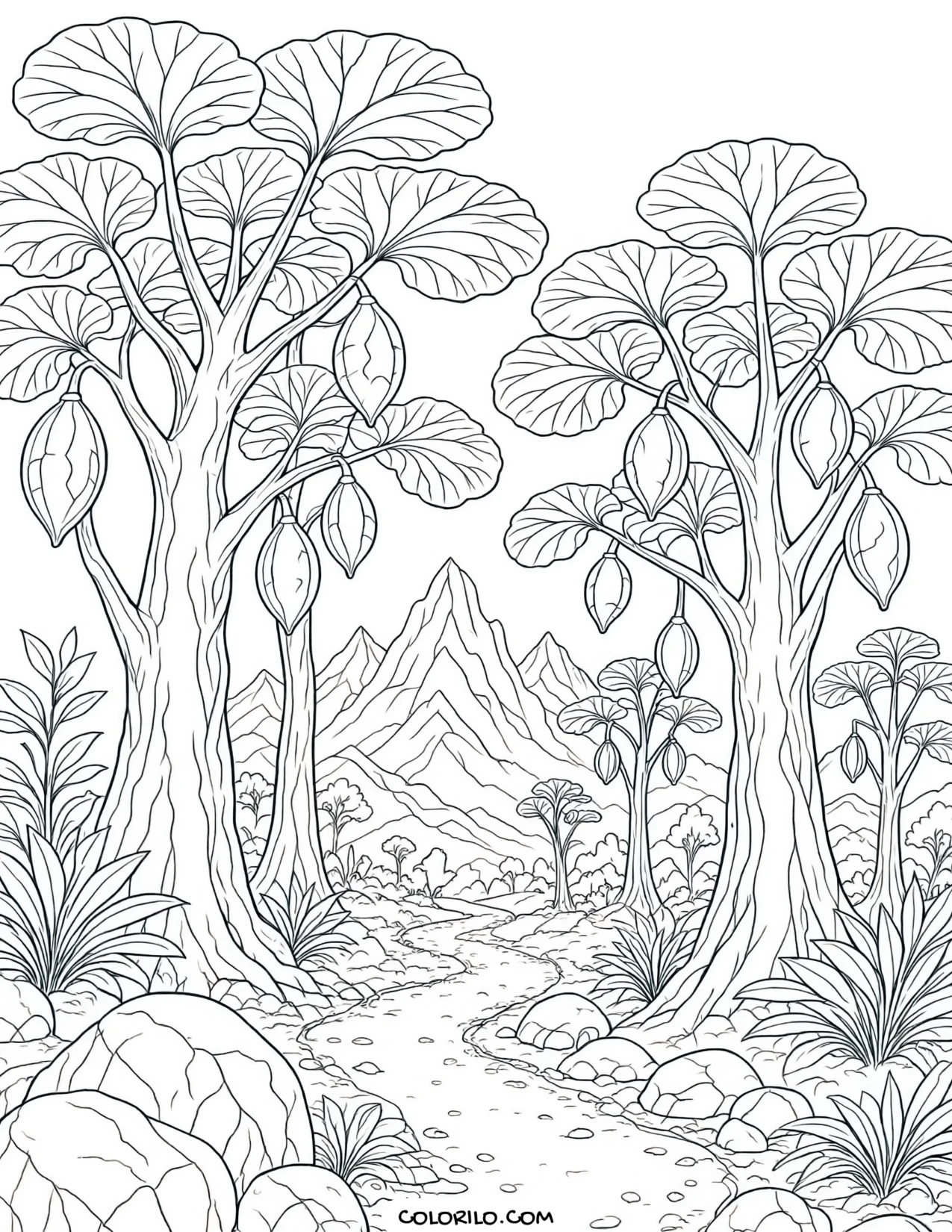
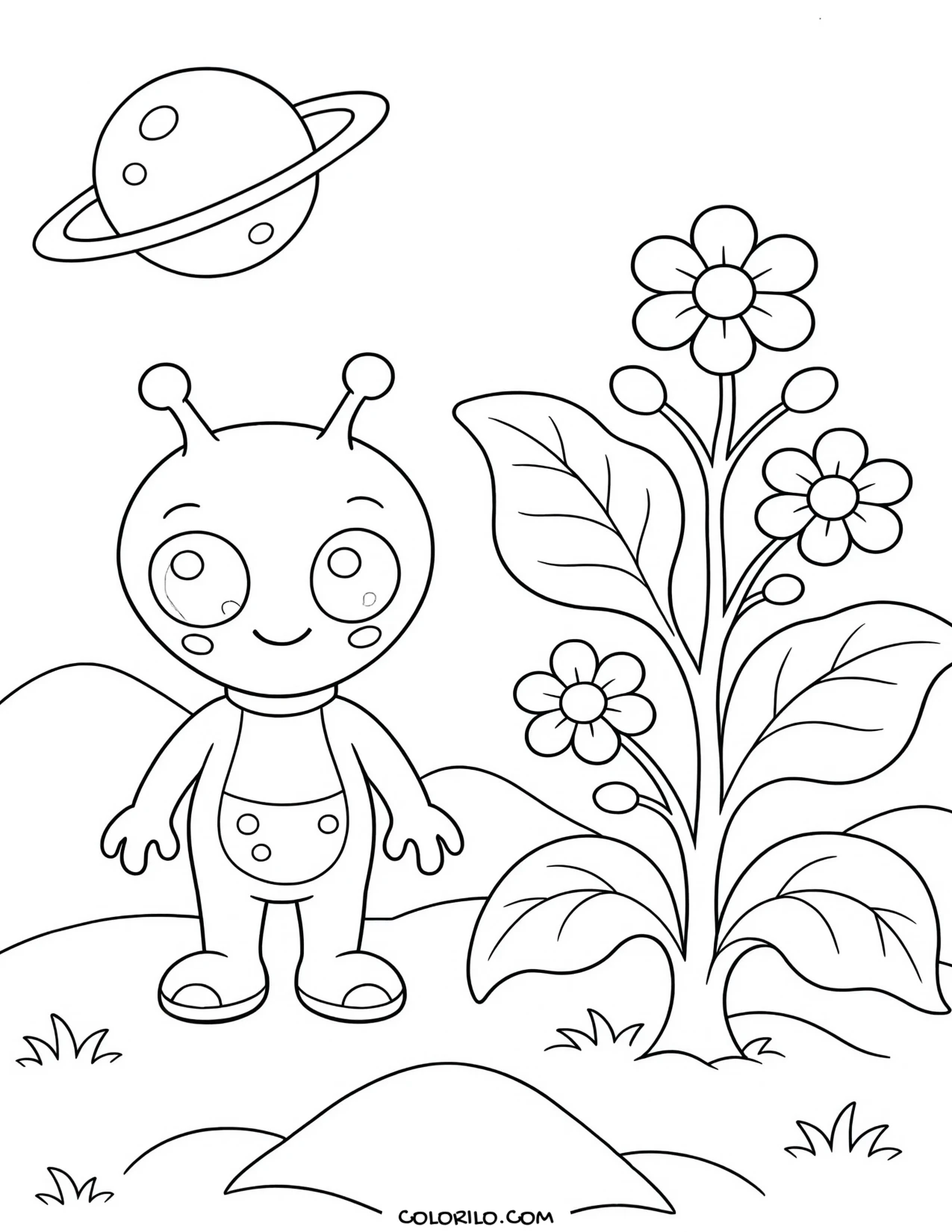
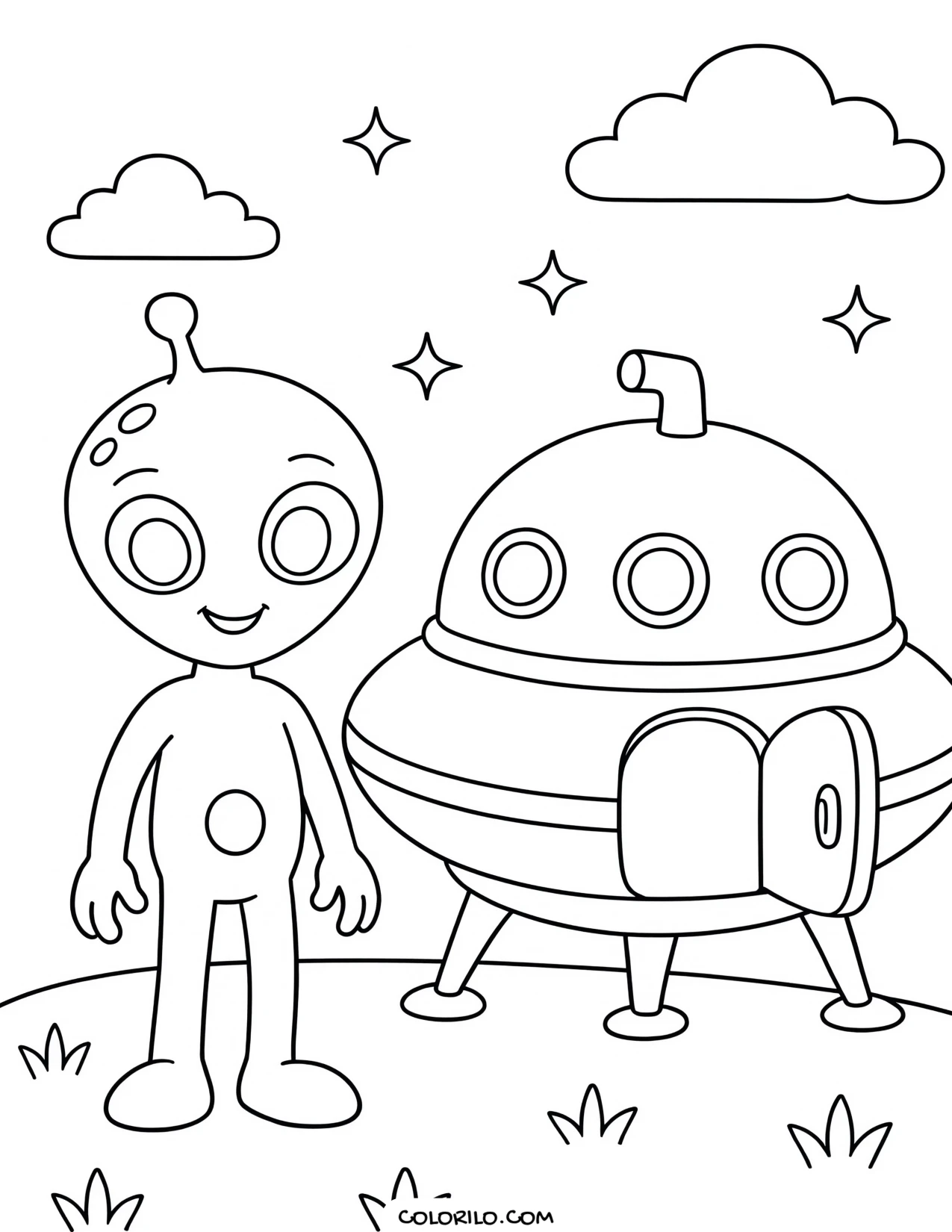
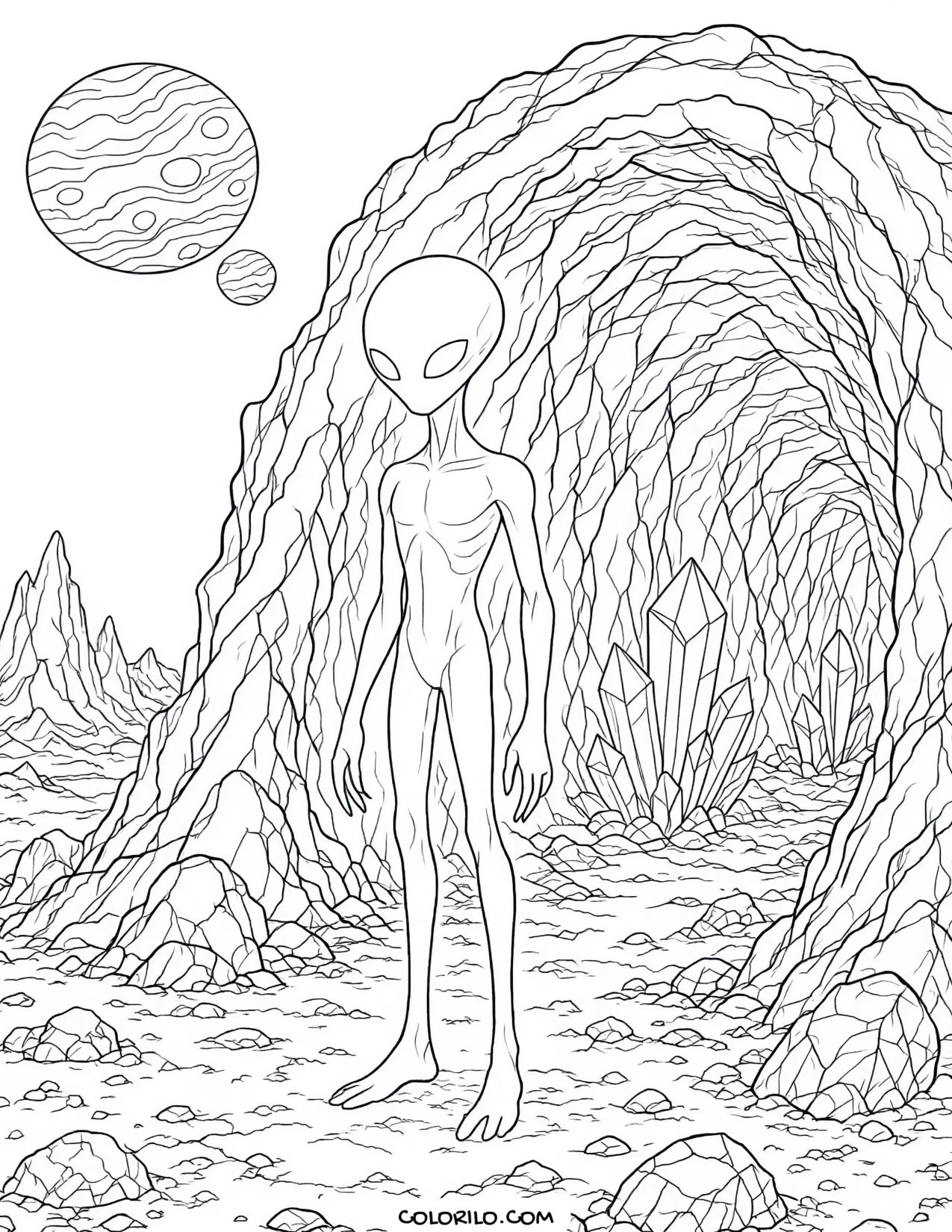
Four designs, an alien with its spaceship, in a cave, on a forest path, and beside a giant plant. The invented end of the collection, and usually the first pages a younger child picks.
If the star patterns are what interest you, there are also mandala coloring pages, and the flag collection includes the flag planted on the Moon.
Coloring Tips
Space is not black. Filling the background solid black swallows everything and empties a felt tip. Deep blue or purple with the stars left as unfilled white dots reads as space and keeps the subject visible.
The planets have real colours worth looking up. Mars is rust red, Neptune deep blue, Jupiter banded cream and orange, Venus pale yellow, Uranus blue-green. Getting them right turns nine pages into something a child can learn from.
Leave the light sources alone. The Sun, the rocket exhaust and the accretion disc around the black hole all depend on something glowing. Colour around them and leave the light itself nearly white, warming only at the edges.
Astronaut suits are white, and that is fine. Leave the suit mostly white with pale grey in the folds, then put all the colour into the visor, the backpack and the flag. The contrast is what makes the figure read.
Galaxies want a spiral, not a fill. Following the arms outward with the same colour, leaving gaps between them, works far better than filling the whole disc evenly.
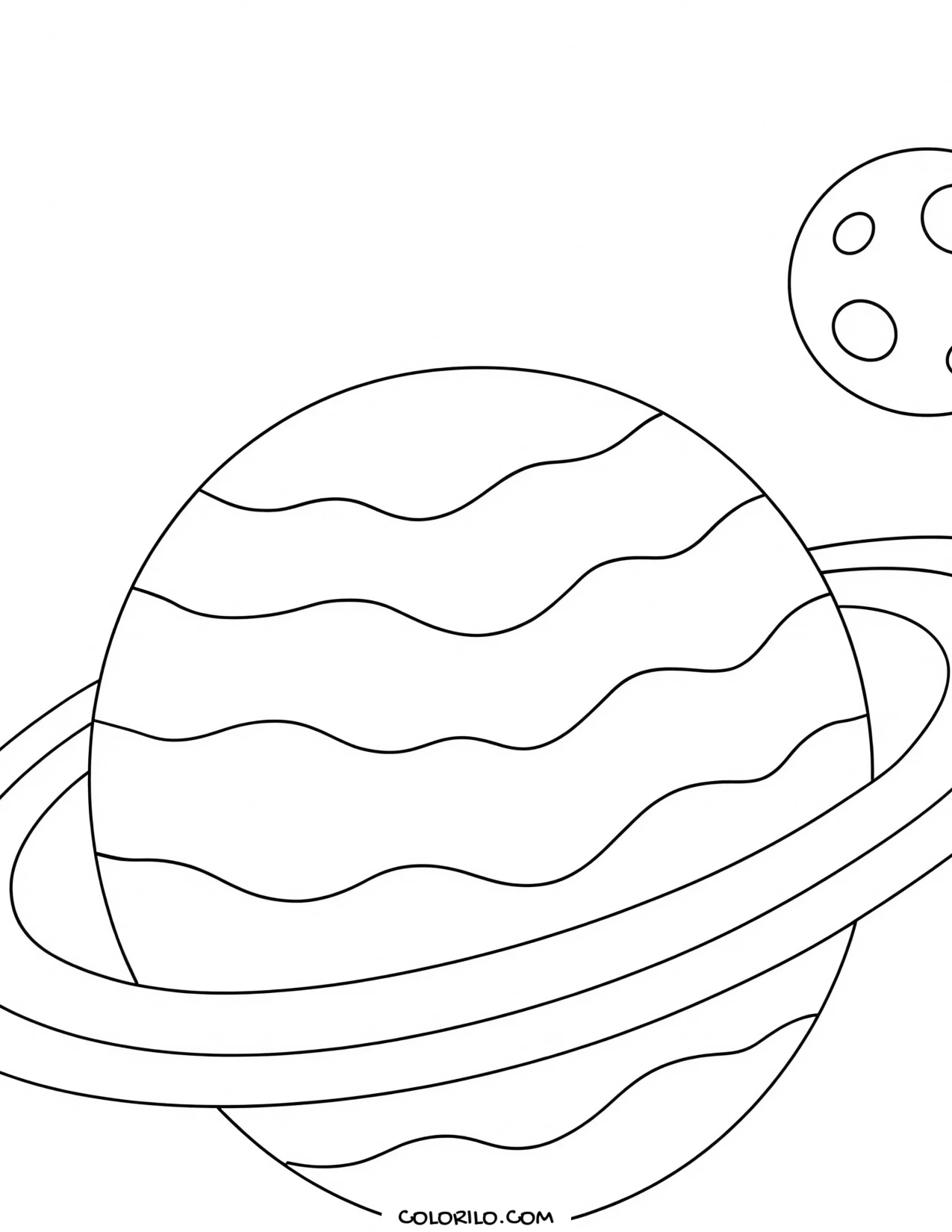
Start young children on the simple pages. The simple rocket, simple Saturn, simple galaxy and the aliens have the fewest lines. Save the black hole, the space station and the solar system for someone older.
Frequently Asked Questions
Are these space coloring pages really free?
Yes, all 59 are free to download and print. Click any design to open the PDF. No account, no email, no payment.
What age are these space coloring pages for?
The whole range. The simple rocket, simple Saturn and the alien designs suit children from around four. The planets, astronauts and rovers work through primary school. The black hole, the solar system and the space stations have the most detail.
Are all nine planets included?
All eight planets are here, each with its identifying feature, plus Pluto, which was reclassified as a dwarf planet in 2006 but is still the one children ask about most.
Are the spacecraft real ones?
Several are. Hubble, the James Webb Space Telescope, Voyager, the Parker Solar Probe and the Bennu asteroid mission all exist, as do the Saturn rocket, the lunar module and the Mars rovers. The lunar base, Mars domes, rotating habitat and asteroid outpost are imagined.
Can I use these in a classroom?
Yes. They pair directly with a topic on the solar system, space exploration or the Moon landing, and are free for personal, educational, and classroom use.
Can I print more than one copy?
As many as you need.
Why is Pluto not a planet any more?
In 2006 astronomers agreed a definition of a planet that required an object to have cleared other things out of its orbital path. Pluto has not, it shares its region with a great many other icy bodies in the Kuiper Belt, so it was reclassified as a dwarf planet. It has not changed in any way; only the naming did. The heart-shaped plain on its surface, which one of these pages shows, was only photographed properly in 2015 when New Horizons flew past.

Leave a Reply