
Table of Contents
Princess coloring pages are one of the oldest categories in children’s printables, and for good reason, the ballgown is essentially a large empty shape with a waist, which is to say an ideal thing to colour. A child can fill it with anything and it still reads correctly, which isn’t true of most subjects.
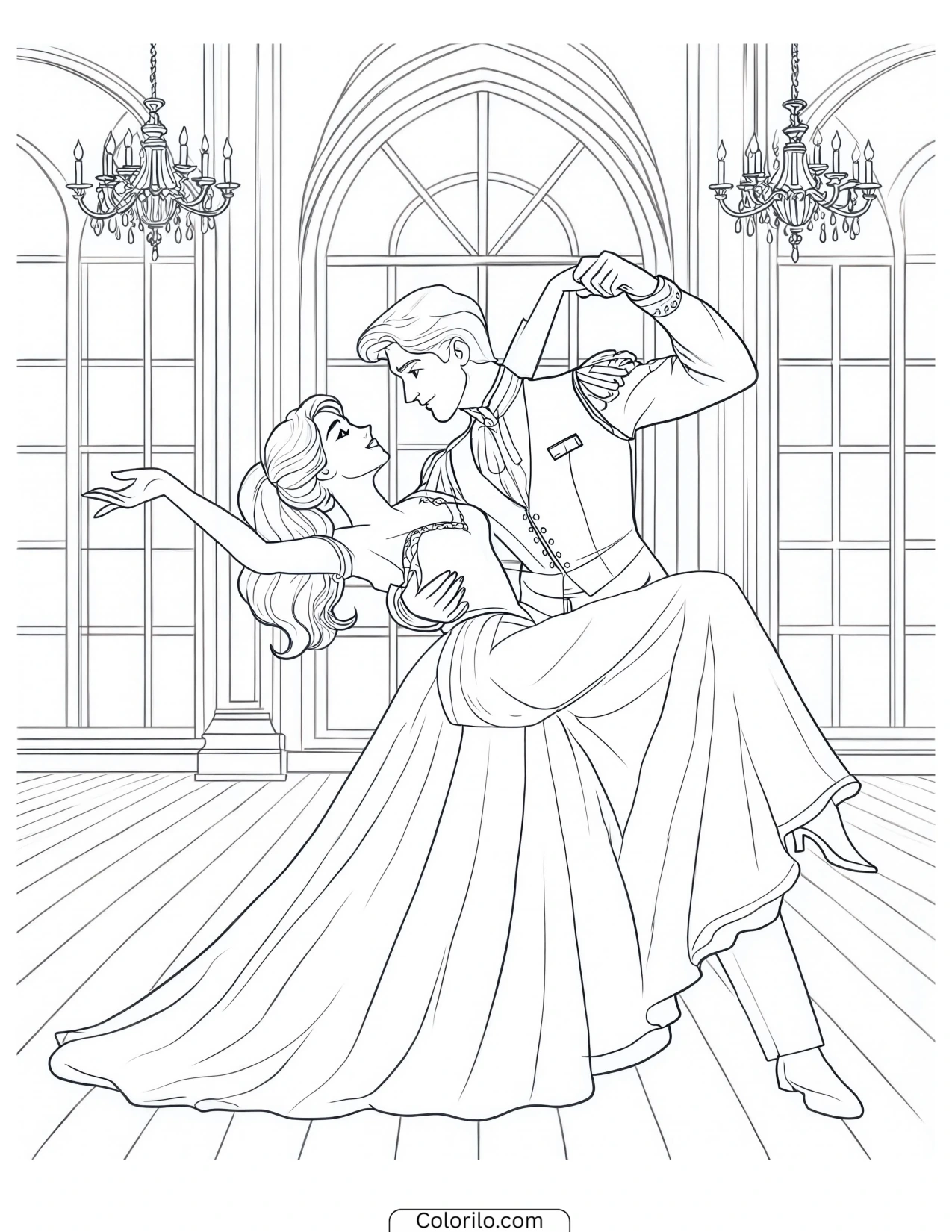
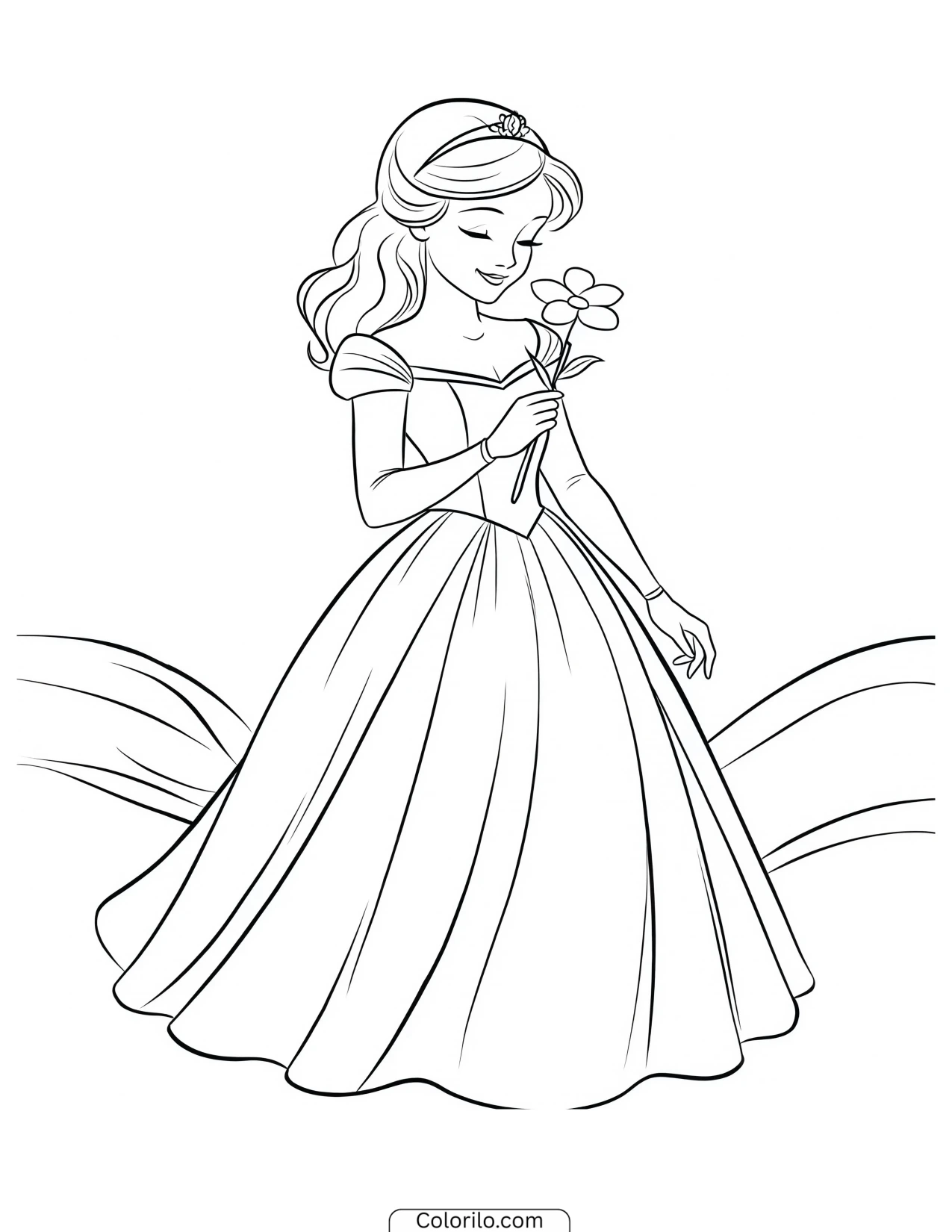
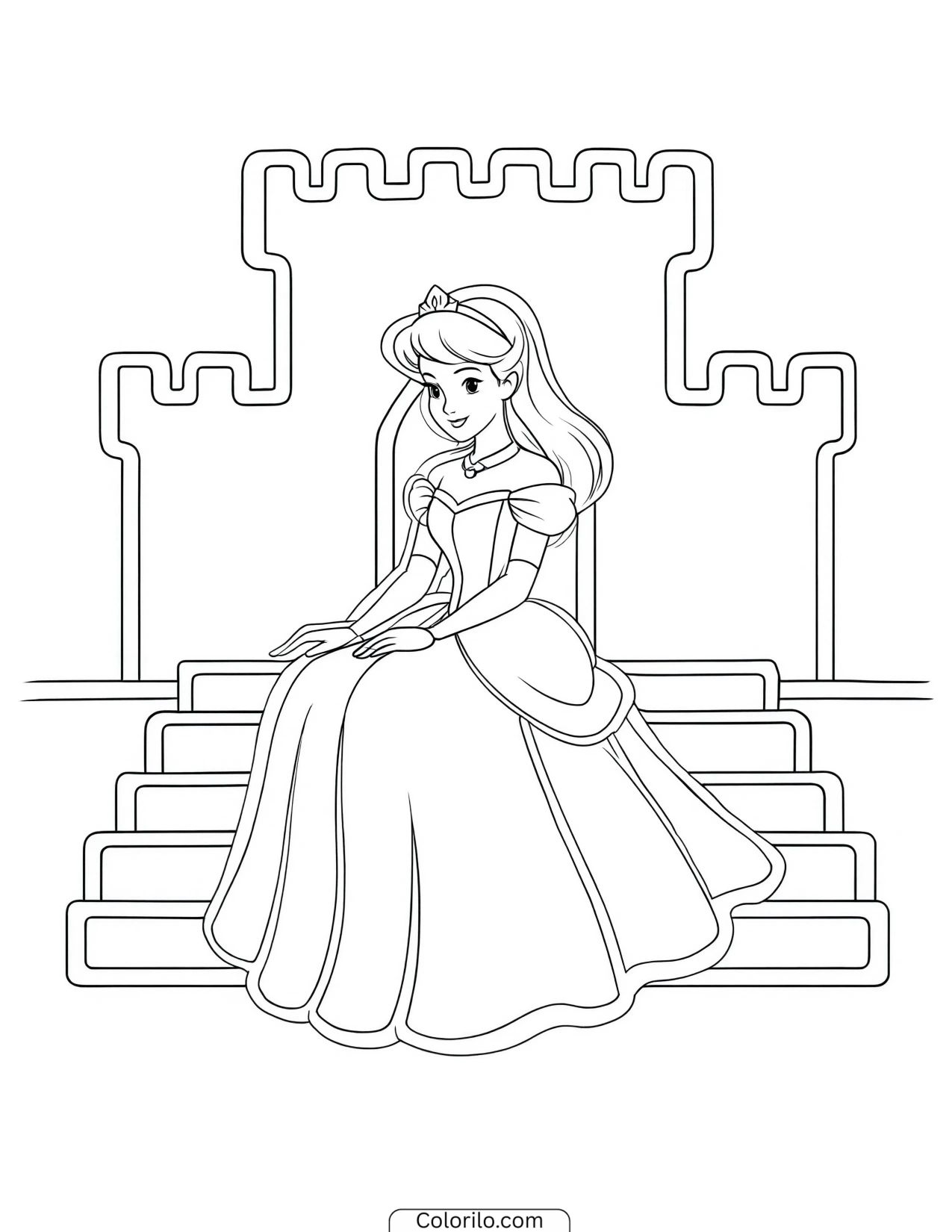
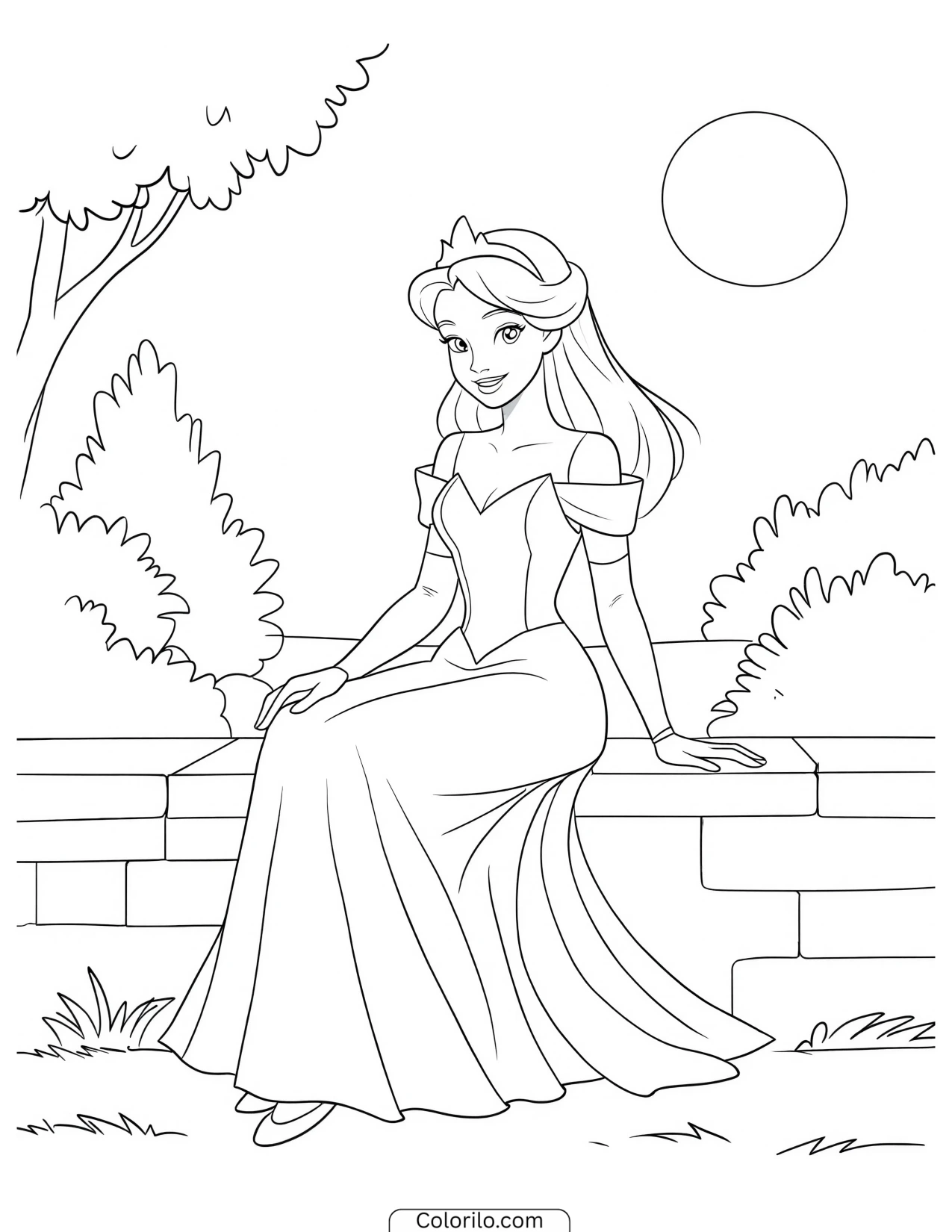
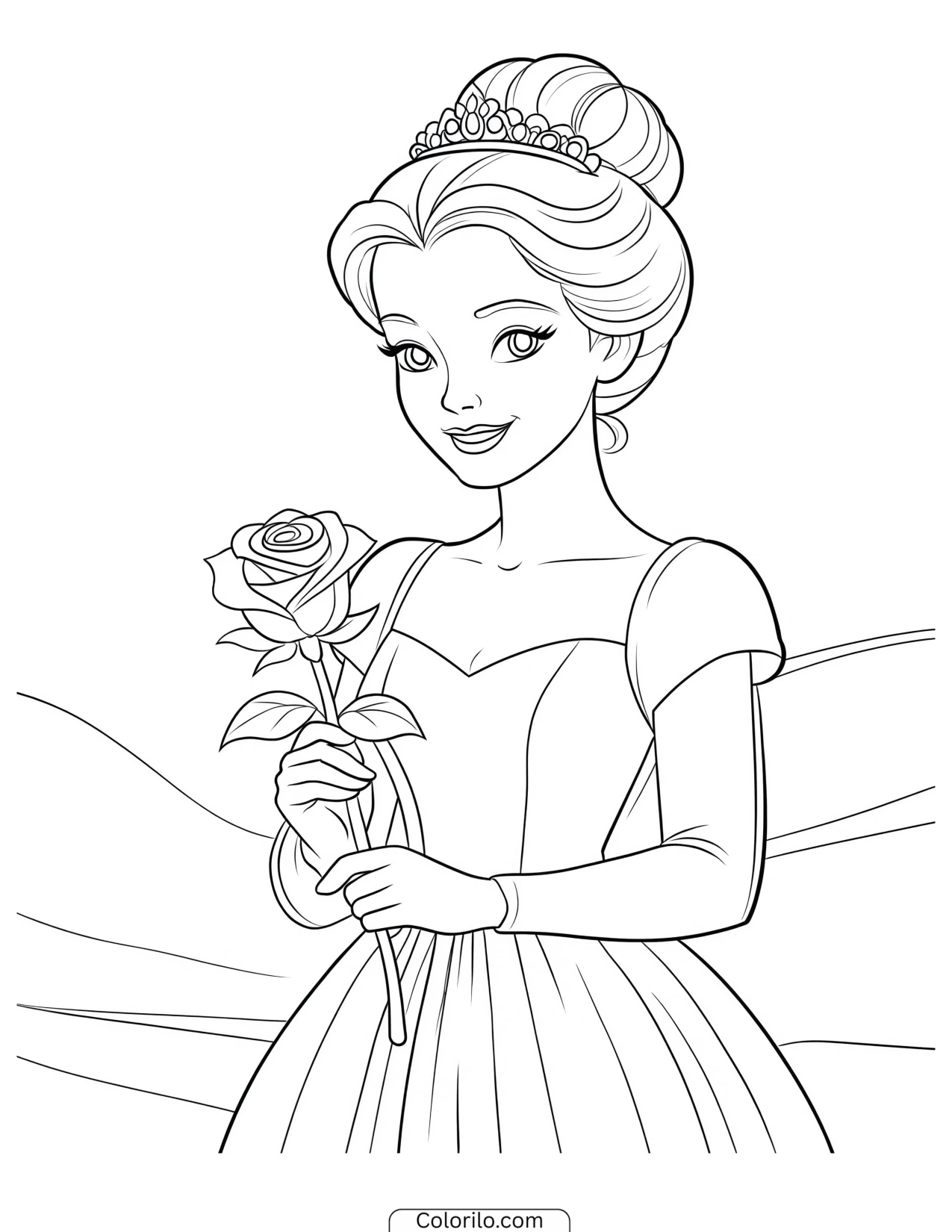
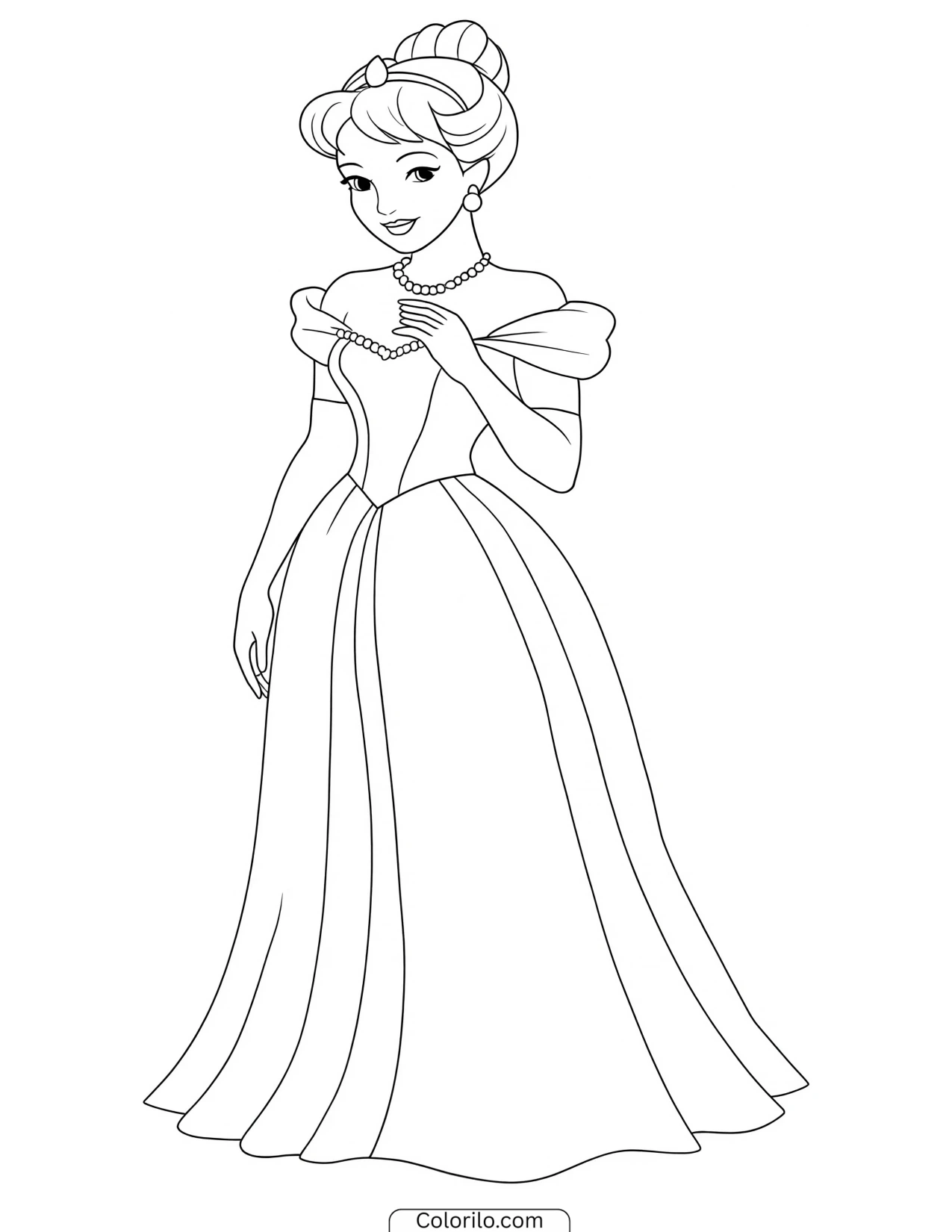
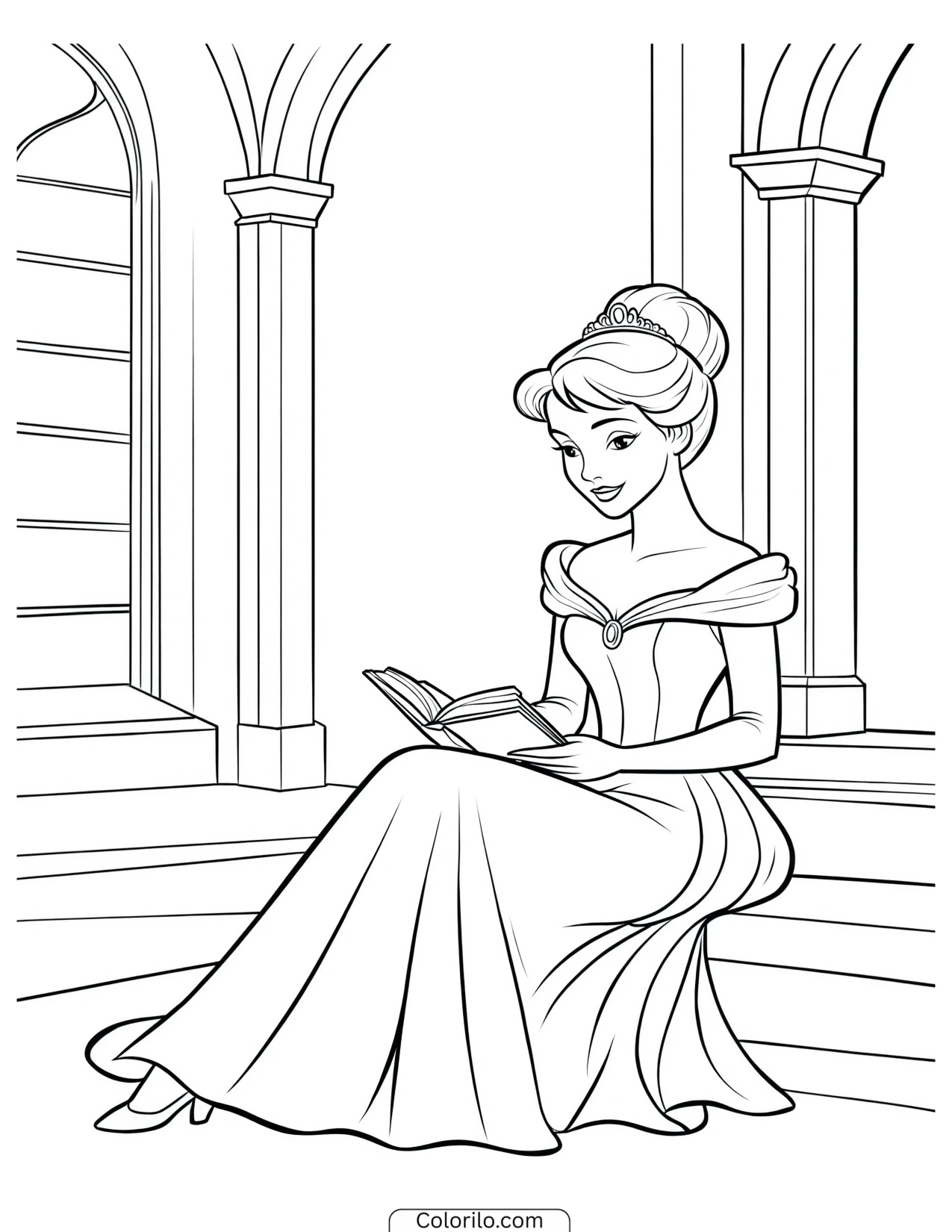
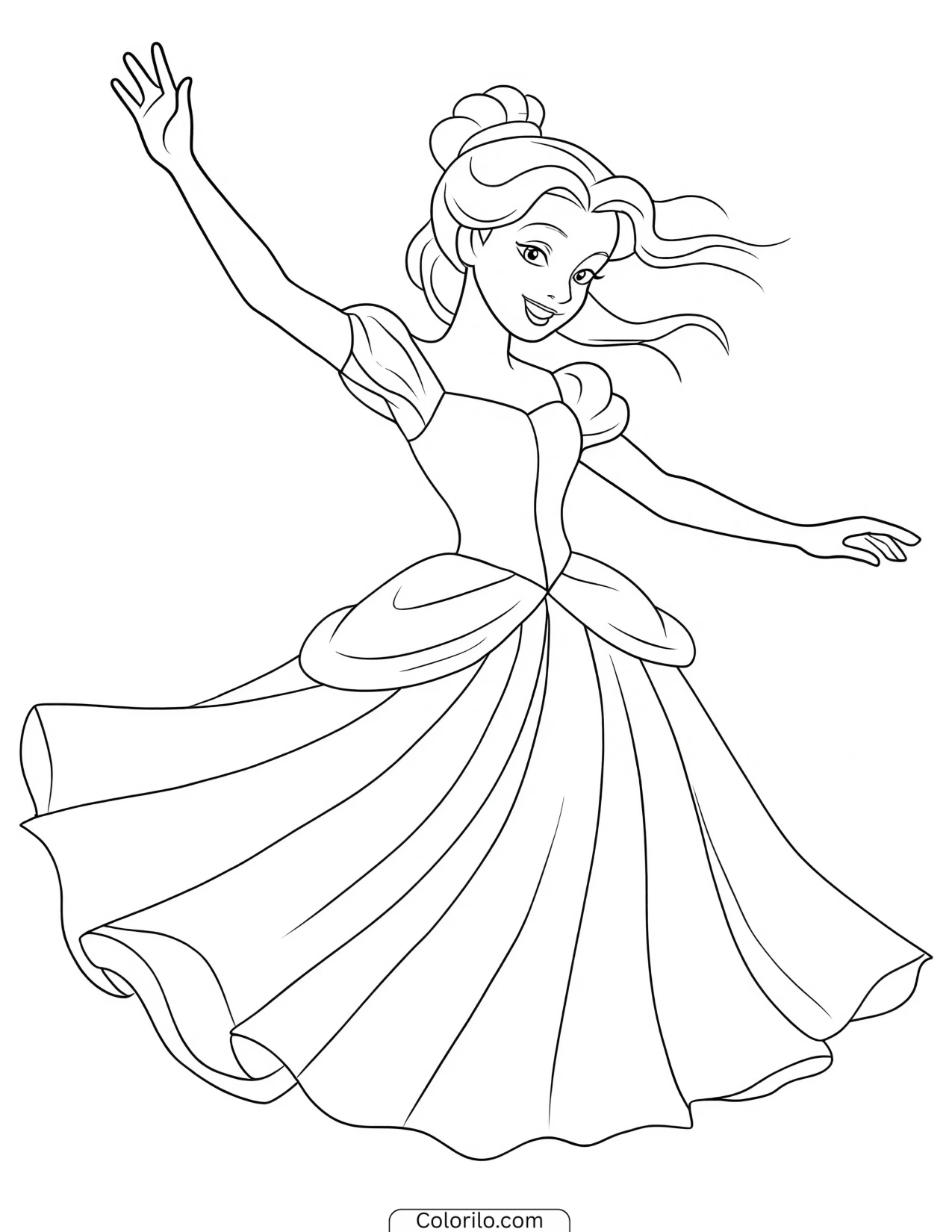
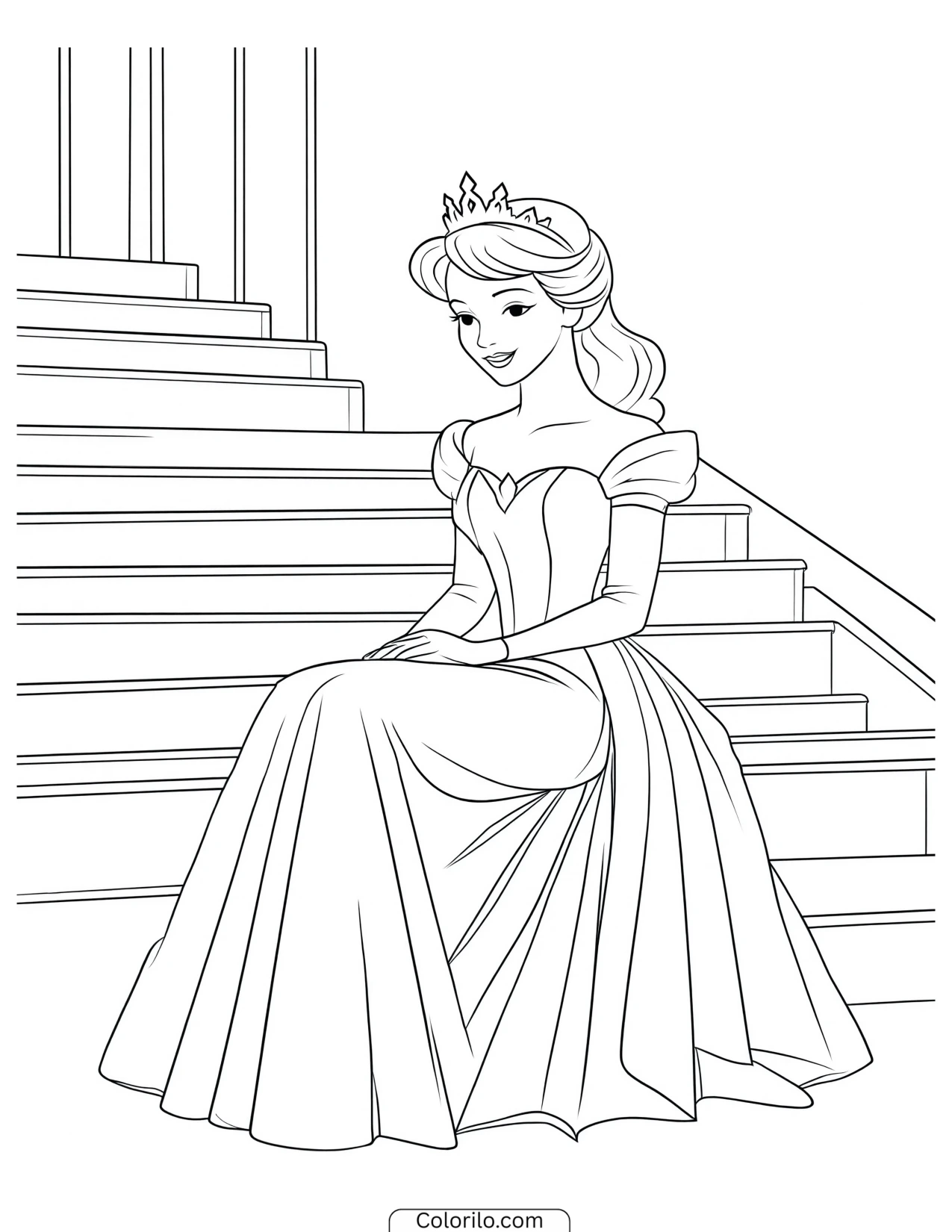
This collection has 47 free designs. Twenty of them are named princesses from the classic tales: nine Cinderella pages, six of Belle, four of Aurora, and Ariel dancing with Eric. The Cinderella set covers her at the ball in her gown, twirling, reading a book, and four dancing scenes with the prince. Belle appears mostly in her ballgown, spinning, twirling, holding the skirt, plus one page with a rose. Aurora is the quietest of the three: sitting on steps, perched on a garden wall, holding a single flower.
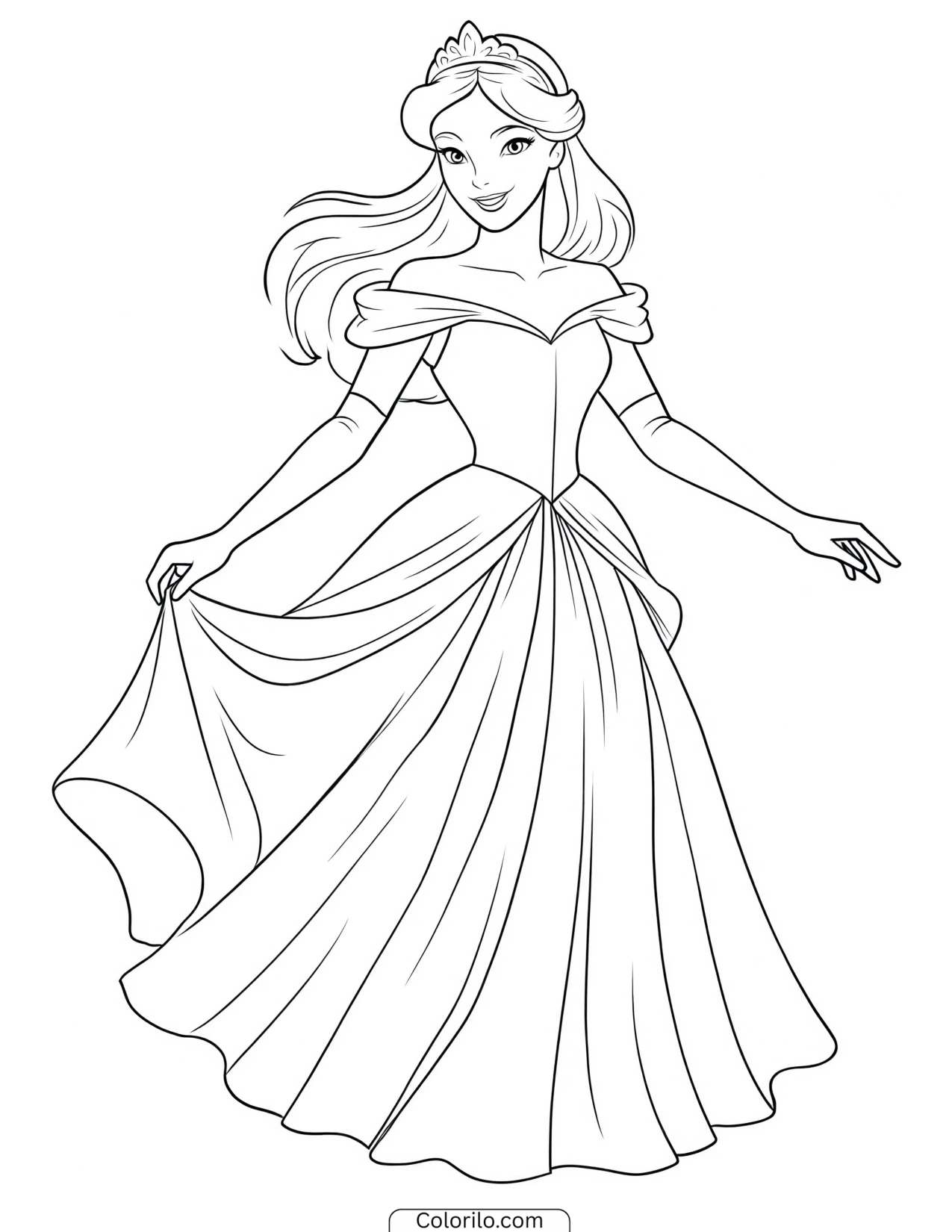
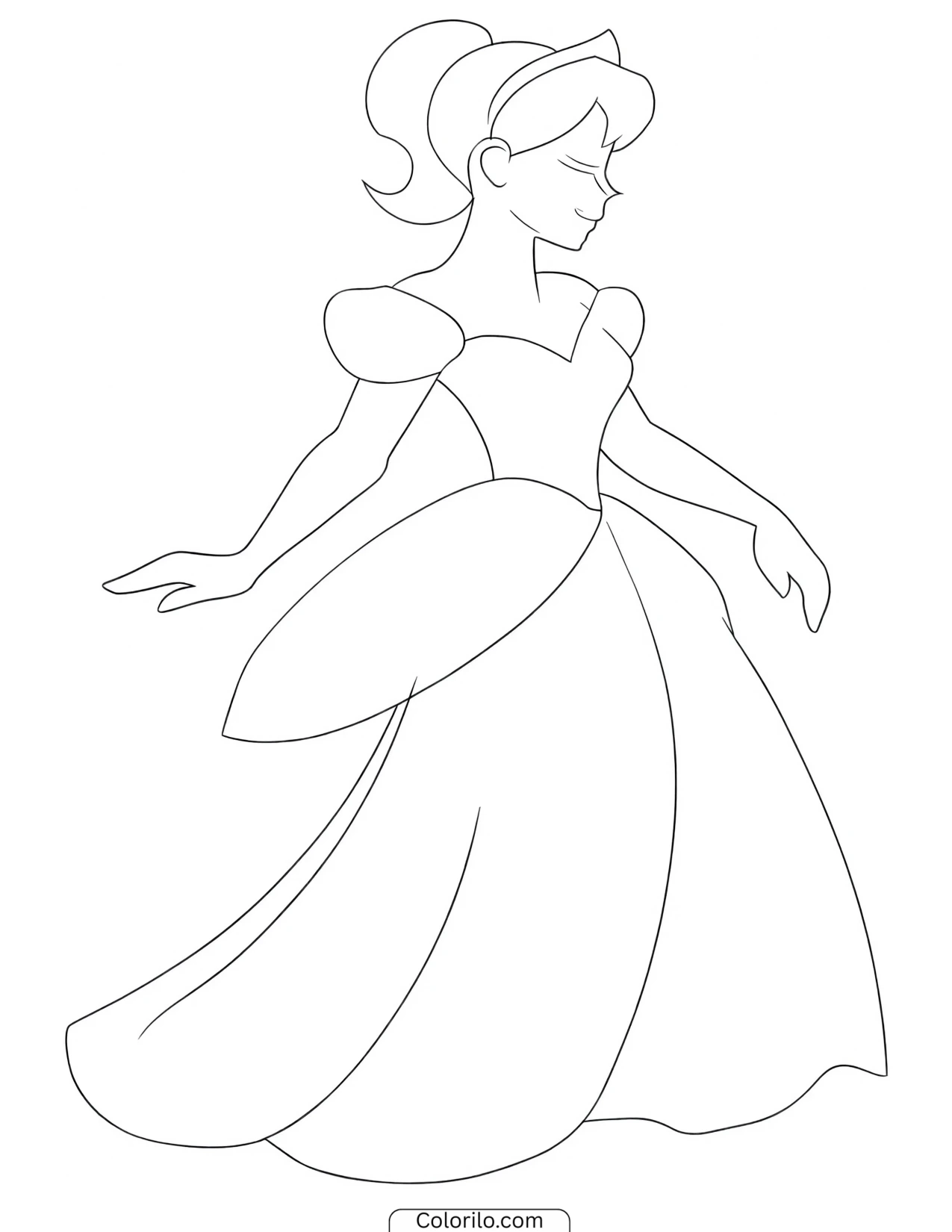
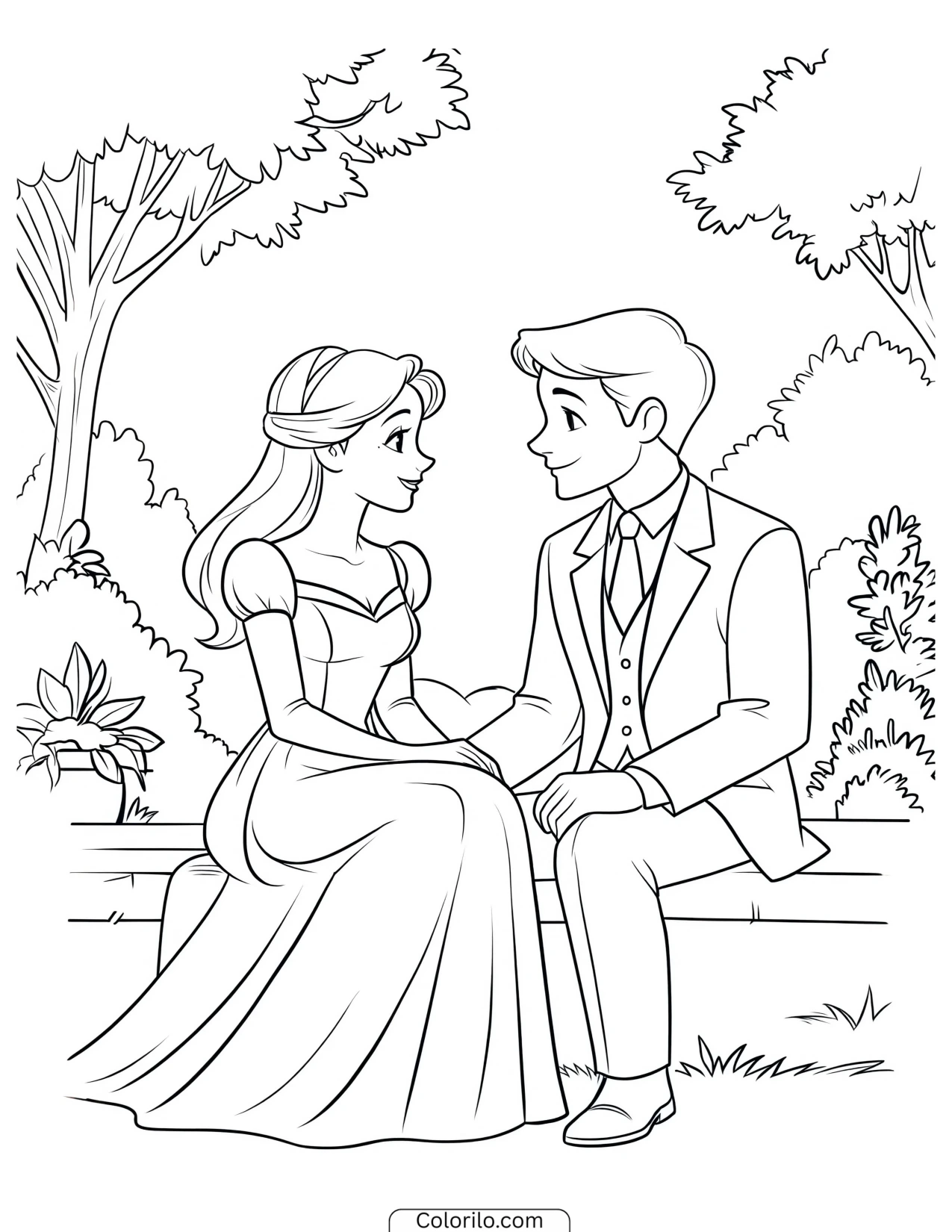
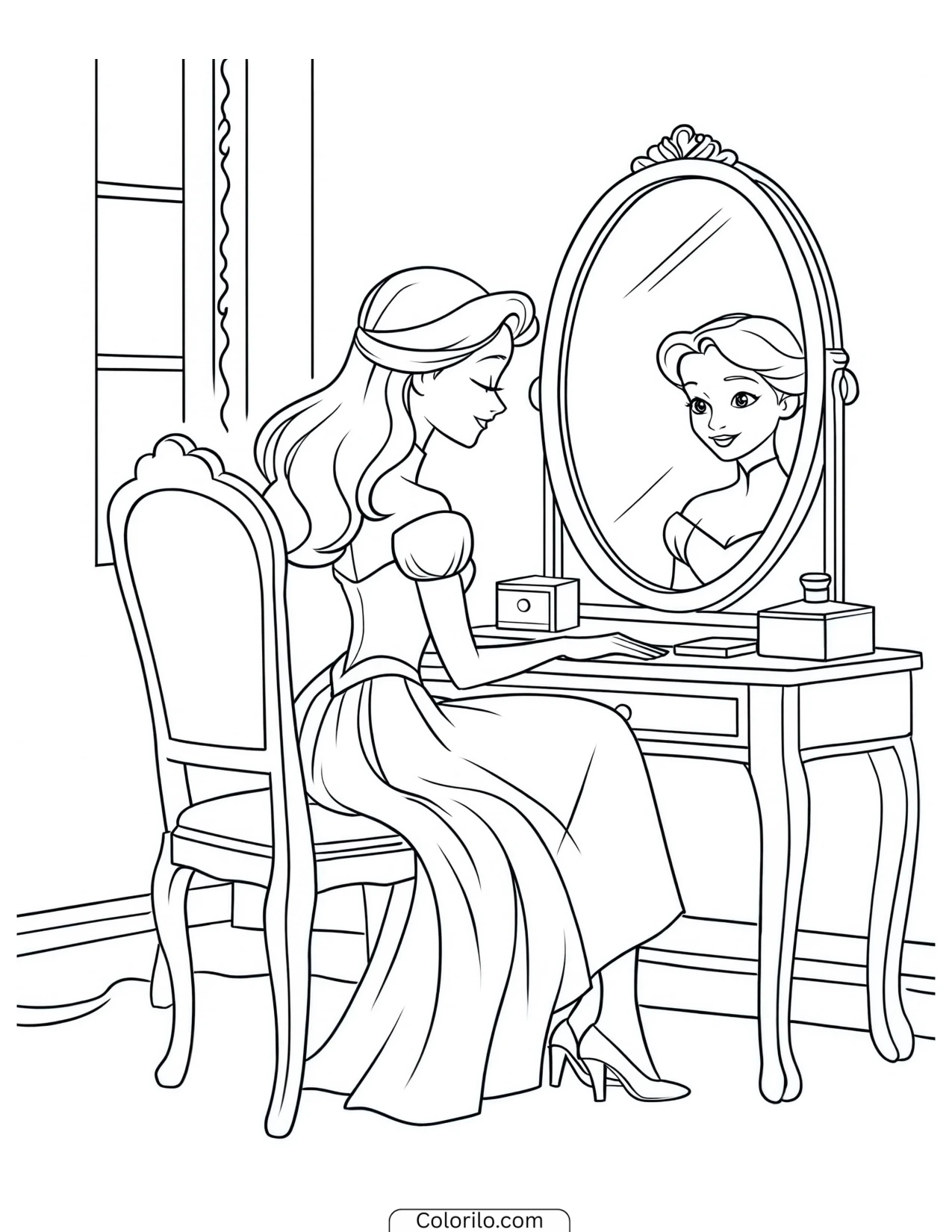
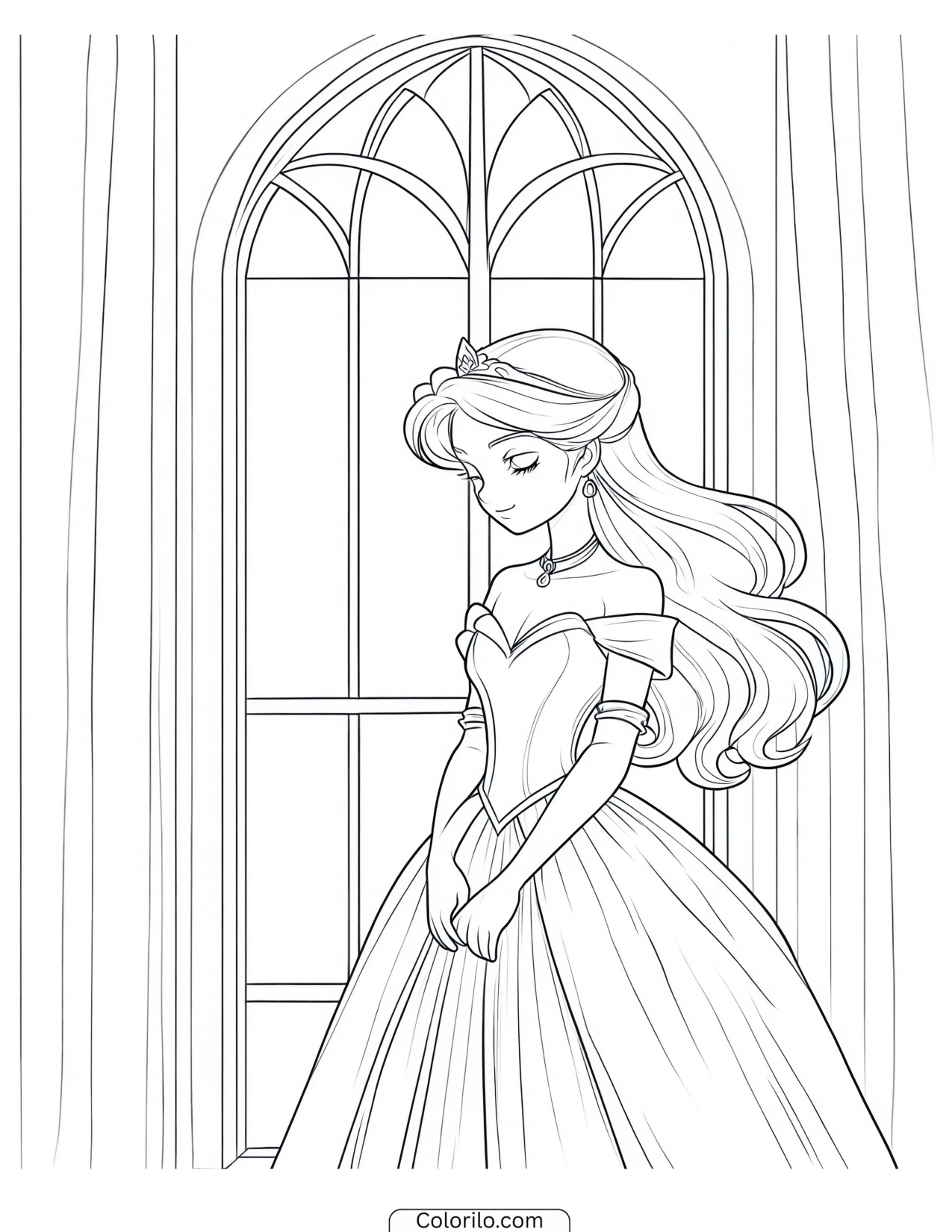
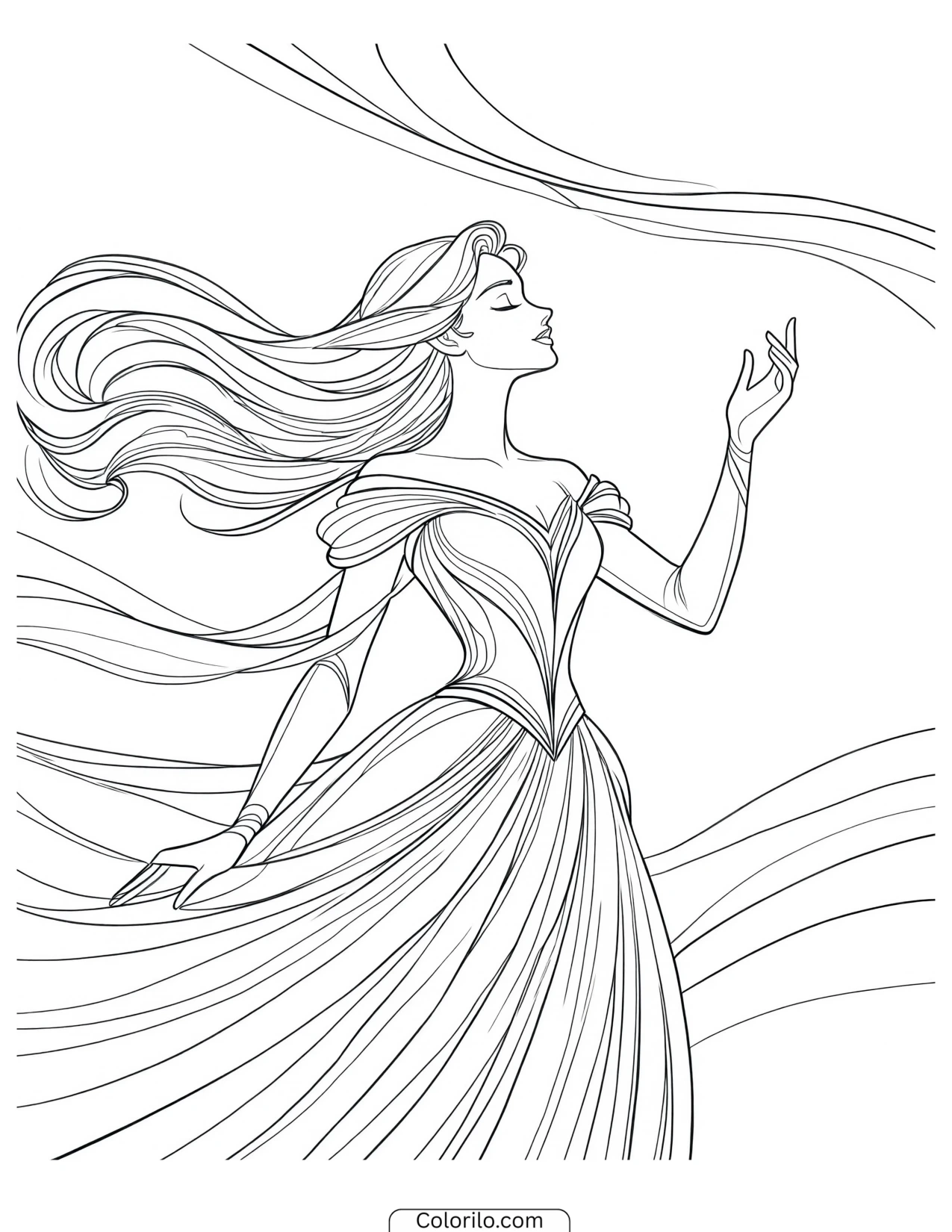
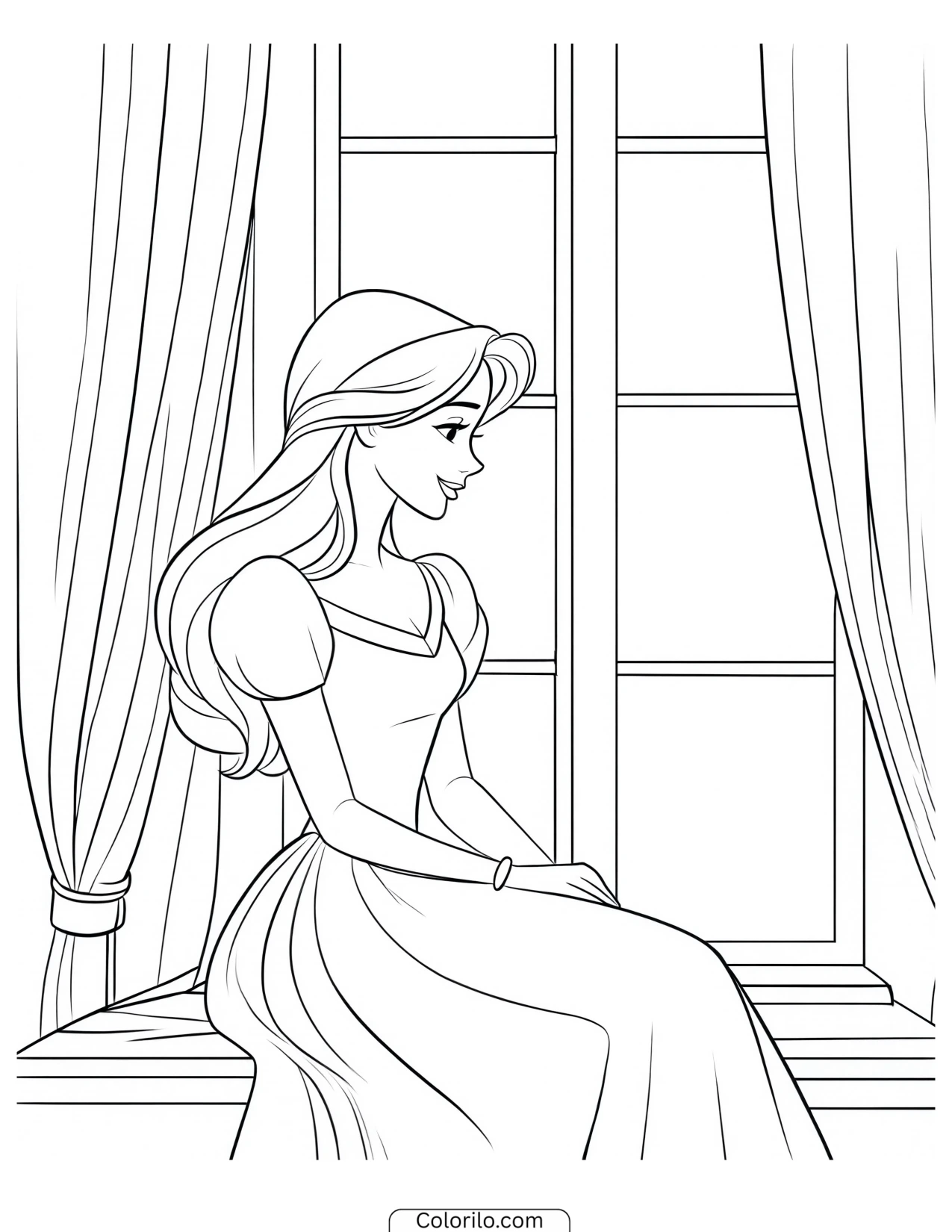
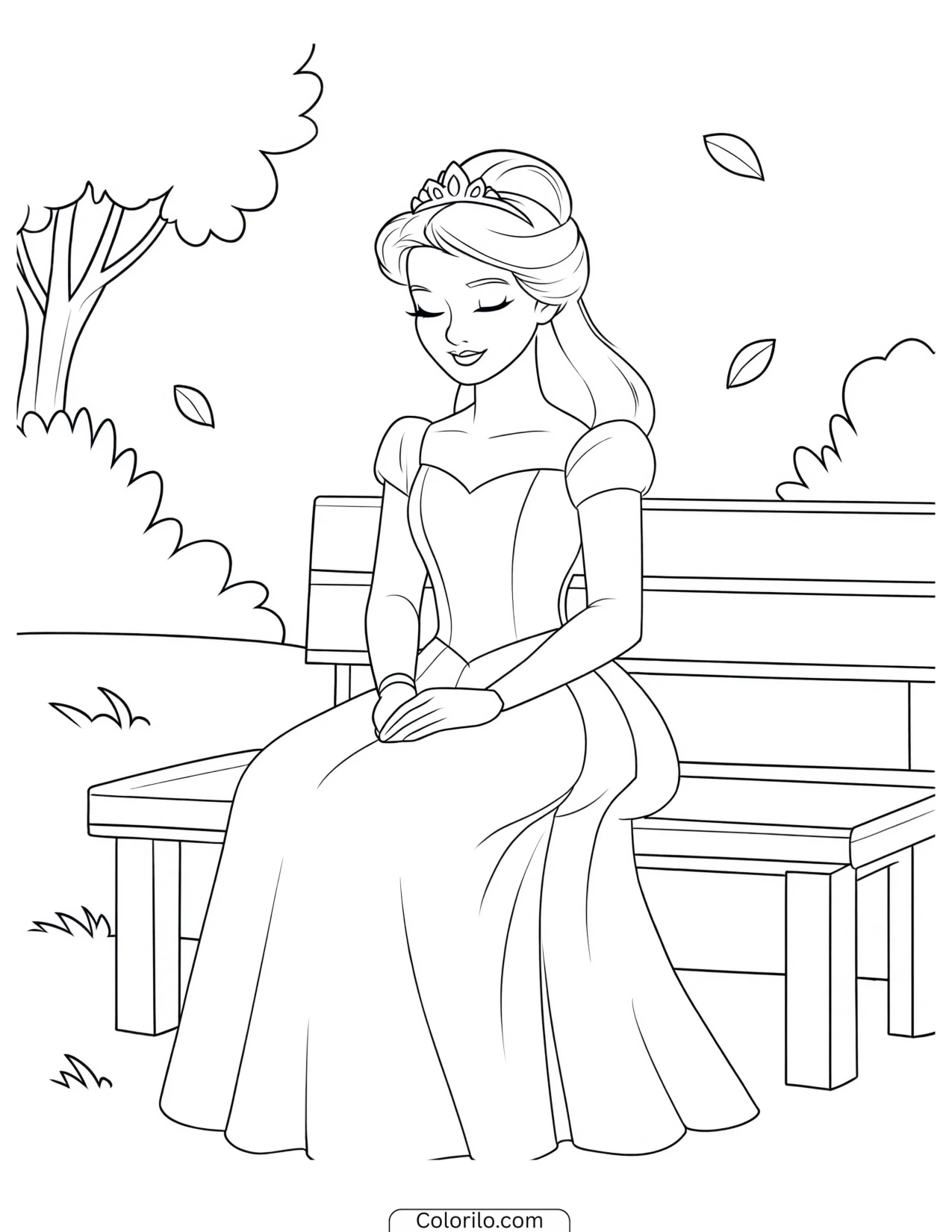
The remaining 27 are unnamed princesses, and they’re arguably the more useful half of the set, since a child can decide who they are. These cover ballgown poses, standing, dancing, curtseying, posing, holding the skirt wide, alongside a group of quieter scenes: sitting by a window, on a staircase, on a garden bench, leaning on a balcony railing, seated at a vanity mirror, standing beneath a floral archway, or outdoors among flowers.
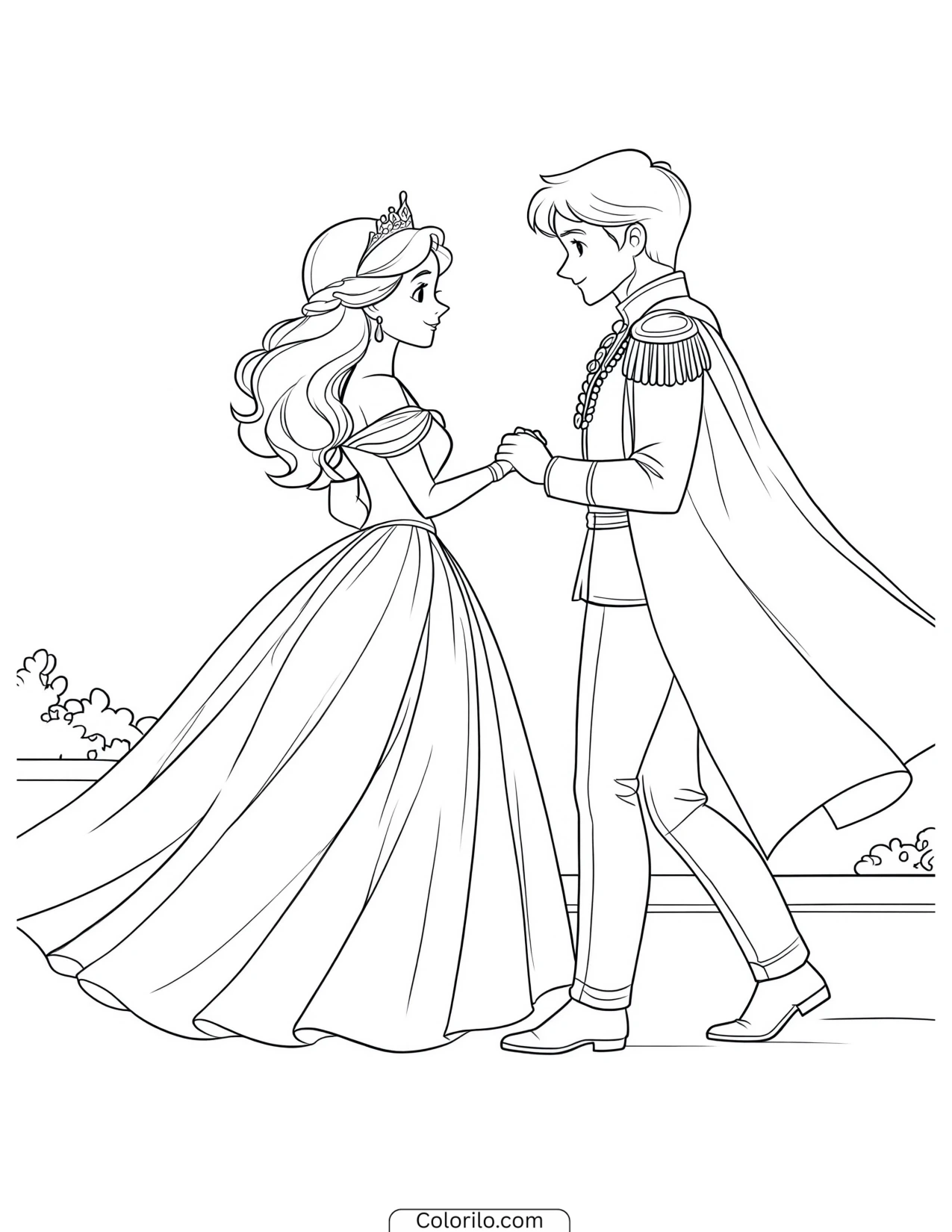
There are also five couple pages beyond the named ones: a prince and princess holding hands, a royal couple with clasped hands, a bride and groom, and a couple sitting together on a bench.
Detail is moderate throughout. The gowns have folds and skirt panels that take time, but the linework is clean and open rather than dense, which makes this one of the more approachable collections here for younger children.
Every one of these princess coloring pages is free, prints on standard US letter paper, and needs no sign-up. Click any design below to open the full-size PDF.
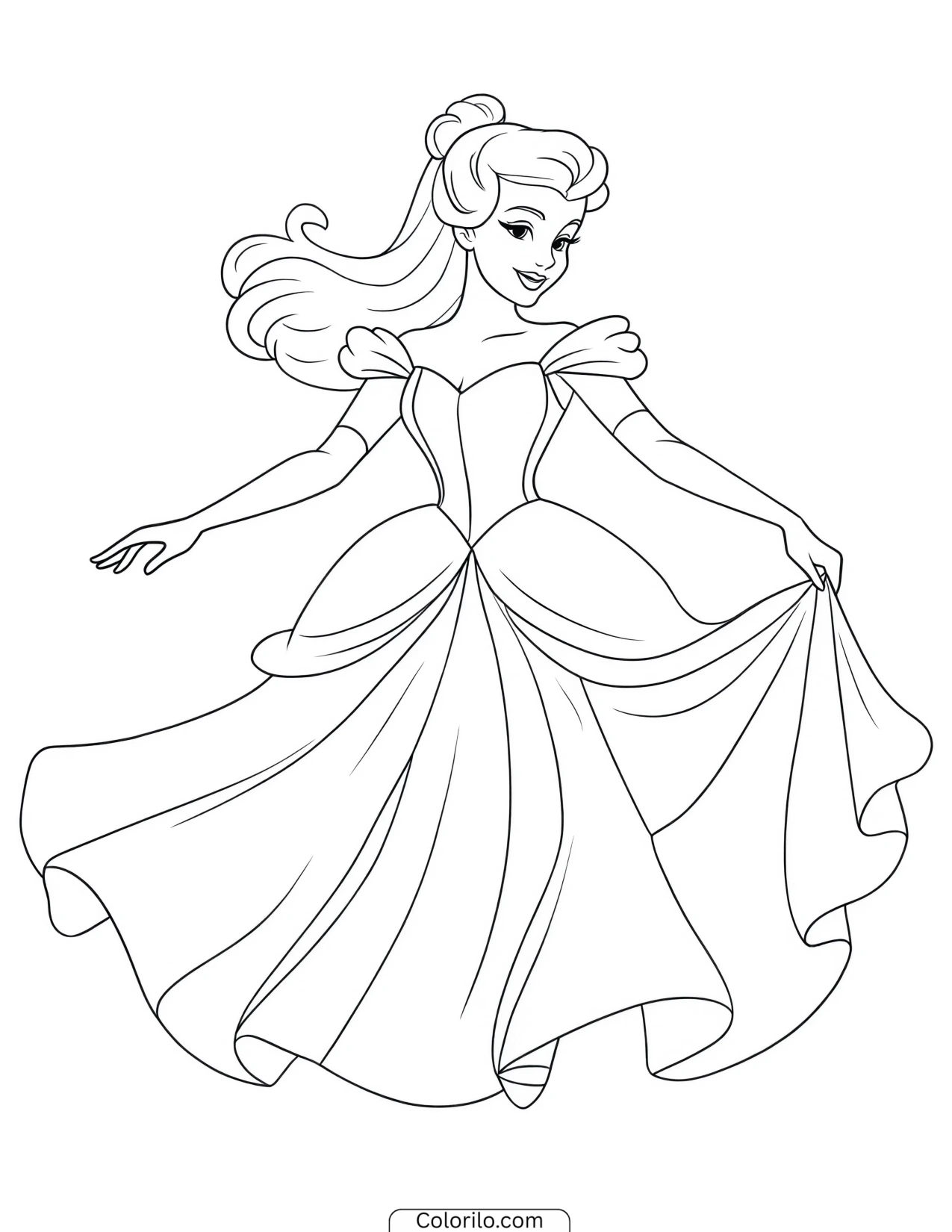
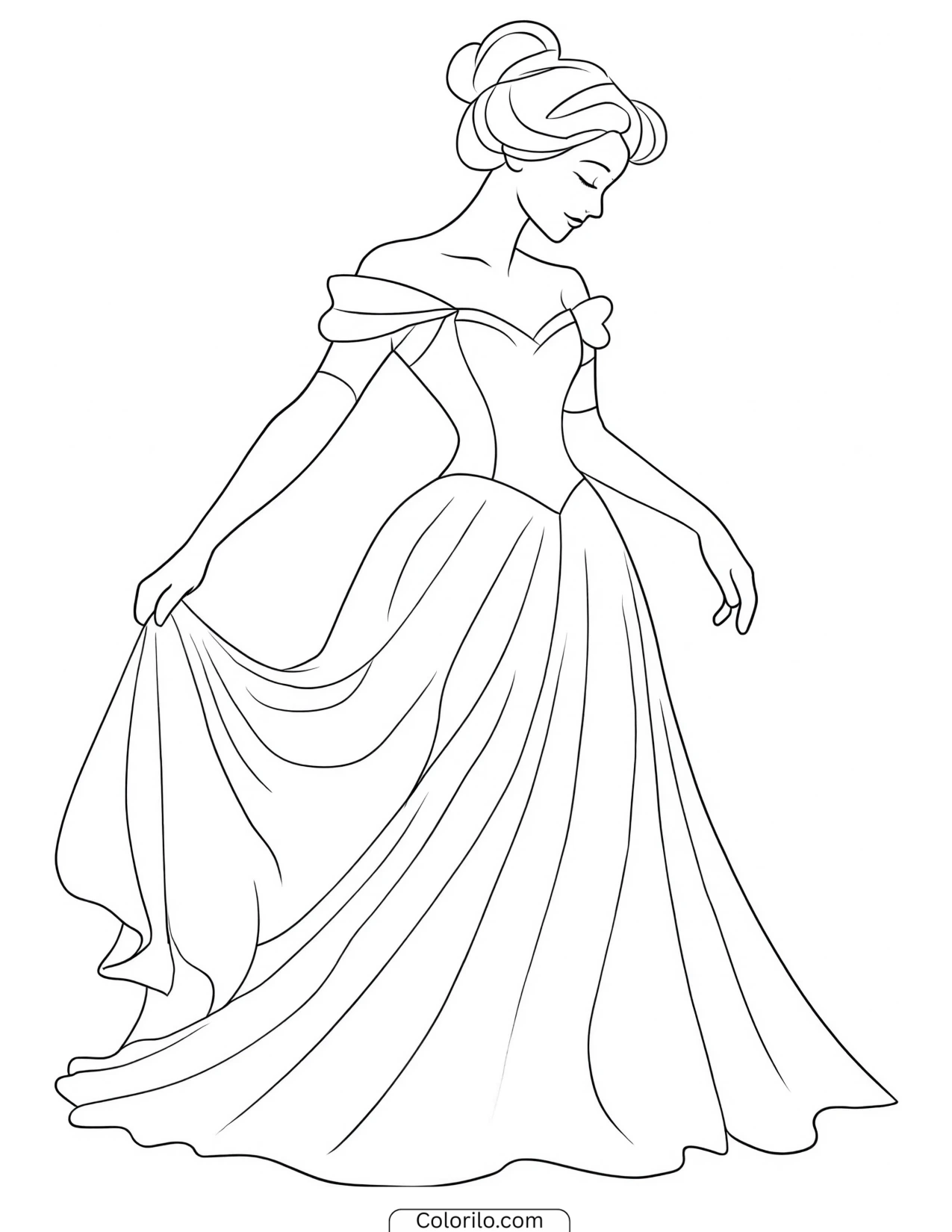
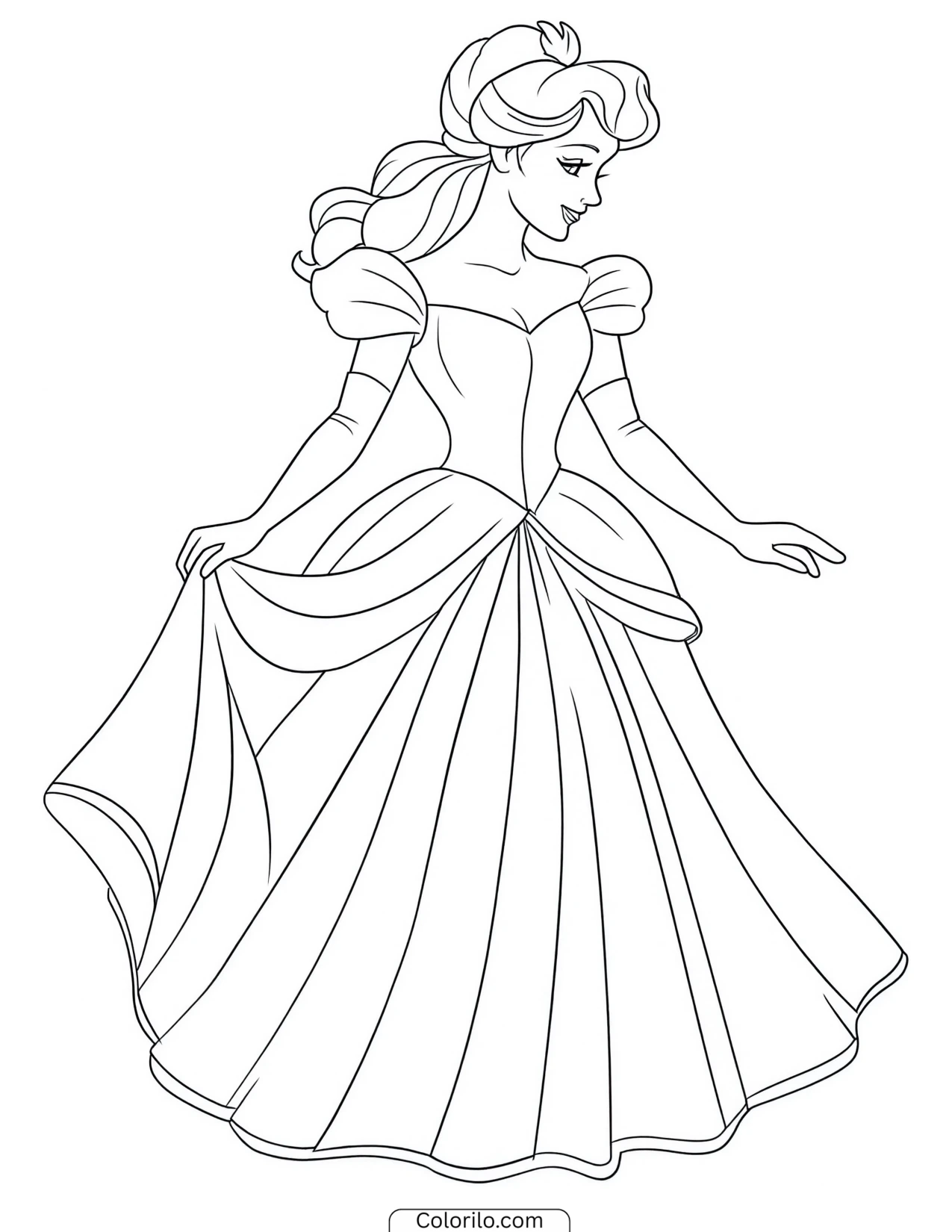
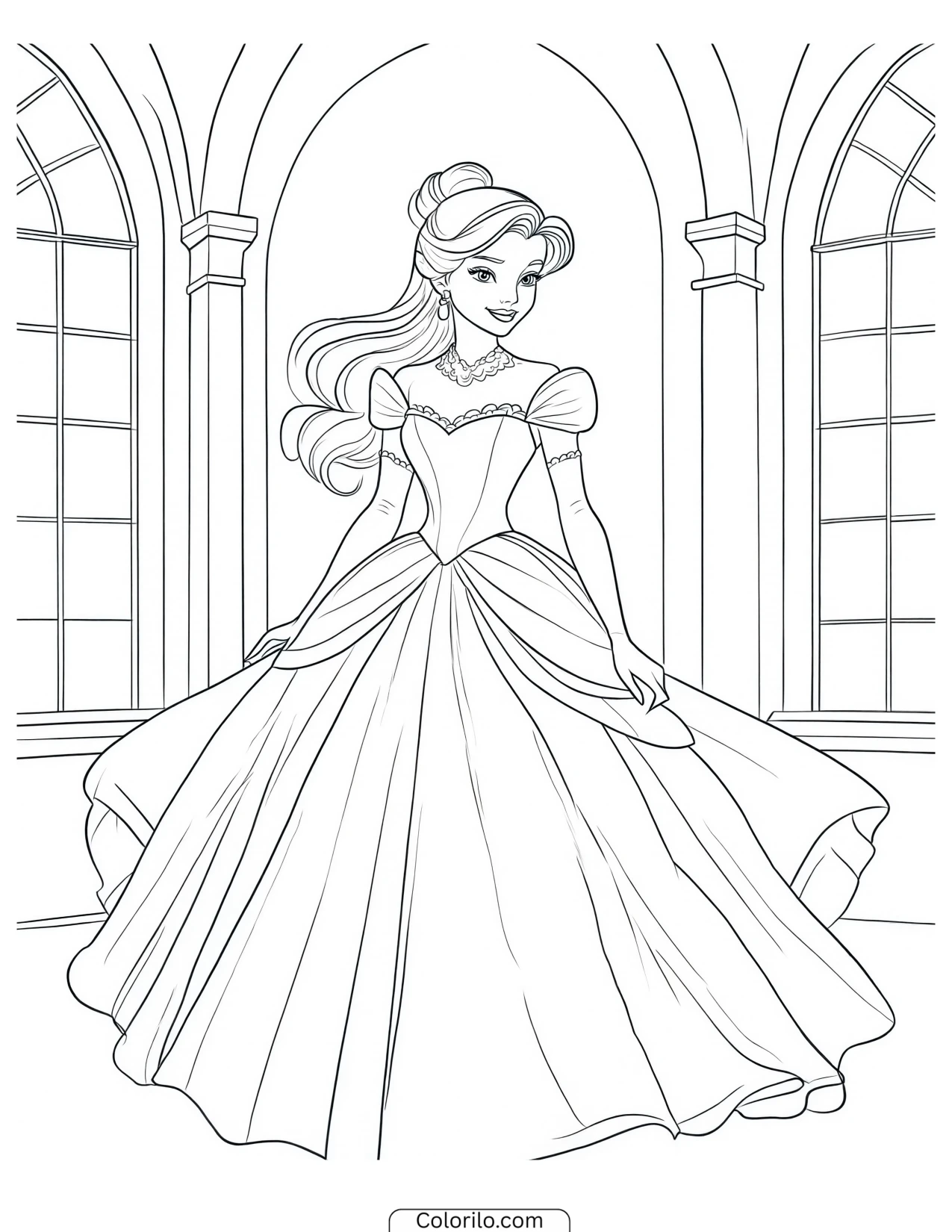
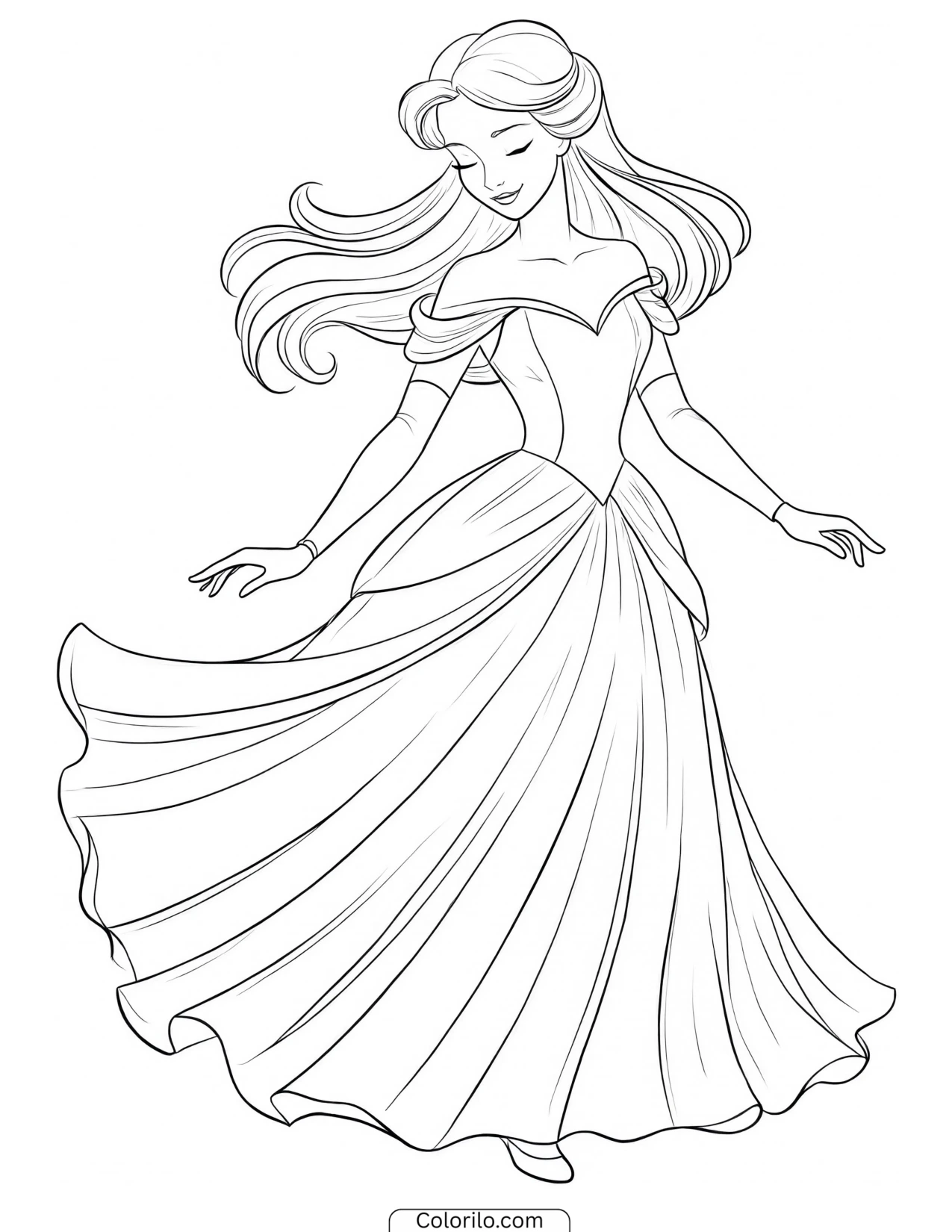
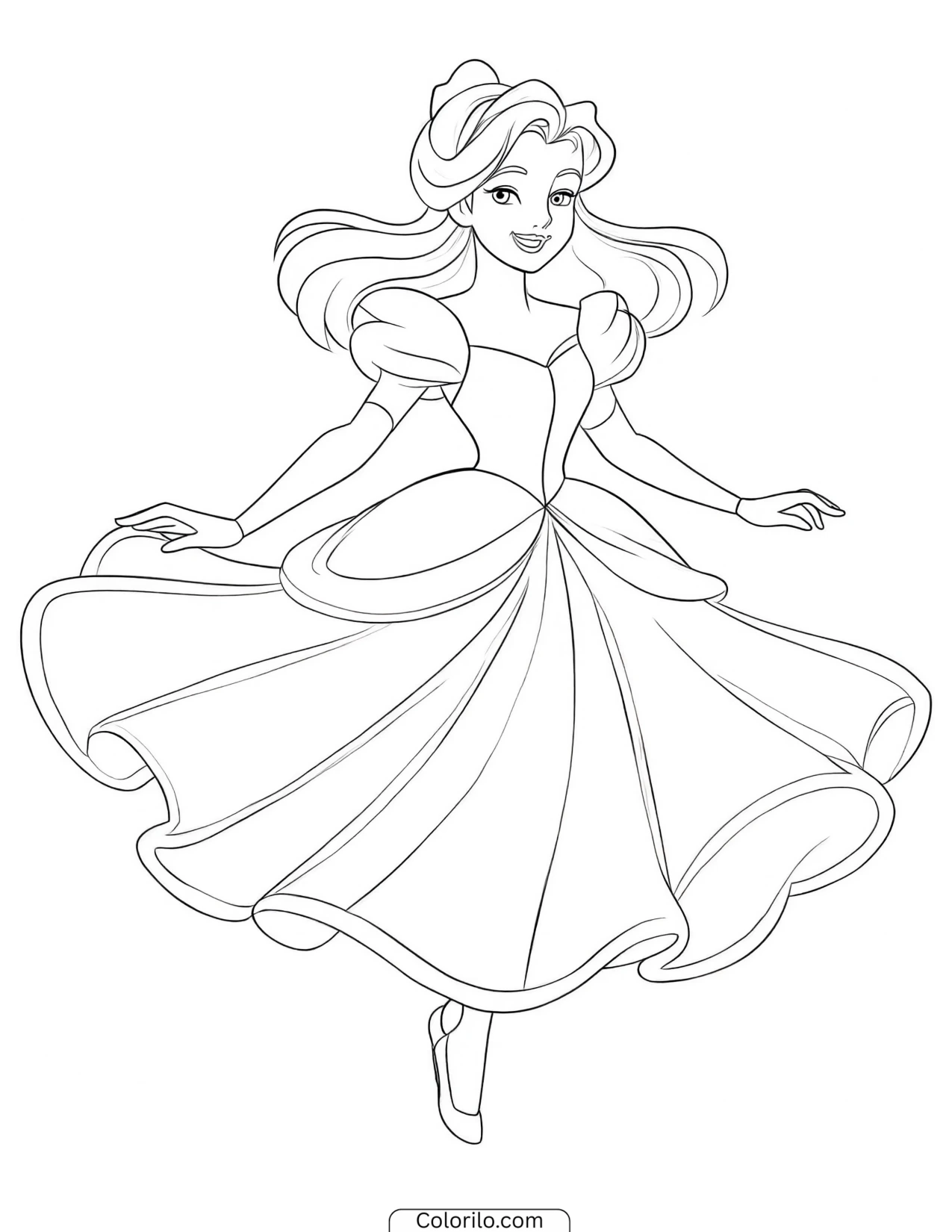
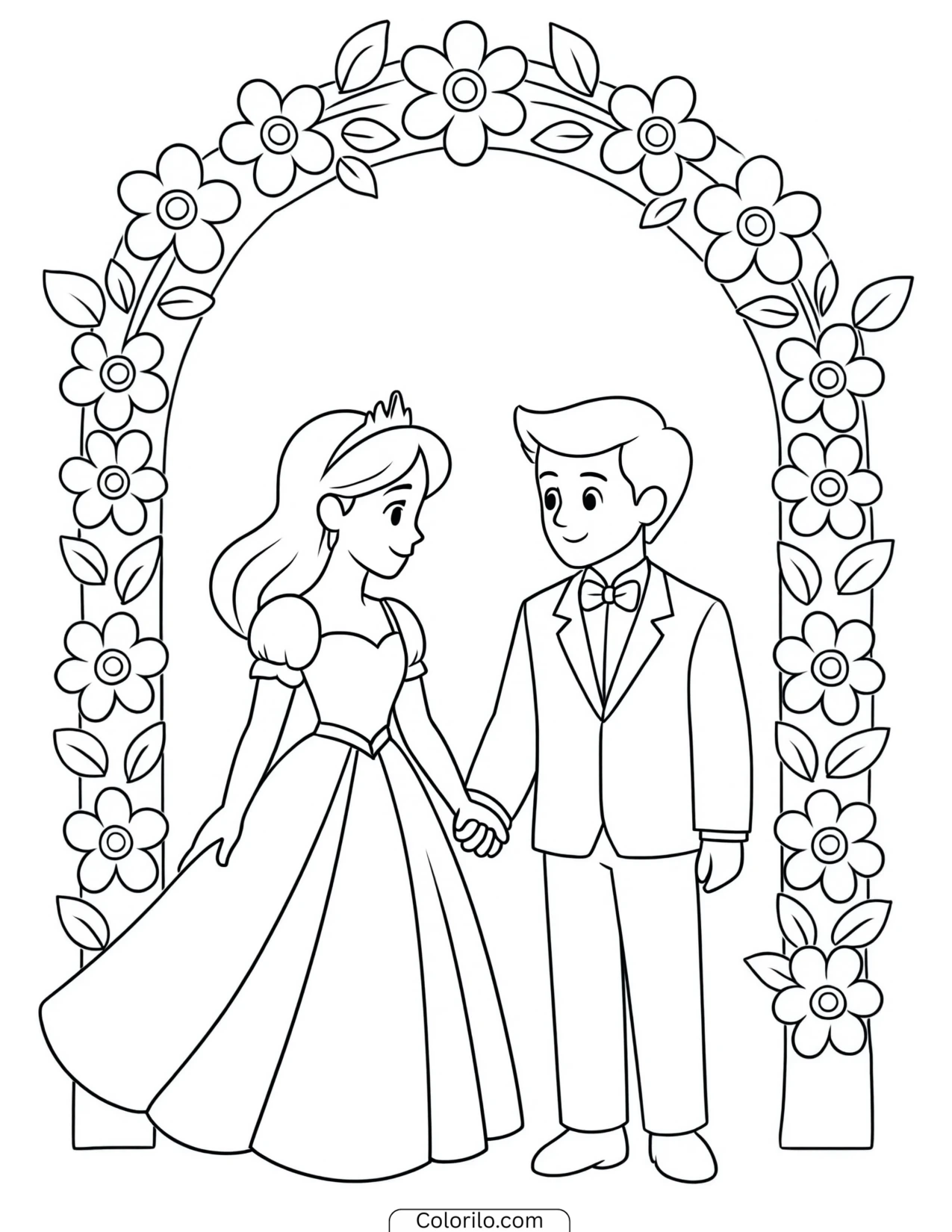
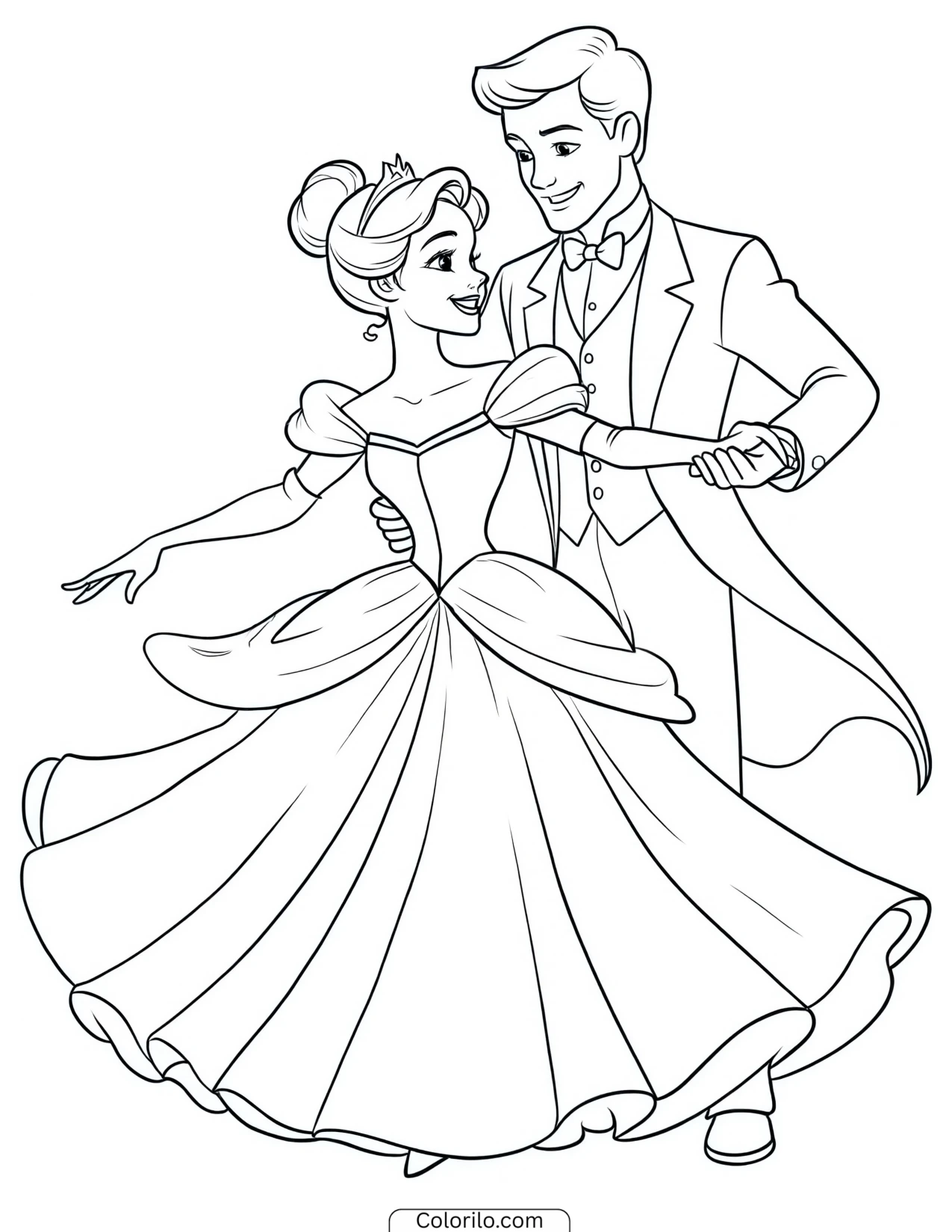
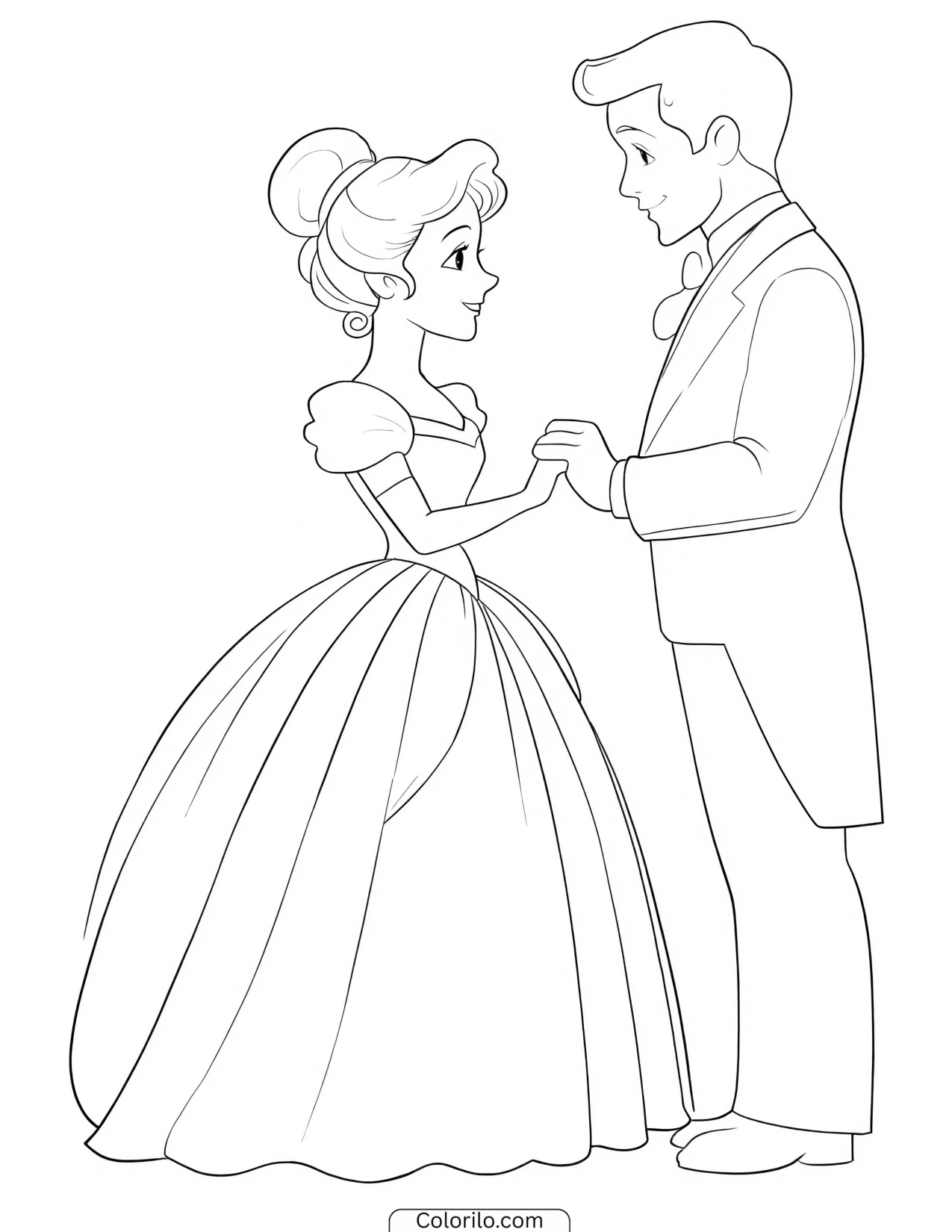
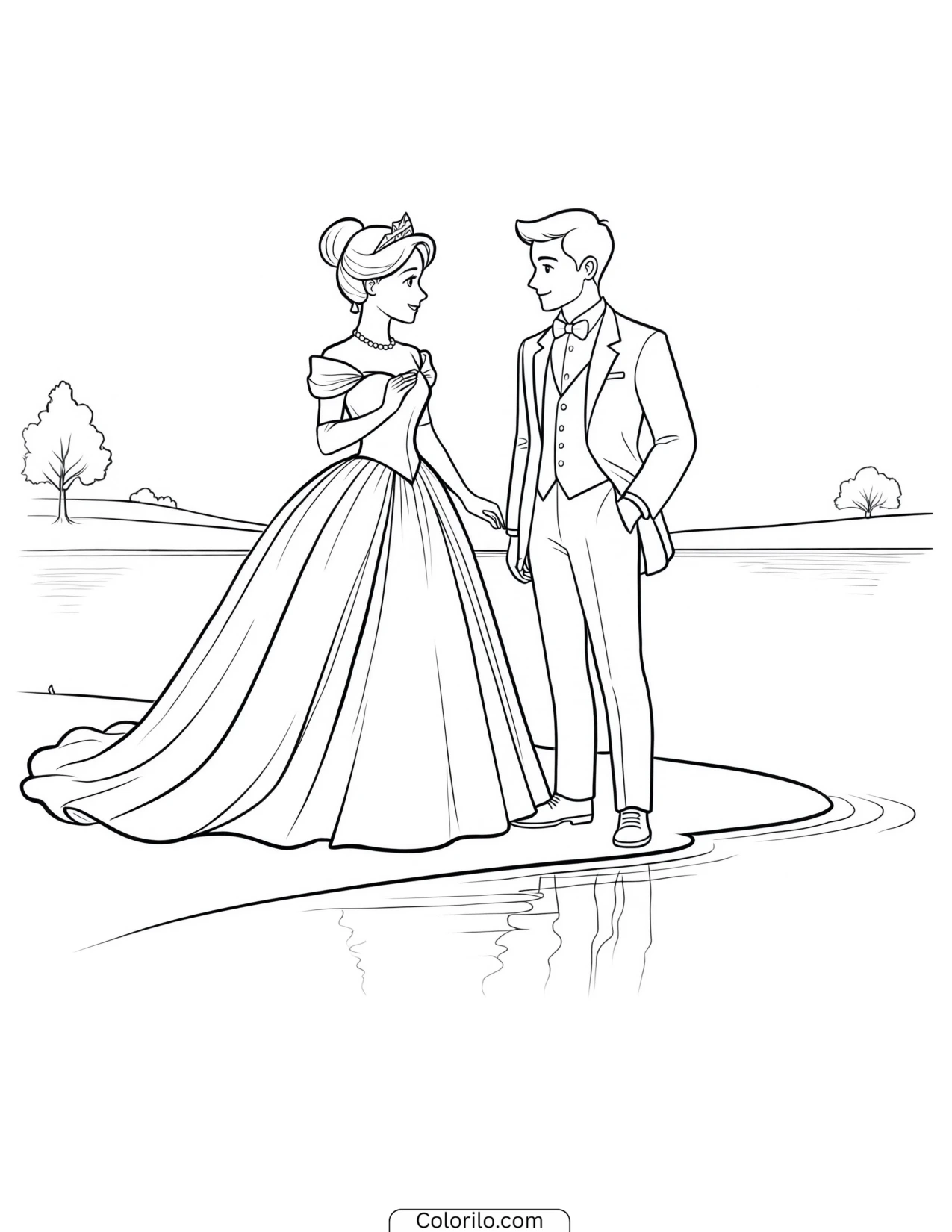
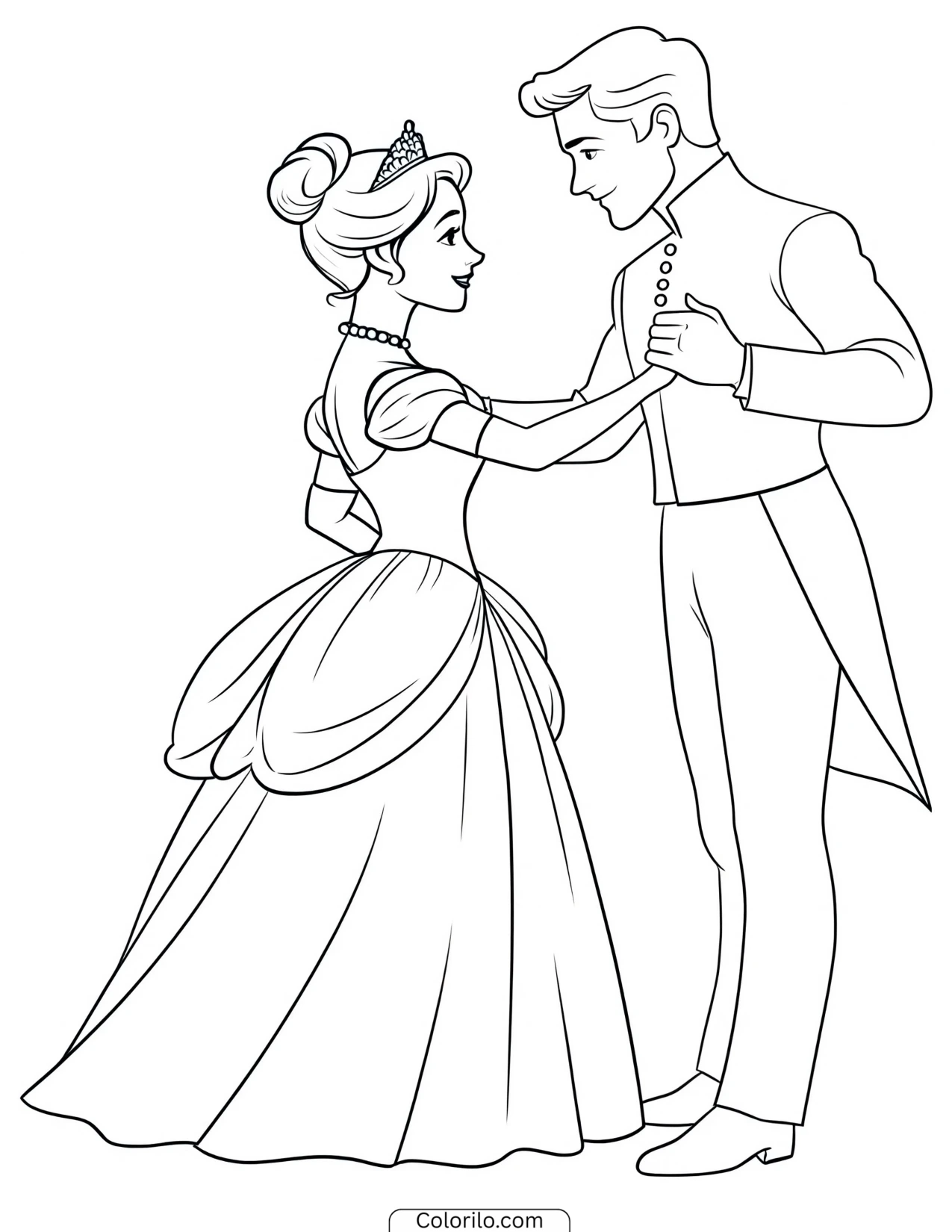
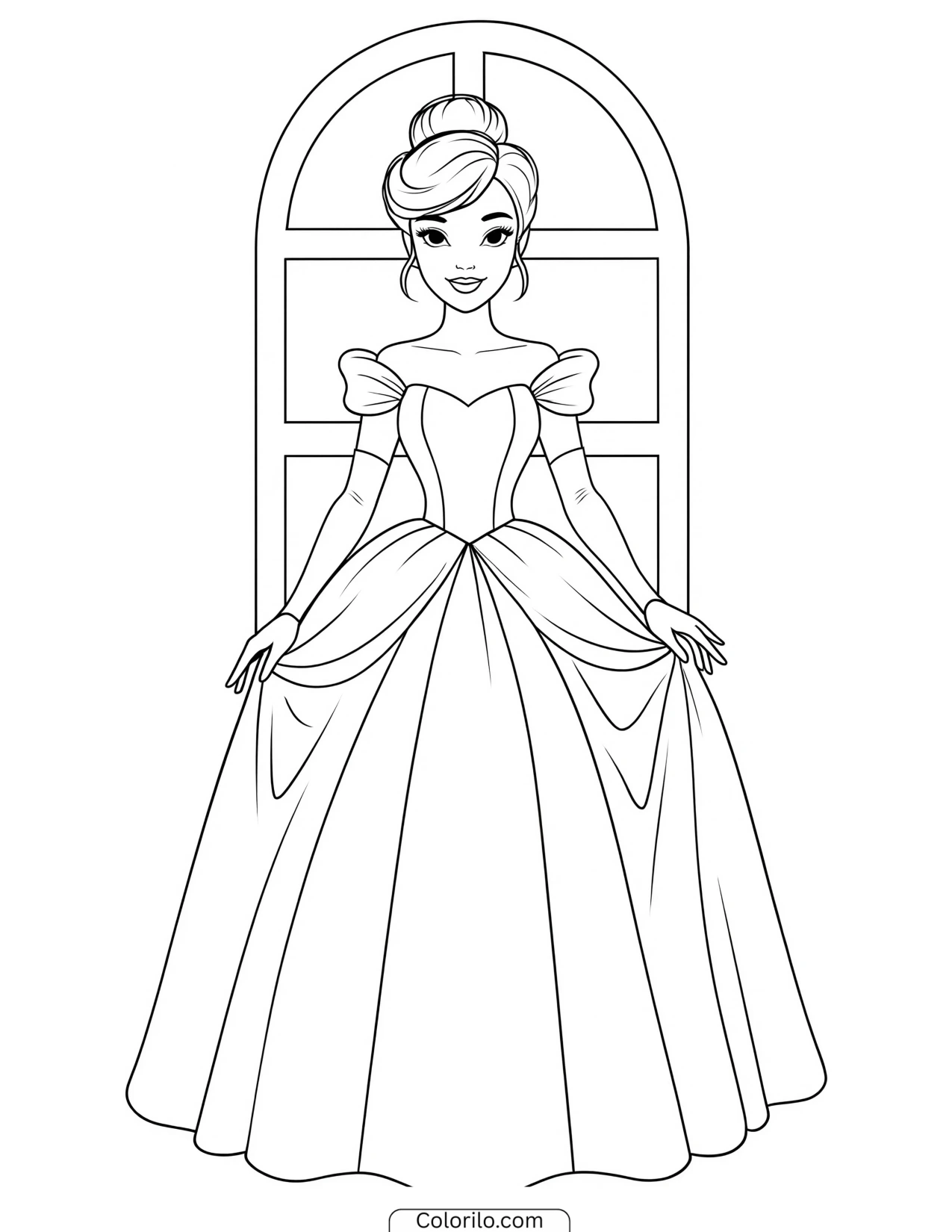
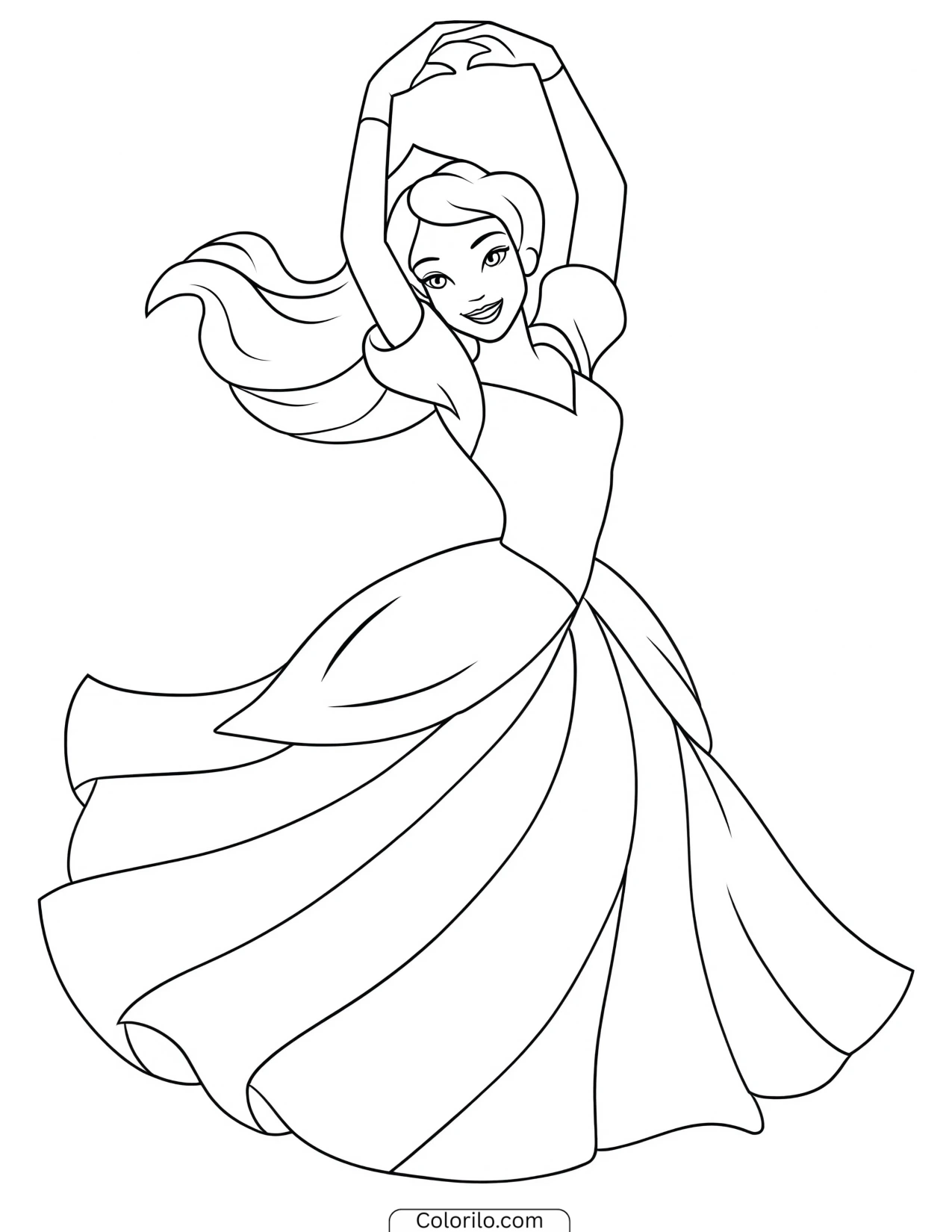
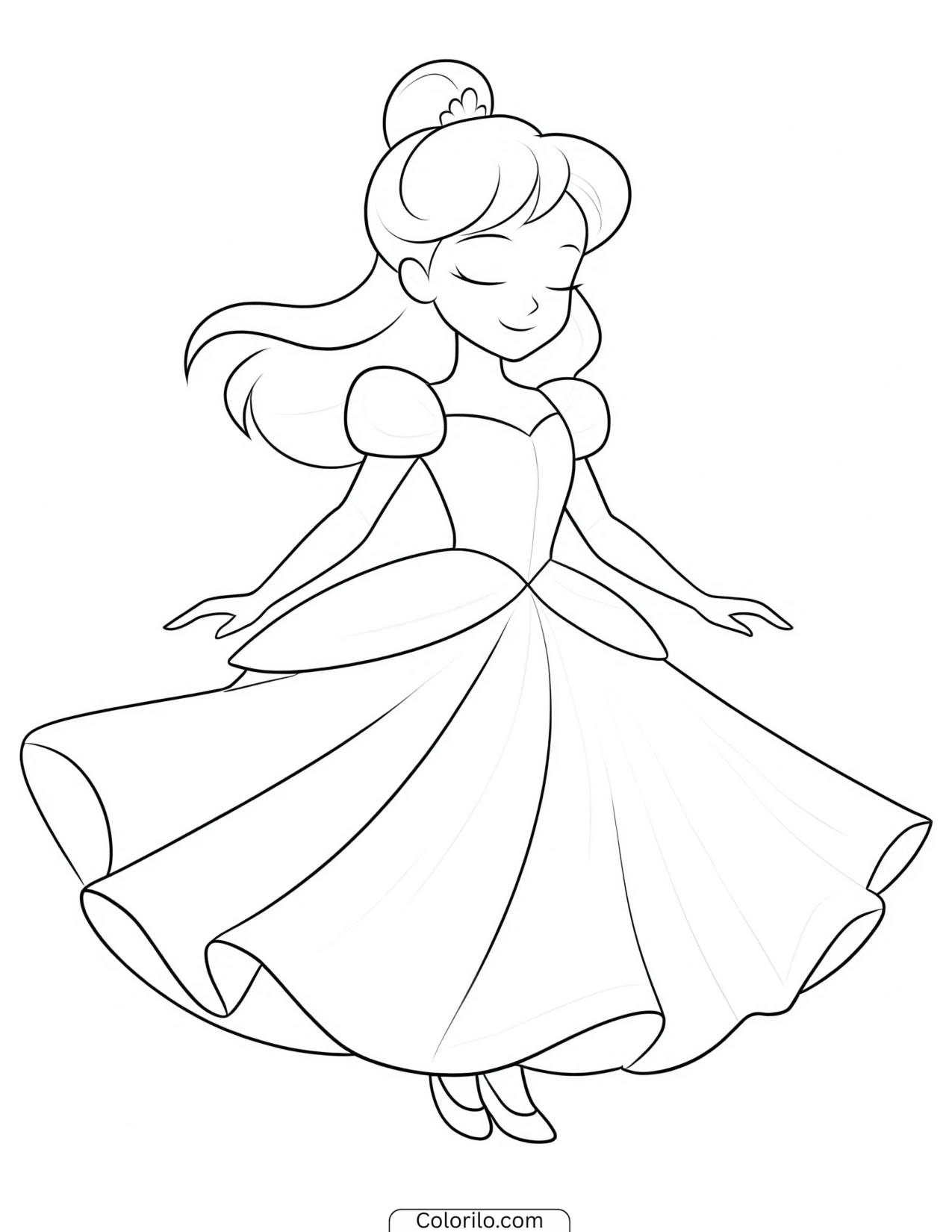
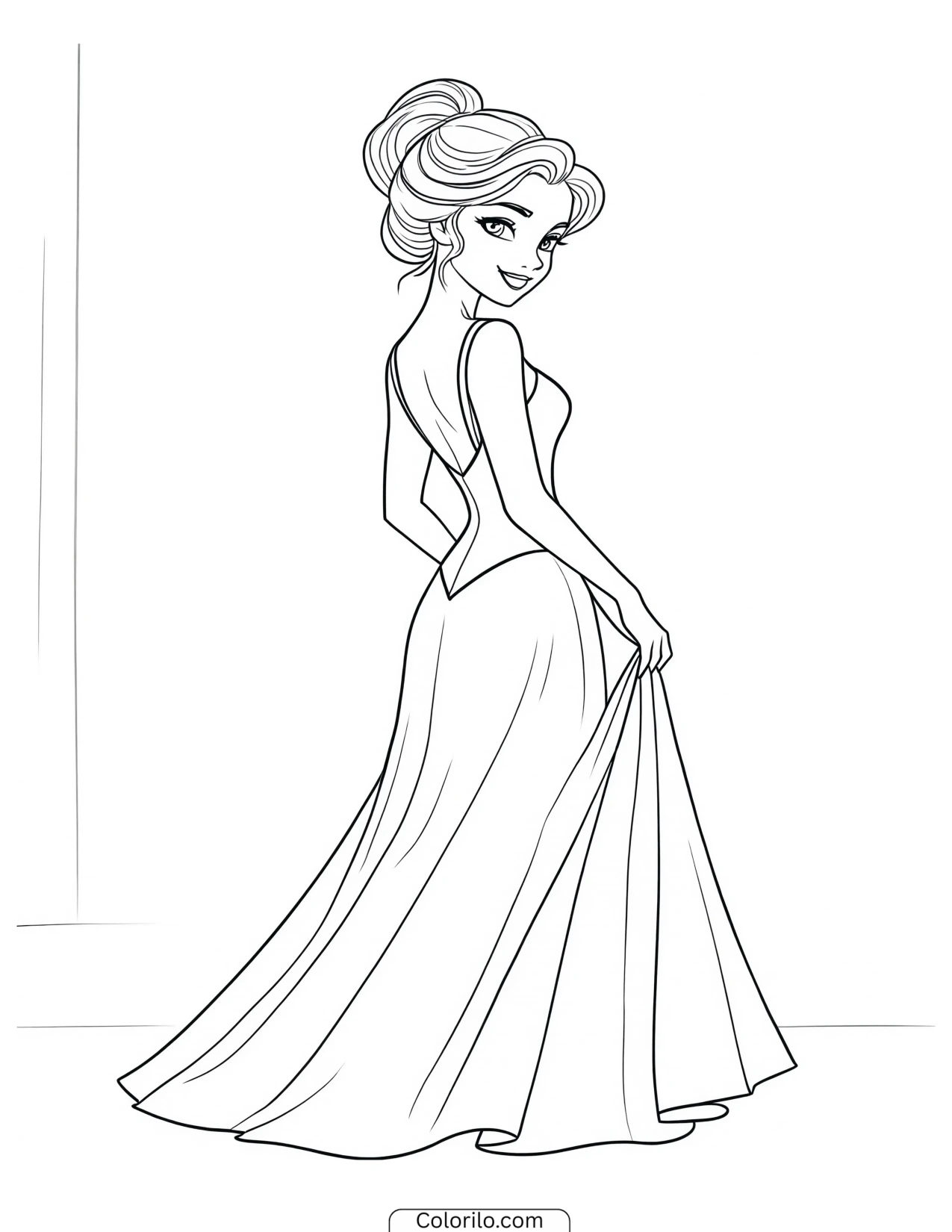
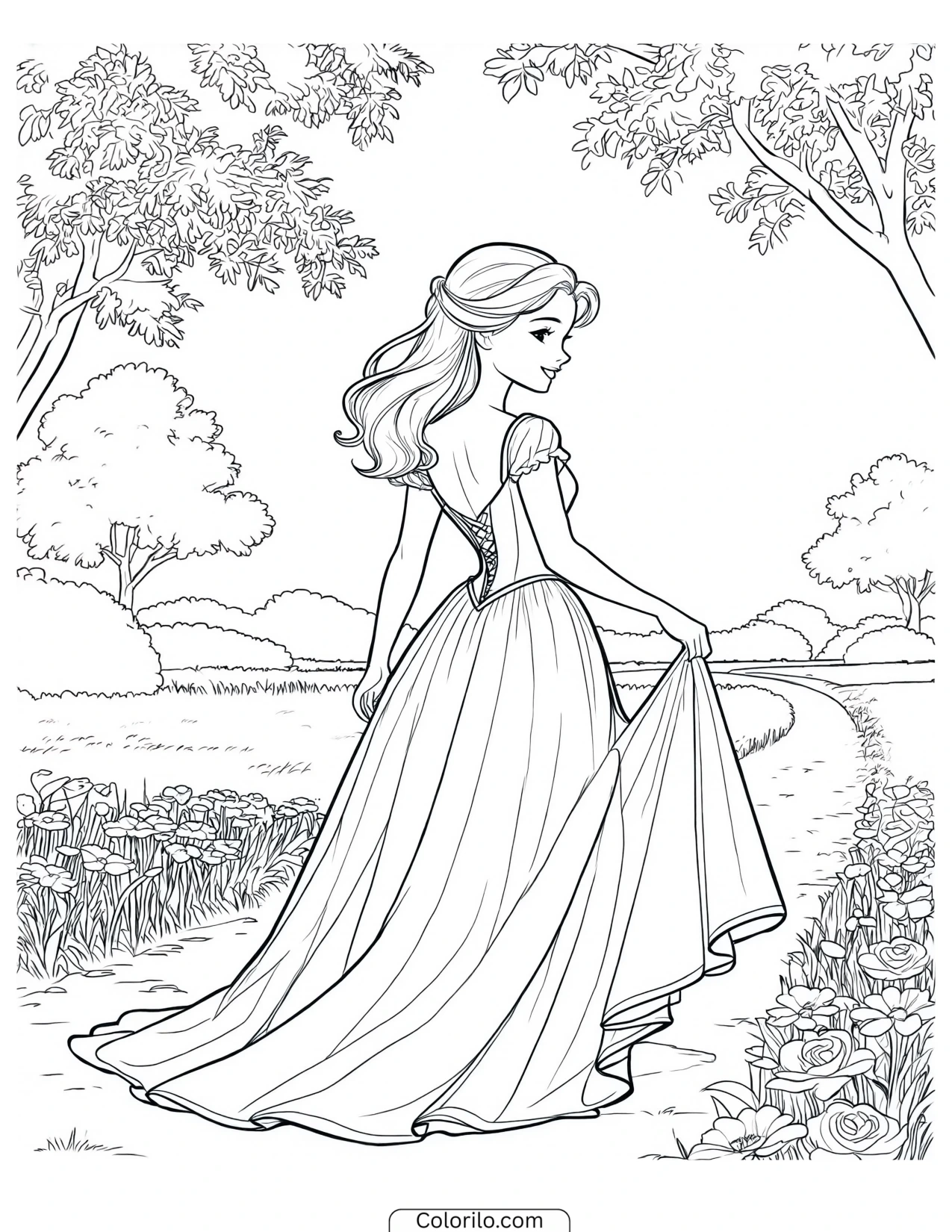
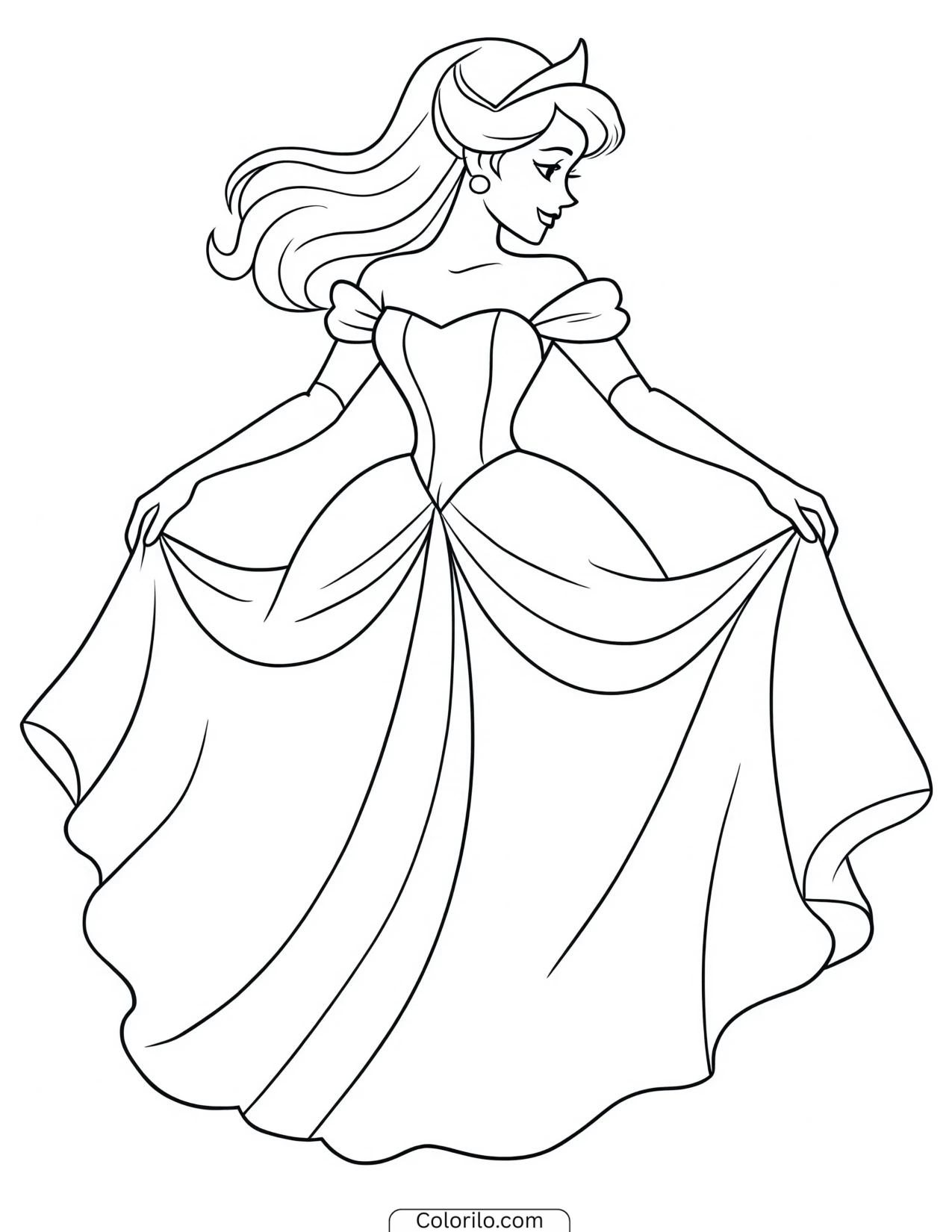
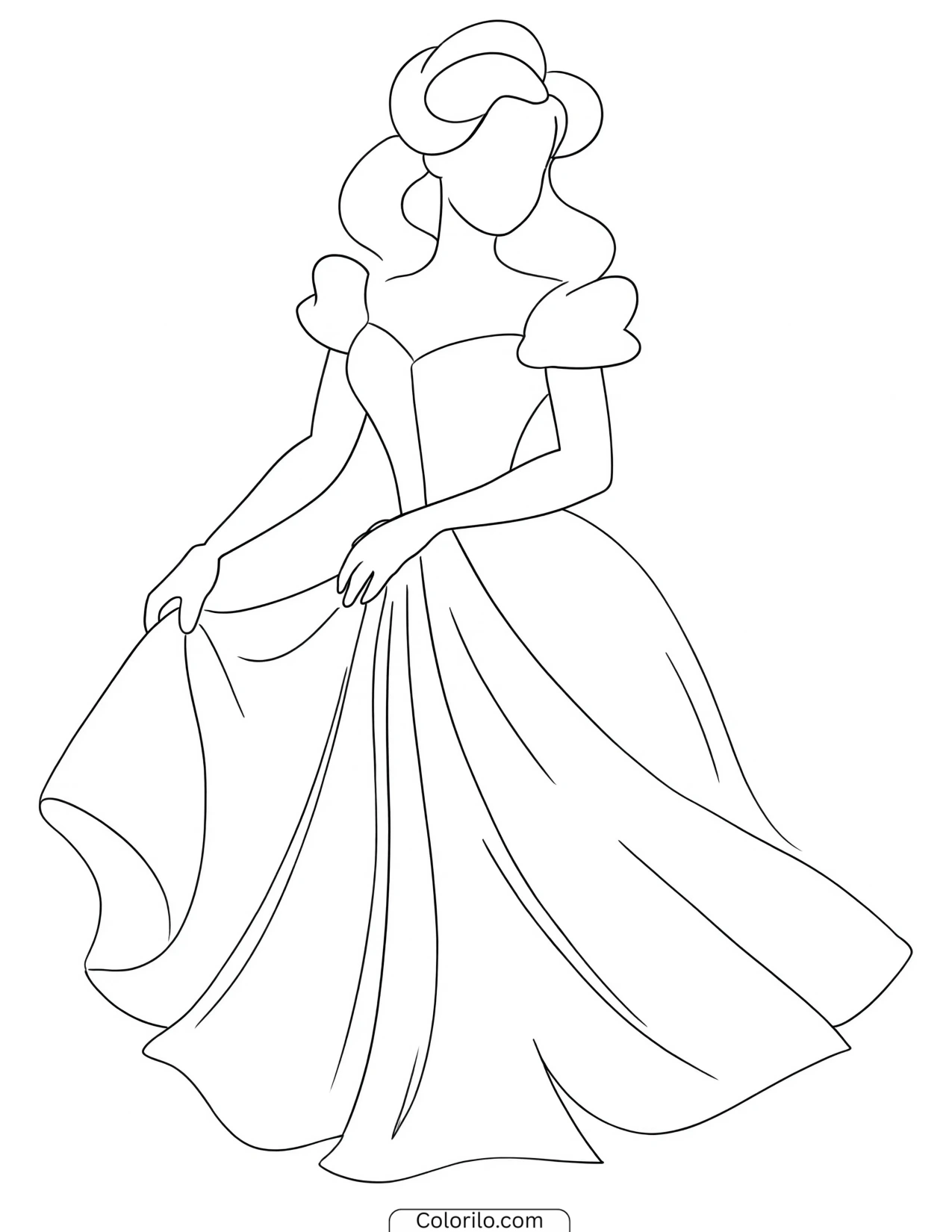
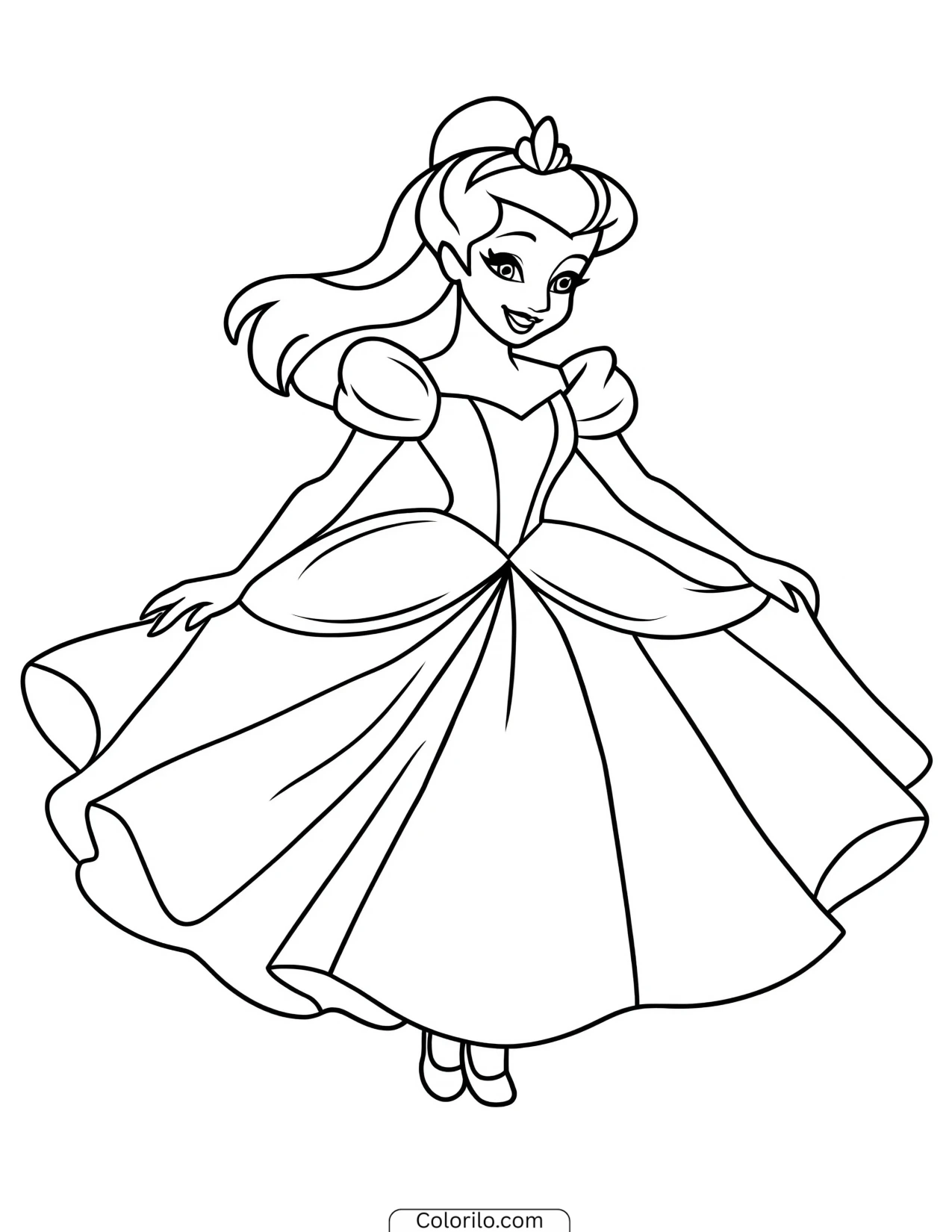
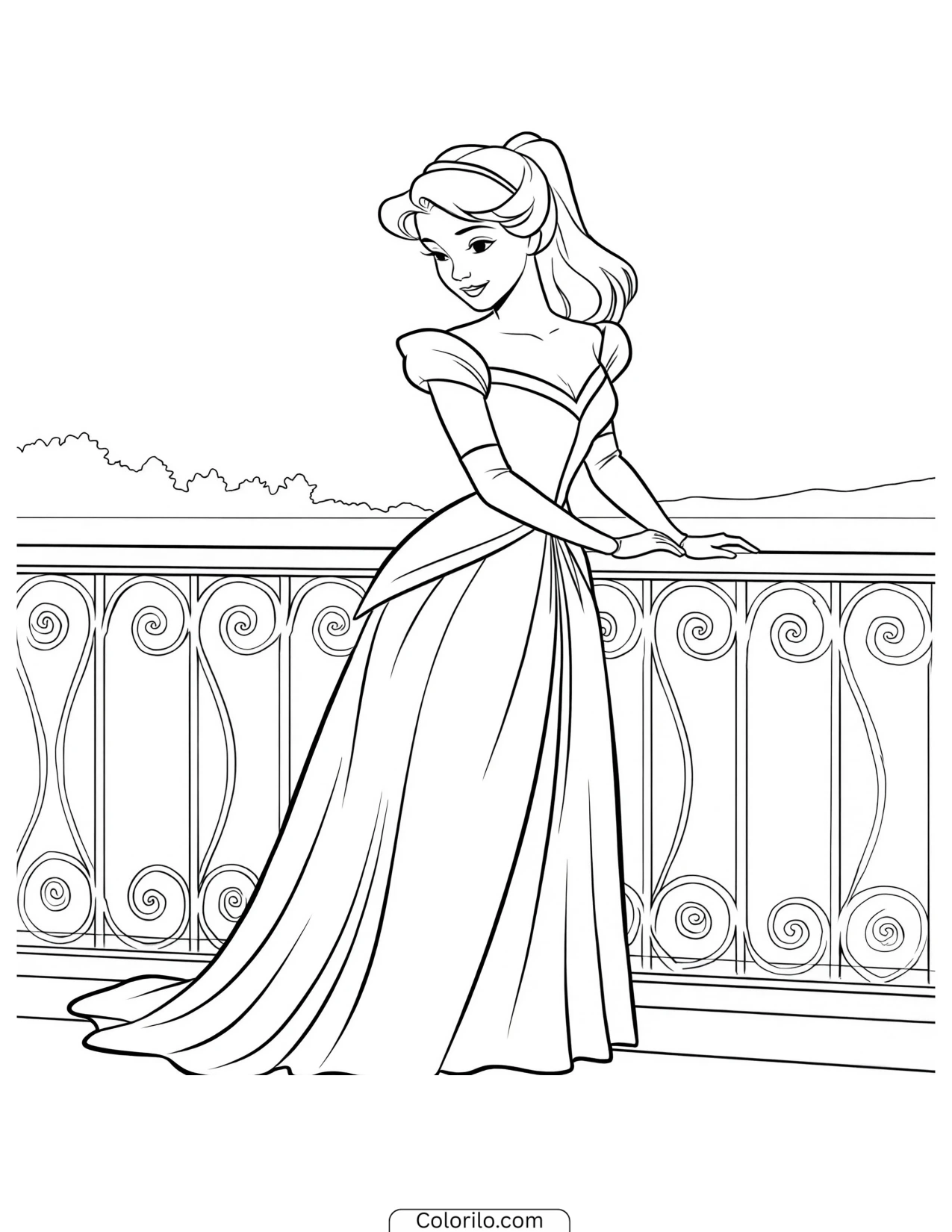
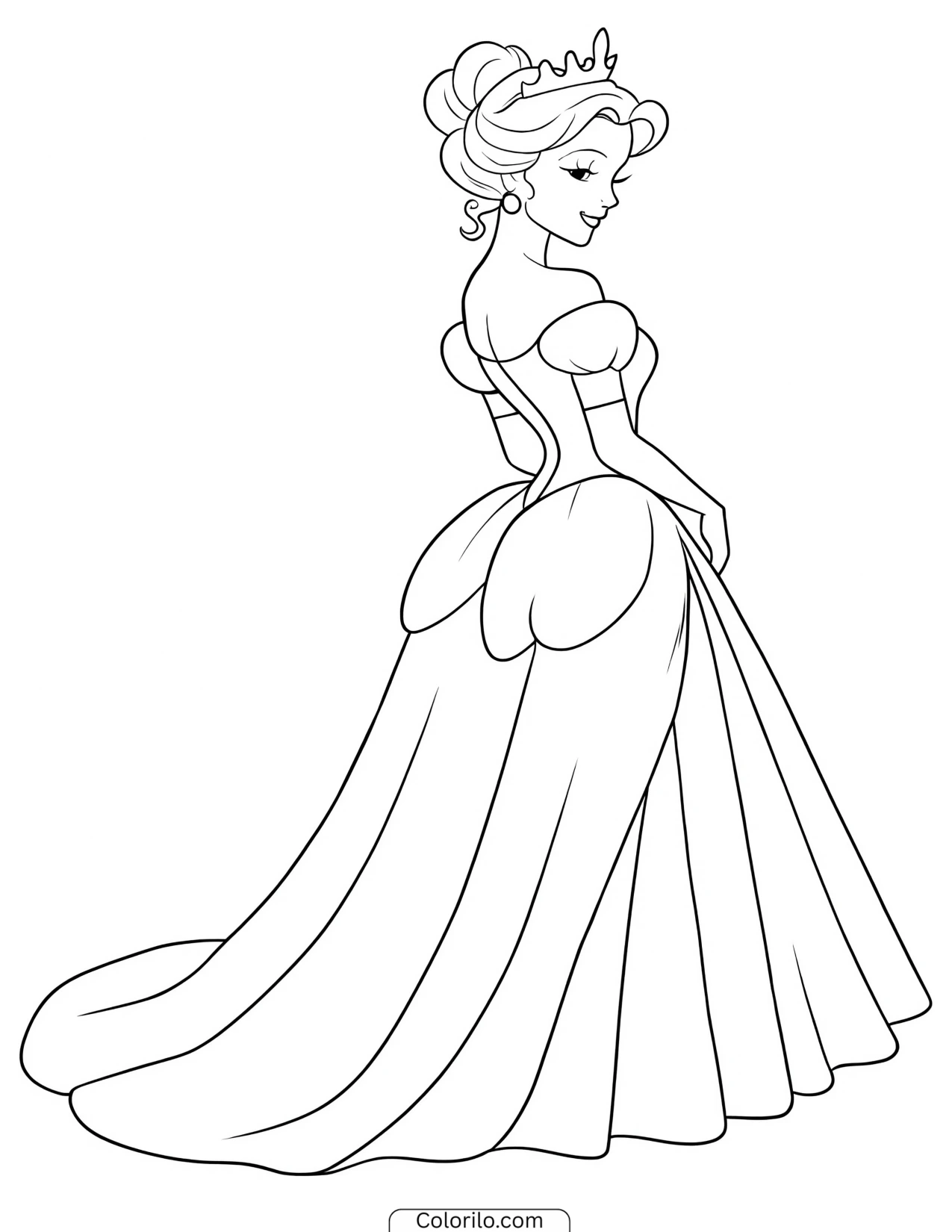
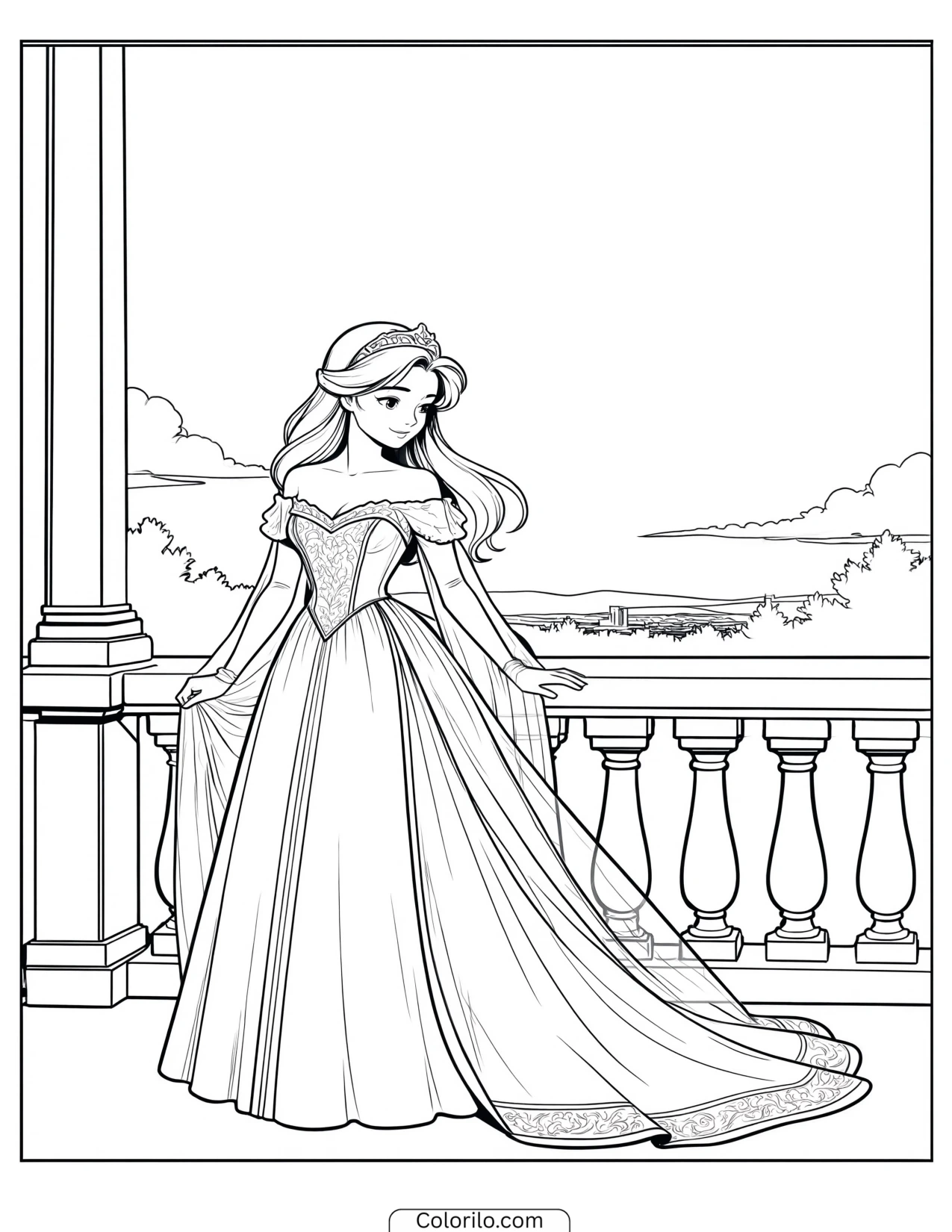
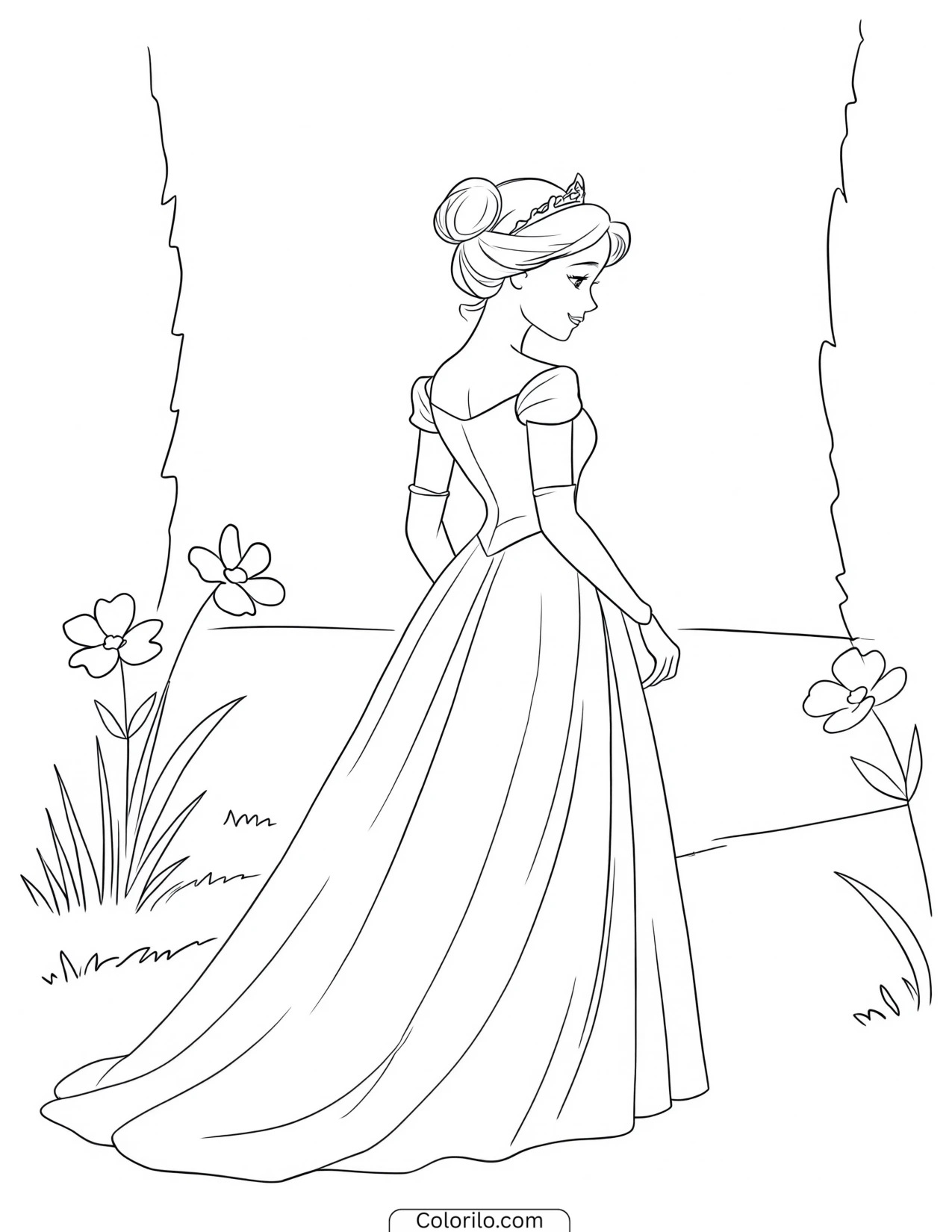
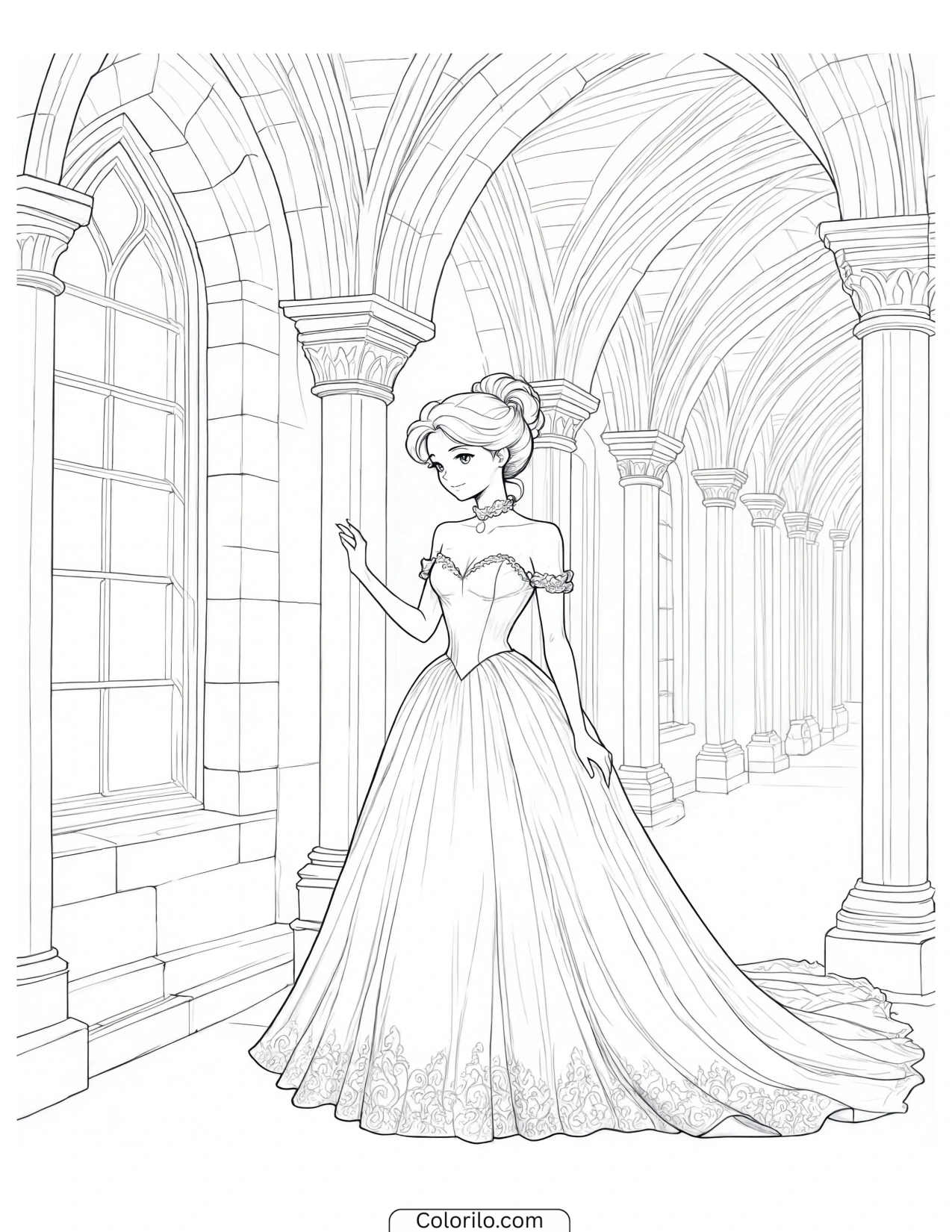
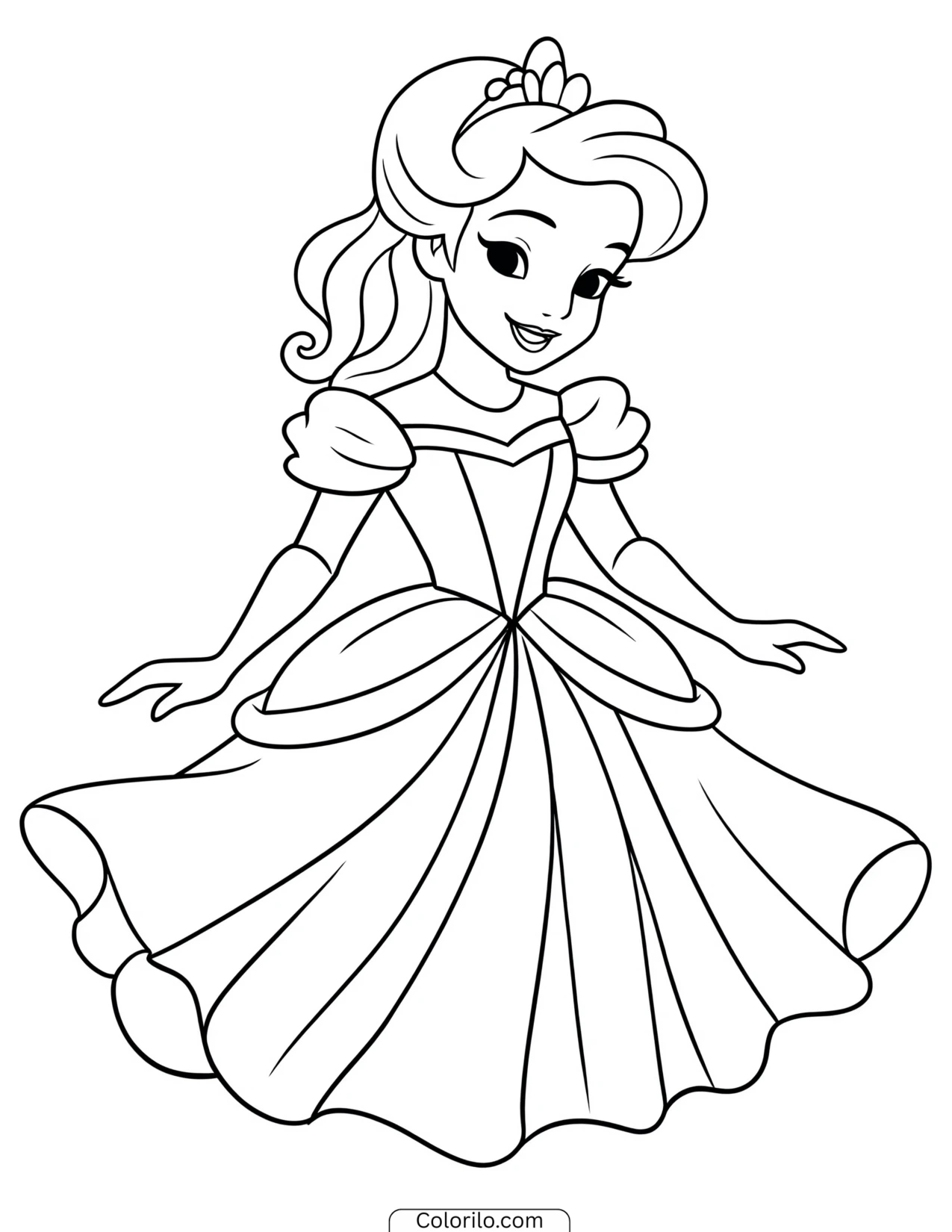
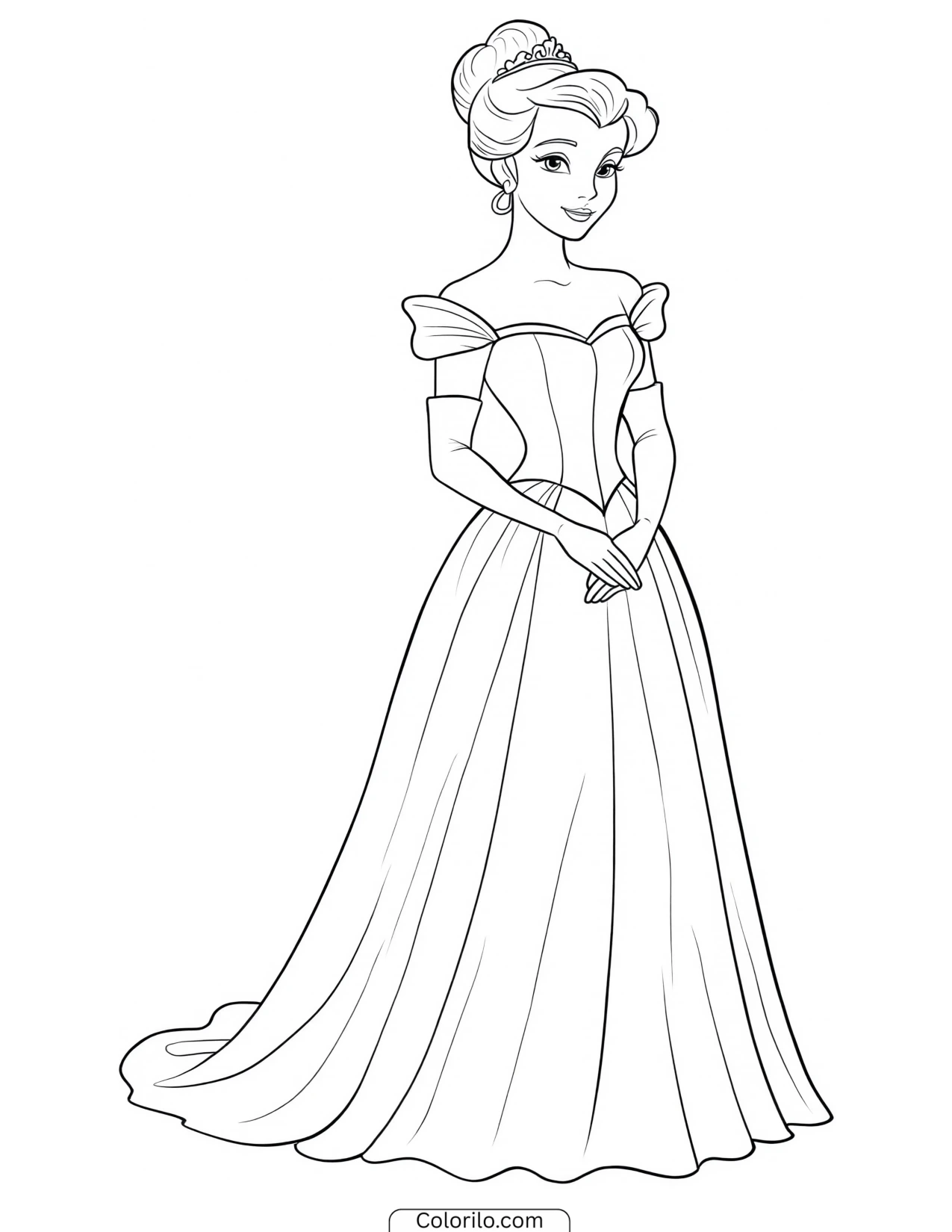
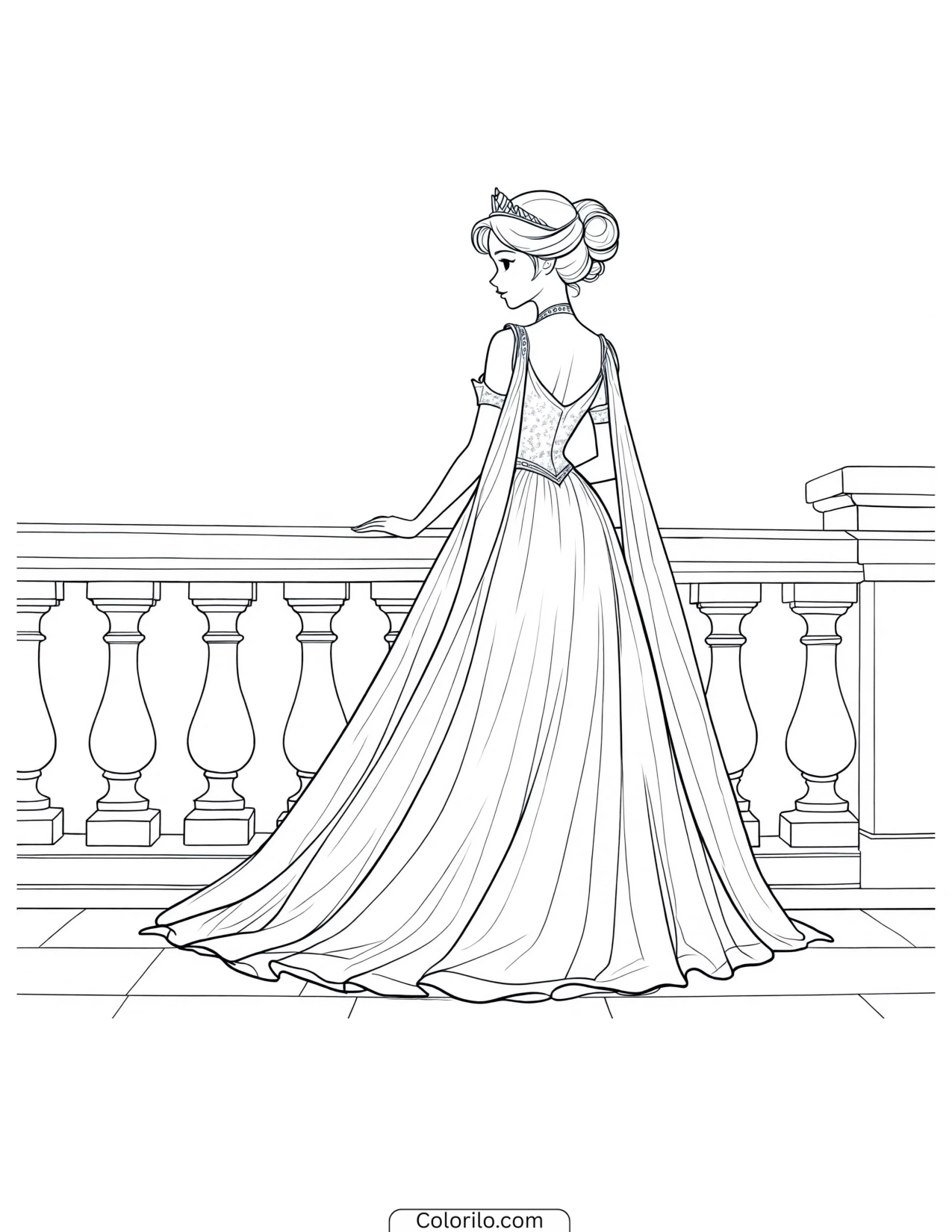
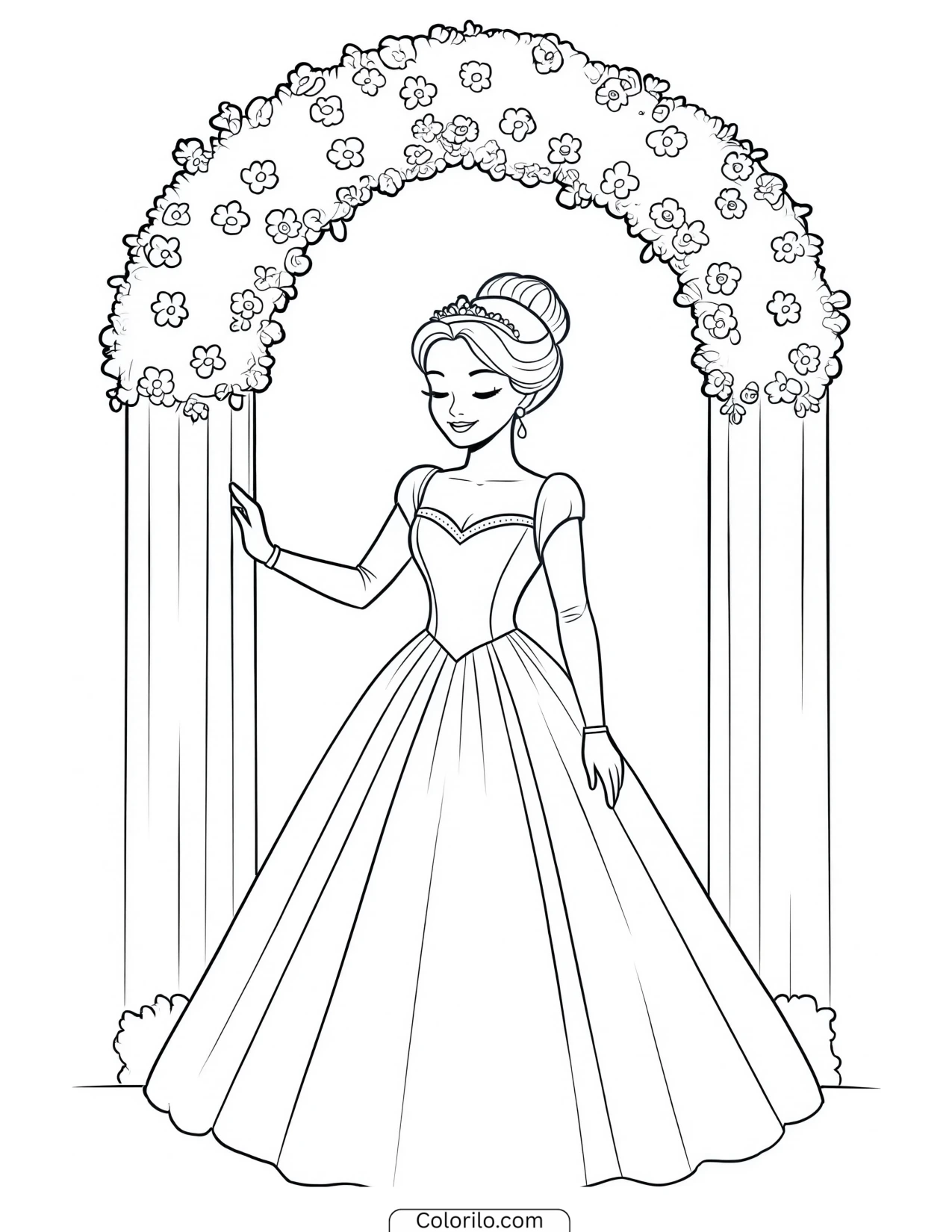
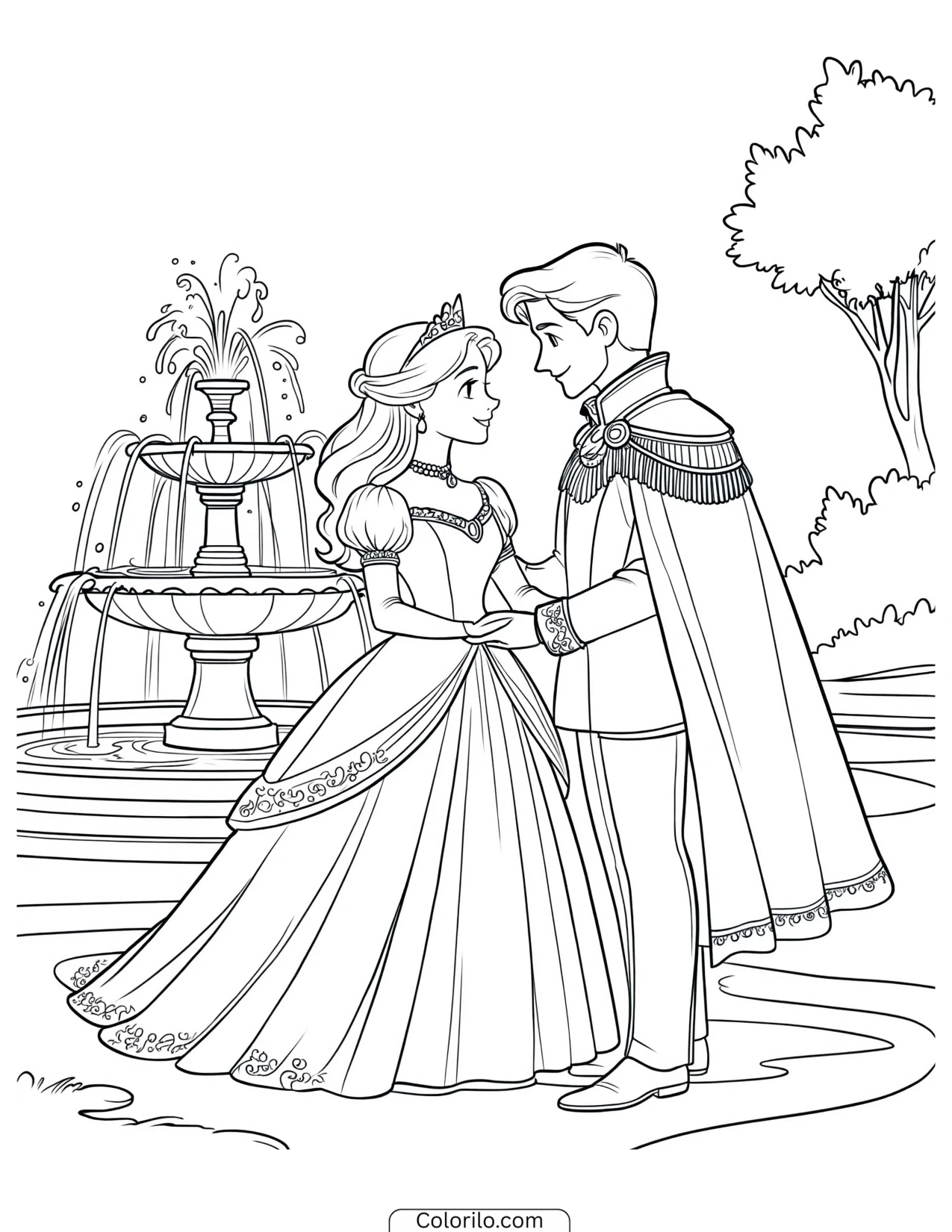
The Princesses in This Collection
Cinderella
Nine designs, the largest group. The story is far older than most people realise: a version was recorded in China in the ninth century, and versions exist across Europe, the Middle East and Asia. Charles Perrault’s 1697 French telling introduced the pumpkin, the fairy godmother, and the glass slipper. The pages here show her at the ball, twirling, reading, and dancing with the prince.
Belle
Six designs. Beauty and the Beast was first published as a long novel by Gabrielle-Suzanne de Villeneuve in 1740, then shortened into the version we know by Jeanne-Marie Leprince de Beaumont sixteen years later. It’s one of the few classic tales where the heroine’s defining trait is that she reads. Most of these pages show her ballgown, with one holding a rose.
Aurora
Four designs, and the calmest in the set. Sleeping Beauty descends from a much darker medieval story, softened considerably by Perrault and softened again by the Brothers Grimm. Tchaikovsky’s ballet of 1890 is where much of the visual language of the princess, the court, the gown, the flowers, comes from.
Ariel and Eric
One design, dancing. Hans Christian Andersen’s The Little Mermaid was published in 1837 and ends quite differently from every adaptation since; the statue in Copenhagen harbour has marked it since 1913.
Unnamed princesses
Twenty-seven designs. These have no fixed identity, which makes them the ones children tend to project onto. The balcony, vanity, window and staircase settings give them more variety of scene than the named pages have.
Couples and weddings
Five designs, including a bride and groom and two royal couples. The white wedding dress, incidentally, isn’t ancient tradition, it became fashionable only after Queen Victoria wore one in 1840.
Coloring Tips
The skirt is where the work is. A ballgown is a large area, and filling it flat makes it look like paper rather than fabric. Shading a little darker inside each fold and along the underside of the skirt is the single change that makes a gown look like cloth.
Pick two colours, not eight. Classic gowns work because they’re restrained, a main colour plus a lighter tone for the highlights and trim. The pages with the most fabric benefit most from this.
Try the traditional palettes, then break them. Cinderella’s pale blue, Belle’s gold, Aurora’s pink. Children often want these exactly right. Then print the same page again and let them pick anything, the unnamed princess pages exist partly for that.
Hair takes a highlight. Leaving a pale unfilled band where light would fall does more for a portrait than any amount of careful colouring elsewhere.
Use the backgrounds. The balcony, archway, window and garden pages all have settings that can carry stone greys, sky blues and greens, which makes the gown stand out far more than an empty white background does.
Start young children on the standing and sitting poses. The dancing and twirling pages have more complicated fabric; the simple standing gowns are the easiest to finish neatly.
Frequently Asked Questions
Are these princess coloring pages really free?
Yes, all 47 are free to download and print. Click any design to open the PDF. No account, no email, no payment.
What age are these suitable for?
This is one of the more child-friendly sets here. The plain standing and sitting poses suit children from around four. The ballgown and dancing pages, with their folds and skirt panels, work well from six or seven. Older children and adults will find enough detail in the fabric to keep them occupied.
Which princesses are included?
Cinderella, Belle, Aurora, and Ariel with Eric, plus twenty-seven unnamed princesses and several prince-and-princess and wedding scenes.
Is this official Disney merchandise?
No, these are fan-made coloring pages inspired by classic fairy tale characters, and are not produced, licensed, or endorsed by Disney or any studio. The underlying stories, Cinderella, Sleeping Beauty, Beauty and the Beast, The Little Mermaid, are centuries old and in the public domain. Free for personal and classroom use, not for resale.
Can I use these for a party?
Yes, for personal use. They work well as a table activity at a birthday party, and the couple and wedding pages are sometimes used as quiet-time activity sheets at weddings.
Can I print more than one copy?
As many as you need. The gown pages in particular are worth doing twice in different colours.
How old are these fairy tales?
Much older than the films. The earliest recorded Cinderella story comes from ninth-century China, and versions turn up across Europe, the Middle East and Asia, well over a thousand variants have been catalogued. Beauty and the Beast was published in French in 1740, Sleeping Beauty descends from a medieval romance, and The Little Mermaid was written by Hans Christian Andersen in 1837. Every one of them existed for centuries before any animation studio did.
Leave a Reply