
Table of Contents
The axolotl went from obscure Mexican salamander to one of the most recognisable animals on the internet in about a decade, helped considerably by Minecraft adding them in 2021. The appeal is obvious once you see one: a permanent smile, feathery pink gills sticking out like a headdress, and tiny arms it holds out in front of itself.
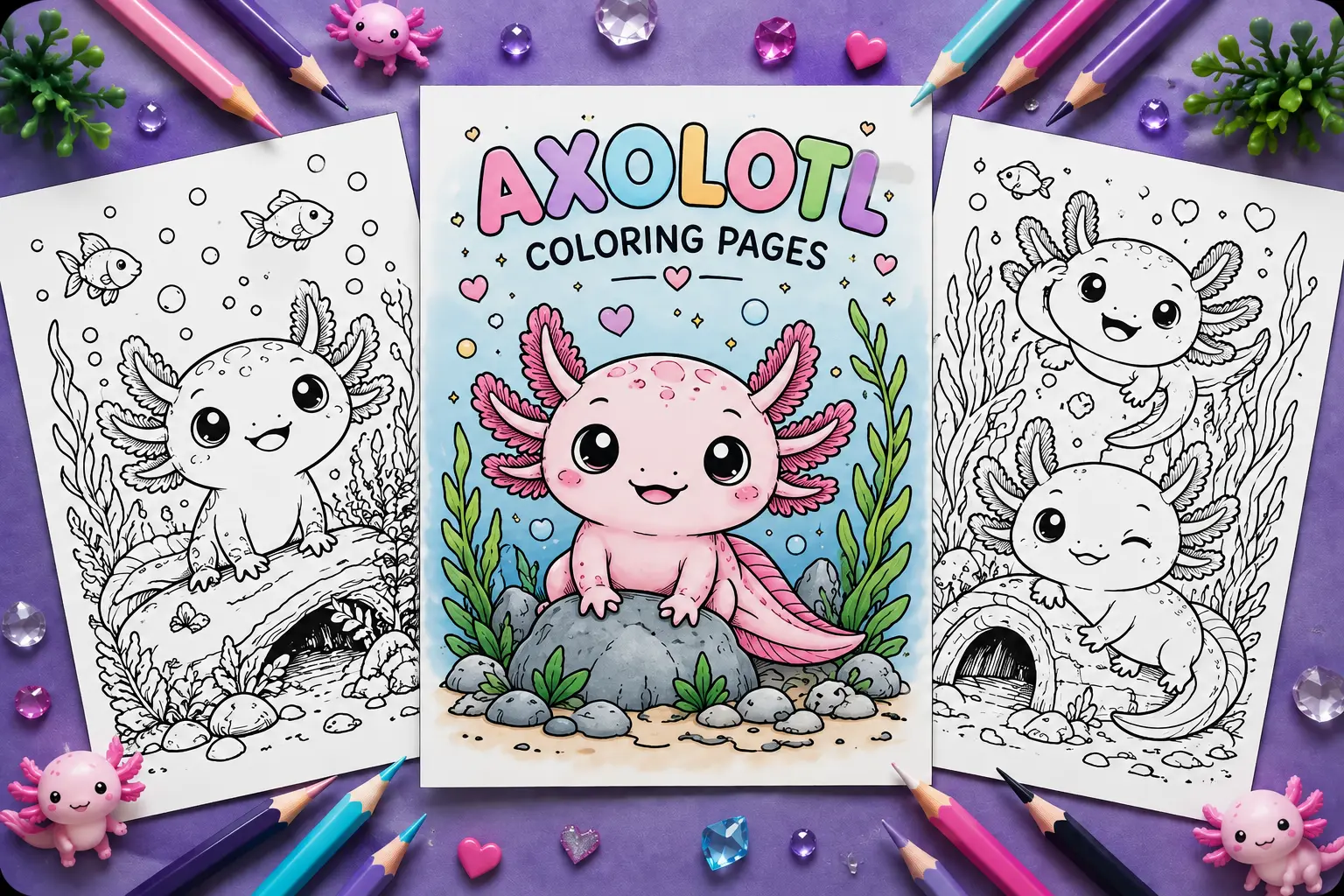
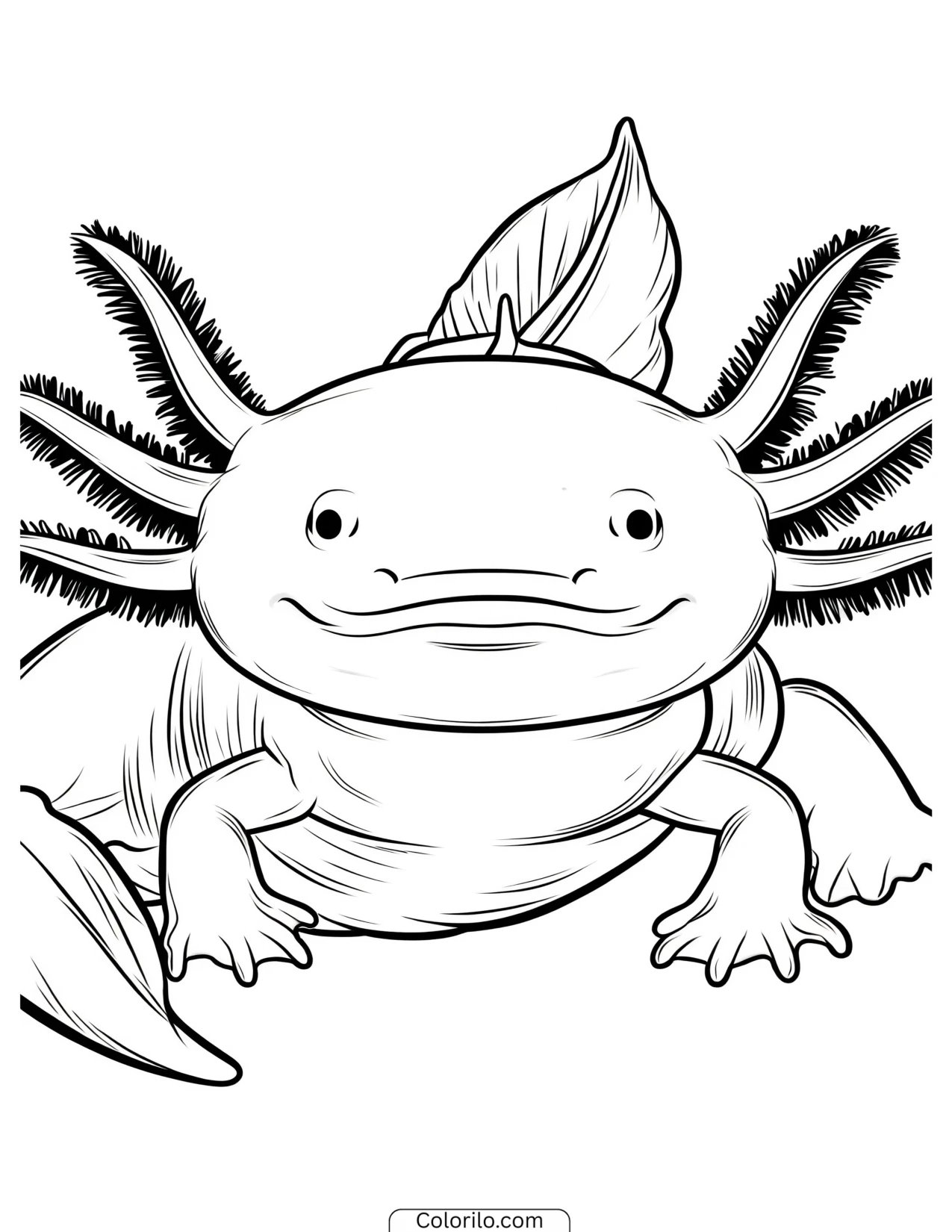
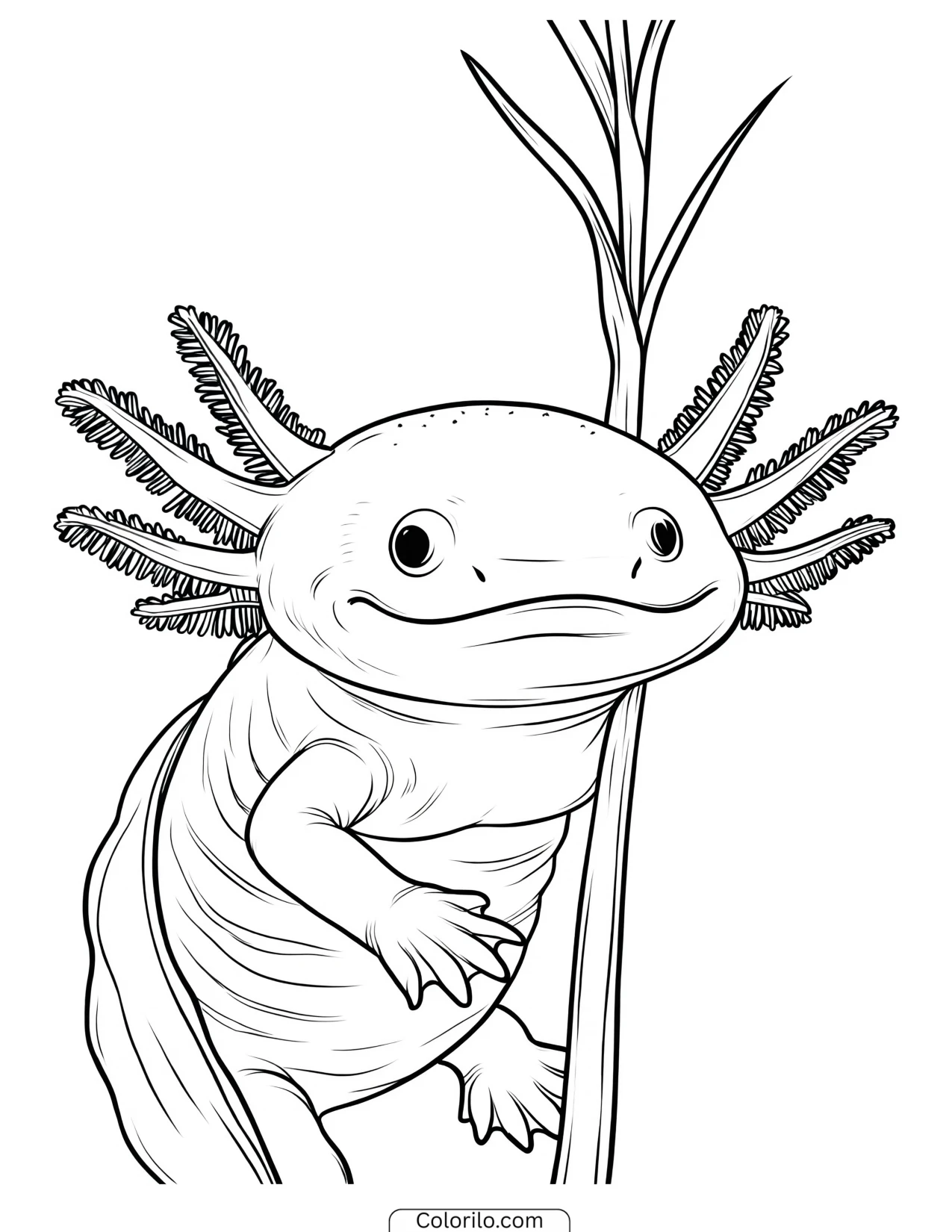
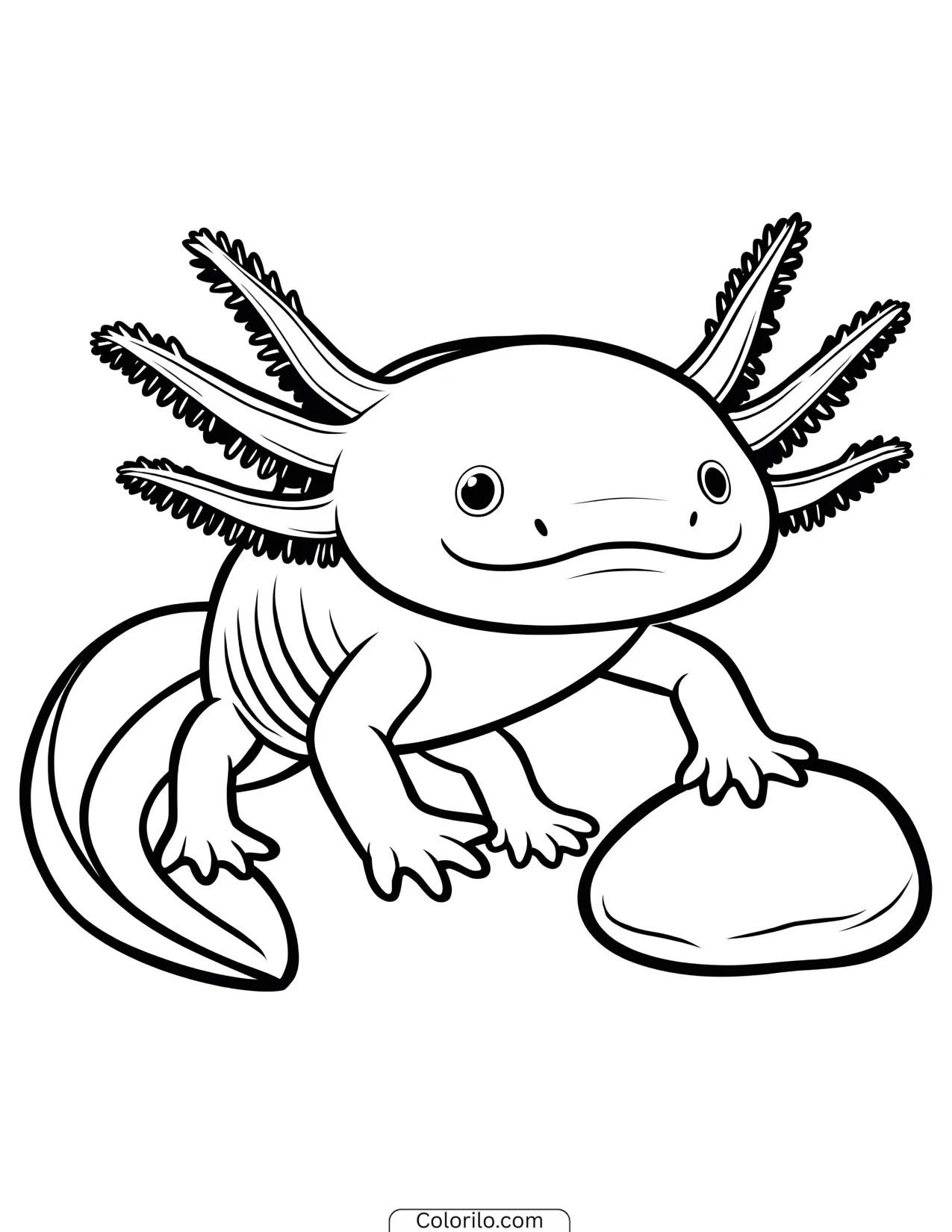
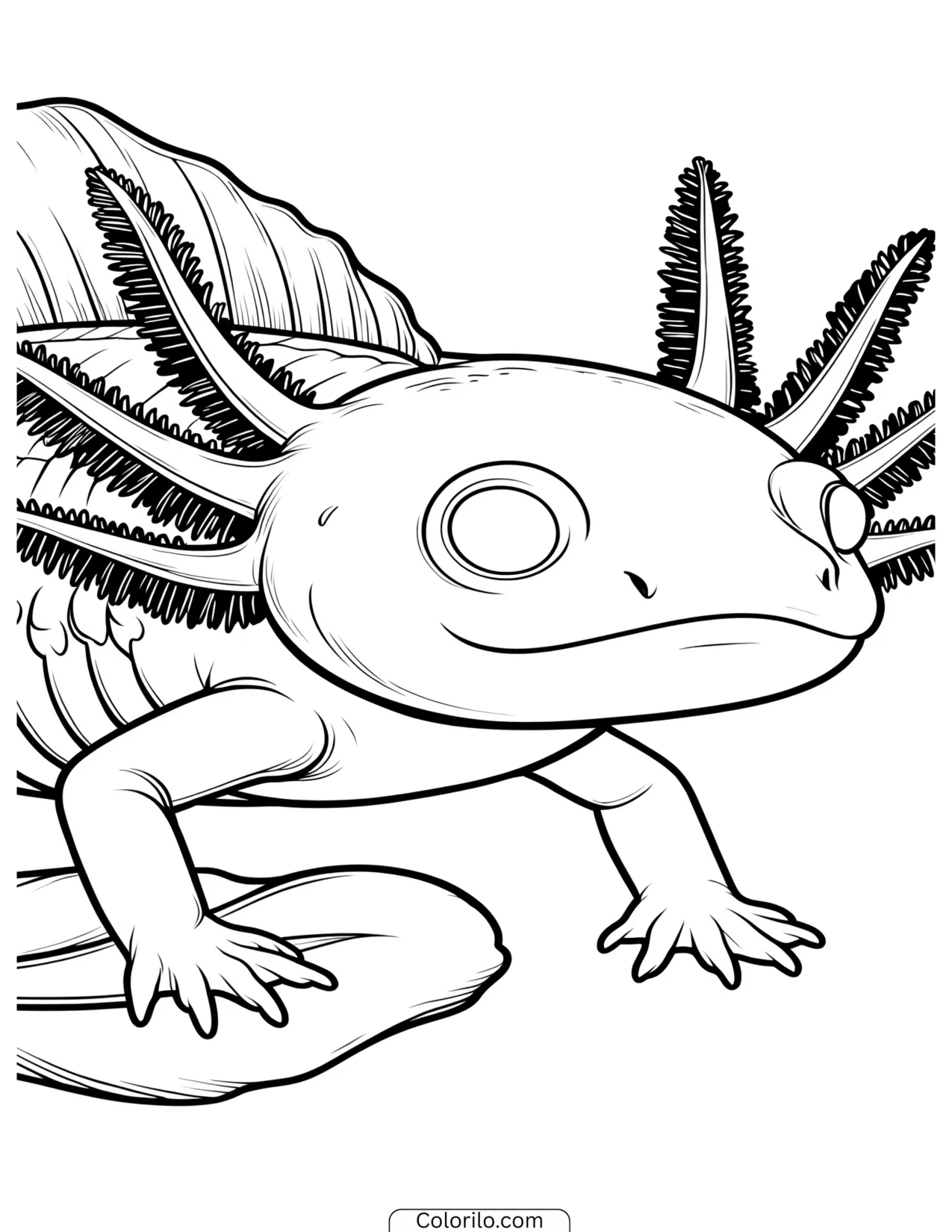
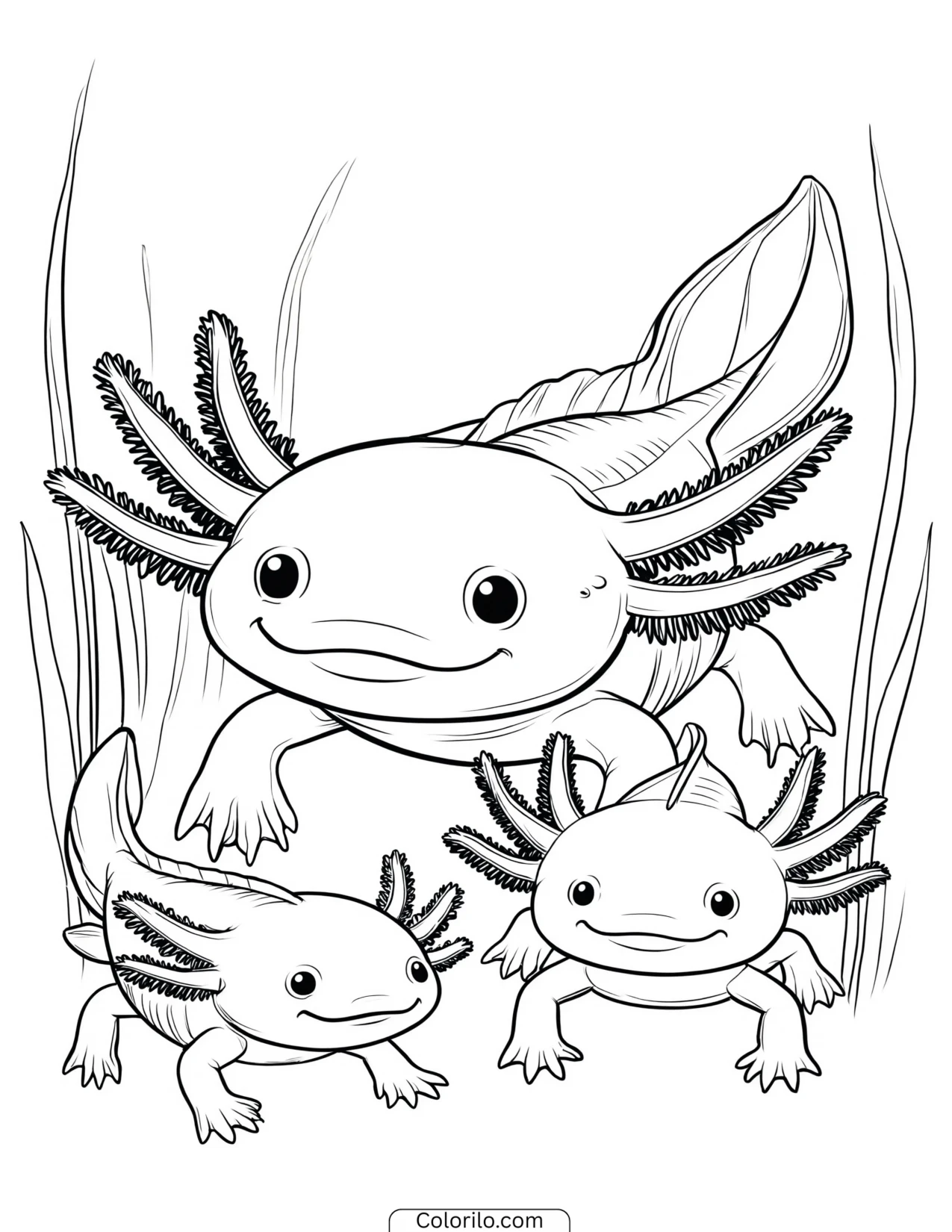
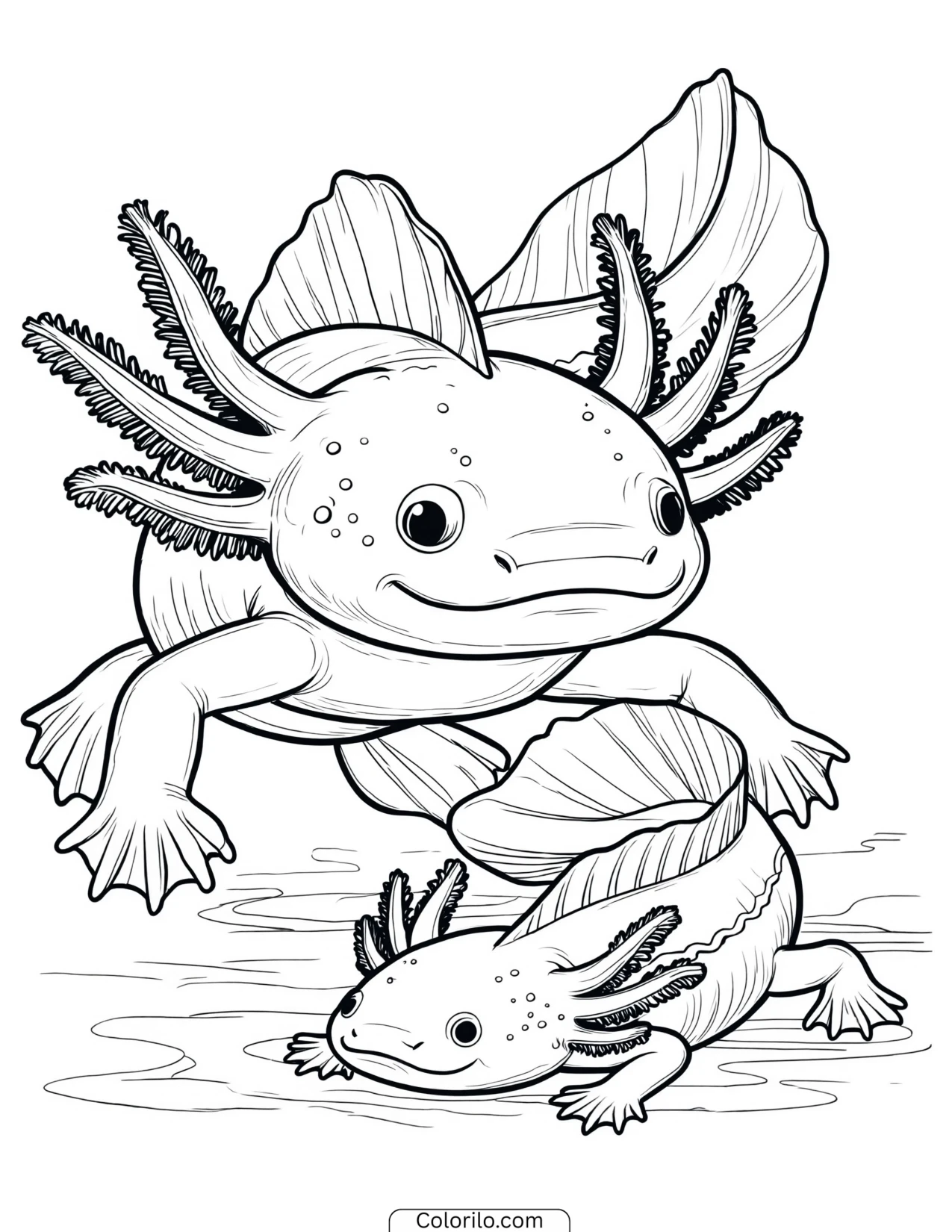
This collection has 40 free axolotl coloring pages, and it leans heavily toward the friendly. Most designs are single axolotls in the water, floating with arms out, gliding forward, wagging their gills, tilting a head, curled up with the tail wrapped round, or stretched out full length. There are close-up portraits too, including a chubby one and a grinning front view.
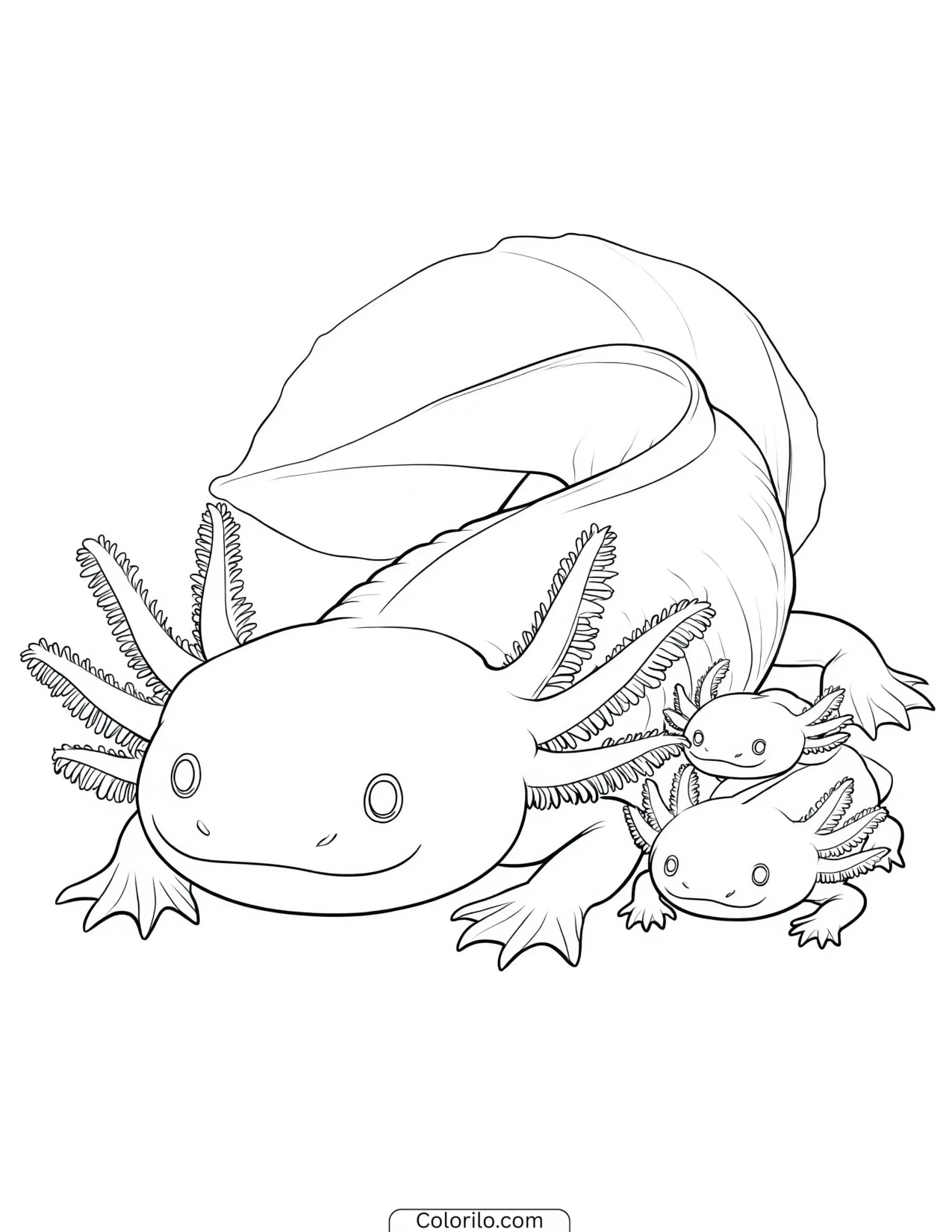
The family pages are the standout group. An adult cradling three babies, a parent with two, one swimming with two hatchlings, a big axolotl guarding its young, and a full family scene underwater. Alongside those are five designs with two or three axolotls together, in a row, swimming as a trio, and one full underwater scene.
A handful place the animal in its environment rather than open water: beside a submerged branch, leaning on a rock, resting on the bottom, hugging an aquatic plant, holding one, and chasing a shrimp. Those have the most background detail in the set and take the longest.
The linework is bold and rounded throughout, which makes this one of the more forgiving collections here for younger children, but the gills reward patience from anyone older, since they’re the fiddliest and most interesting part of the animal to color.
Every one of these axolotl coloring pages is free, prints on standard US letter paper, and needs no sign-up. Click any design below to open the full-size PDF.
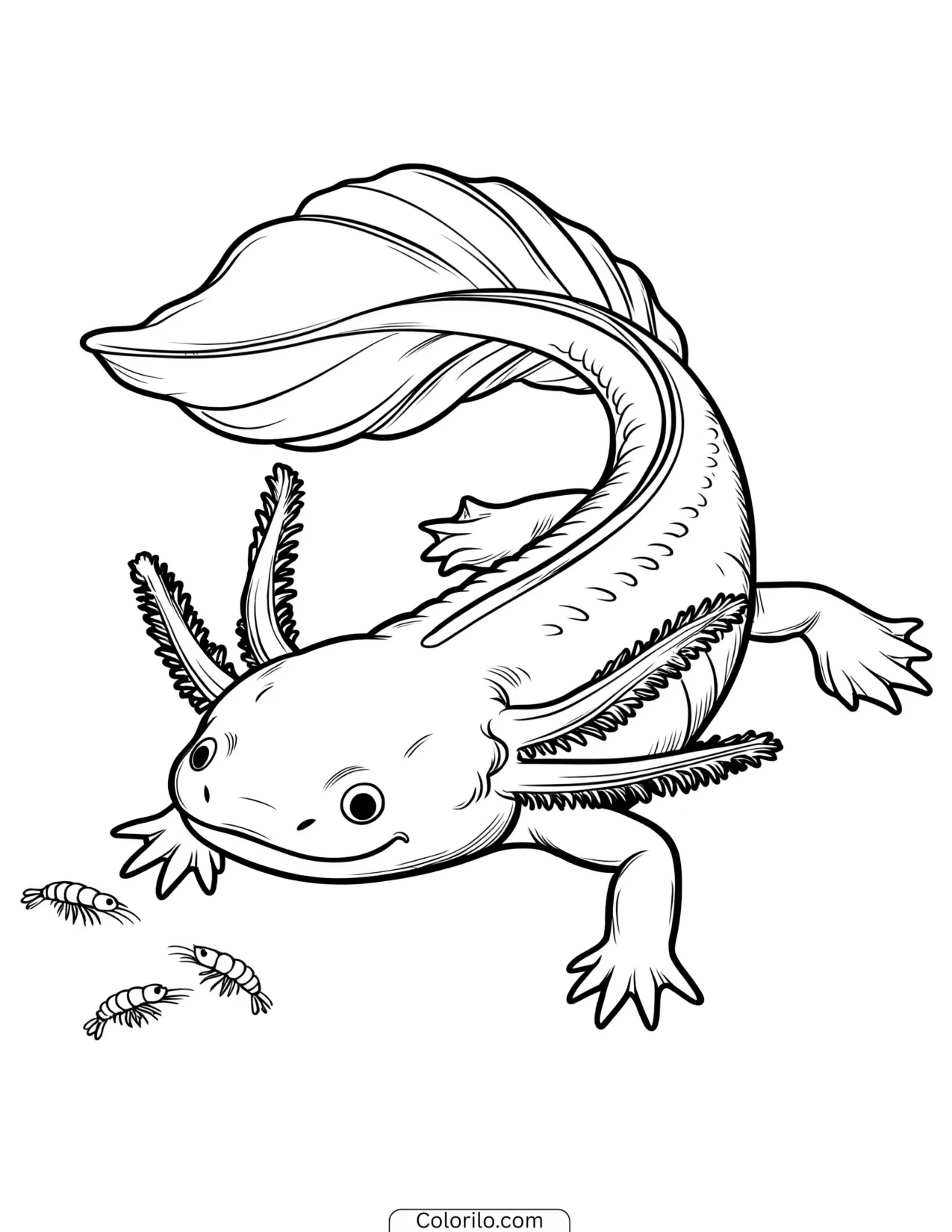
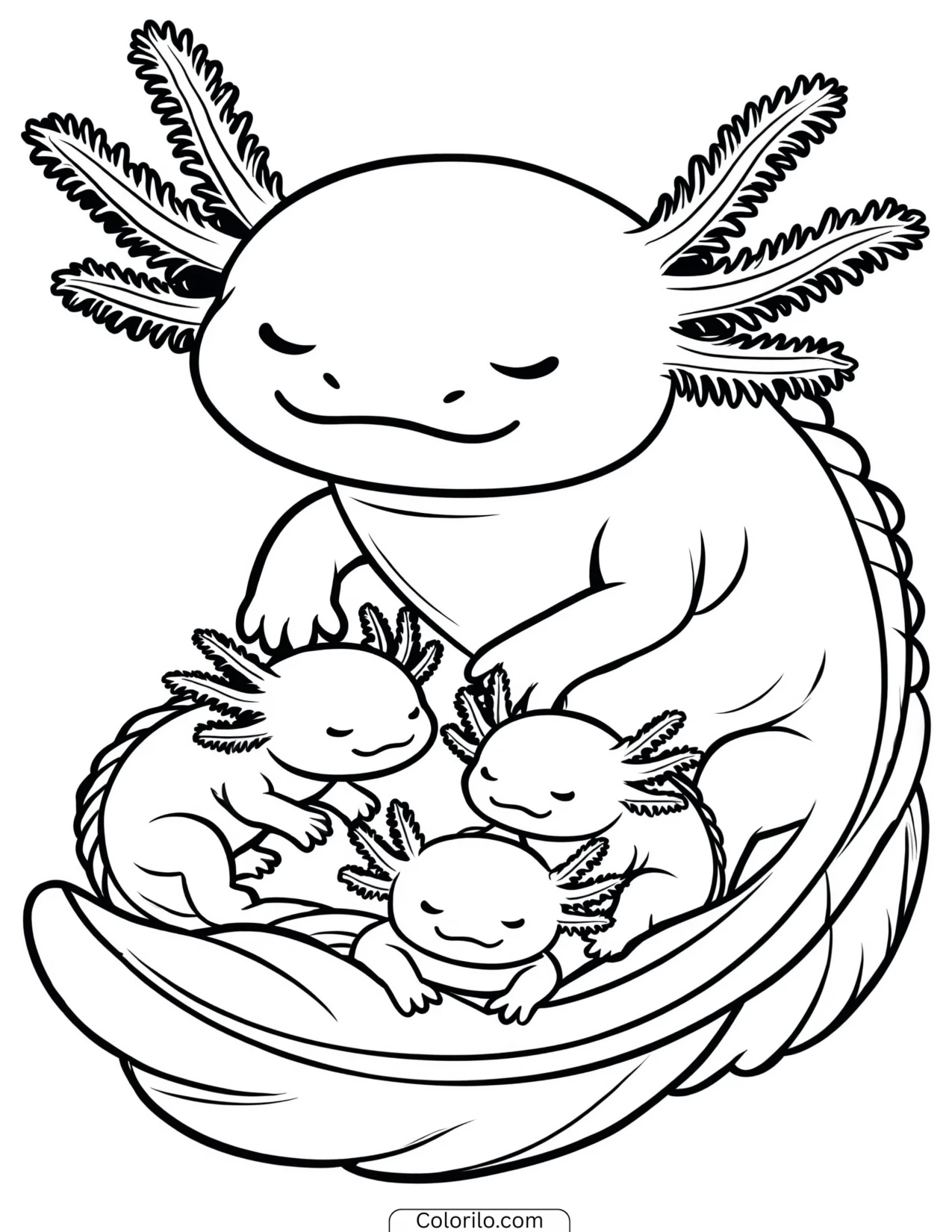
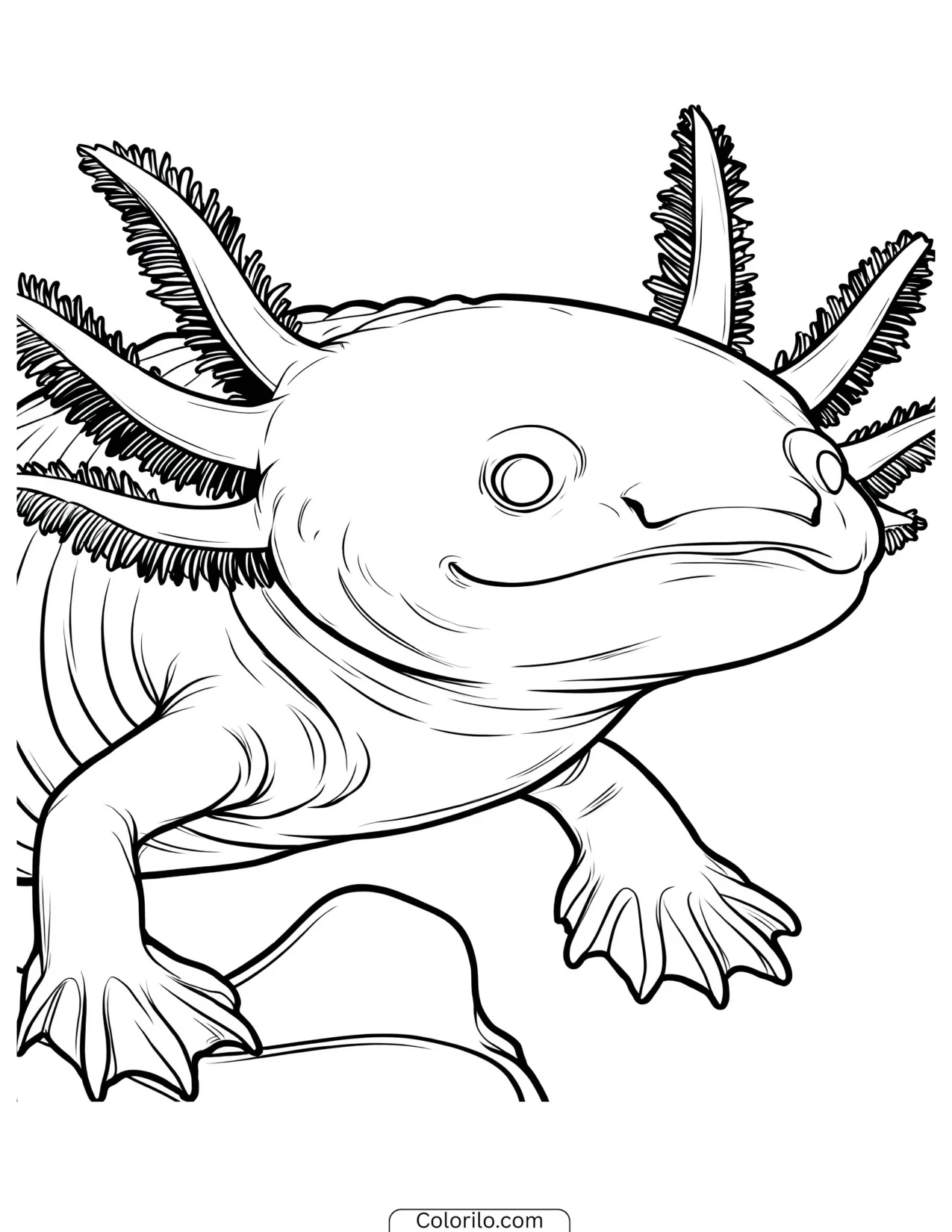
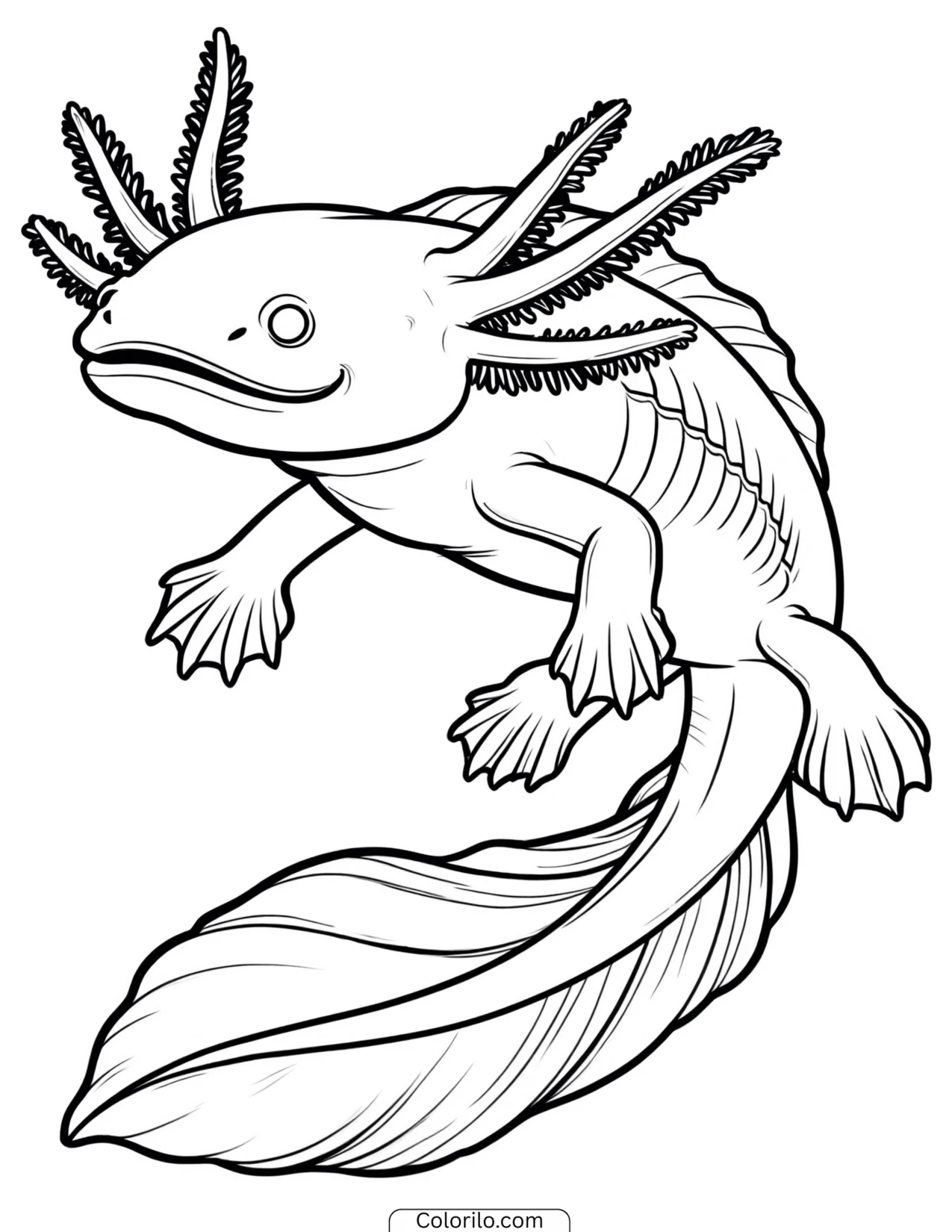
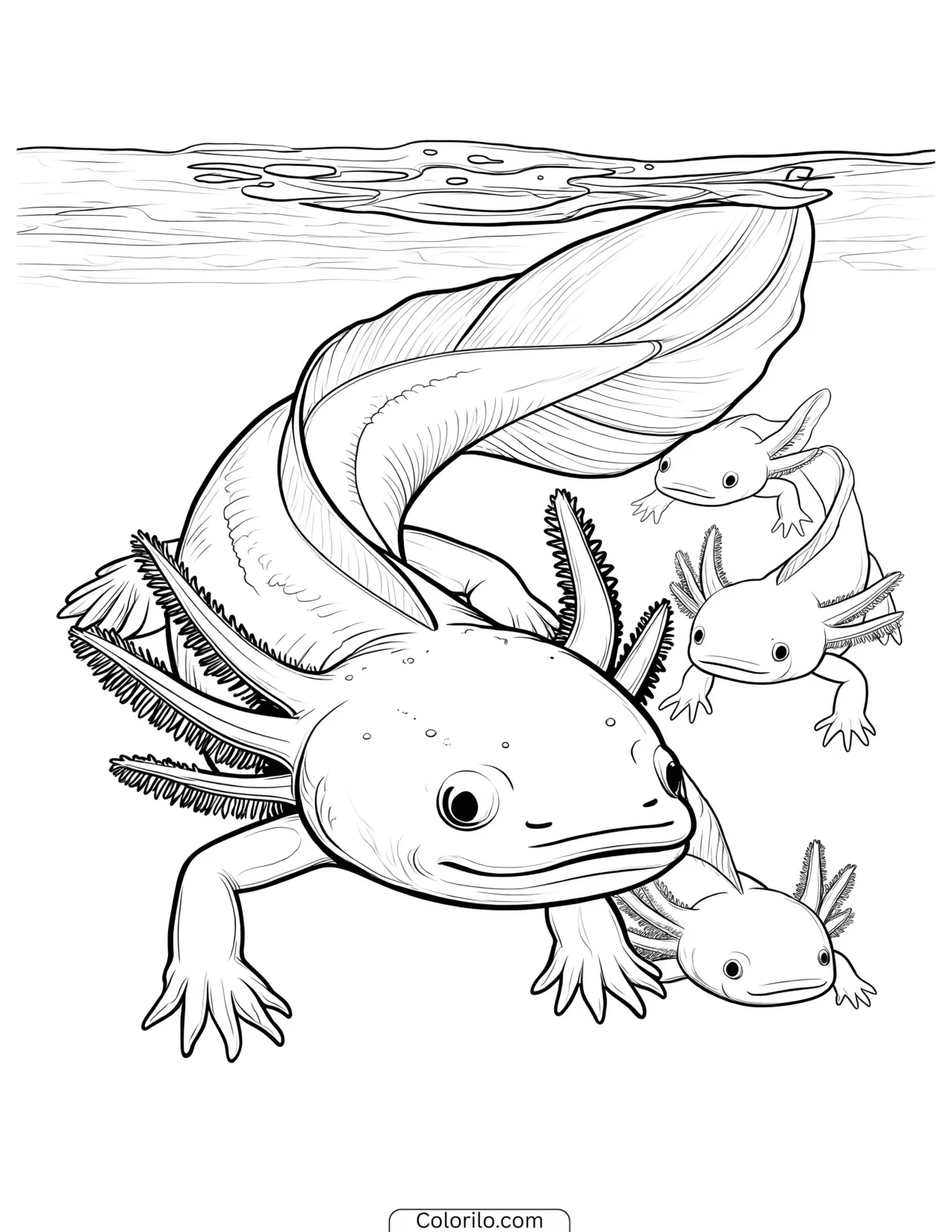
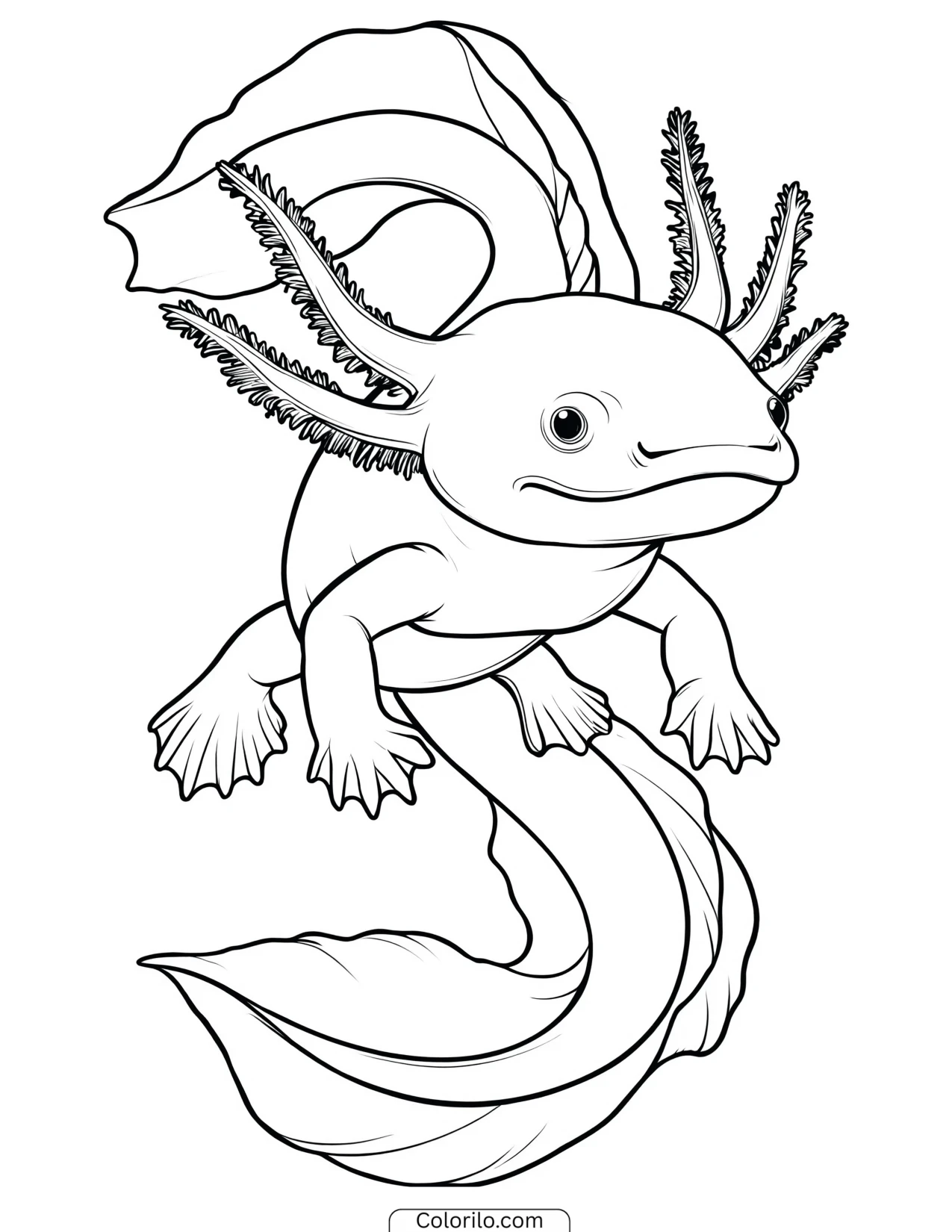
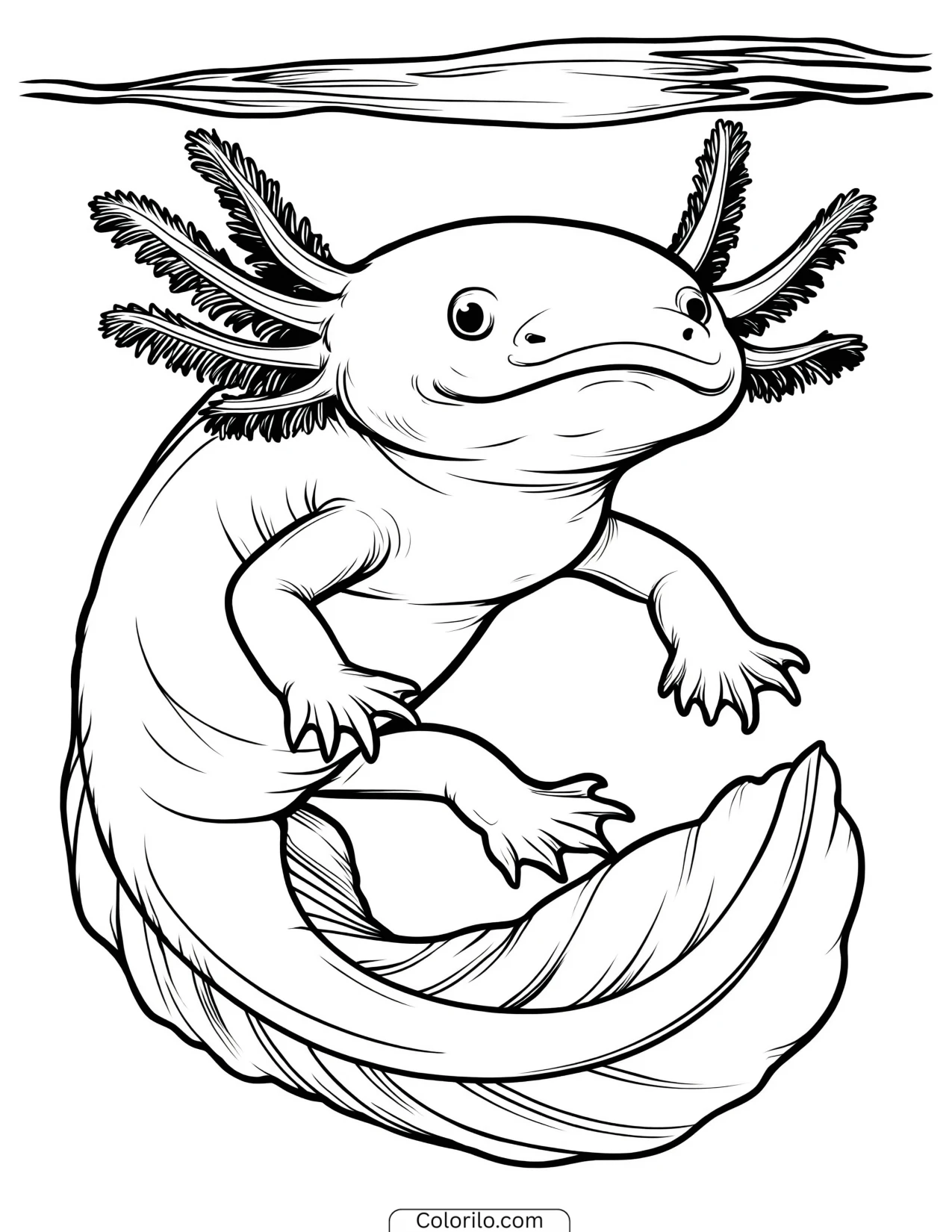
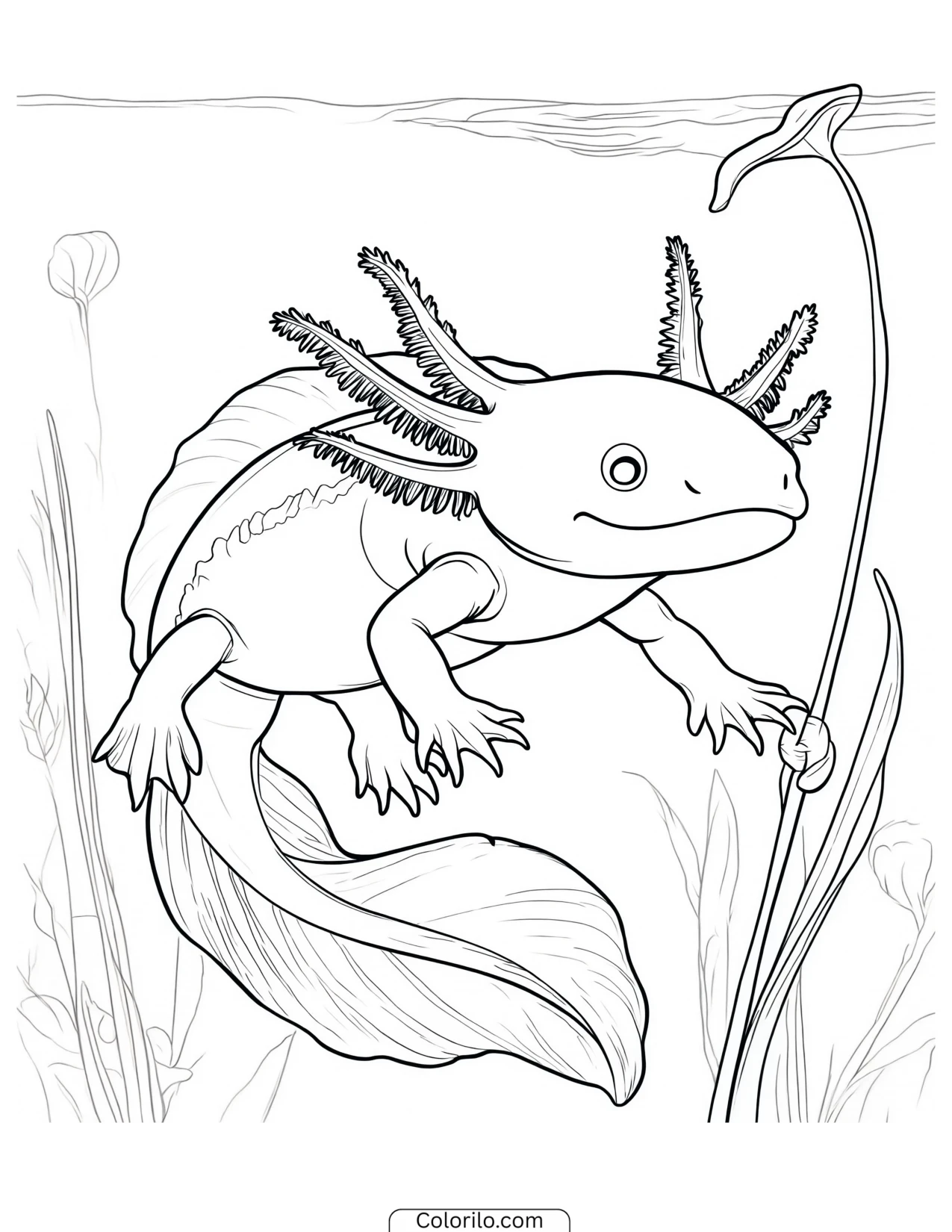
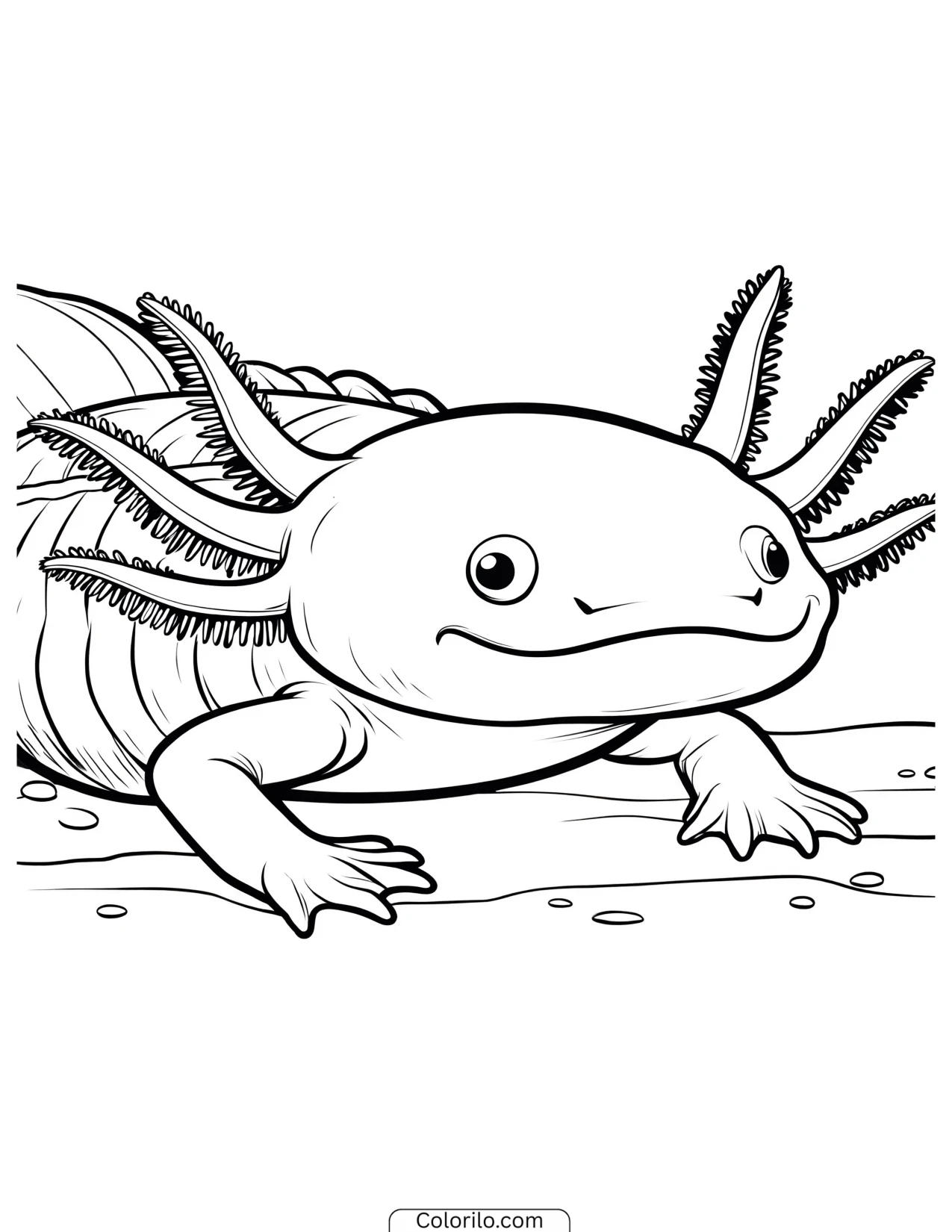
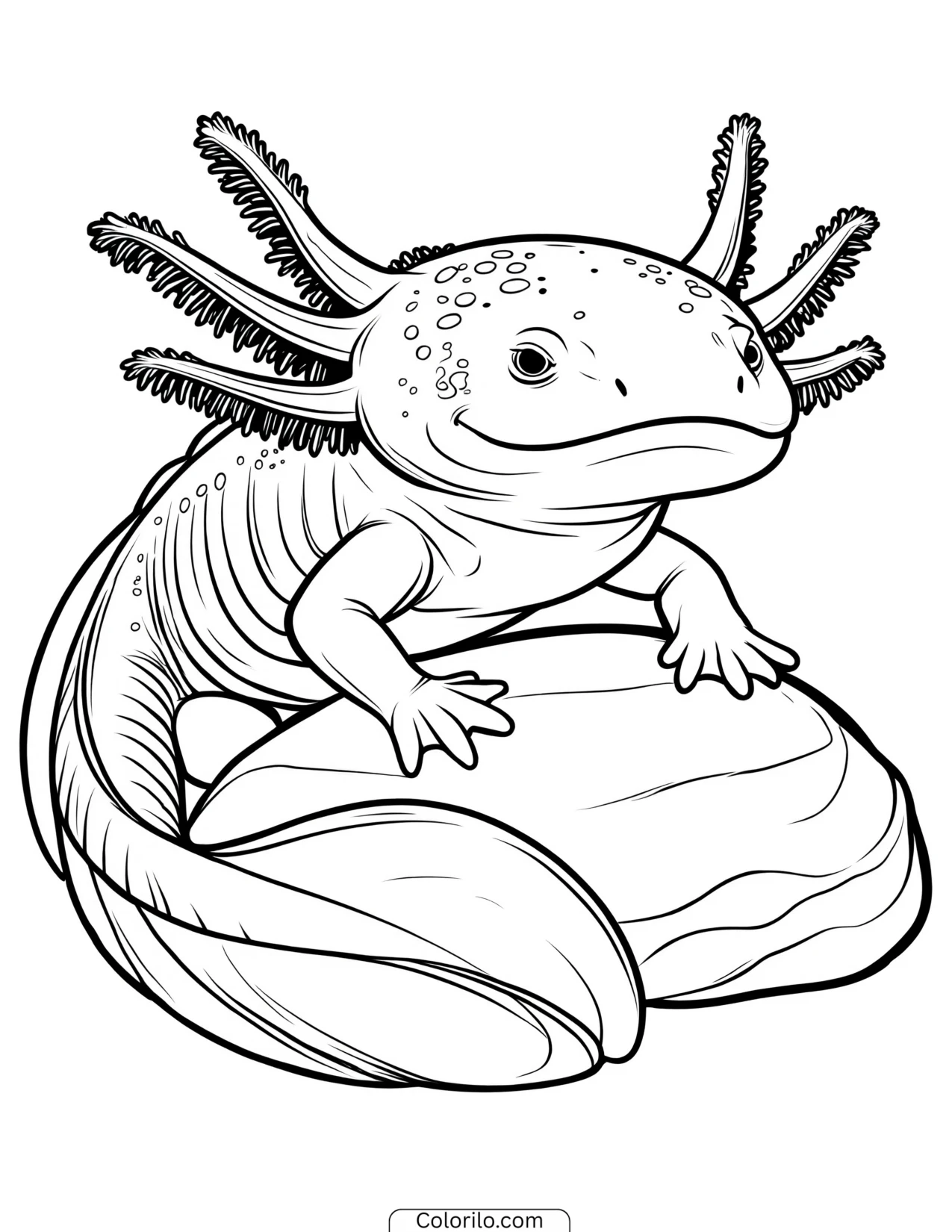
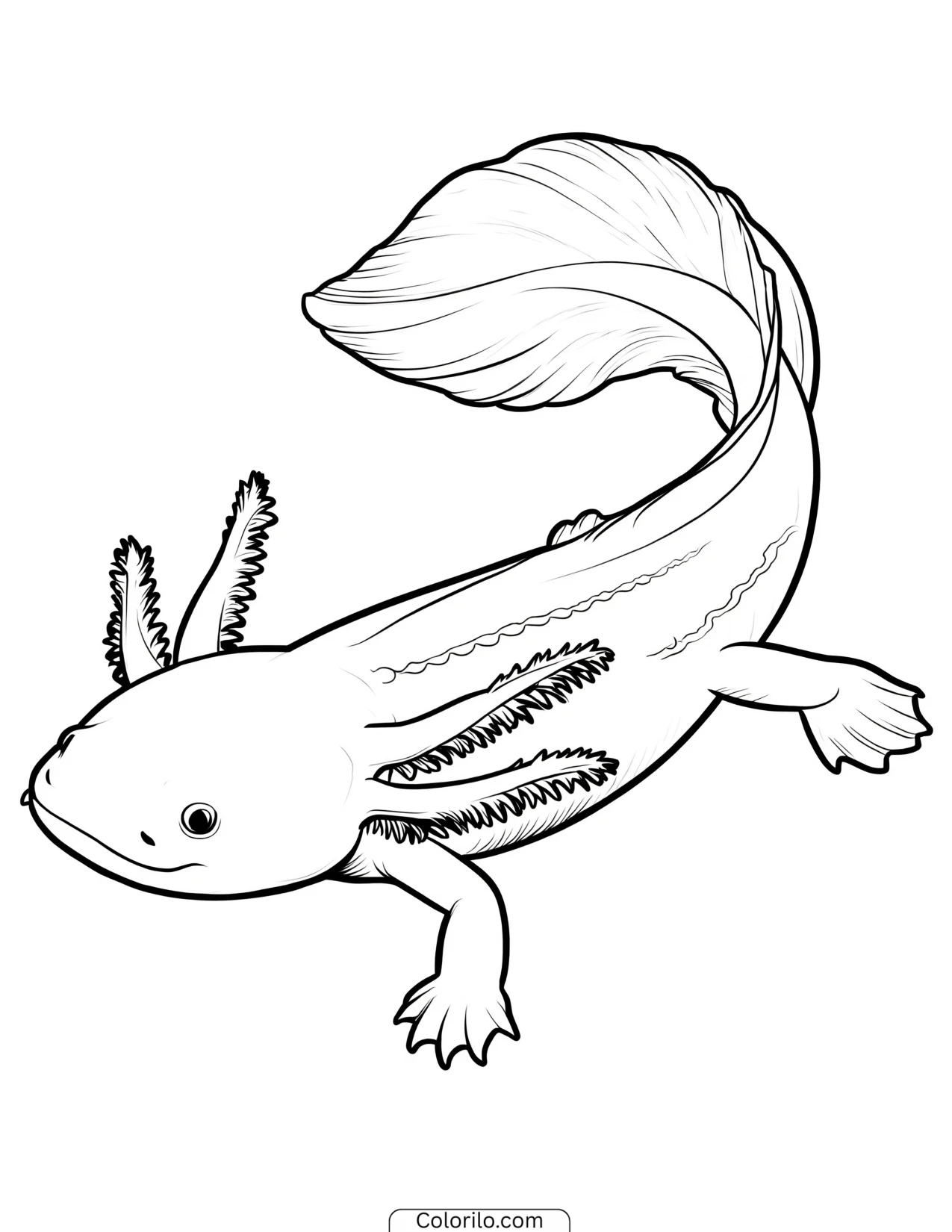
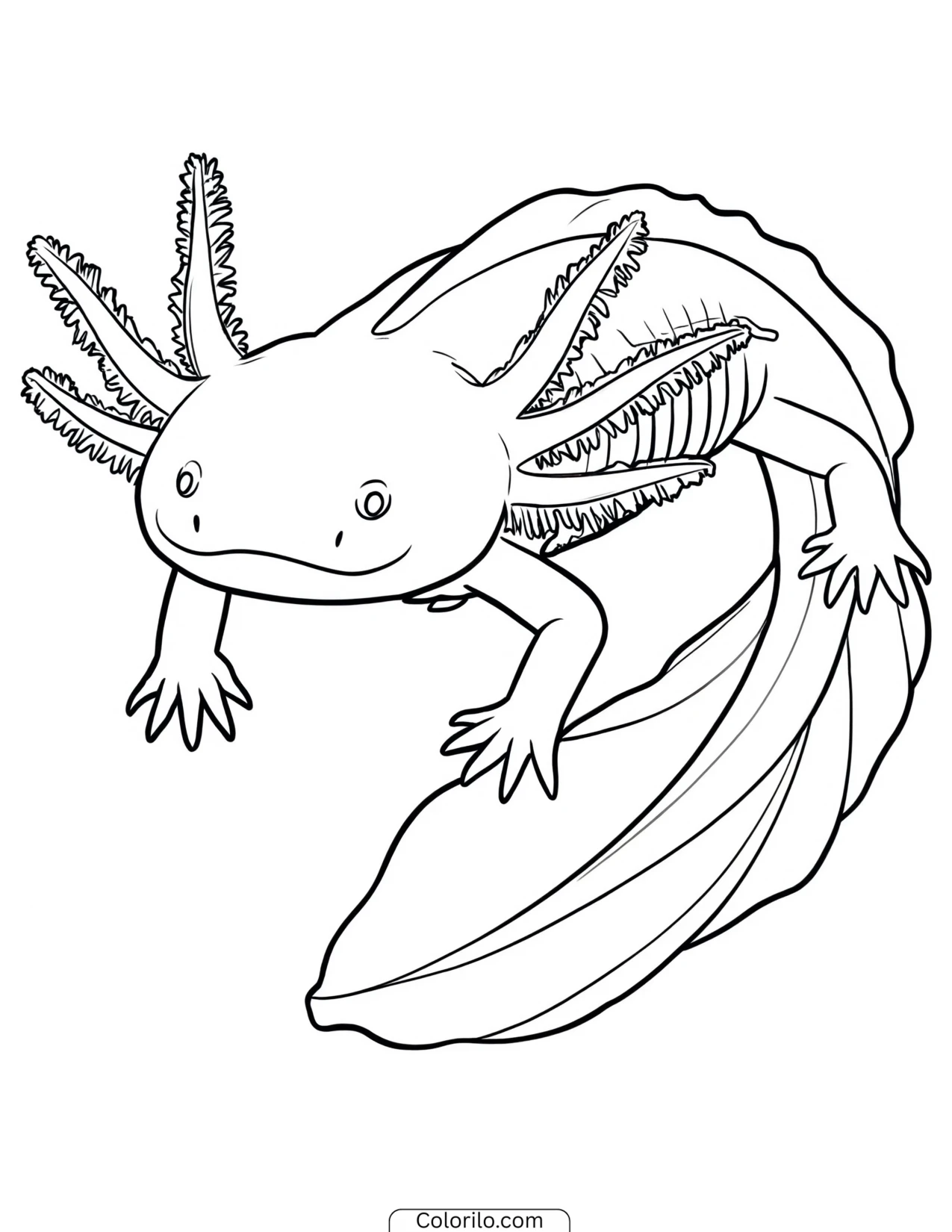
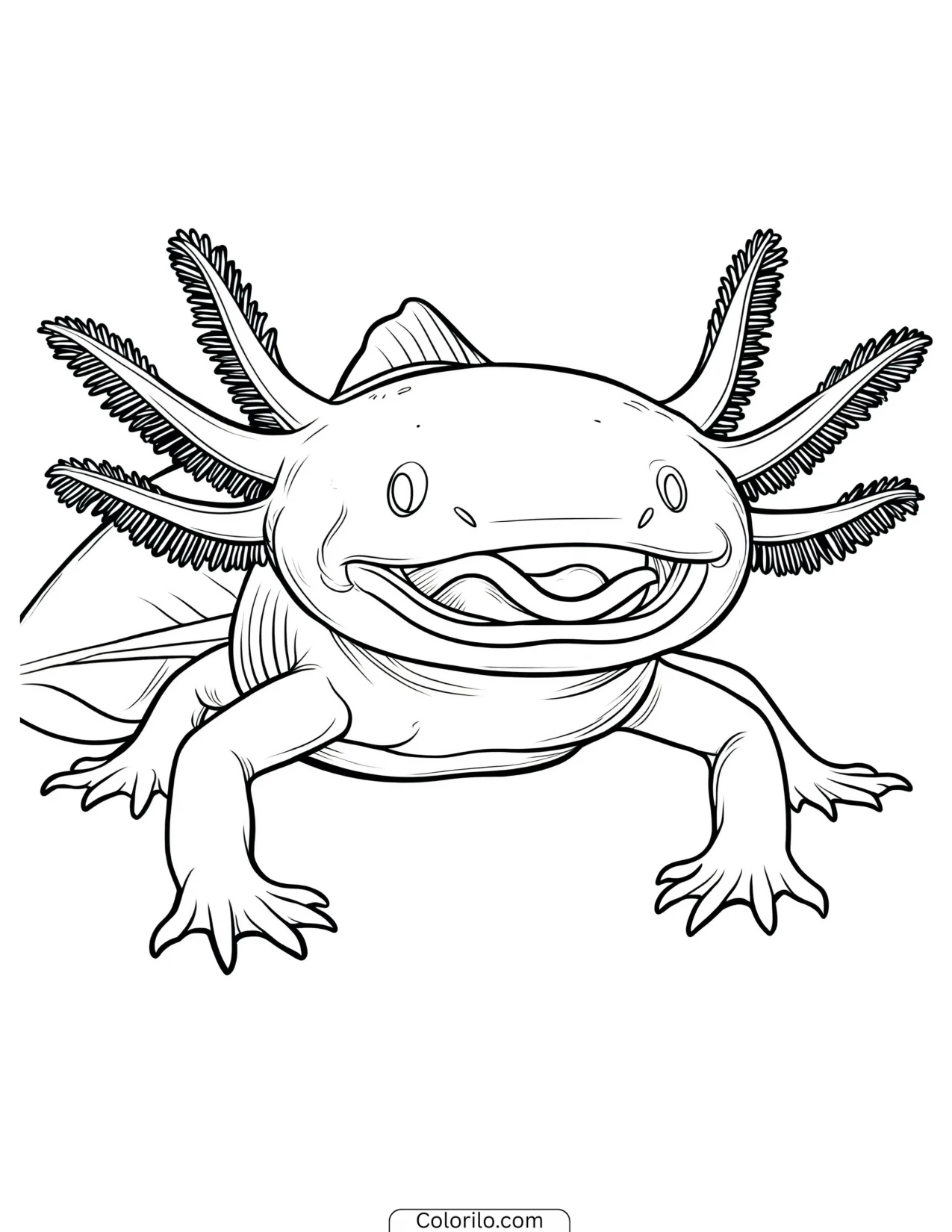
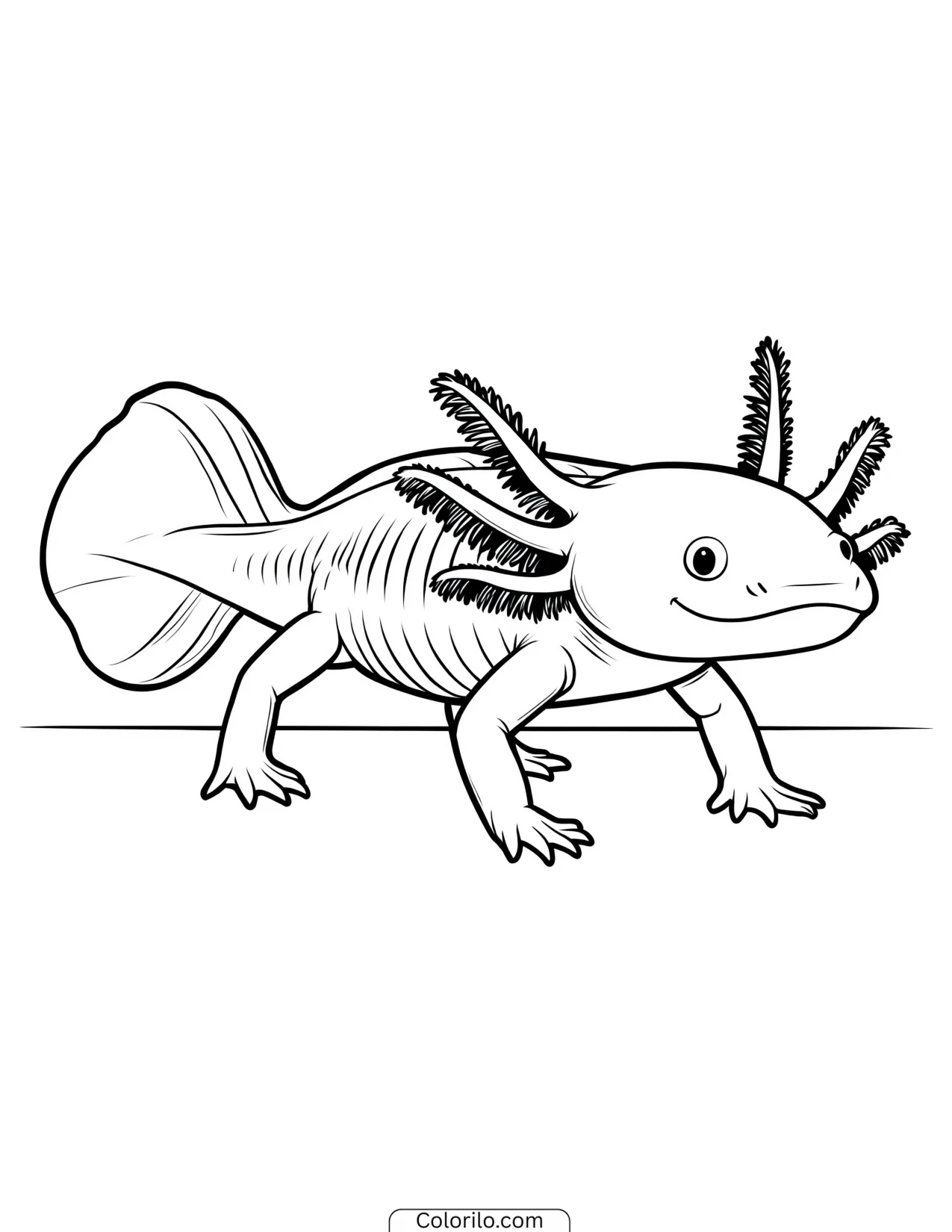
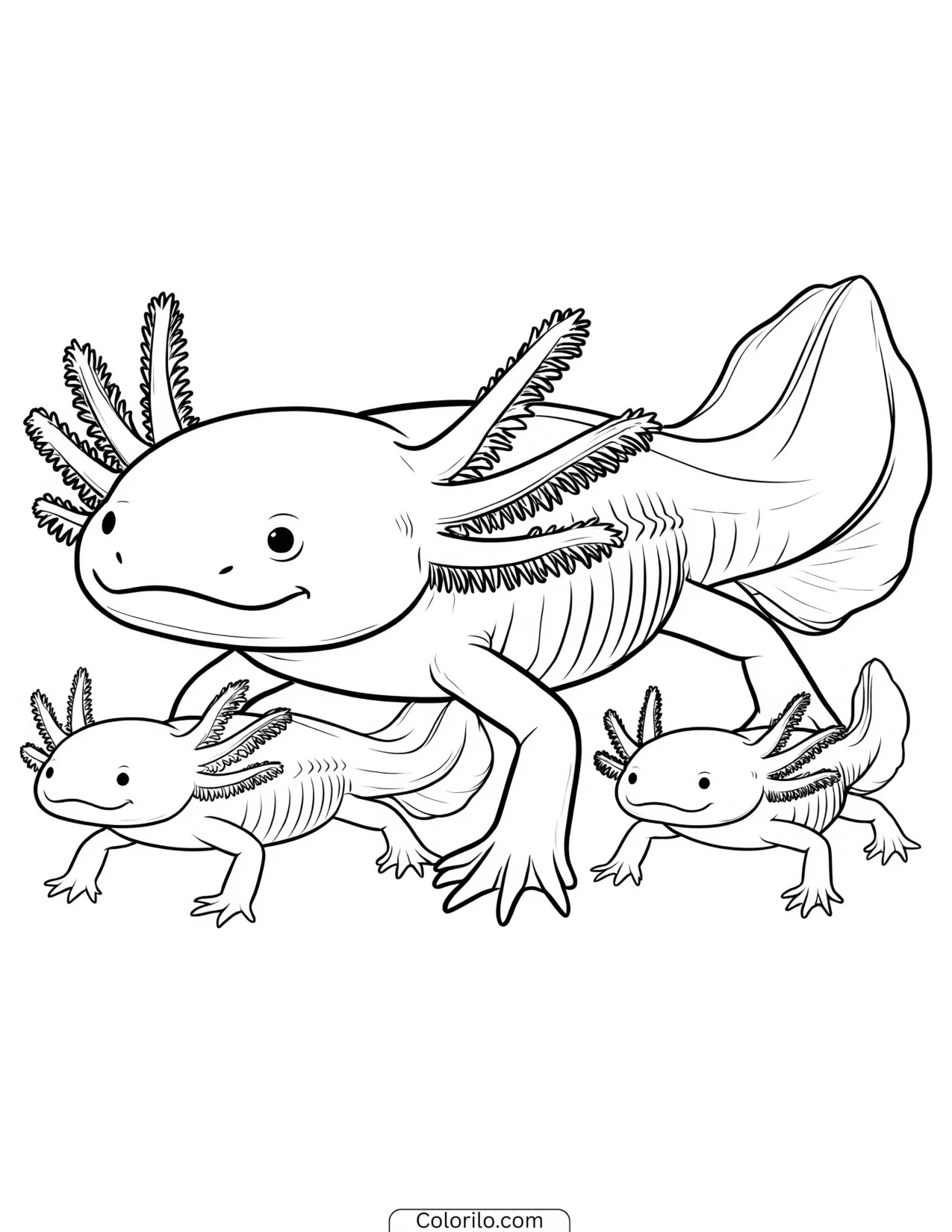
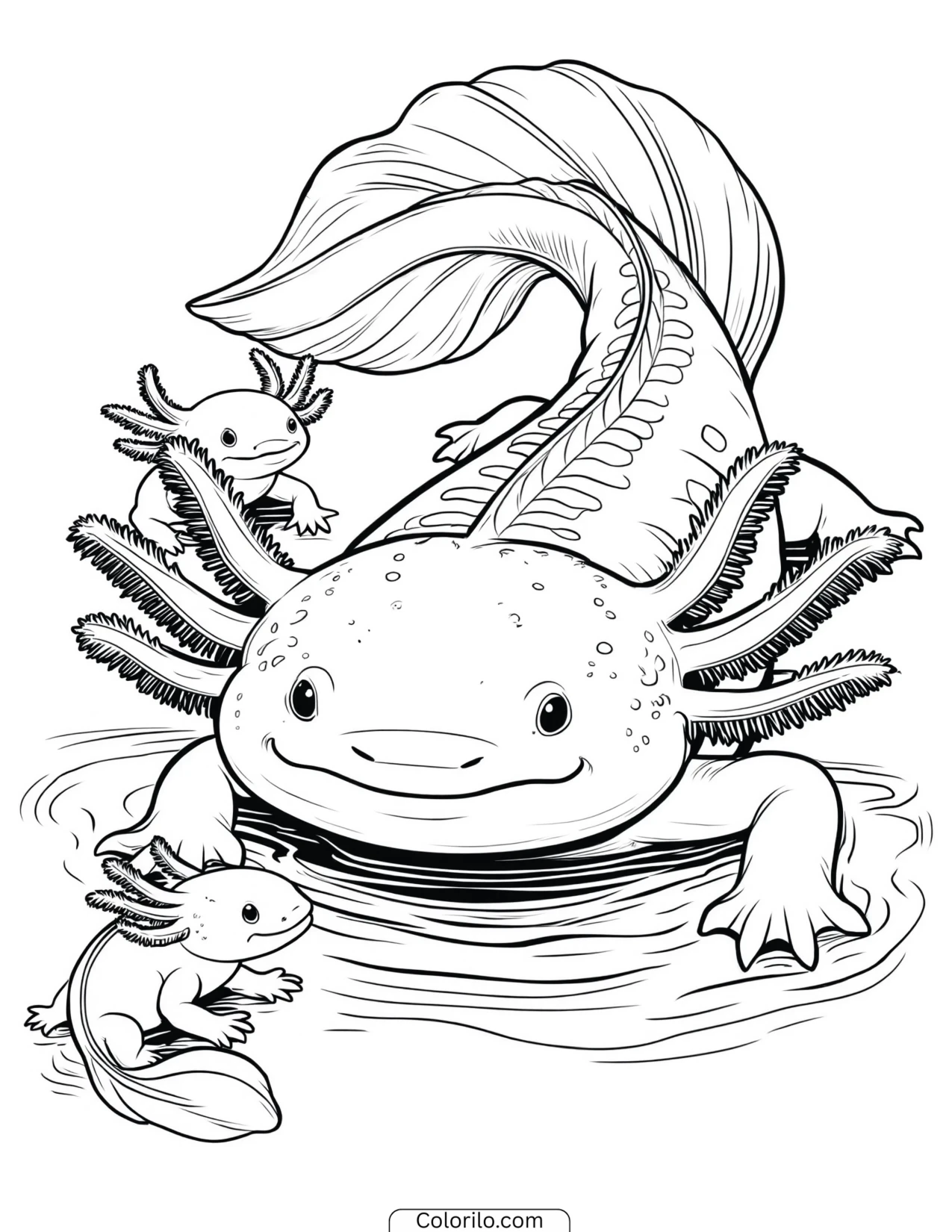
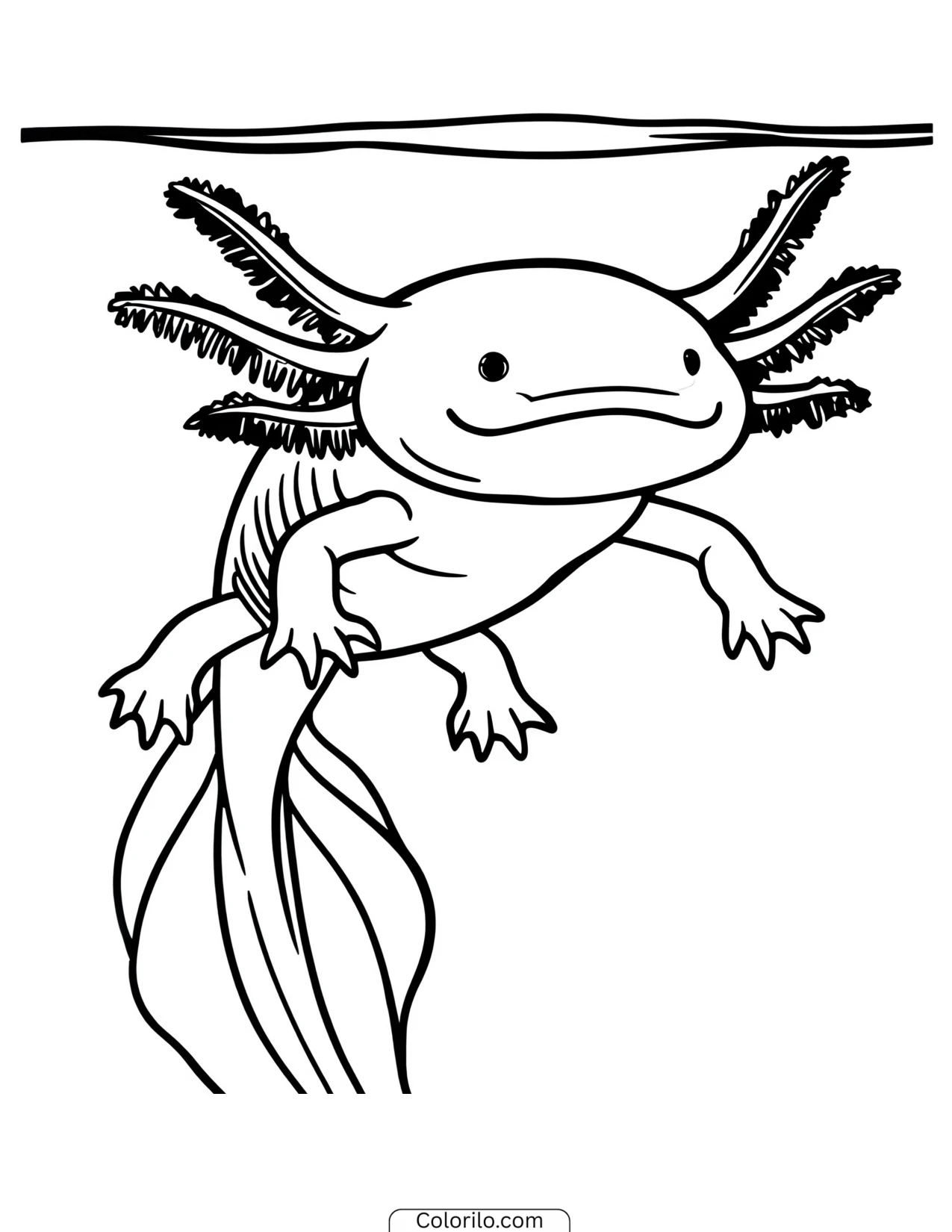
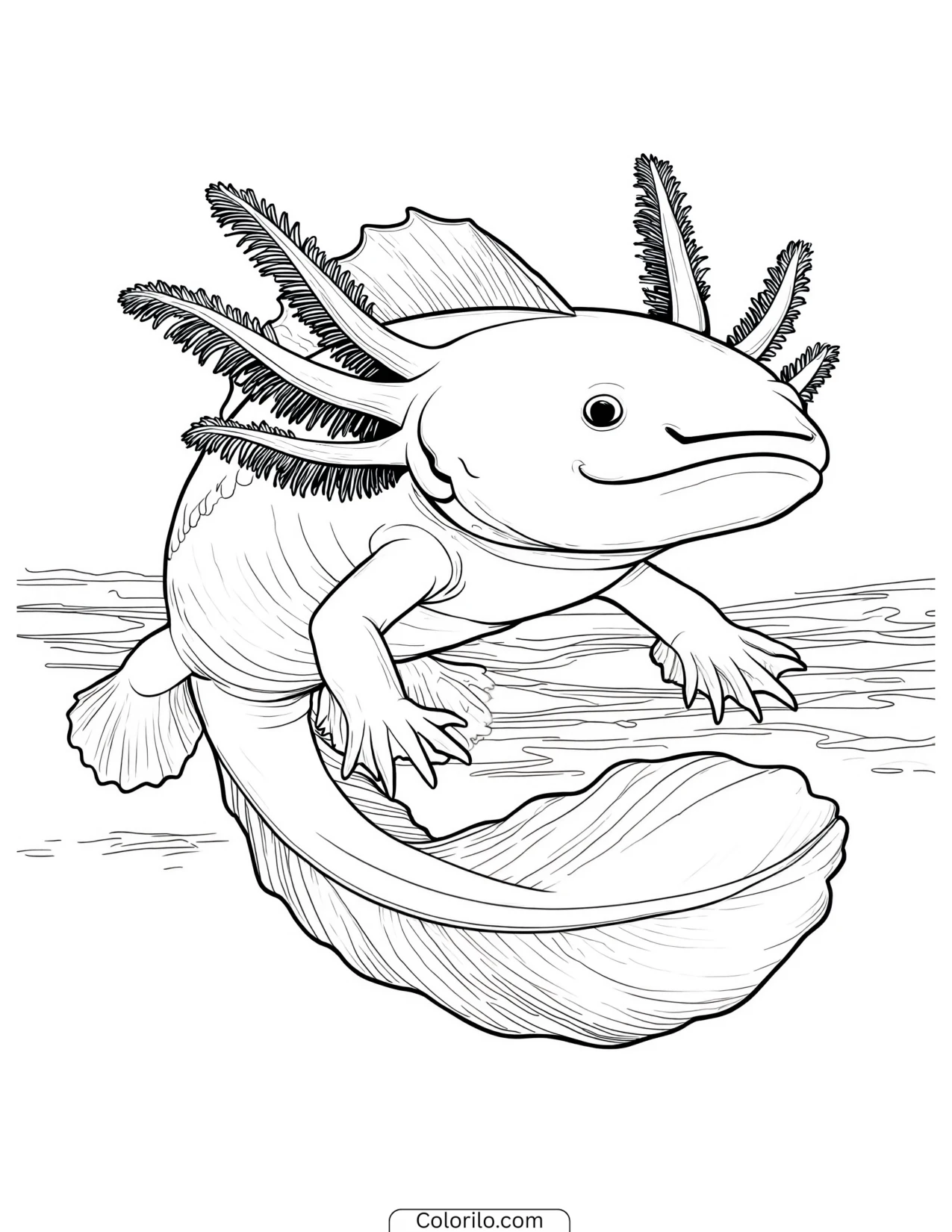
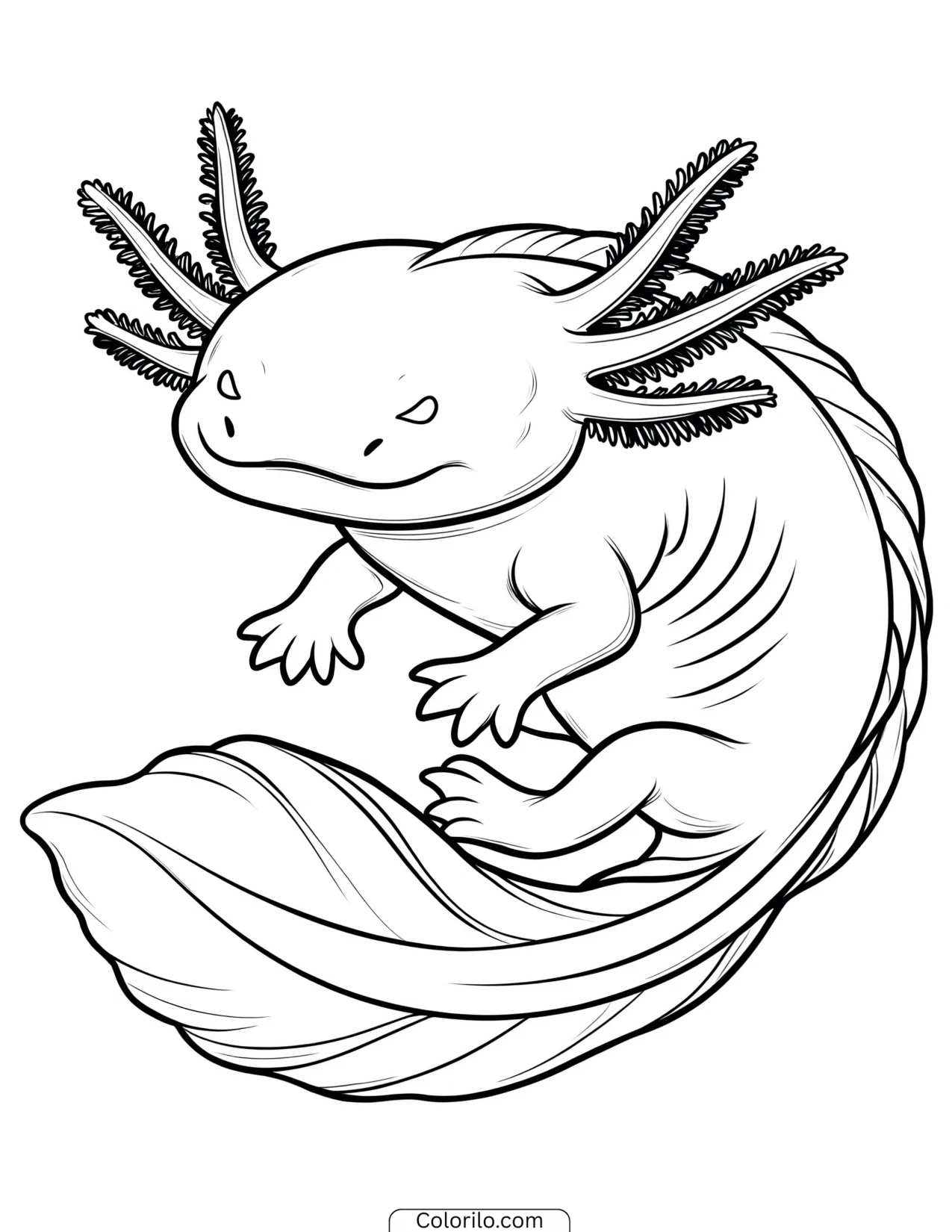
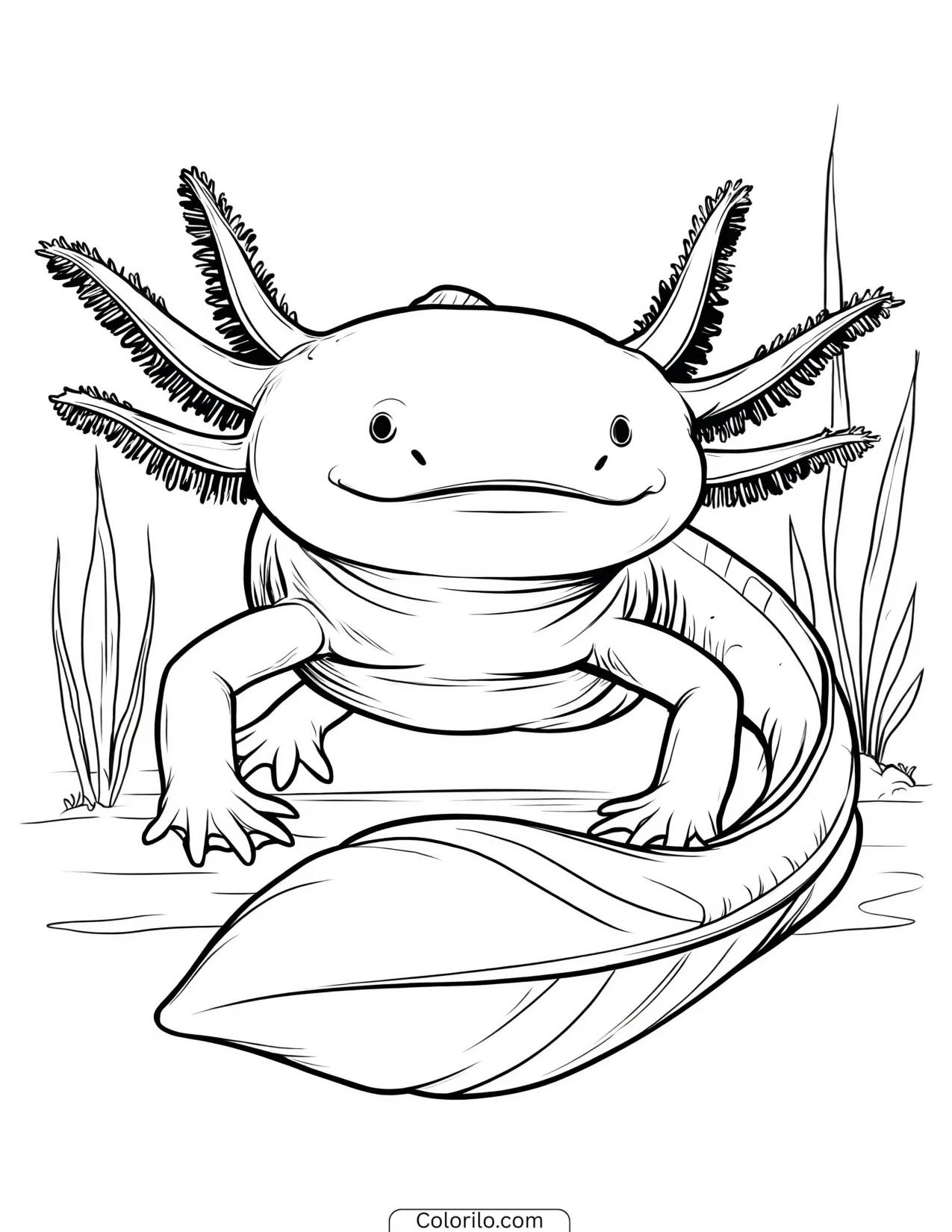
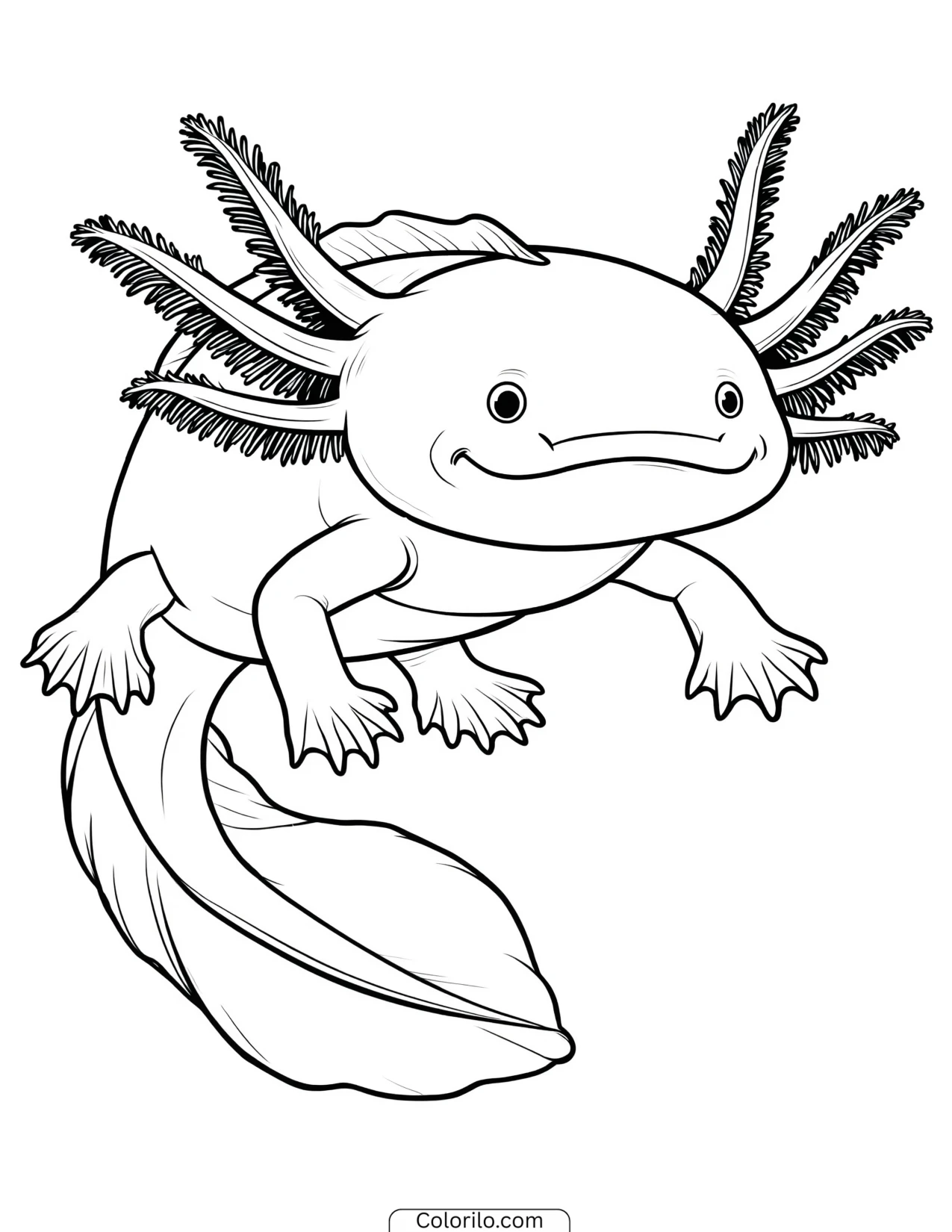
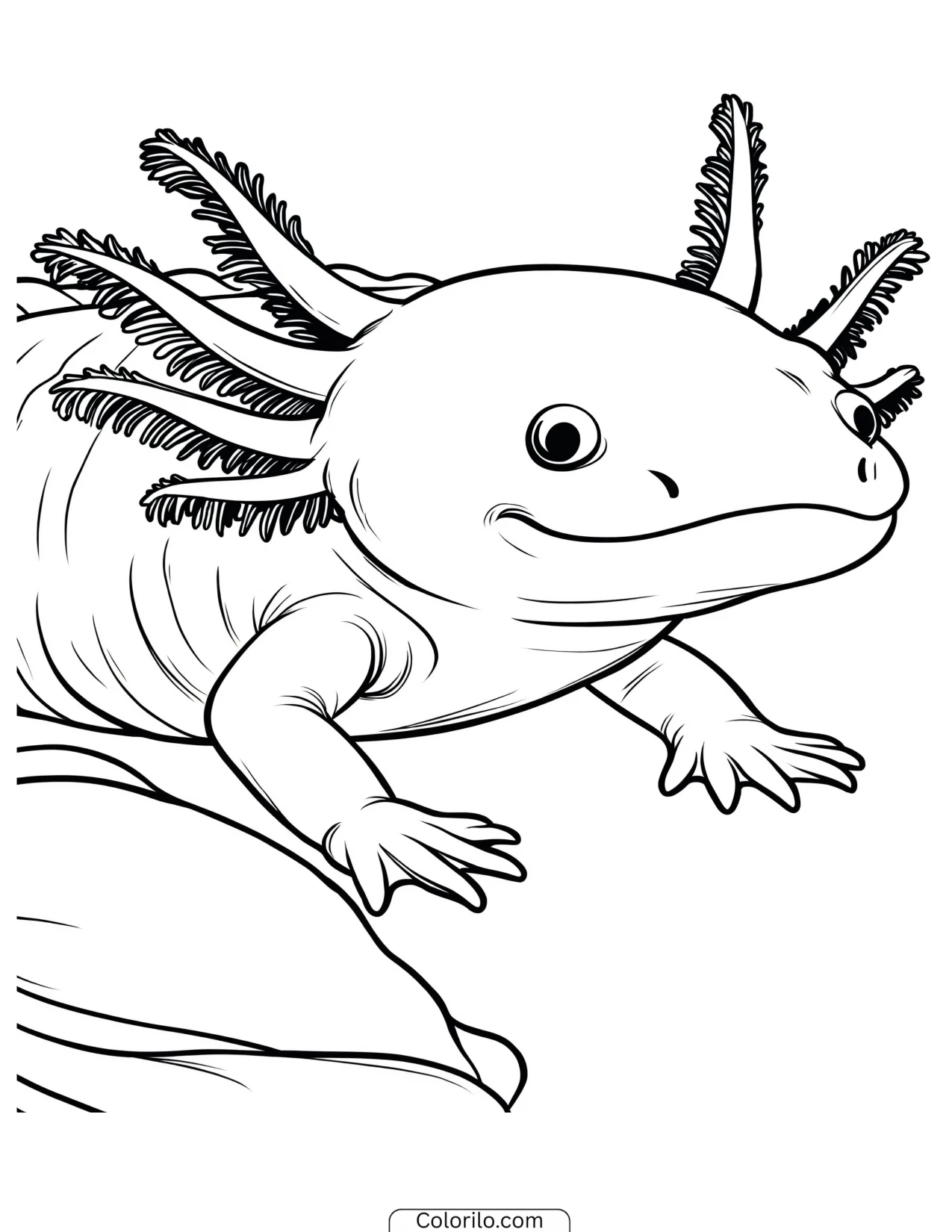
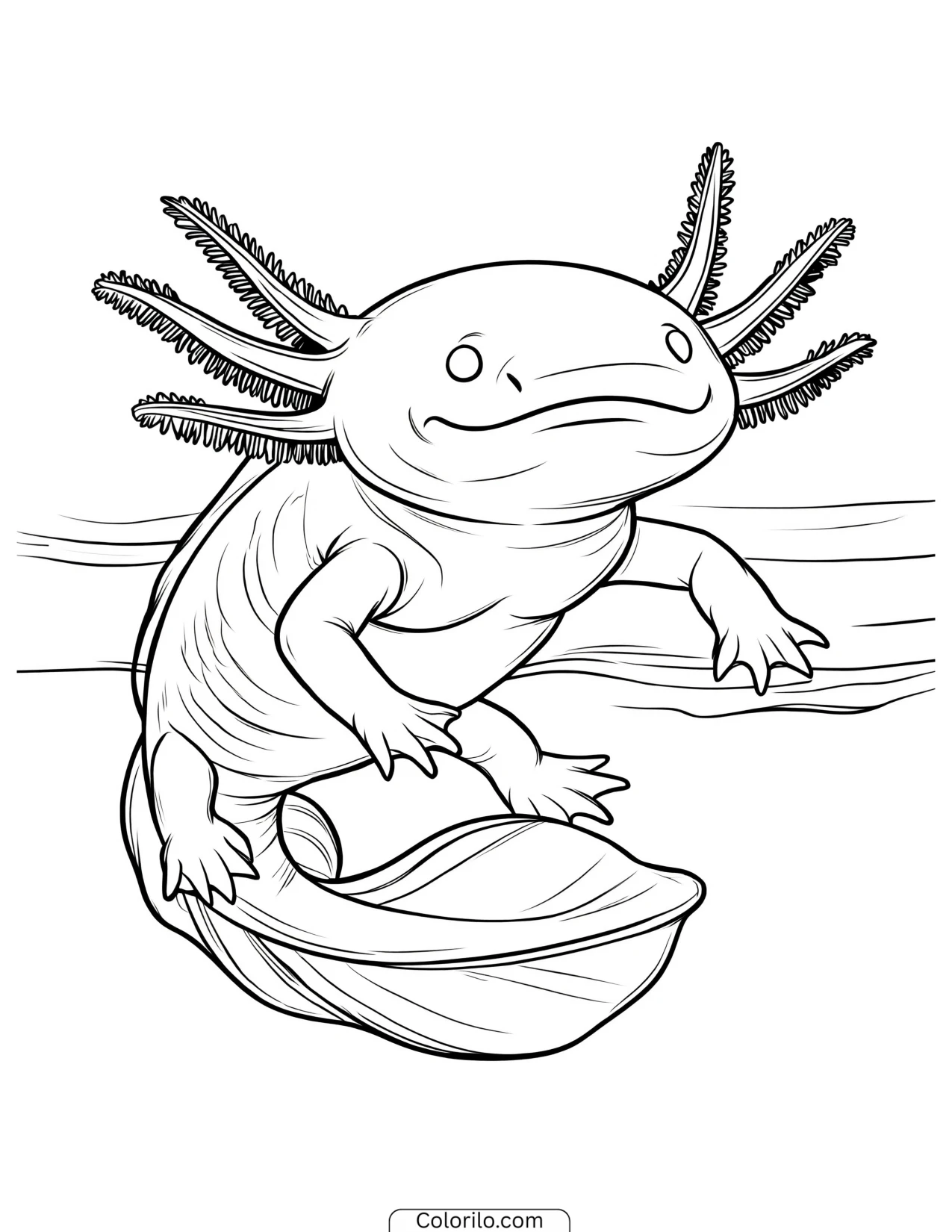
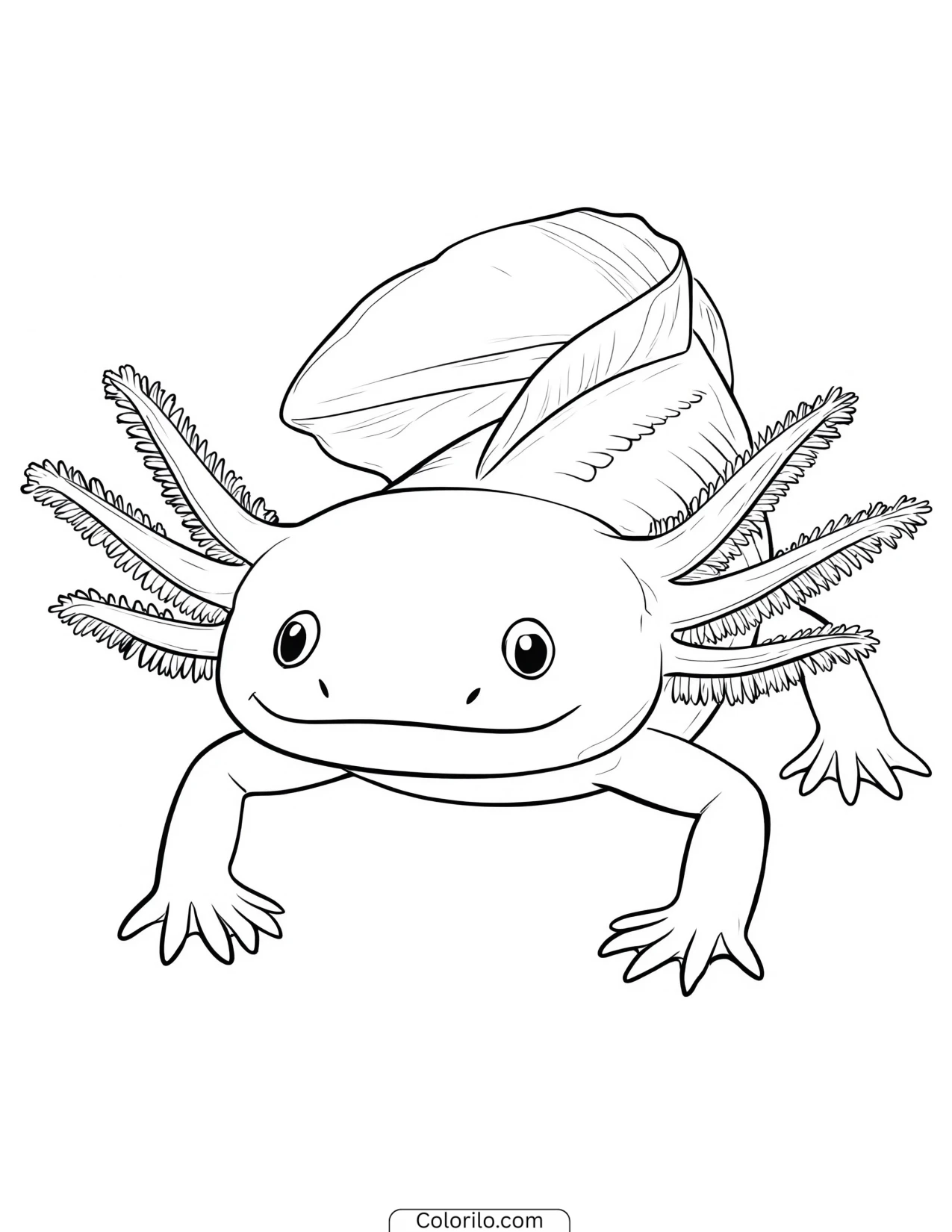
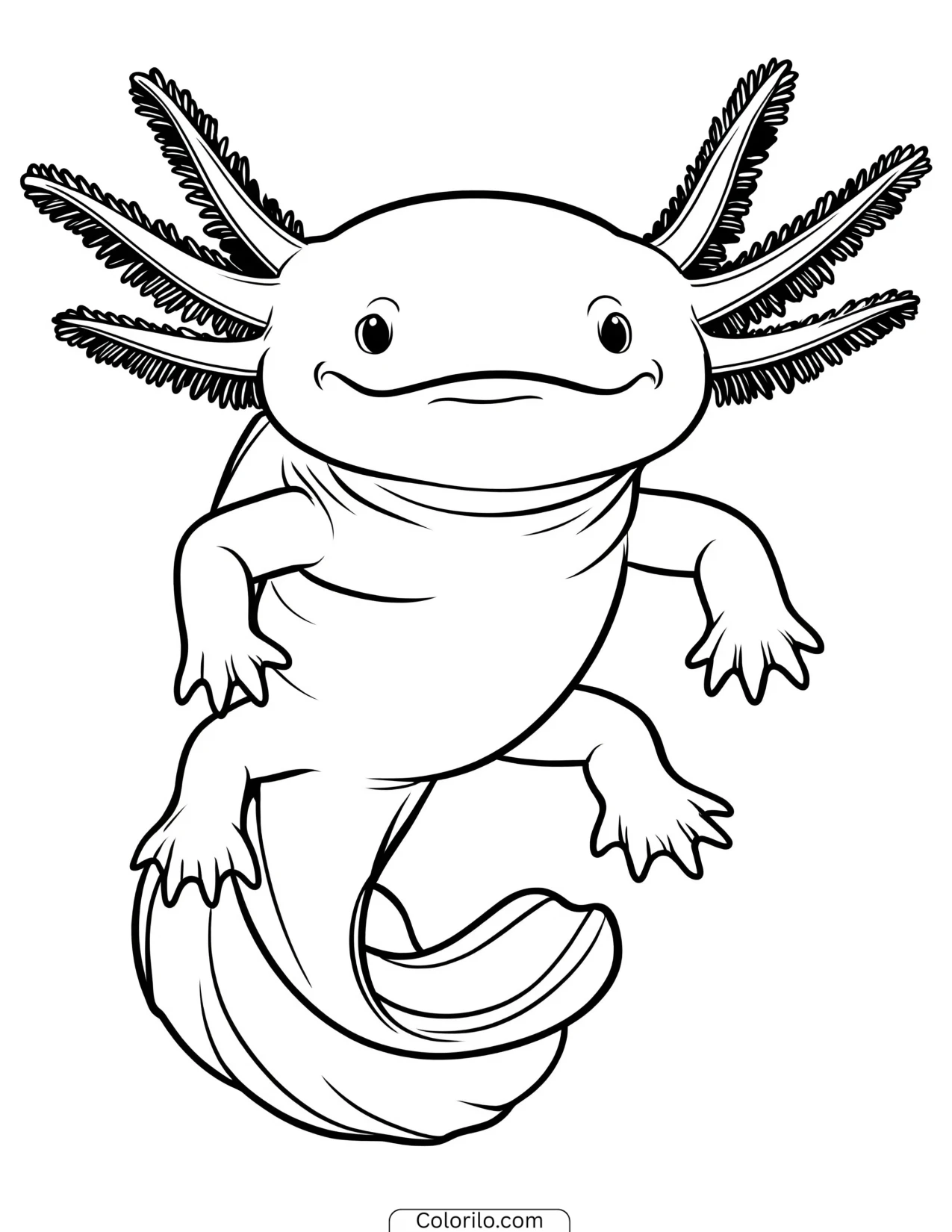
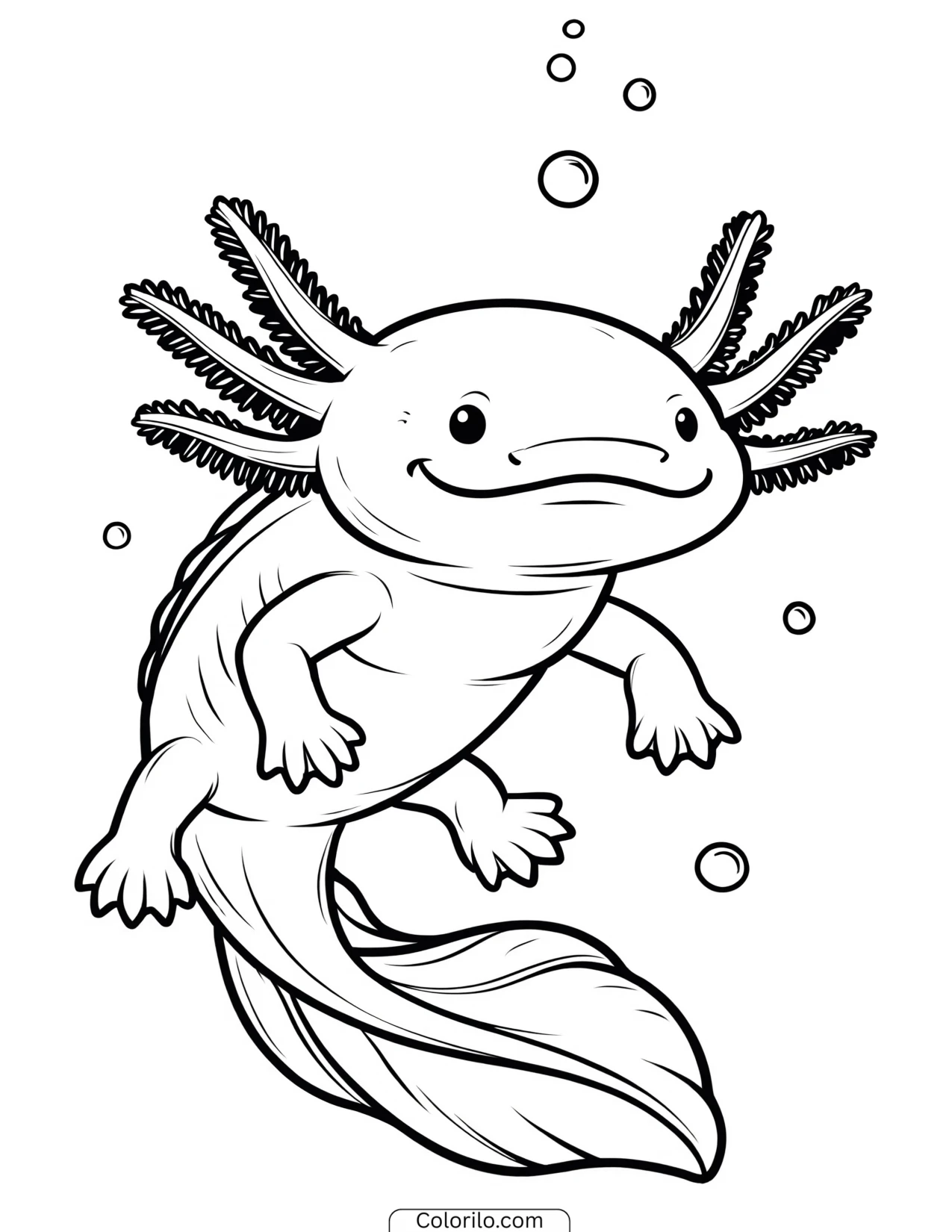
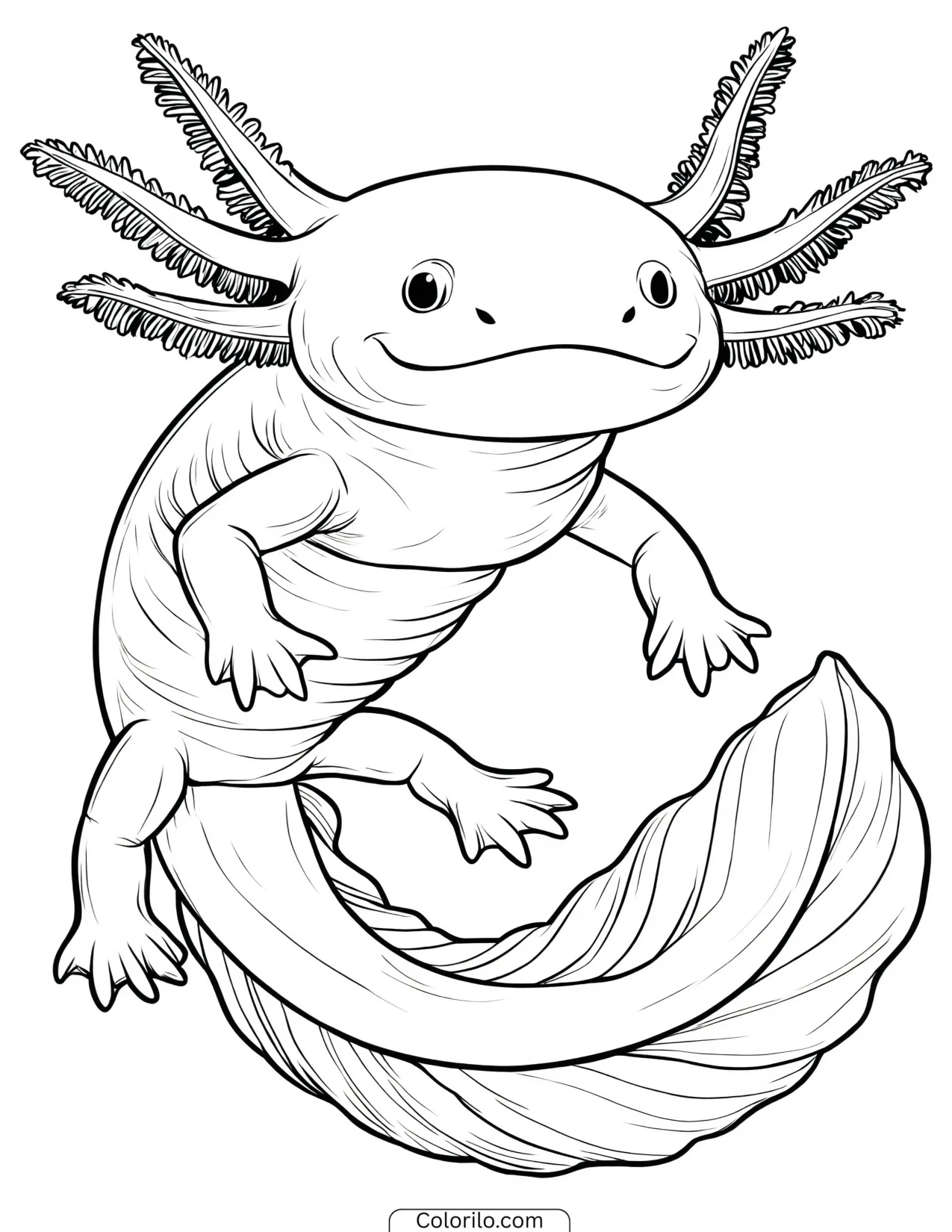
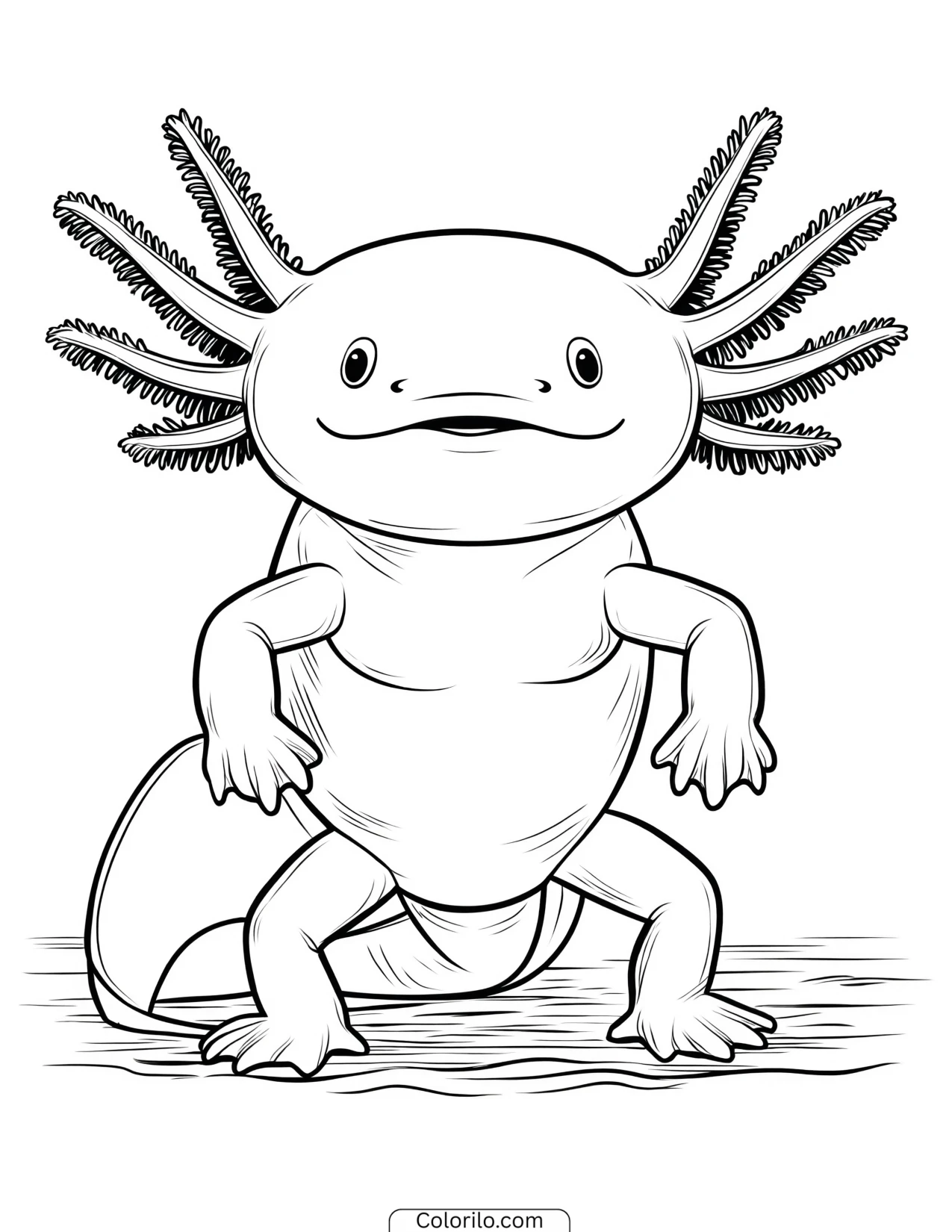
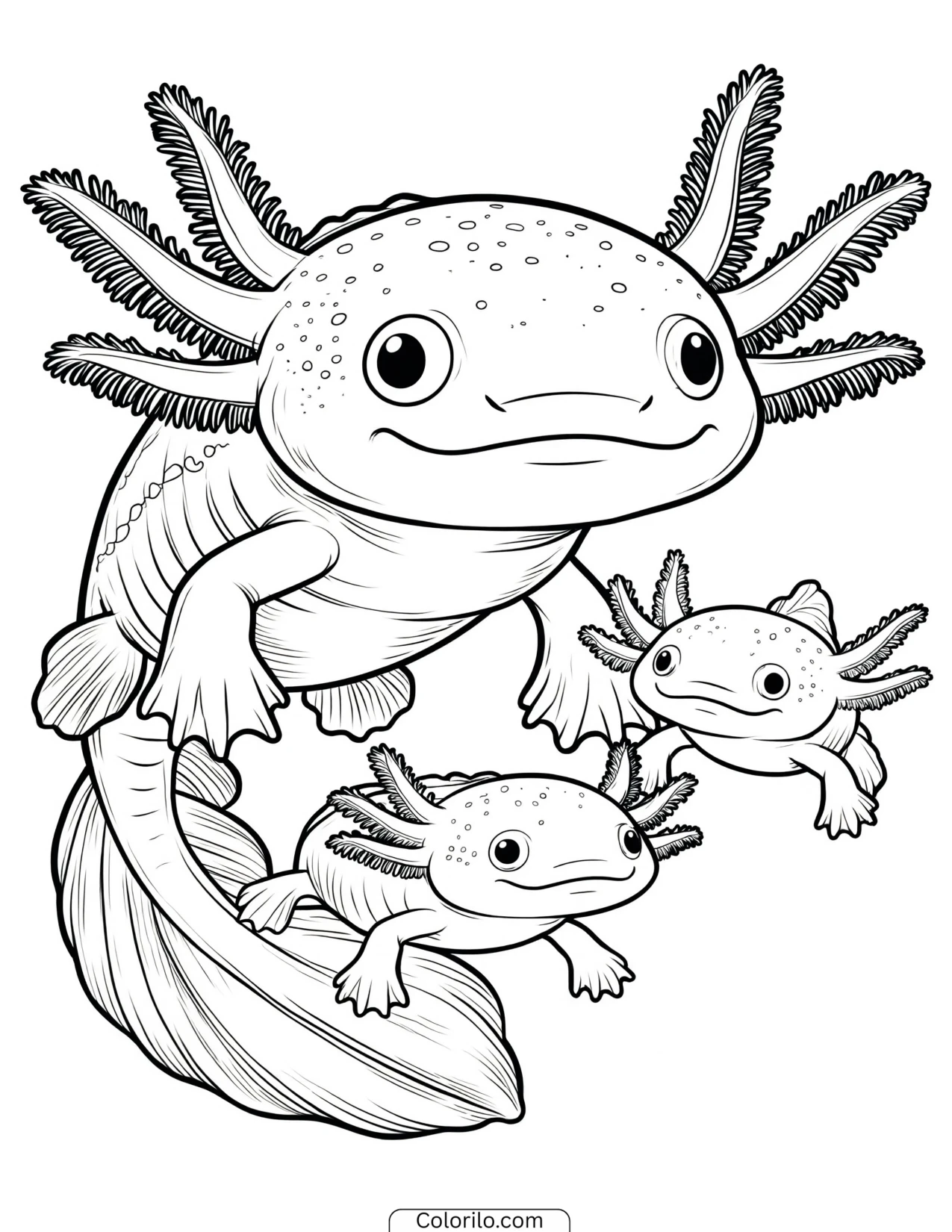
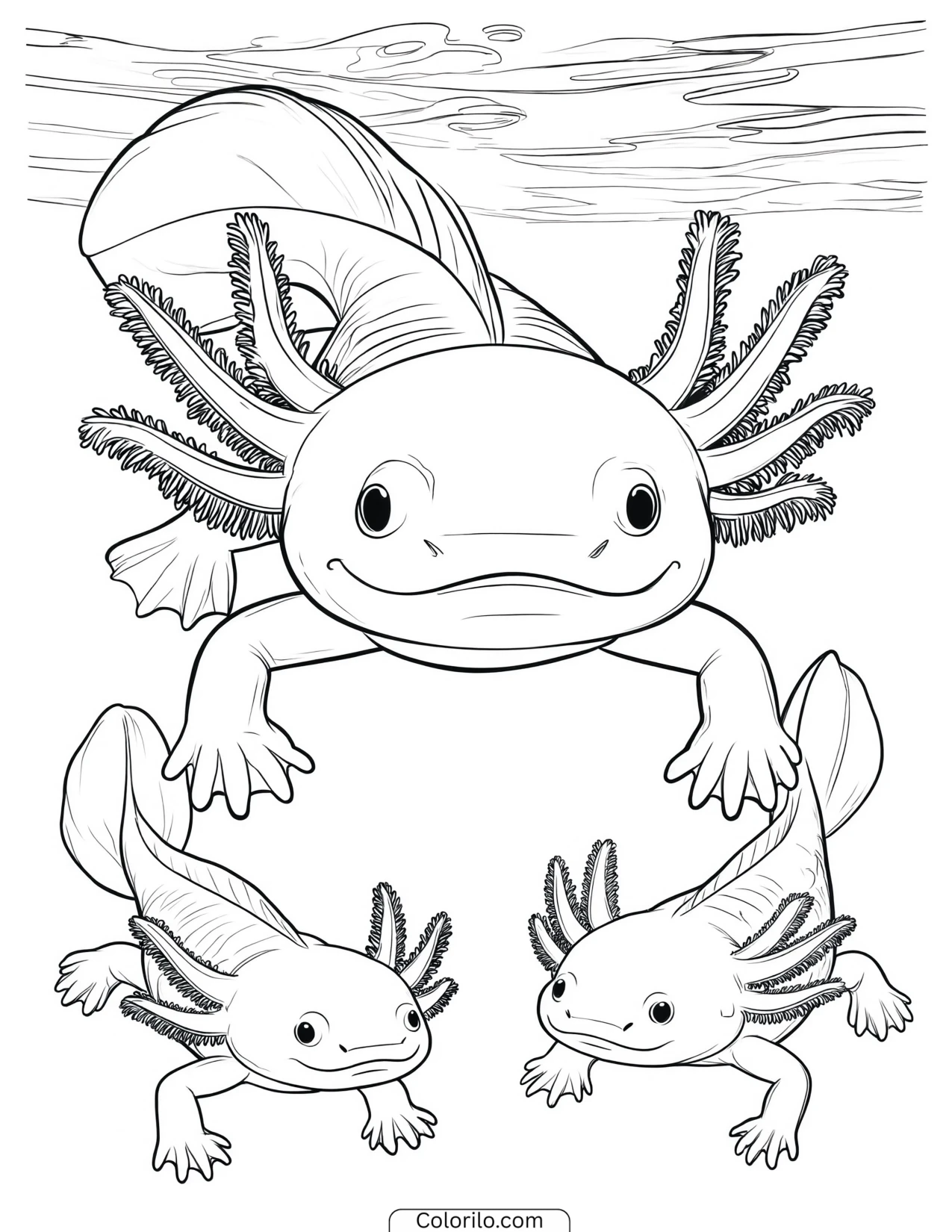
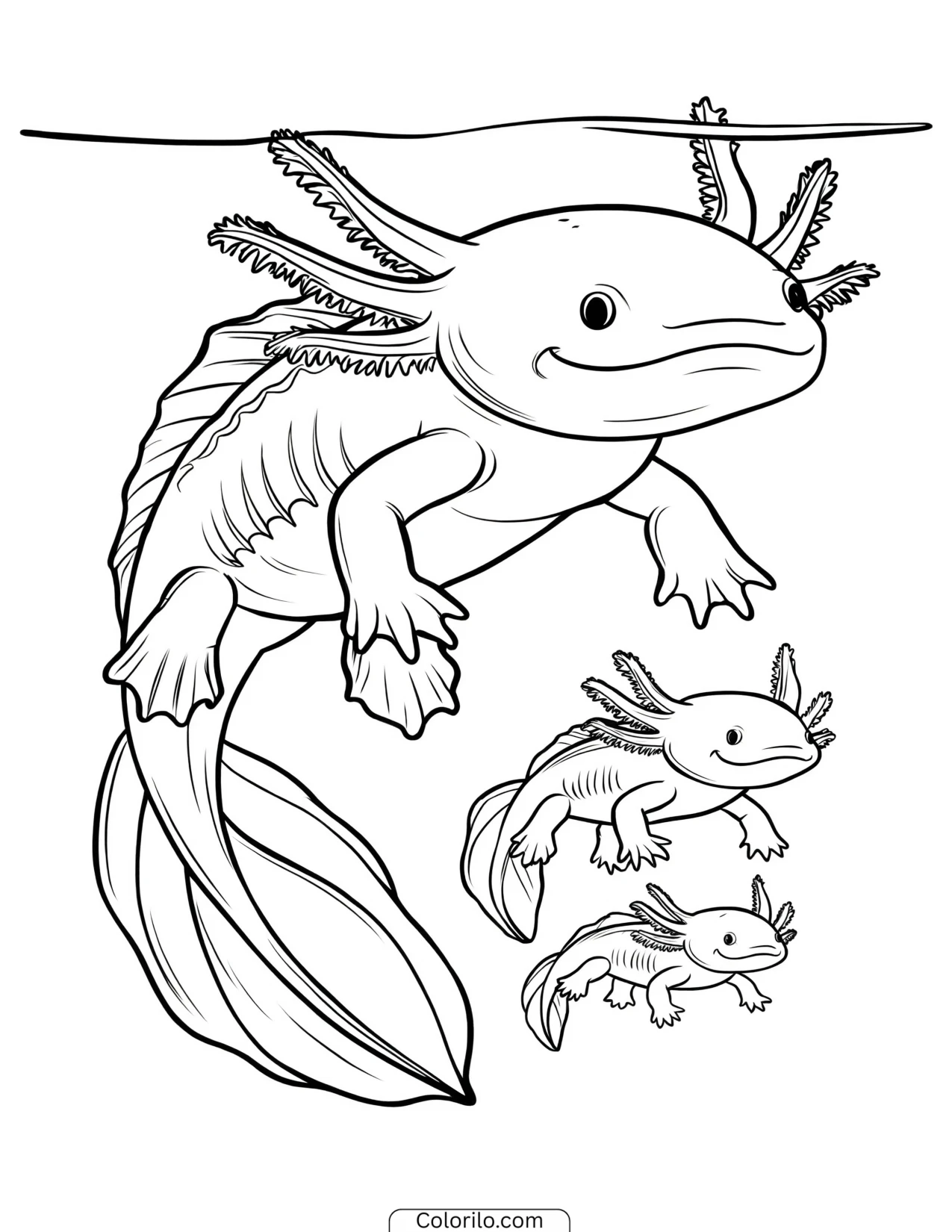
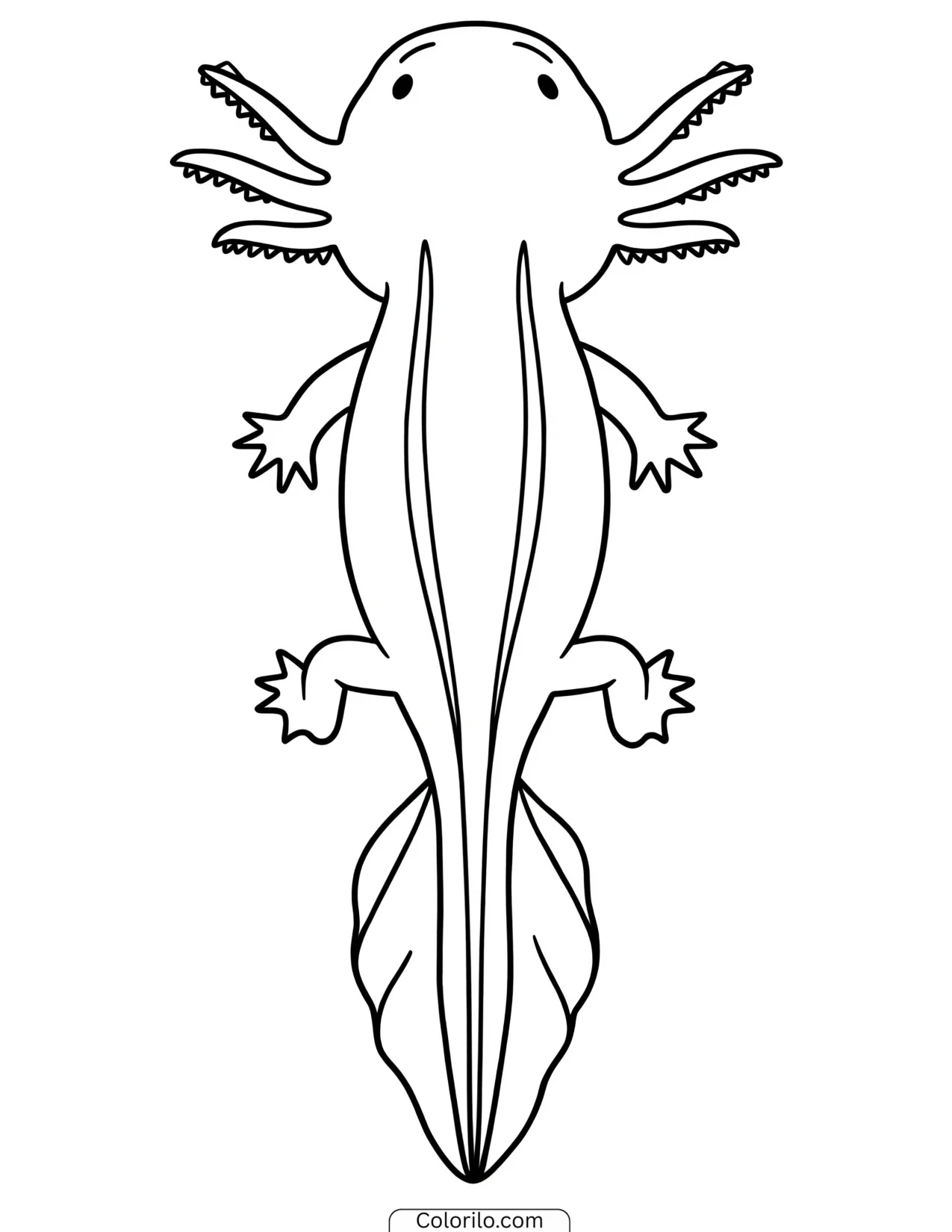
About the Axolotl
What it actually is
A salamander, and an unusual one. Most amphibians hatch as larvae with external gills and then metamorphose, losing the gills and moving onto land. The axolotl simply doesn’t. It keeps its larval body for life and stays in the water, breeding as what is essentially a permanent juvenile. That trait is called neoteny, and it’s why an adult axolotl still looks like a baby.
The gills
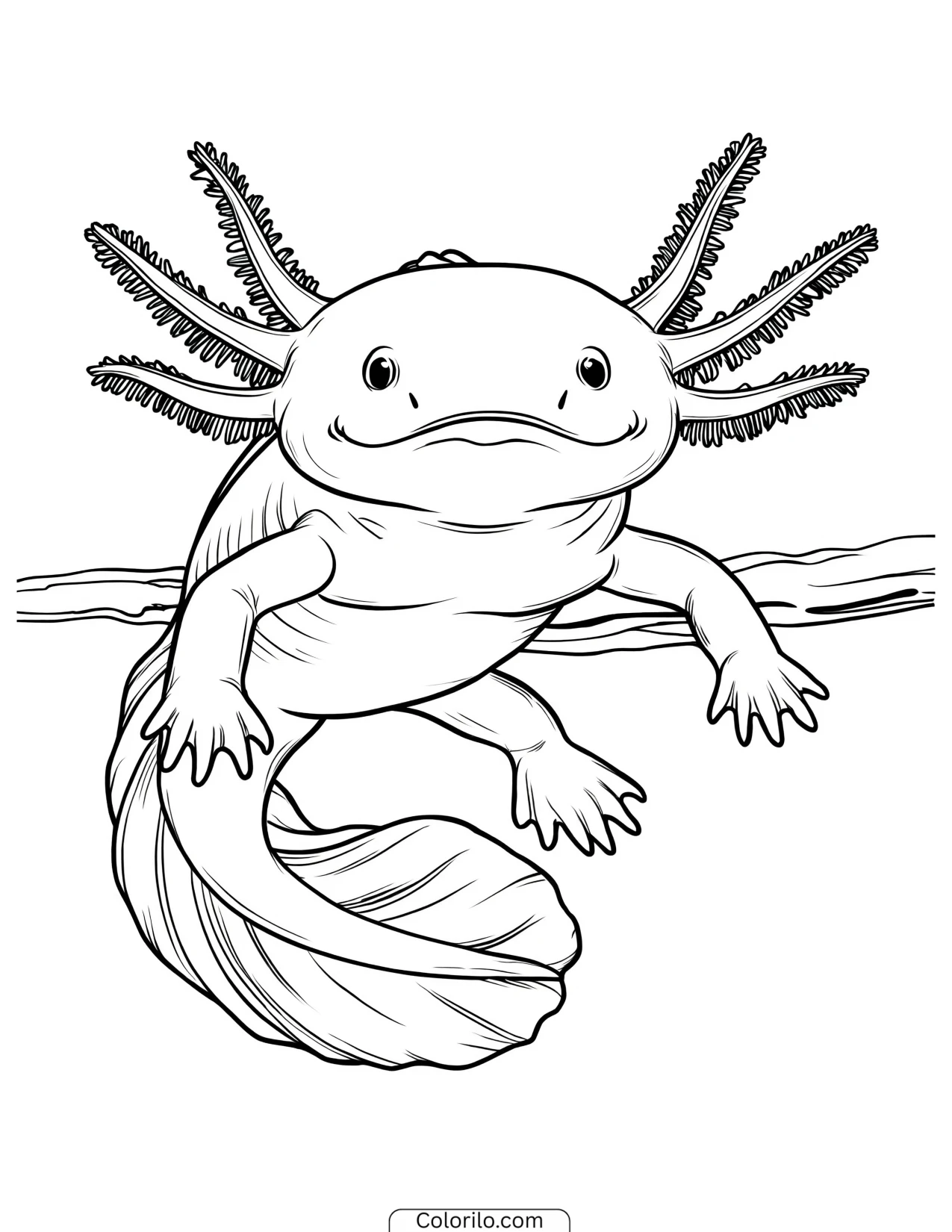
Those six feathery branches are external gills, and they’re the feature every one of these pages hinges on. They vary between individuals, wave in the current, and get fuller in well-oxygenated water. The wagging gills design shows them at their most spread.
The smile
Not really a smile. The mouth line is just how the jaw sits, and the animal has no expression at all. It happens to land exactly where a human reads friendliness, which is most of the reason for its popularity.
Regeneration
Axolotls regrow lost limbs completely, with bone, muscle and nerve, and can do it repeatedly without scarring. They also regenerate parts of the heart, spinal cord and brain. This makes them one of the most heavily studied animals in regenerative medicine.
Where they come from
A single lake system near Mexico City. Wild axolotls are critically endangered and now confined to remnants of the canals of Xochimilco, with recent surveys finding very few. The species survives in enormous numbers in laboratories and home aquariums while nearly vanishing in the one place it is native to.
The Minecraft effect
Axolotls were added to the game in 2021, in pink, brown, gold, cyan and blue variants. That introduced them to millions of children at once, and searches for the animal have stayed high ever since.
Coloring Tips
Pink is the famous colour, but it’s the rare one. The pale pink axolotl with red gills is leucistic, a genetic variant that’s common in captivity and almost unseen in the wild. Wild axolotls are mottled brown or grey-green. Both are correct, and knowing that opens up the whole page.
The gills should be a different colour from the body. They’re full of blood vessels, so they run darker and redder than the skin. Leaving them the same pink as the body flattens the animal completely.
Leave a highlight in the eyes. Axolotl eyes are small, dark and lidless. A tiny unfilled white dot in each is what stops the face looking blank.
Try the Minecraft palette. Cyan, gold, blue, brown, pink. Any child who plays the game will recognise them instantly, and it’s a good excuse to color the same page five times.
The plant and rock pages want green behind. The branch, plant, rock and shrimp designs all give you a background, and greens and browns behind a pink axolotl make it stand out far more than white paper does.
Good for young children. The rounded shapes and thick outlines suit around four and up. The gills are the only fiddly part, and they can be filled as one shape rather than branch by branch.
Frequently Asked Questions
Are these axolotl coloring pages really free?
Yes, all 40 are free to download and print. Click any design to open the PDF. No account, no email, no payment.
What age are these suitable for?
Most of the set works from around four. The single-axolotl designs have bold outlines and large open shapes. The underwater scenes, the family groups and the plant and rock pages have more going on and suit six and up.
Can I print more than one copy?
As many as you need. These are worth repeating, since the same axolotl can be coloured pink, brown, gold or cyan and look completely different each time.
Is an axolotl a fish?
No, though the name “Mexican walking fish” suggests otherwise. It’s an amphibian, a salamander, with lungs as well as gills, four legs, and no scales. The confusion comes from the fact that it spends its whole life in water rather than moving onto land like most amphibians.
Why do axolotls always look like they’re smiling?
They aren’t. The upturned line of the mouth is simply the shape of the jaw, and axolotls have no facial muscles for expression of any kind. It’s a coincidence of anatomy that happens to match what humans read as a friendly face, the same reason people find them so appealing in photographs.
Can I print more than one copy?
As many as you like.
Can axolotls really regrow their limbs?
Yes, and more completely than almost any other vertebrate. A lost leg regrows with functioning bone, muscle, blood vessels and nerves, and leaves no scar. They can repeat this many times over, and can also regenerate parts of the heart, spinal cord and even brain tissue. Understanding how they manage it is an active area of medical research.




Leave a Reply