
Table of Contents
Monster trucks are a genuinely odd thing to have become a global sport. They started as a competition between men modifying pickups in the late 1970s, and the whole spectacle still rests on one idea a small child grasps immediately: put enormous wheels on a truck and drive it over other vehicles.
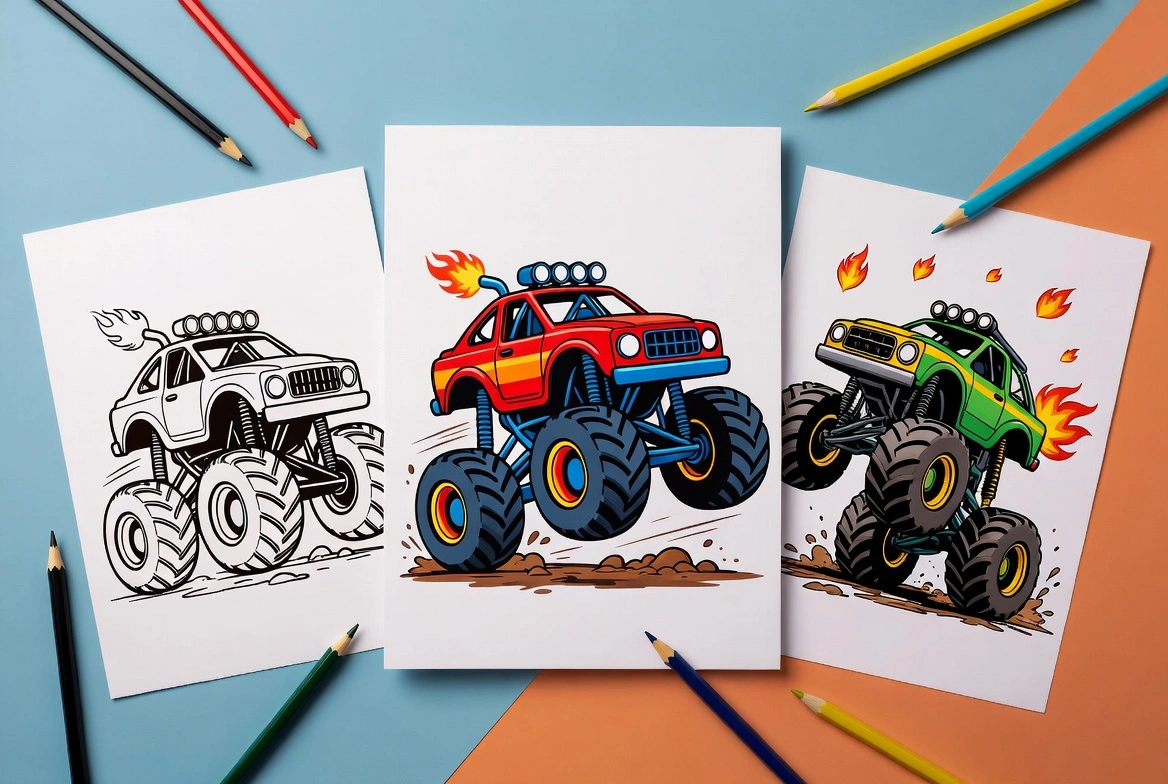
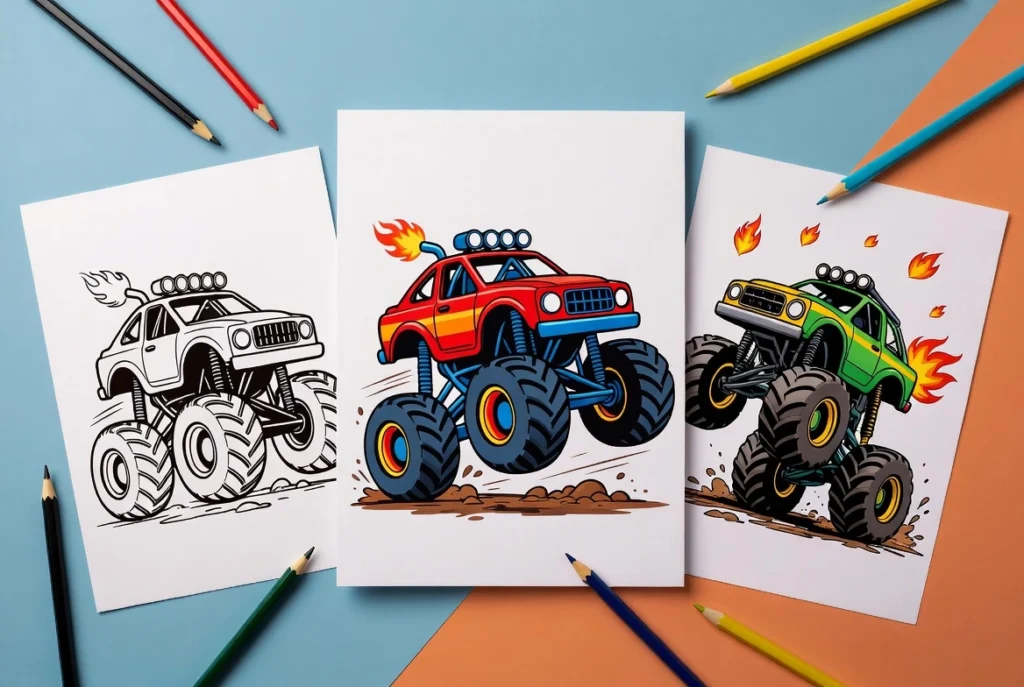
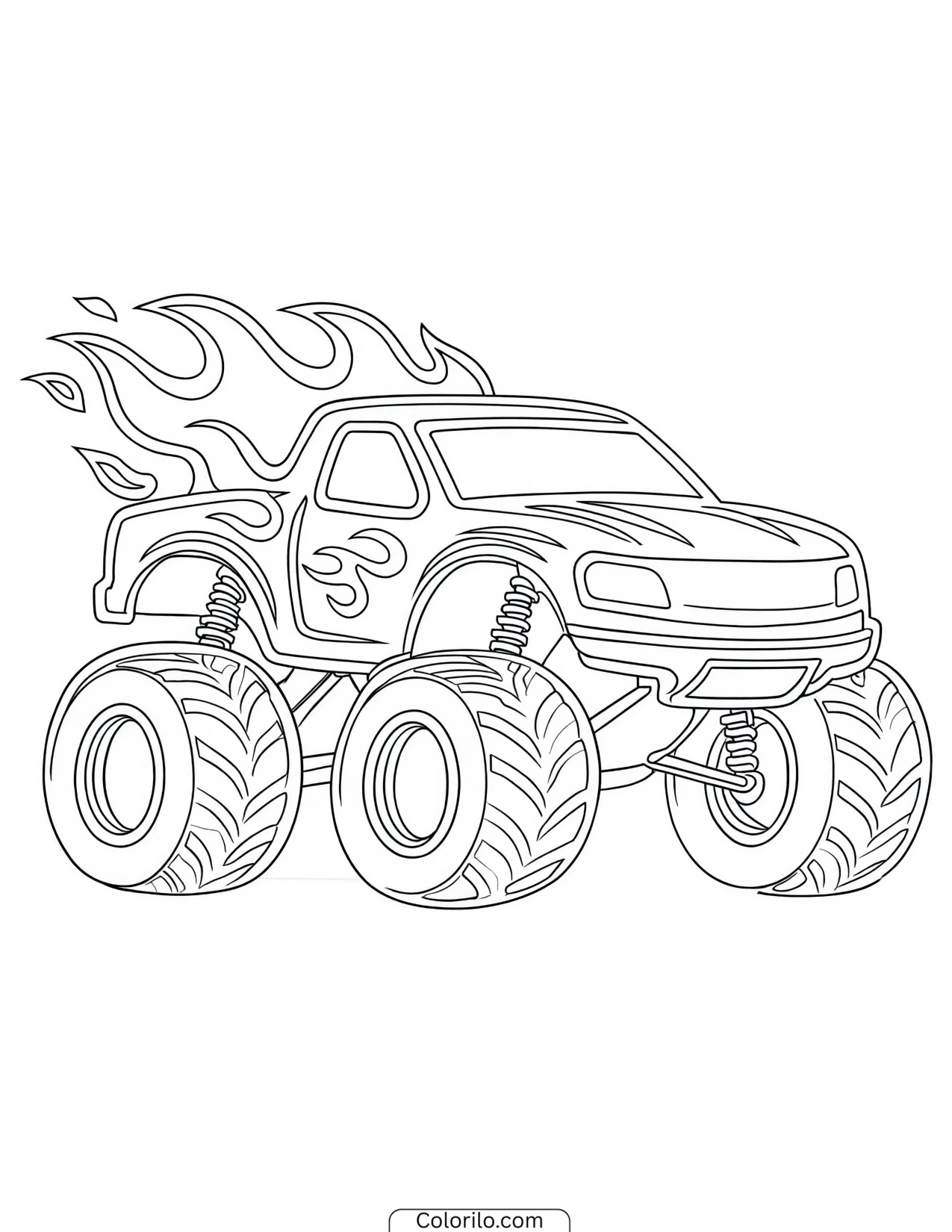
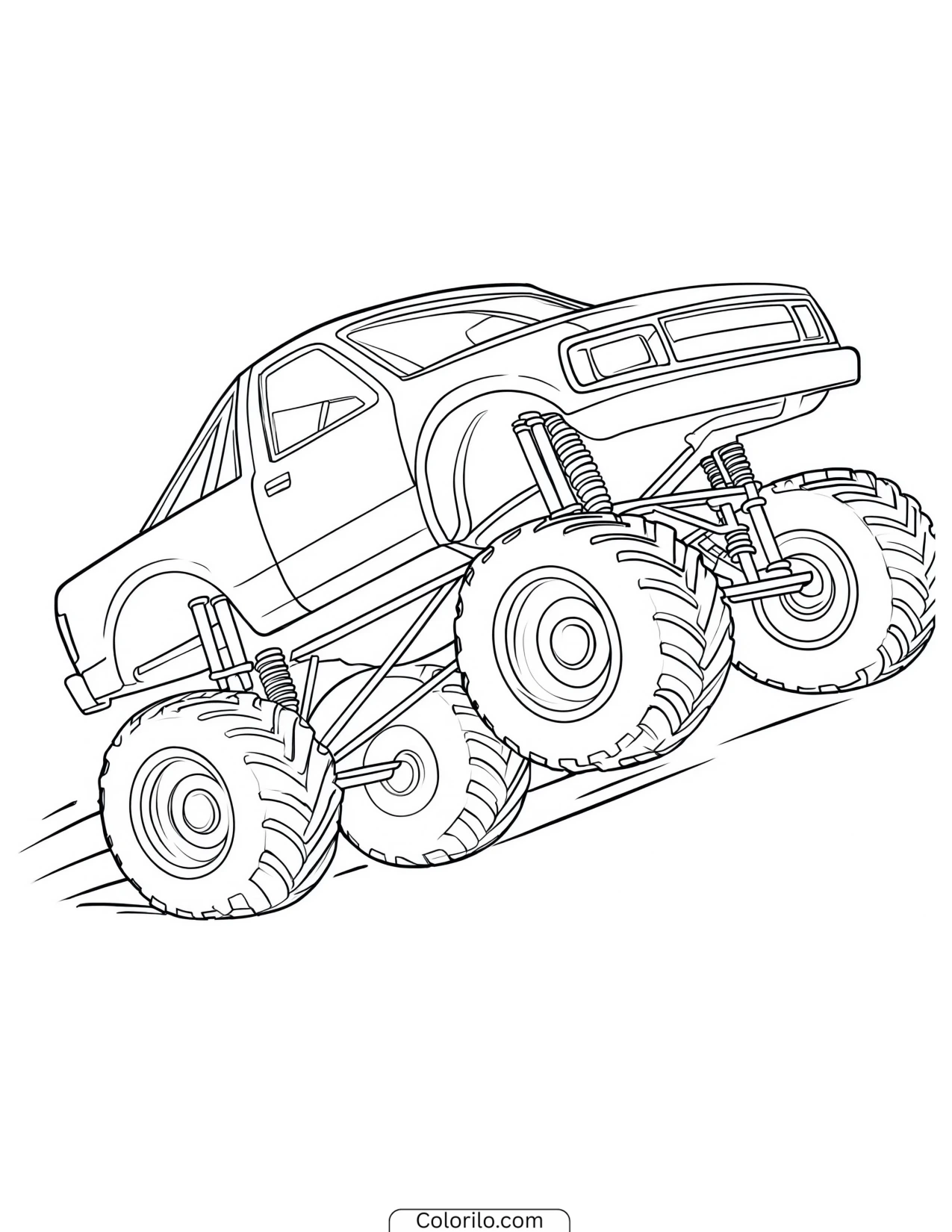
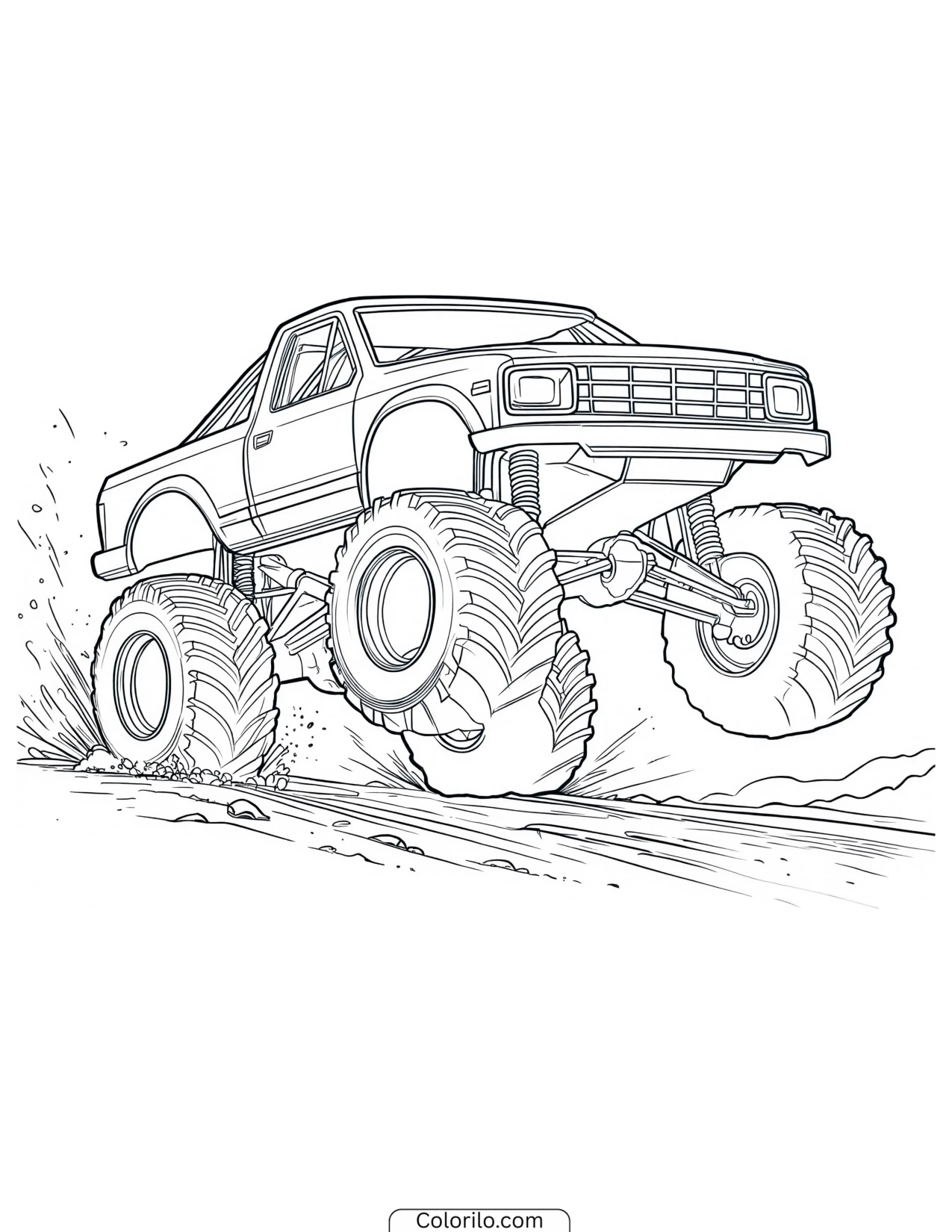
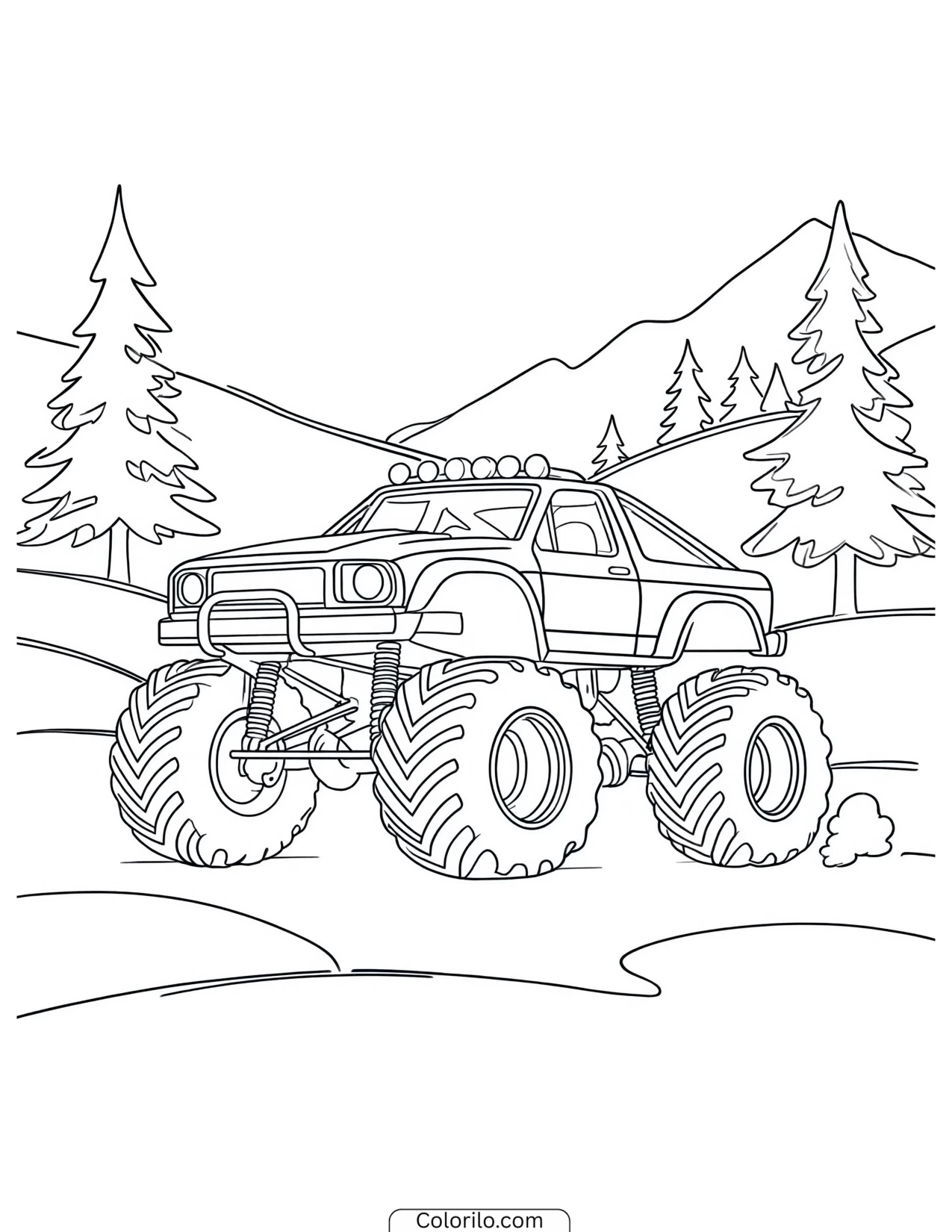
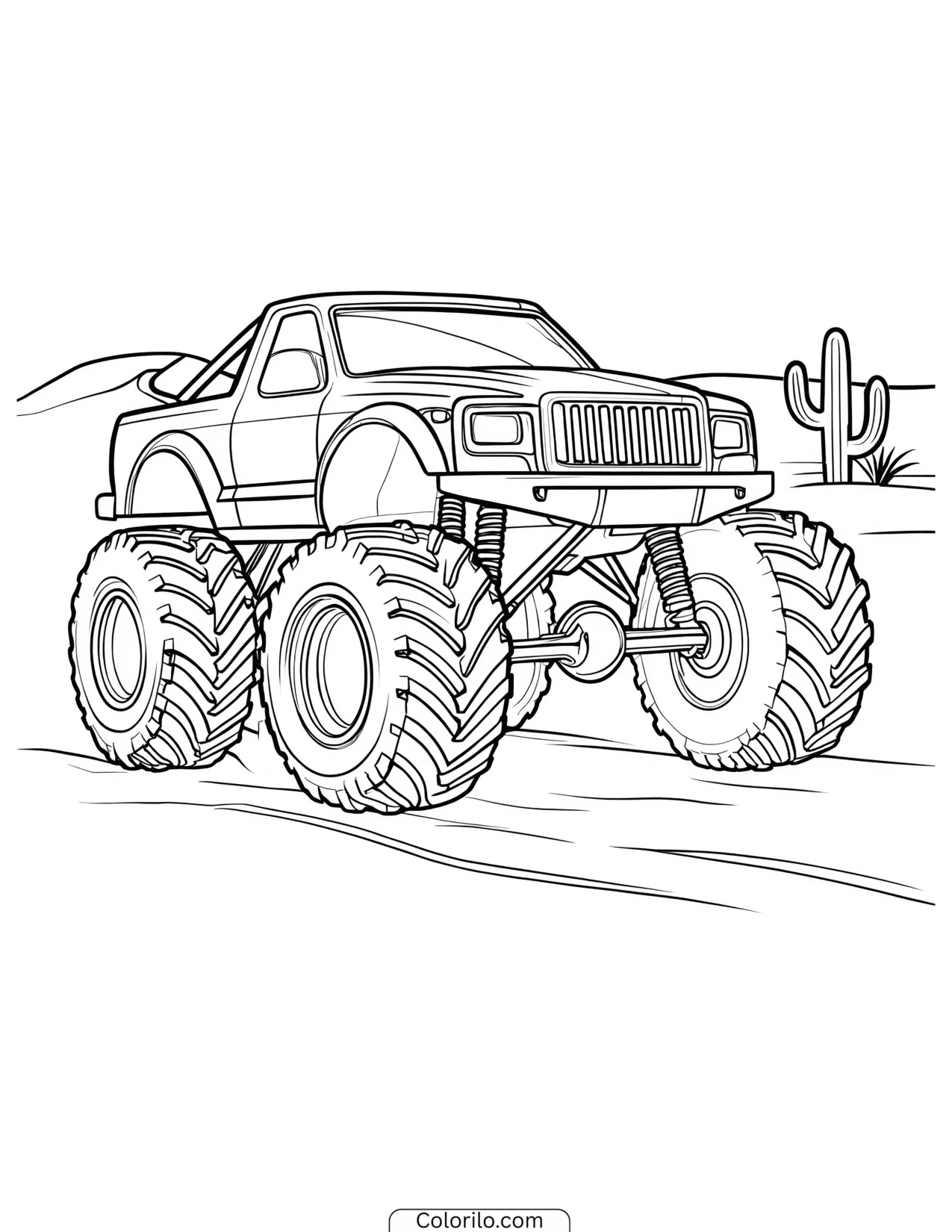
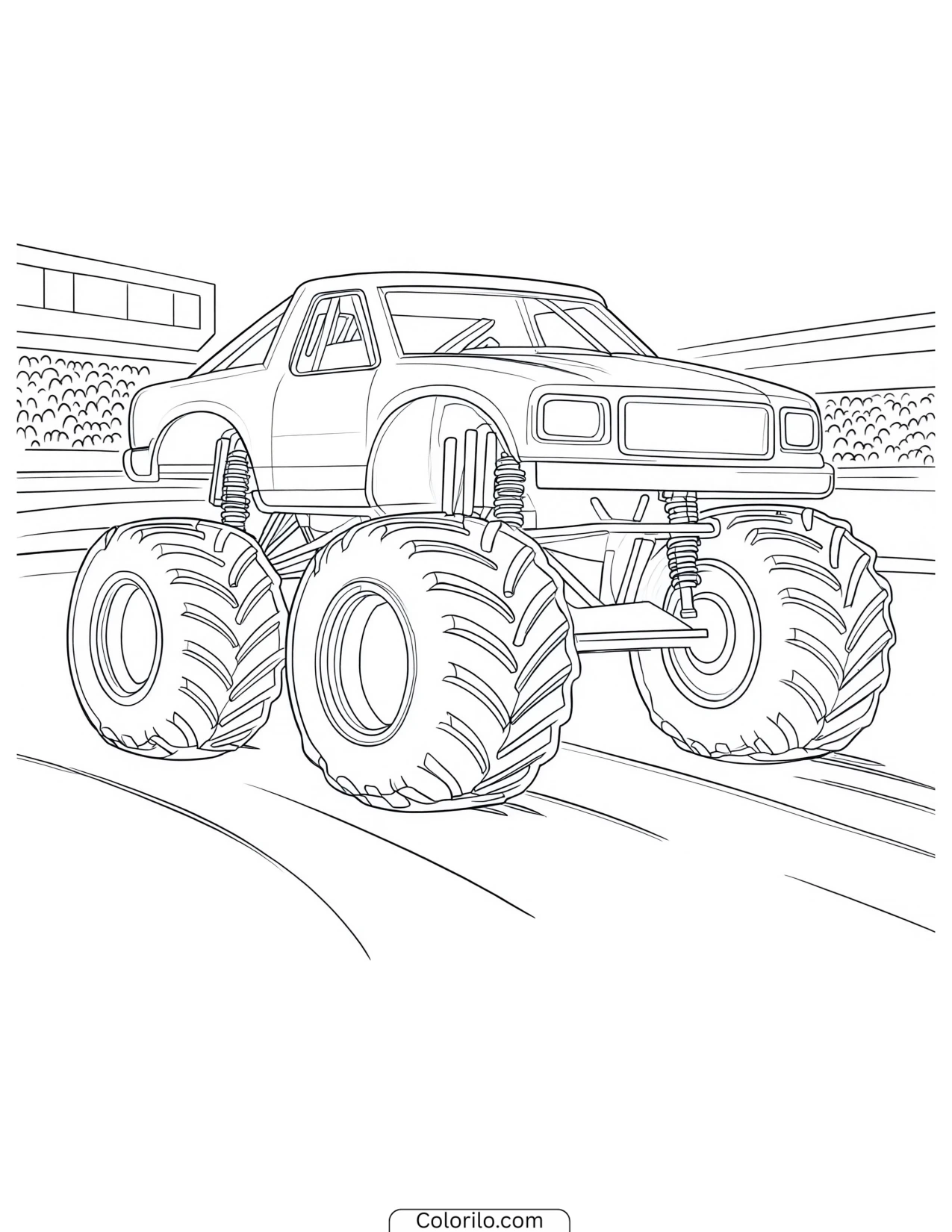
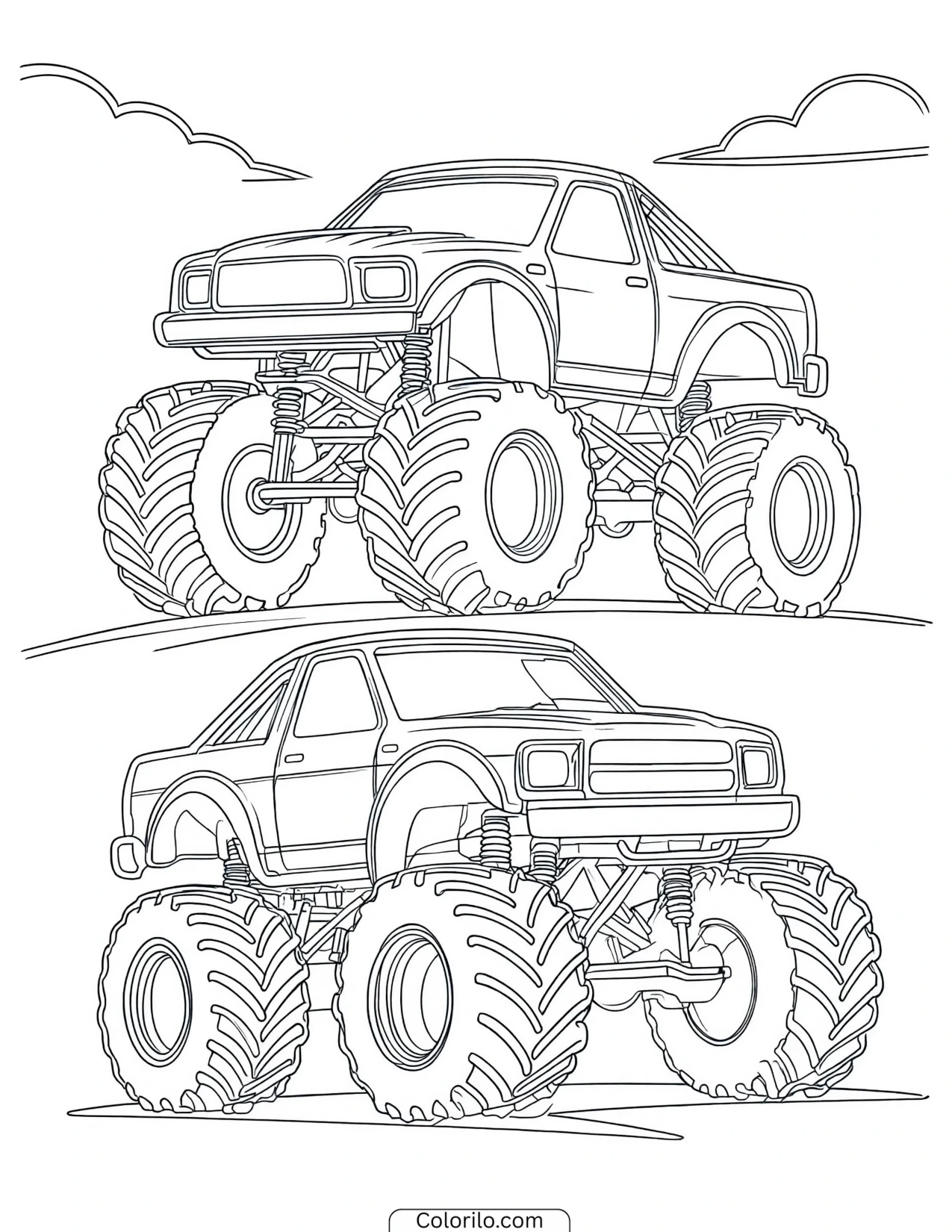
This collection has 39 free designs, and the best of them lean into the theatre. Trucks jumping over lines of buses, crushing rows of cars, pulling wheelies, kicking dirt off the tyres, and trailing flames. There are three settings worth pointing out, a stadium arena, a desert landscape, and a run through pine trees, which give a child somewhere to put colour beyond the vehicle itself.
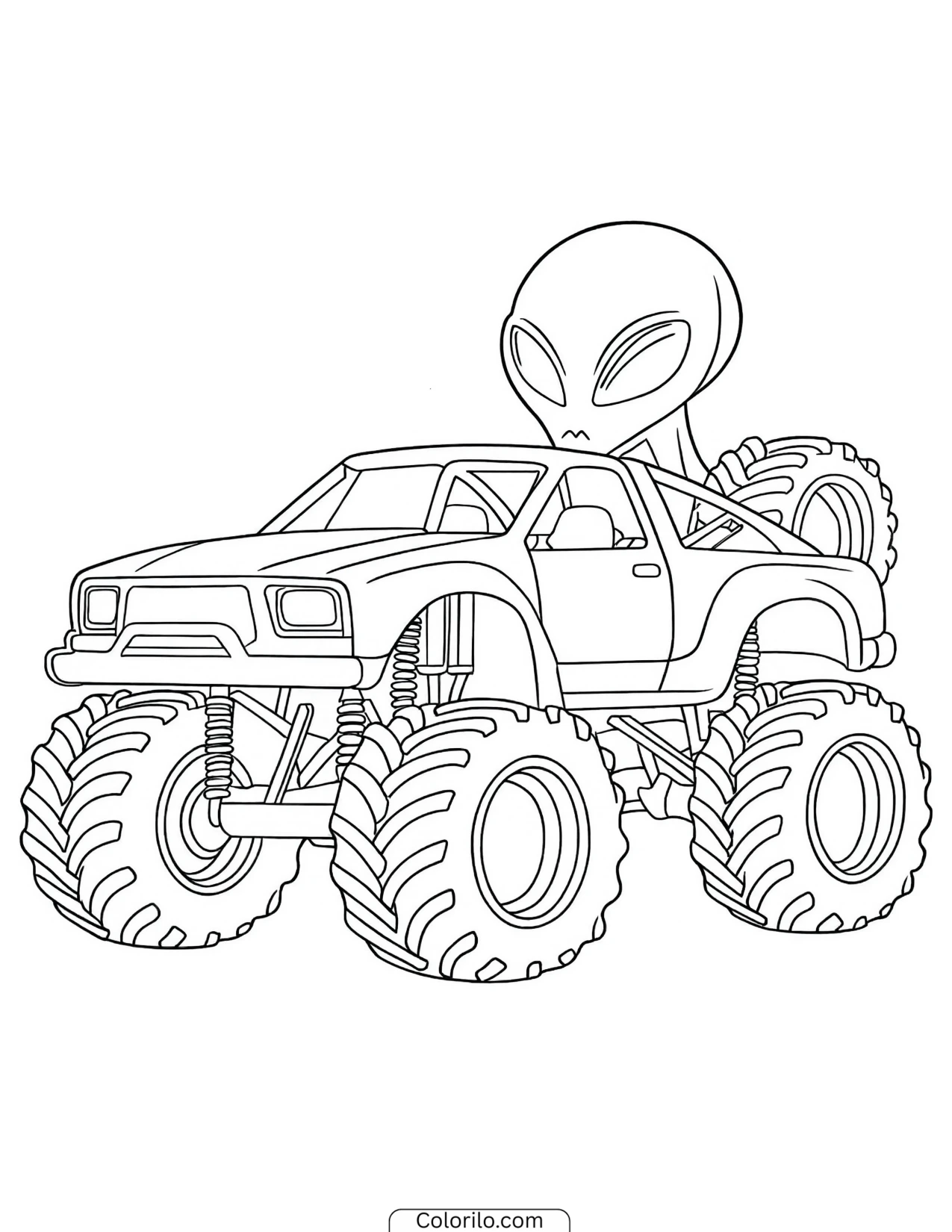
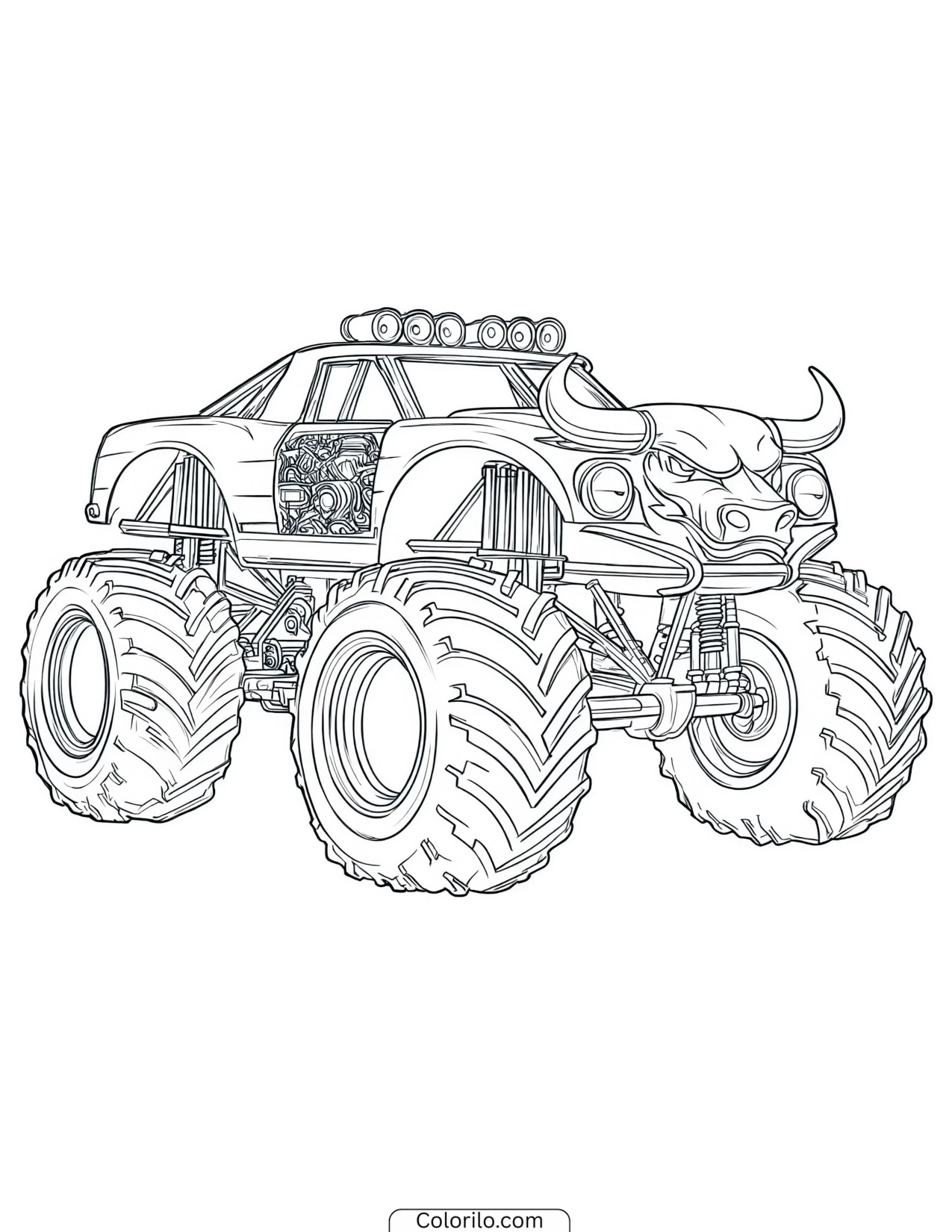
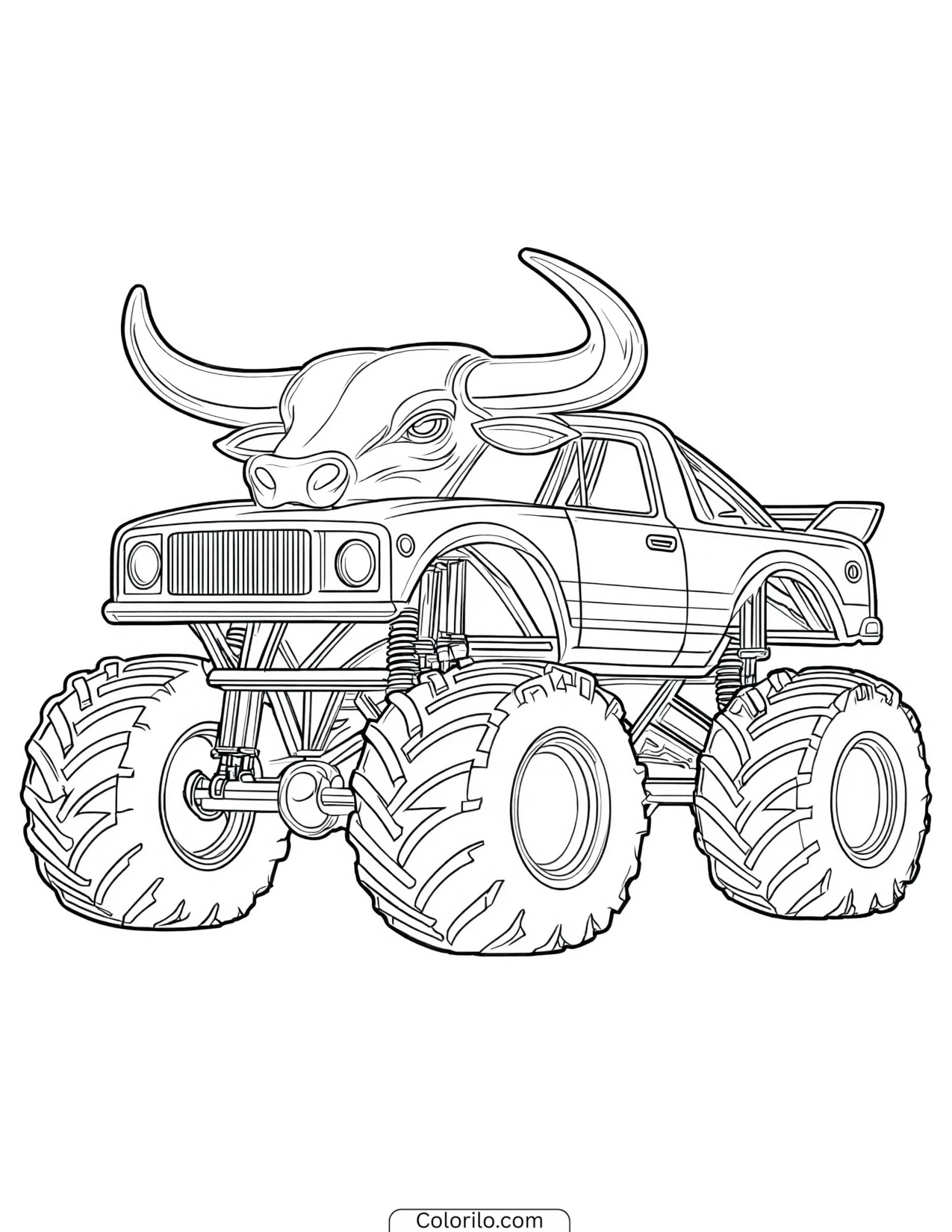
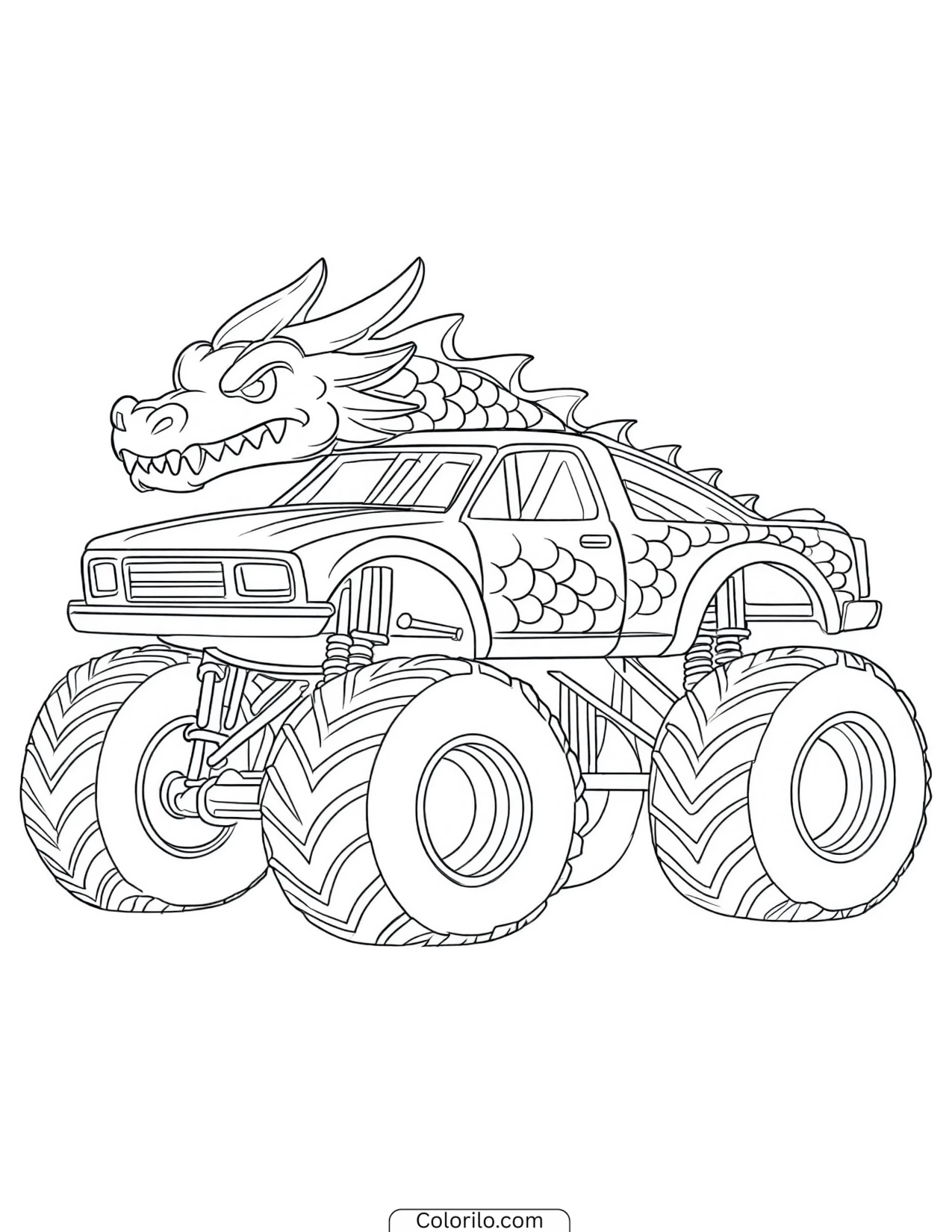
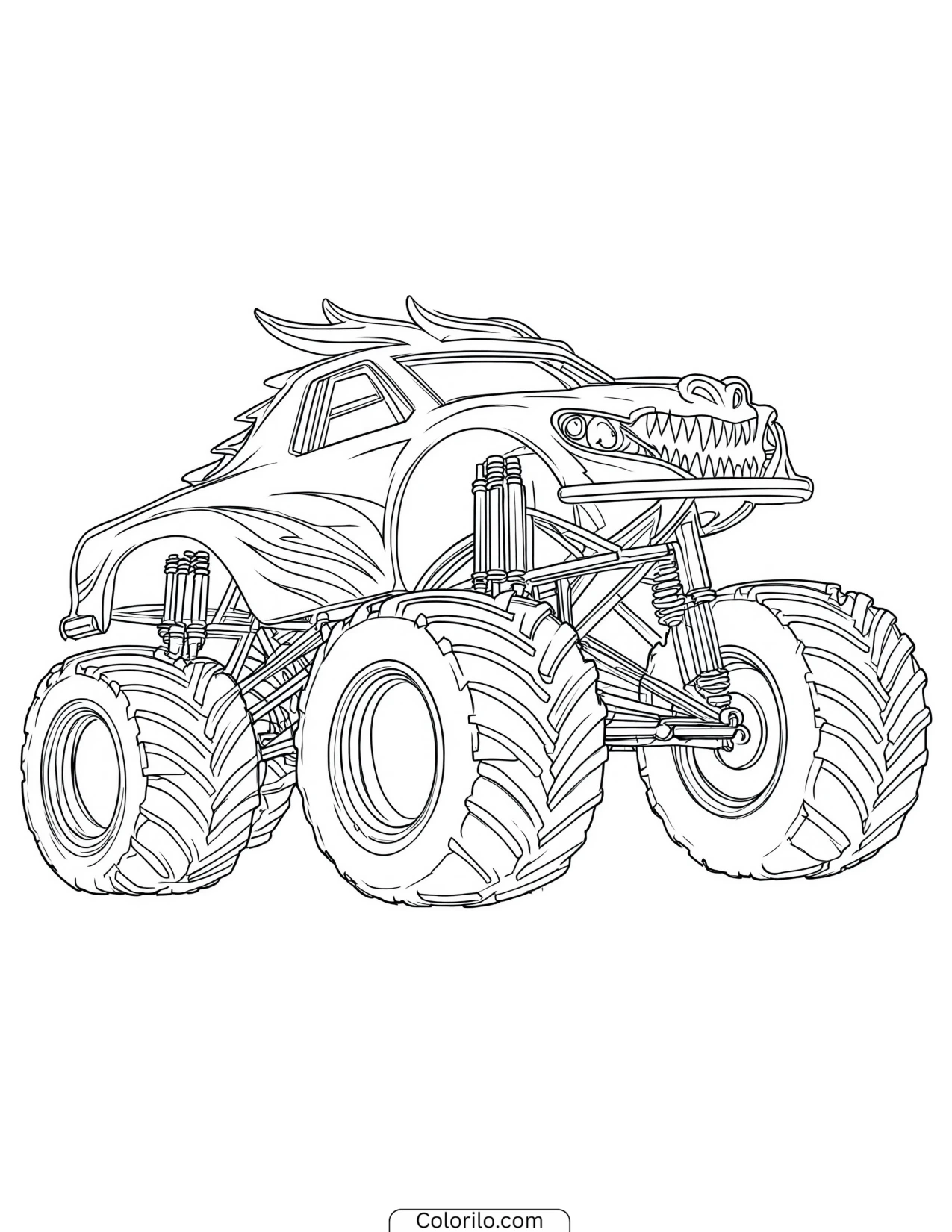
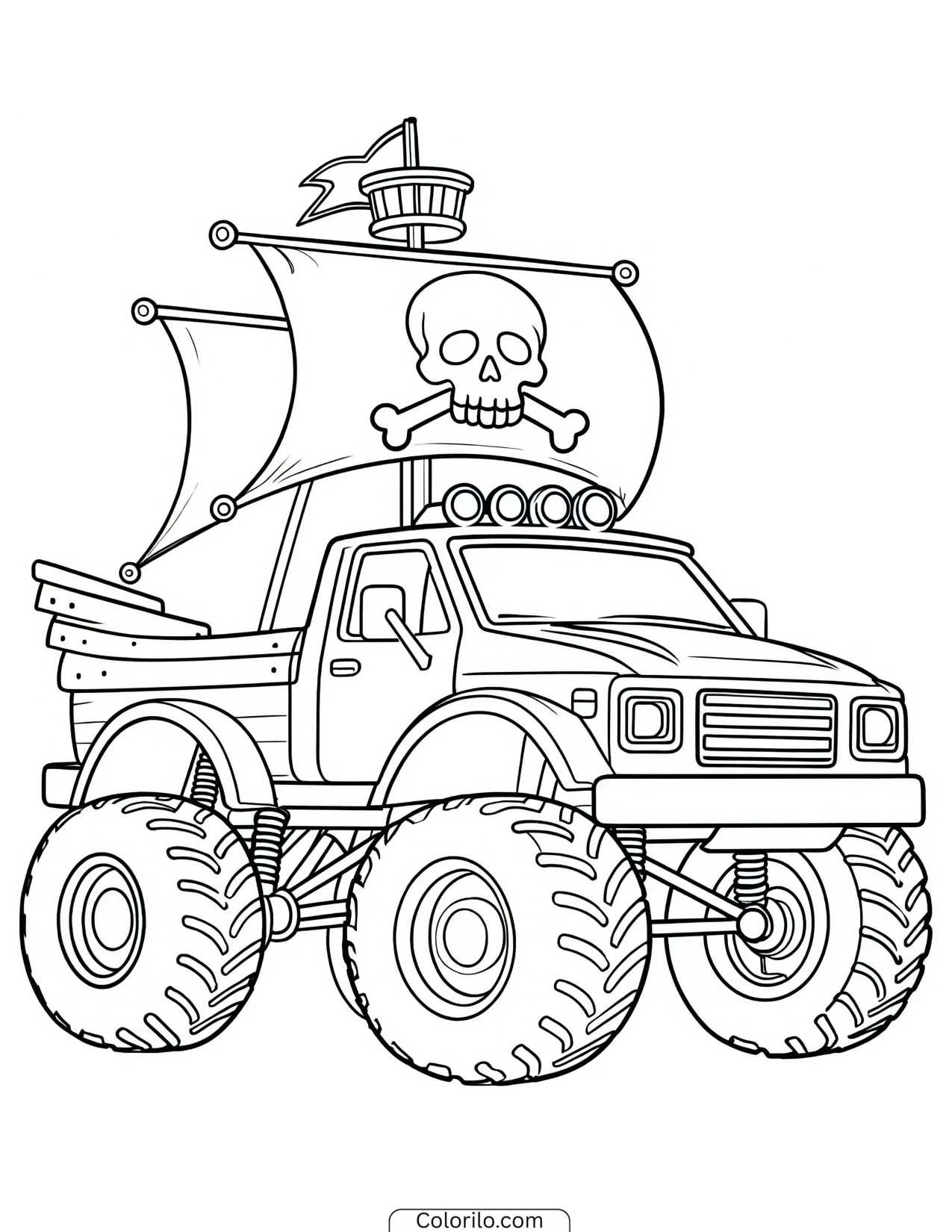
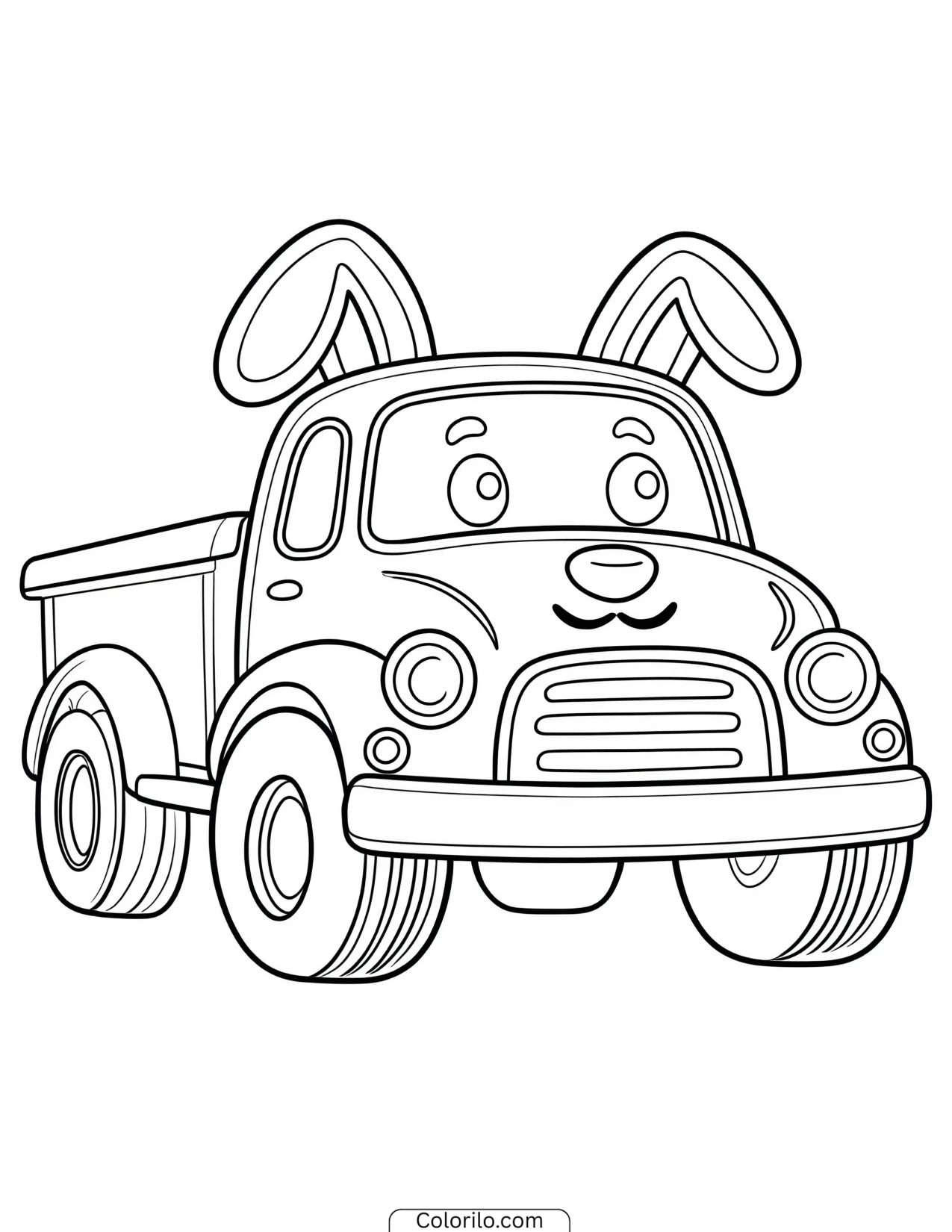
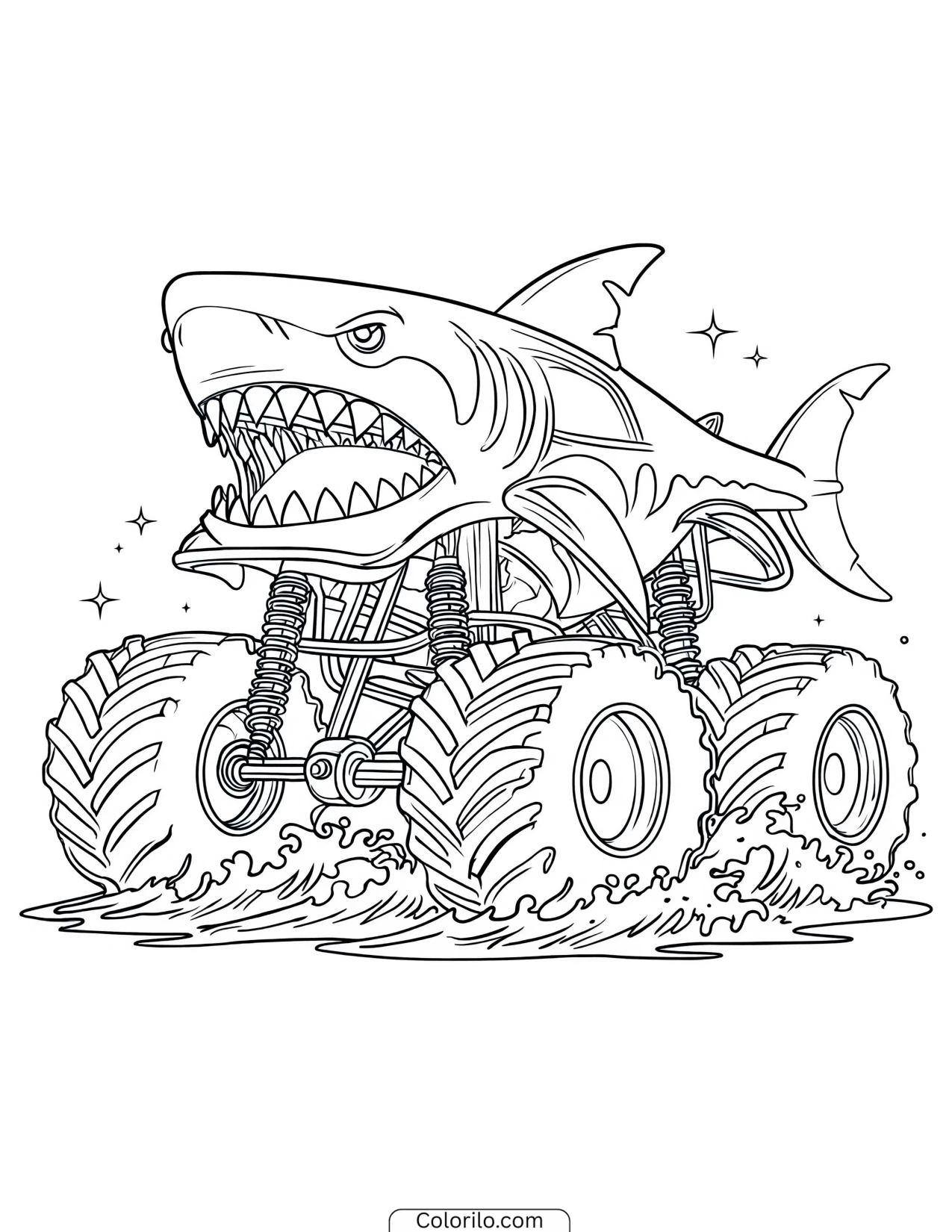
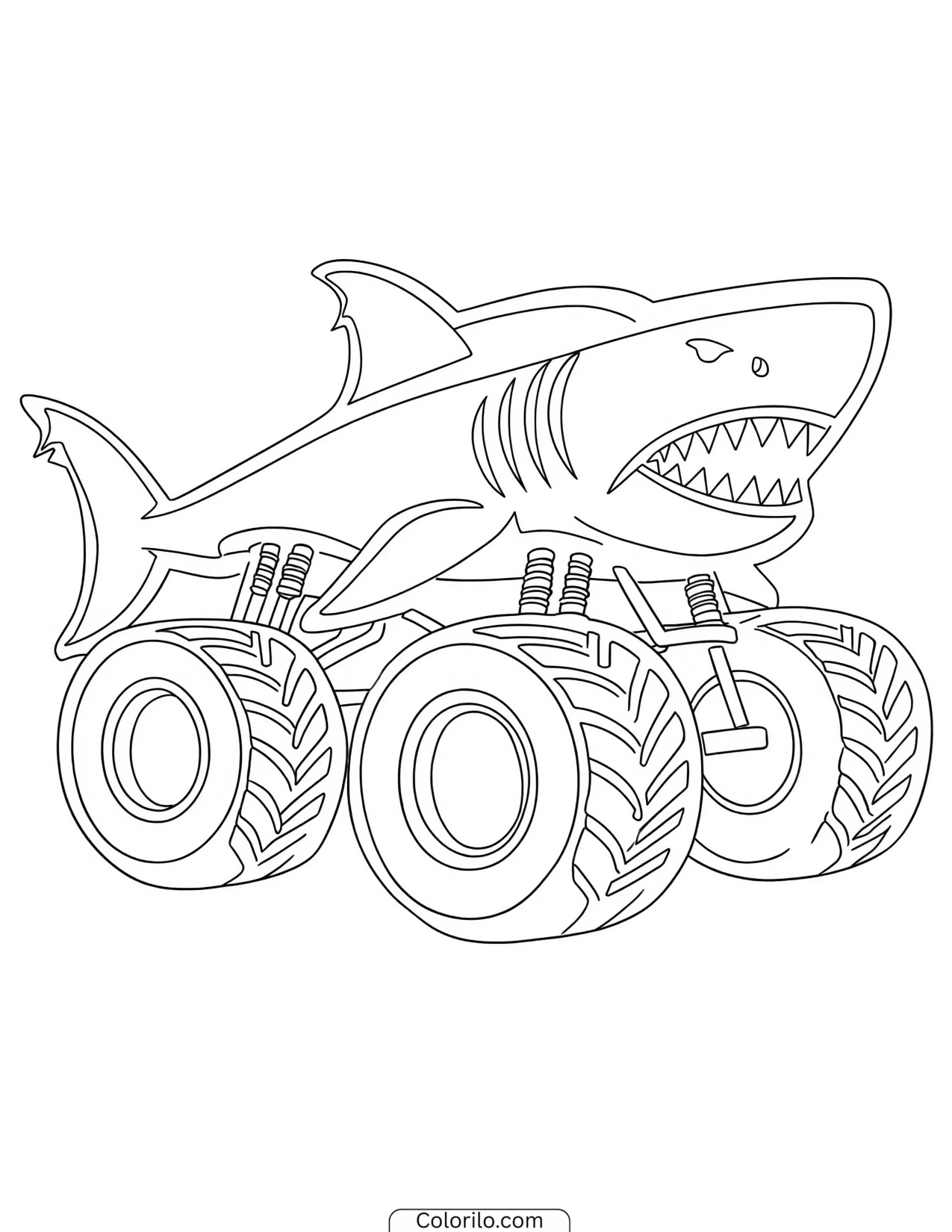
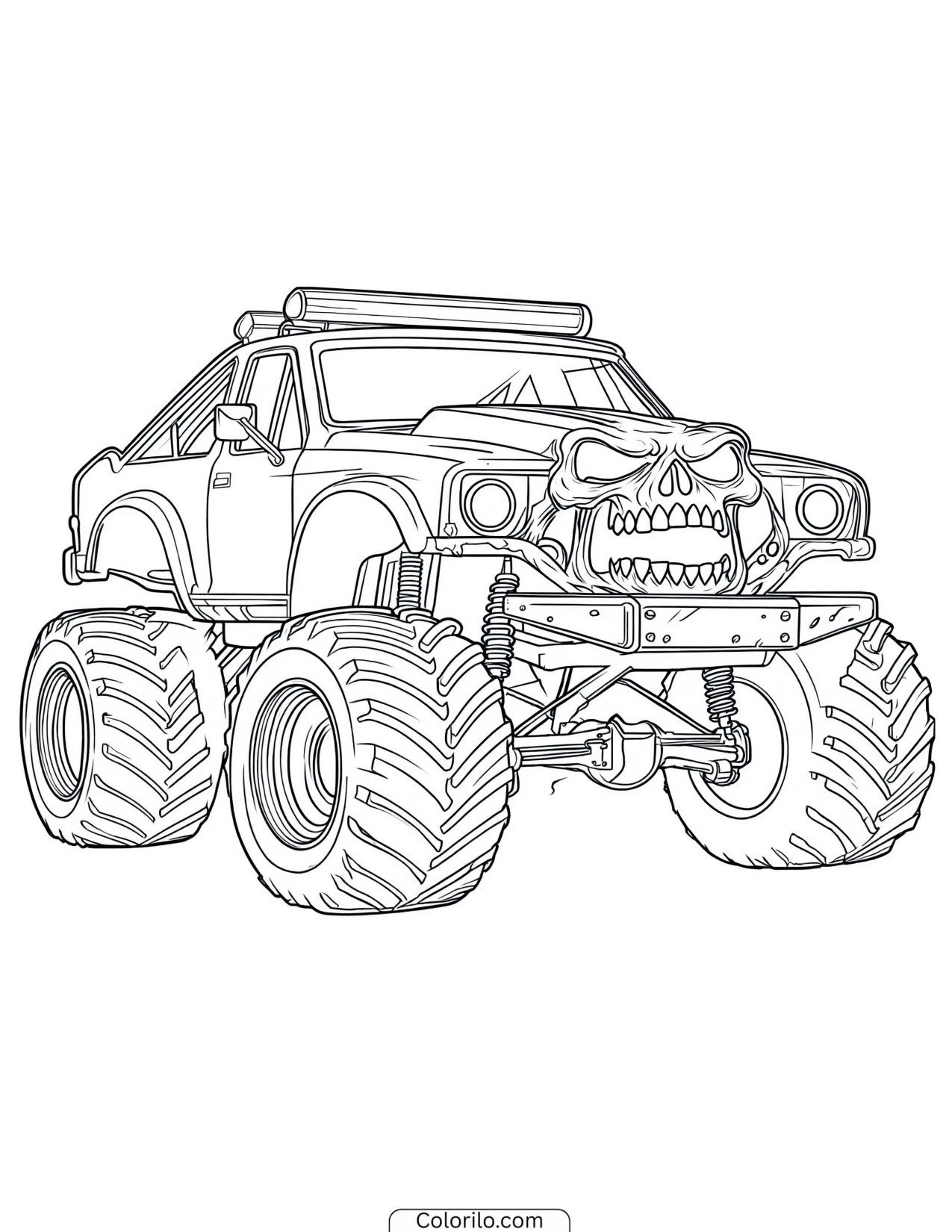
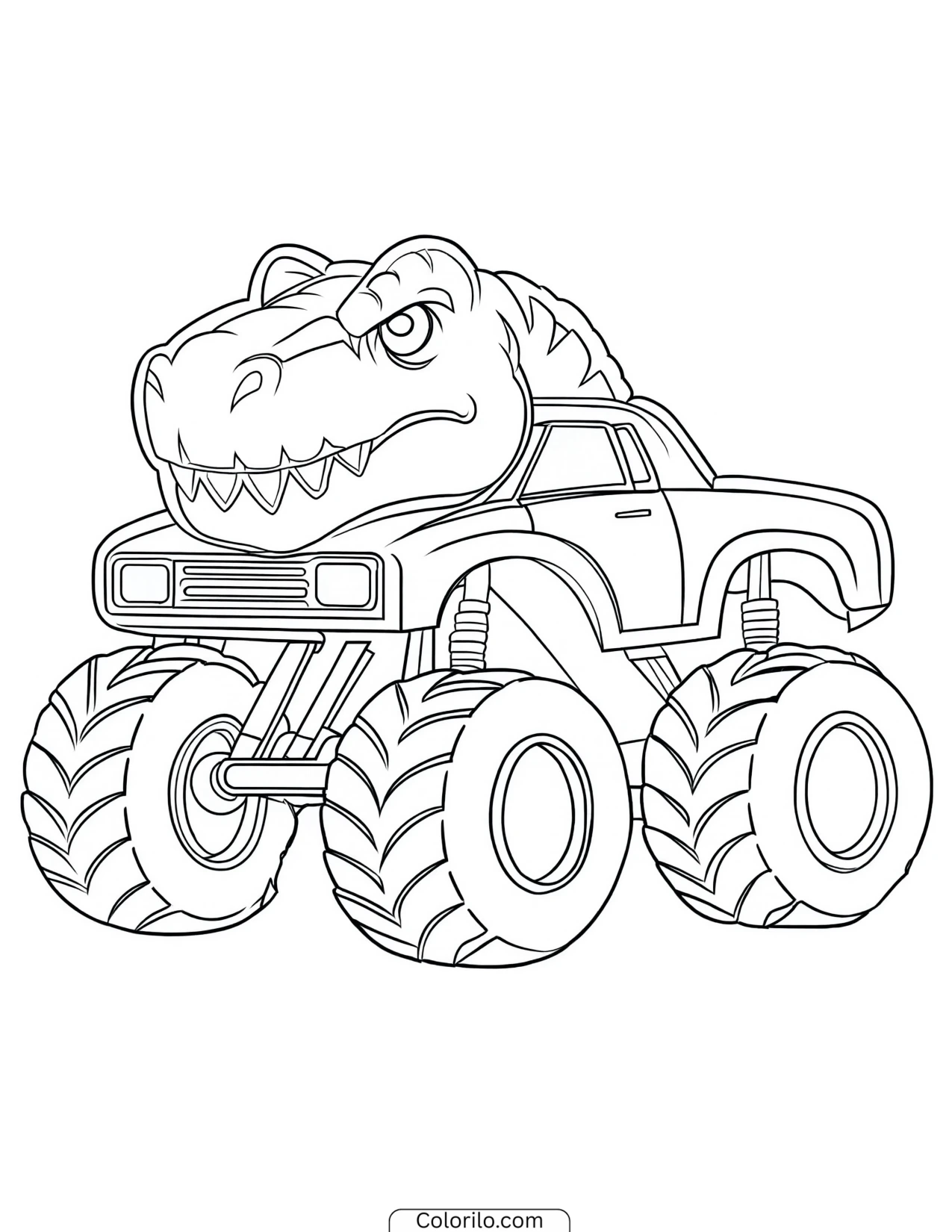
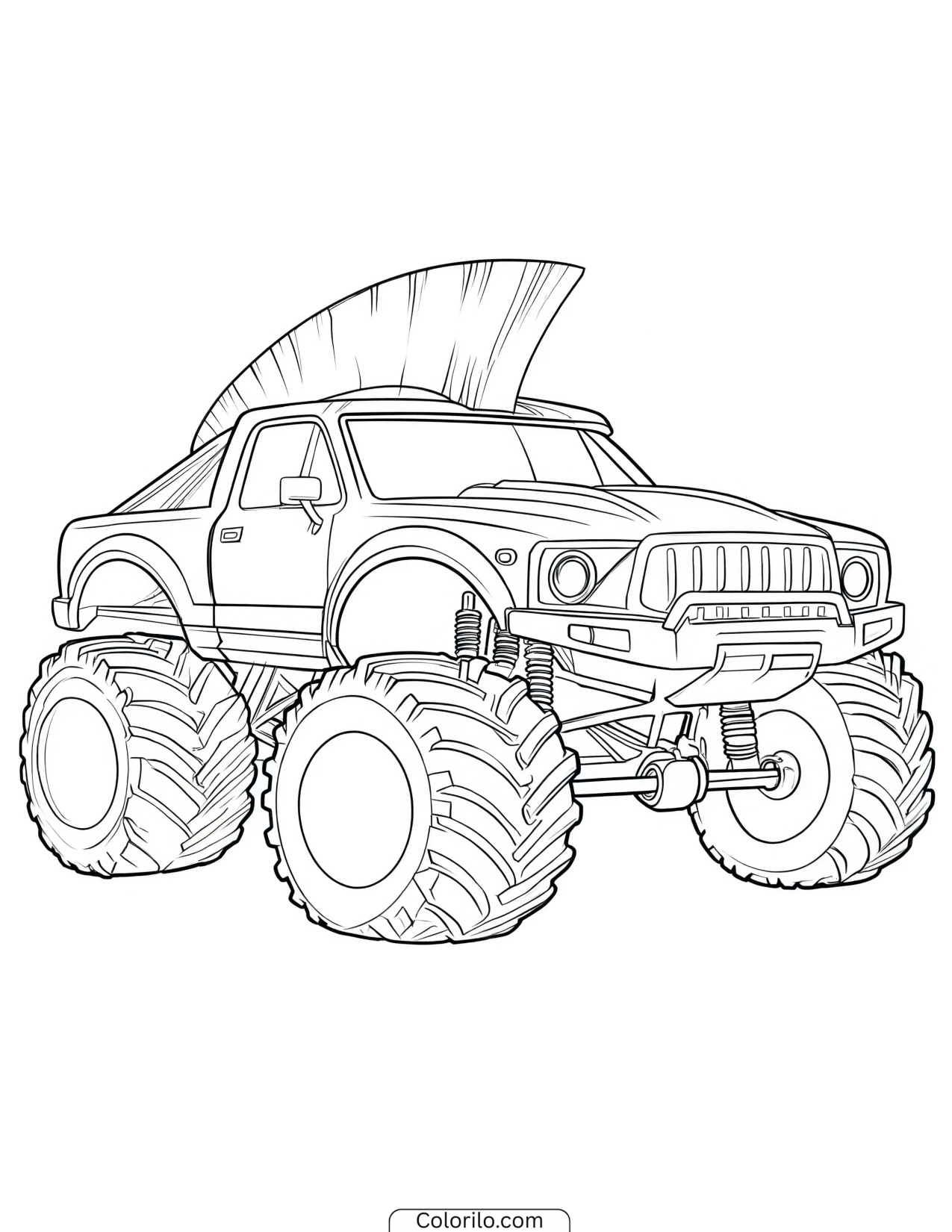
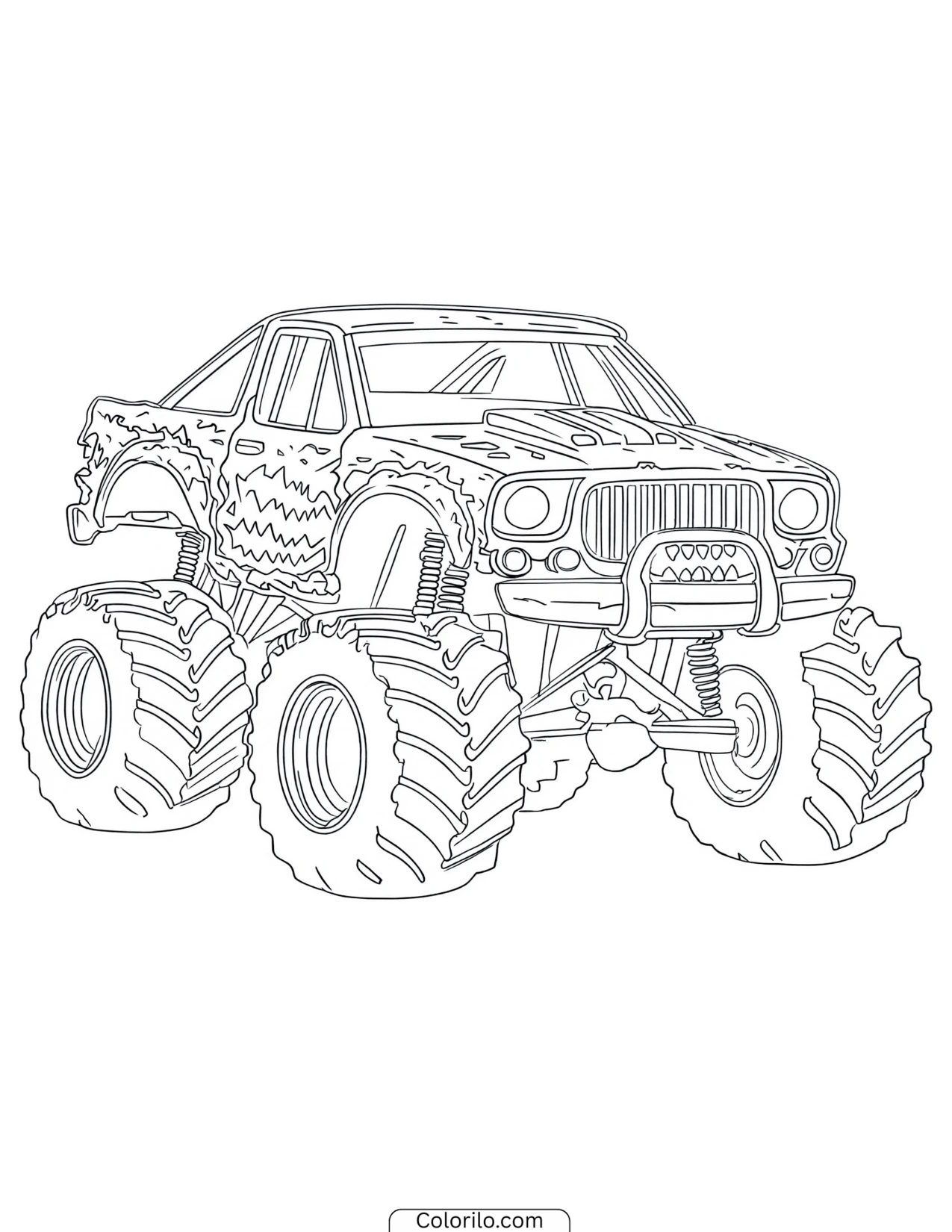
The creature trucks are the most distinctive group here. A bull’s head, a dragon, a horned dragon, a shark in two views including one splashing through water, a T. rex head, a skull face, and a truck built to look like a pirate ship. There’s also a mohawk fin along one roof, monster-mouth graphics on another, and two cartoon designs with puppy ears, the friendliest pages in the set, and the right ones for a very young child.
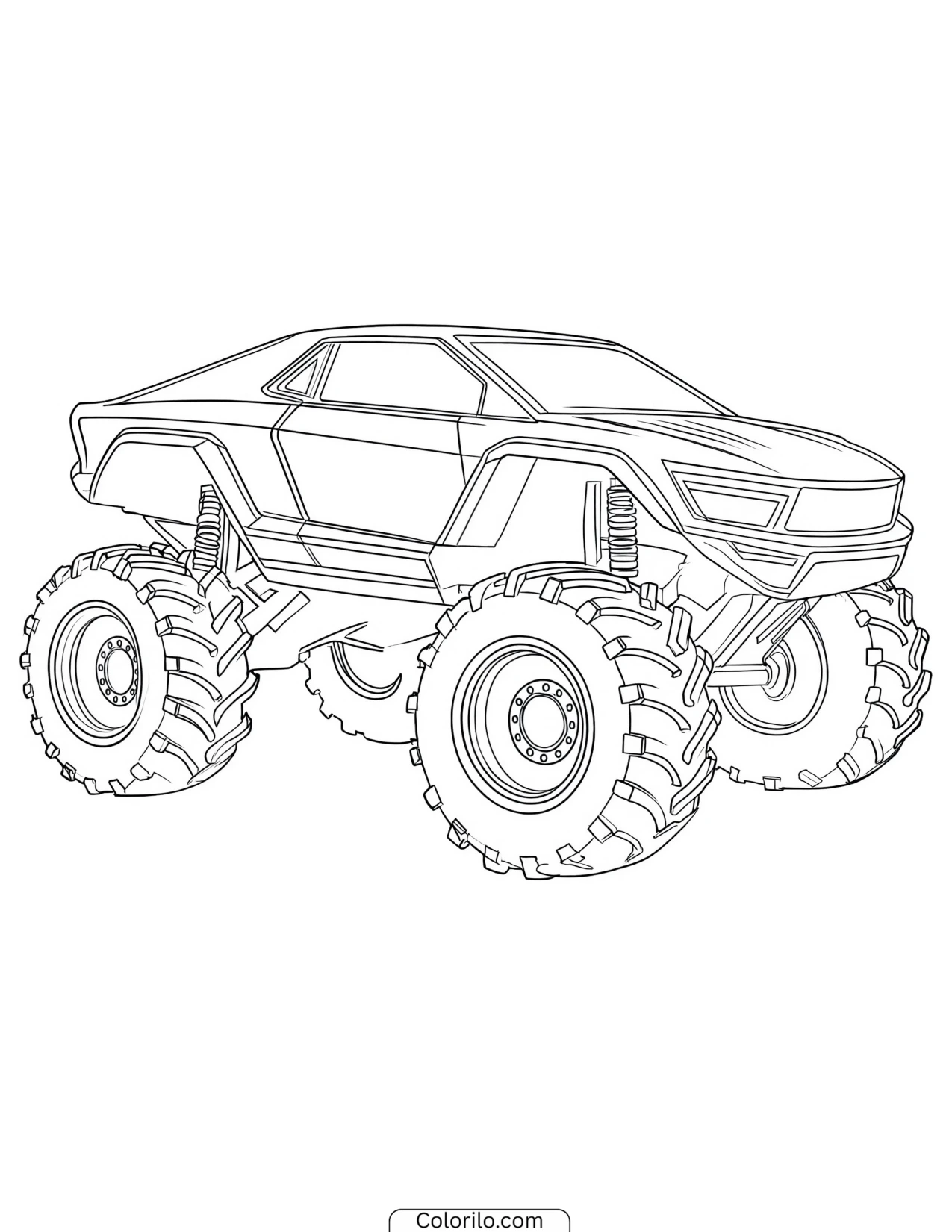
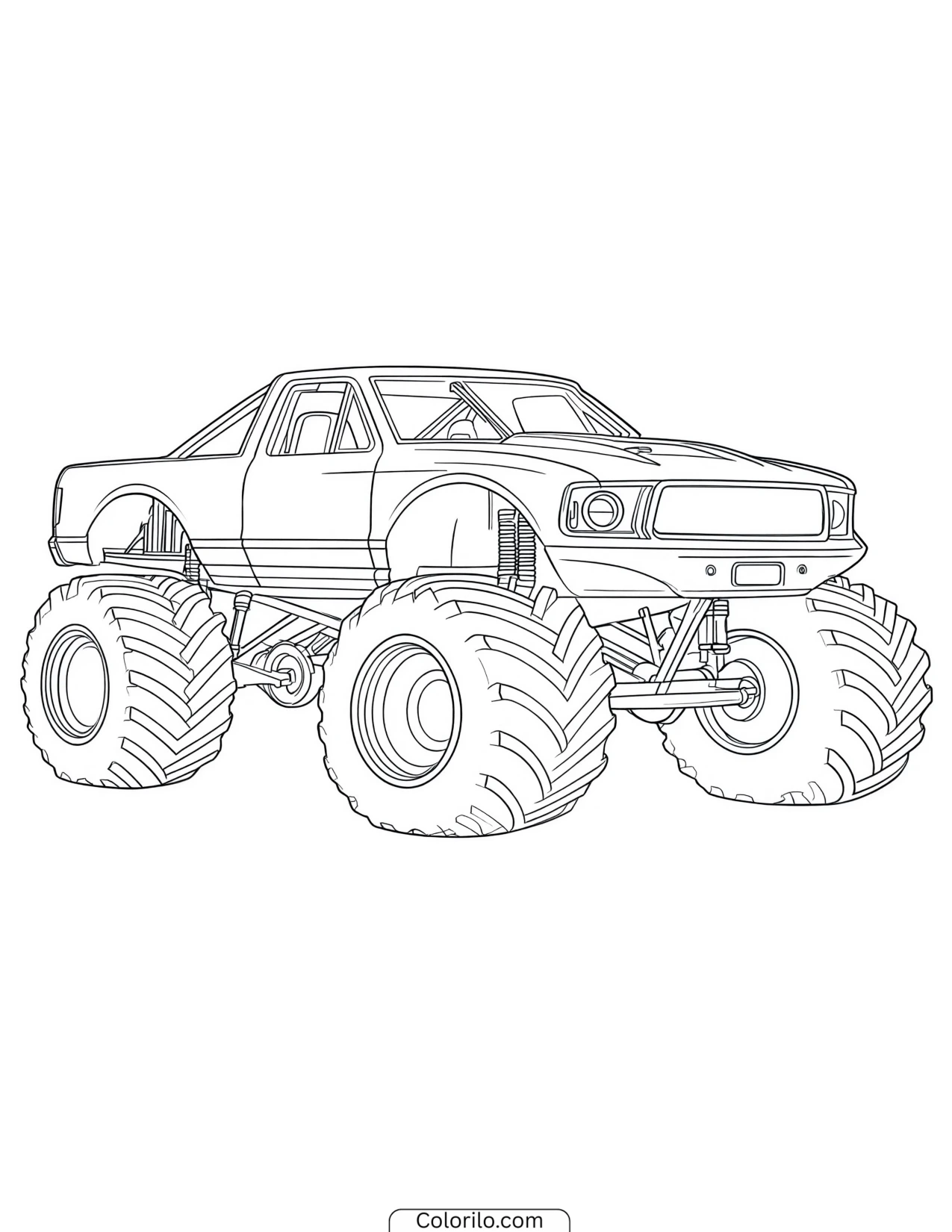
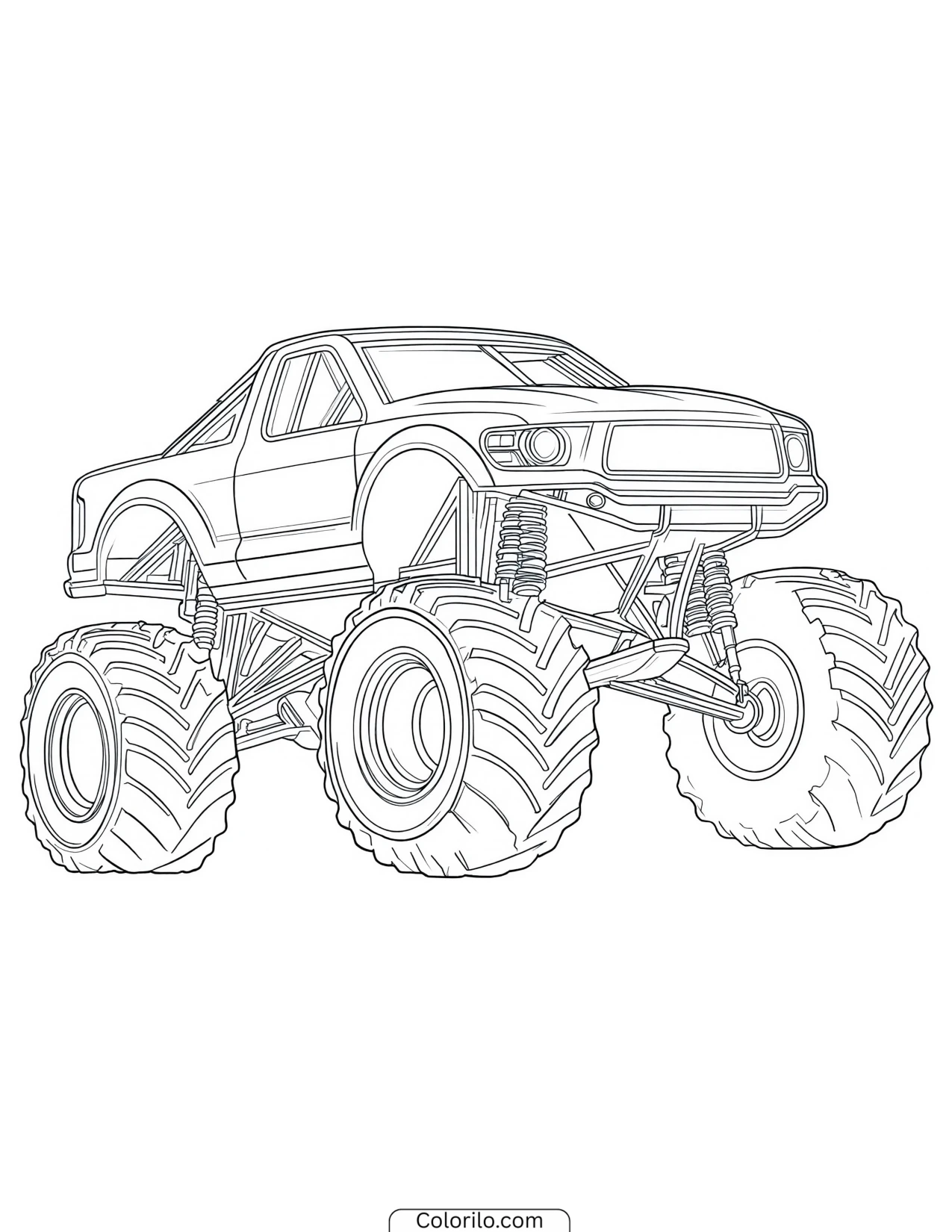
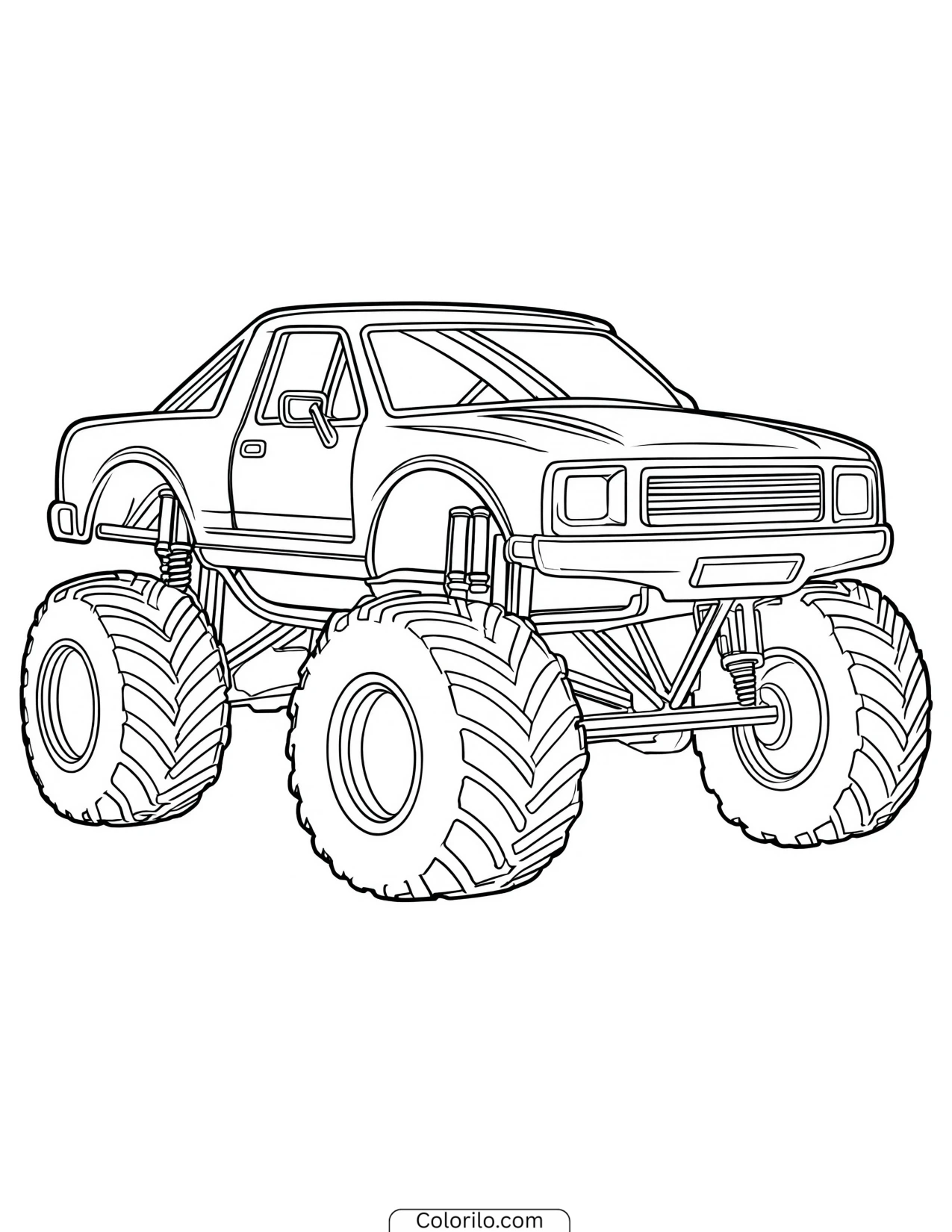
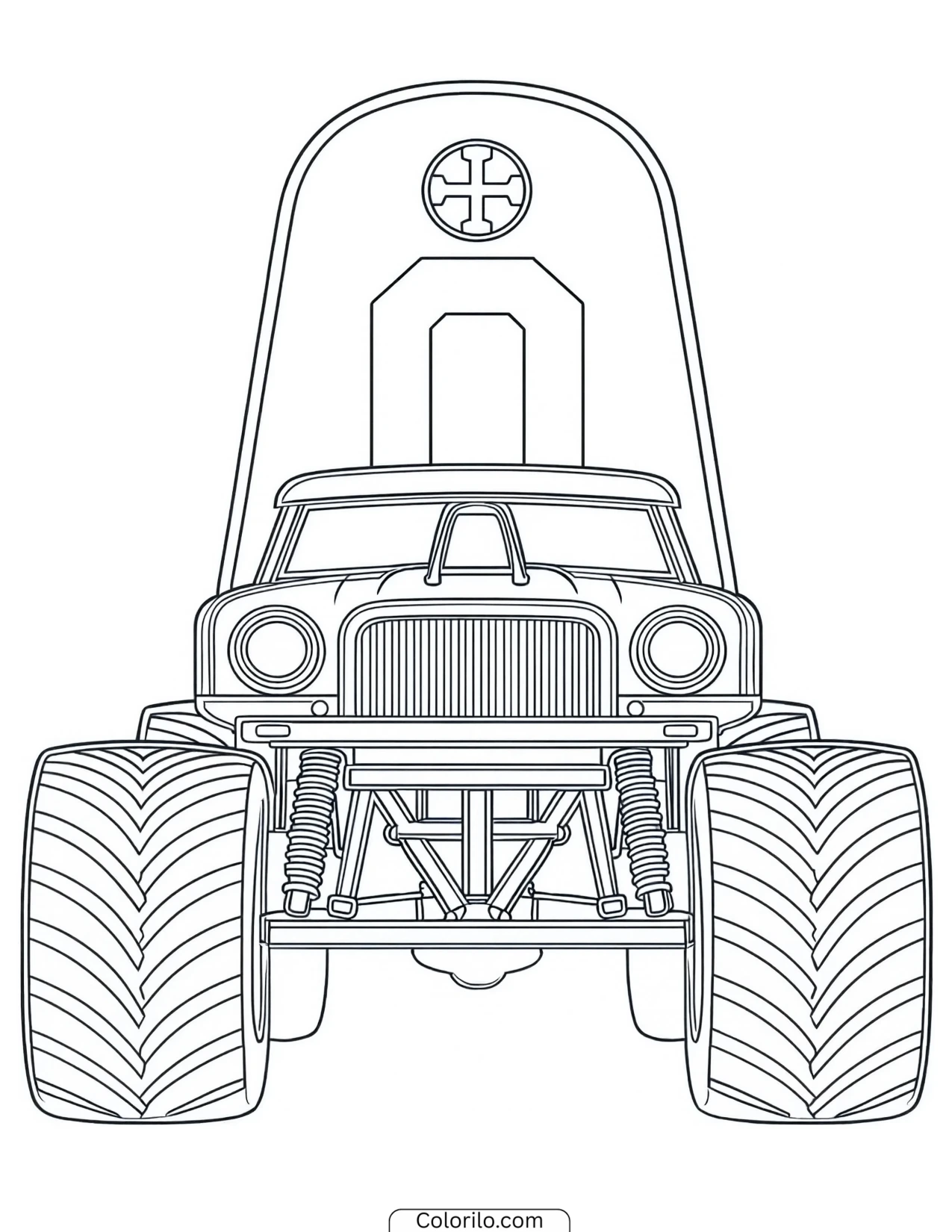
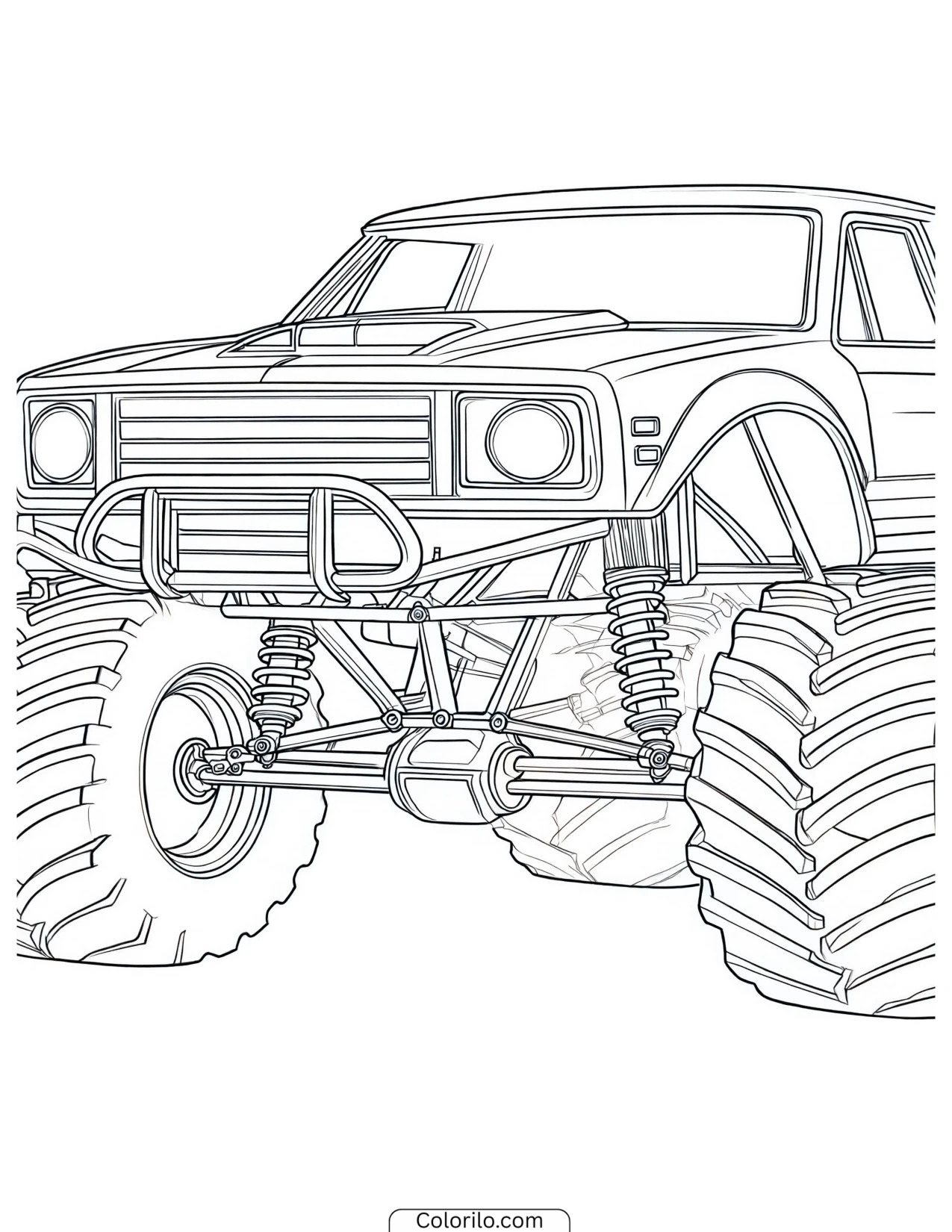
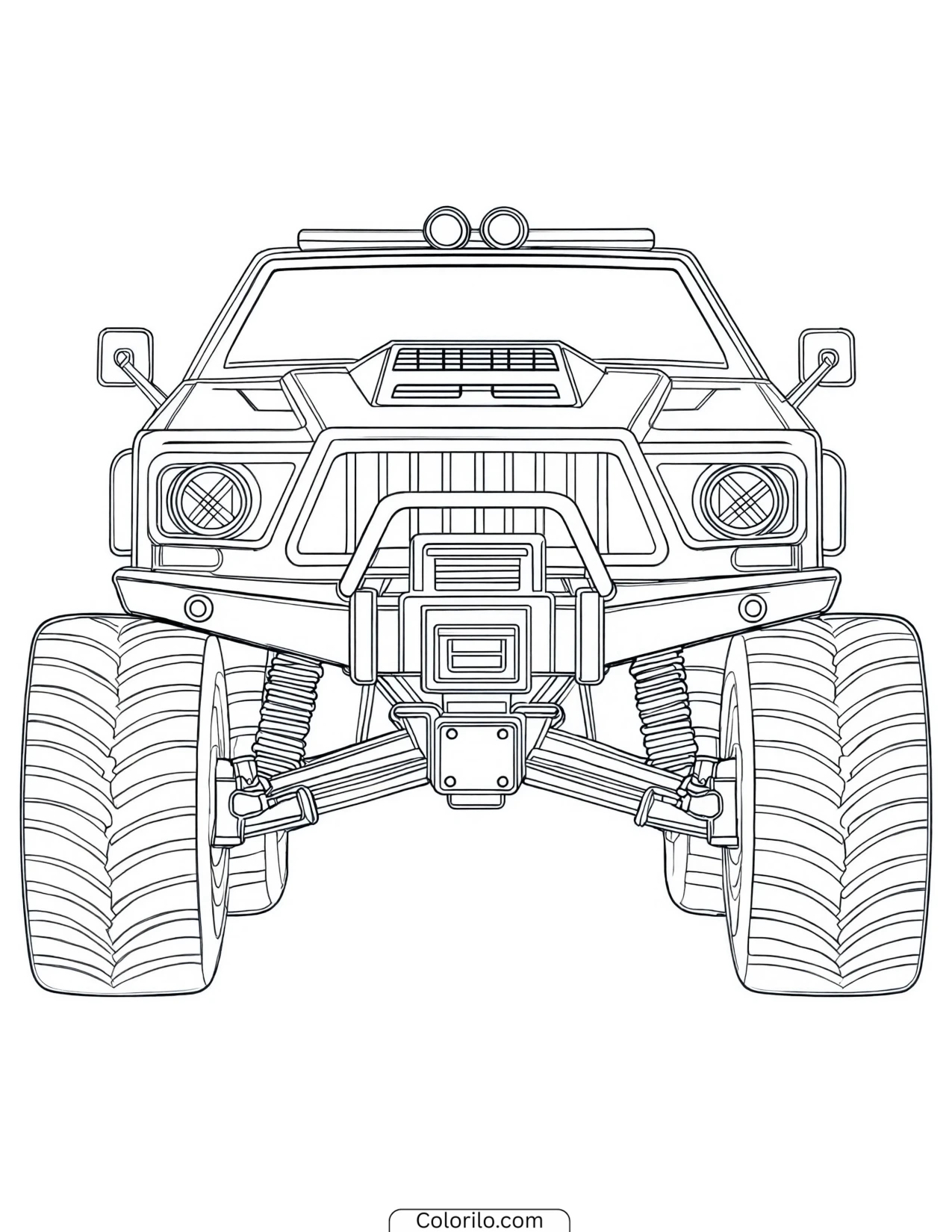
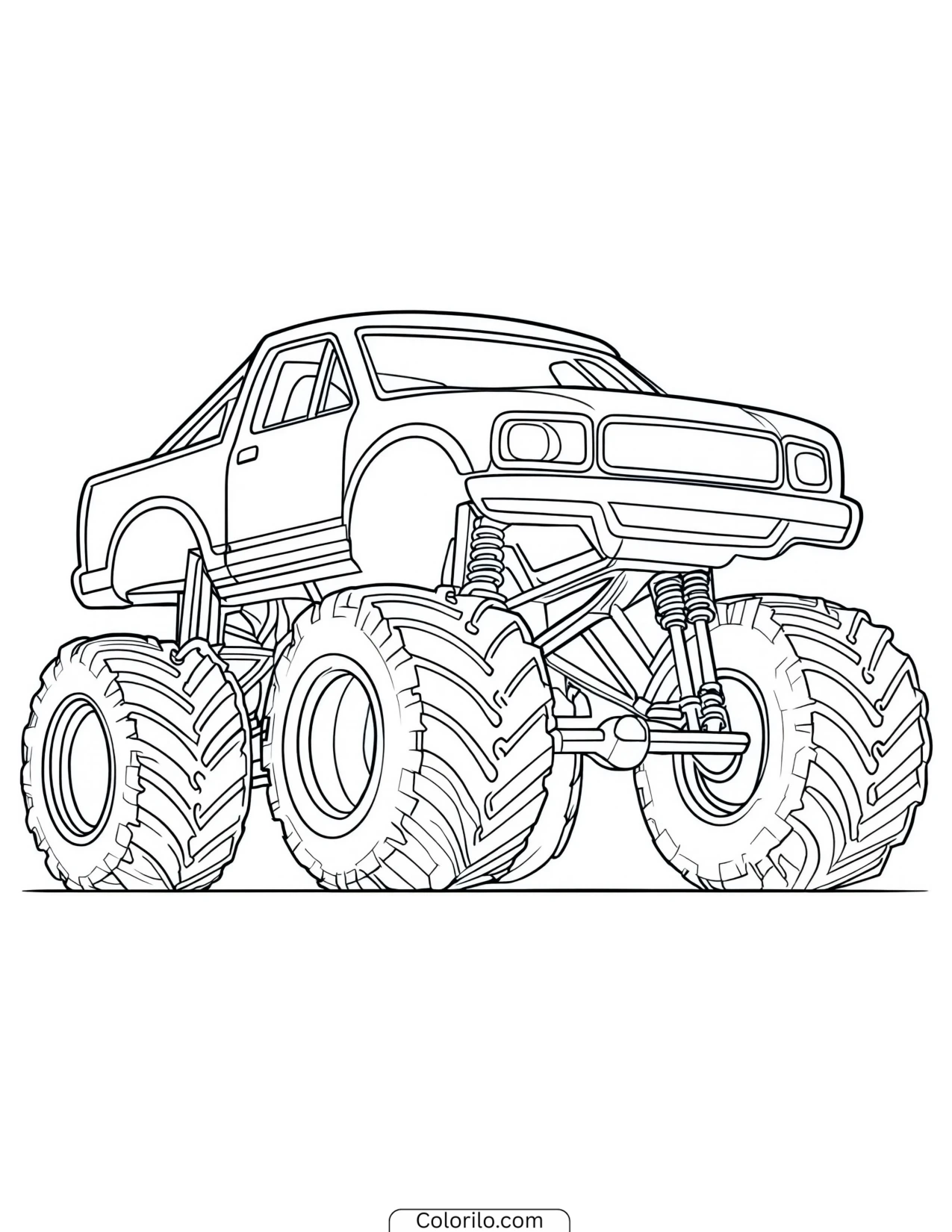
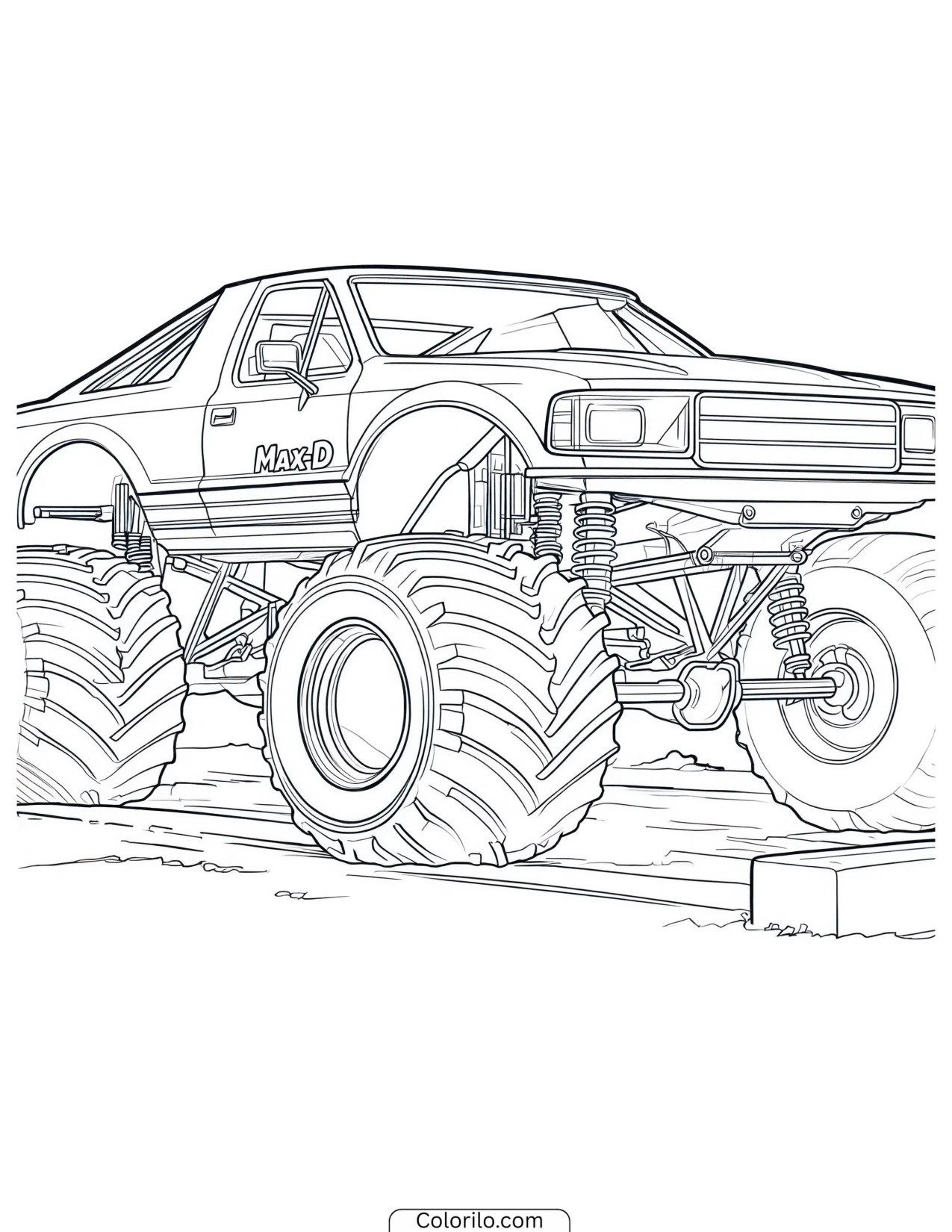
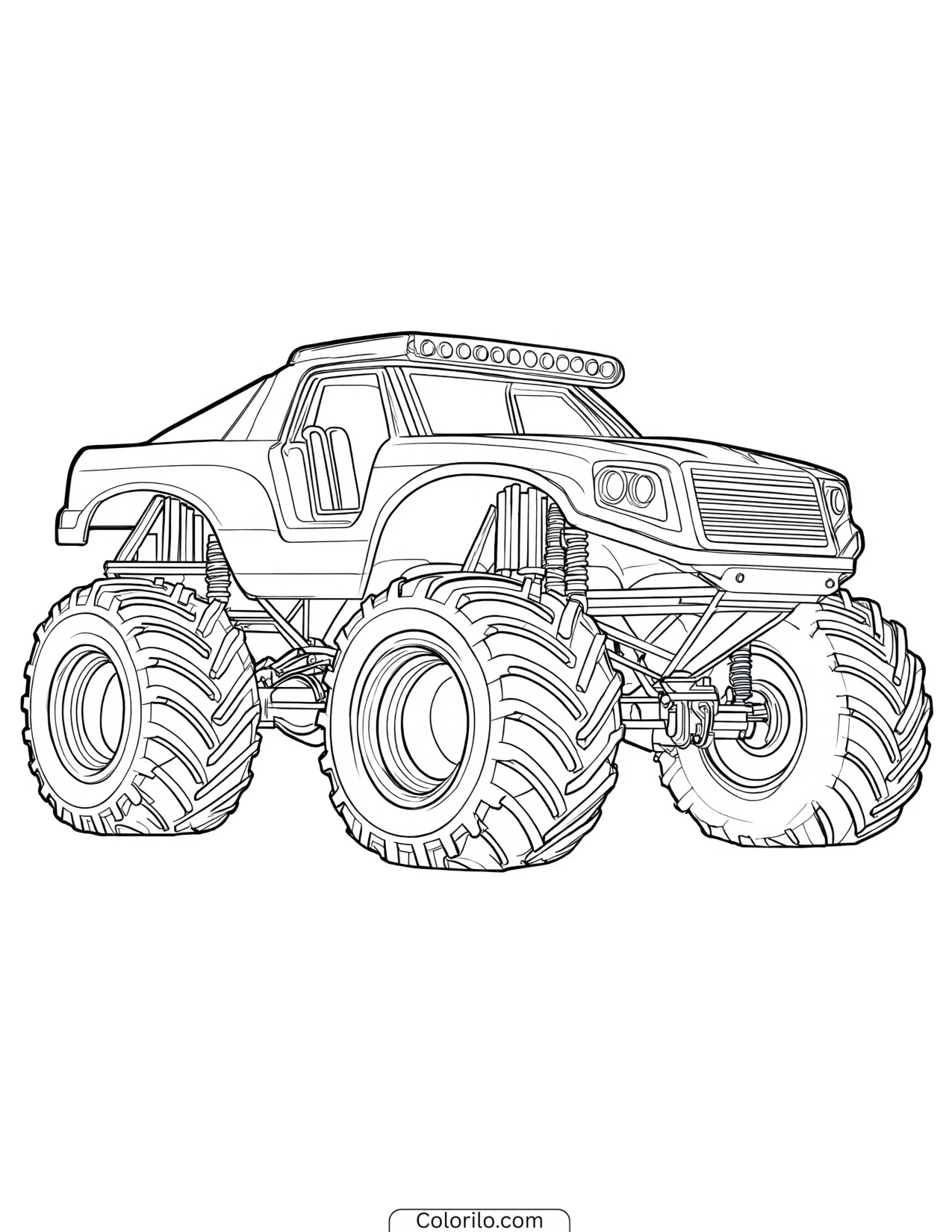
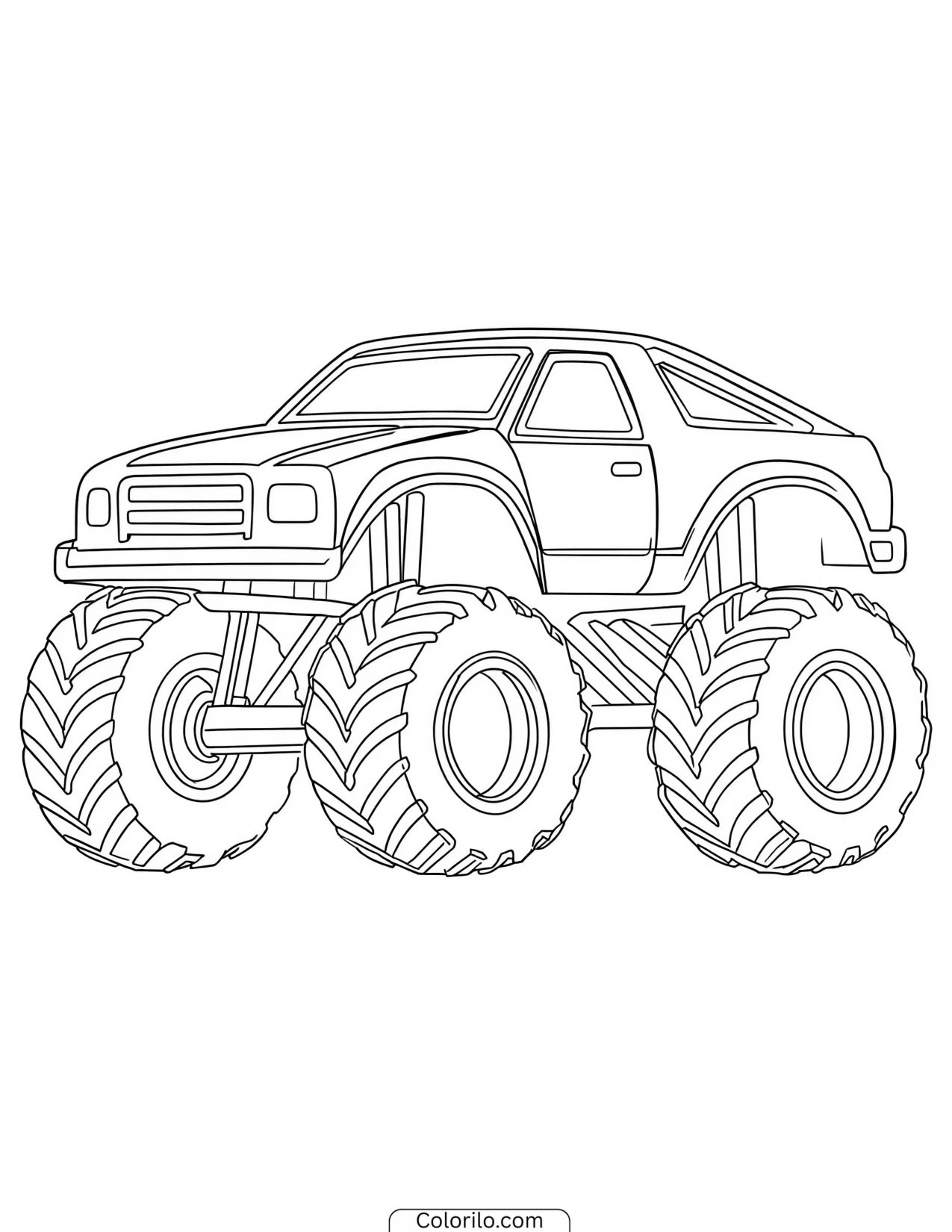
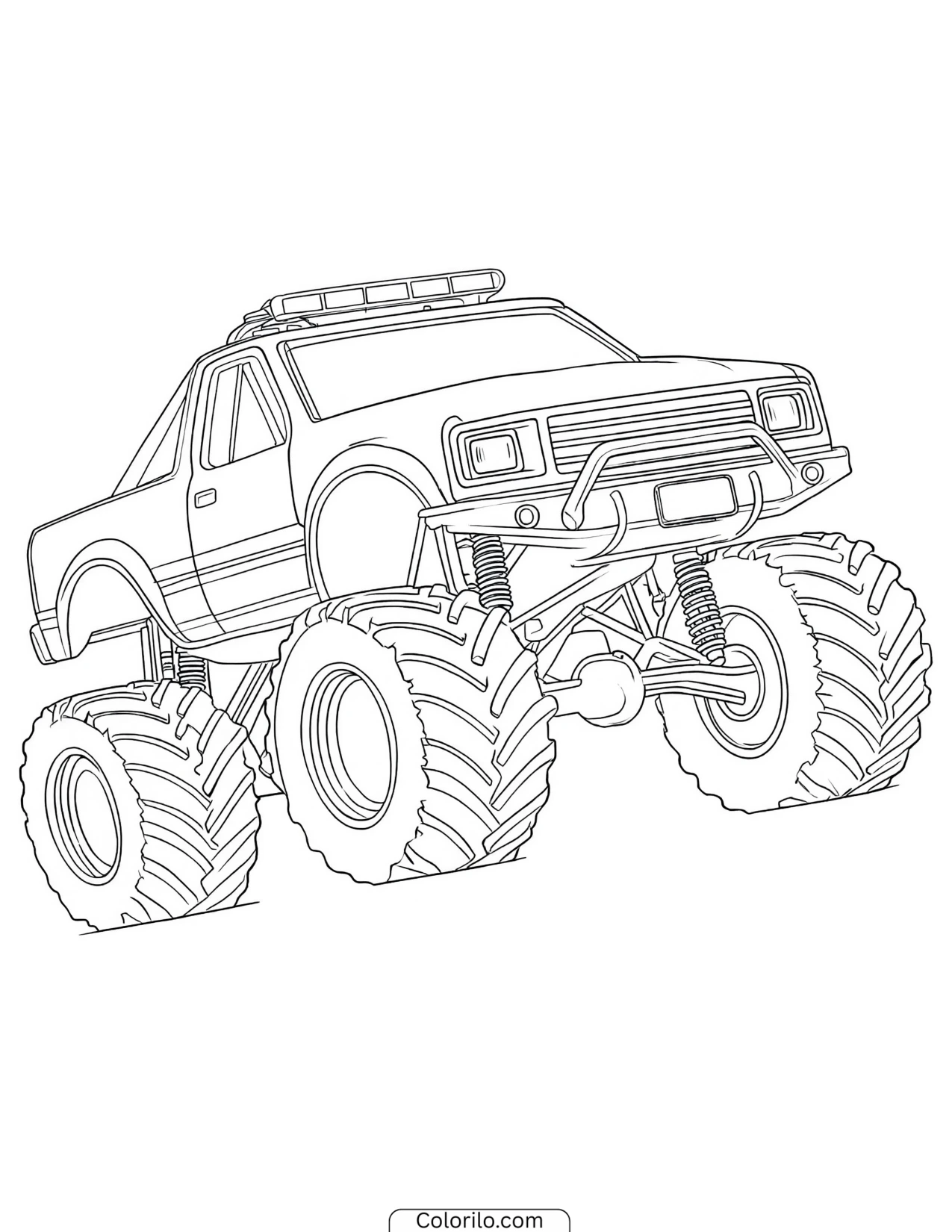
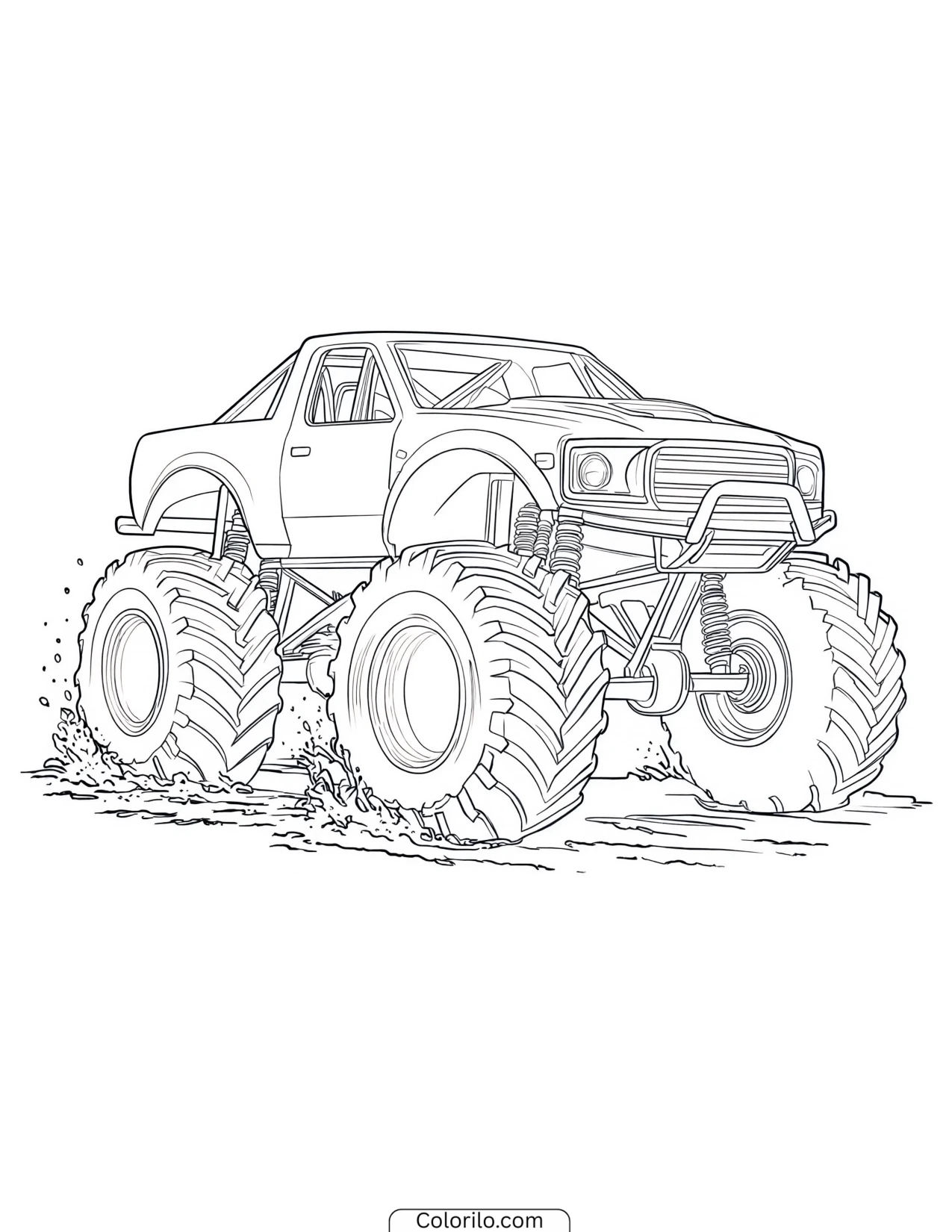
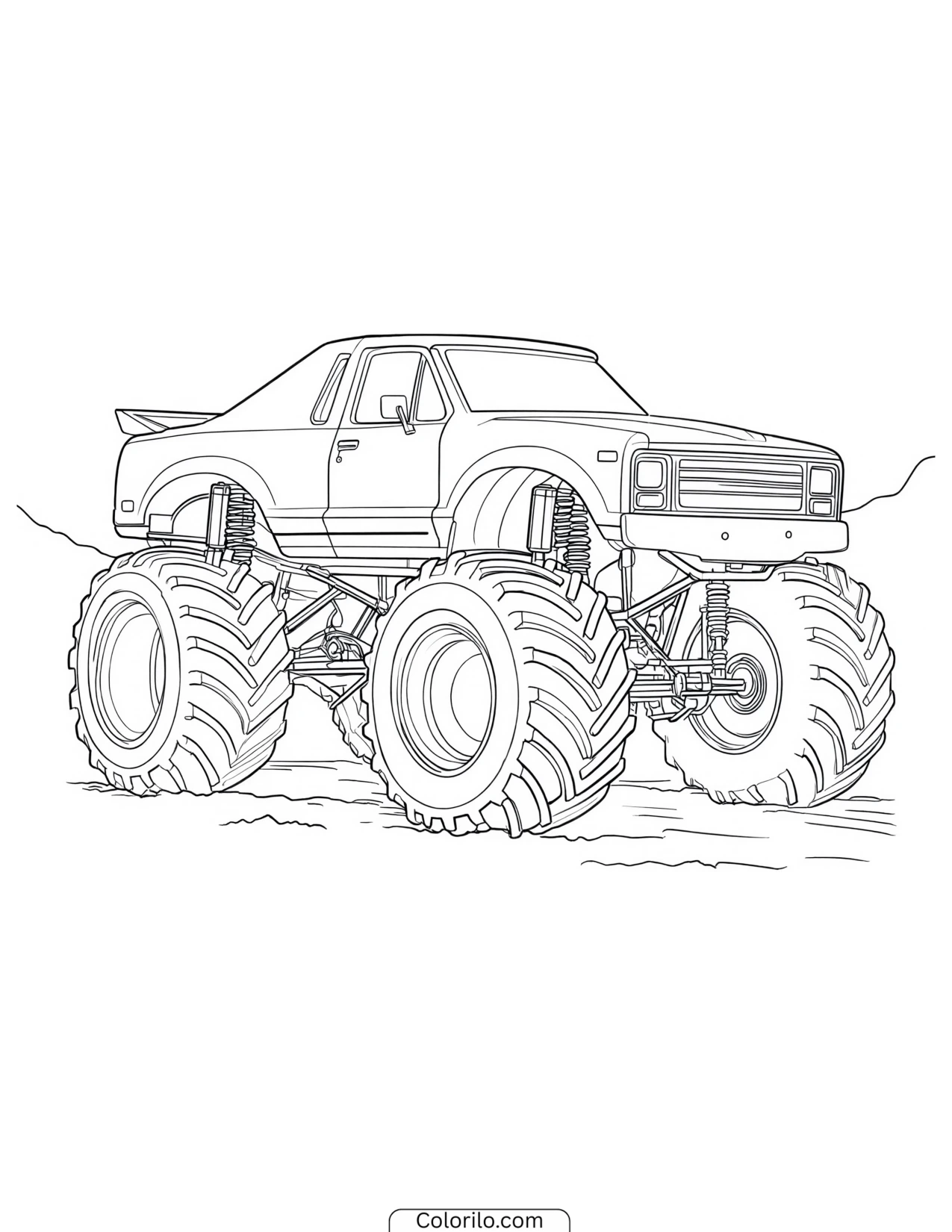
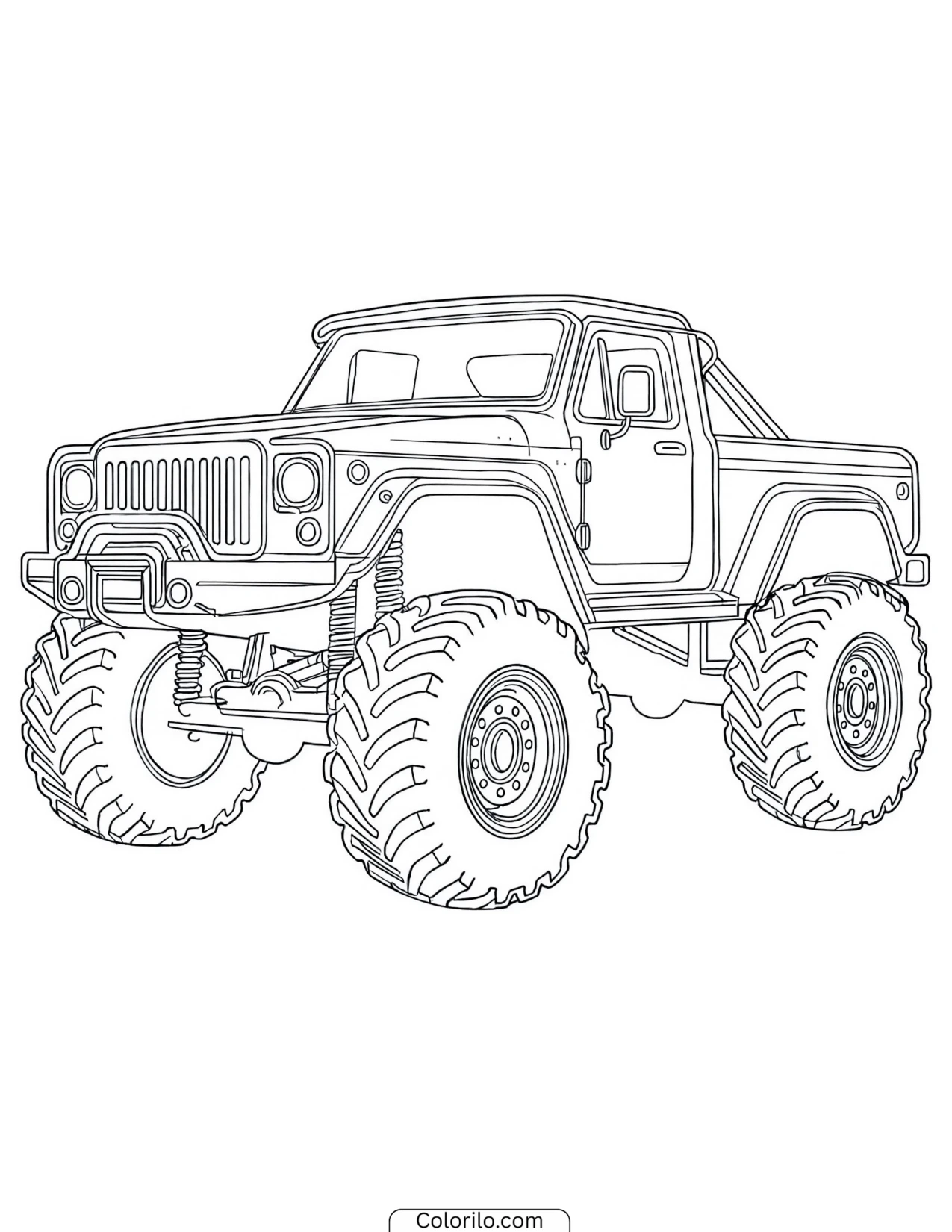
The rest are straight vehicle studies from different angles: front, head-on, three-quarter, low-angle. Those pages are all about the machinery, exposed engines, winch bumpers, roof light bars, lifted suspension, and they suit a child who wants the truck to look right rather than wild.
Line work is bold throughout, with large panels and big tyres. This is one of the more forgiving collections here for younger children, while the tread patterns and suspension detail give older ones something to work at.
Every one of these monster truck coloring pages is free, prints on standard US letter paper, and needs no sign-up. Click any design below to open the full-size PDF.
What’s in This Collection
Stunt pages
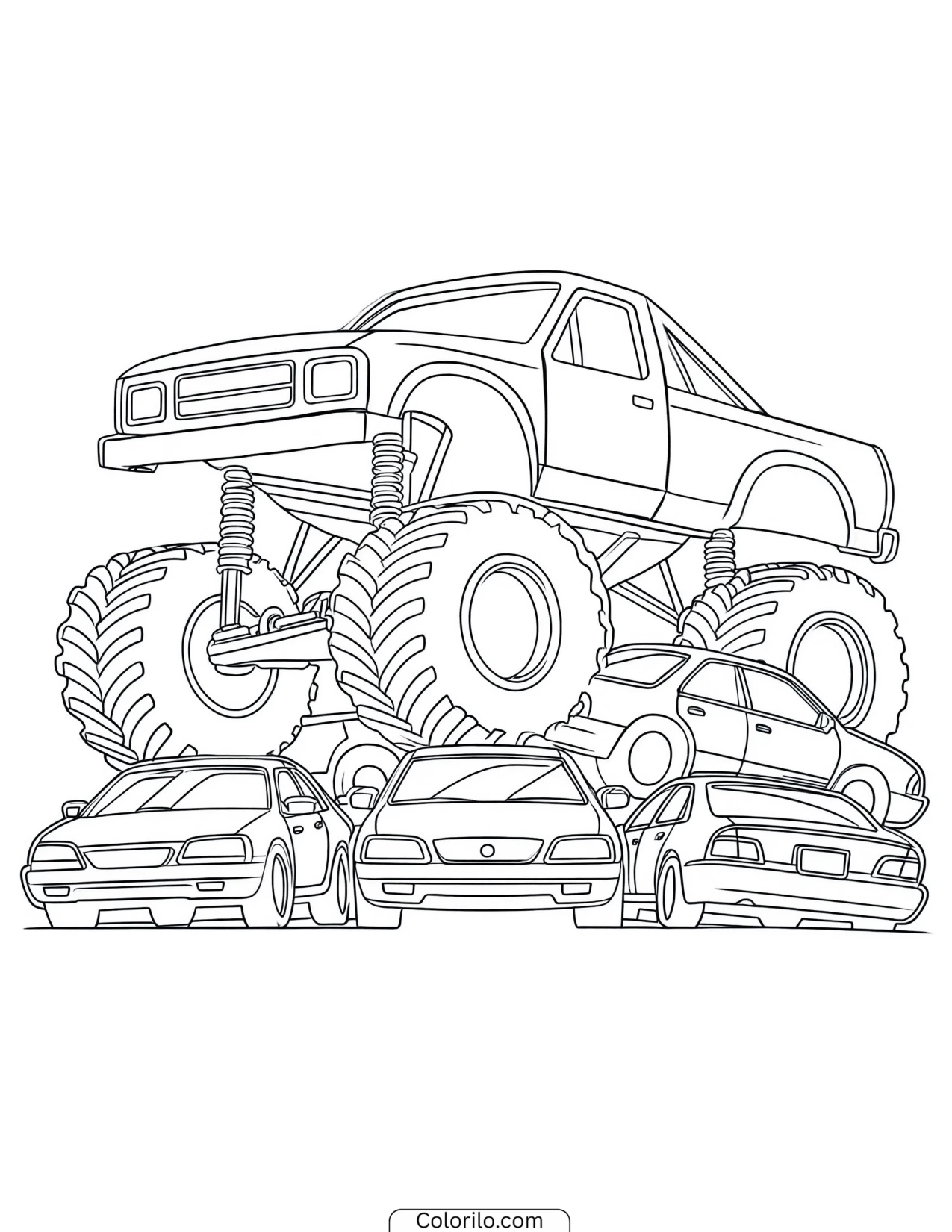
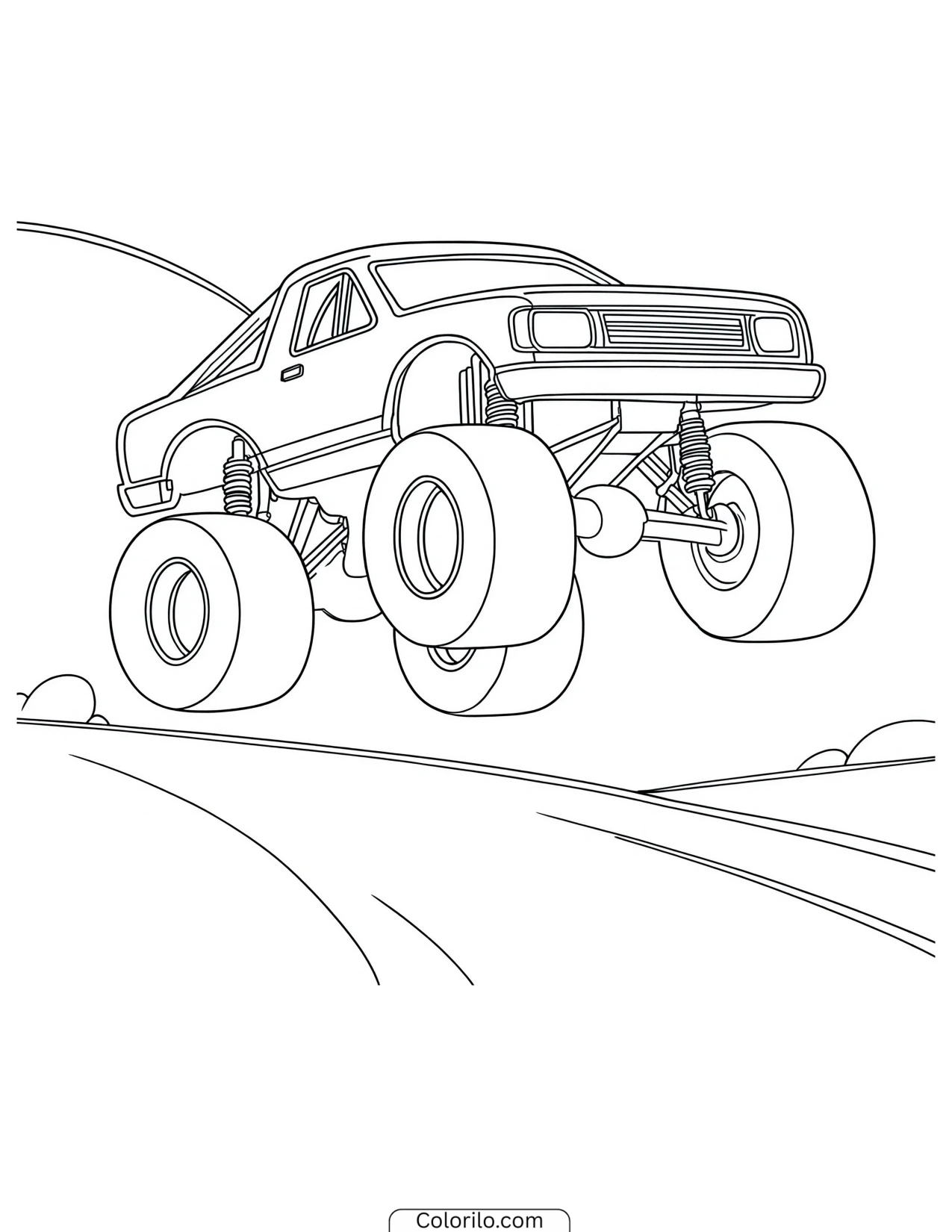
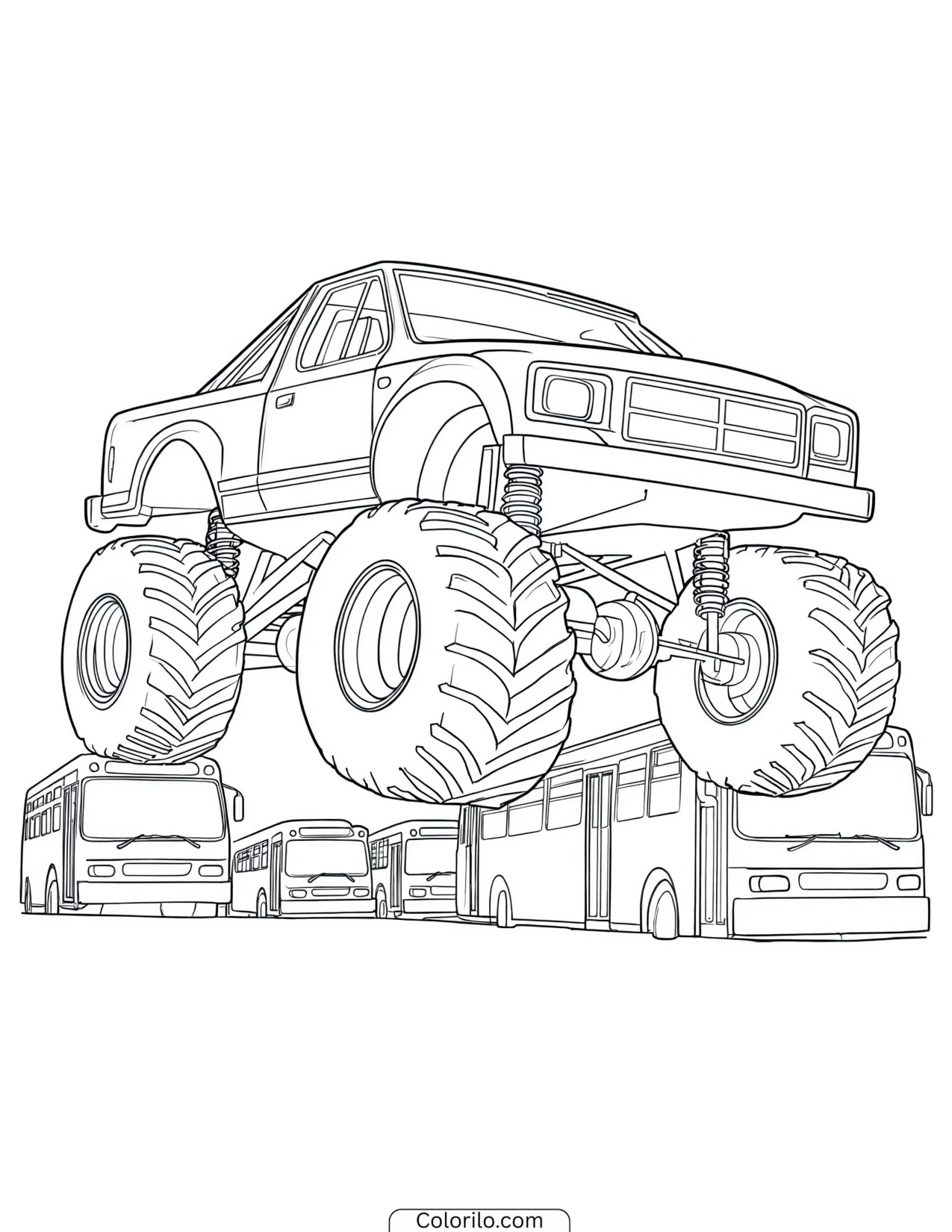
Around eight designs covering the moves the sport is built on. The car crush came first: Bob Chandler drove his modified Ford over two junked cars in a field in 1981, filmed it, and the footage turned a hobby into an industry. Bus jumps and freestyle wheelies followed.
Creature trucks
Nine designs. Bull, dragon, shark, T. rex, skull, pirate ship. Themed bodywork is central to the real sport, where trucks are built as characters rather than just vehicles, and the fibreglass shell is designed to be recognisable from the back row of a stadium.
Settings
Three designs place the truck somewhere specific: a stadium arena, desert terrain, and pine forest. Worth choosing when you want a page that takes longer than the vehicle alone.
Technical views
Six designs from various angles, showing exposed engines, winches, light bars and lifted suspension. Real competition trucks run tyres about 66 inches tall, weigh around 5,400 kilos, and produce roughly 1,500 horsepower from a supercharged methanol engine.
Cartoon trucks
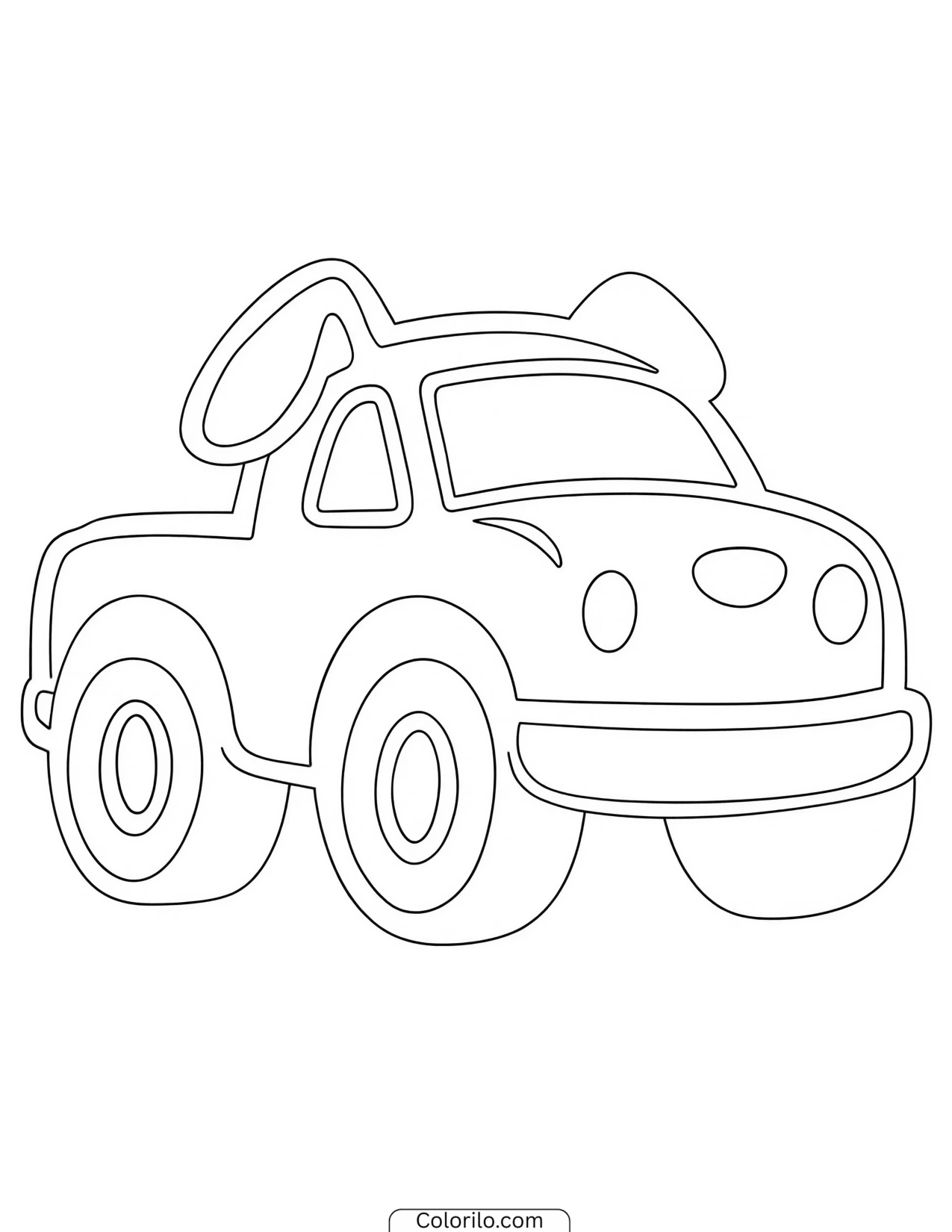
Two puppy-eared designs, plus a toy car. The simplest pages in the set by a distance.
Coloring Tips
Tyres are the whole silhouette. They’re the largest single shape on almost every page, and leaving them white makes the truck look unfinished. Black or dark grey with the tread pattern picked out slightly lighter is what makes them read as rubber.
Real trucks are loud on purpose. Competition liveries use high-contrast combinations, green and black, red and chrome, purple and silver, because they have to be legible from the far side of an arena. Muted colours look wrong here in a way they don’t on most subjects.
Flames and speed lines want to stay pale. The flame-trailing and accelerating pages both work better if the effect is left mostly white with colour only at the edges. Filling them solid flattens the motion.
Chrome is white with grey edges. The winches, light bars and exposed engines all read as metal if you leave the middle bright and shade only where the shape turns.
Use the backgrounds. The stadium, desert and pine forest pages give you somewhere to put contrast, which makes the truck itself stand out considerably more than a white page would.
Start young children on the puppy-eared trucks. Those have the largest open shapes. Save the engine and suspension detail for older colorists.
Frequently Asked Questions
Are these monster truck coloring pages really free?
Yes, all 39 are free to download and print. Click any design to open the PDF. No account, no email, no payment.
What age are these suitable for?
This set works well from around four. The cartoon and puppy-eared trucks are the simplest, the stunt and creature pages suit most primary-age children, and the technical views with exposed engines and suspension detail hold older kids and adults.
Are these official Monster Jam designs?
No, these are original fan-made designs inspired by the sport’s style, and are not produced, licensed, or endorsed by Monster Jam, Feld Entertainment, or any team. Free for personal and classroom use, not for resale.
Can I use these for a party?
Yes, for personal use. They work well as a birthday party activity, and the bolder designs hold up when printed for a group.
Can I print more than one copy?
As many as you need.
How big is a real monster truck?
Roughly 3.5 metres tall and 3.7 wide, weighing about 5,400 kilos, most of it in the tyres, which stand around 66 inches high and cost thousands each. Engines are supercharged and run on methanol, producing something near 1,500 horsepower. A truck burns a couple of gallons of fuel in a single freestyle run of about two minutes.
Where did monster trucks come from?
From one man modifying a pickup. Bob Chandler began building up his Ford F-250 in Missouri in the mid-1970s, named it Bigfoot, and in 1981 drove it over two scrapped cars in a field mainly to see what would happen. Footage of the crush circulated, promoters took an interest, and by the mid-1980s car-crushing was a stadium event. Bigfoot is still running, in many later versions.

Leave a Reply