
Table of Contents
Mushrooms sit in an odd category for coloring. They’re not plants, they belong to a kingdom closer to animals than to trees, and the part you can see is only the fruiting body of something much larger living underground. That mix of the ordinary and the strange is why mushroom coloring pages appeal to both a child drawing a red toadstool and an adult who wants an hour with a botanical subject.
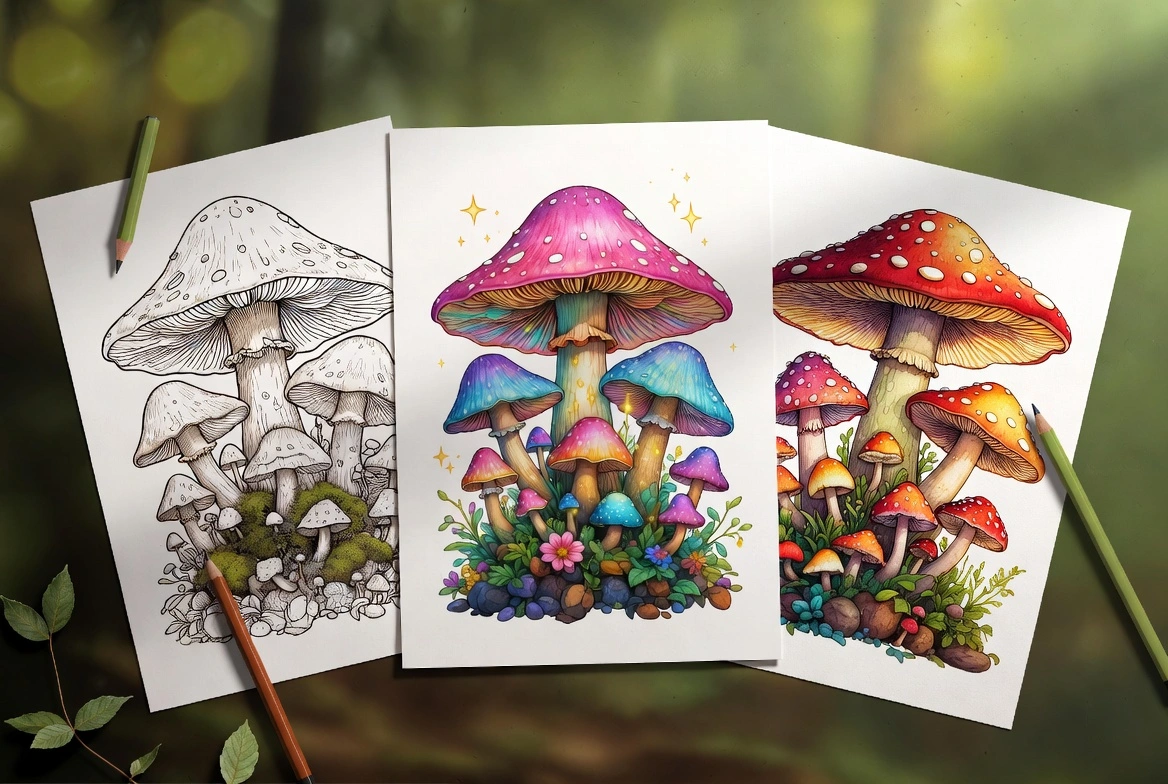
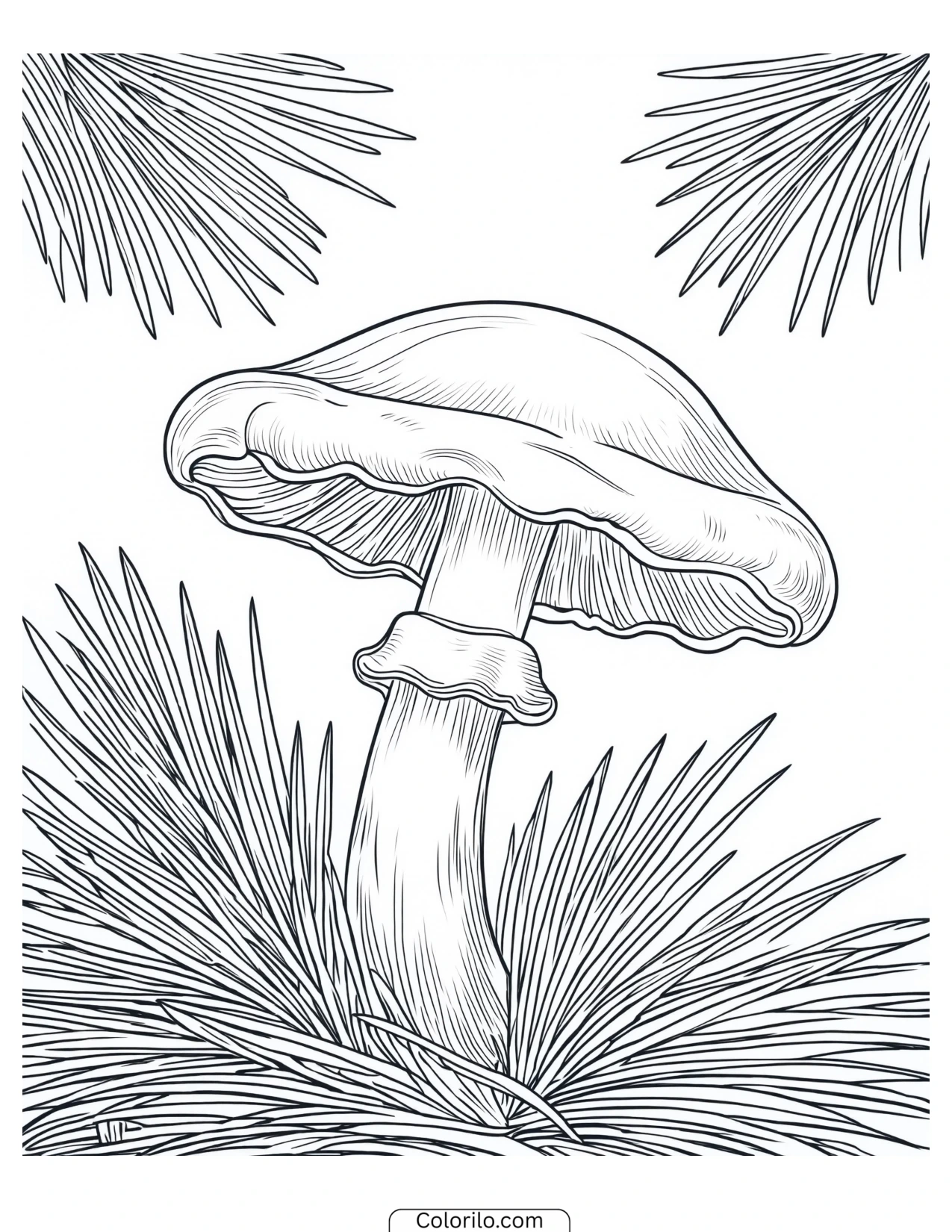
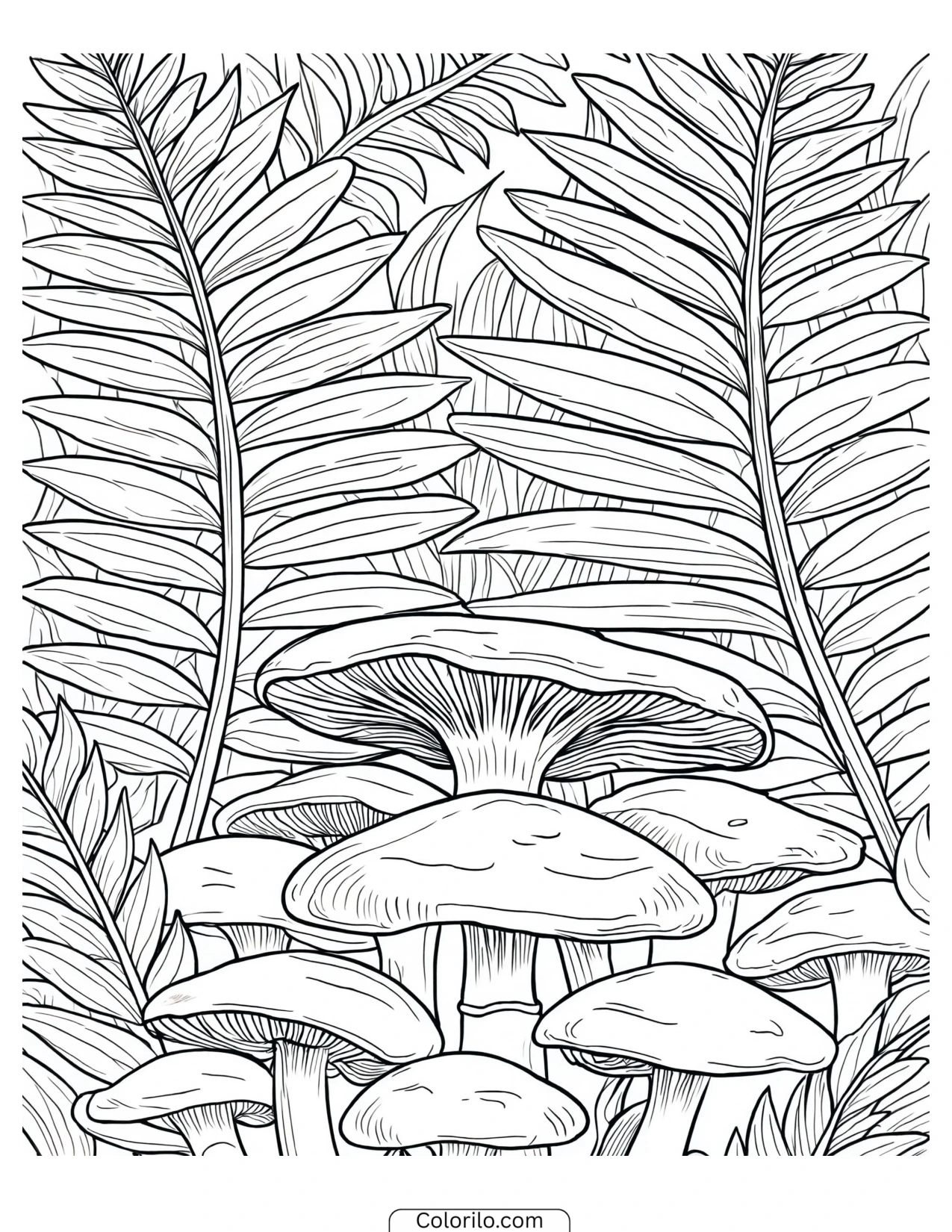
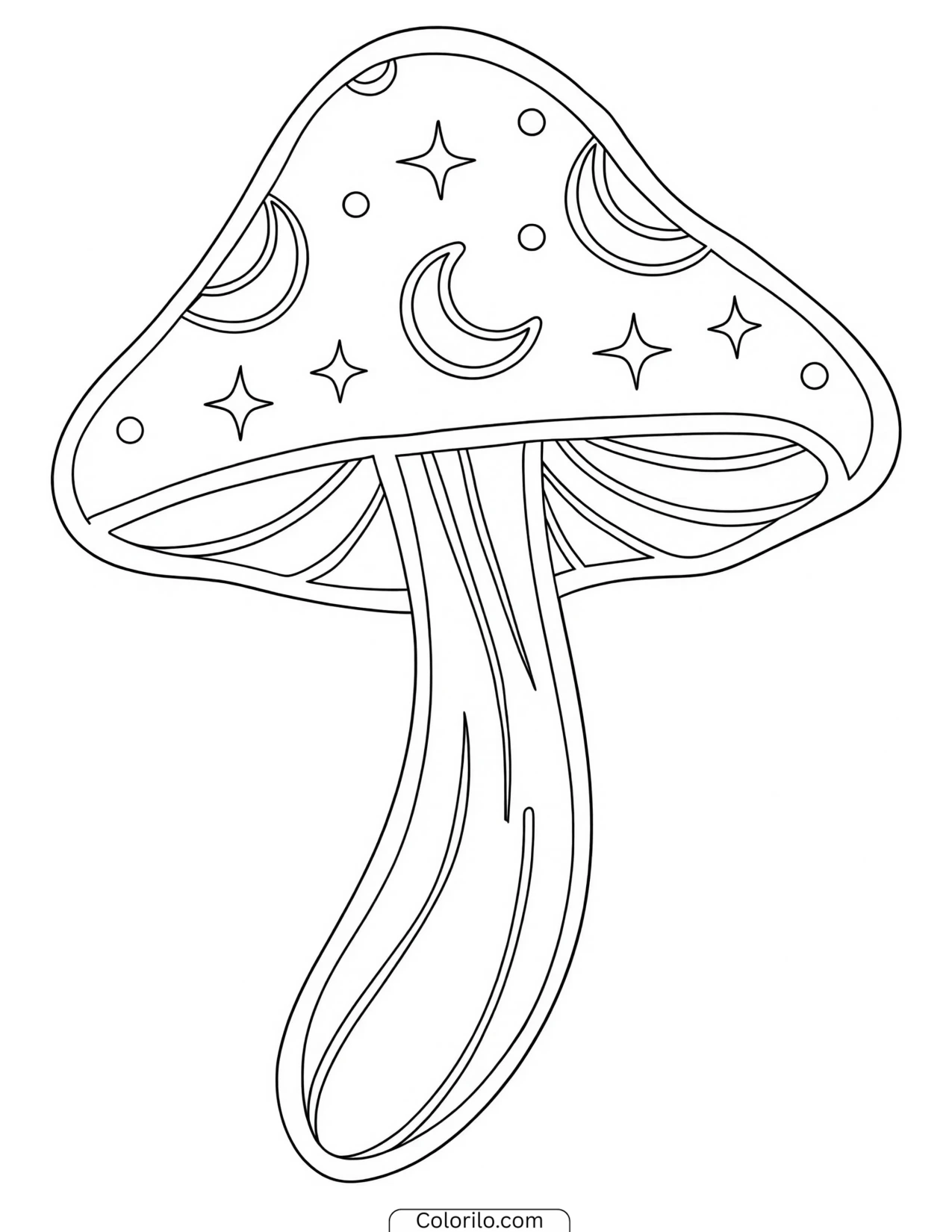
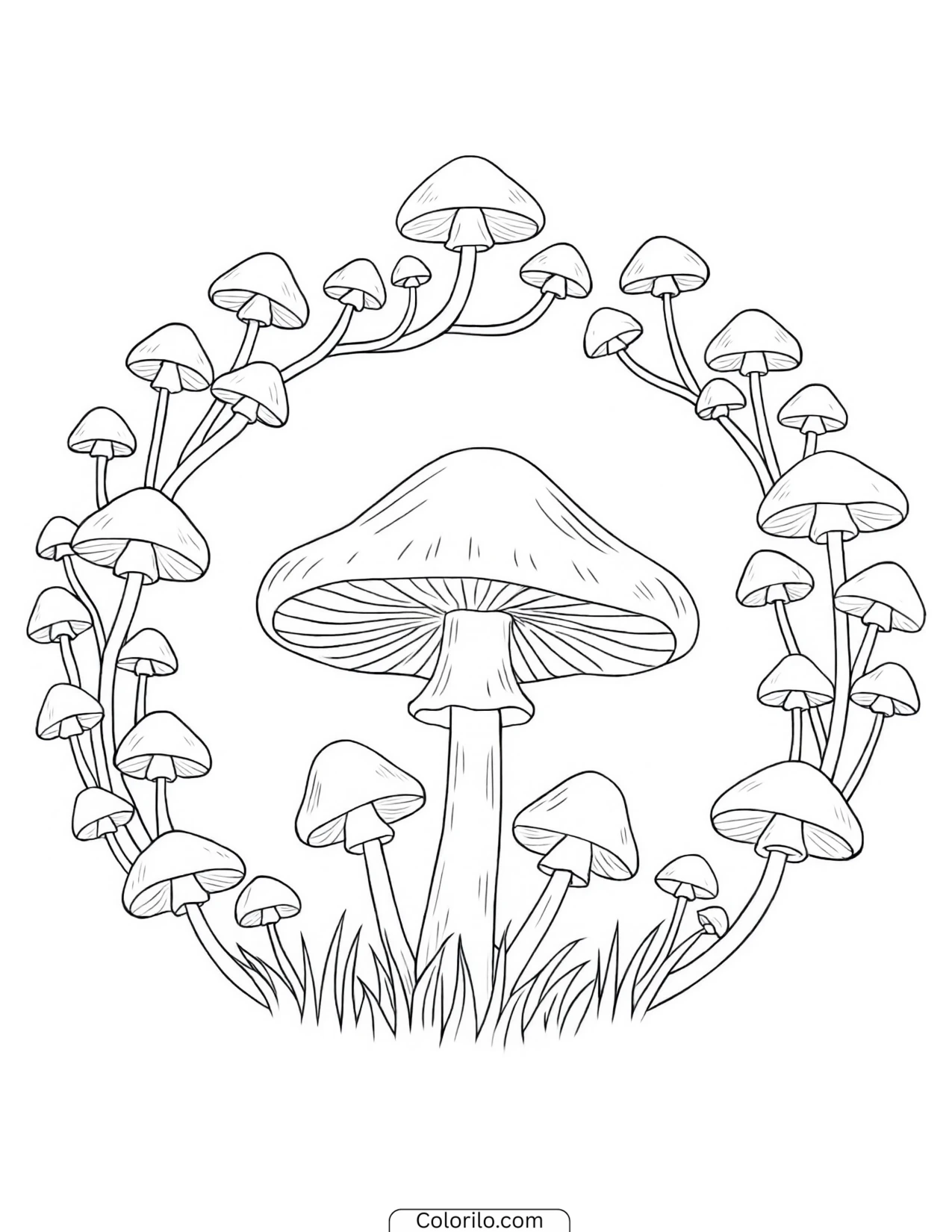
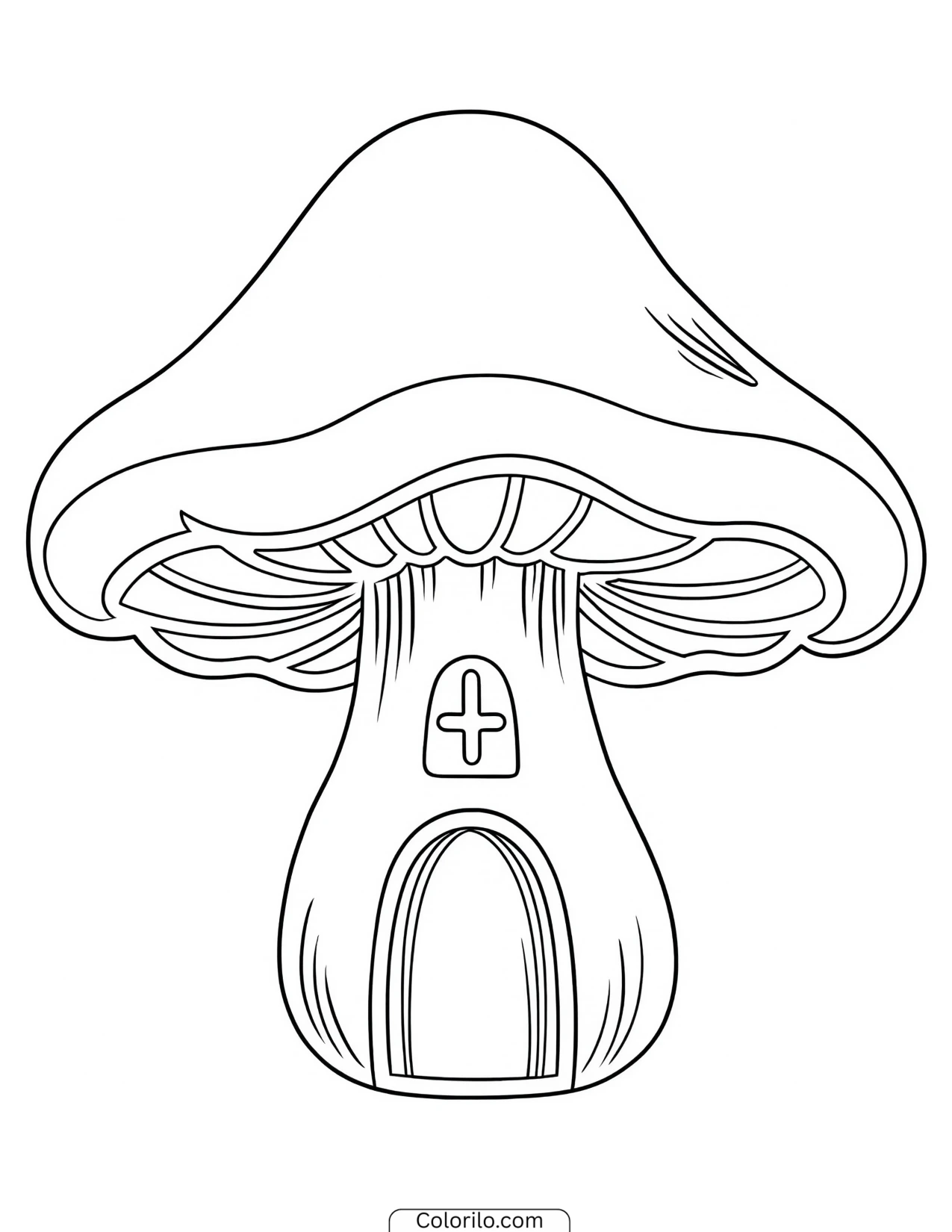
This collection has 72 free designs. The scenes are where it’s strongest: mushrooms growing along fallen logs and up standing trunks, pushing through pine needles, clustered on a stump, ringed among ferns, and one ring laid out as a proper fairy ring. There’s a mushroom with autumn leaves falling around it, one surrounded by butterflies, another set among moons and stars, a mushroom wreath, and a small house built inside a mushroom cap.
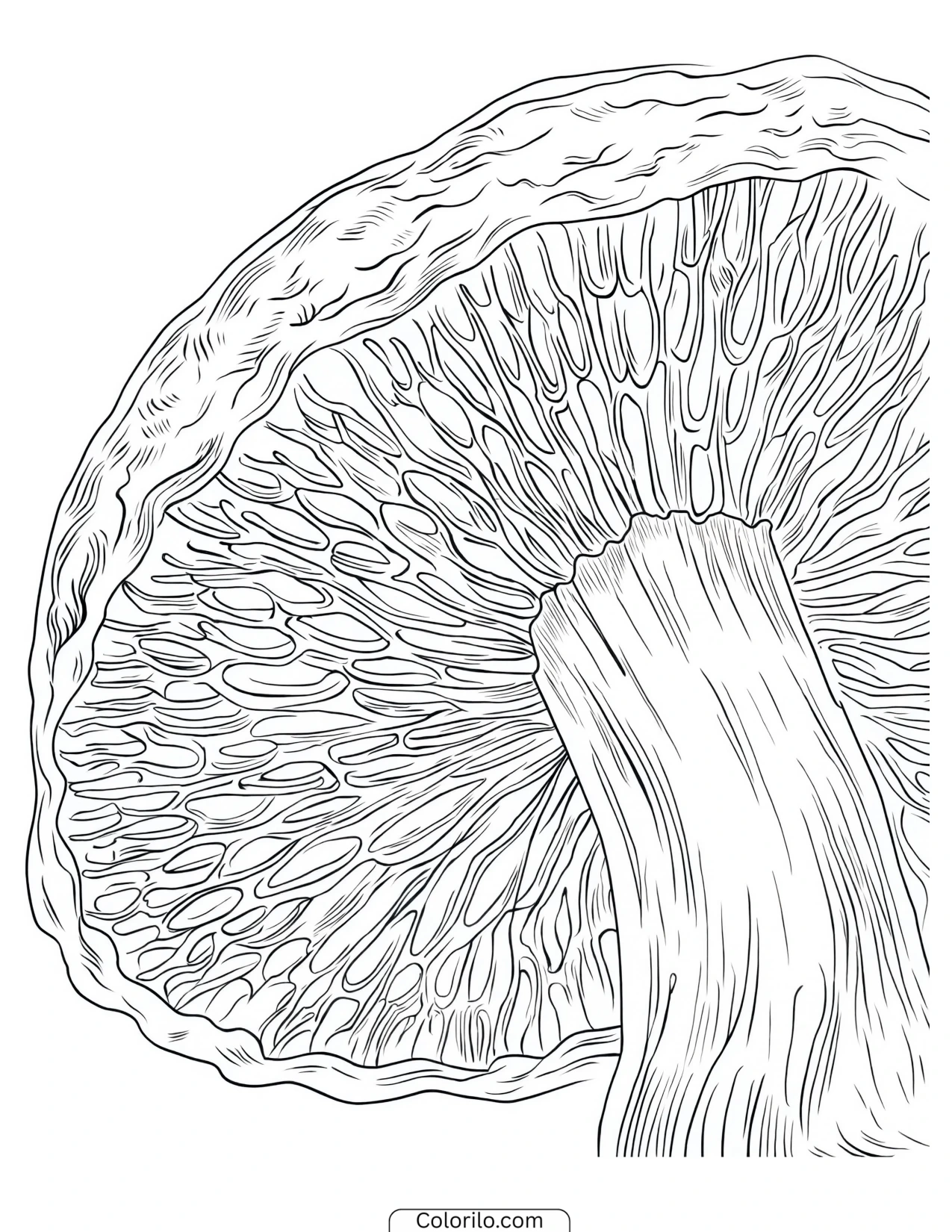
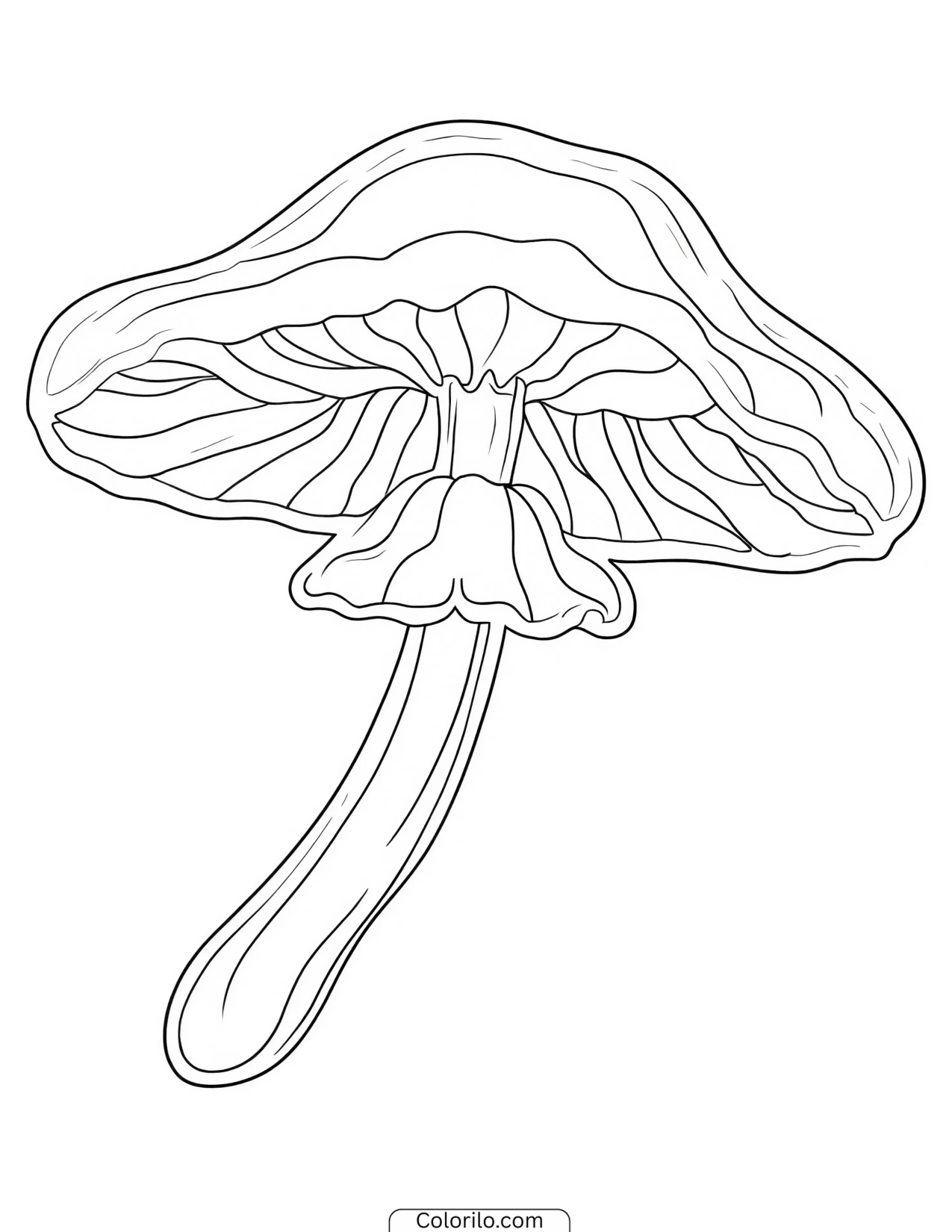
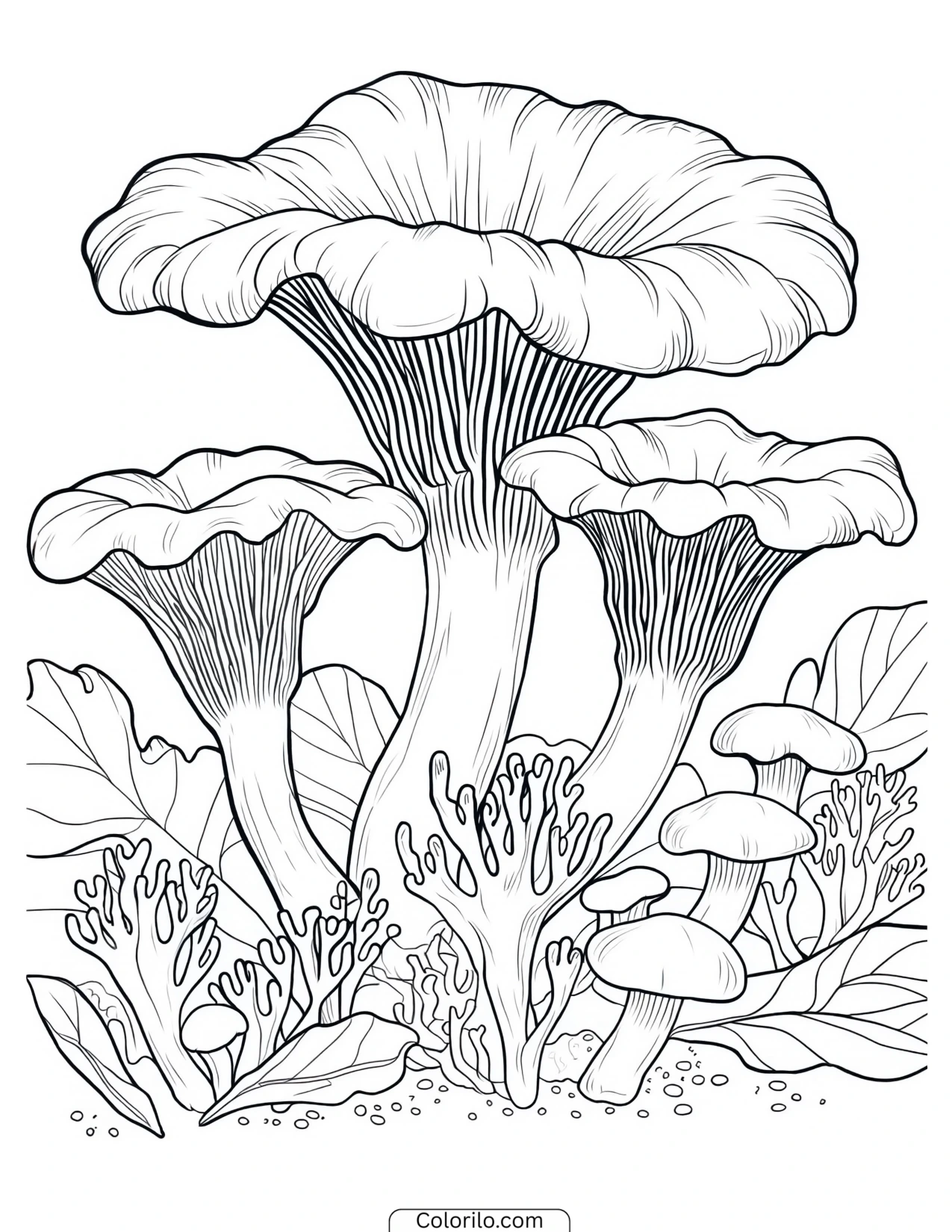
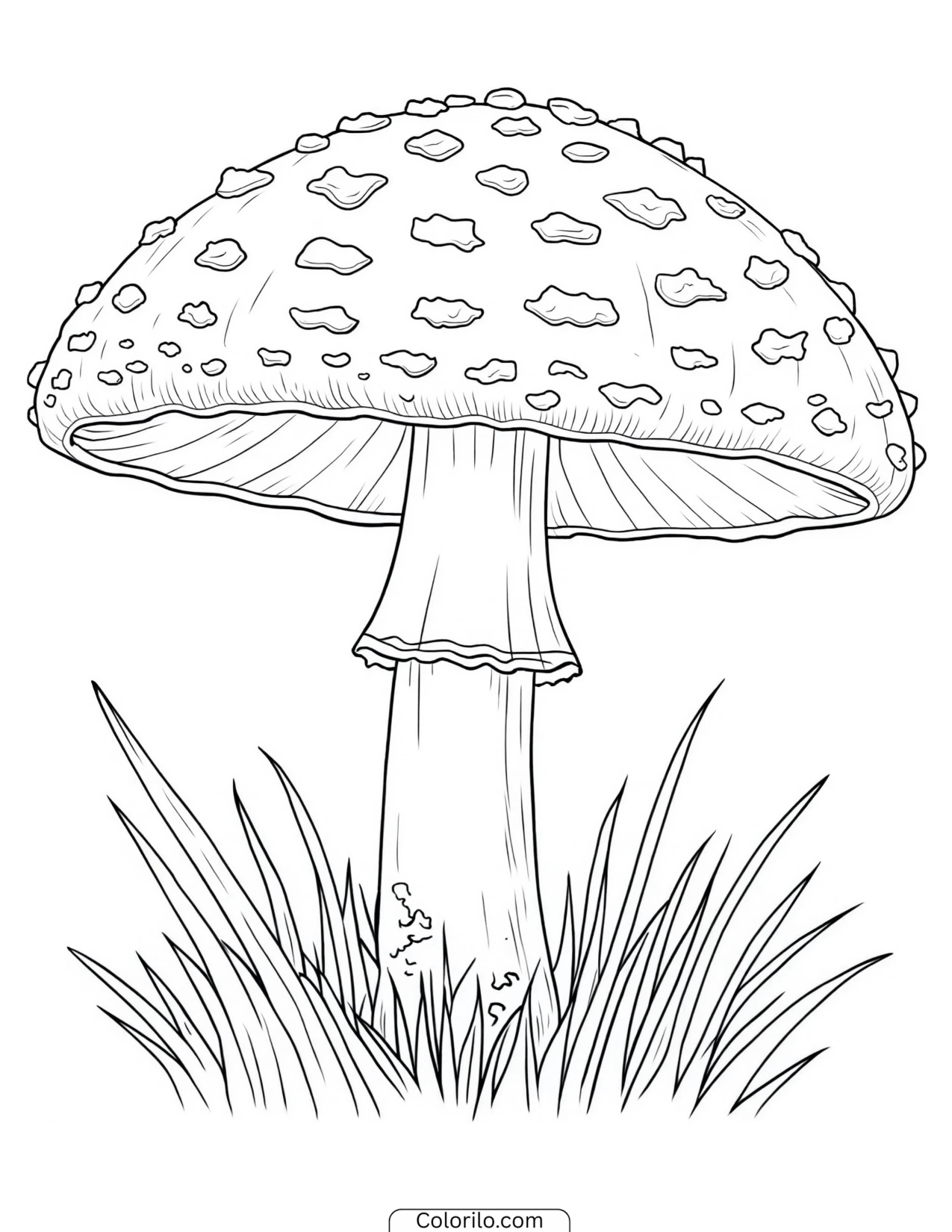
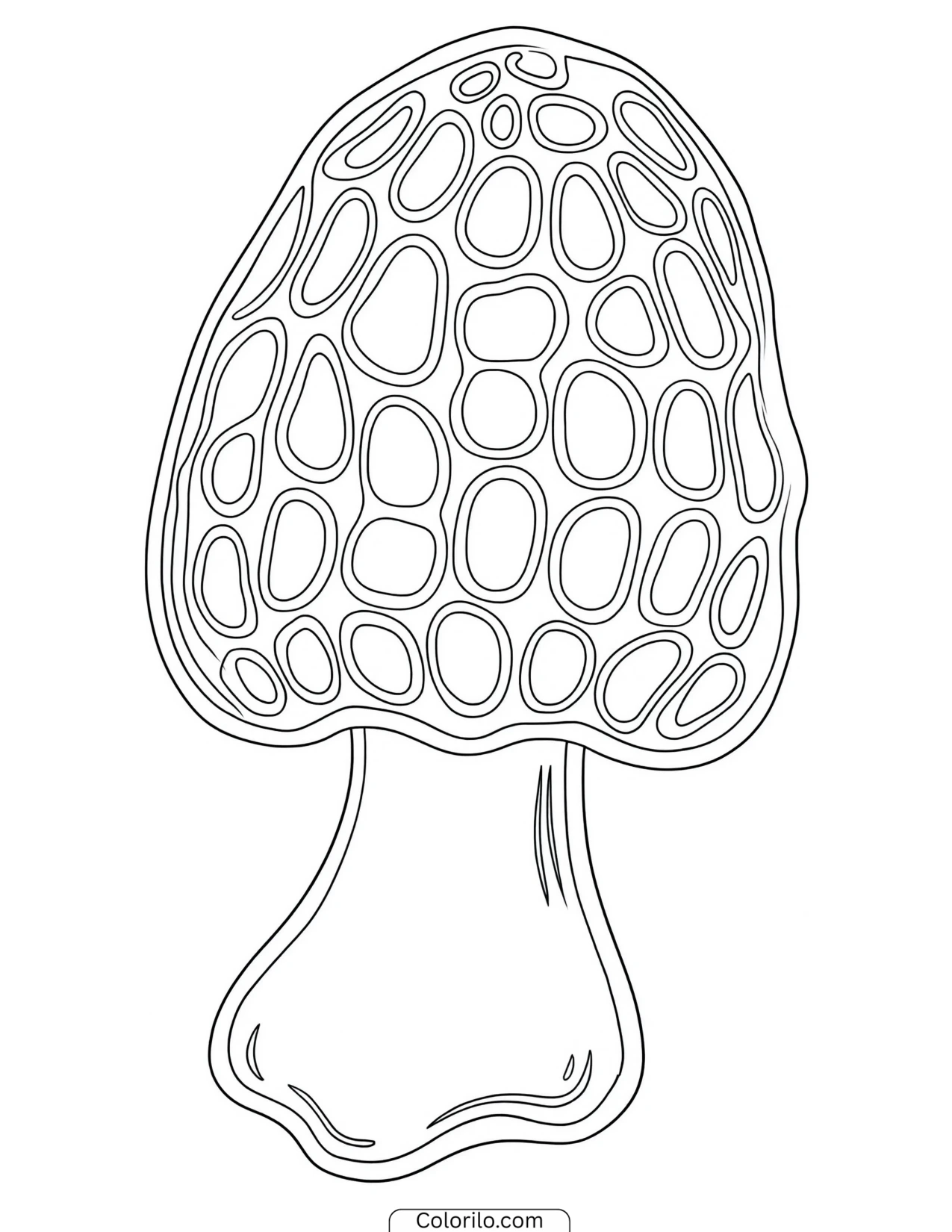
Several designs name a real species. Four morels, with their distinctive honeycombed caps. A chanterelle with its funnel shape and false gills. A cluster of long-stemmed enoki. A spotted amanita. Bracket and shelf fungi growing in tiers off wood, and a branching coral fungus that looks more like something from a reef than a forest. Two pages show anatomy directly, a close-up of gills, and the underside of a cap.
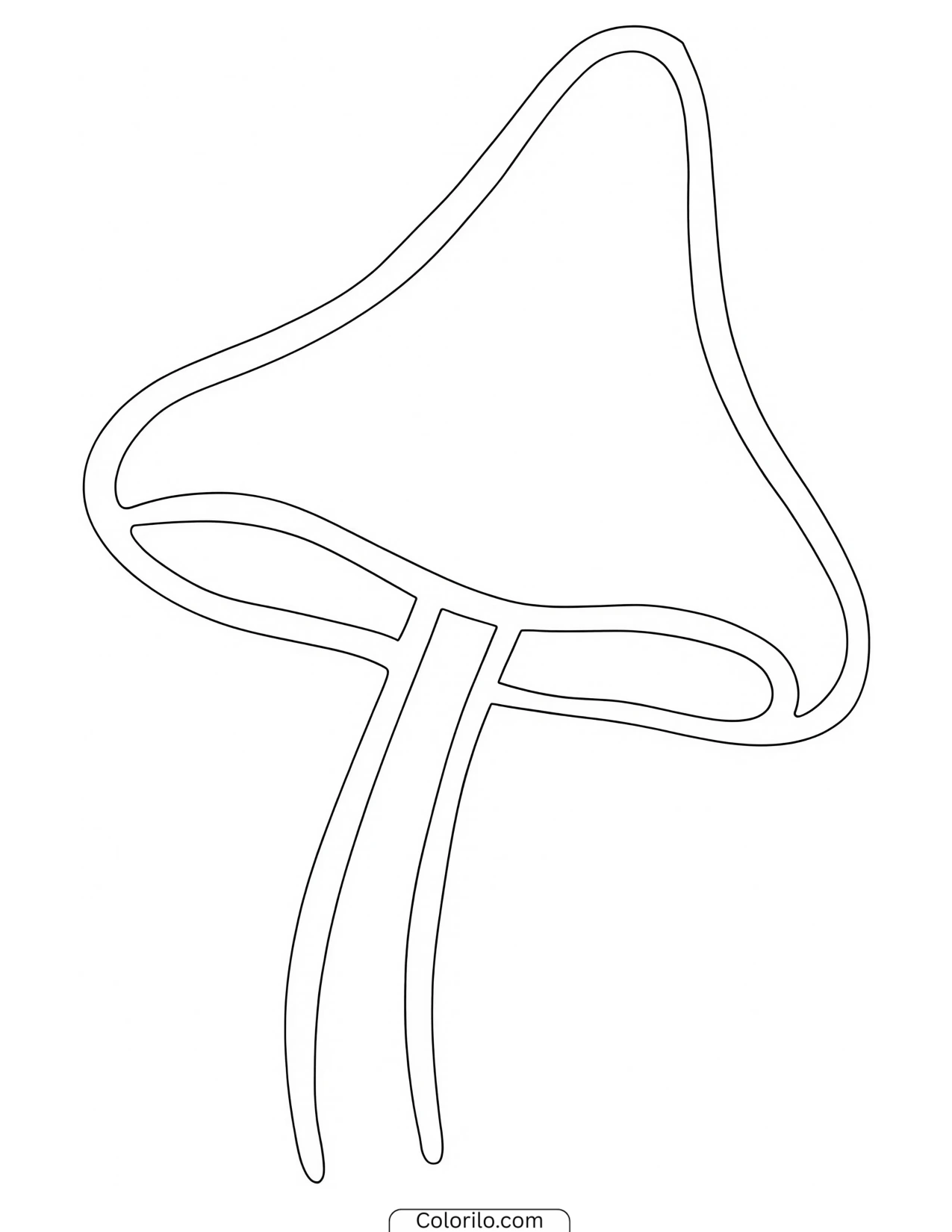
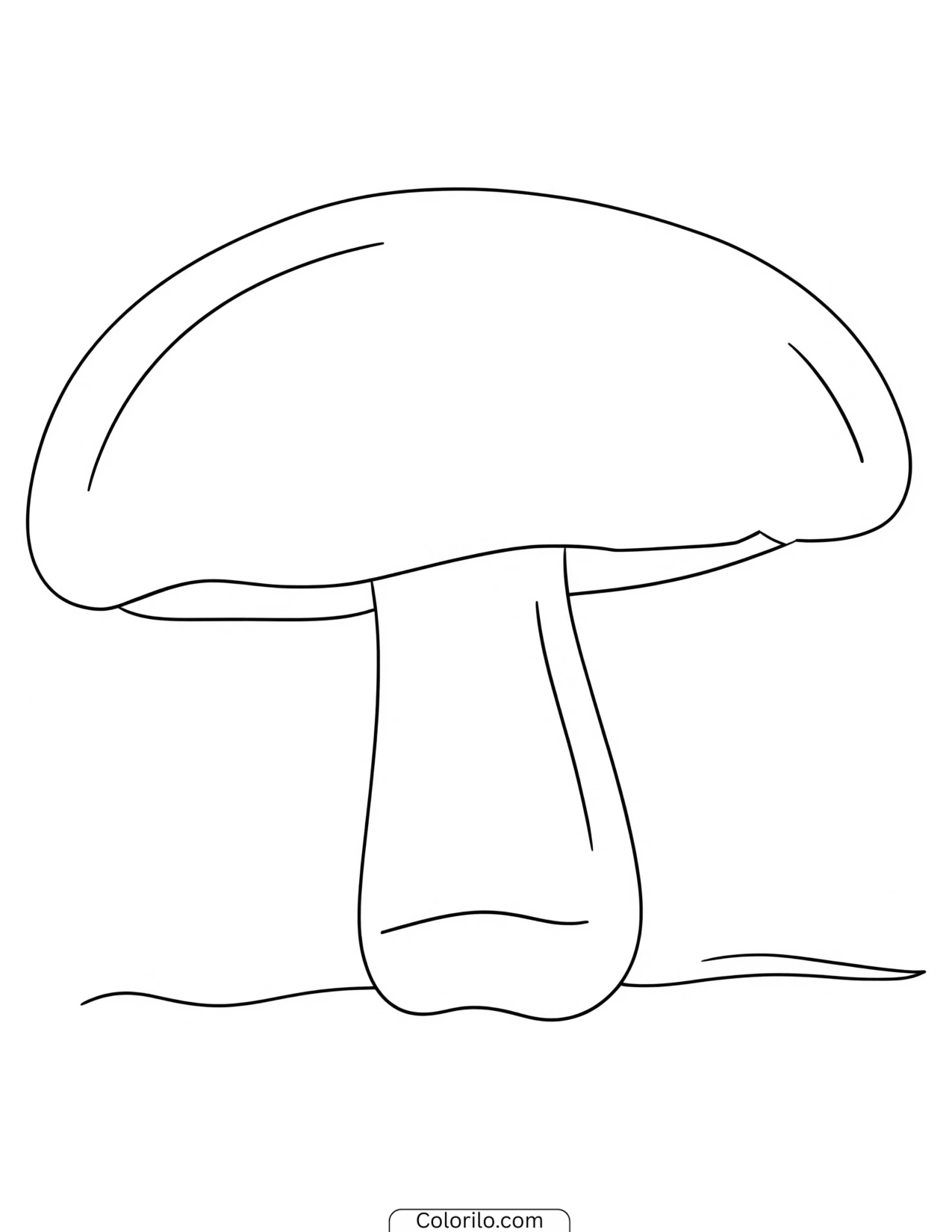
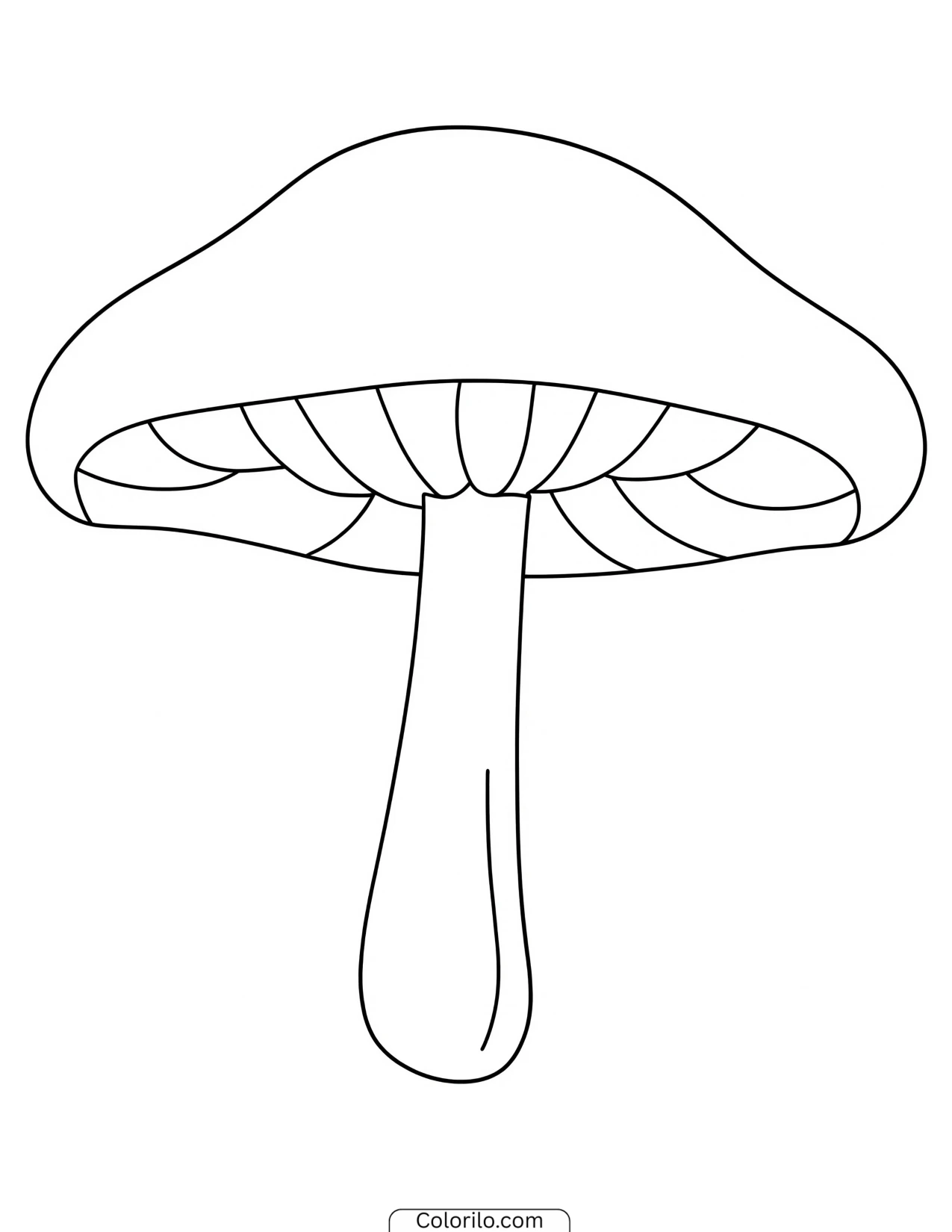
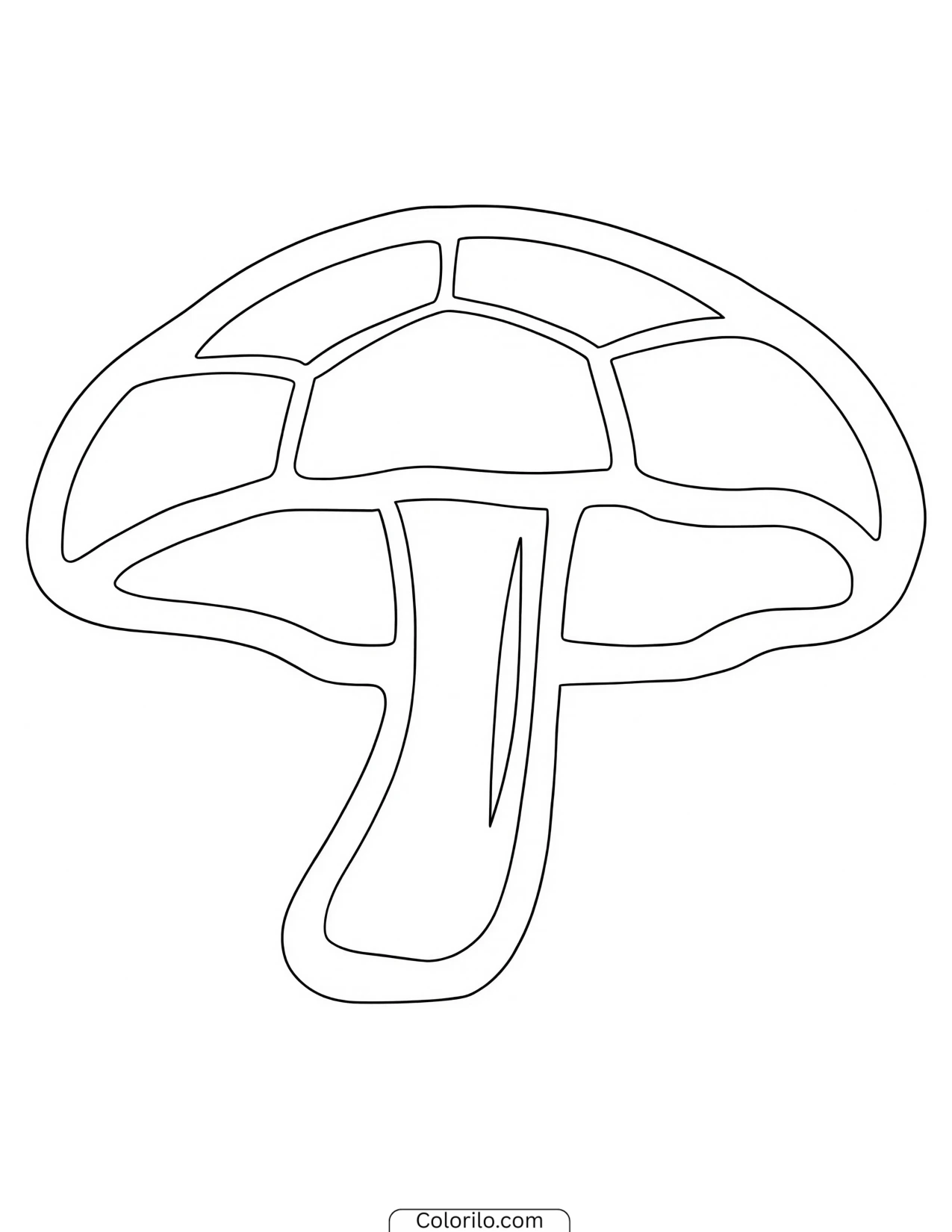
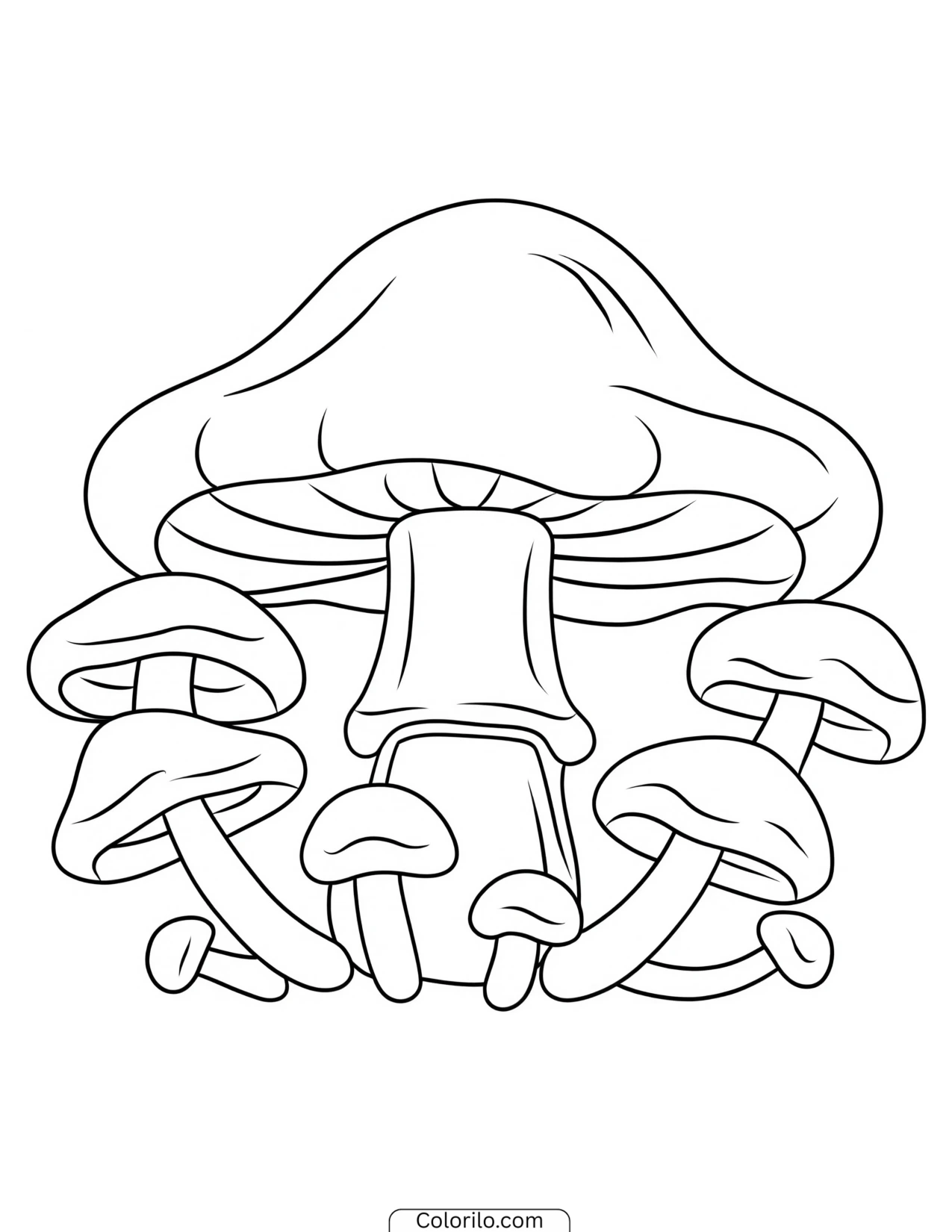
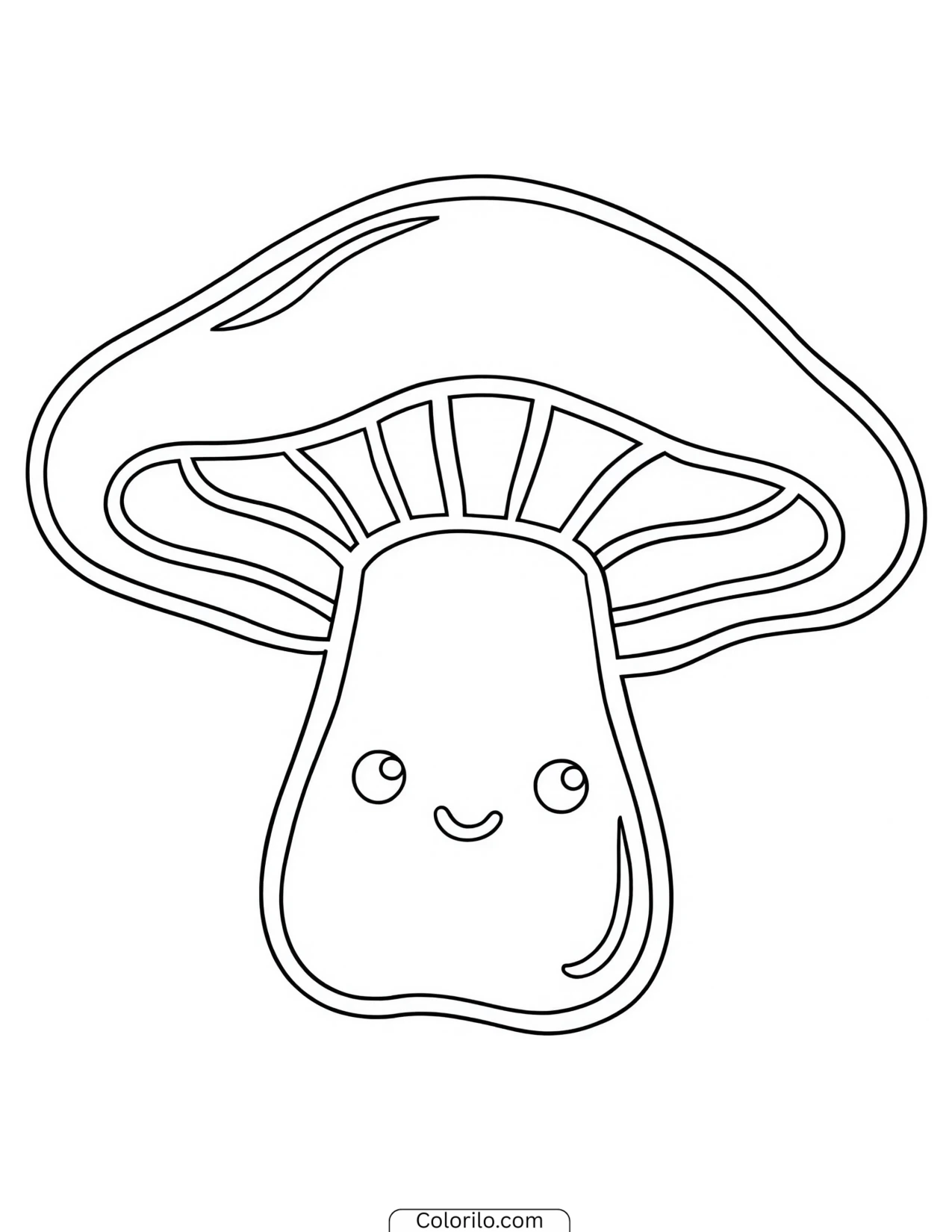
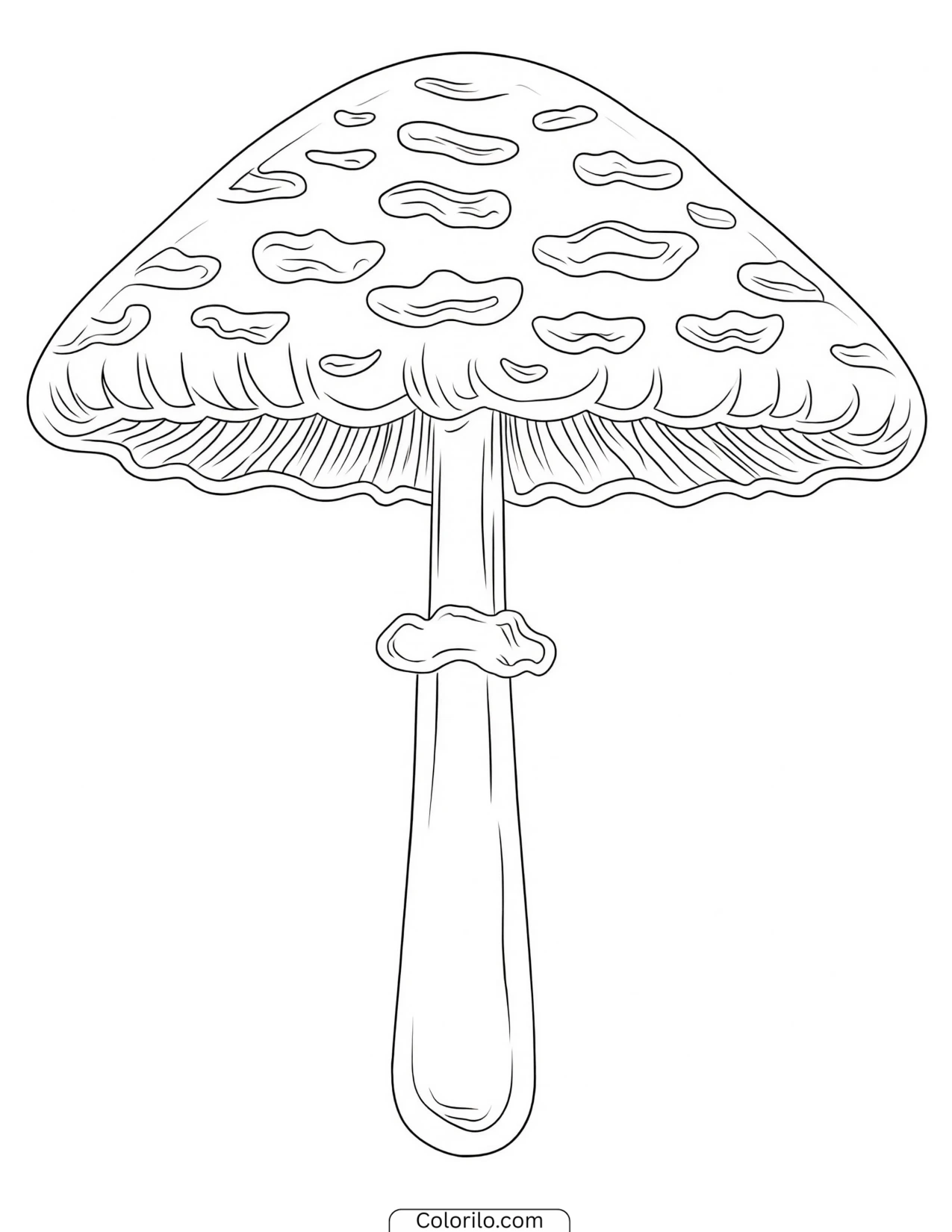
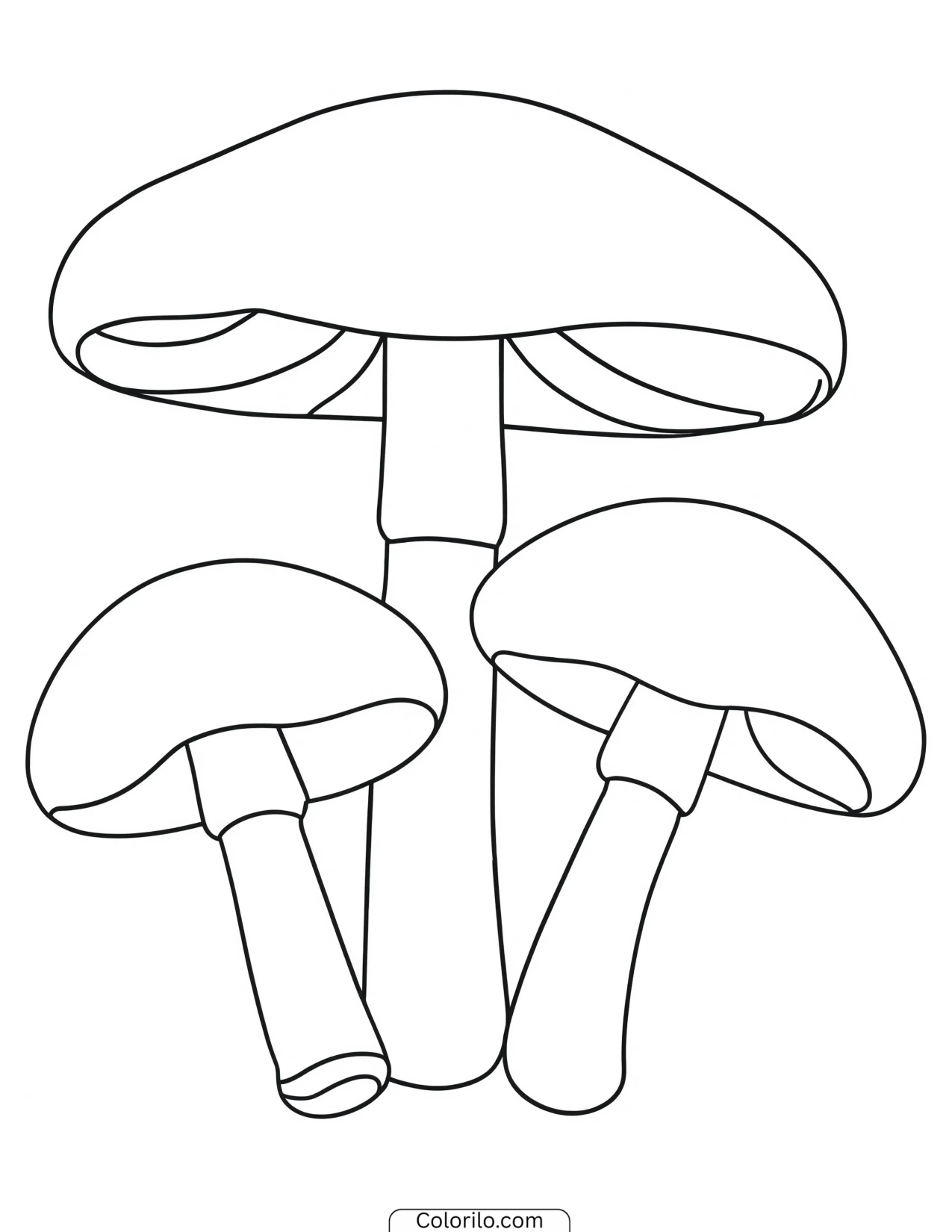
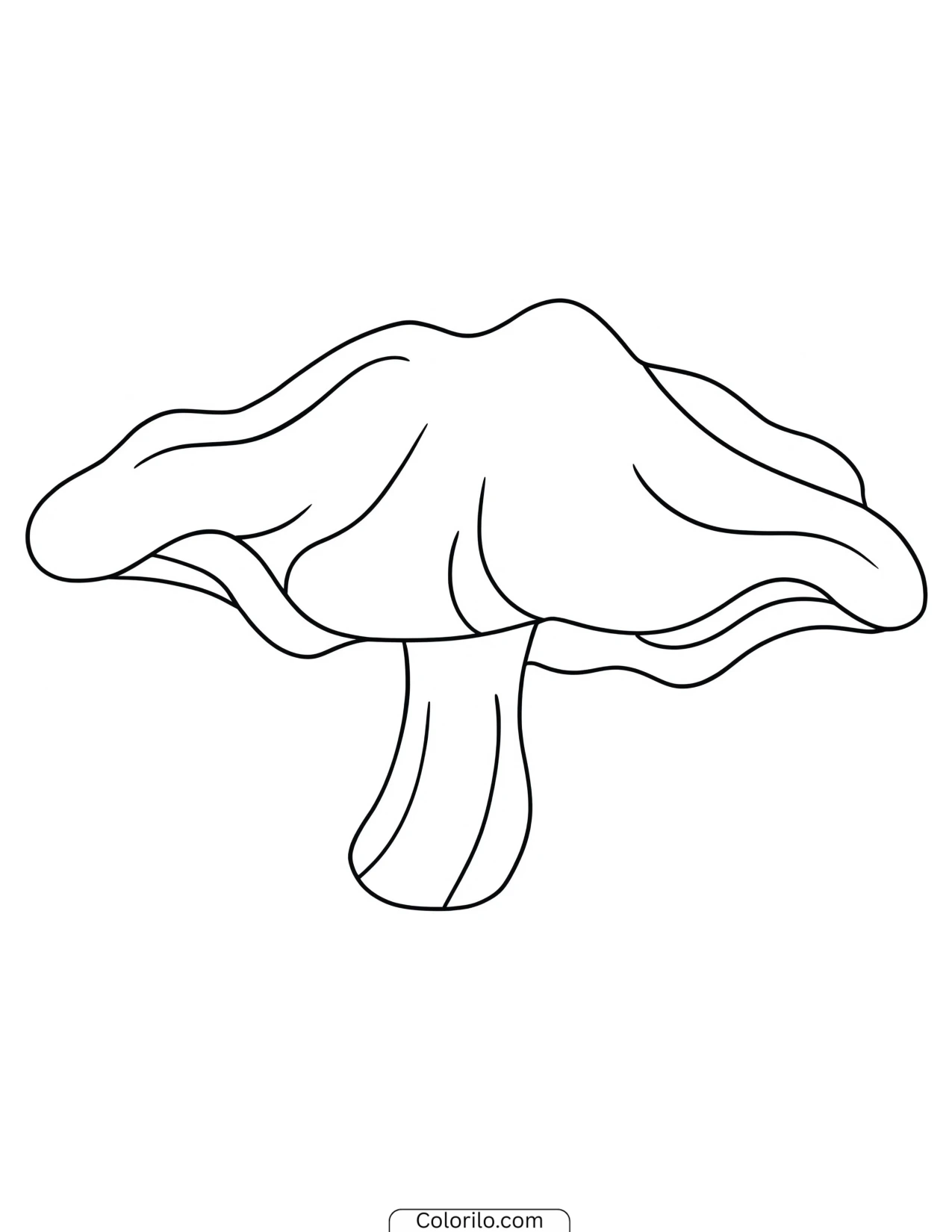
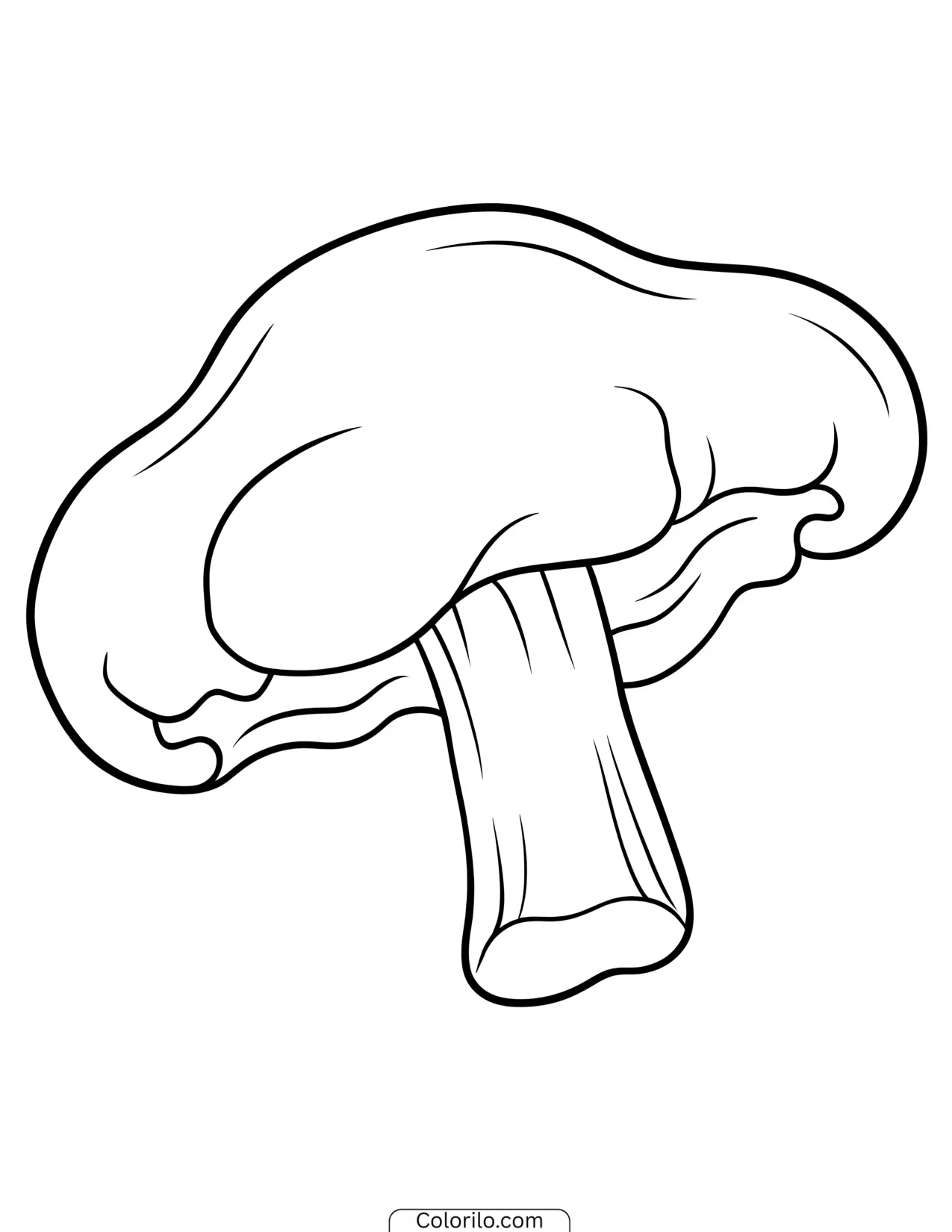
The rest are single mushrooms varying by cap and stem shape: bell, domed, pointed, wavy, flat, tapered, slender. Those are the simplest pages here and the best starting point for a young child, though they do blur together somewhat if you work through them in sequence. Better to treat them as a set to dip into.
Every one of these mushroom coloring pages is free, prints on standard US letter paper, and needs no sign-up. Click any design below to open the full-size PDF.
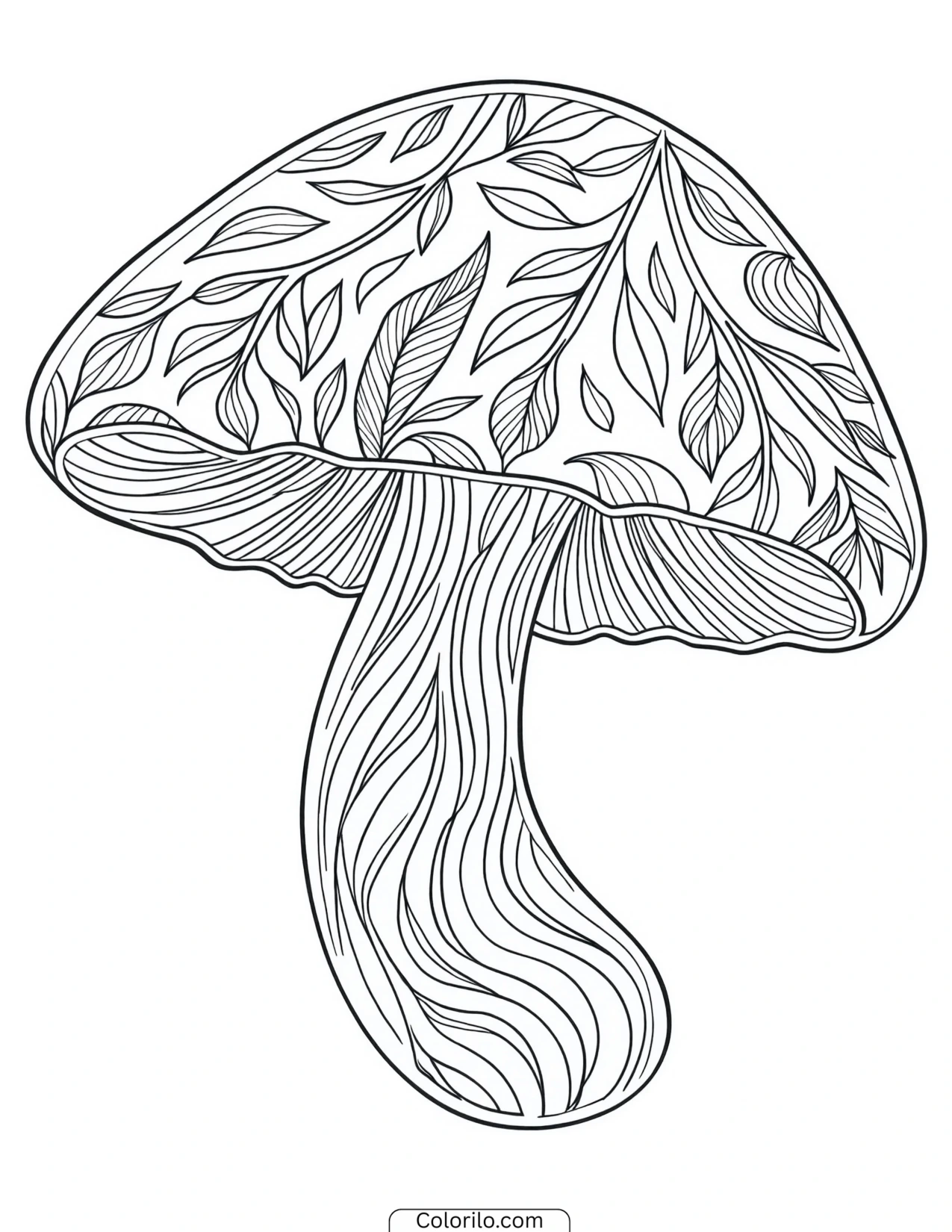
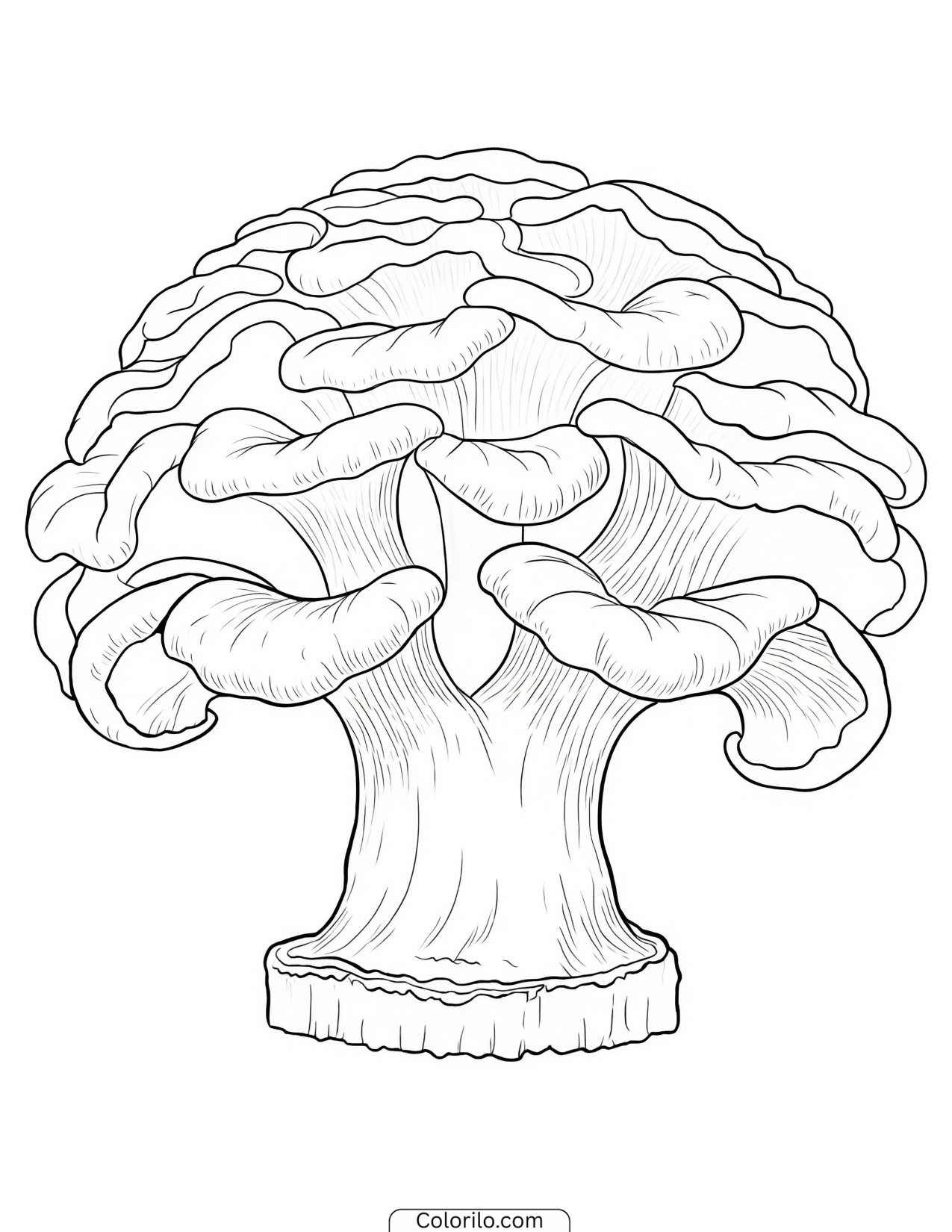
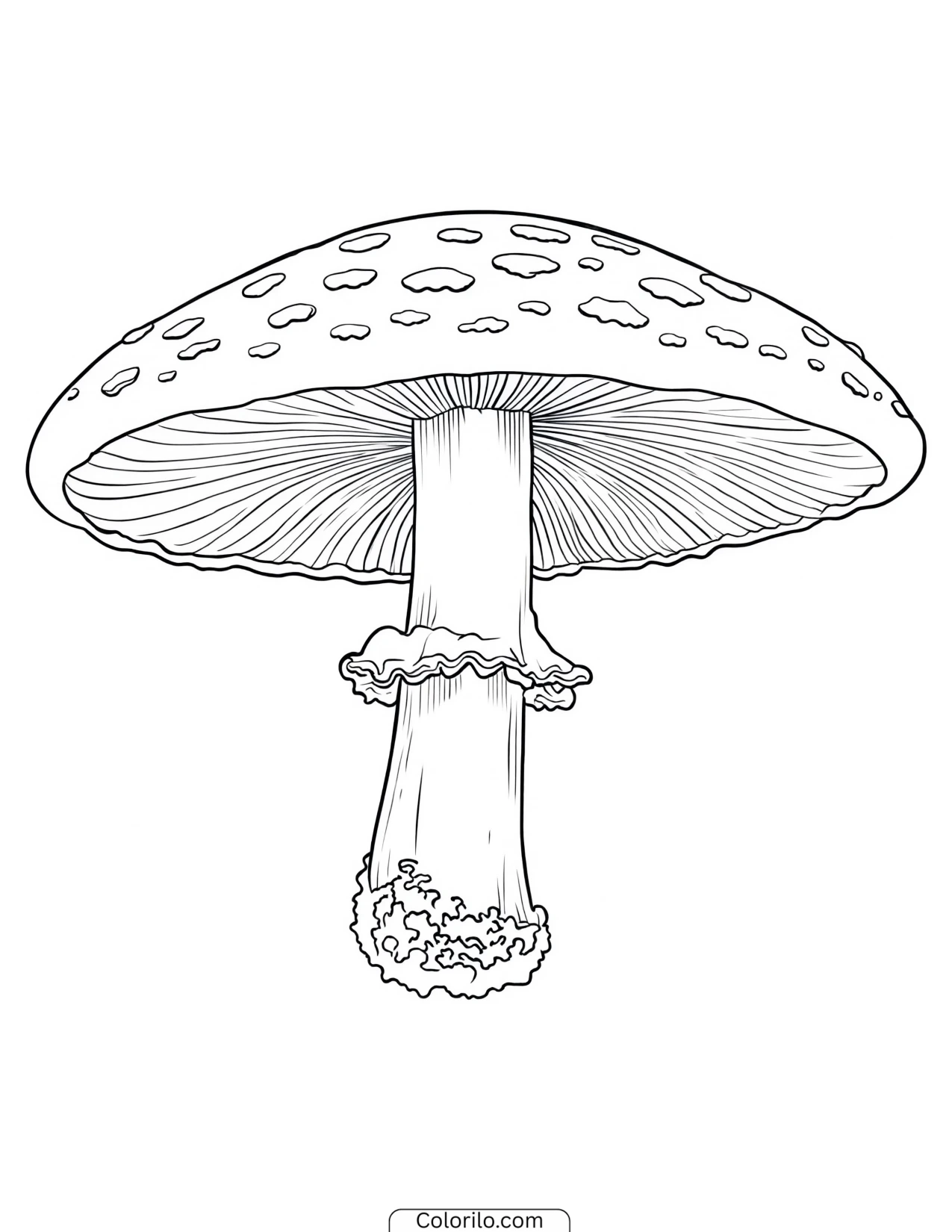
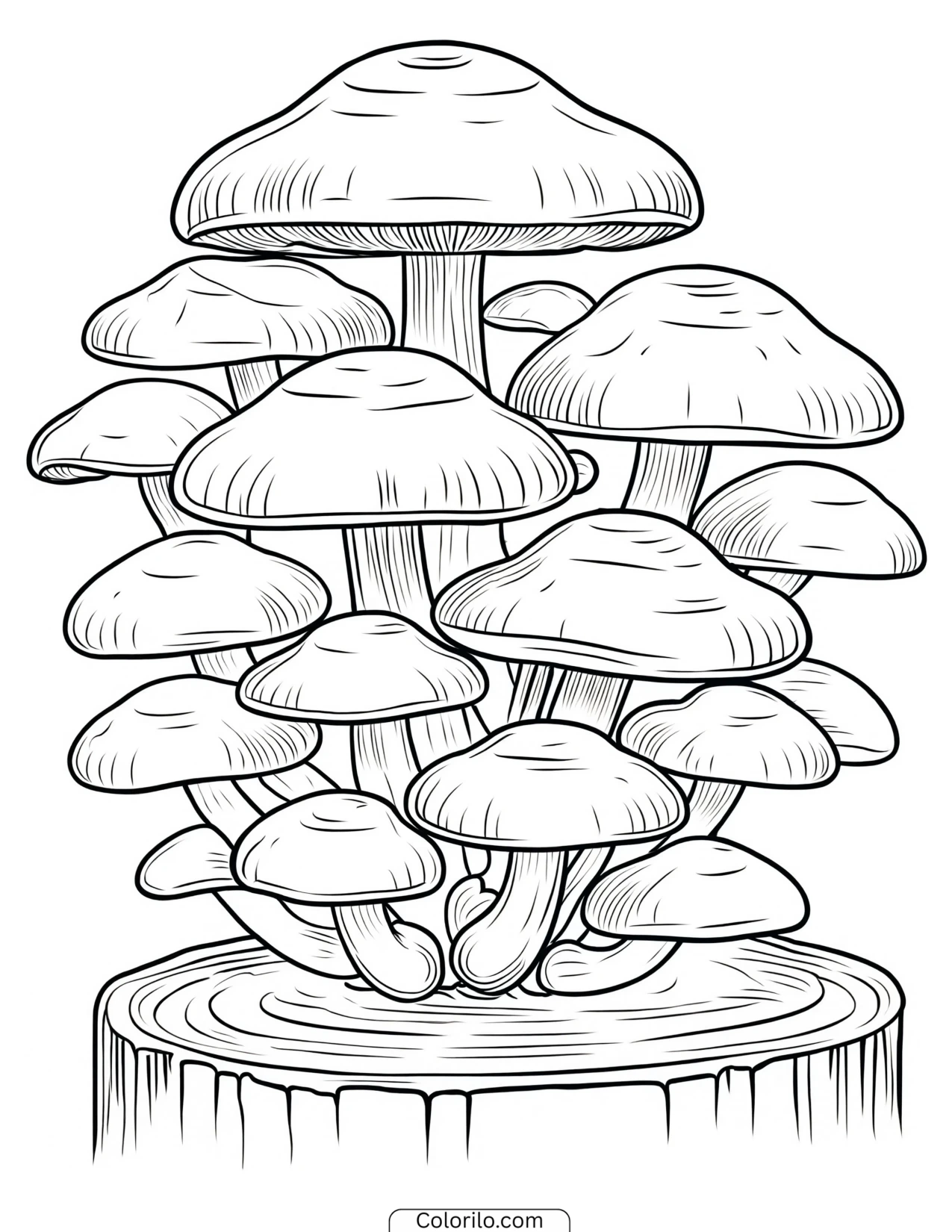
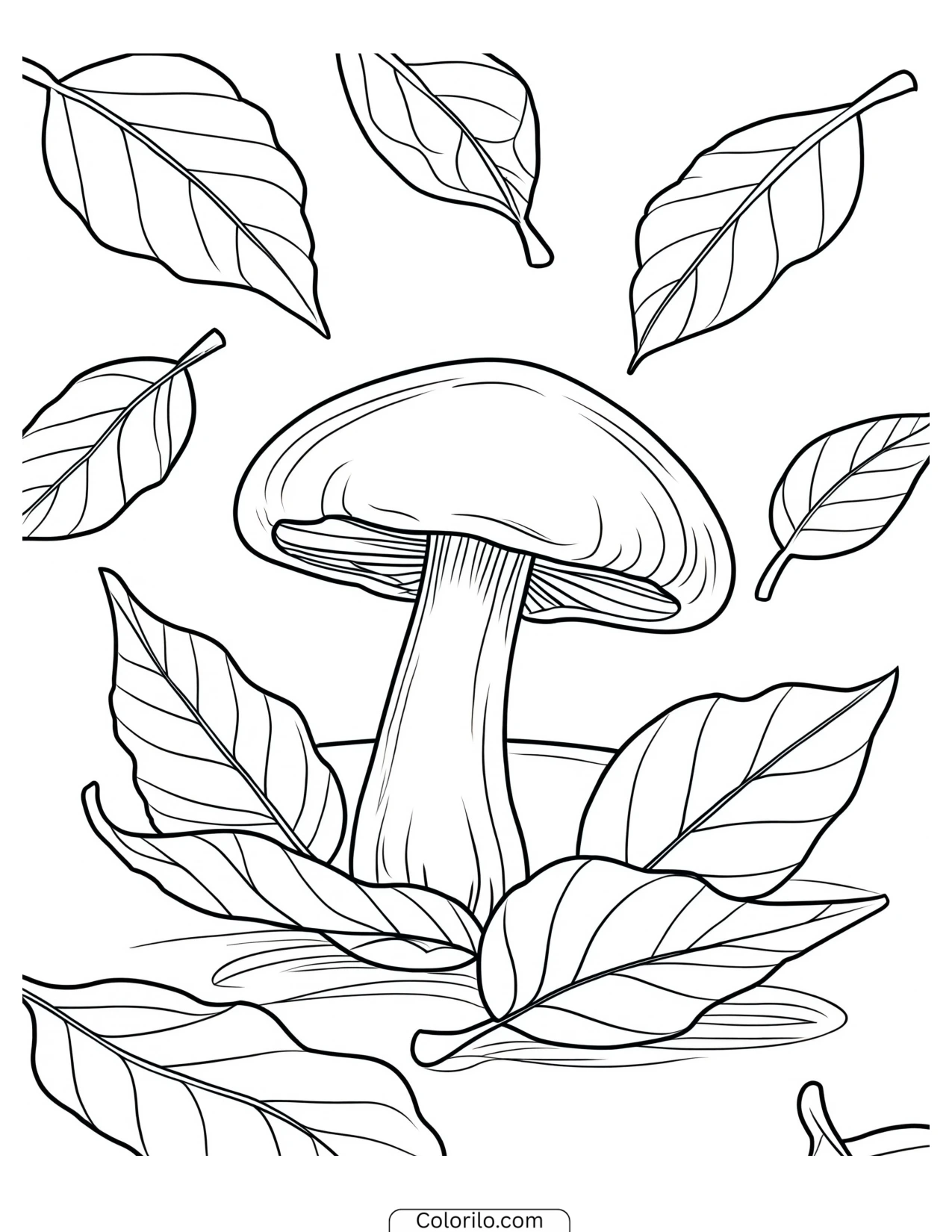
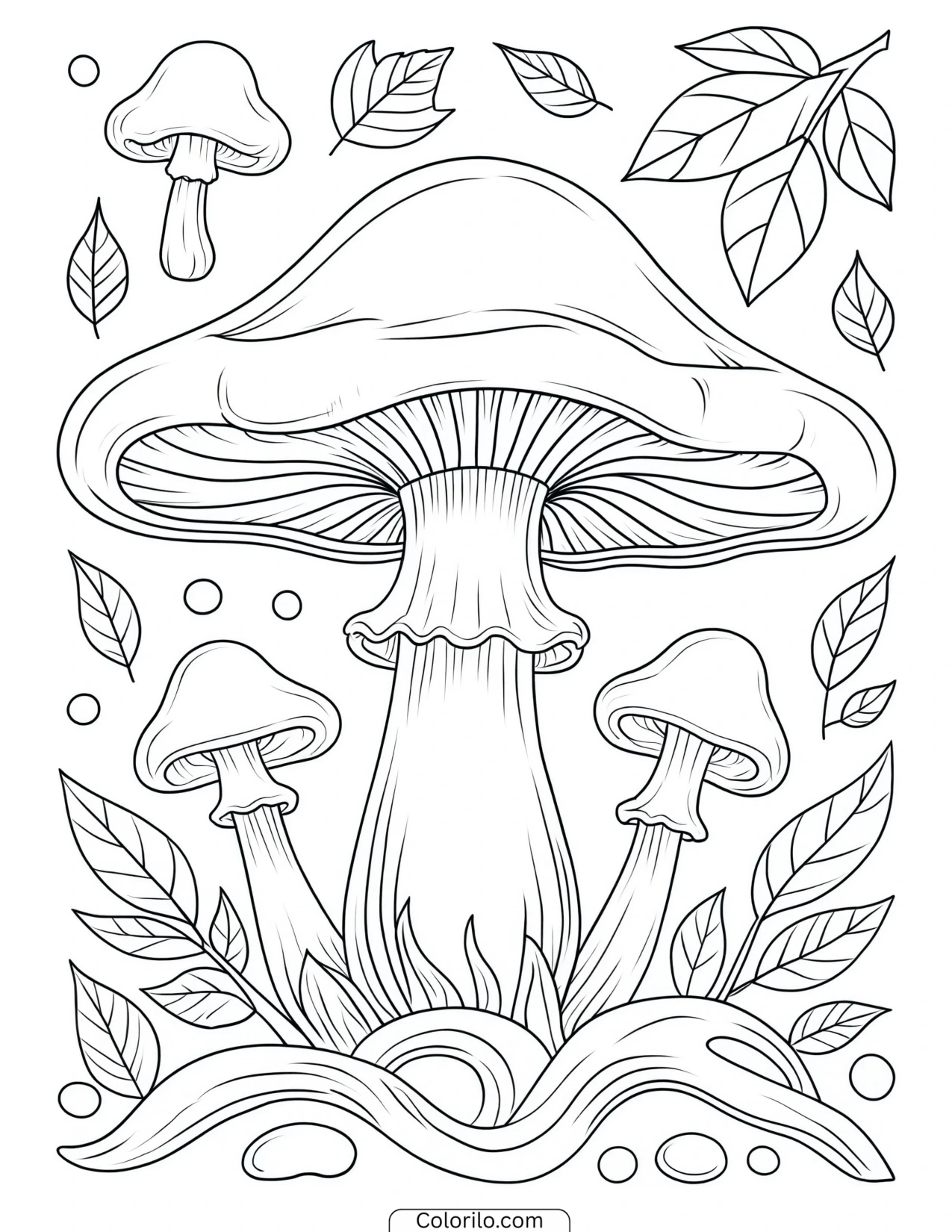
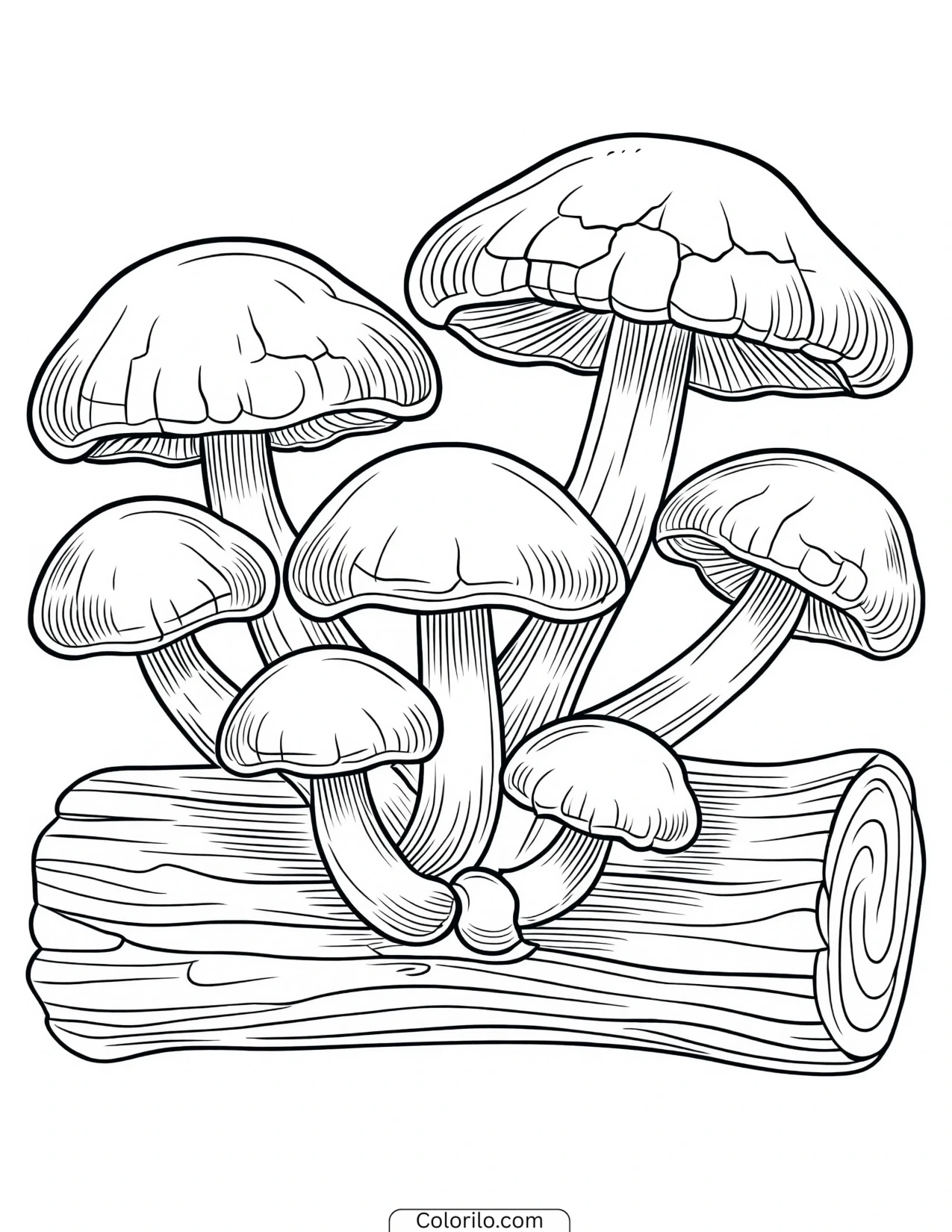
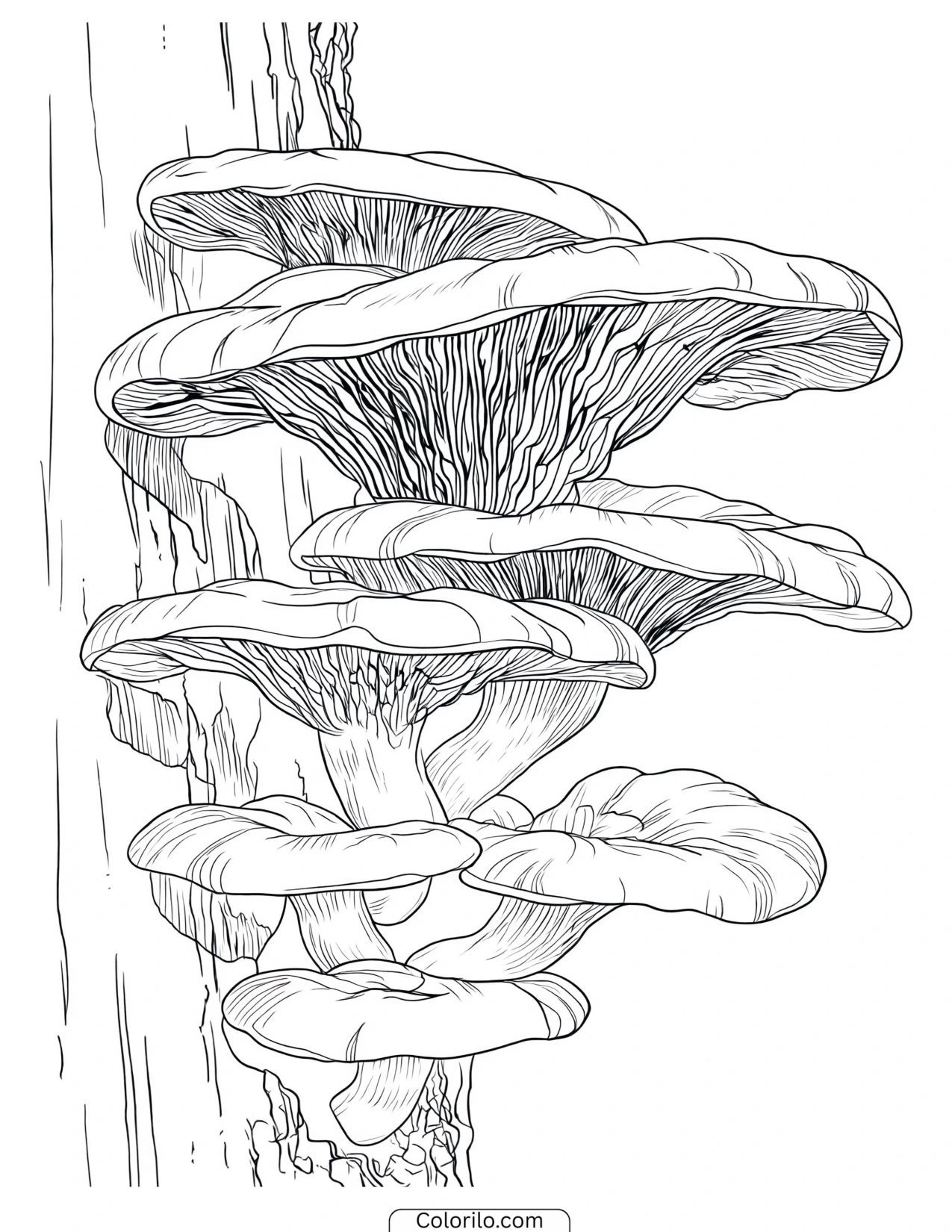
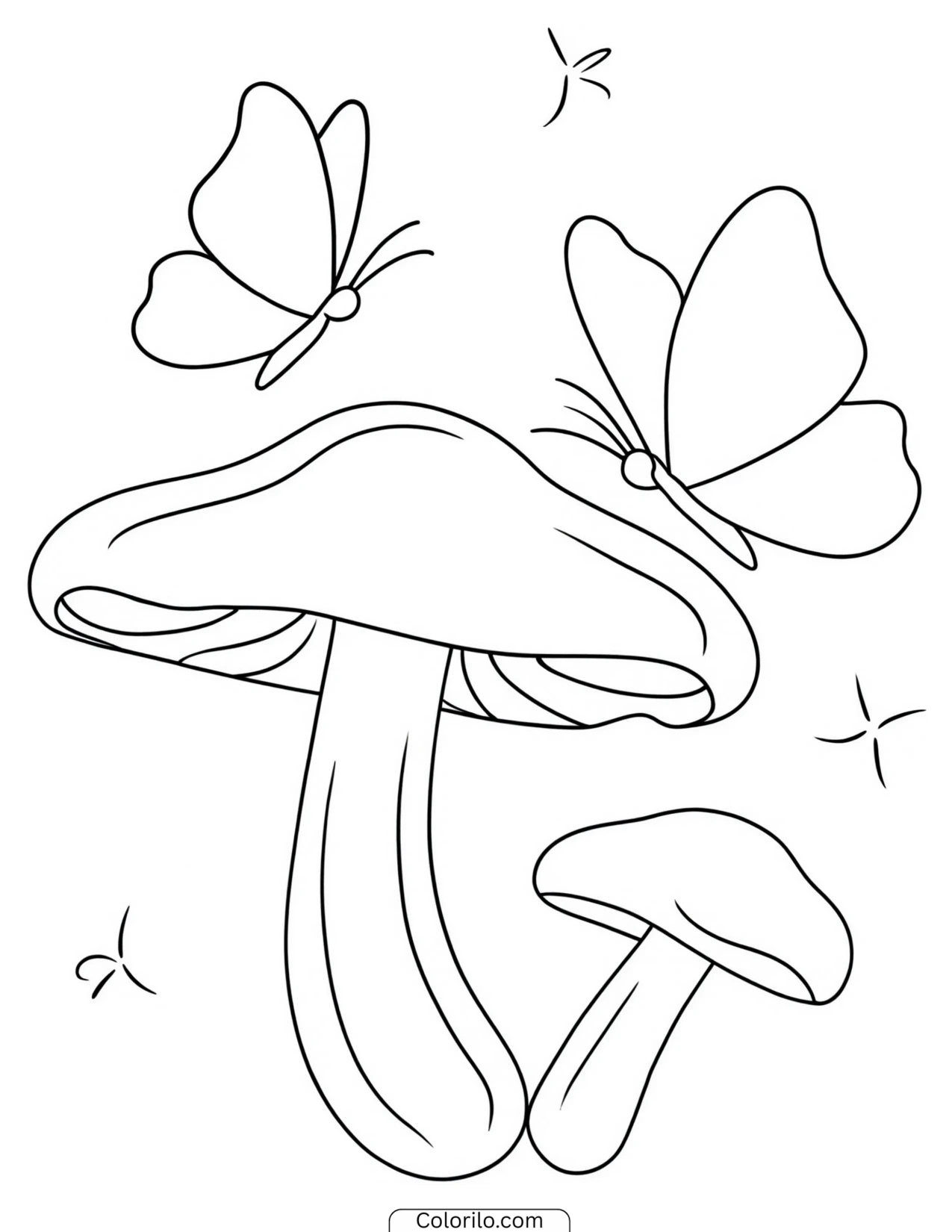
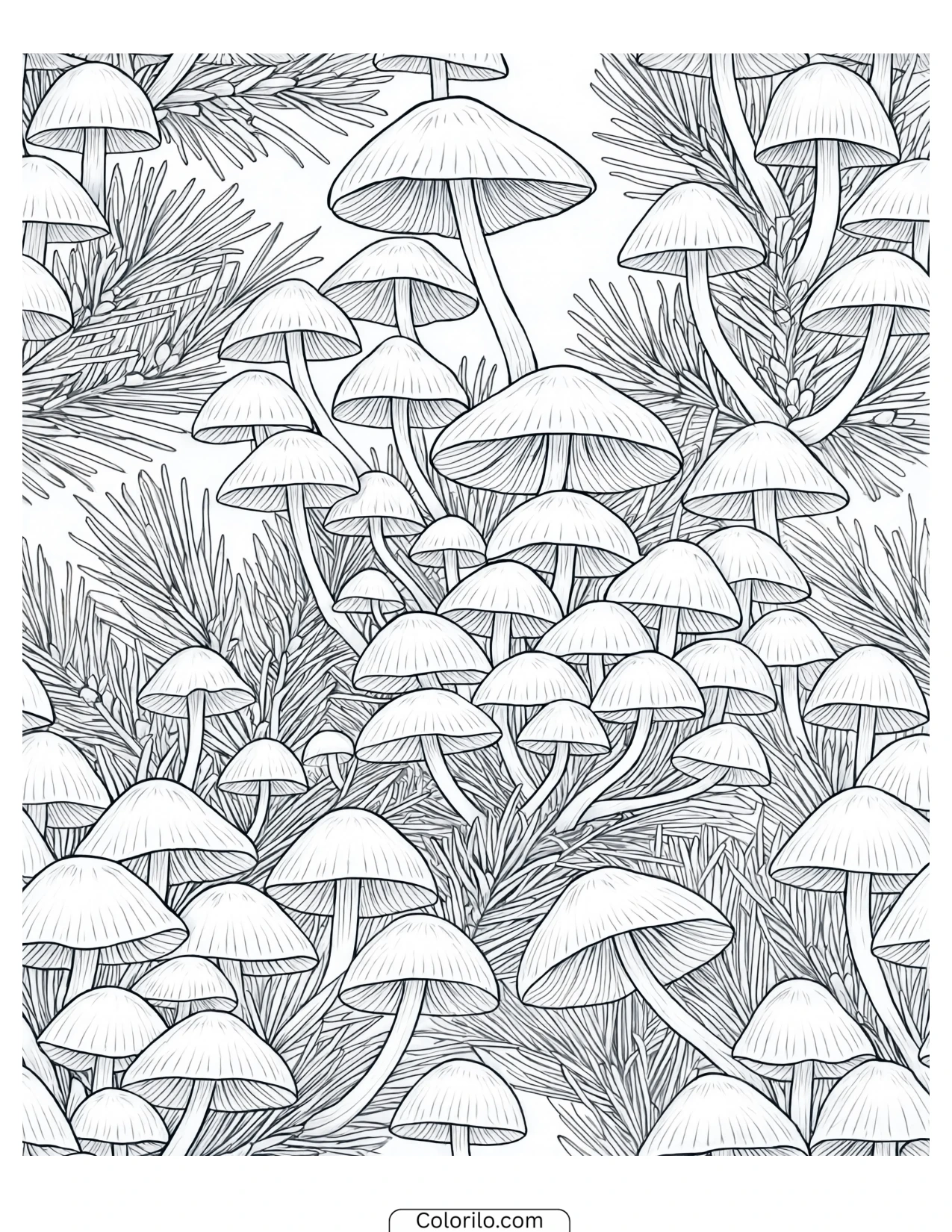
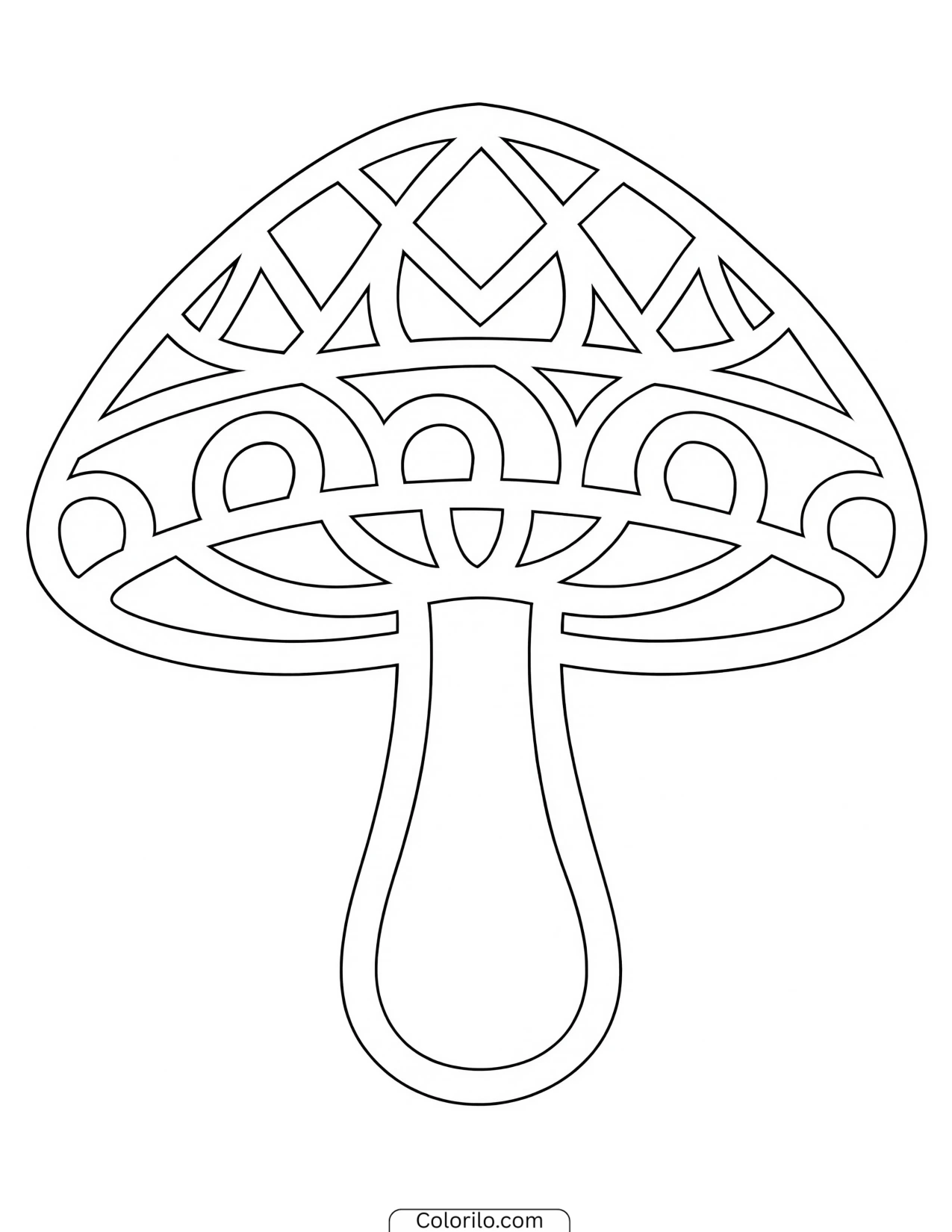
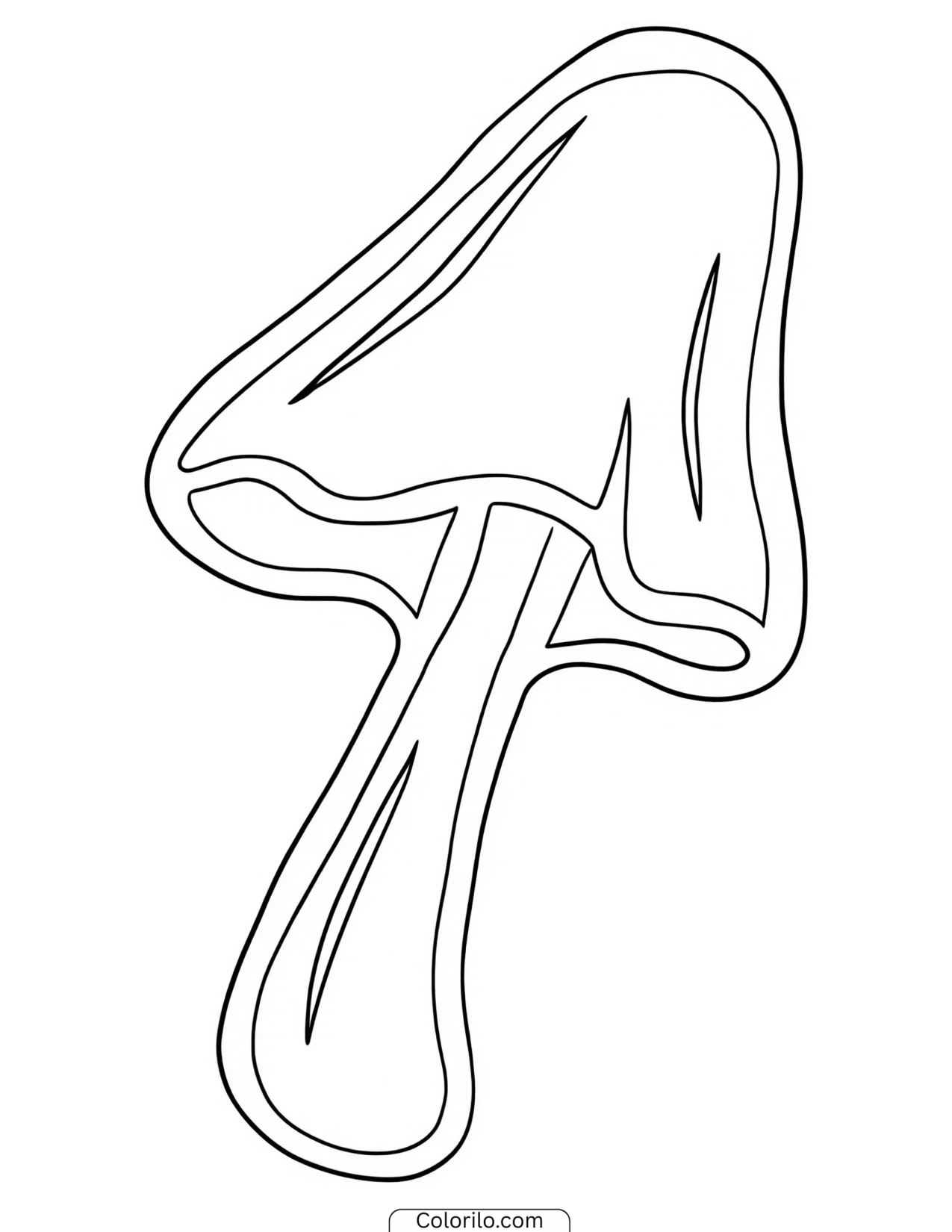
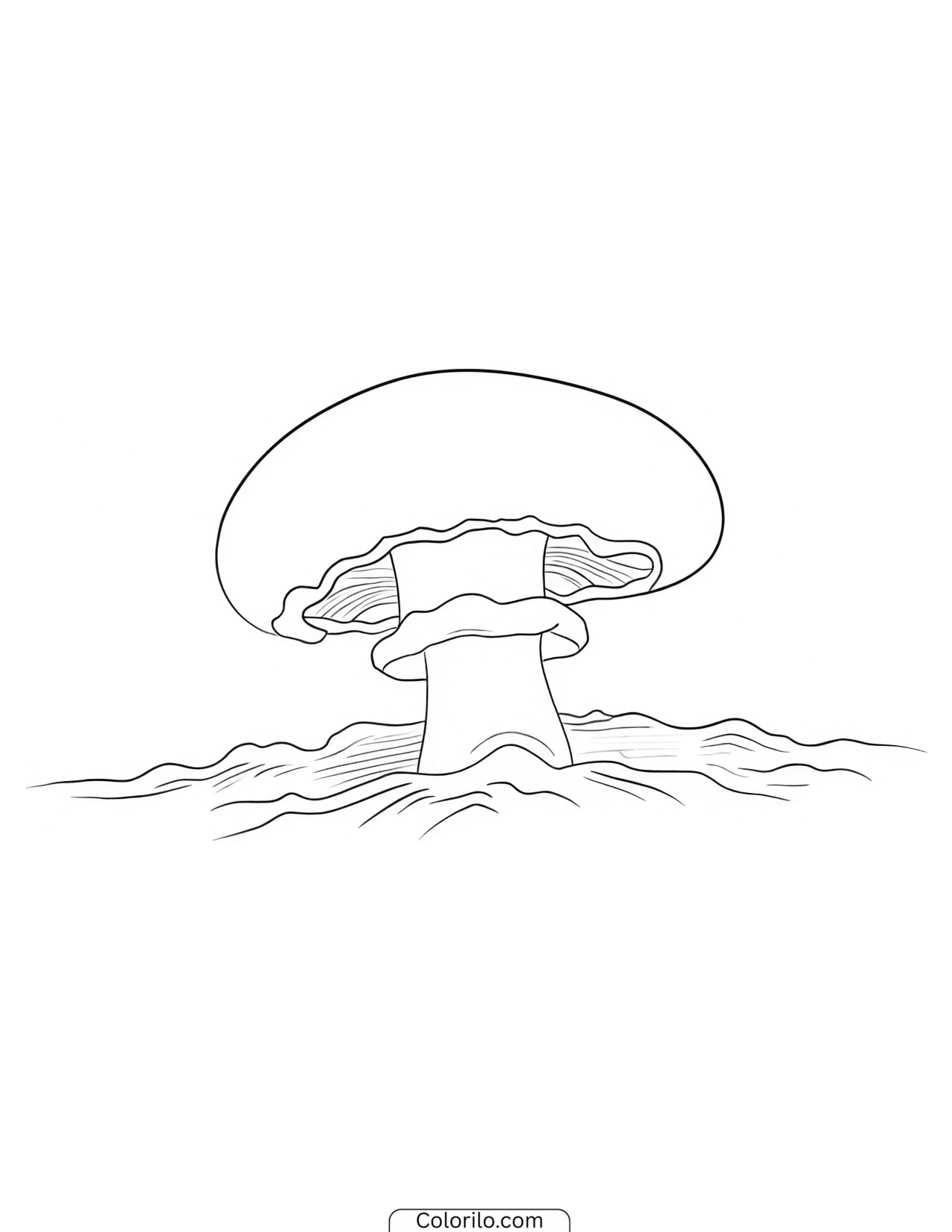
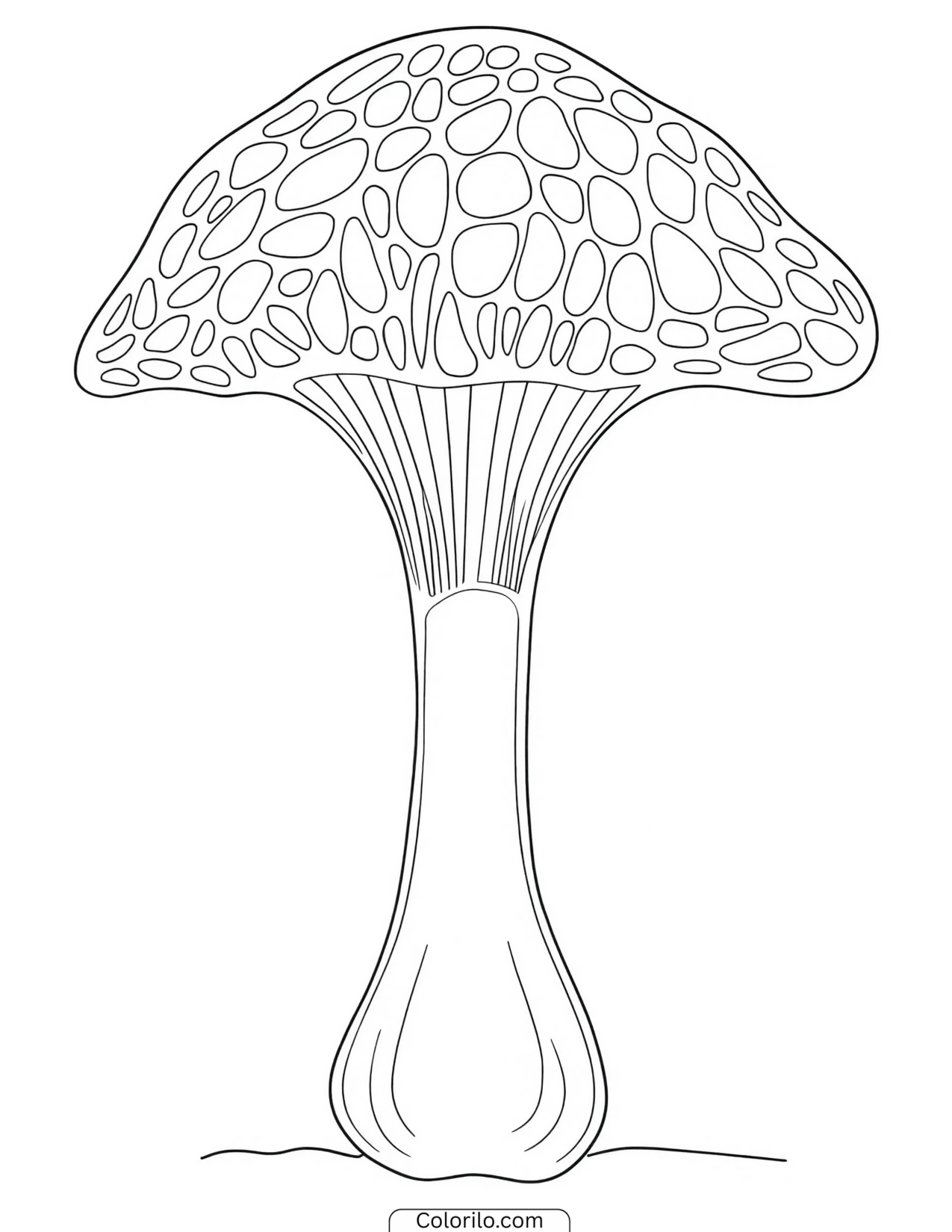
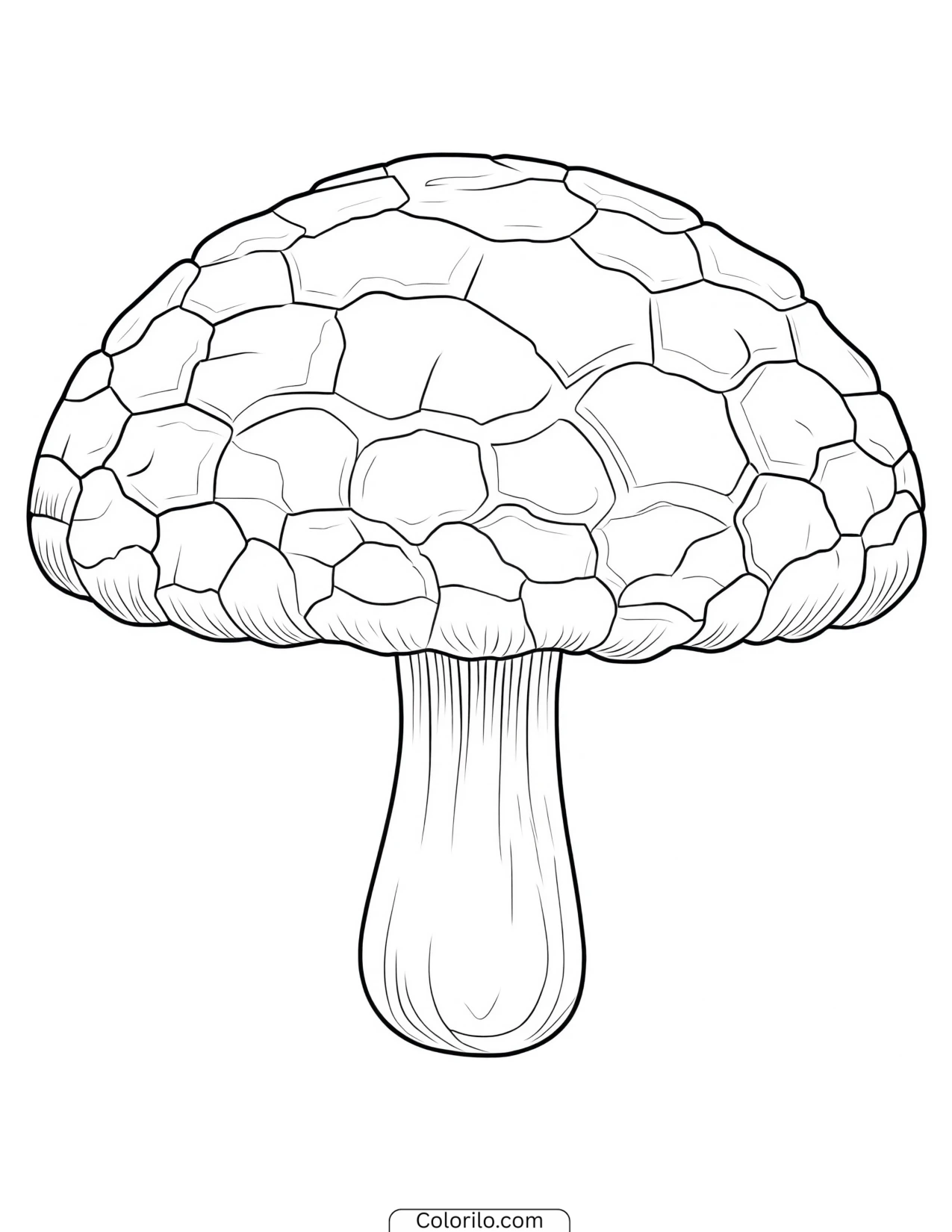
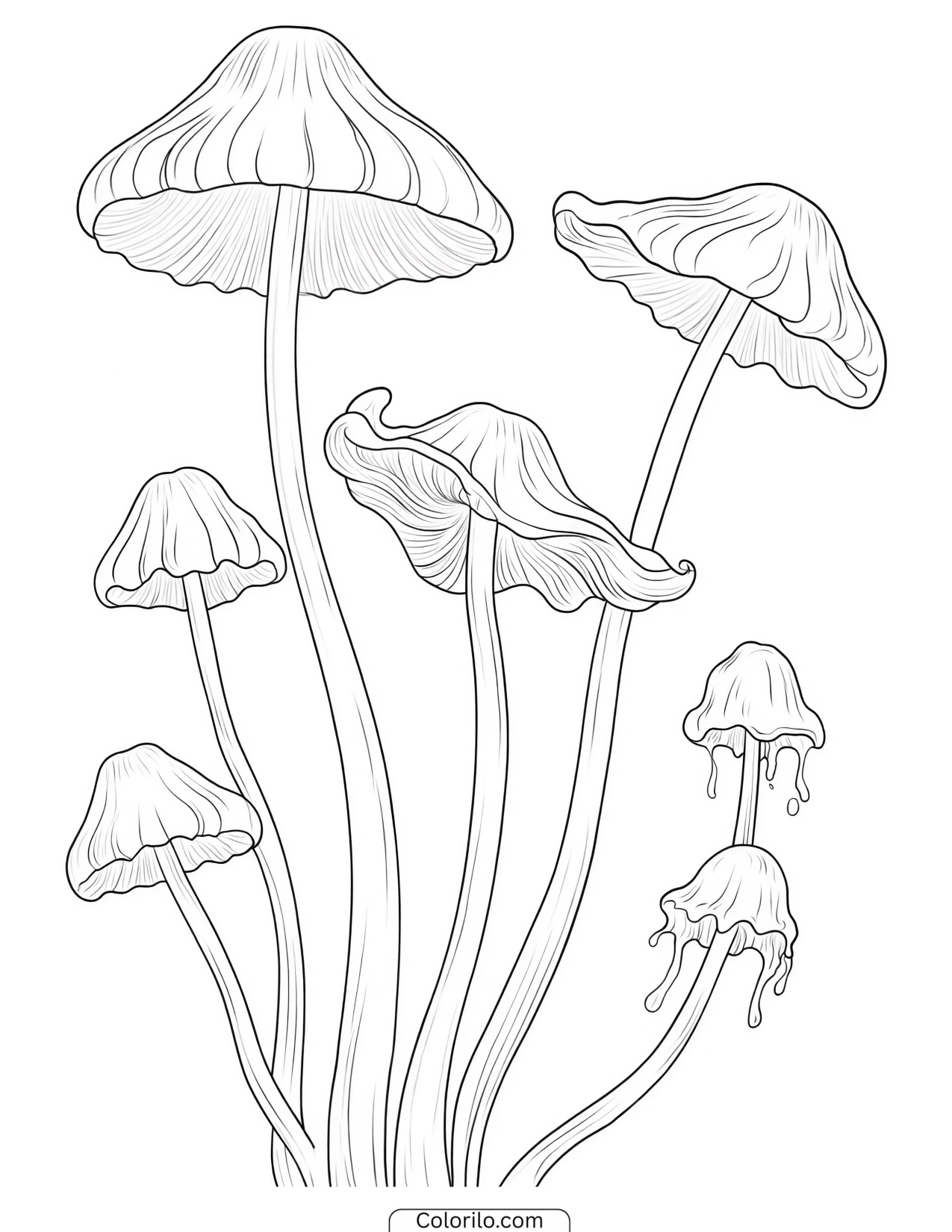
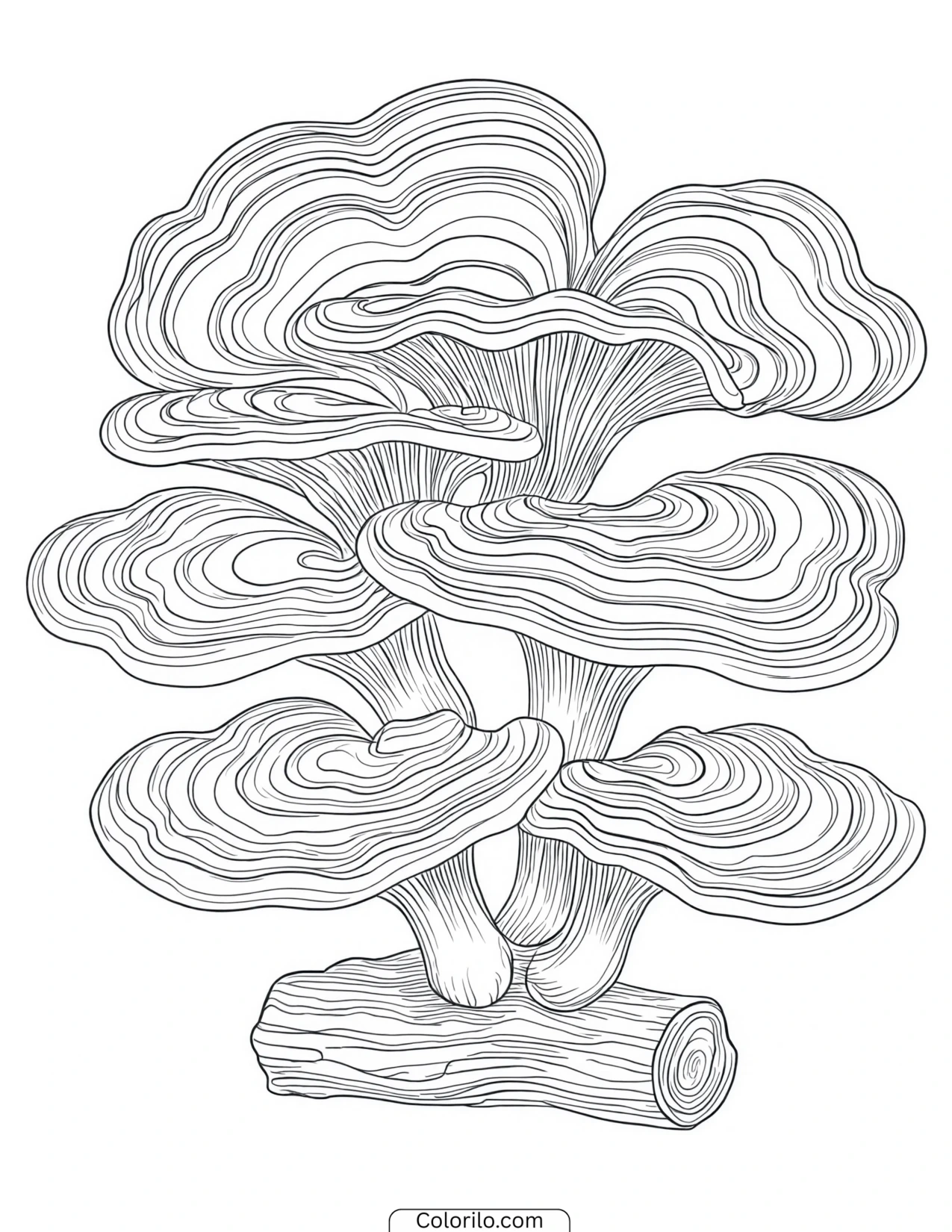
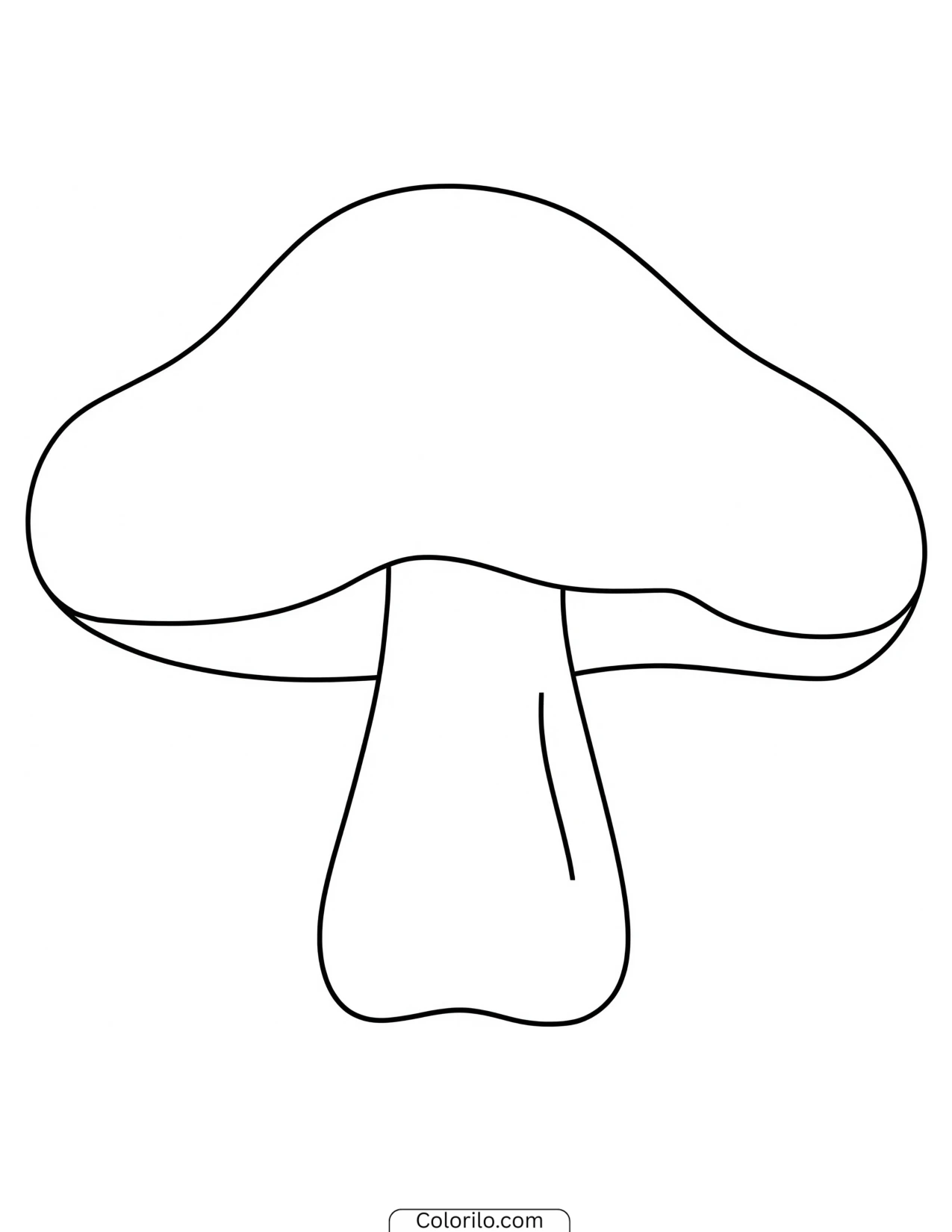
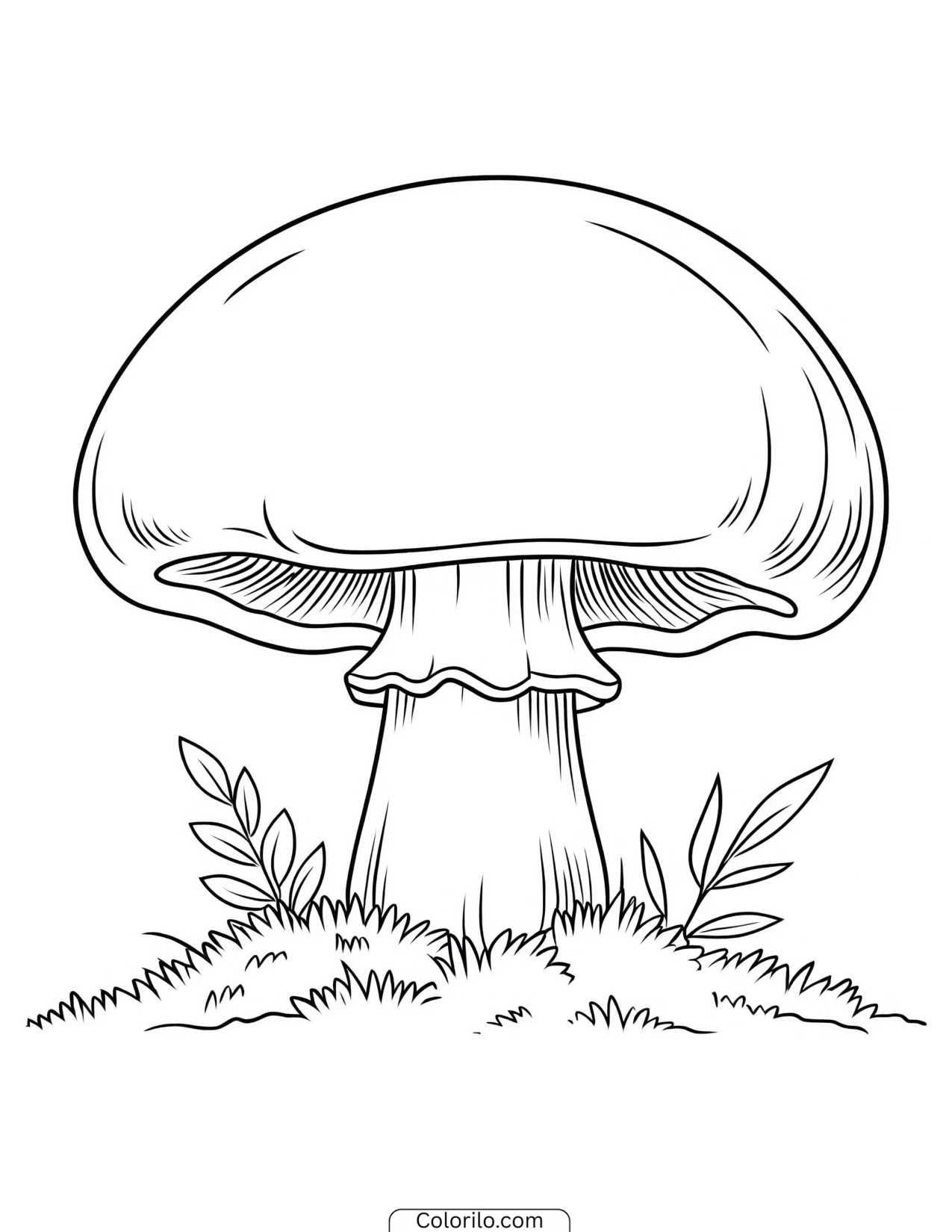
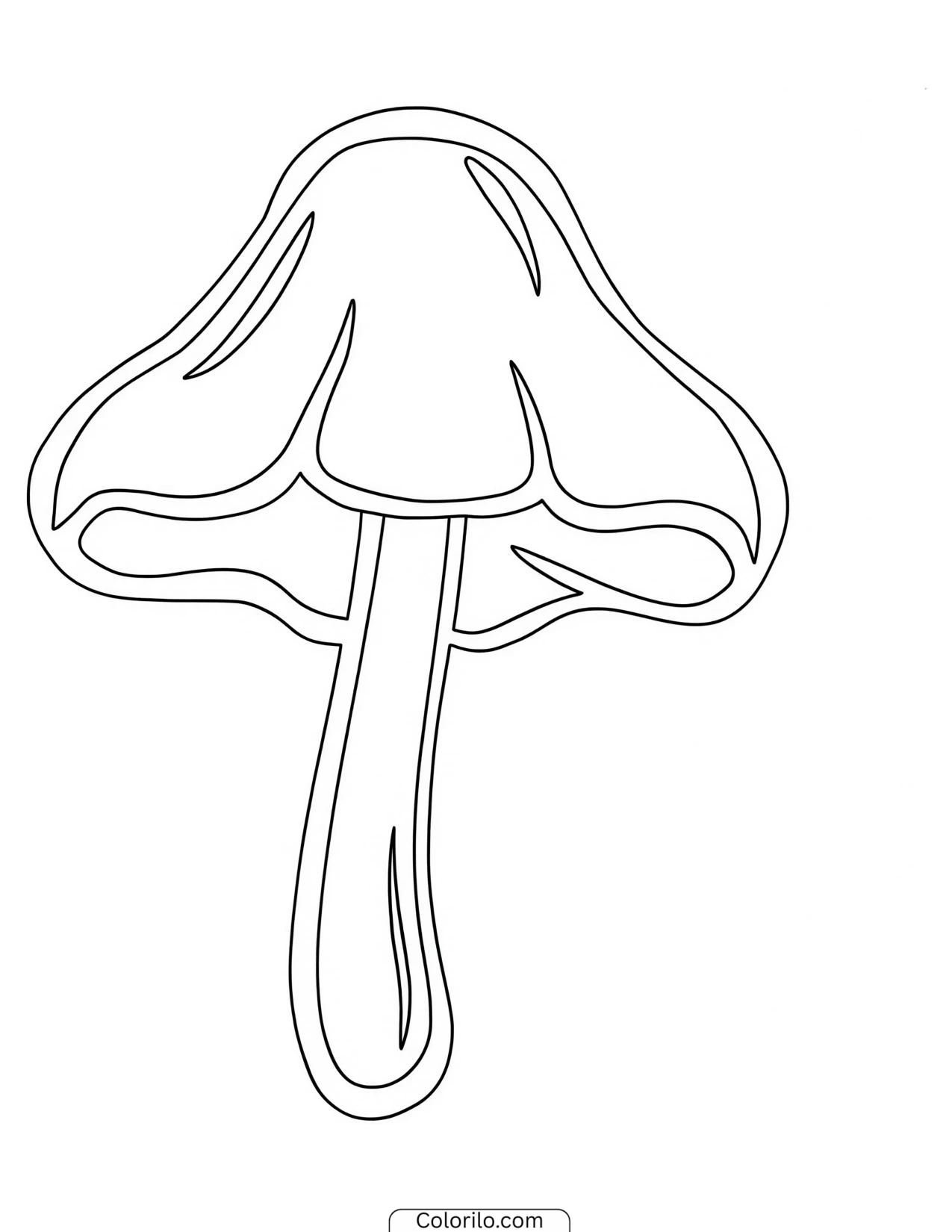
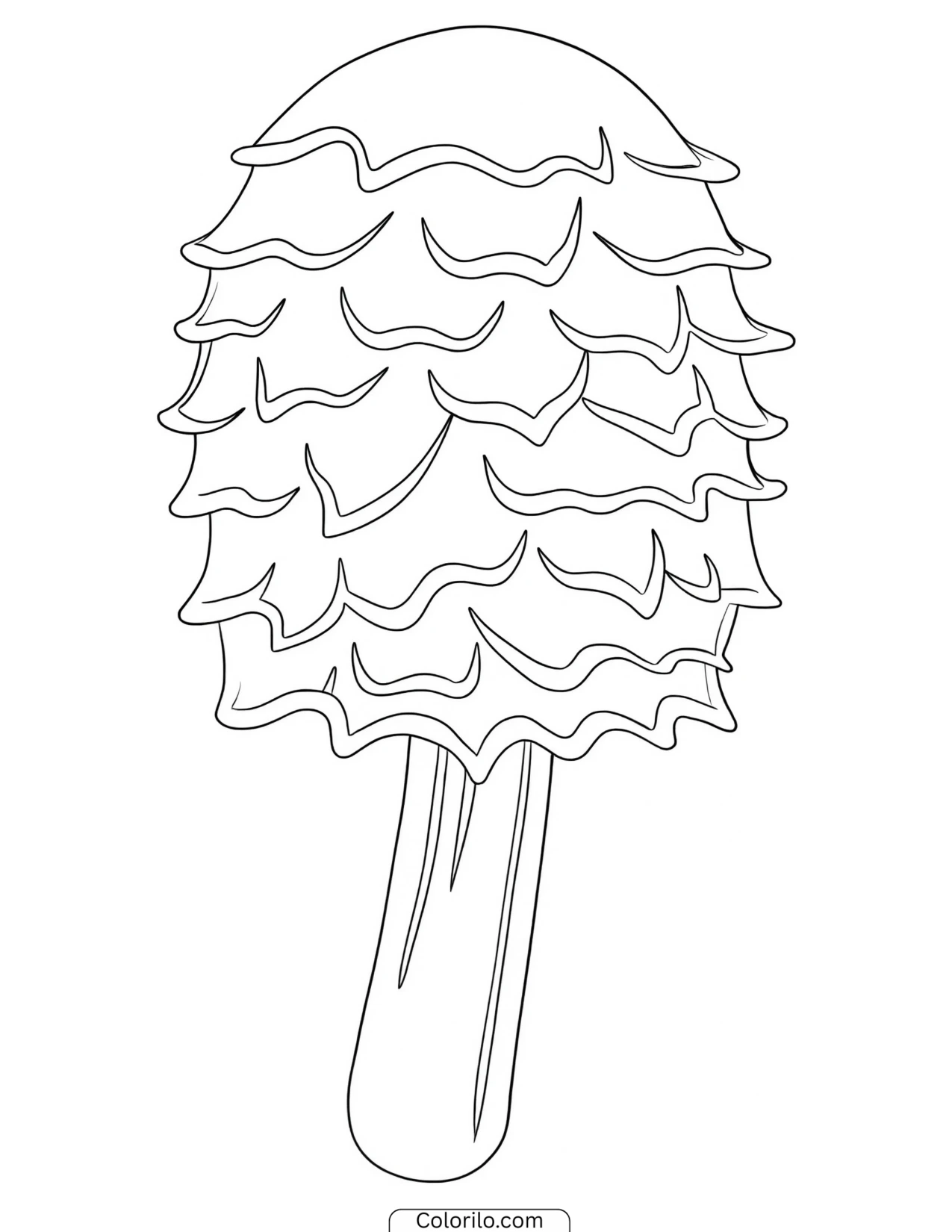
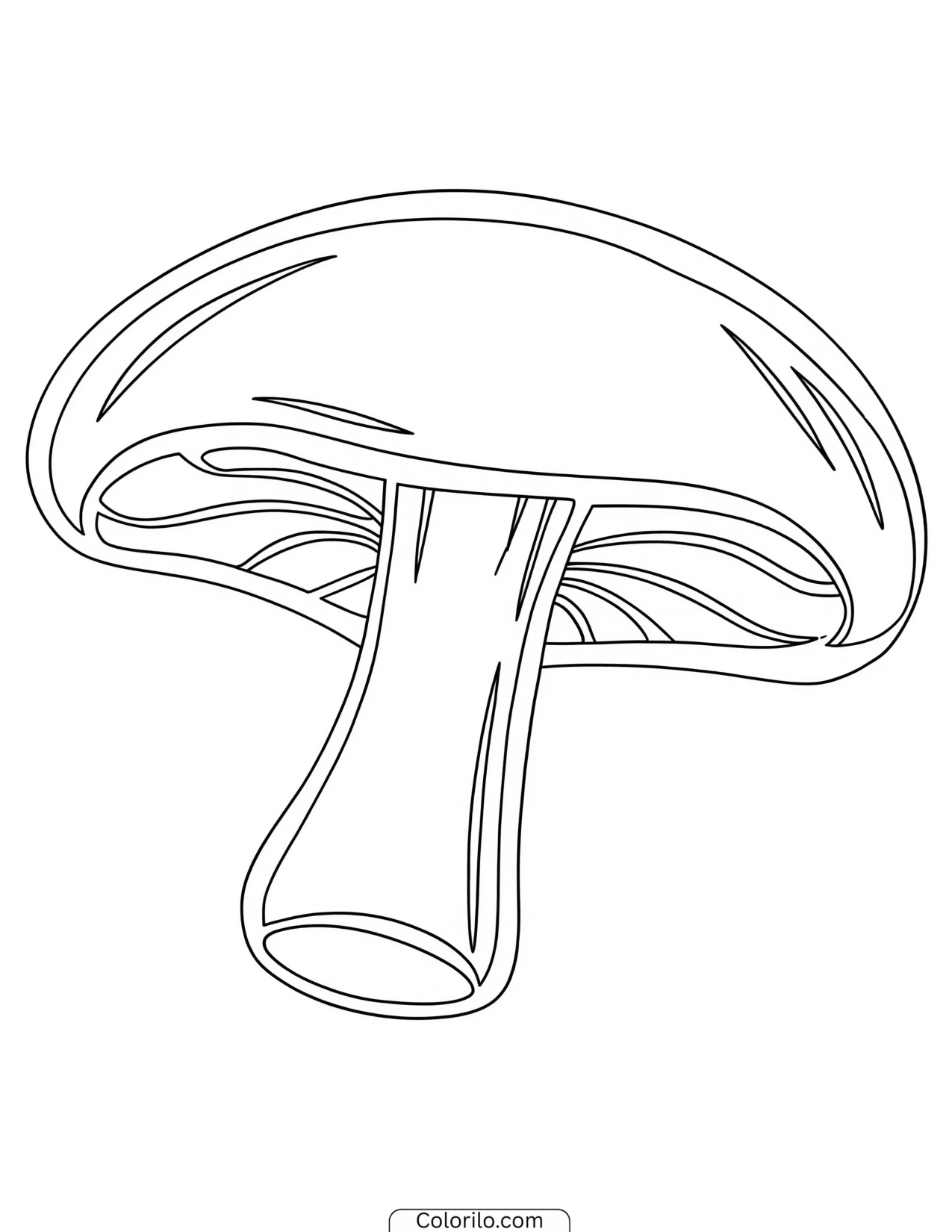
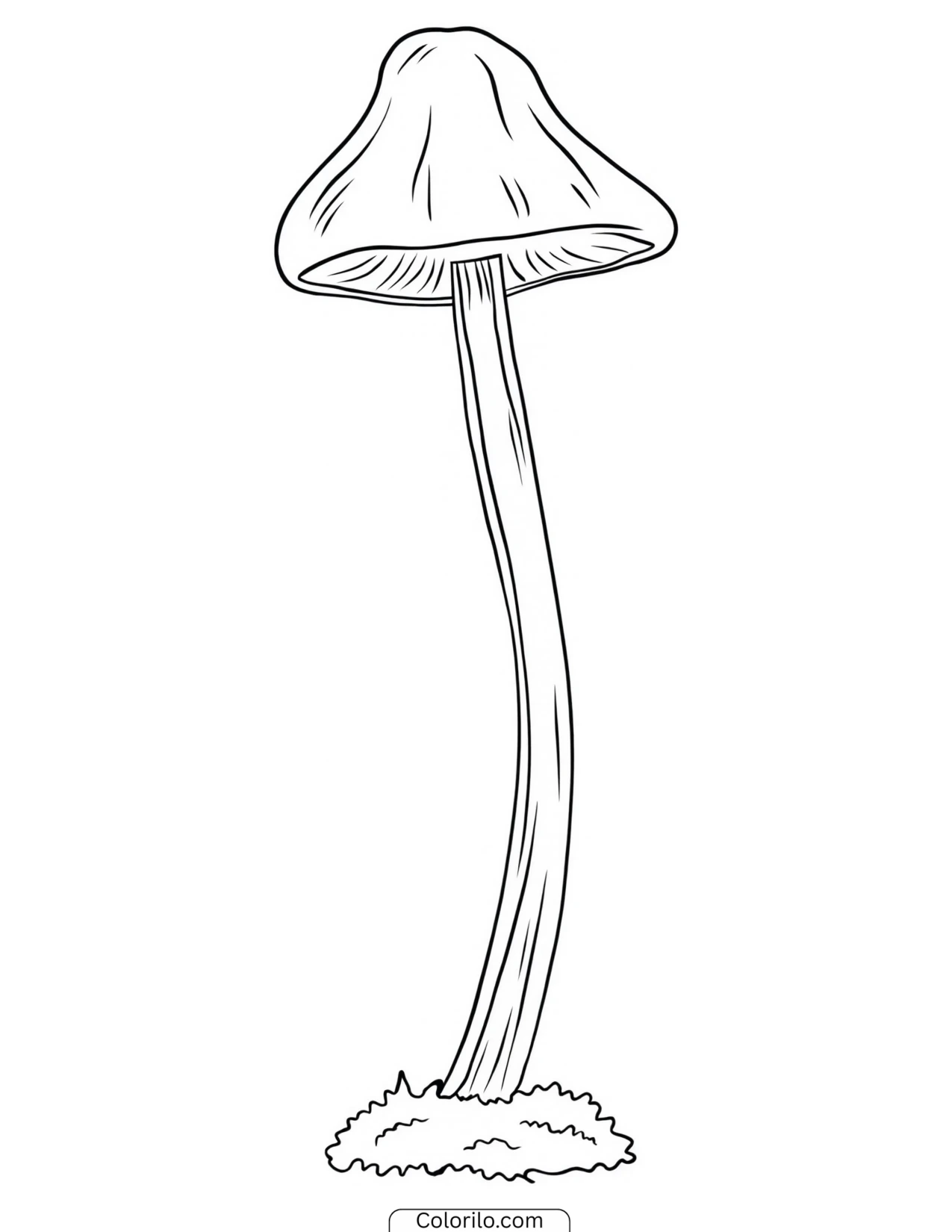
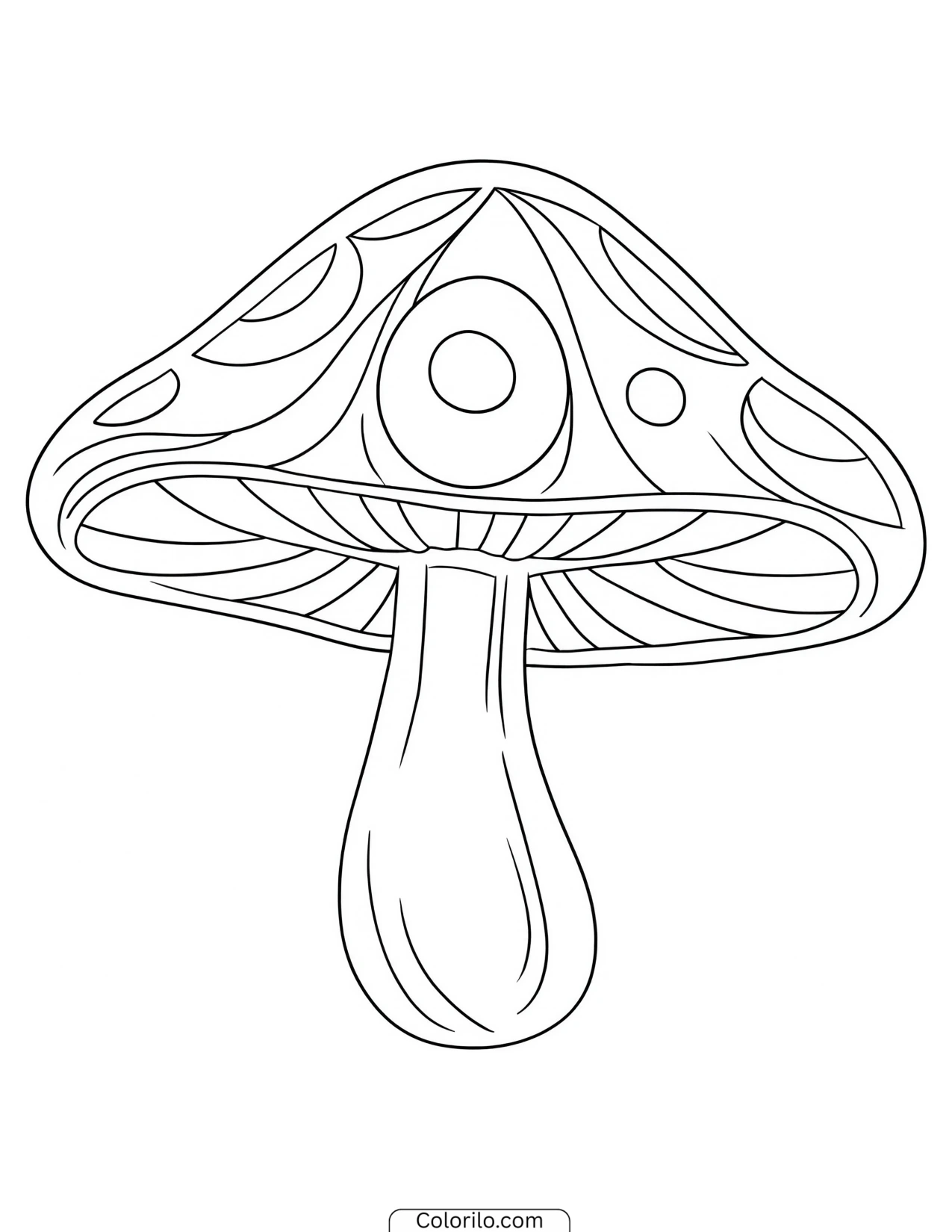
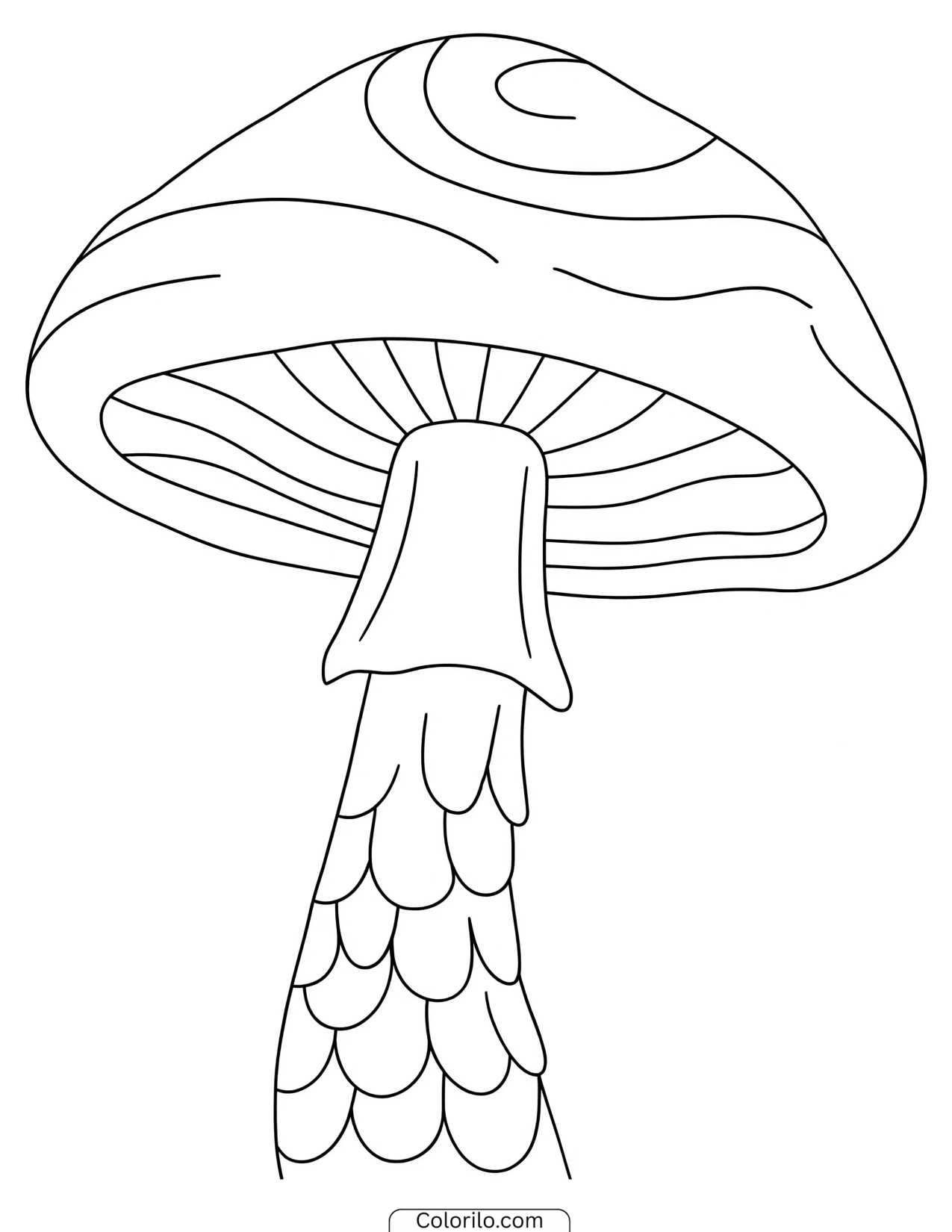
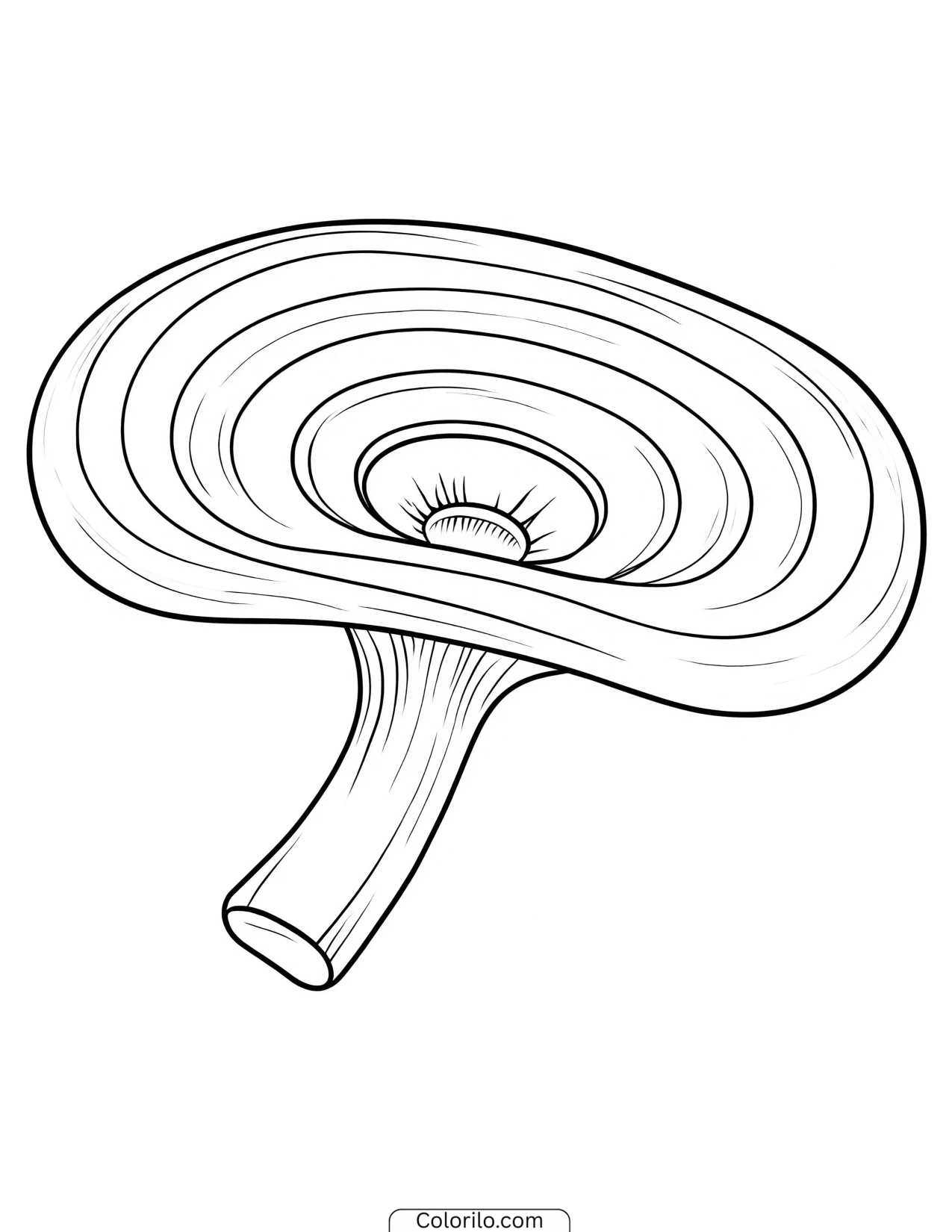
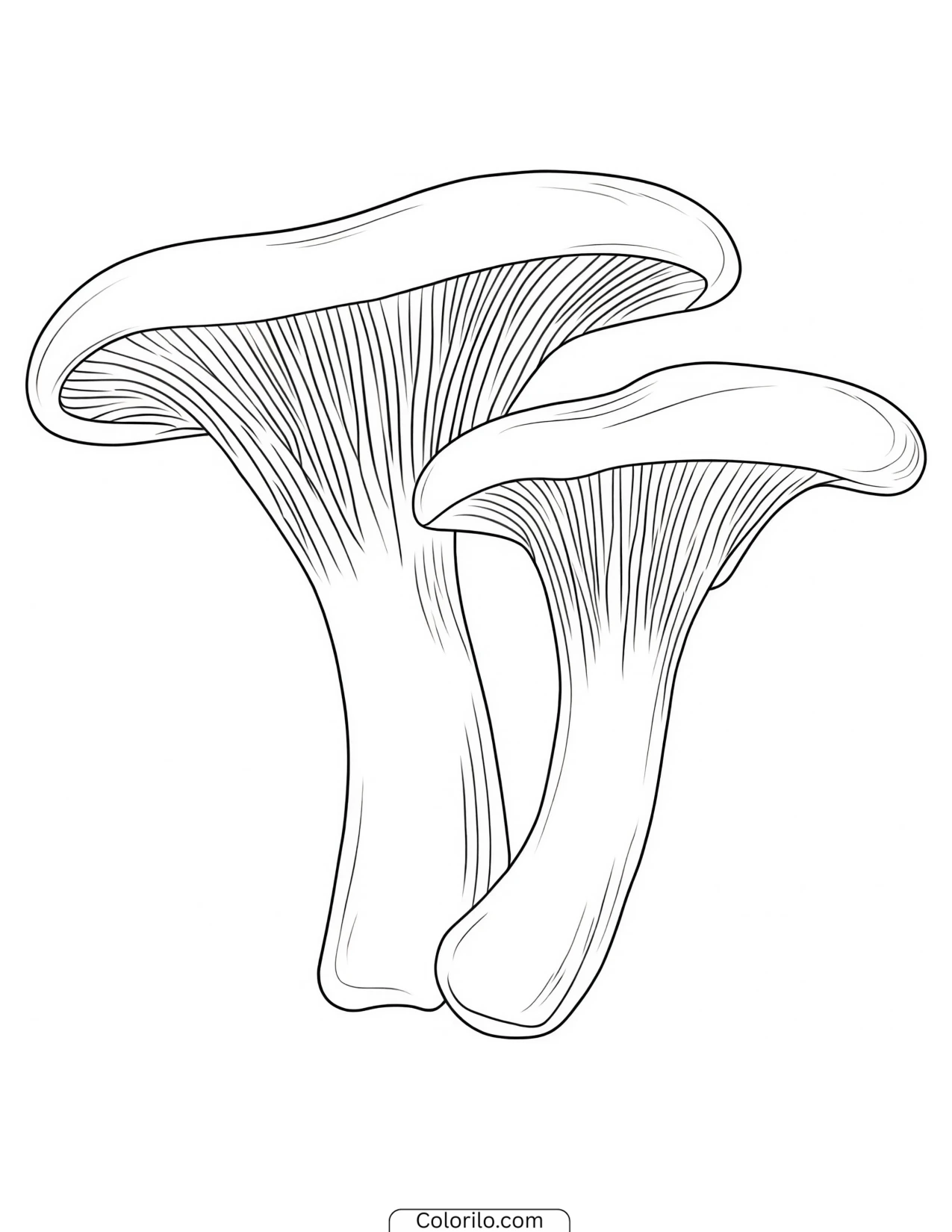
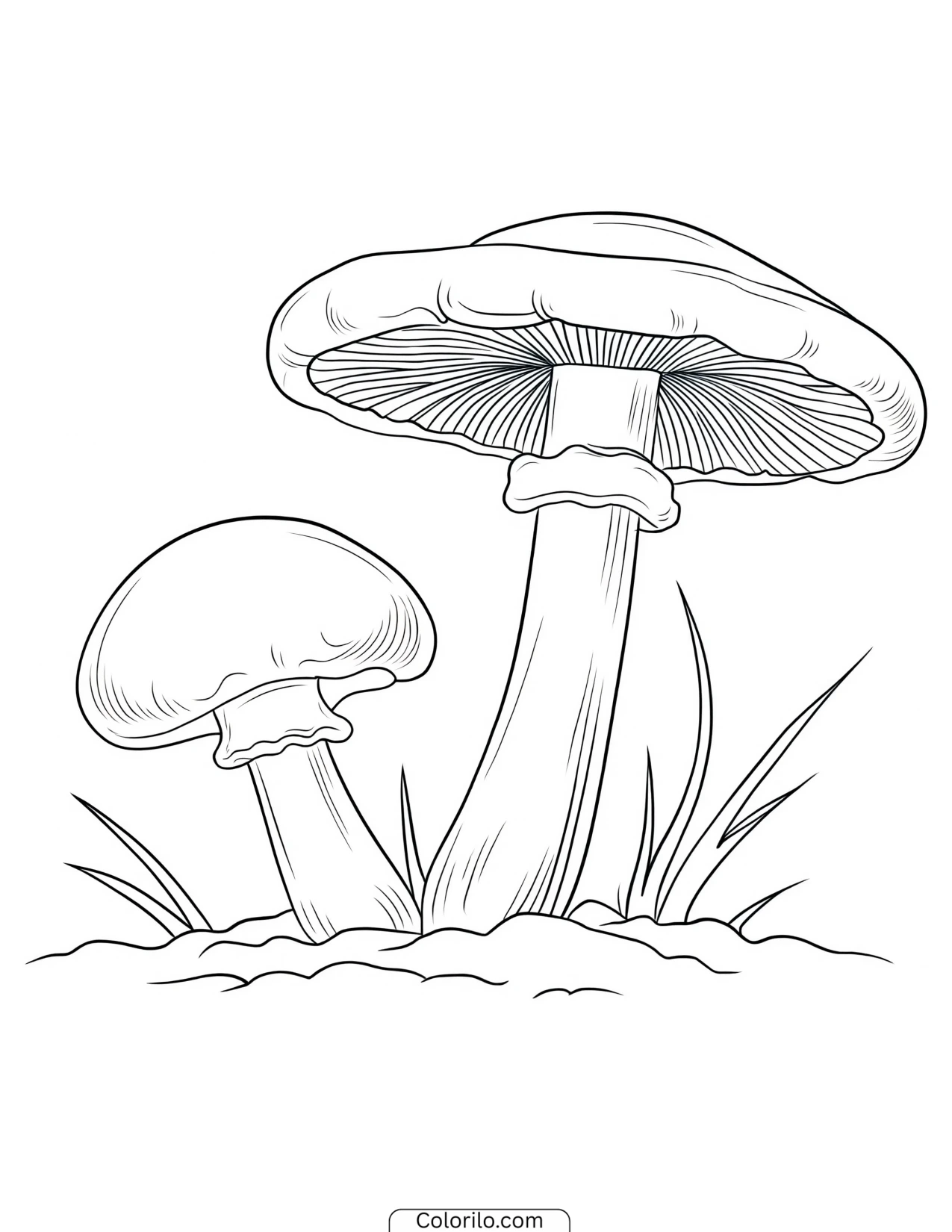
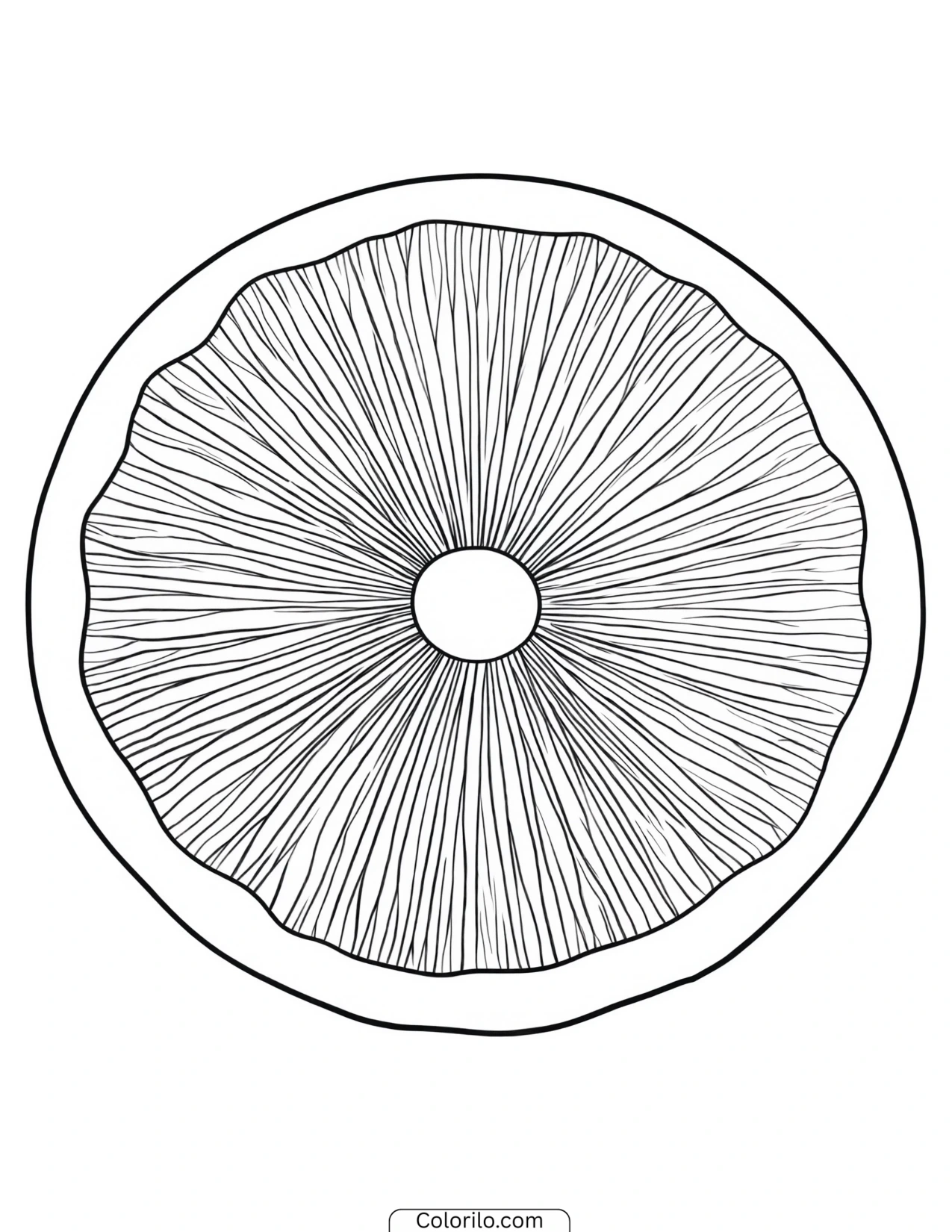
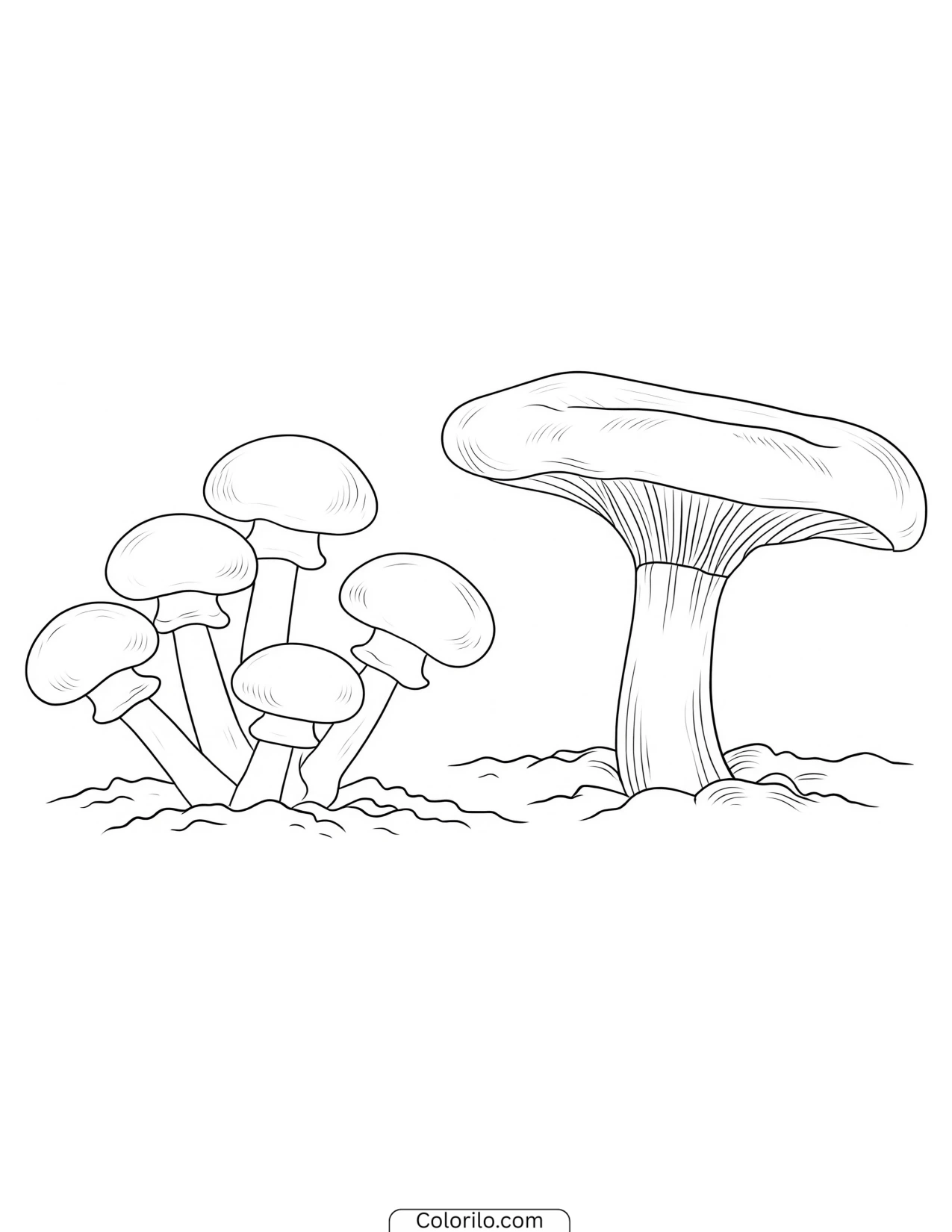
The Fungi in This Collection
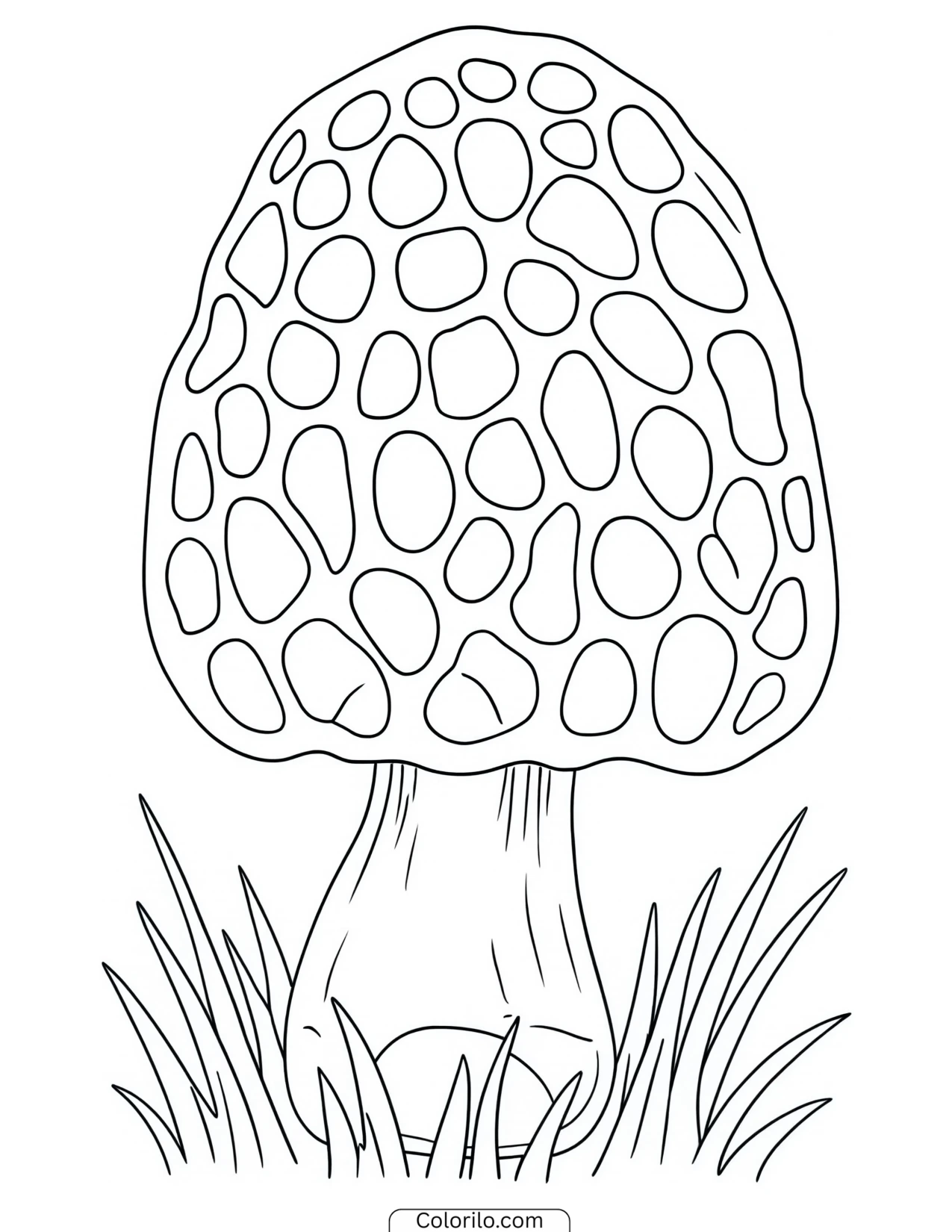
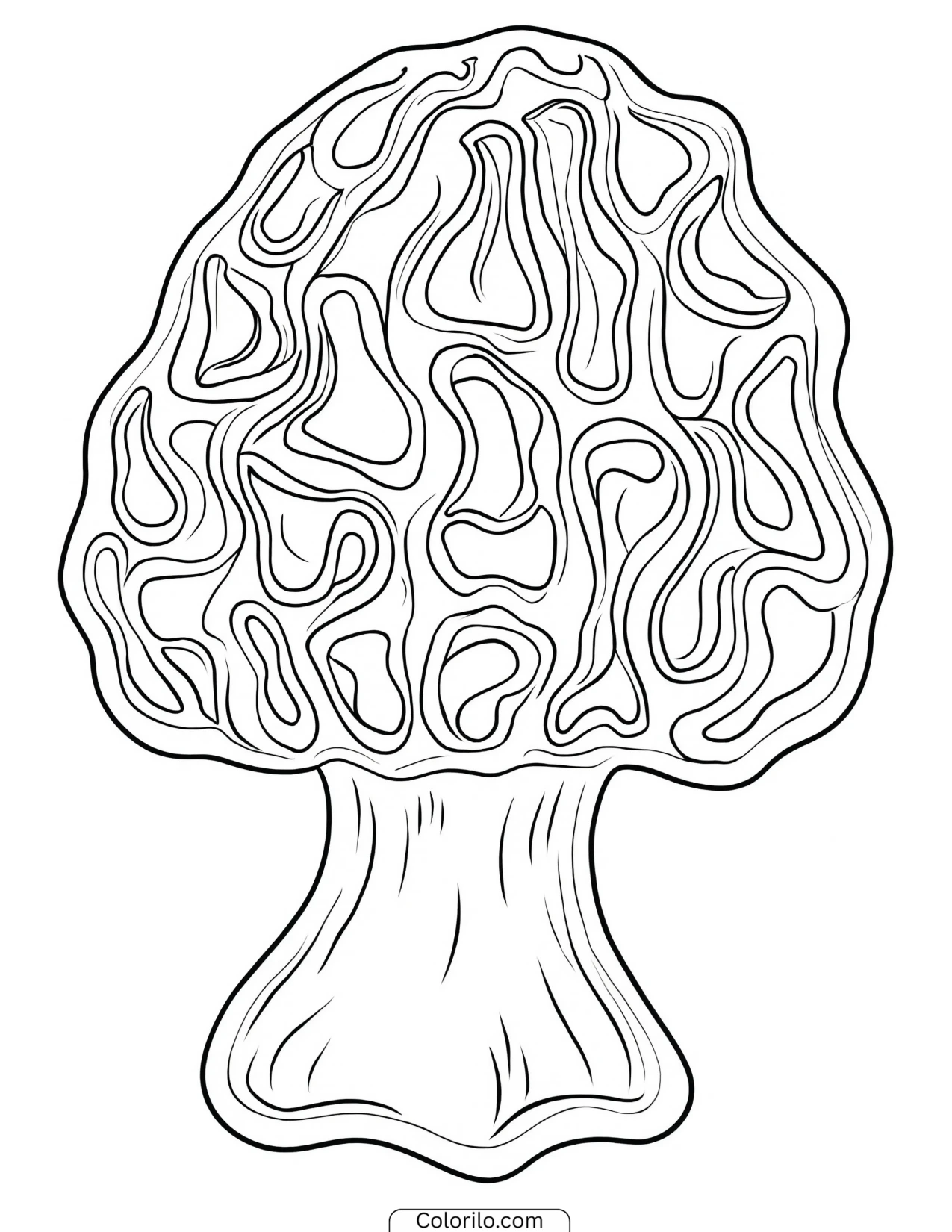
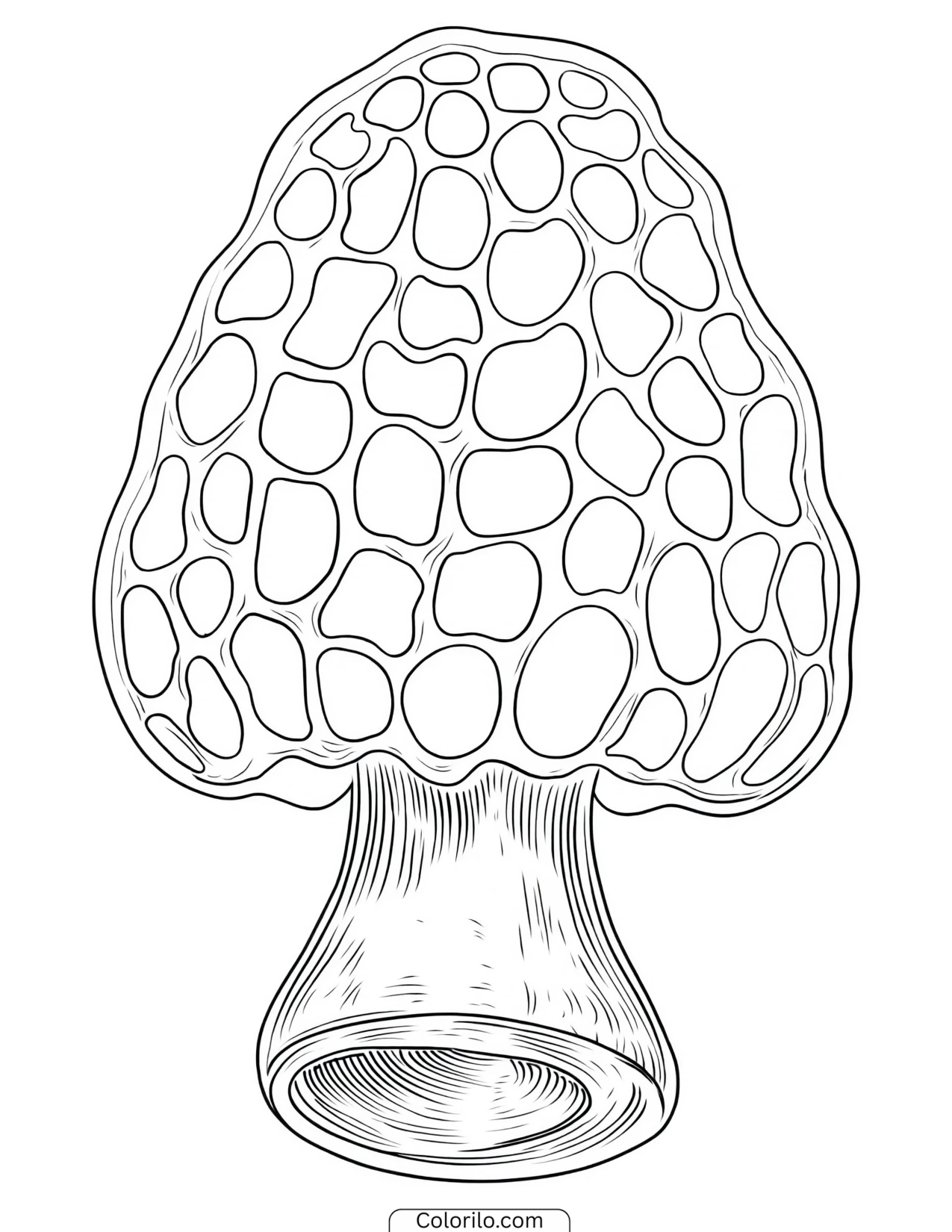
Morel
Four designs. The honeycombed cap is unmistakable, and morels are among the most sought-after wild edibles, partly because nobody has managed to farm them reliably. They tend to appear in spring, often on ground that burned the year before.
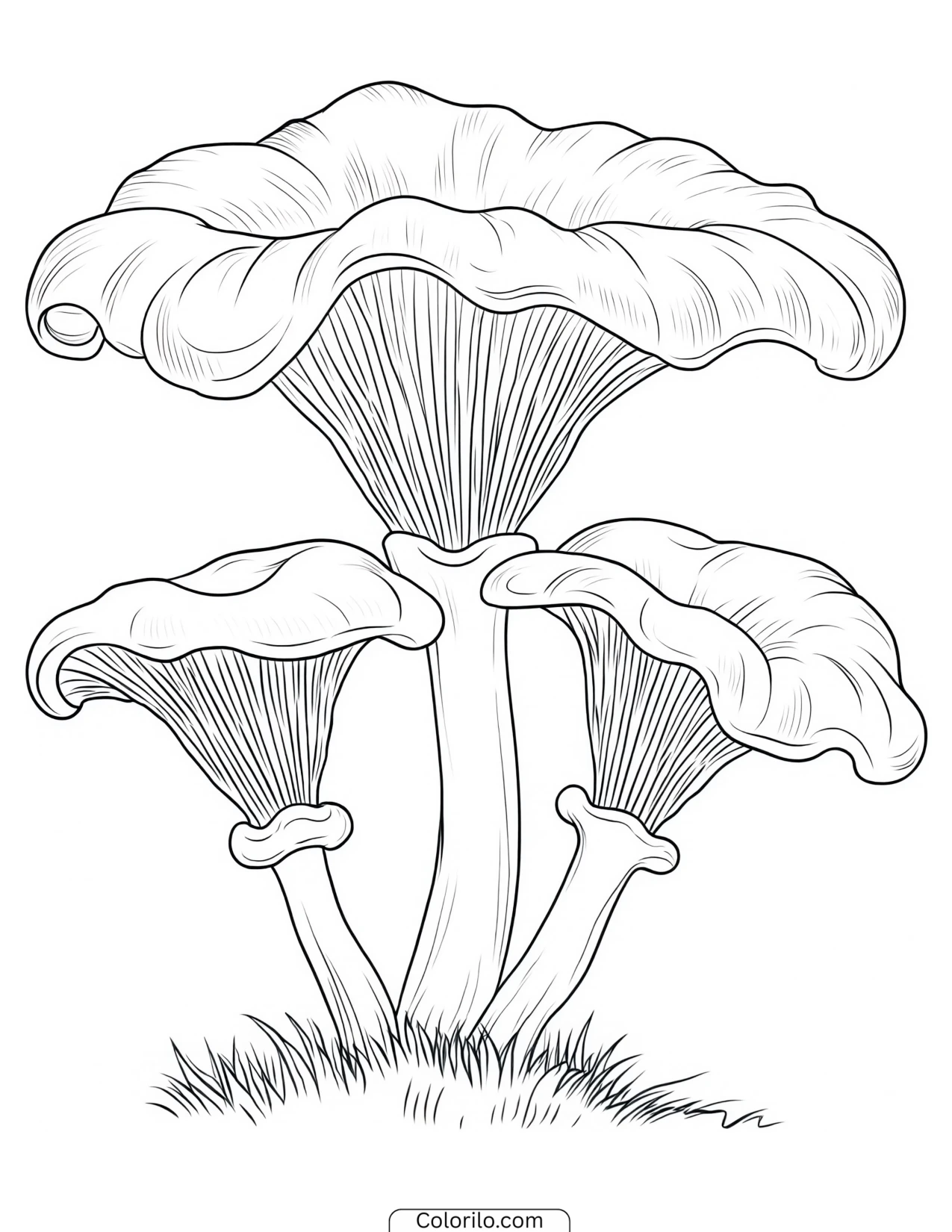
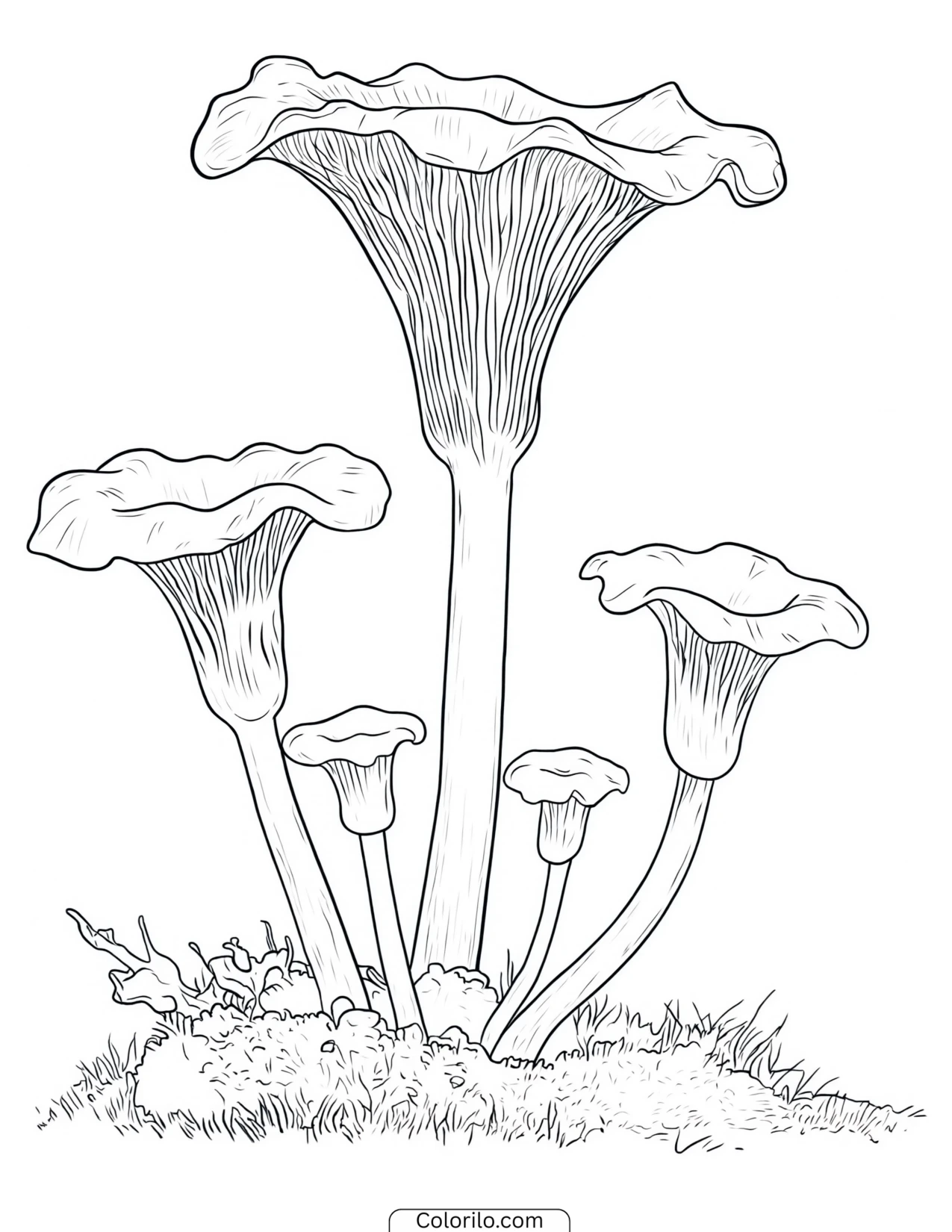
Chanterelle
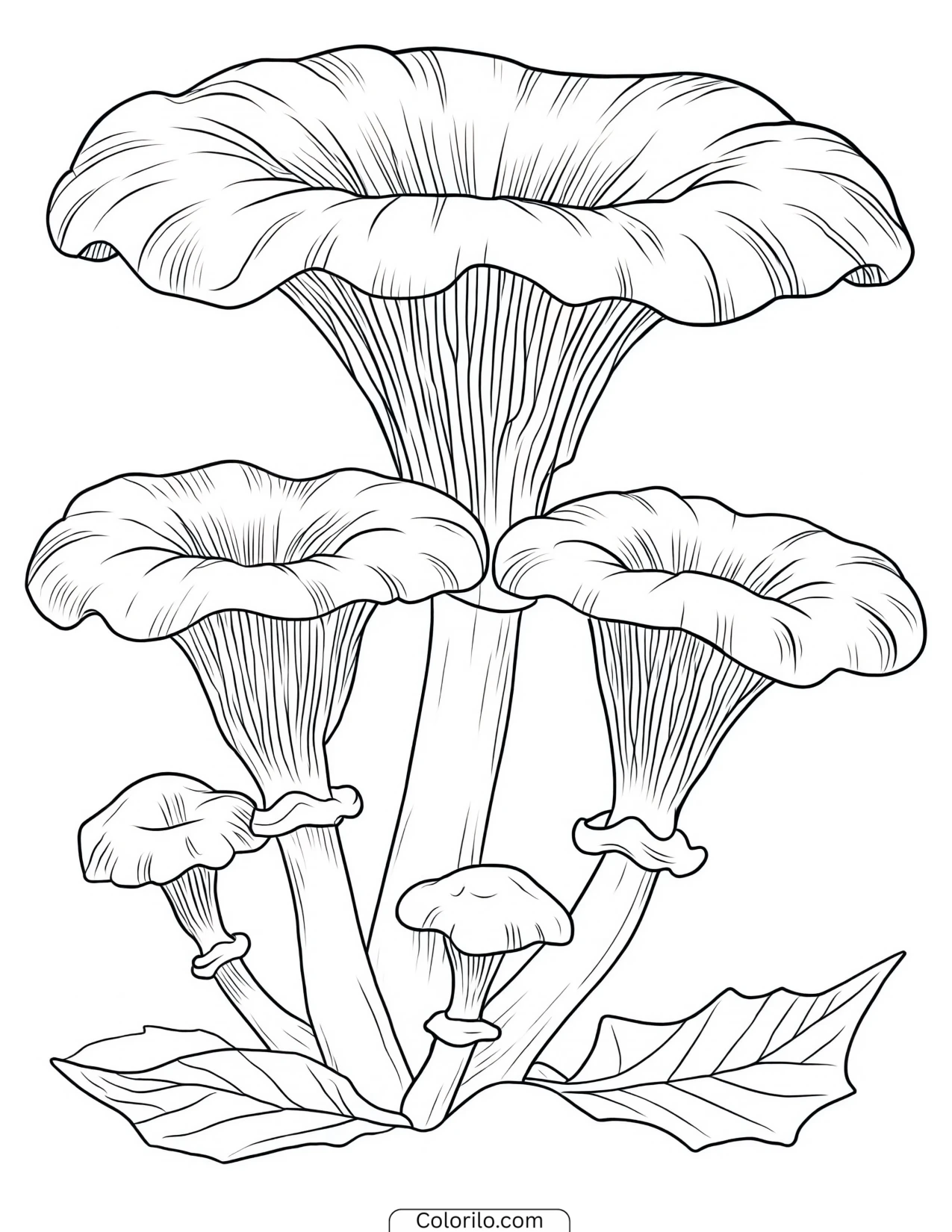
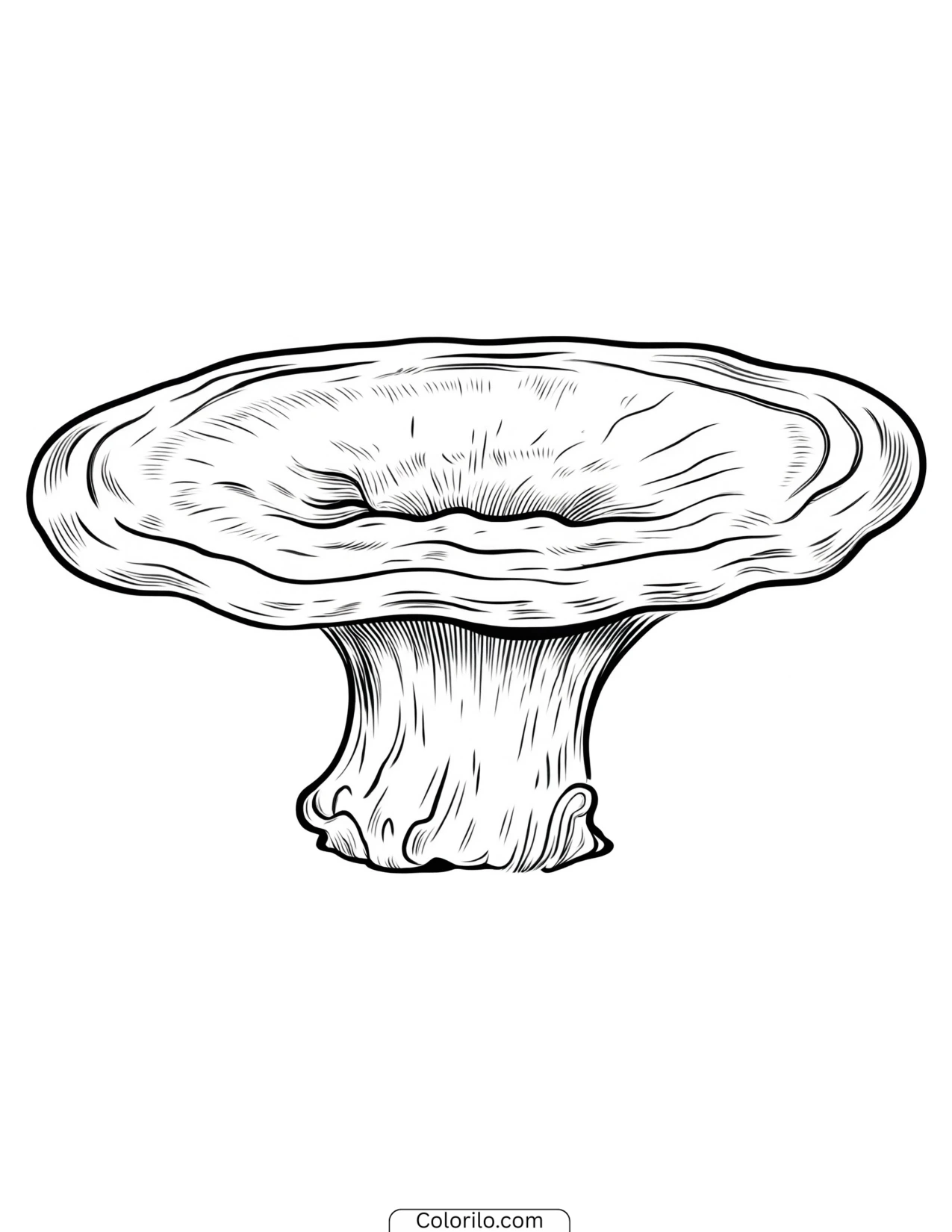
One design. Golden, funnel-shaped, and prized in cooking. What look like gills underneath are actually blunt ridges running down the stem, which is one of the ways foragers separate them from lookalikes.
Enoki
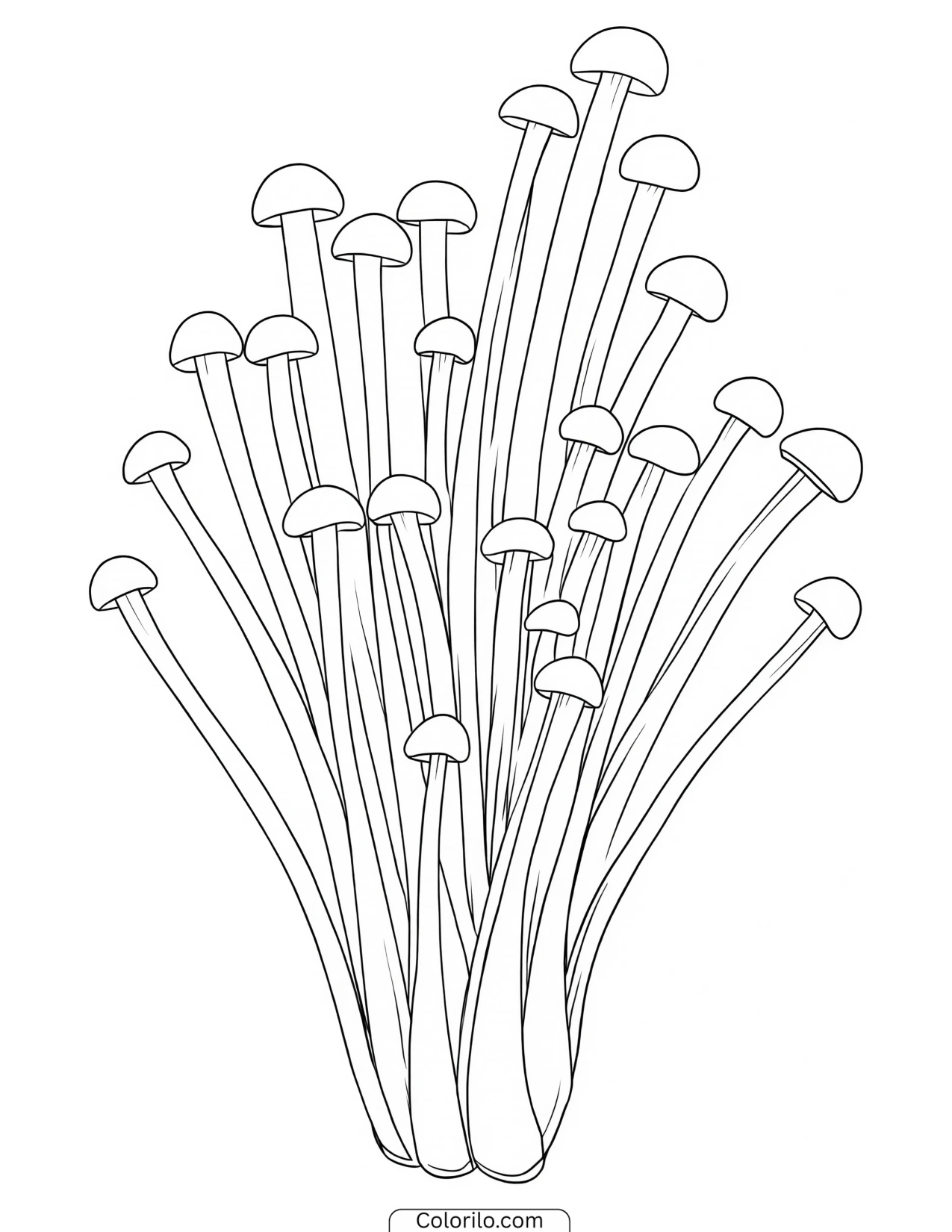
One cluster. Long thin white stems with tiny caps, grown commercially in the dark, which is what makes them pale and elongated. Wild enoki look considerably different.
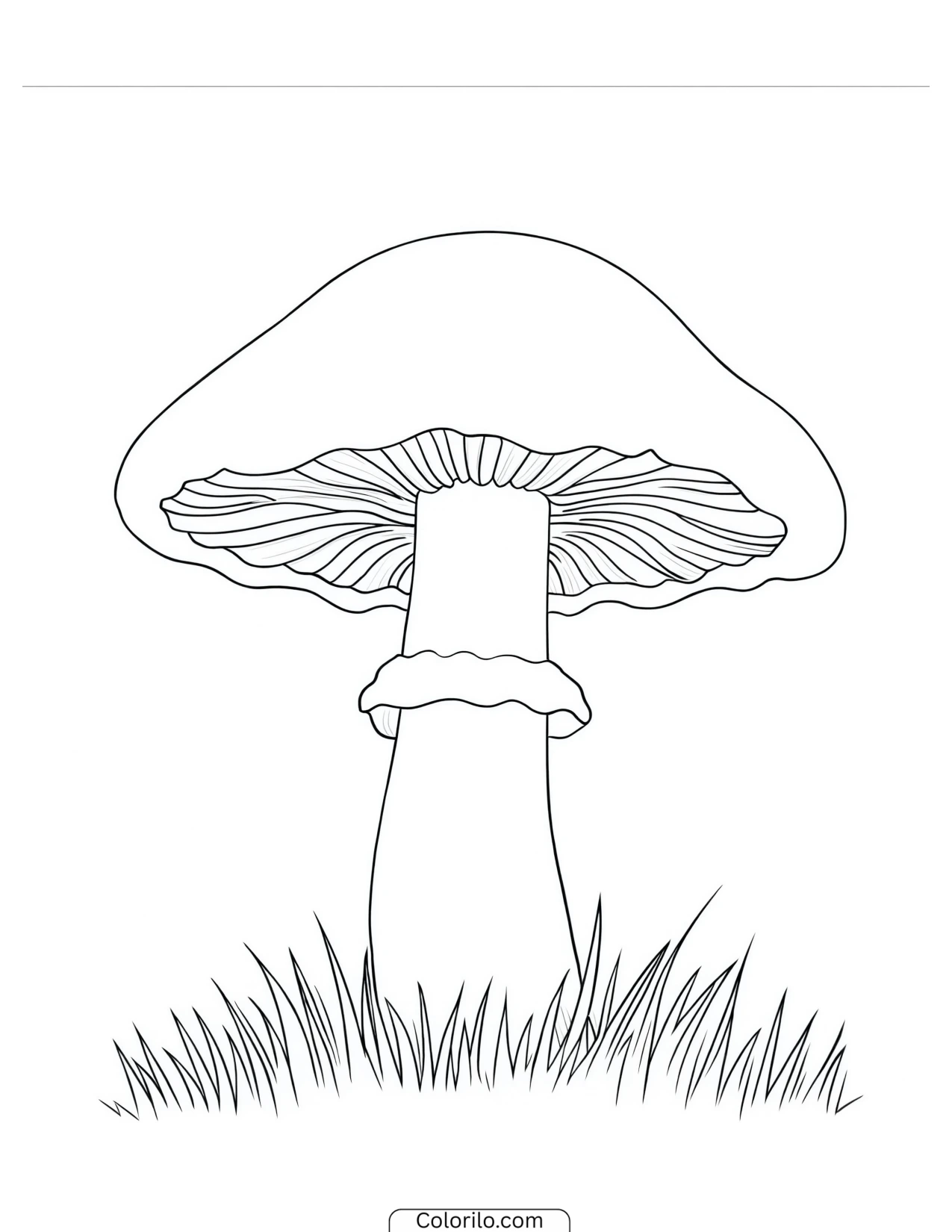
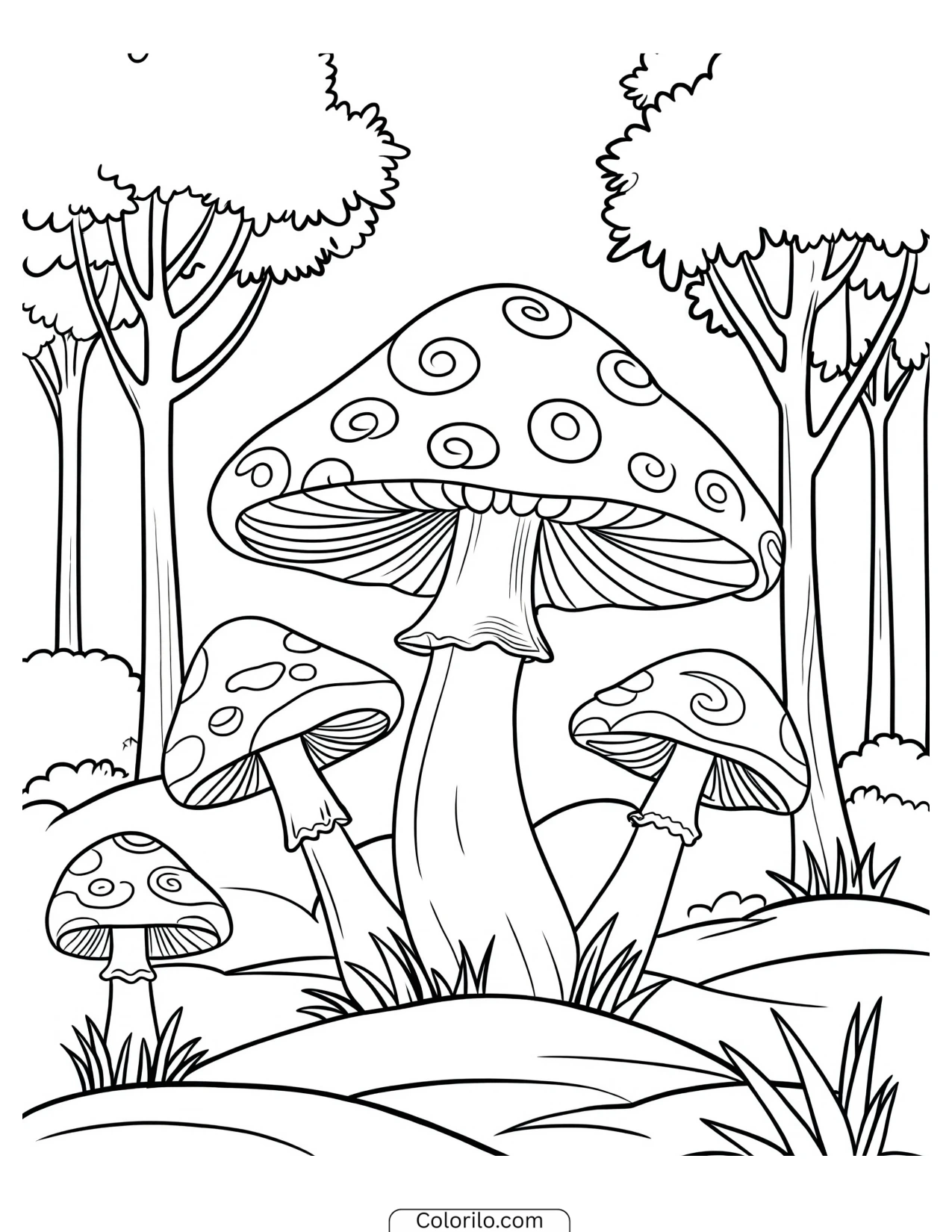
Amanita
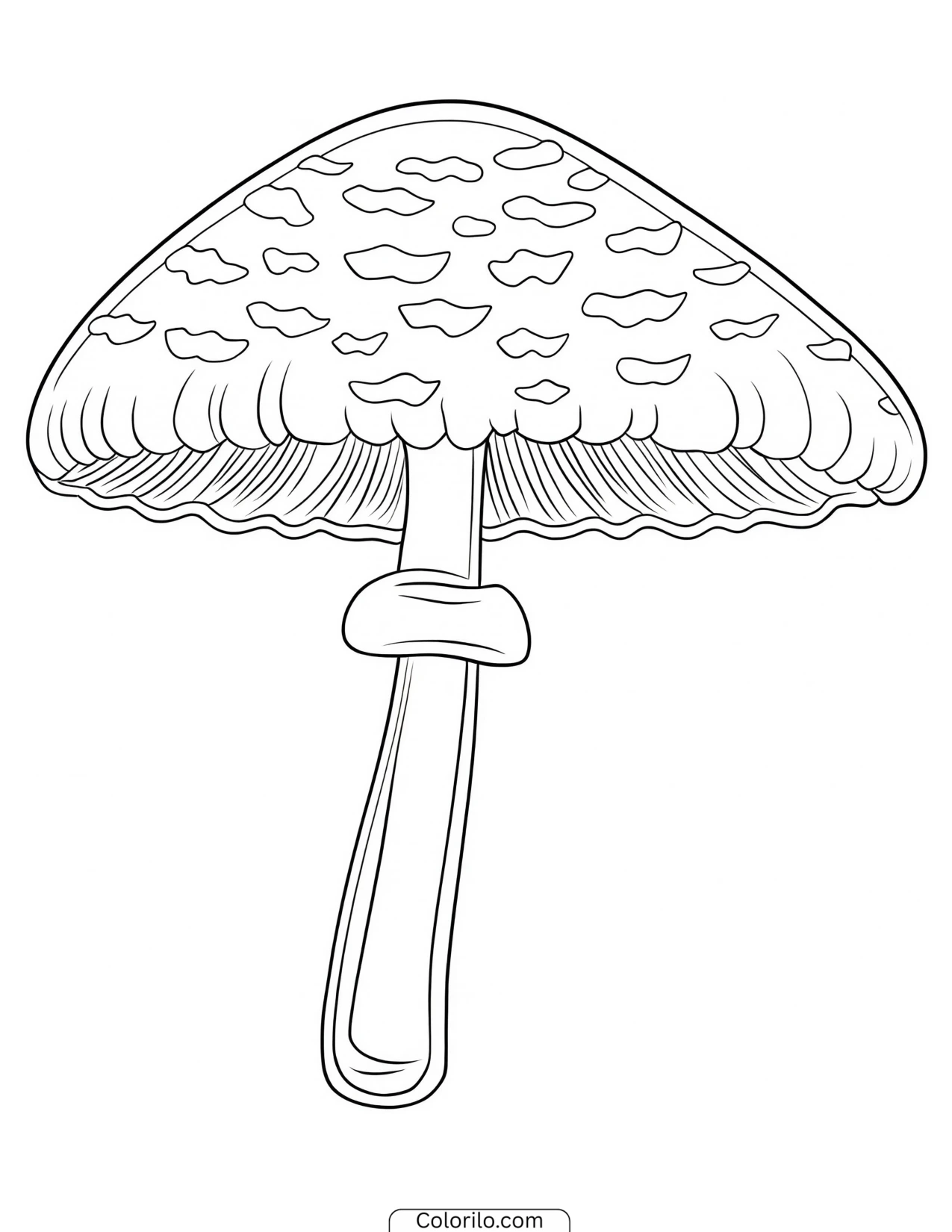
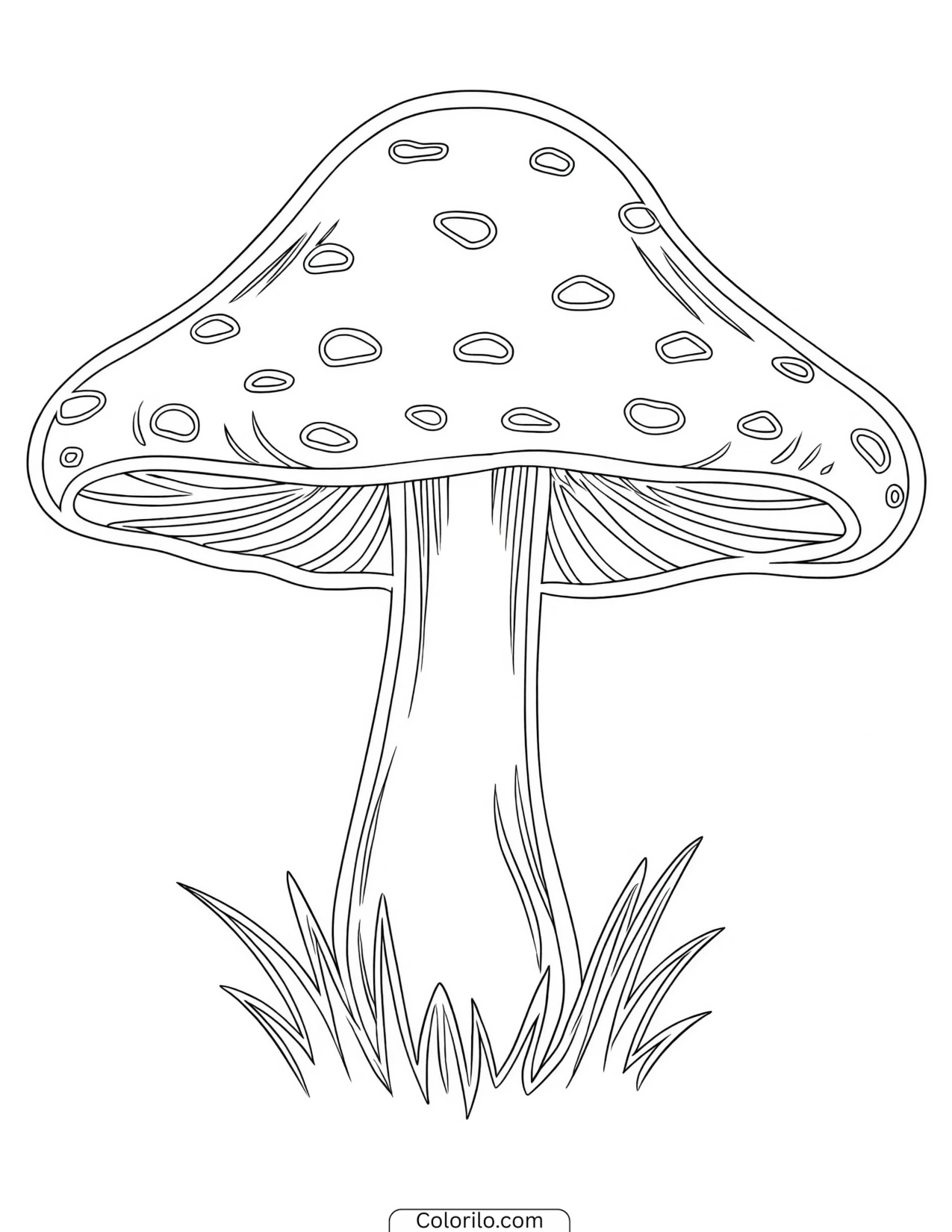
One named design, though several of the spotted toadstools here appear to be the same thing. Amanita muscaria, or fly agaric, is the red cap with white flecks that appears in more or less every illustrated fairy tale. It’s toxic, and it’s also the reason “toadstool” carries a whiff of danger.
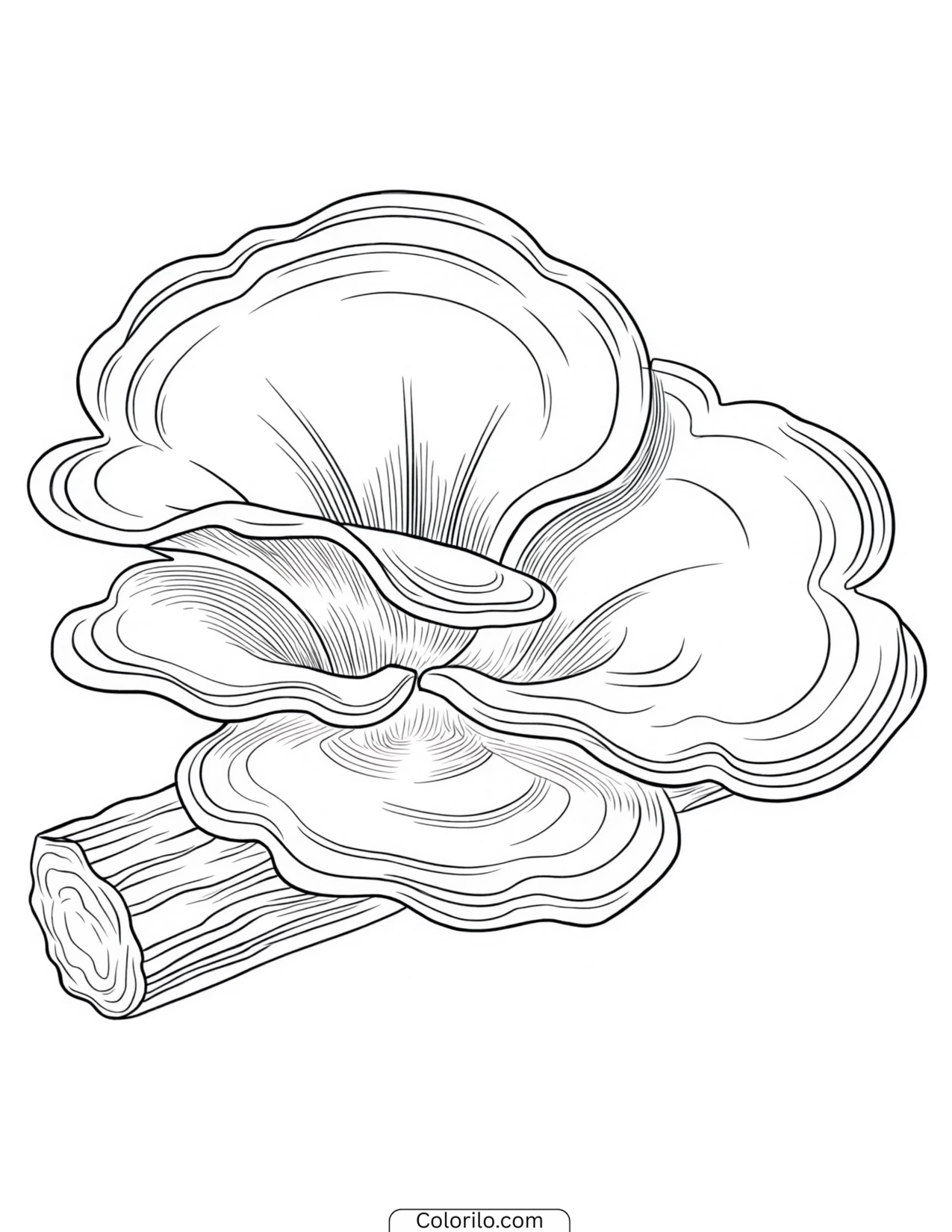
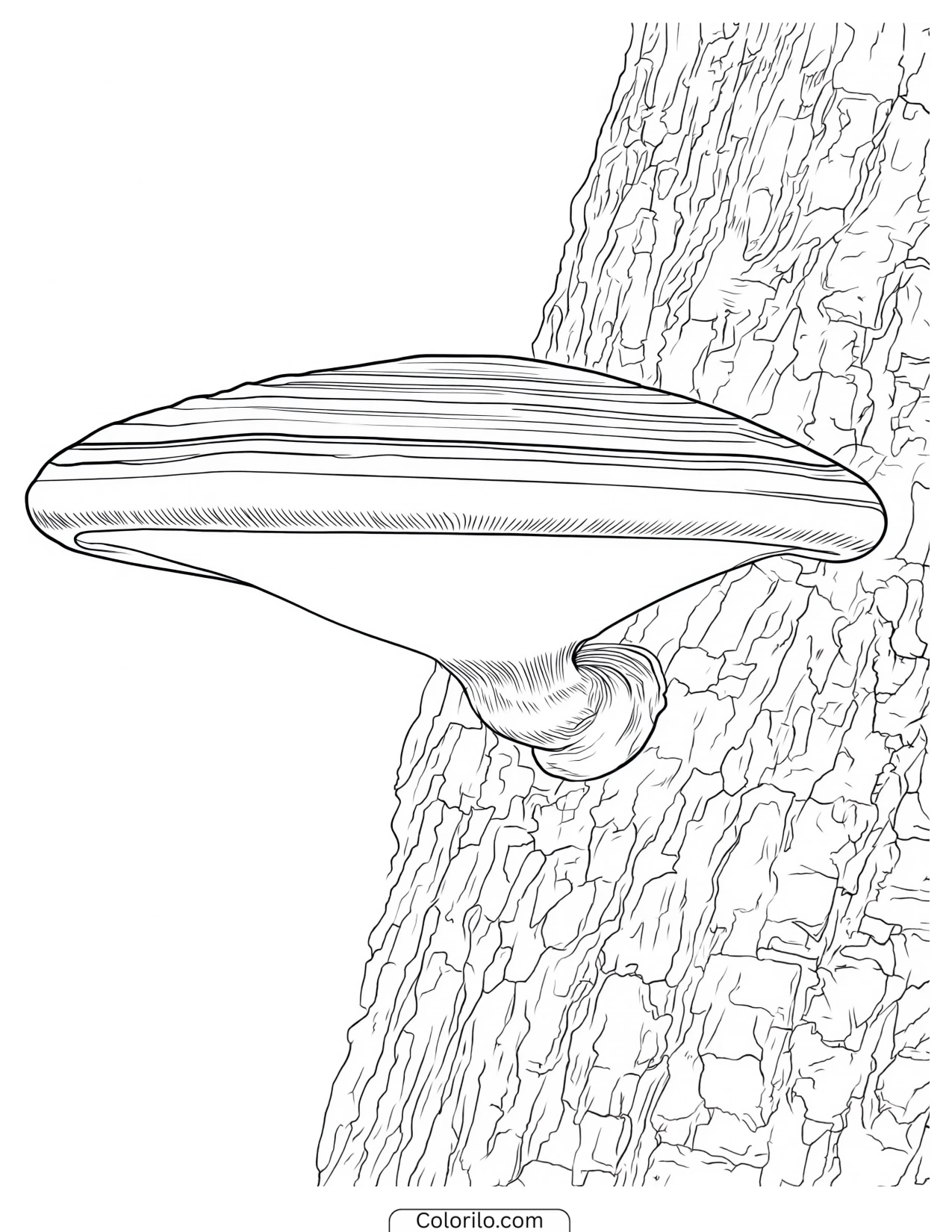
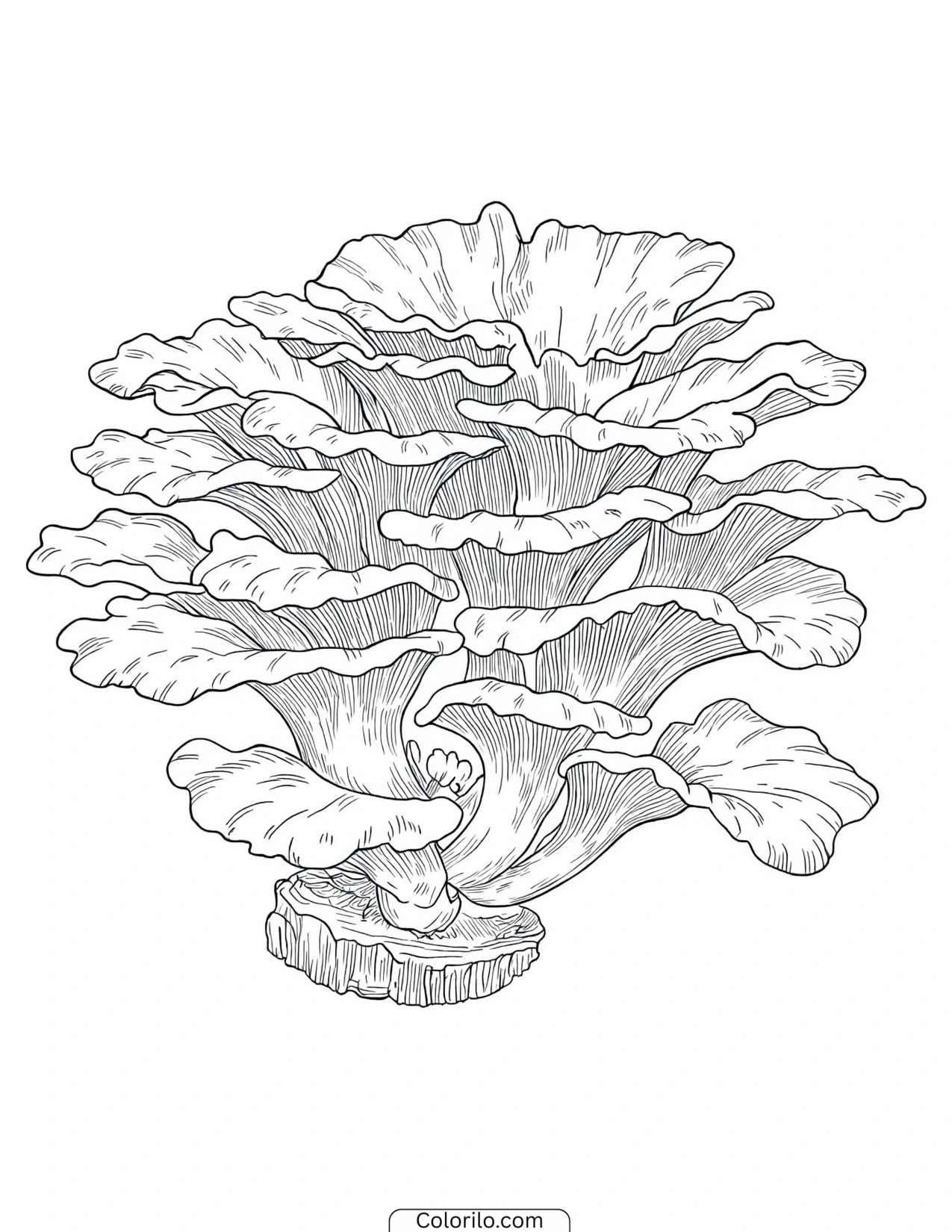
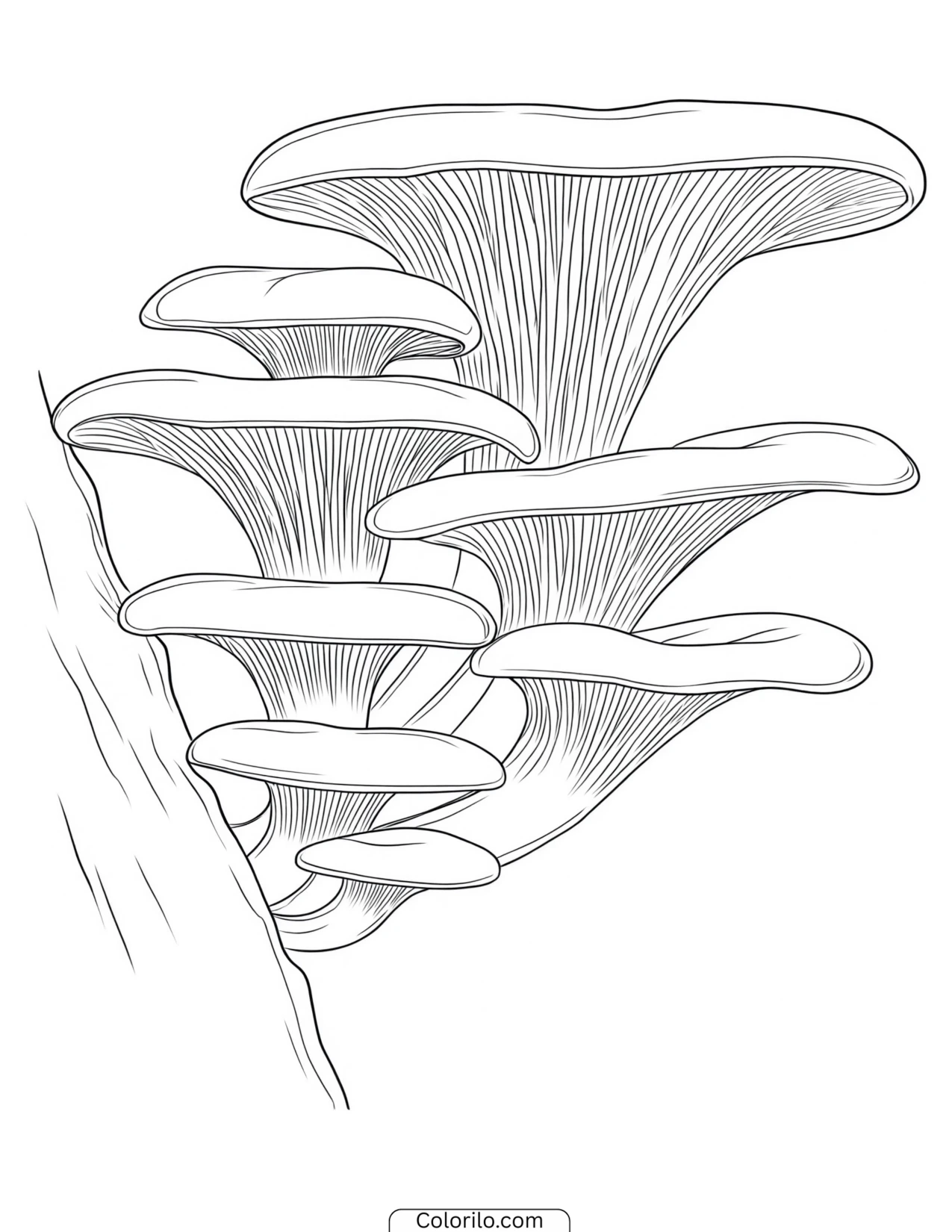
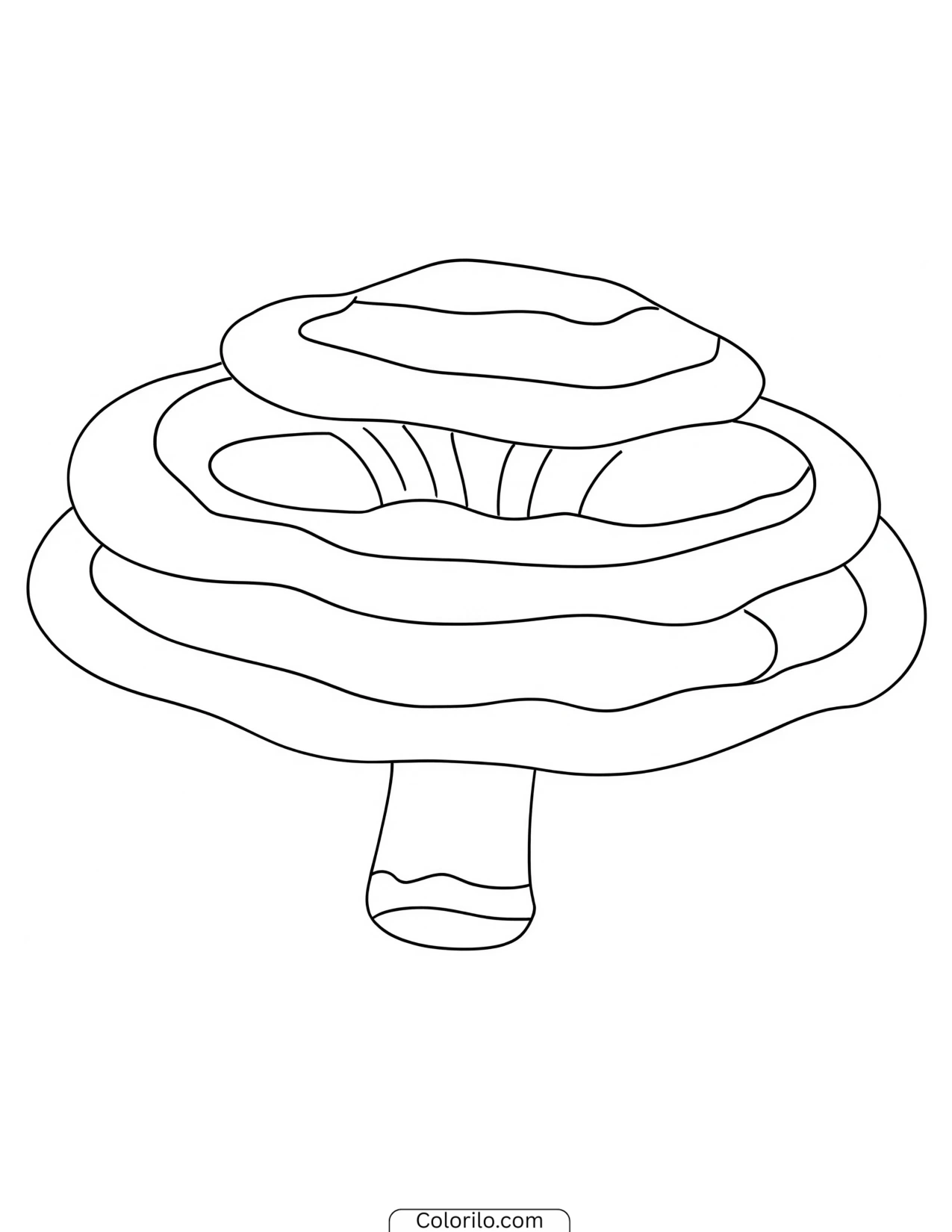
Bracket and shelf fungi
Three designs. These grow directly out of wood in stacked tiers and can live for years, adding a layer annually much like tree rings. Many are decomposers, breaking down dead trunks.
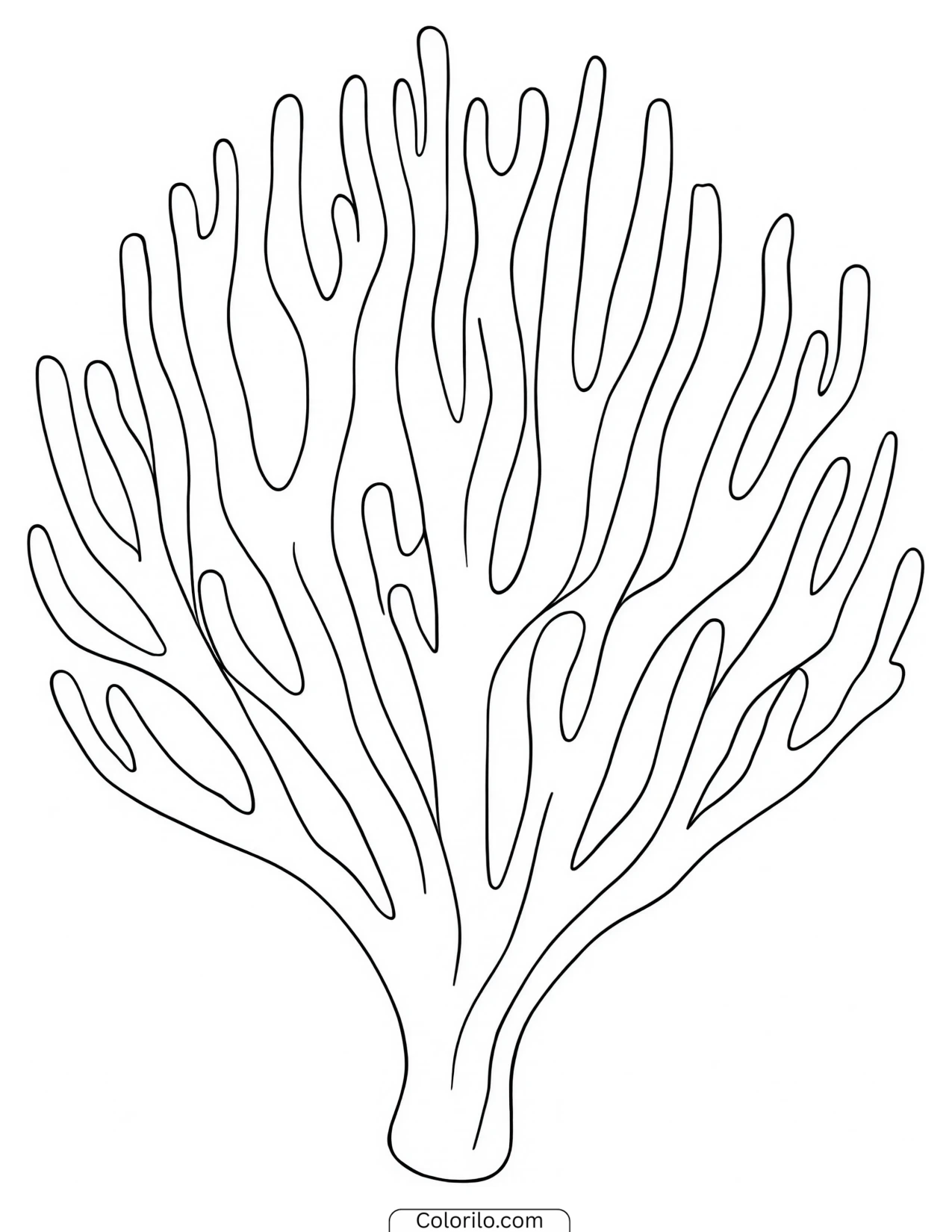
Coral fungus
One design. Branching upward in antler-like forms rather than forming a cap at all, which is a useful reminder of how much variation the kingdom holds.
Fairy rings
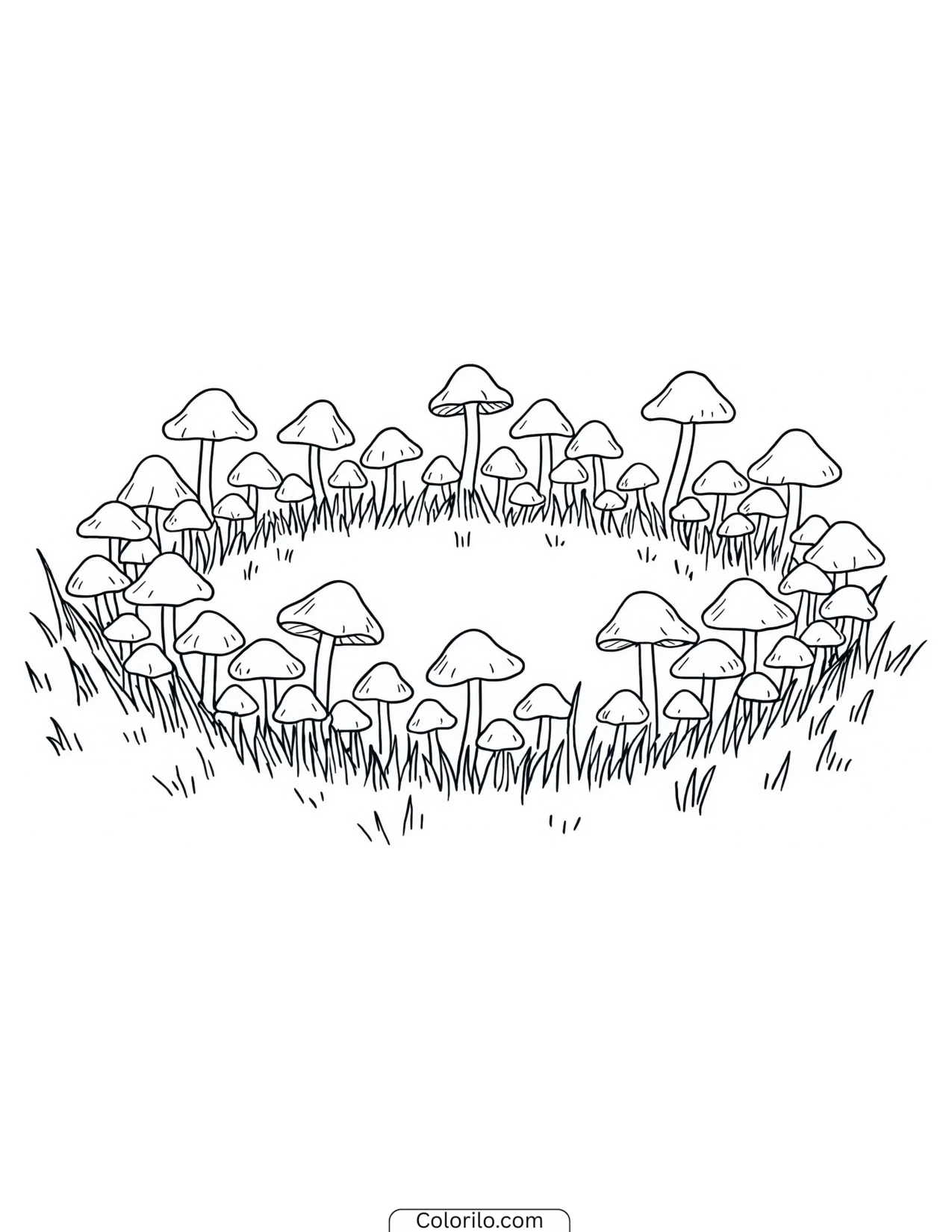
One design. Real, and not mysterious: a fungus spreads outward underground from a central point, fruiting at the expanding edge, which produces a circle. Some rings in Europe are estimated to be centuries old. Folklore across Britain and Scandinavia held them to be dancing places, and stepping inside was thought to be unwise.
Gills and cap undersides
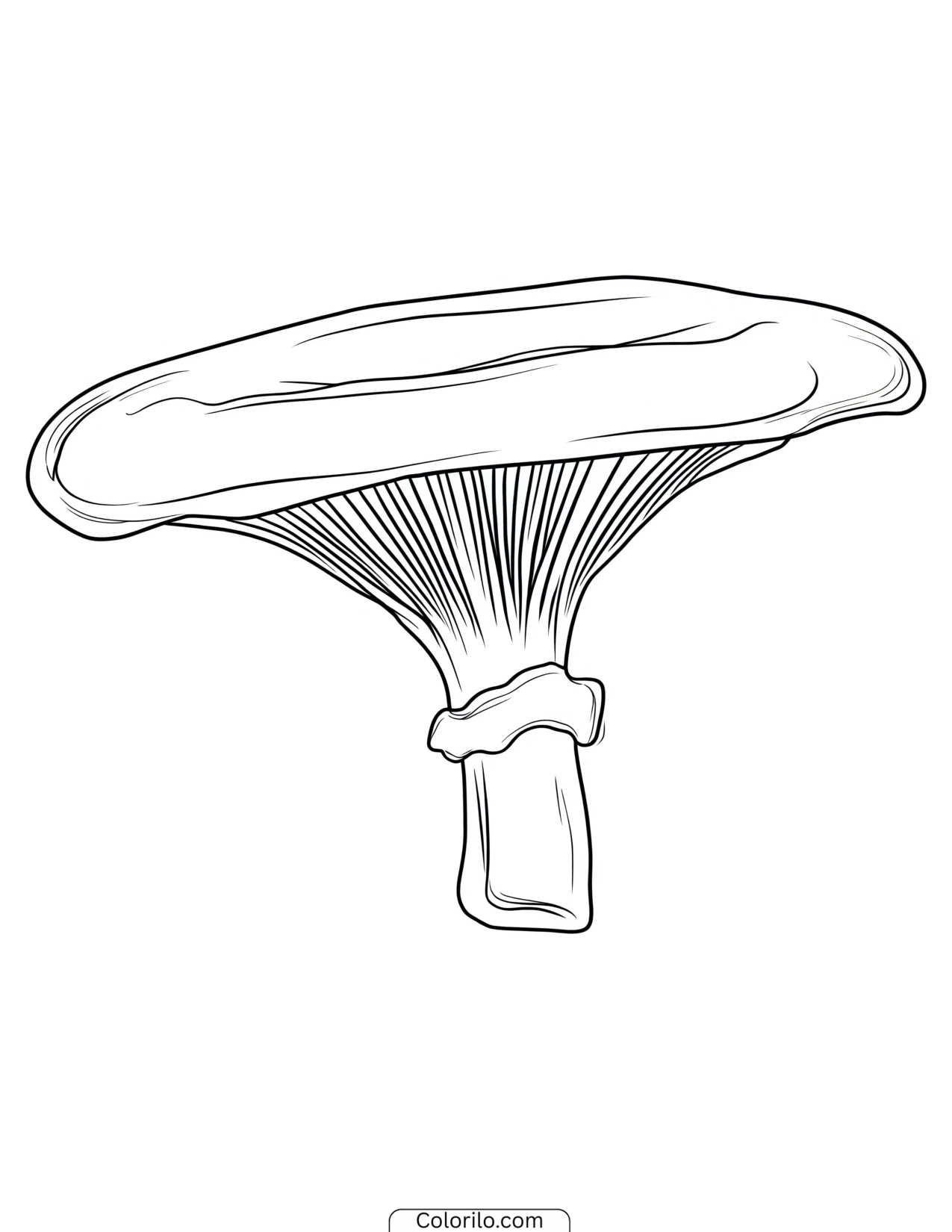
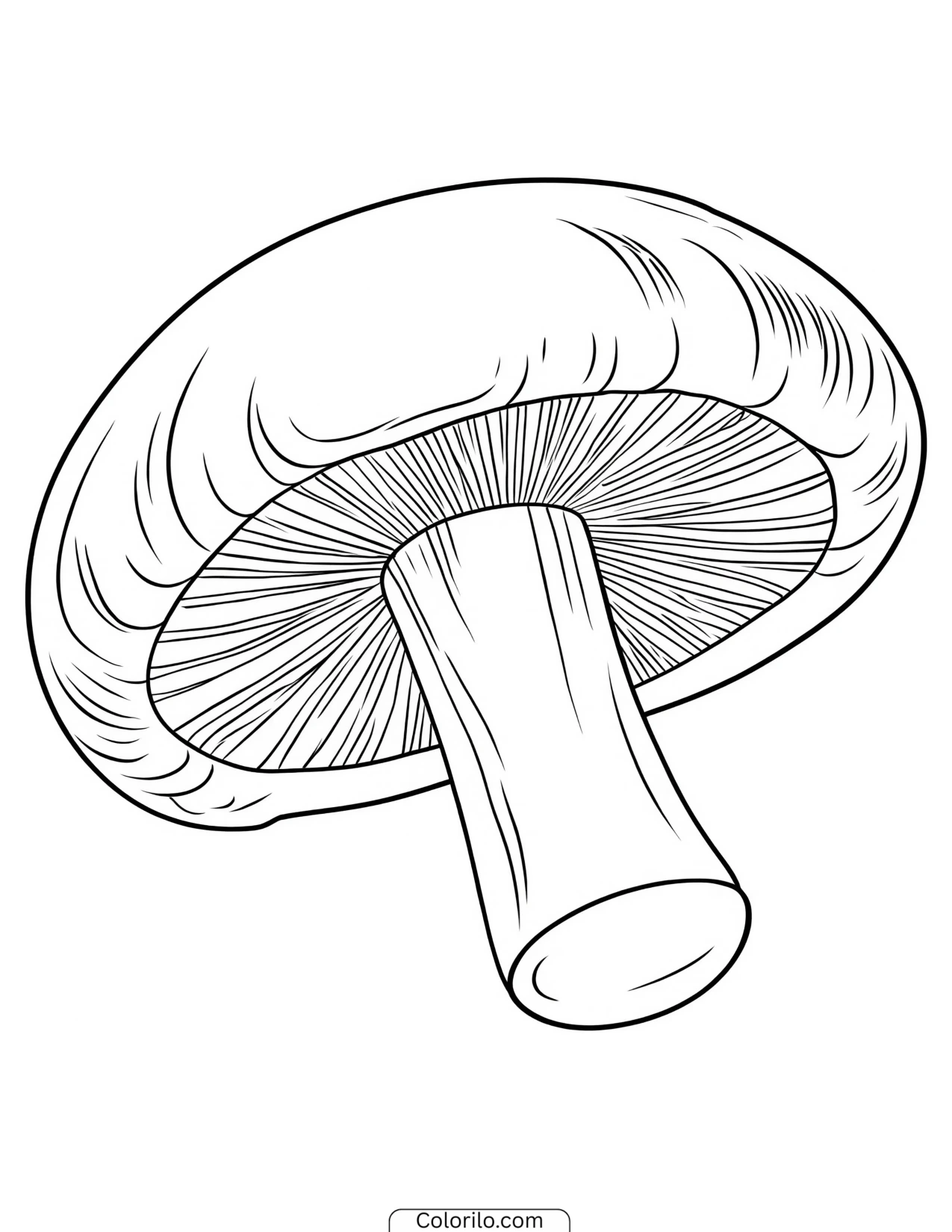
Two designs showing the structure directly. The gills are where spores are produced, a single large mushroom can release billions, which is why they’re worth drawing attention to.
Coloring Tips
Mushrooms are rarely one brown. Real caps shade from a darker centre outward, and the stem is usually paler than the cap. Two tones does more here than any single colour choice.
Gills want a light hand. The close-up and underside pages have dozens of narrow radiating lines. Leaving them mostly pale with shadow only where they meet the stem reads far better than filling each one.
Fly agaric has a specific palette. Scarlet to orange-red cap, white flecks left unfilled, white stem with a ring near the top. The spotted pages here are the ones to try it on.
The wood pages need contrast. Bracket fungi and log clusters sit against bark, and if the wood and the fungus are both mid-brown the whole thing goes flat. Push the bark darker or cooler.
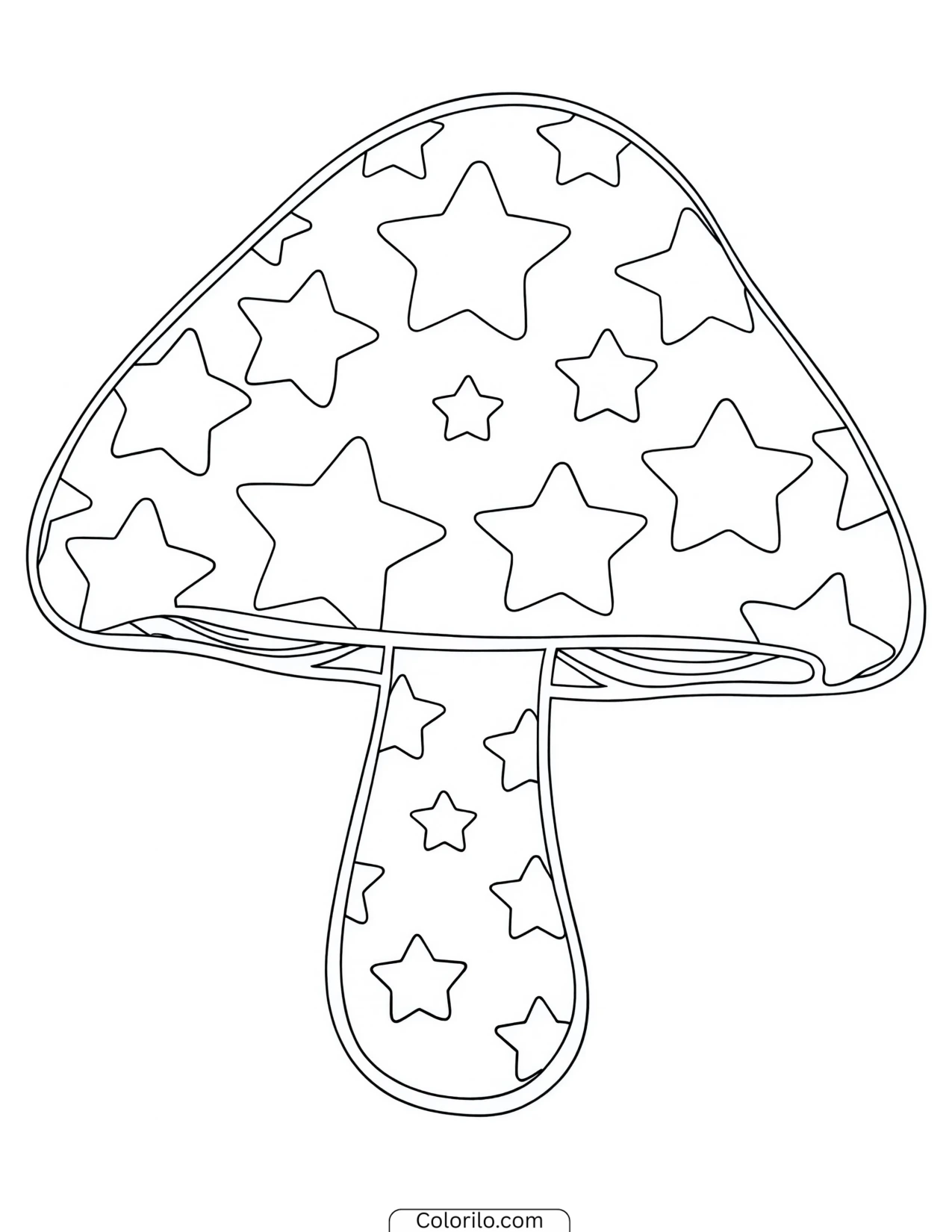
Try the decorative ones in unnatural colours. The star-patterned, swirl-patterned, celestial, and wreath designs aren’t trying to be botanically accurate, so purple, teal, and gold all work. The realistic pages reward accuracy; these reward the opposite.
Start young children on the simple caps and the cartoon mushroom. The smiling mushroom and the plain single-cap designs have the largest open shapes in the set.
Frequently Asked Questions
Are these mushroom coloring pages really free?
Yes, all 72 are free to download and print. Click any design to open the PDF. No account, no email, no payment.
What age are these suitable for?
The simple single-mushroom outlines and the smiling cartoon mushroom suit children from around four. The woodland scenes and clusters work well through primary school. The gill close-ups, the morels, and the detailed forest pages have the most line work and suit eight and up, including adults.
Which mushrooms are included?
Morel, chanterelle, enoki, amanita, bracket and shelf fungi, and coral fungus are identified. The remaining designs are mushrooms drawn by cap and stem shape rather than species, along with woodland scenes, a fairy ring, a mushroom wreath, and a mushroom house.
Can I use these in a classroom?
Yes. They pair well with lessons on fungi, decomposition, forest ecosystems, or the difference between plants and fungi, and are free for personal, educational, and classroom use.
Can I print more than one copy?
As many as you need.
Are mushrooms plants?
No, and the distance is larger than most people expect. Fungi form their own kingdom, and genetically they sit closer to animals than to plants. They have no chlorophyll and cannot photosynthesise, so instead of making food from light they absorb nutrients from what they grow on, which is why so many of the pages here show mushrooms on logs, stumps and forest floor rather than in open ground.
What’s the difference between a mushroom and a toadstool?
Scientifically, nothing. Both words describe the fruiting body of a fungus, and there’s no biological line between them. In everyday English “toadstool” has drifted toward the poisonous or fairy-tale sort, the spotted red cap especially, while “mushroom” suggests something edible. Mycologists use neither distinction.
Is the part you see the whole fungus?
Not remotely. What appears above ground is only the reproductive structure. Beneath it runs a network of fine threads called mycelium, which can extend for enormous distances, one honey fungus in Oregon covers close to 10 square kilometres and is thought to be among the largest single organisms on Earth.




Leave a Reply