
Table of Contents
Kittens are the rare subject where the appeal needs no explanation. They also happen to make good drawing subjects for a practical reason, they’re small enough that a whole kitten fits comfortably on a page in a way an adult cat sprawling across a sofa doesn’t, and their proportions are exaggerated to begin with, so a simple outline still reads as unmistakably kitten.
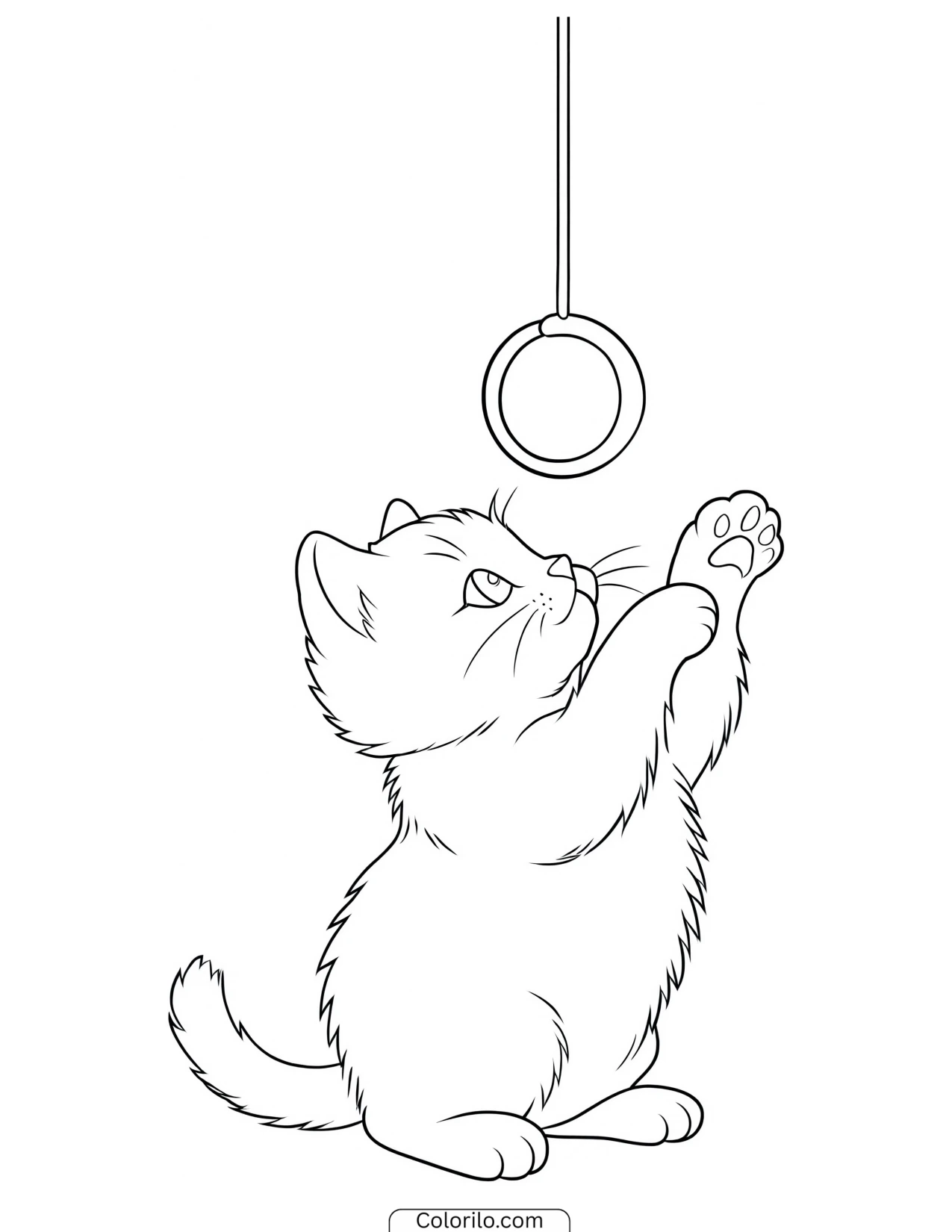
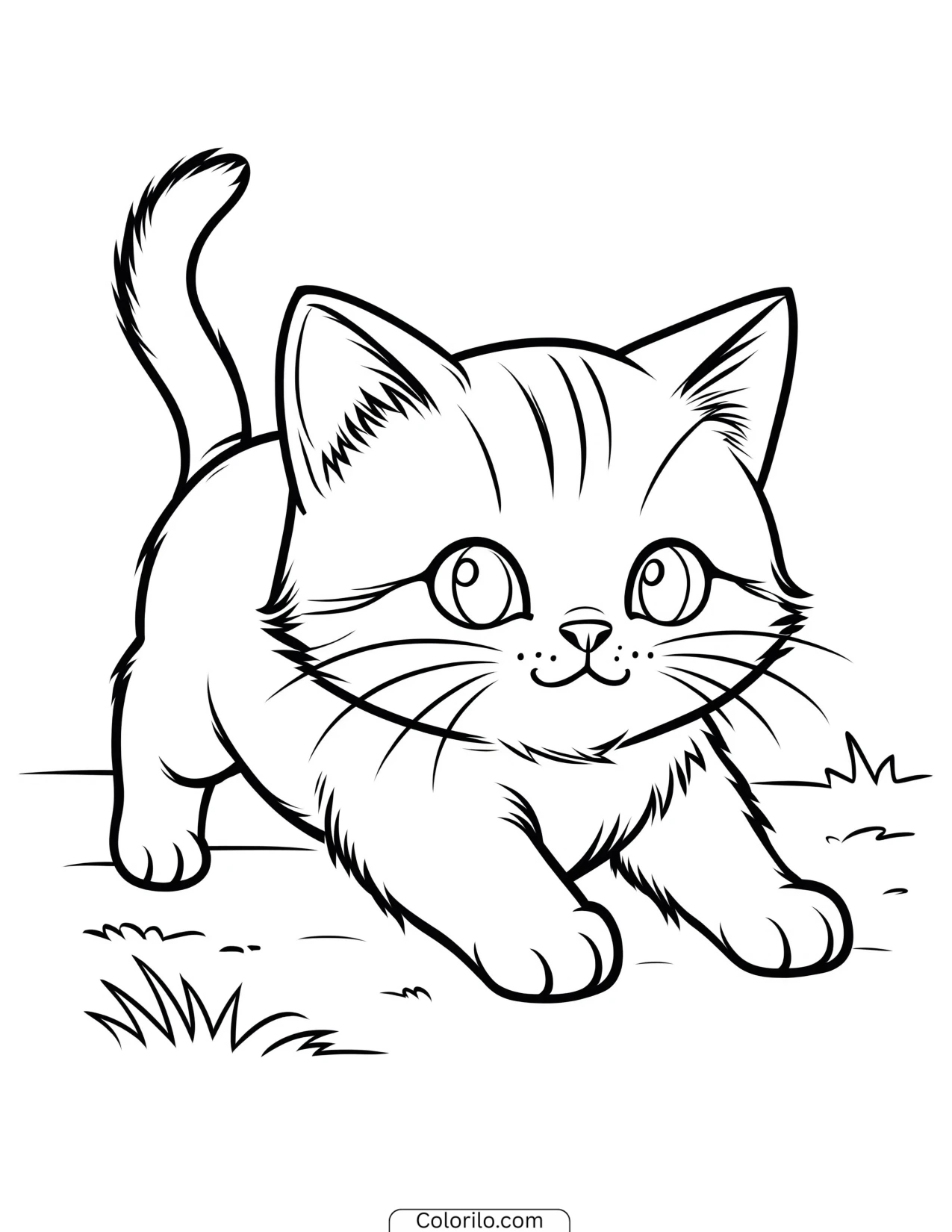
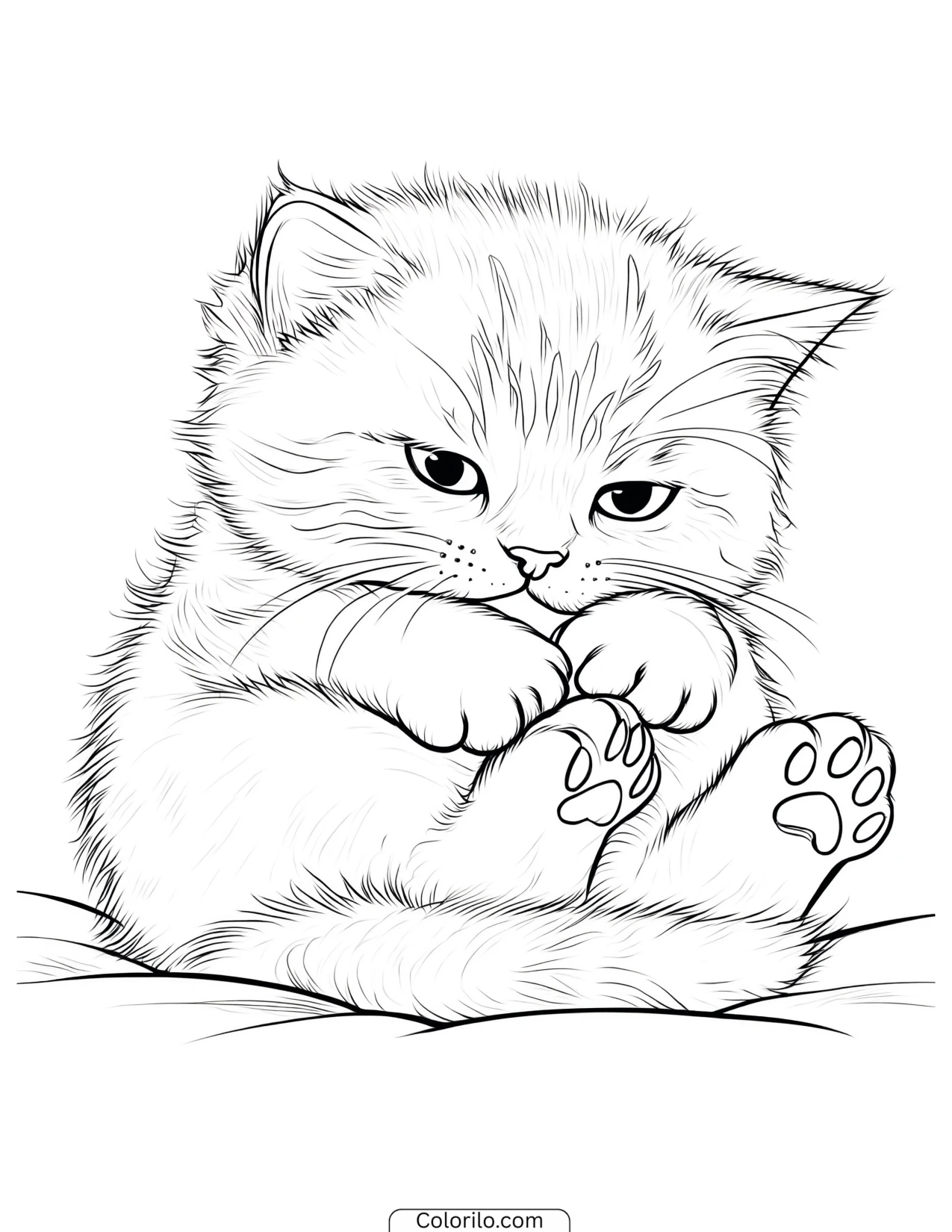
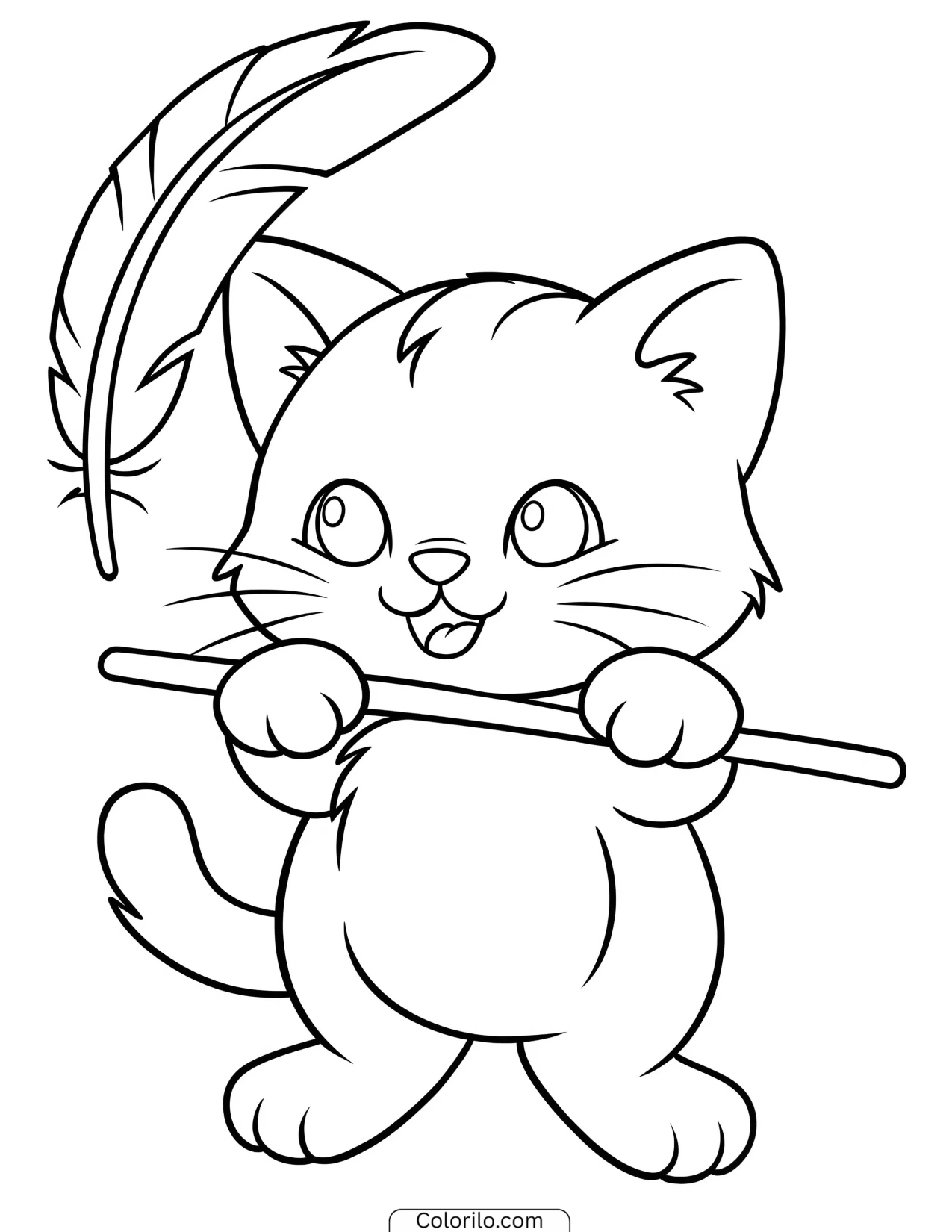
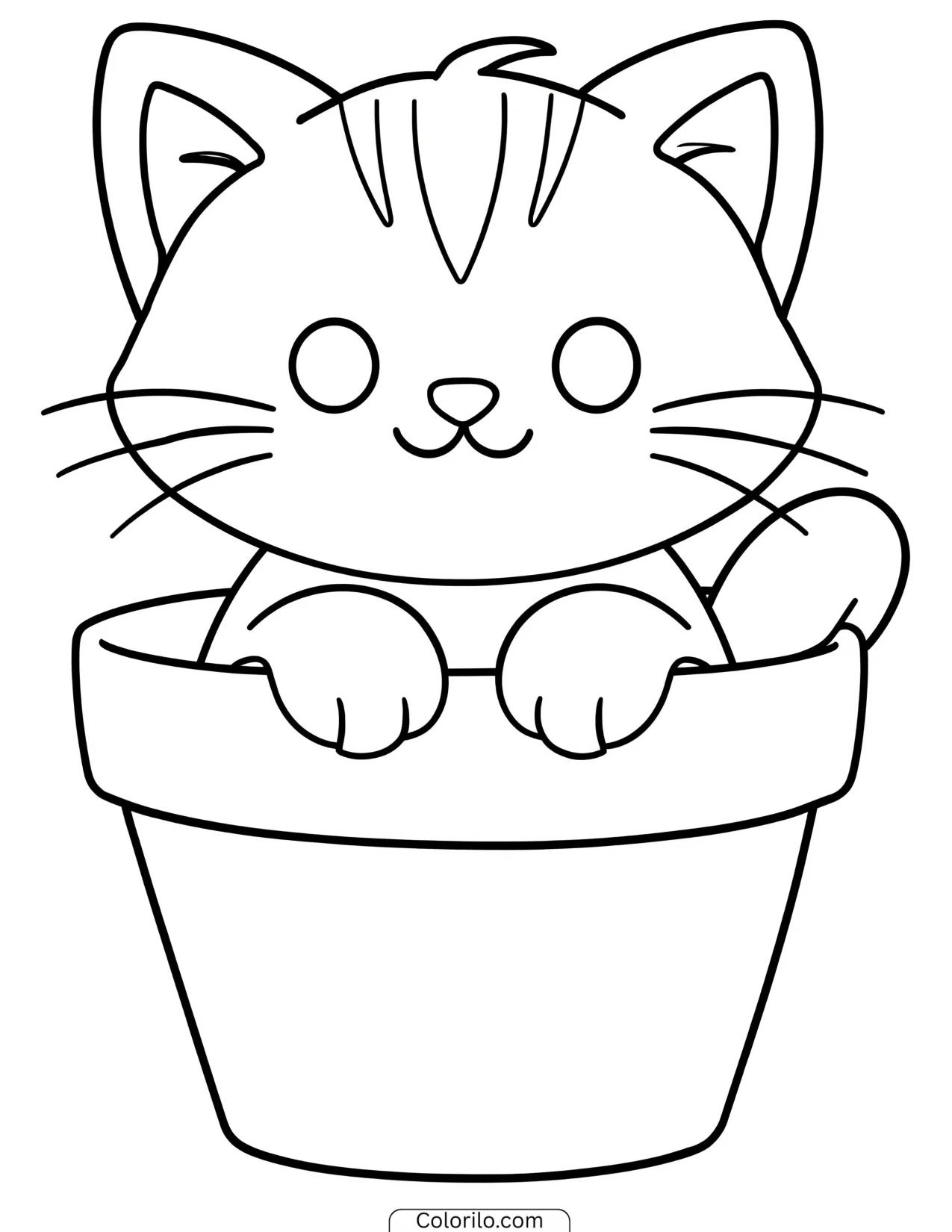
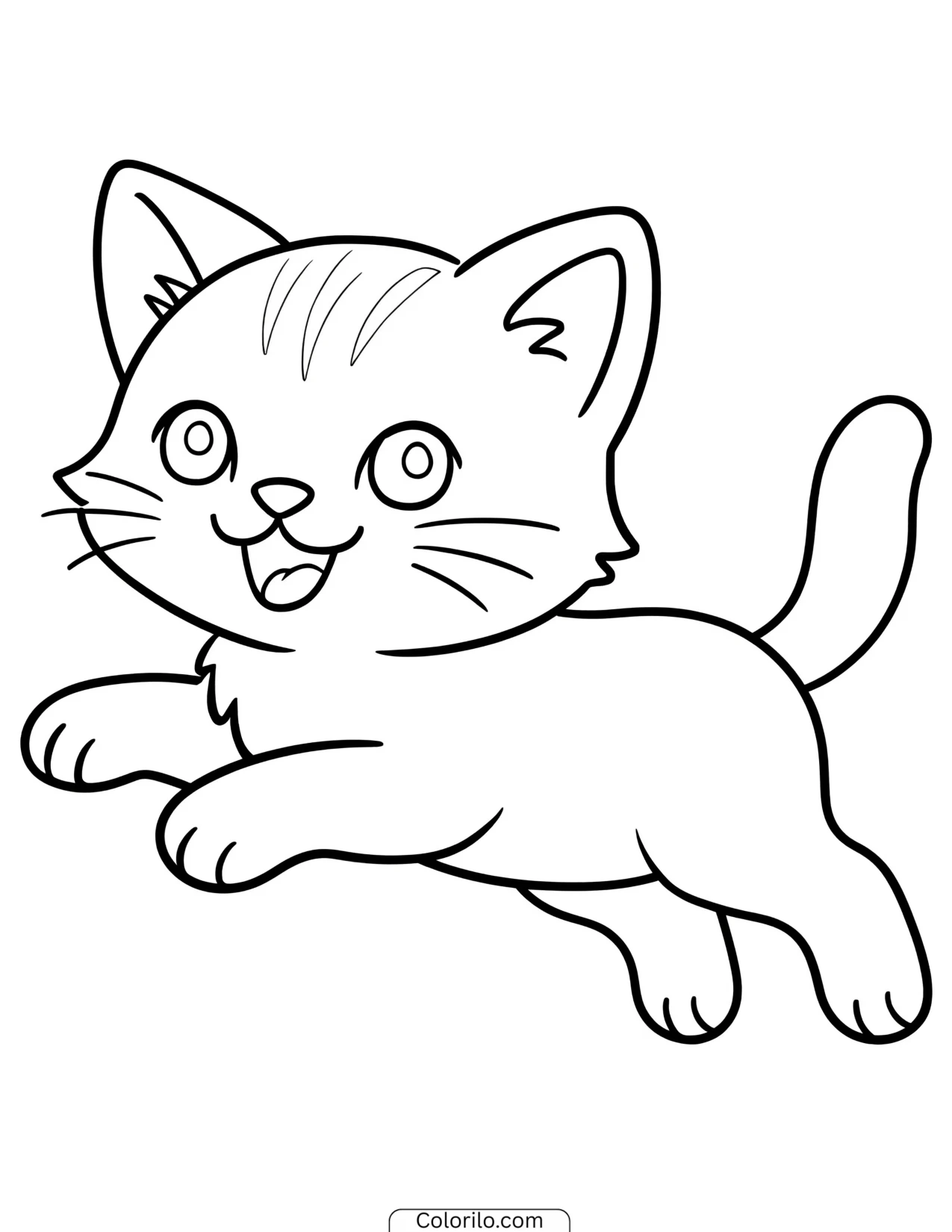
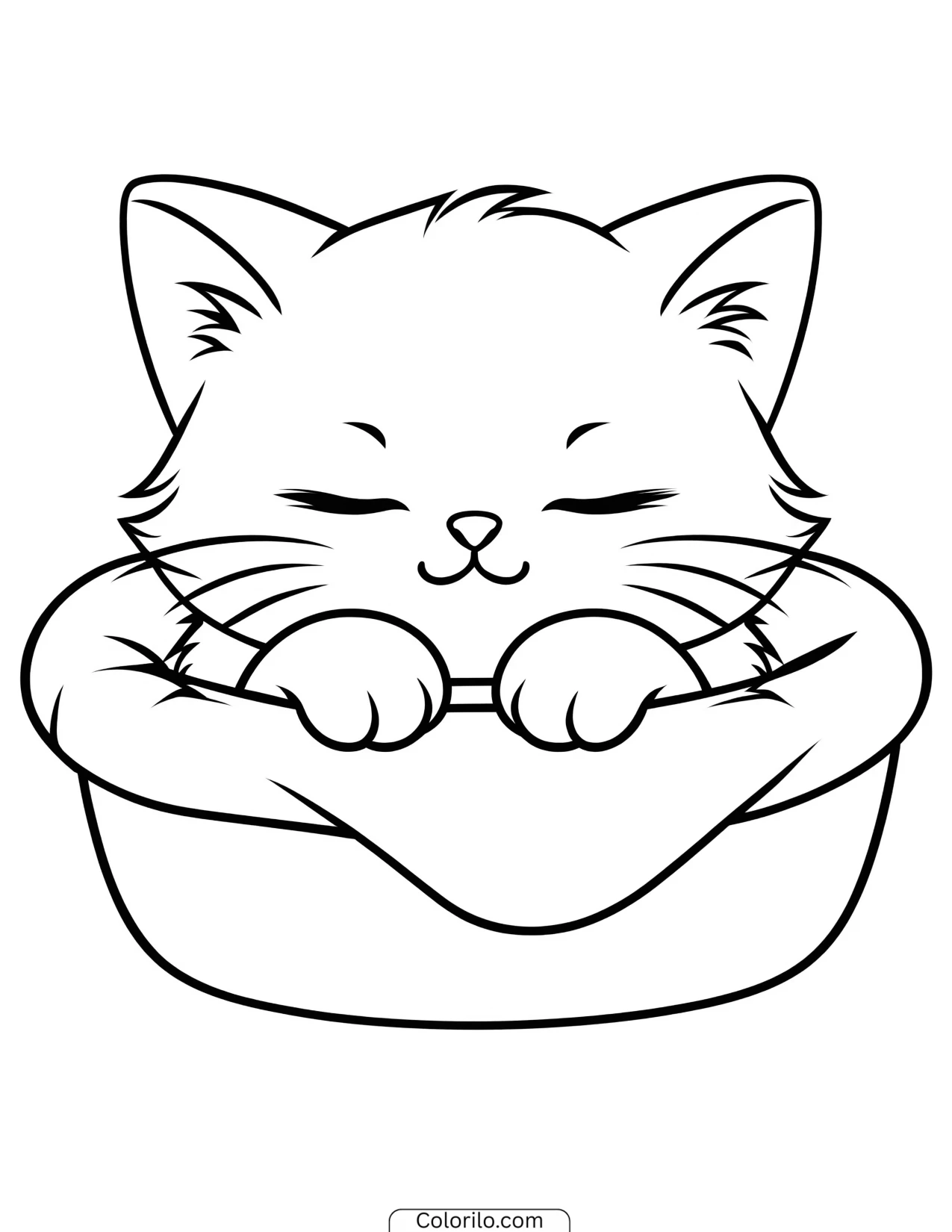
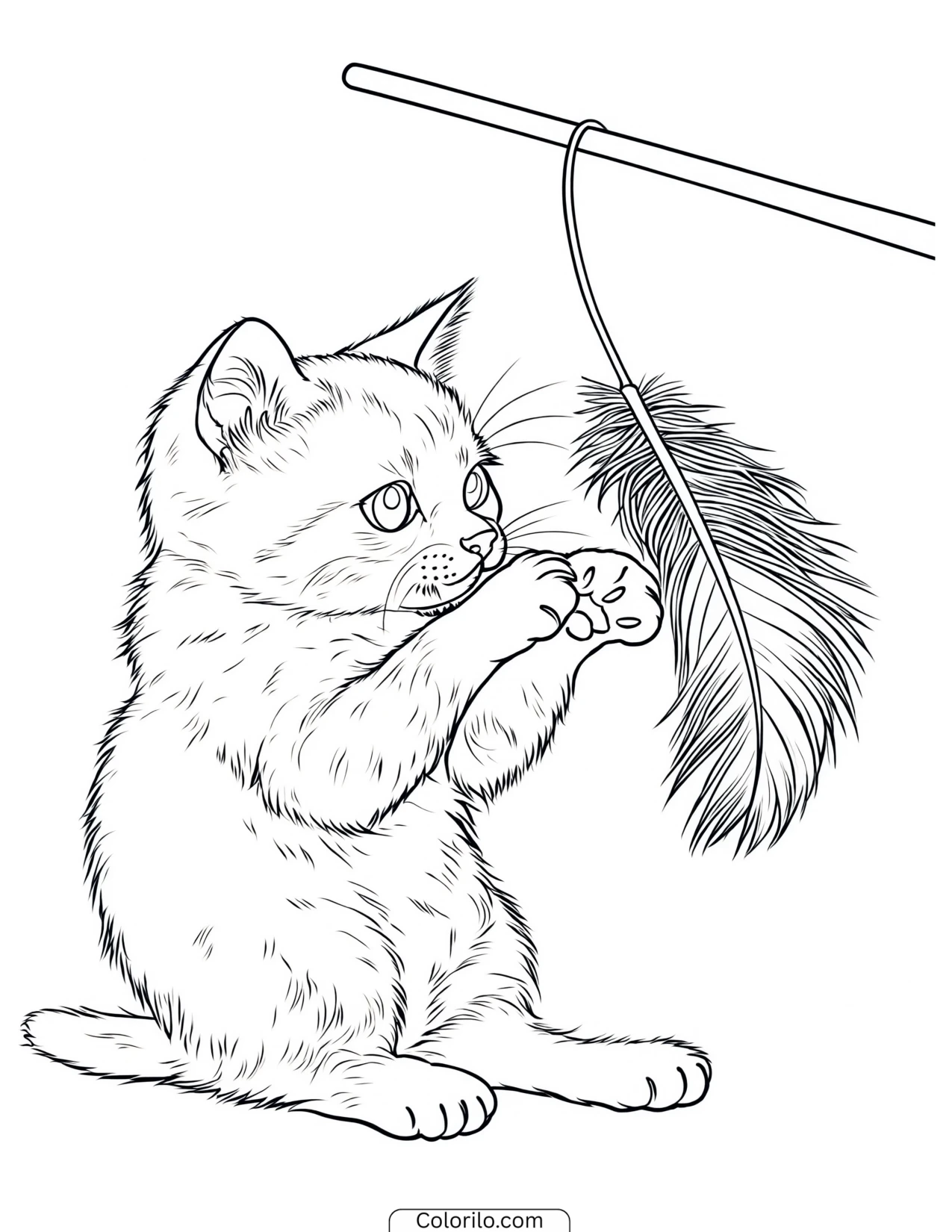
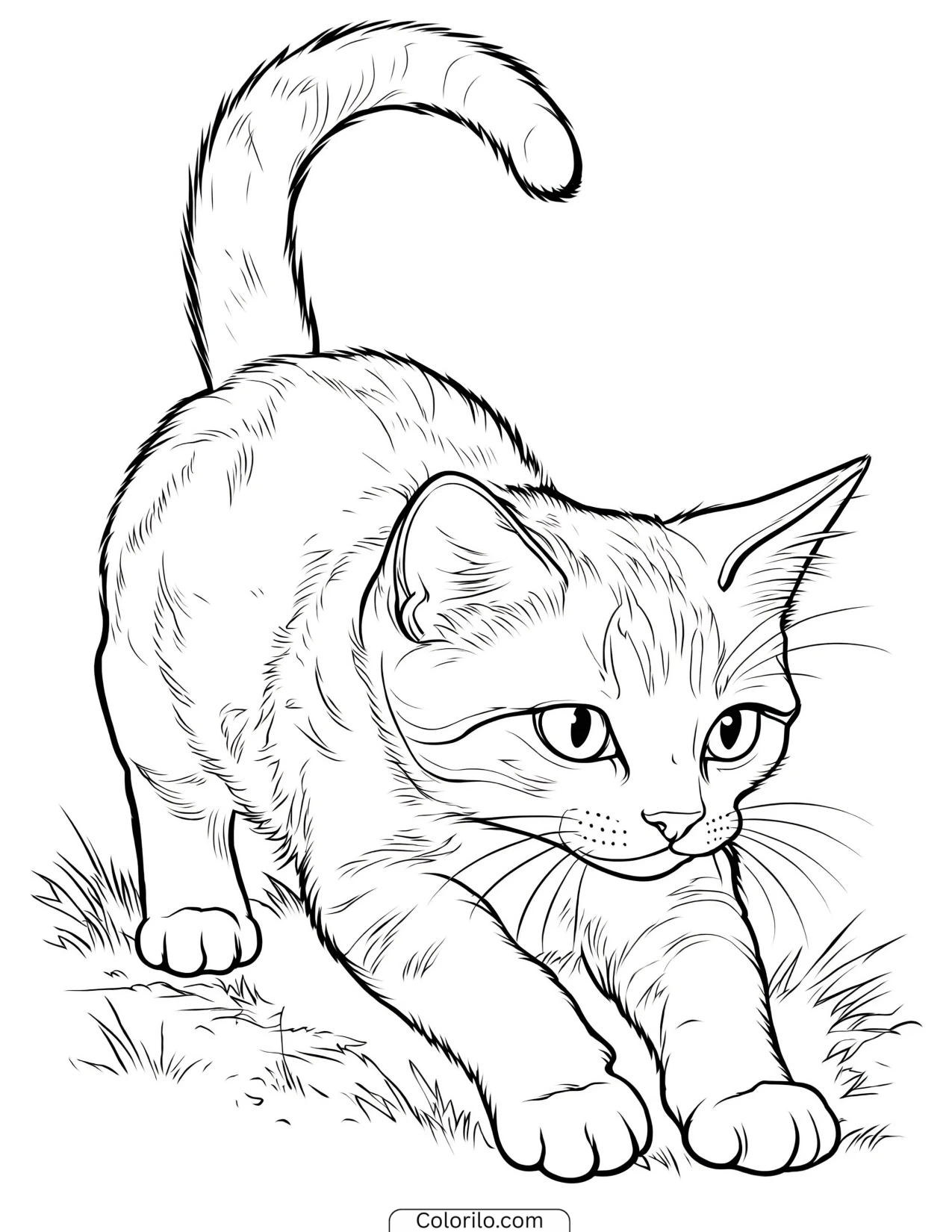
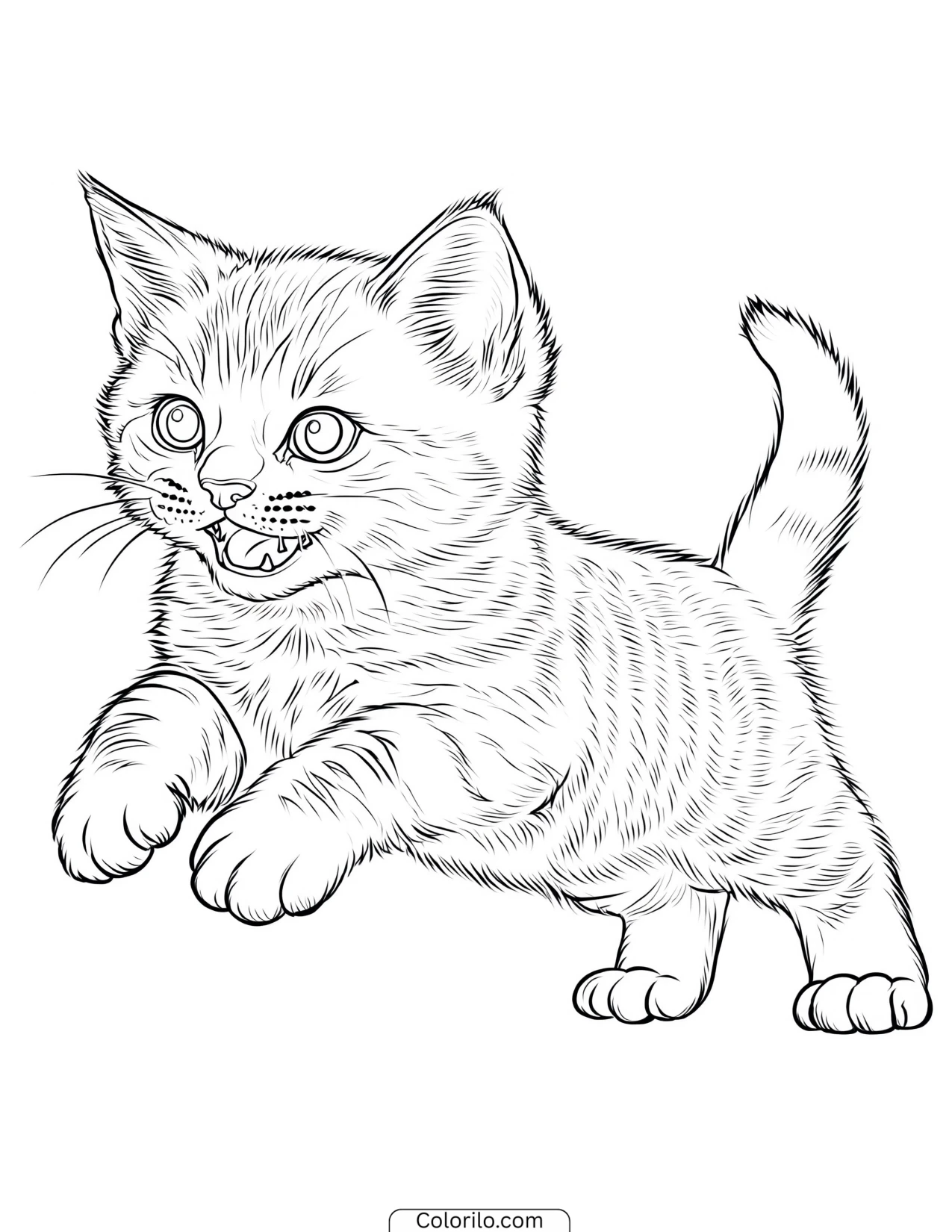
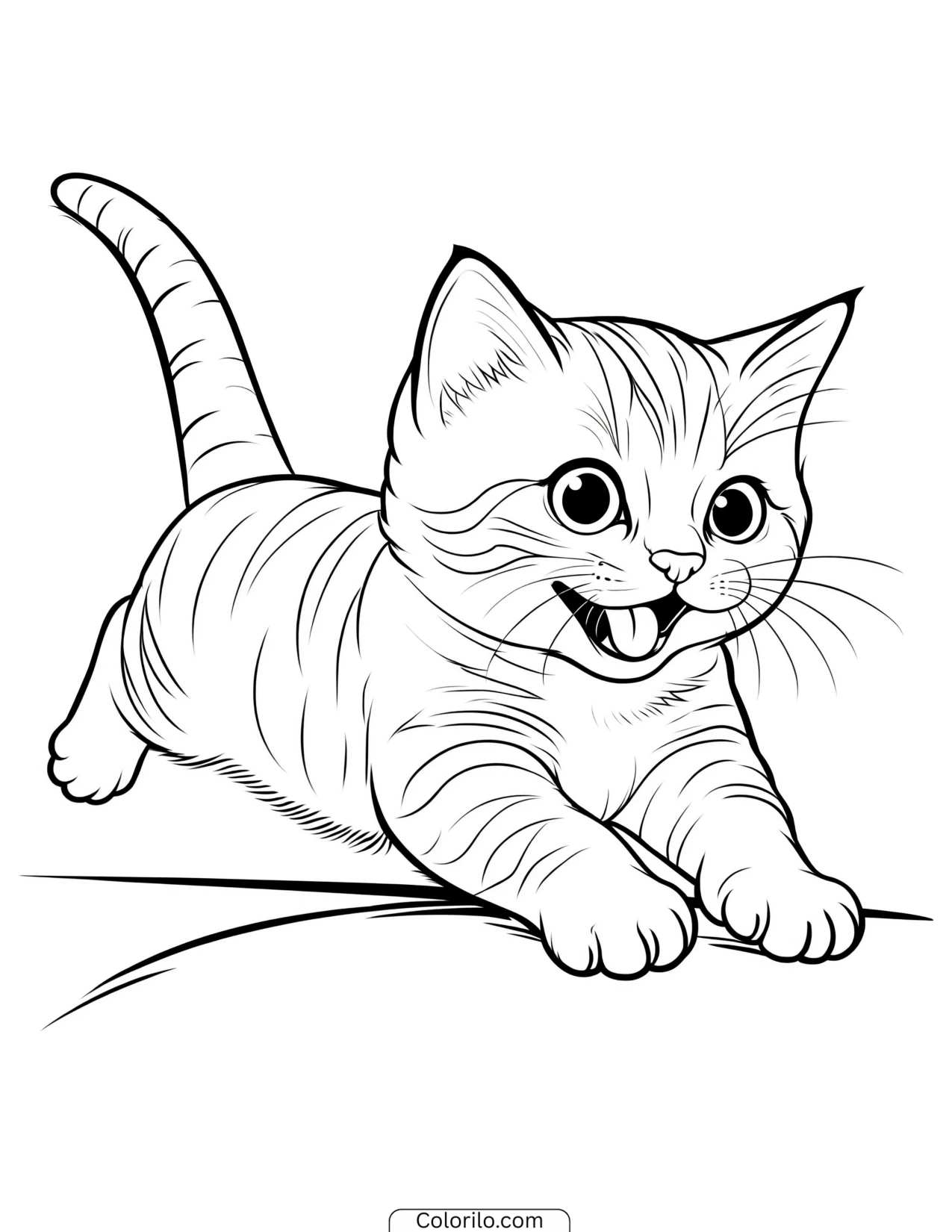
There are 65 free designs in this collection, and most of them come from real kitten behaviour rather than posed portraits. Twelve pages involve play: batting a ring toy, chasing a feather, pouncing on a wand toy, tangled up in ribbon, reaching for something hanging just out of range. Five show sleeping, in a basket, on a pillow, in a pet bed, stretched over a blanket, and one with its back paws sticking straight up. Several show kittens getting themselves into things they shouldn’t: a shoe, a sneaker, a cardboard box, a flower pot, a stack of books.
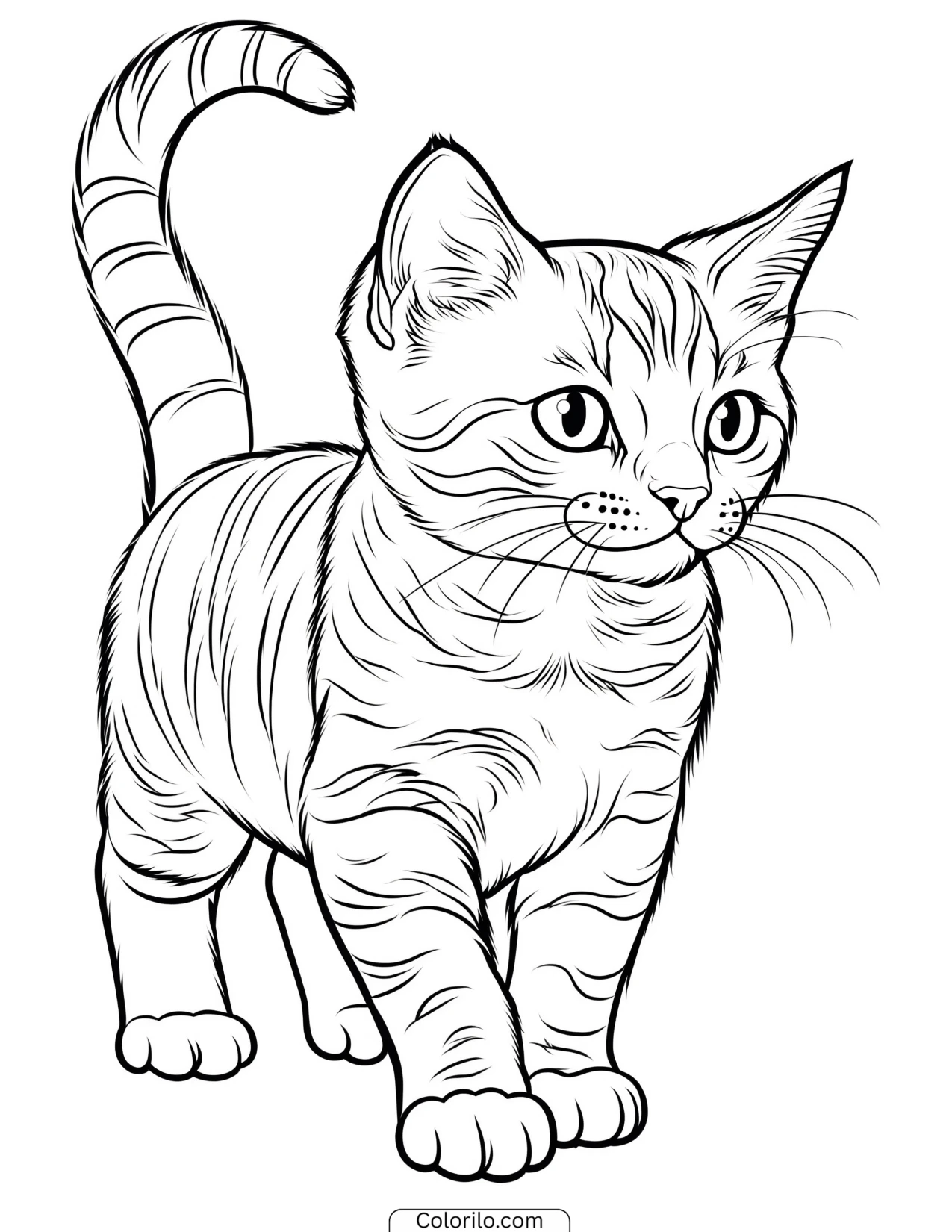
Nine pages identify a breed. Three Siamese kittens, in a box, reaching up, and playing with a wand toy, and six tabbies, including a close-up of the face and two variations on the pounce. The rest are generic kittens, which is arguably more useful, since the same outline can be colored as whichever cat a child actually knows.
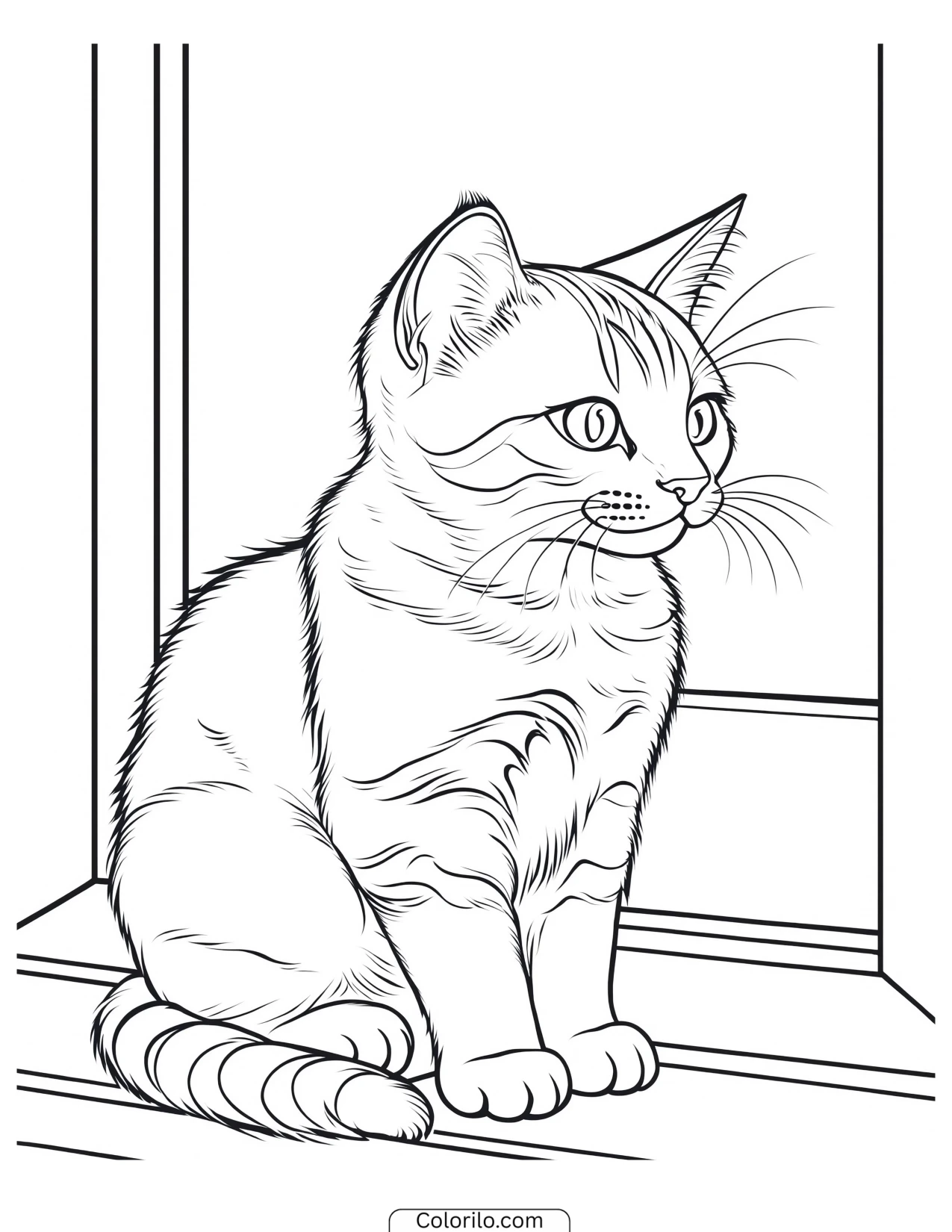
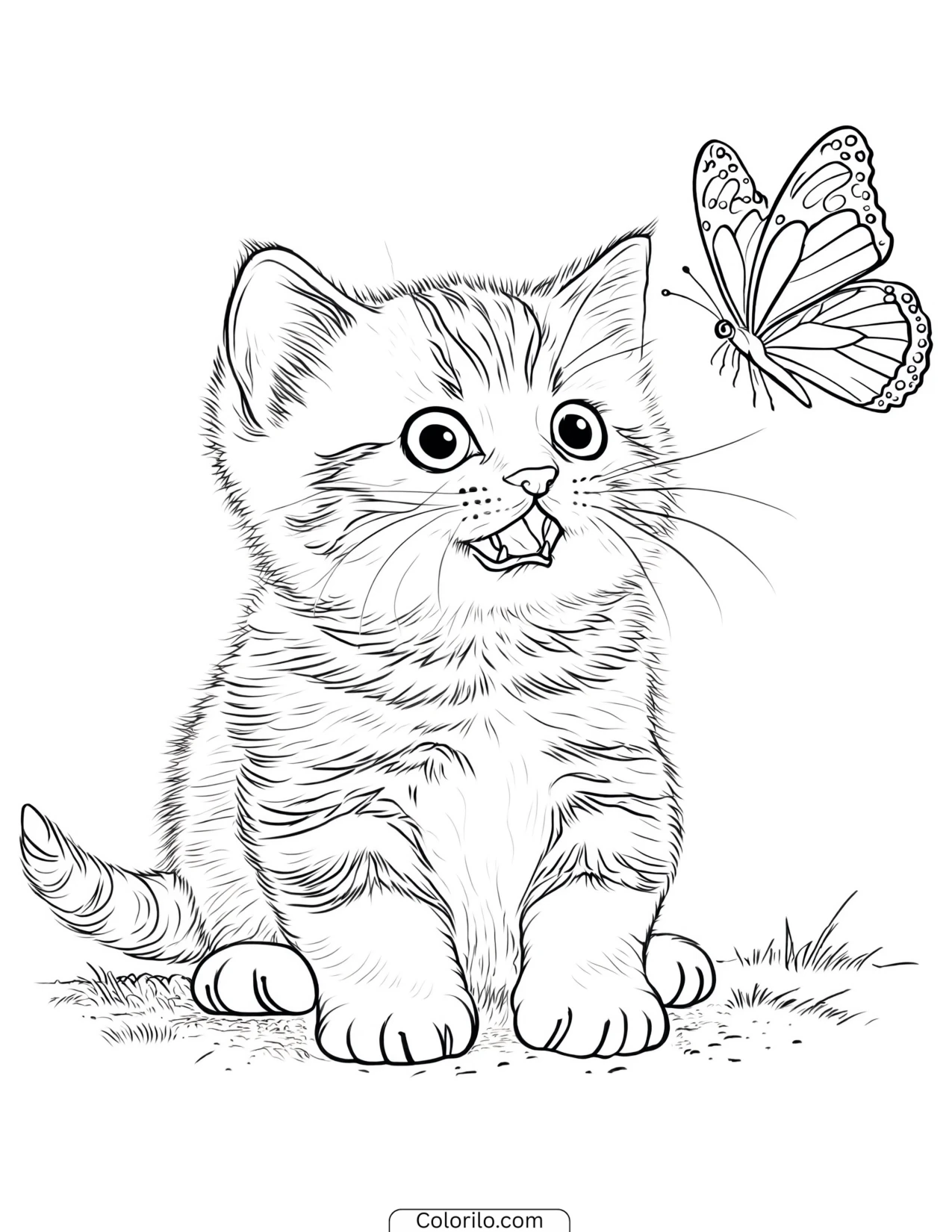
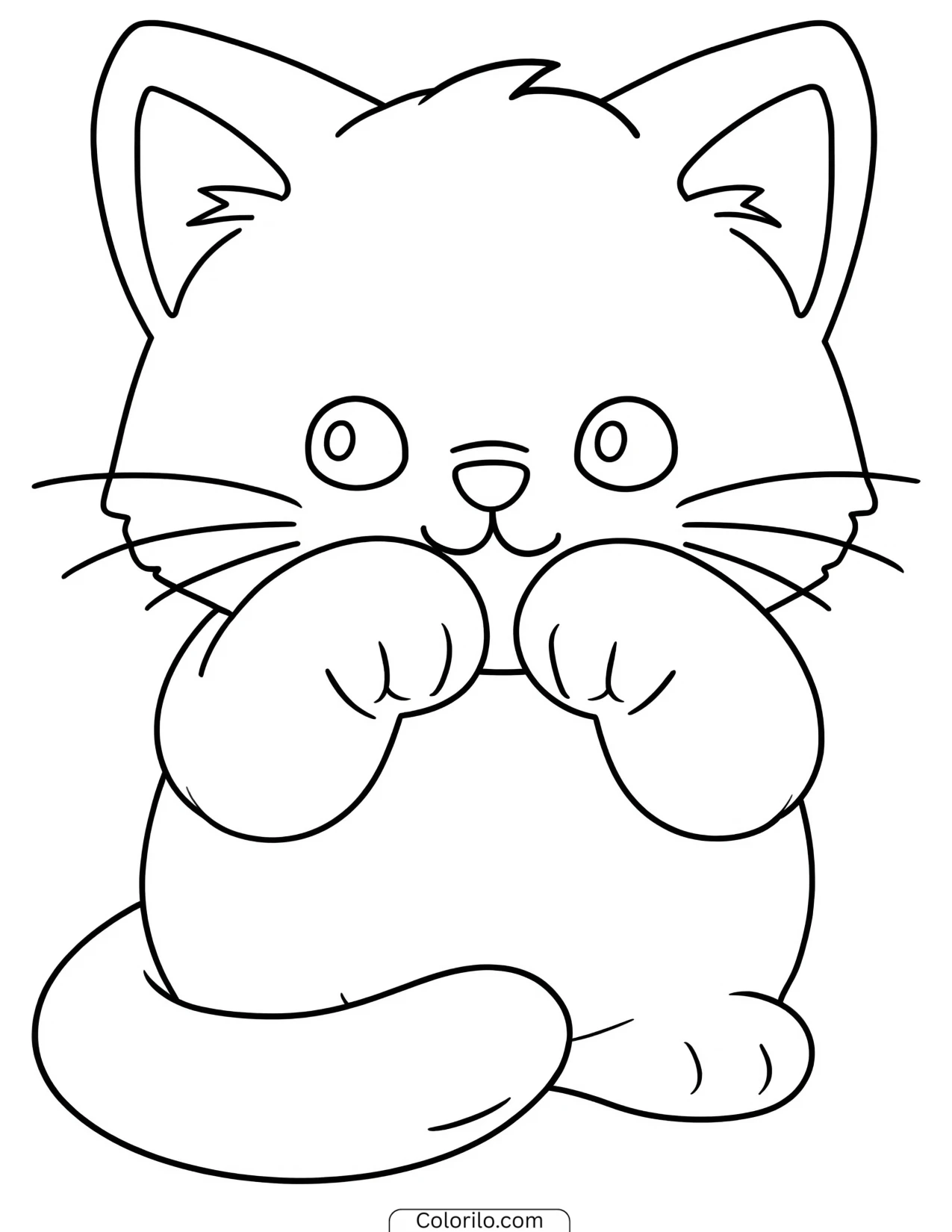
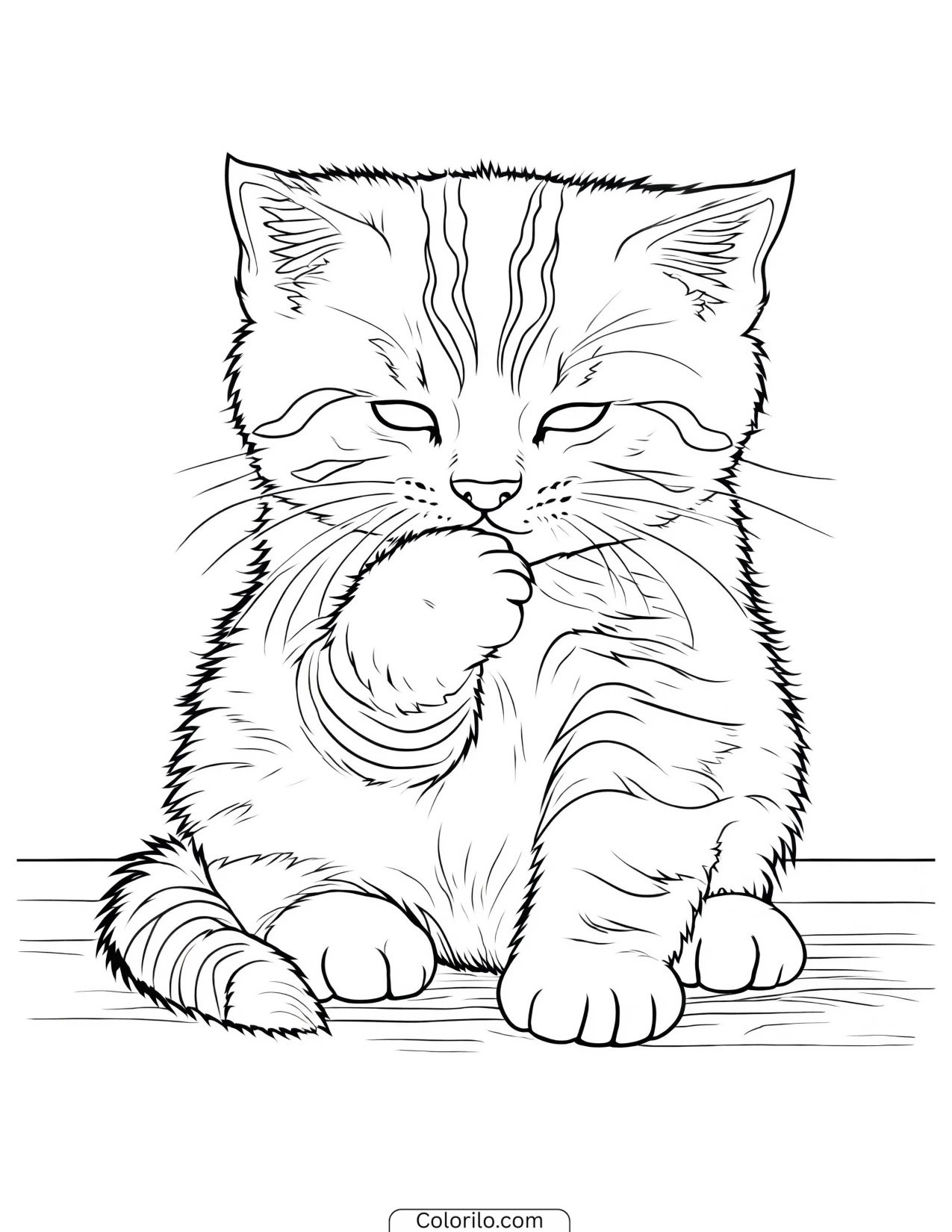
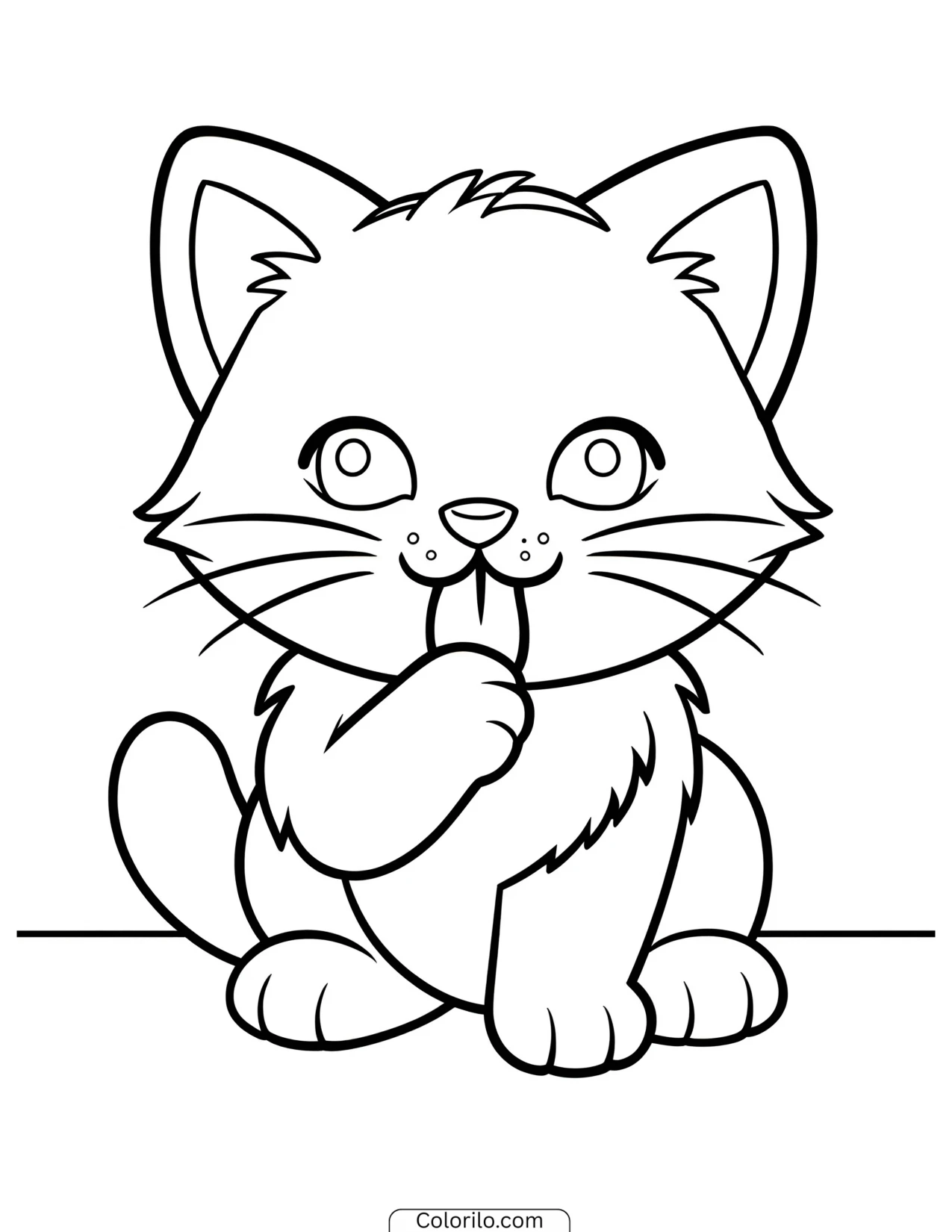
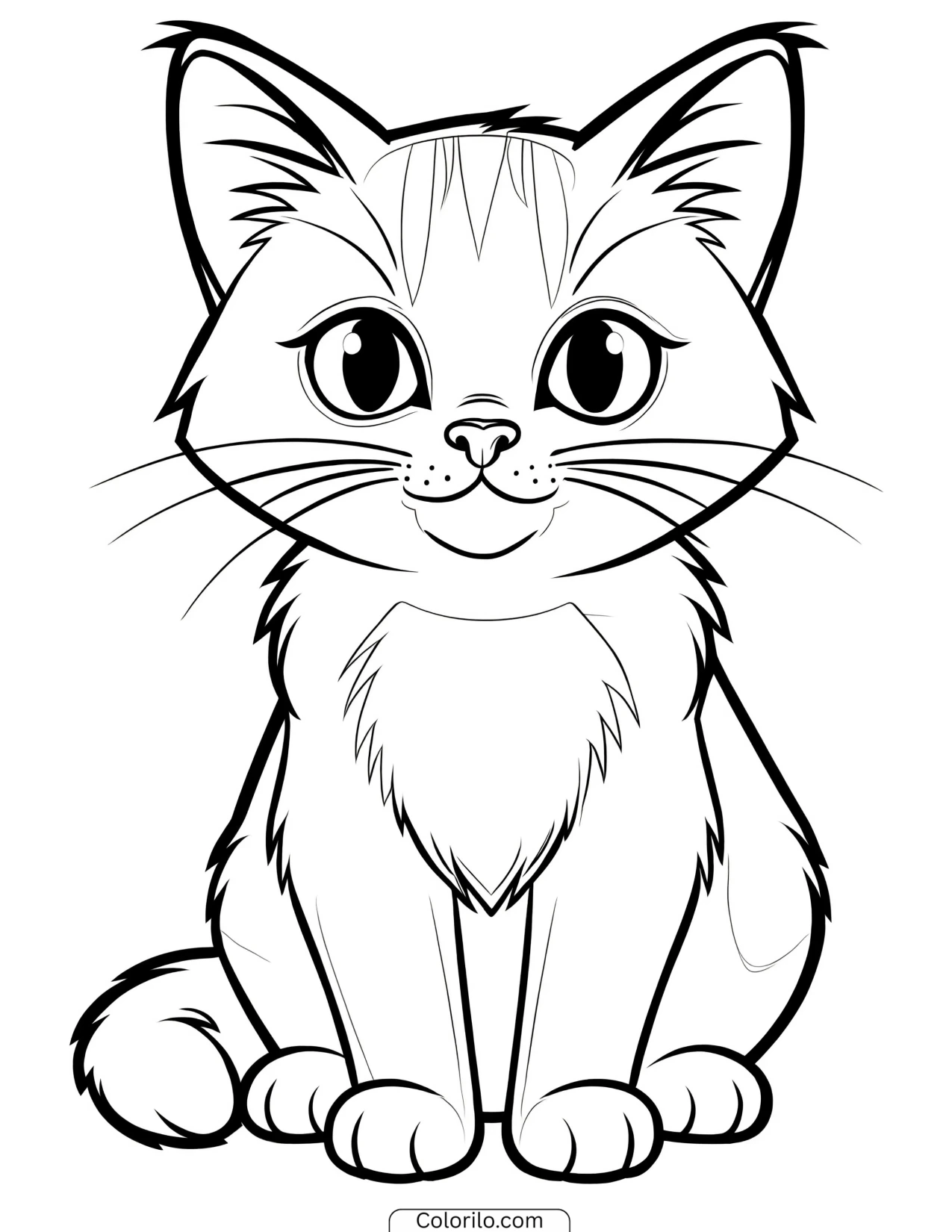
There’s also a quieter group worth pointing out. Kittens watching birds and butterflies, one curled up looking down, one grooming its paw, one sitting neatly with its paws together, and several at windows and on ledges. Those are the calmer pages, and the ones that take the longest to color well.
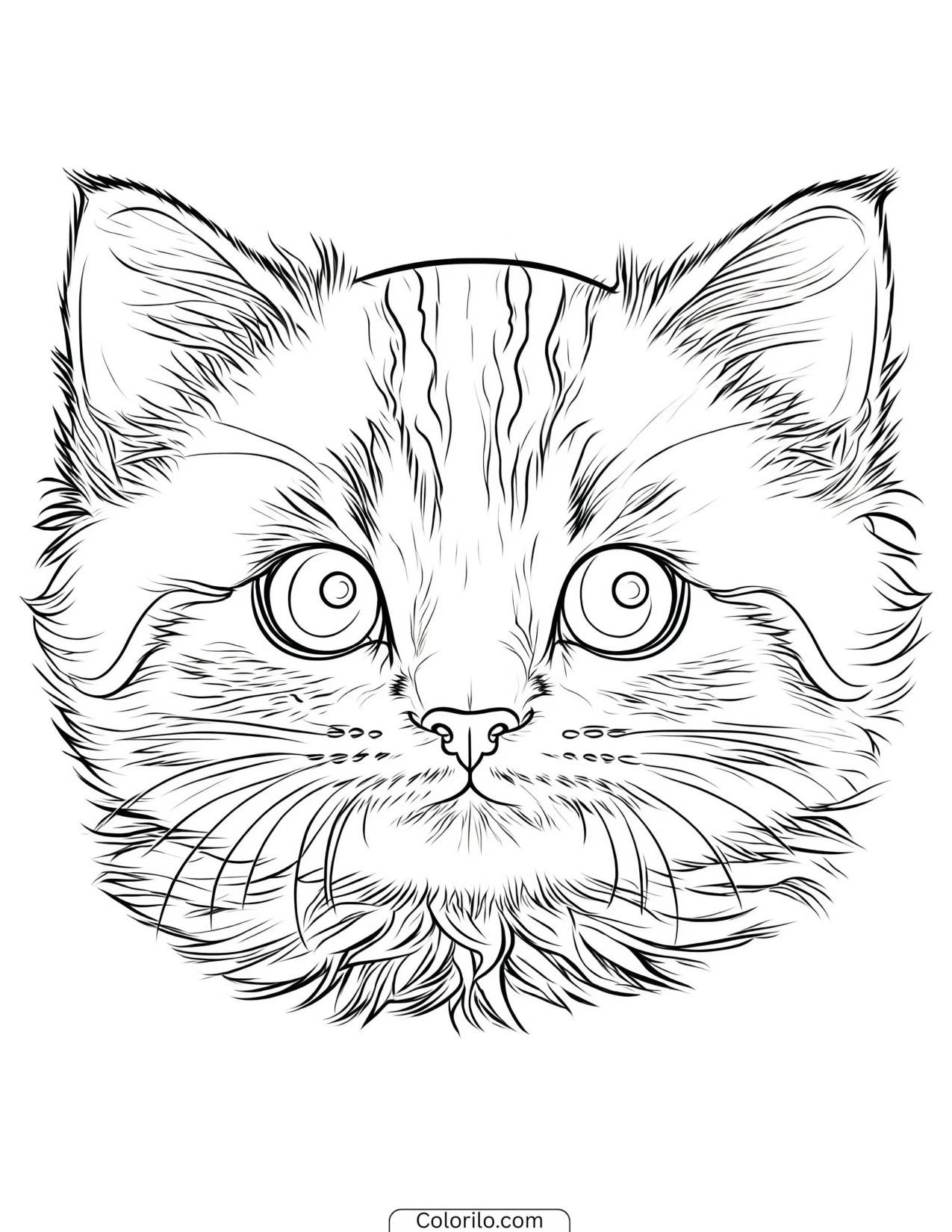
Detail runs from very simple to moderate throughout, this set is friendlier to young children than most collections here. The plain seated and standing poses have large open shapes. The face portraits and the autumn leaves scene carry the most texture.
Every one of these kitten coloring pages is free, prints on standard US letter paper, and needs no sign-up. Click any design below to open the full-size PDF.
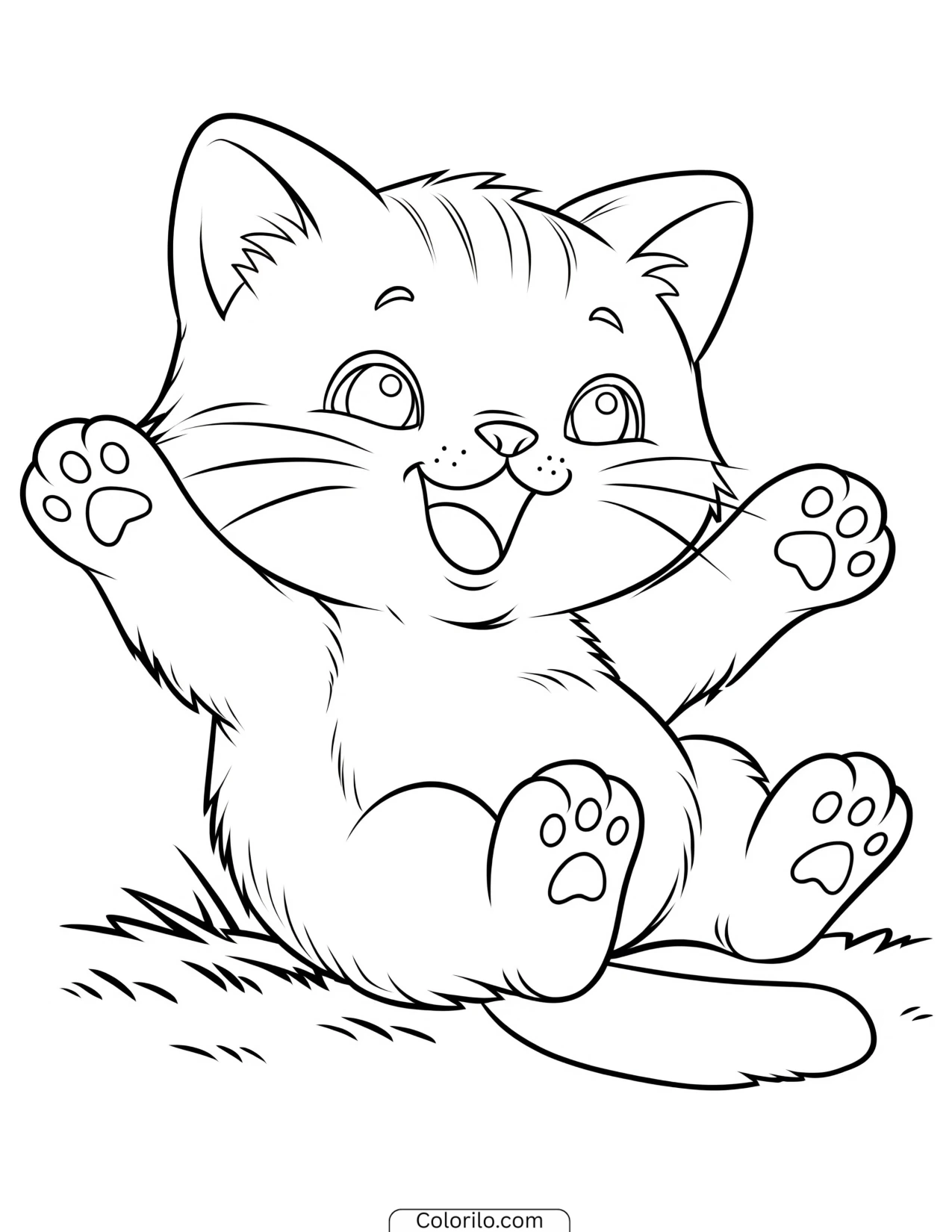
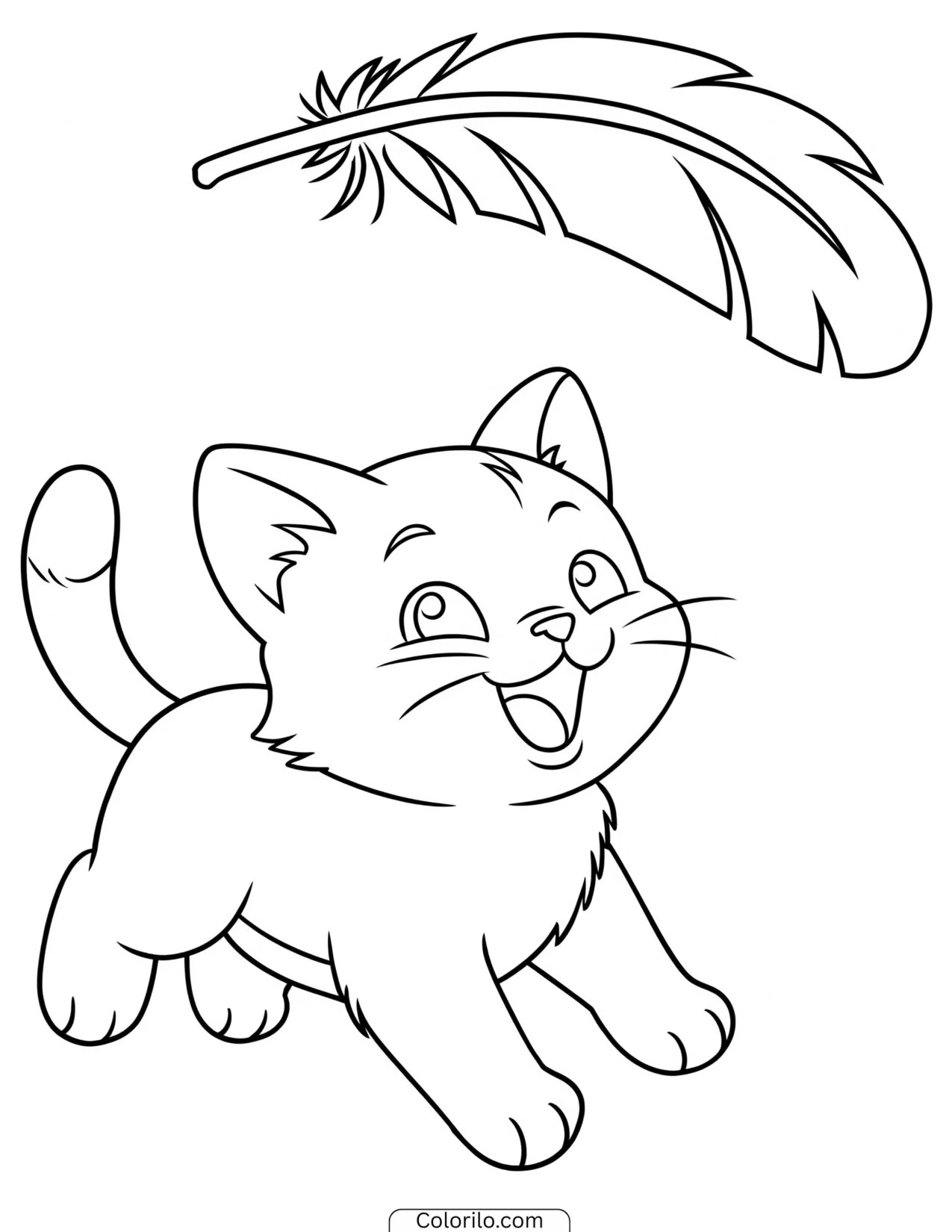
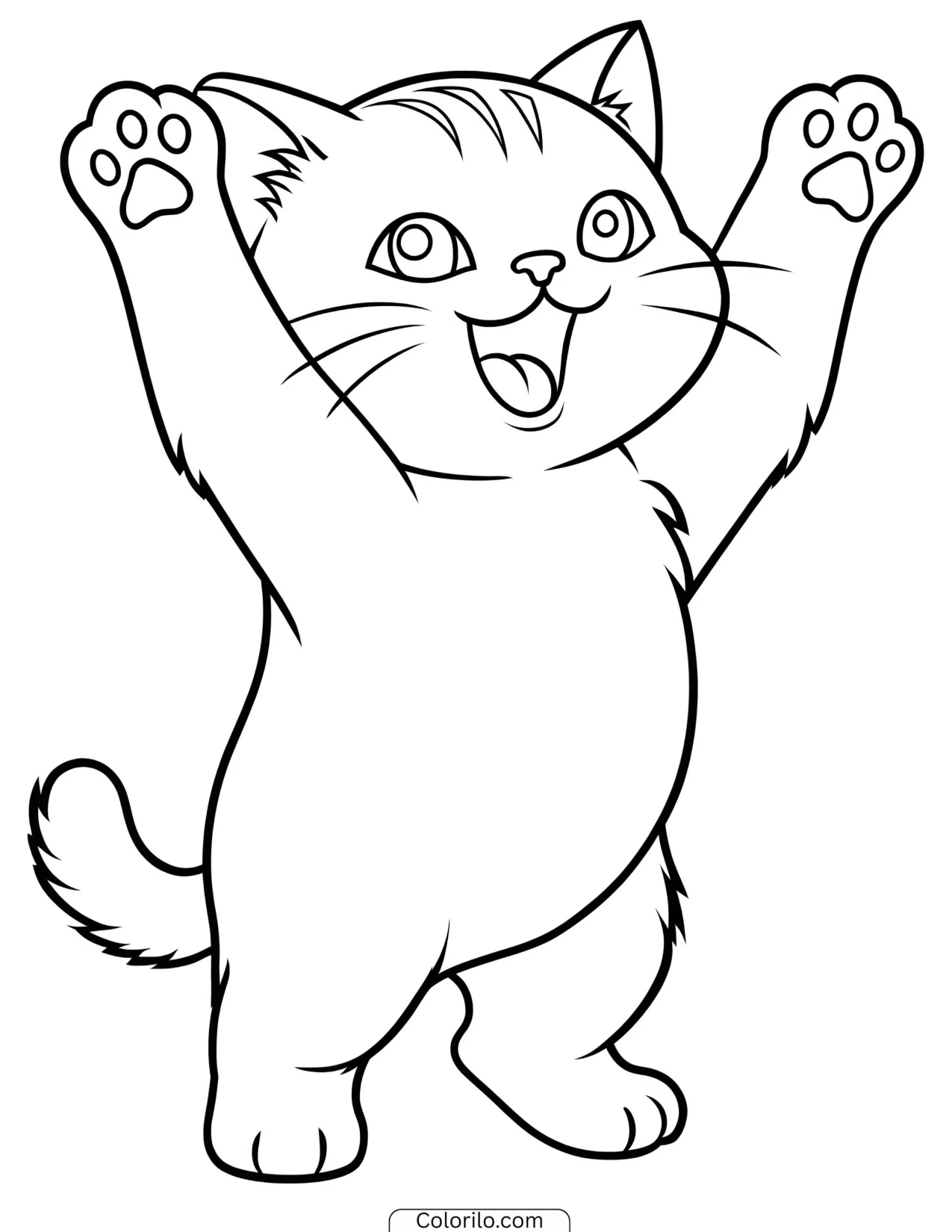
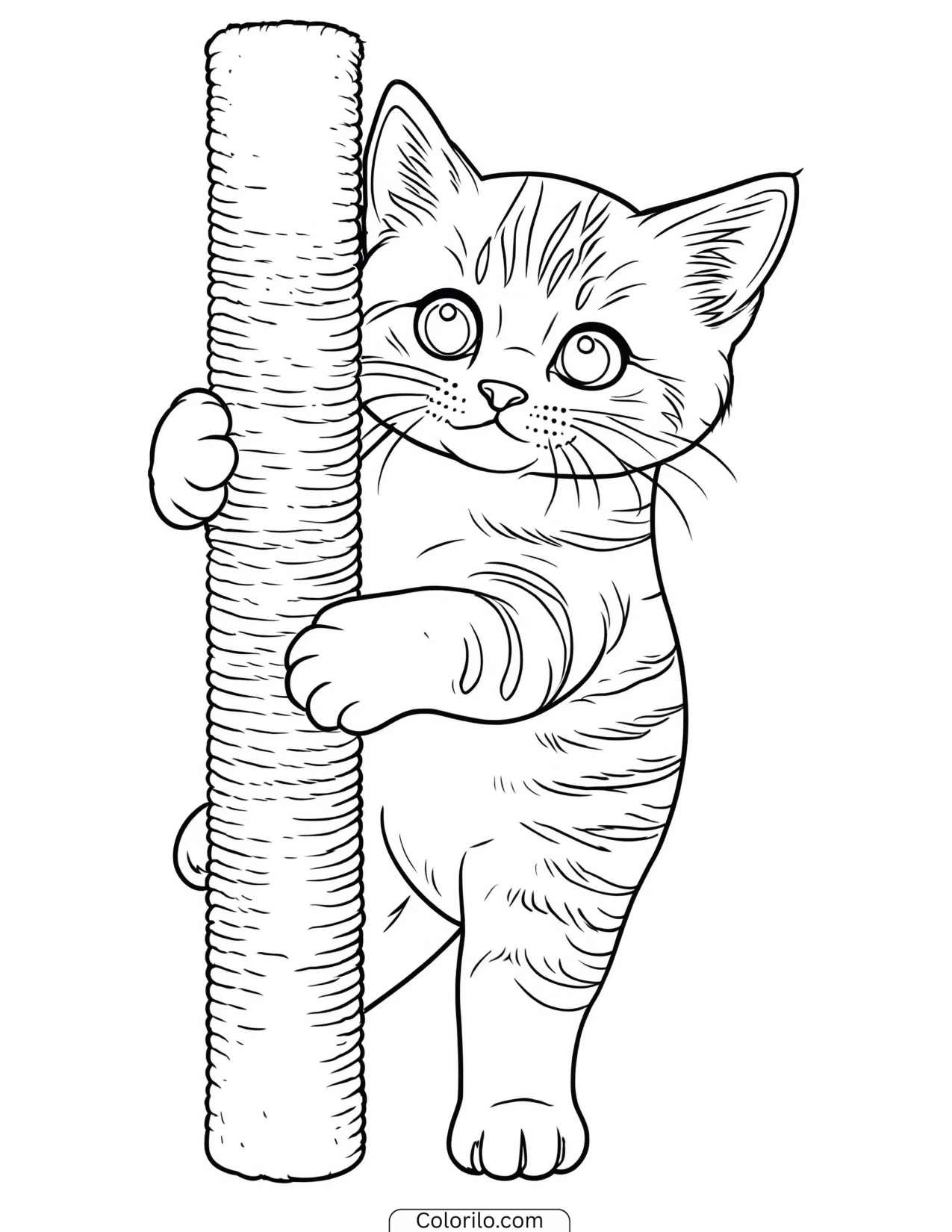
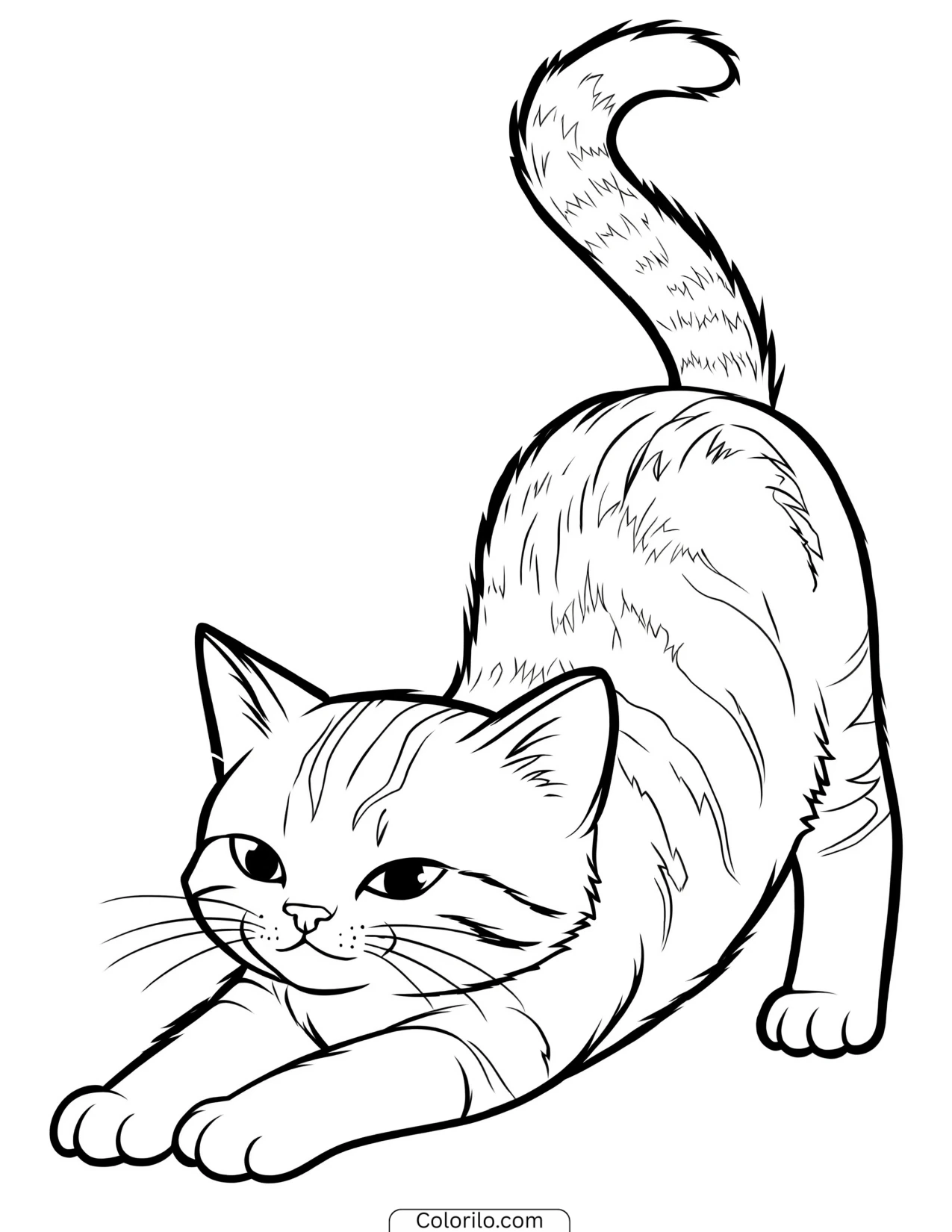
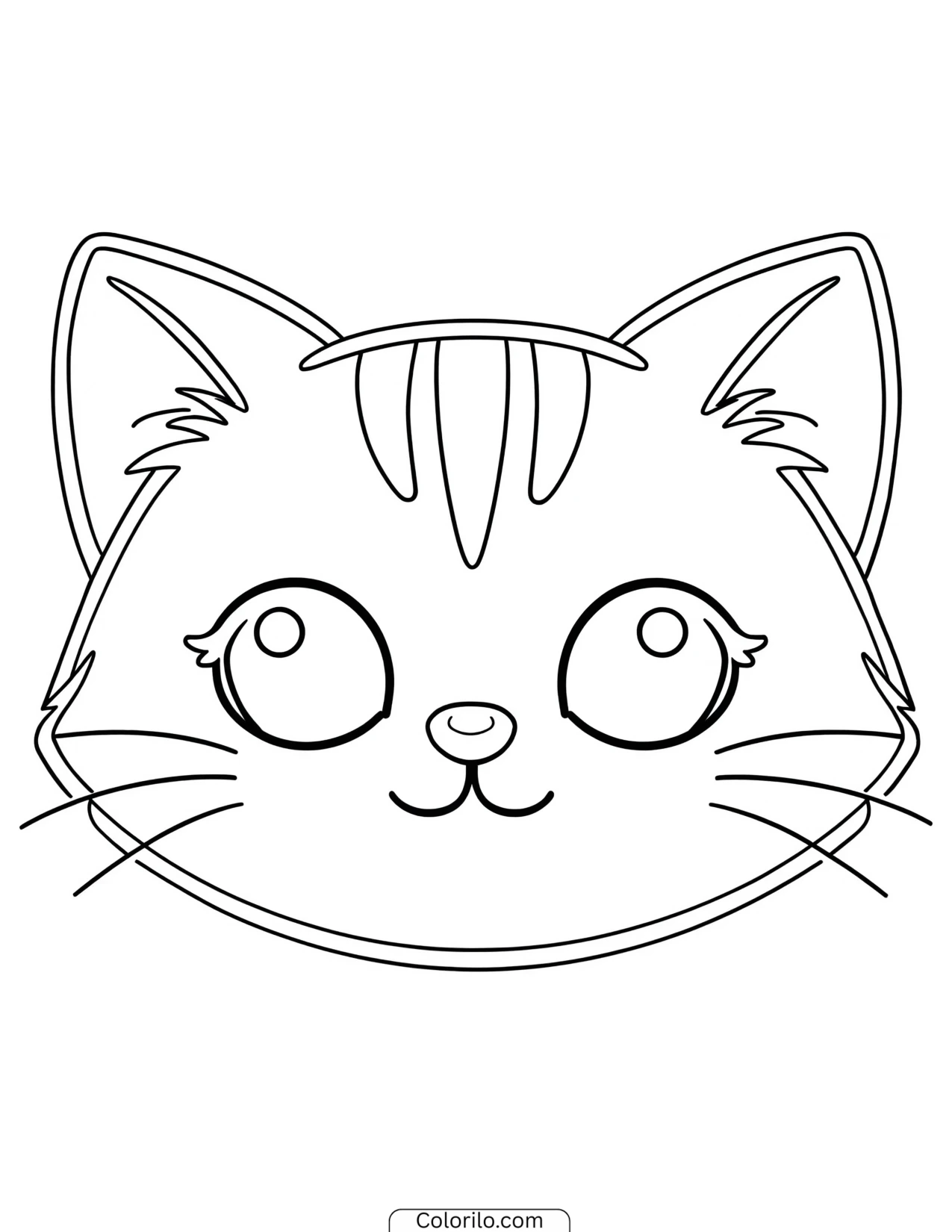
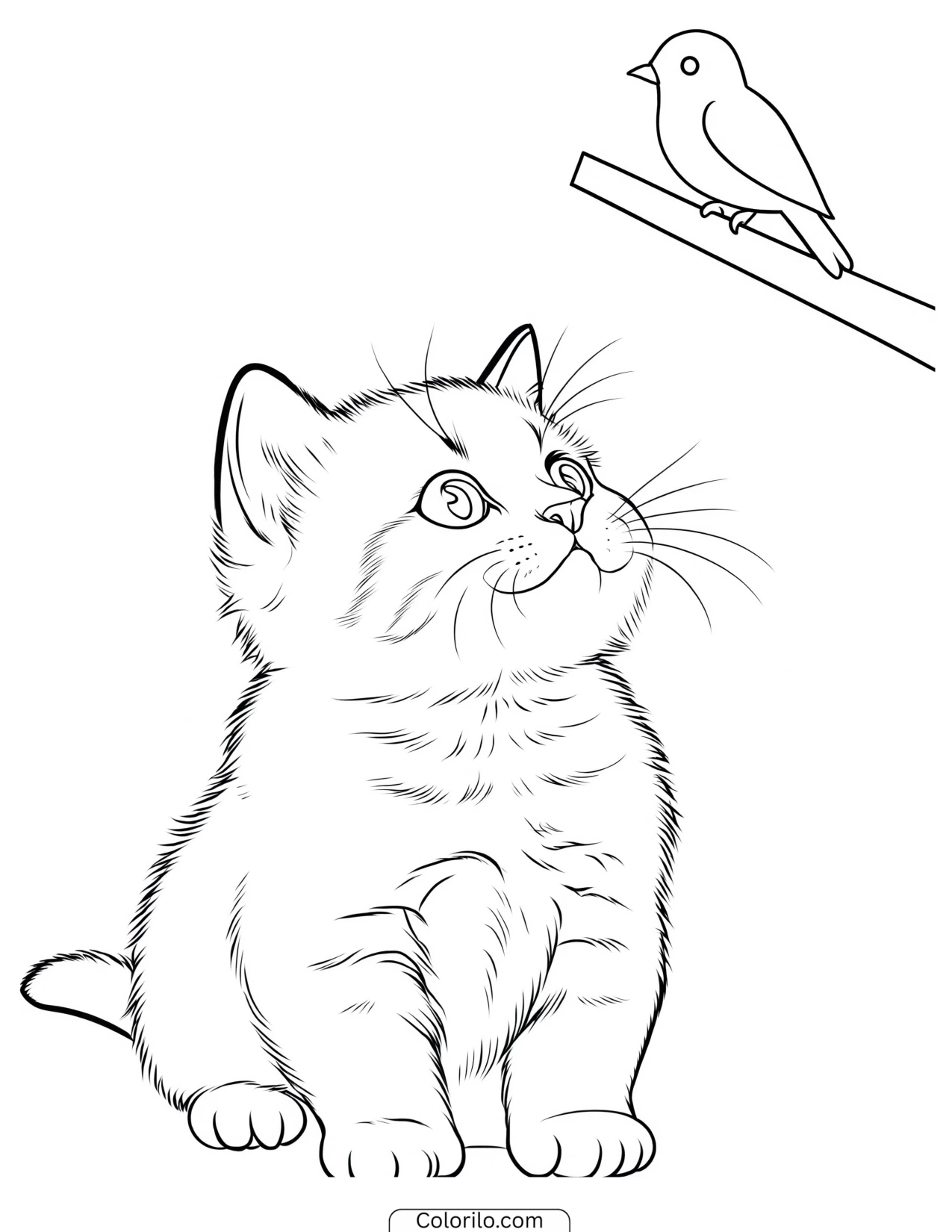
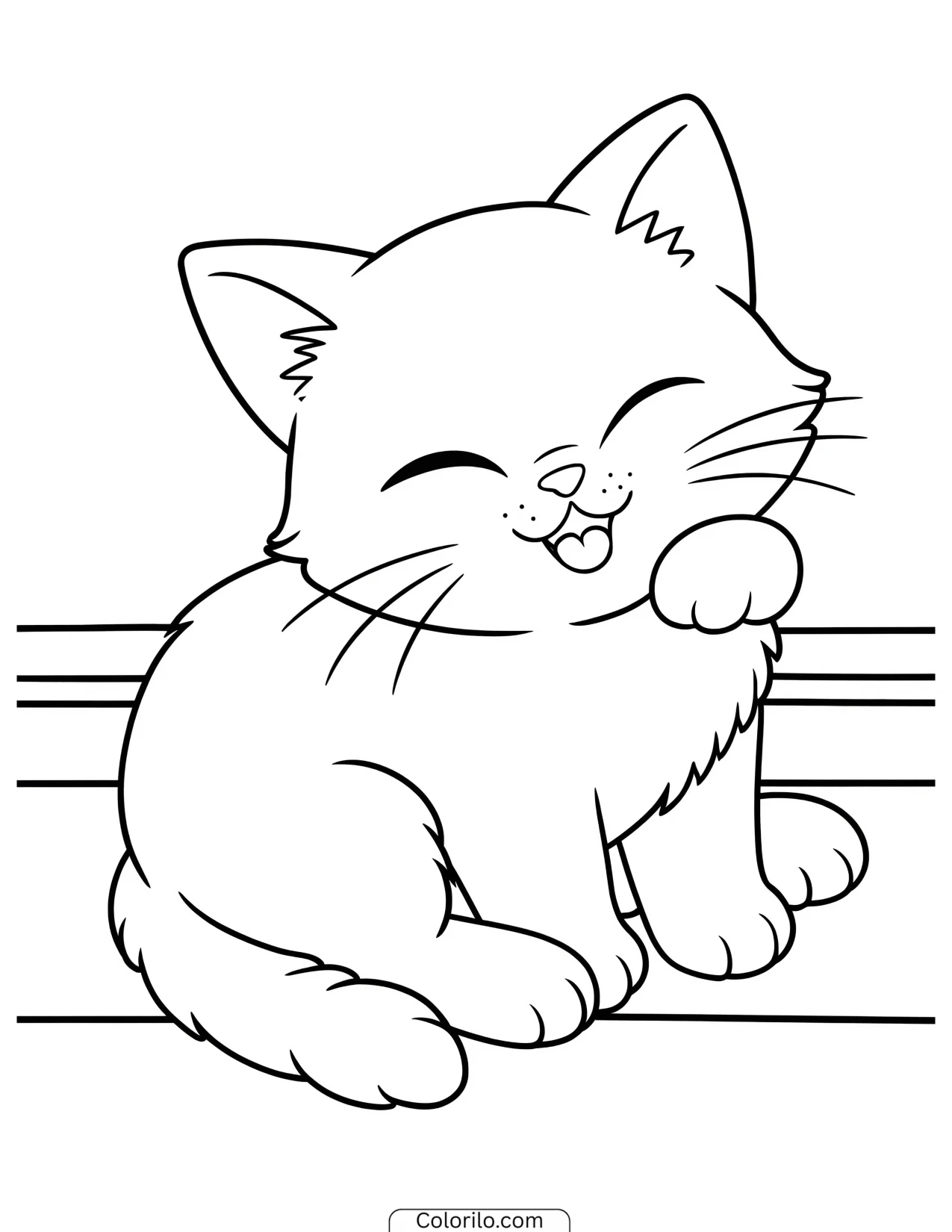
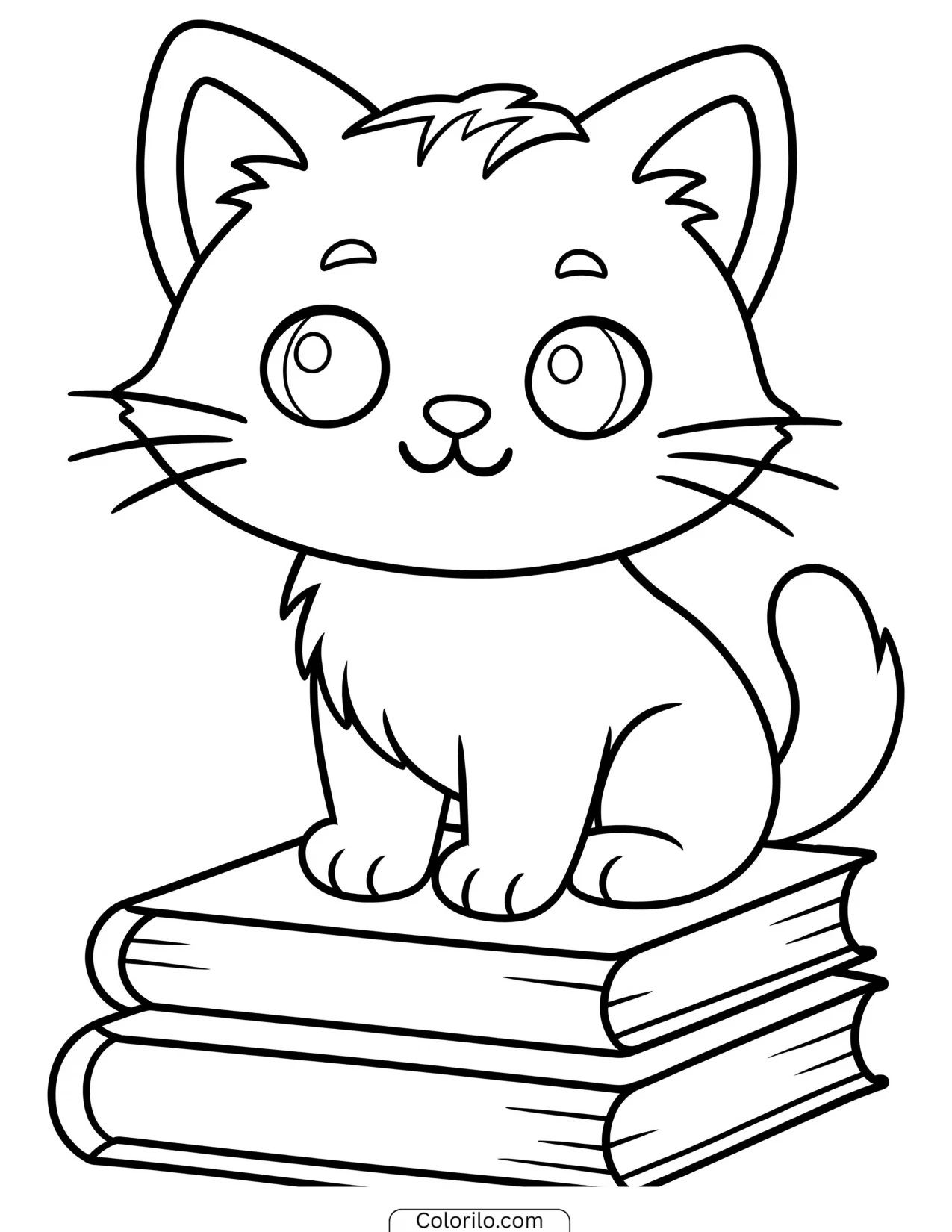
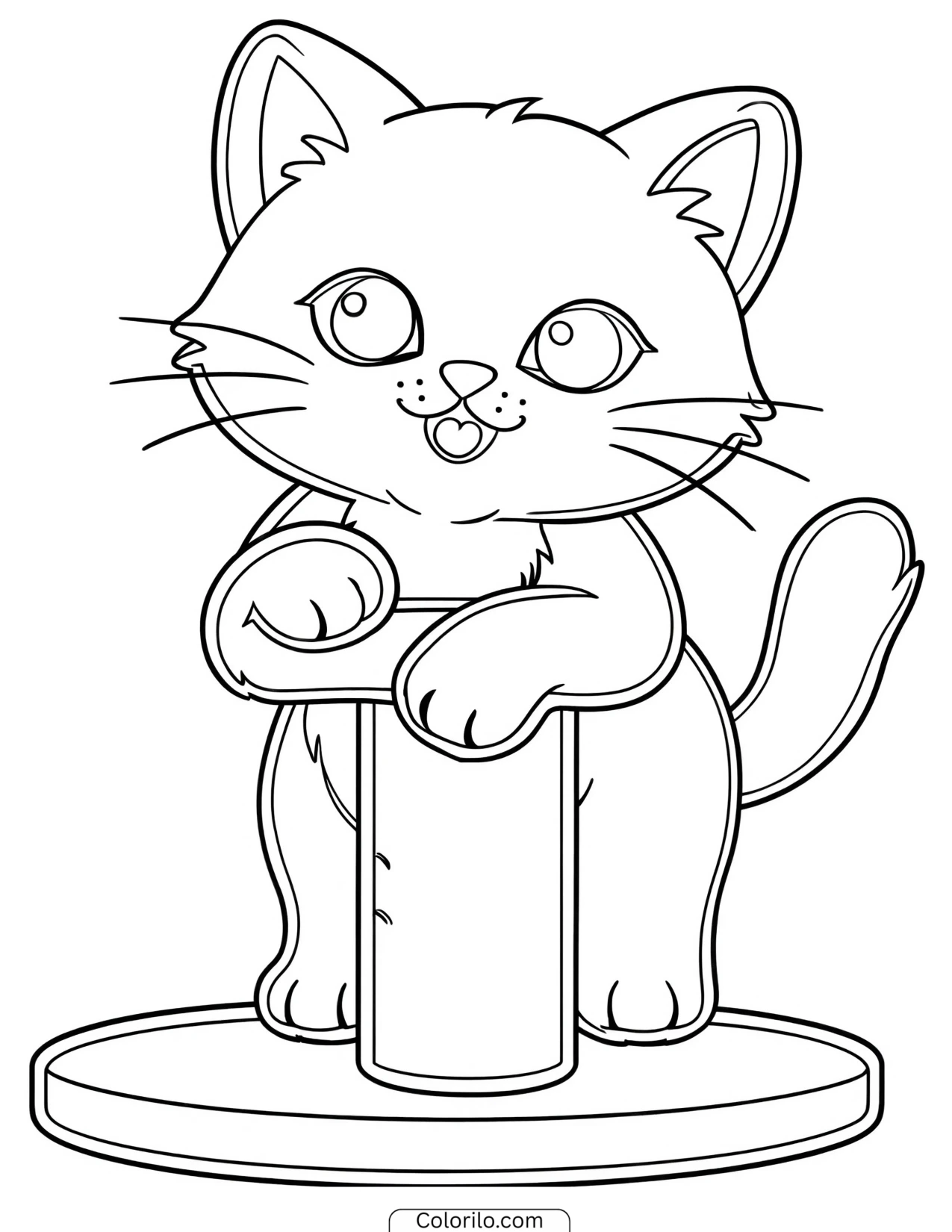
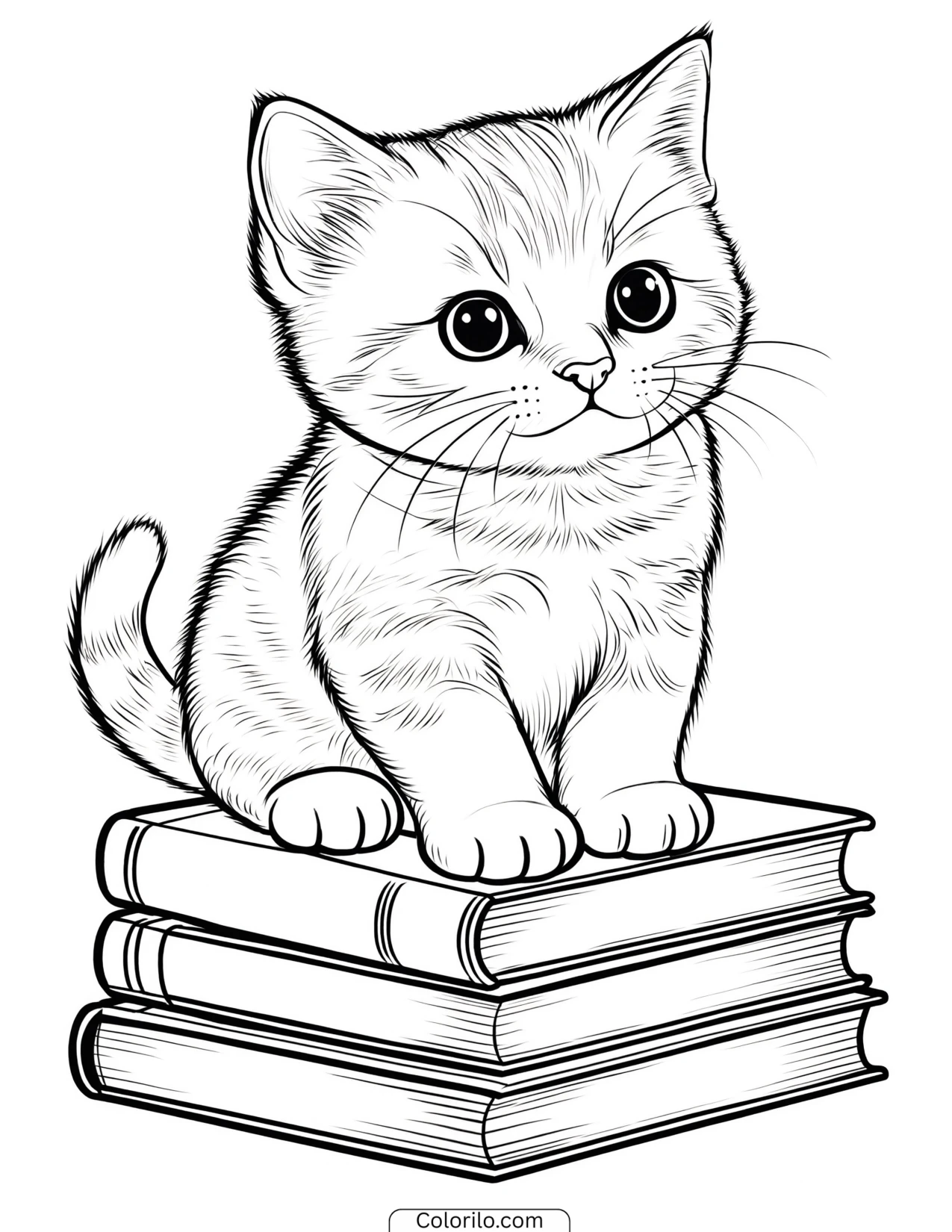
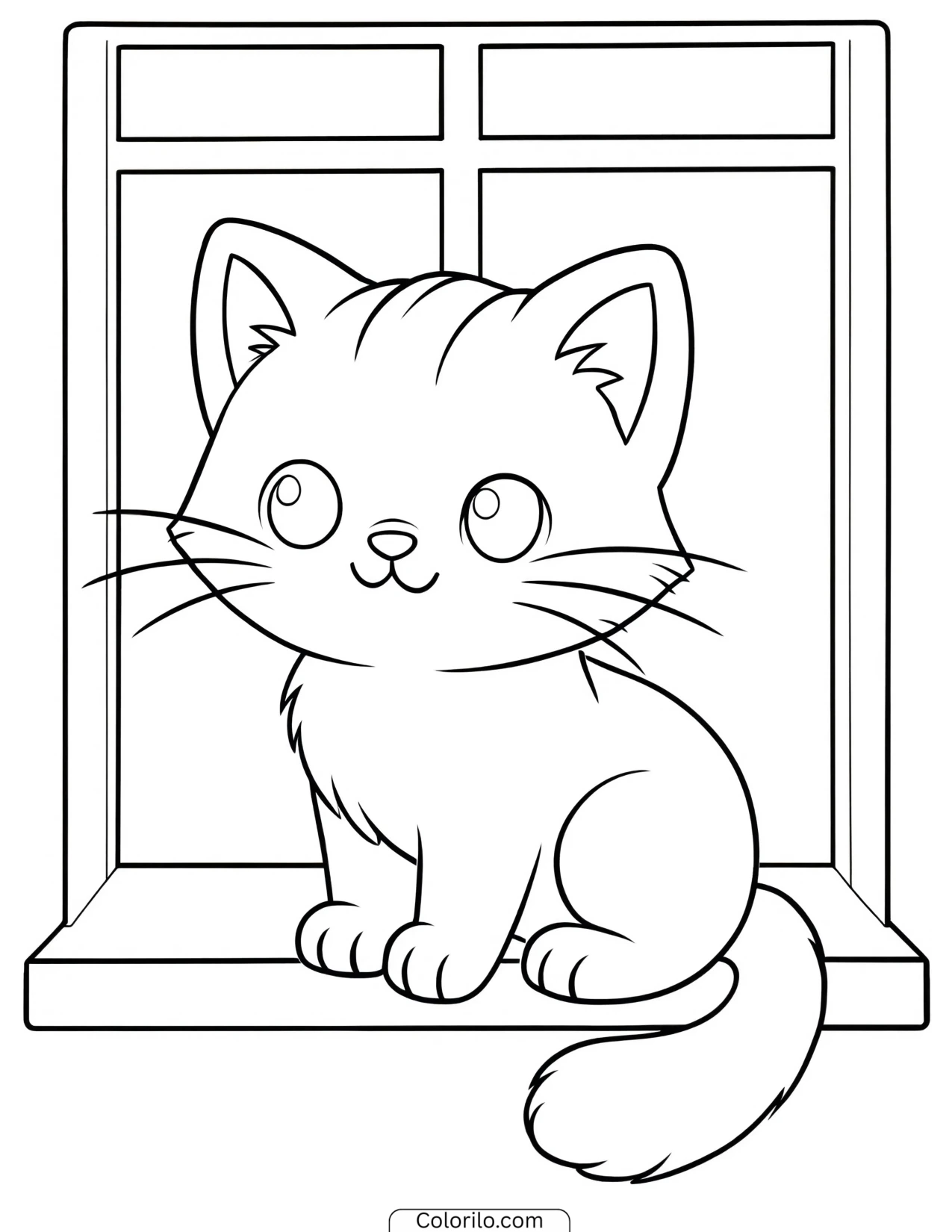
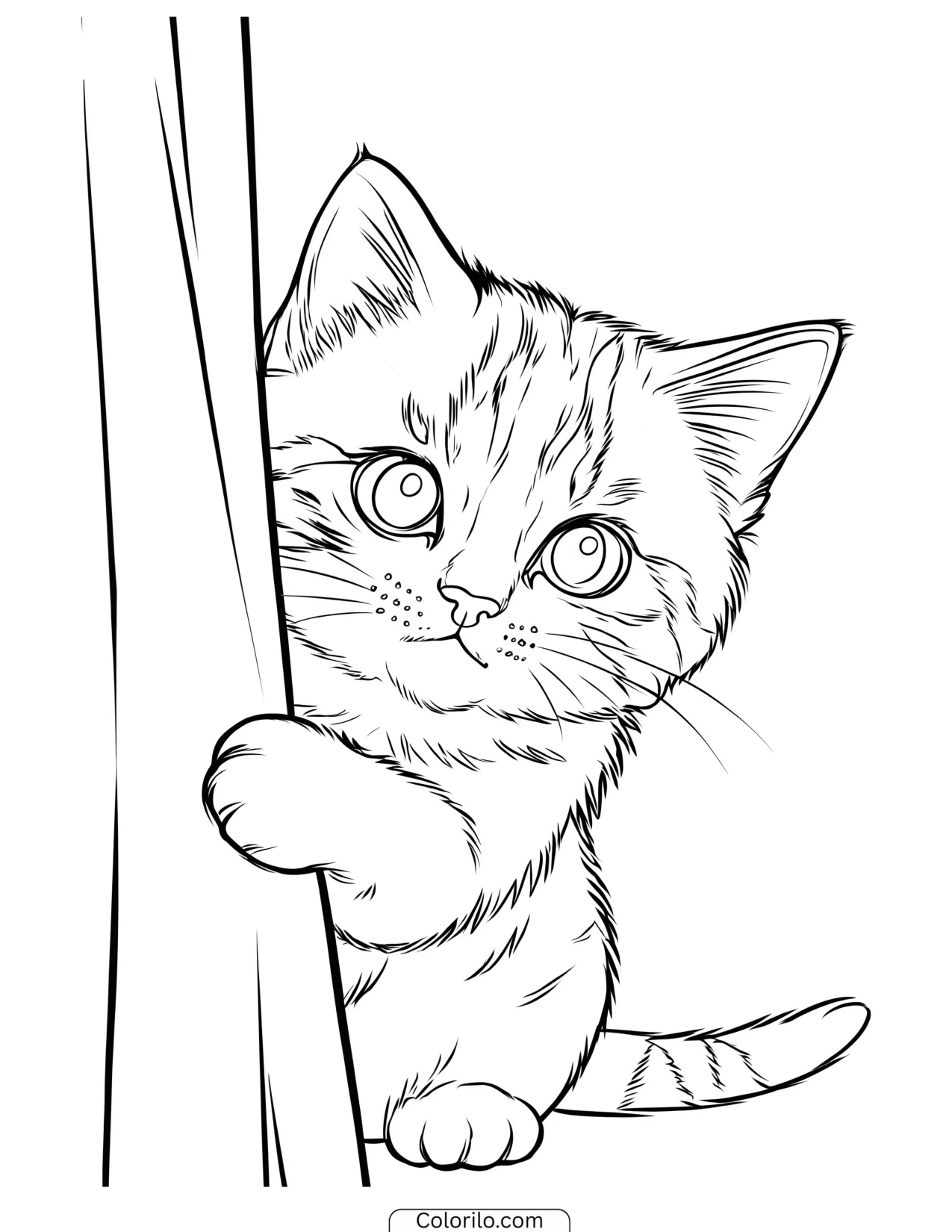
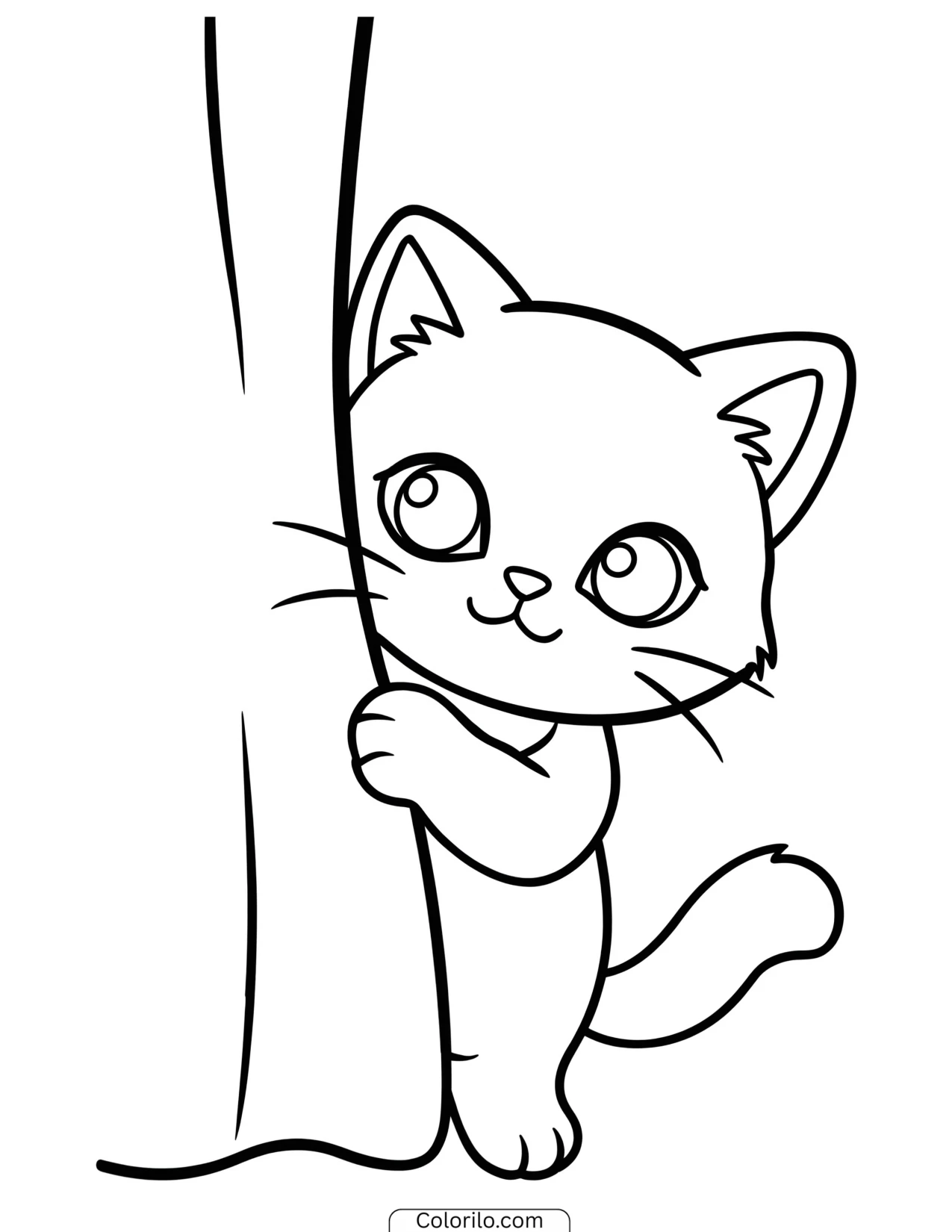
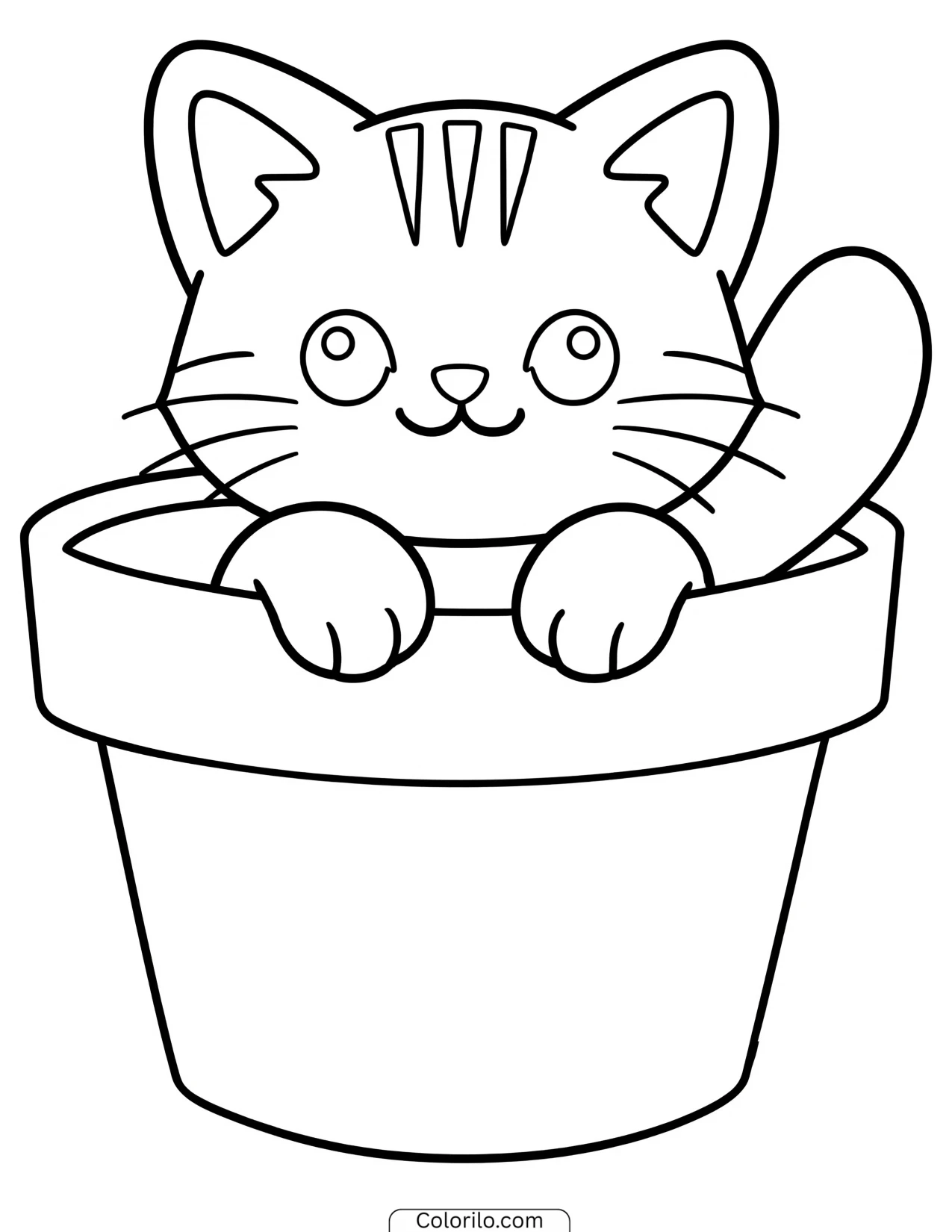
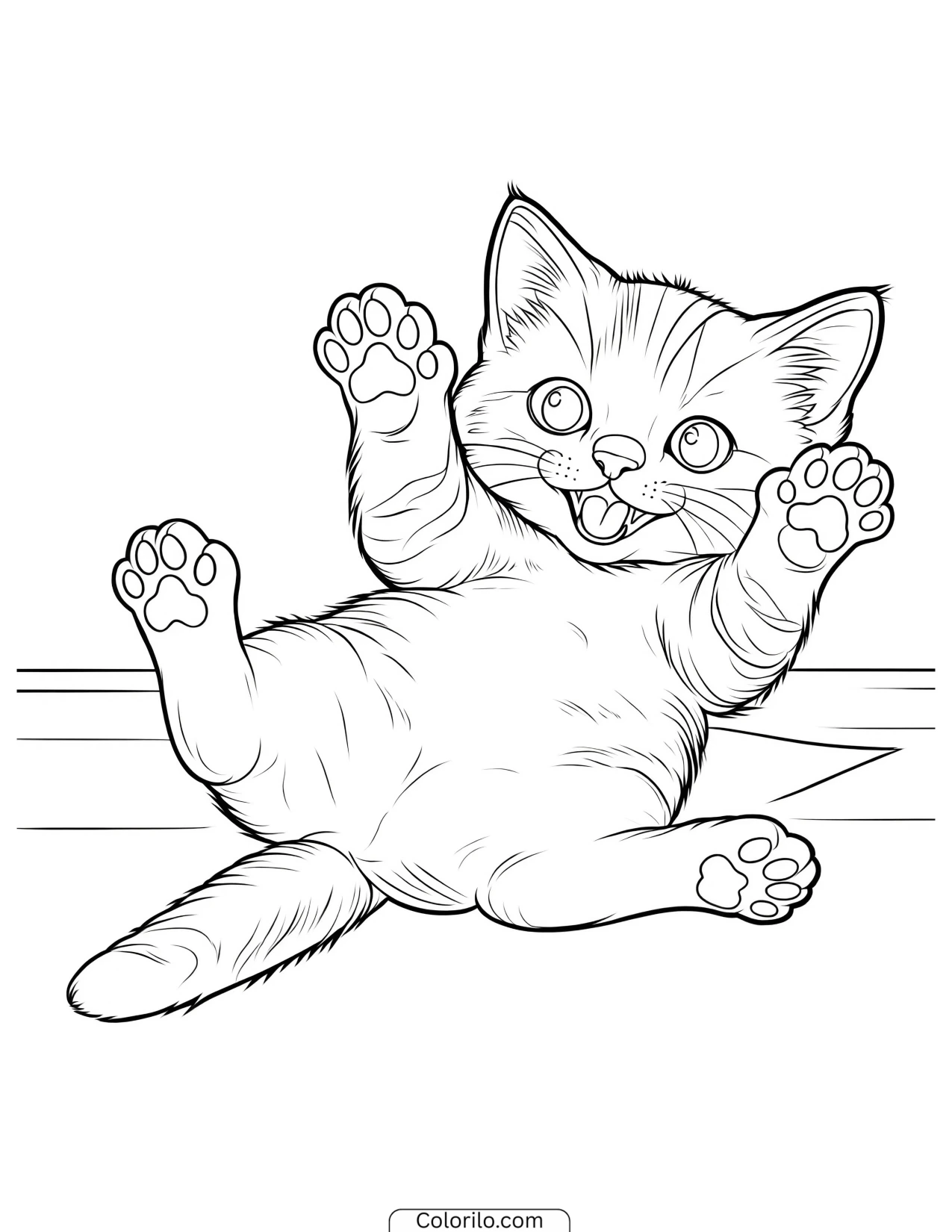
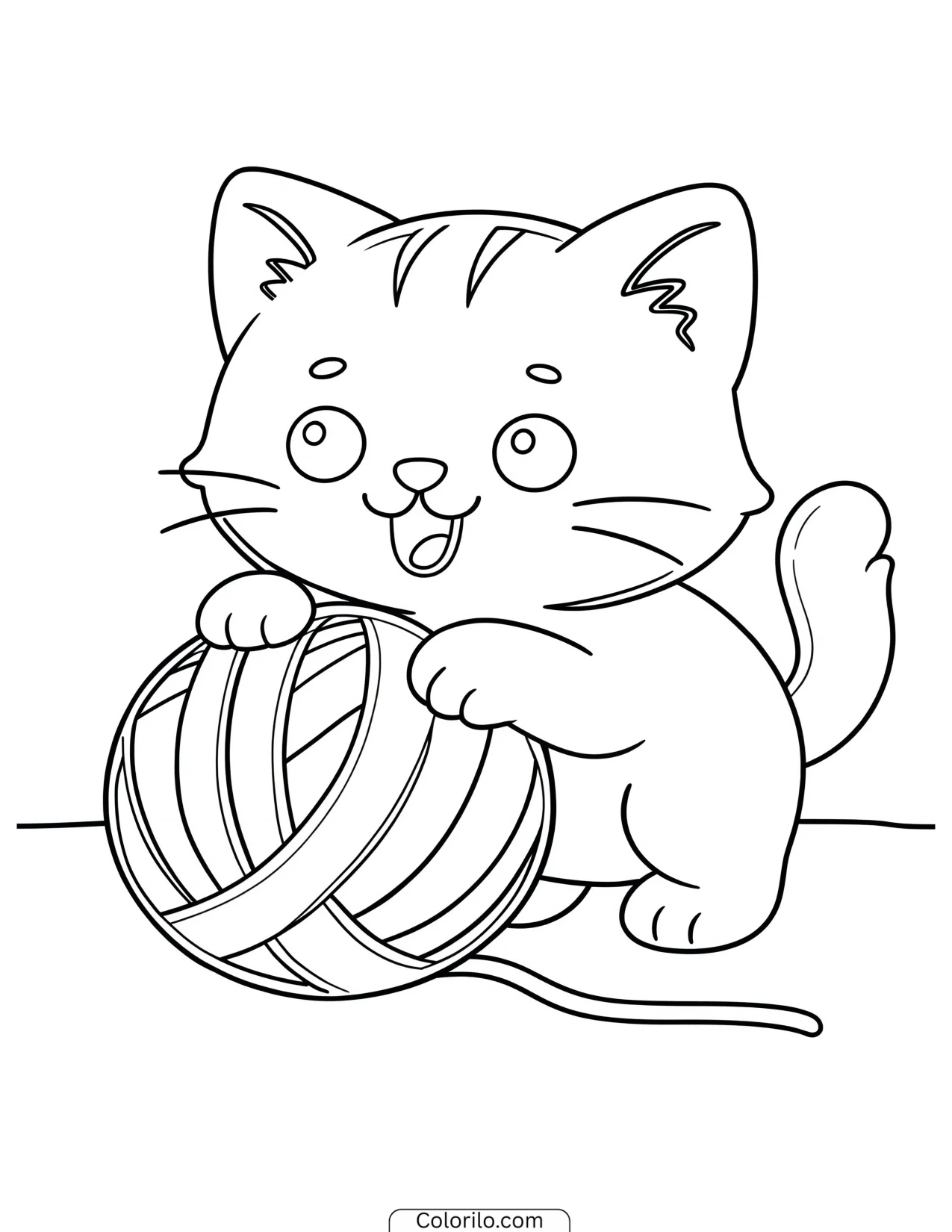
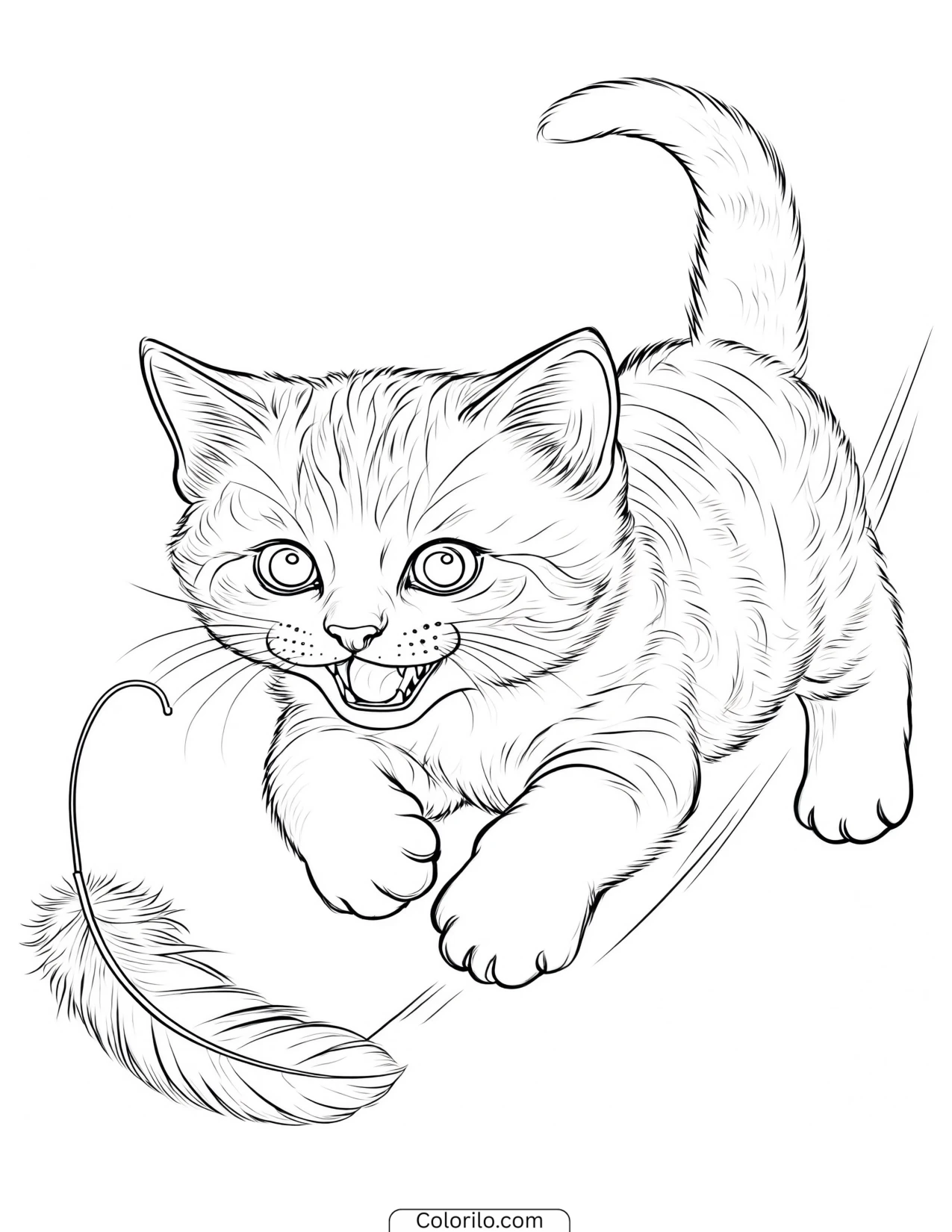
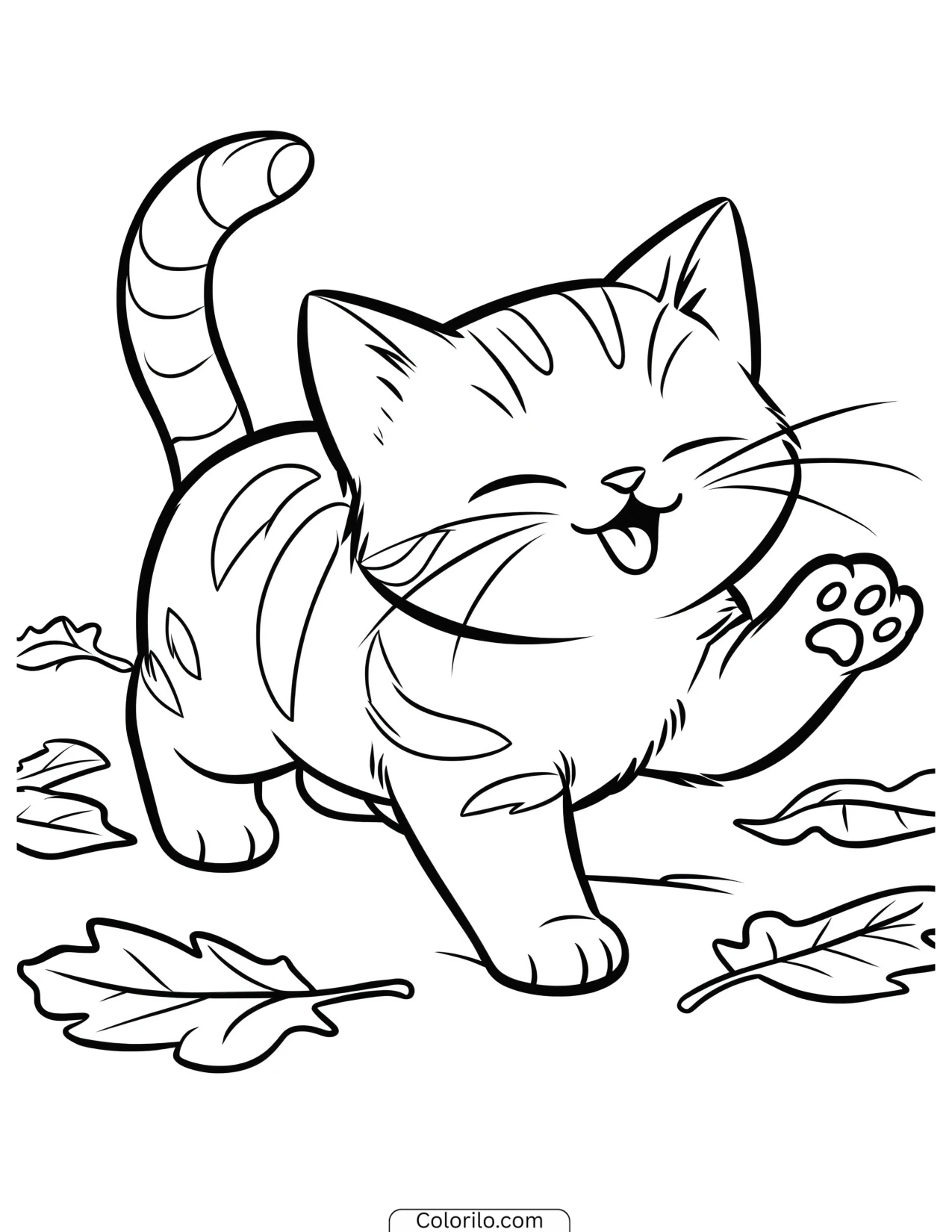
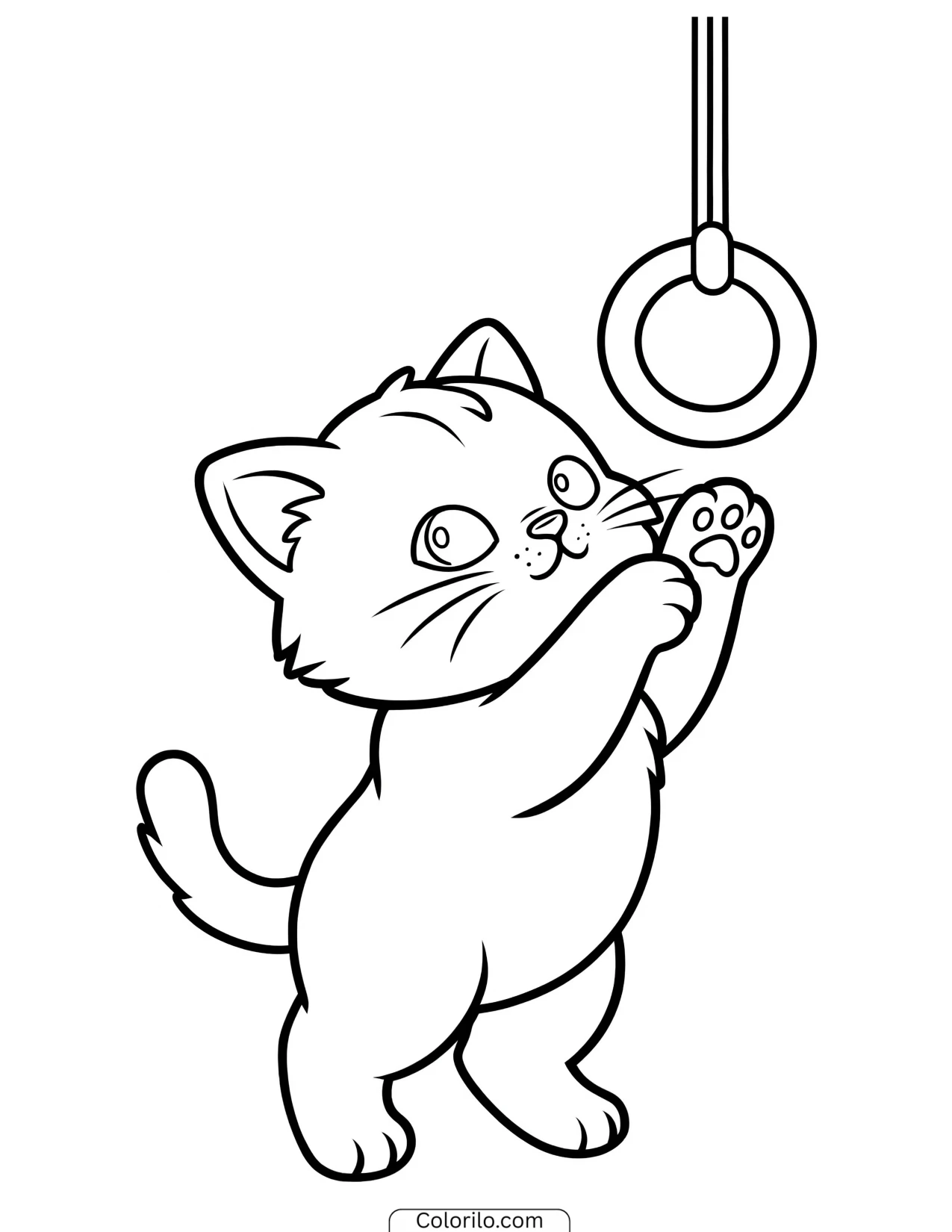
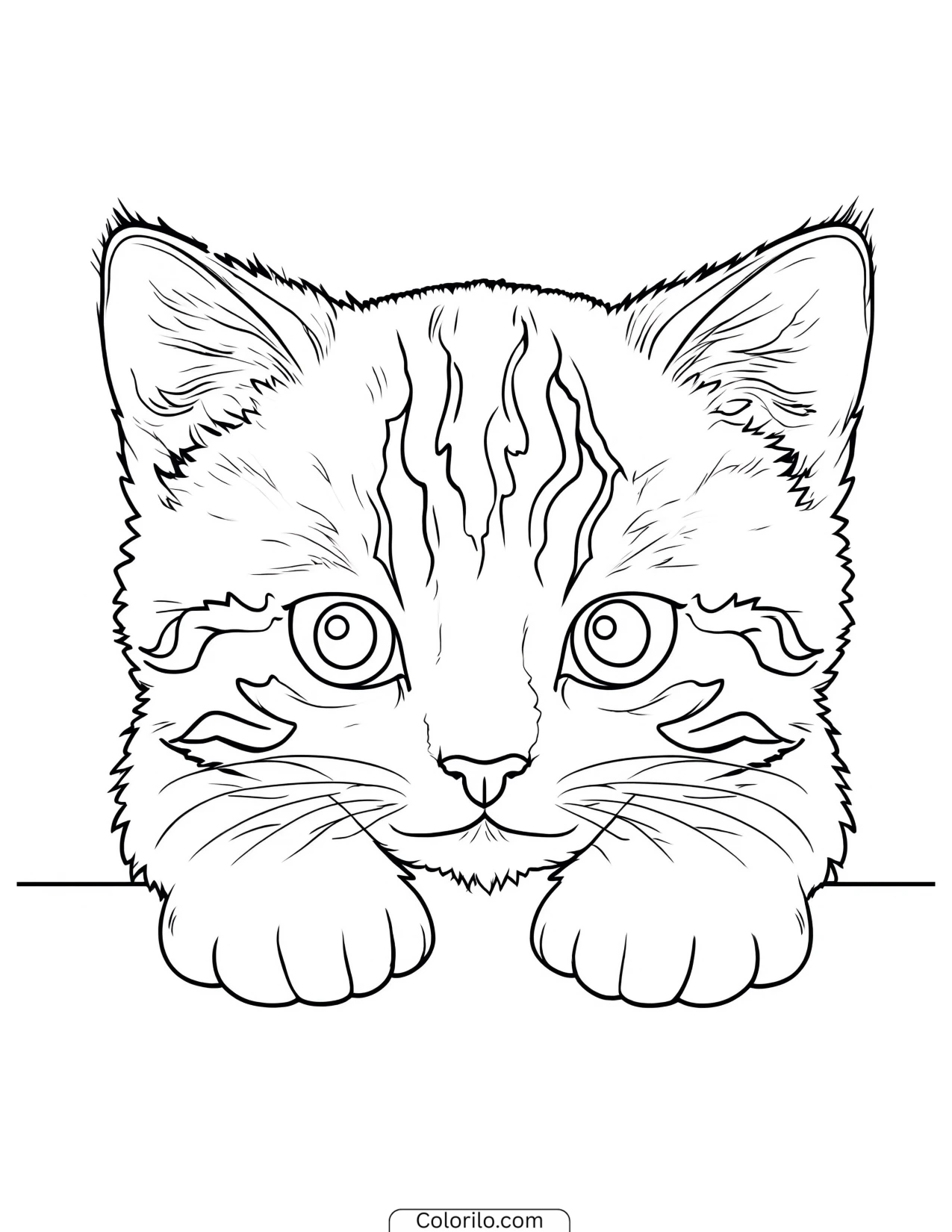
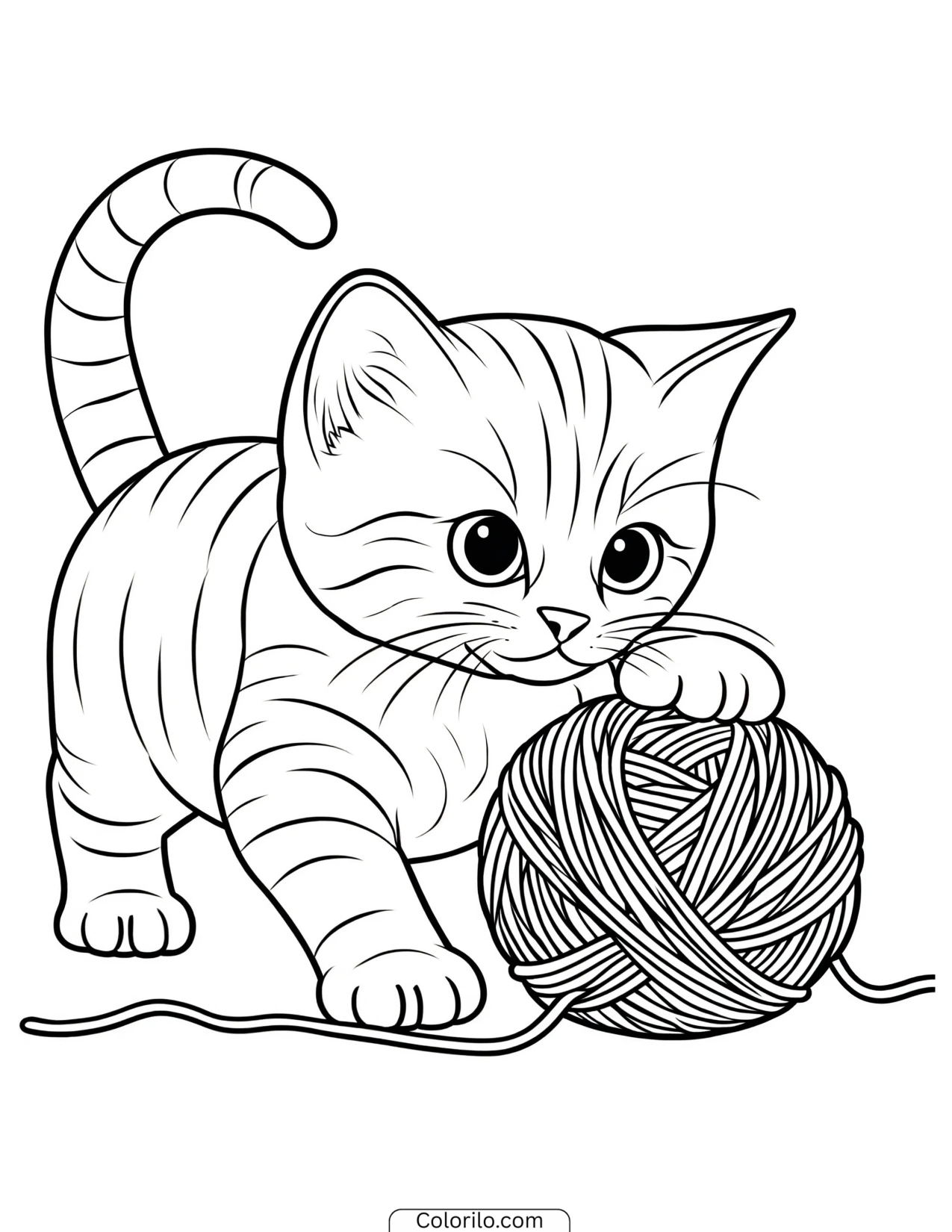
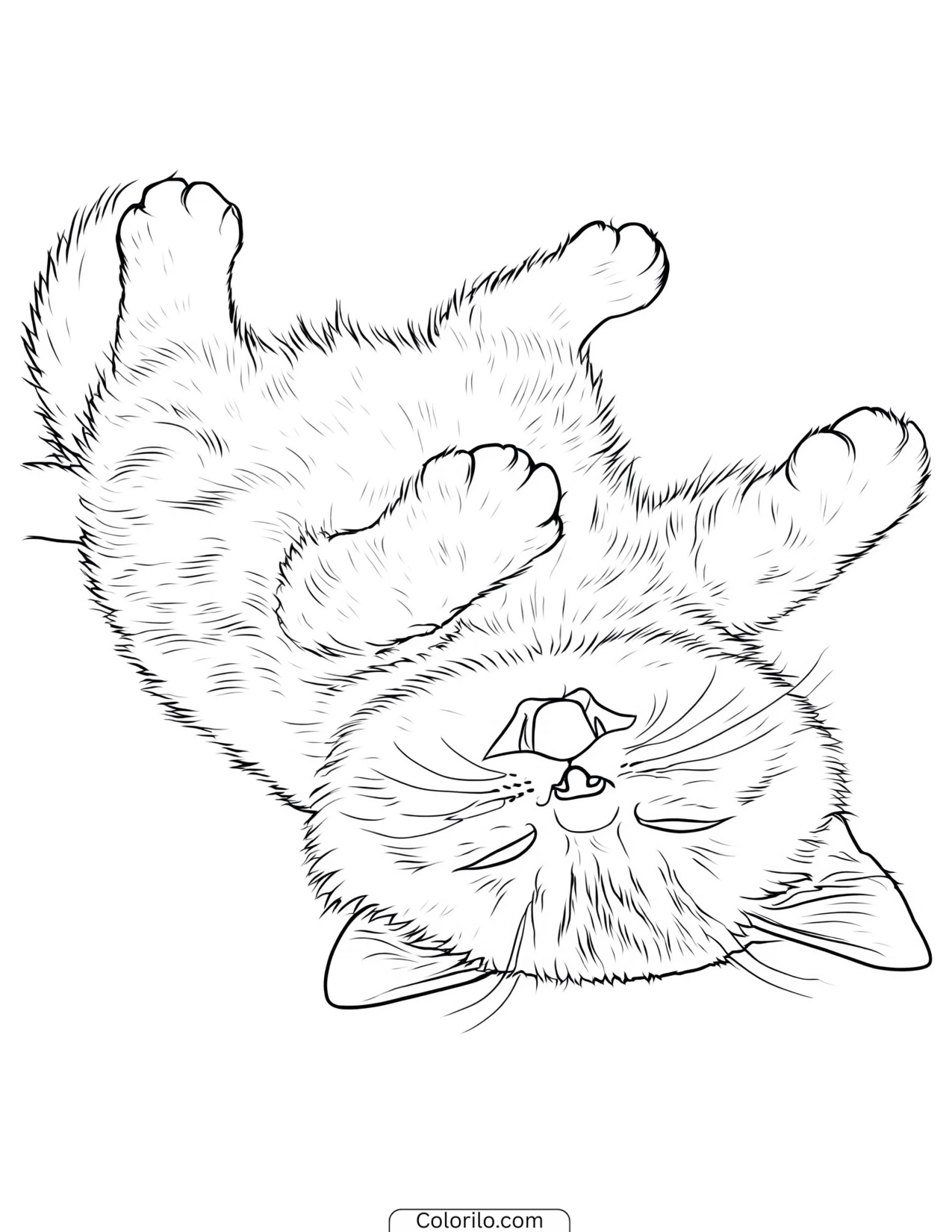
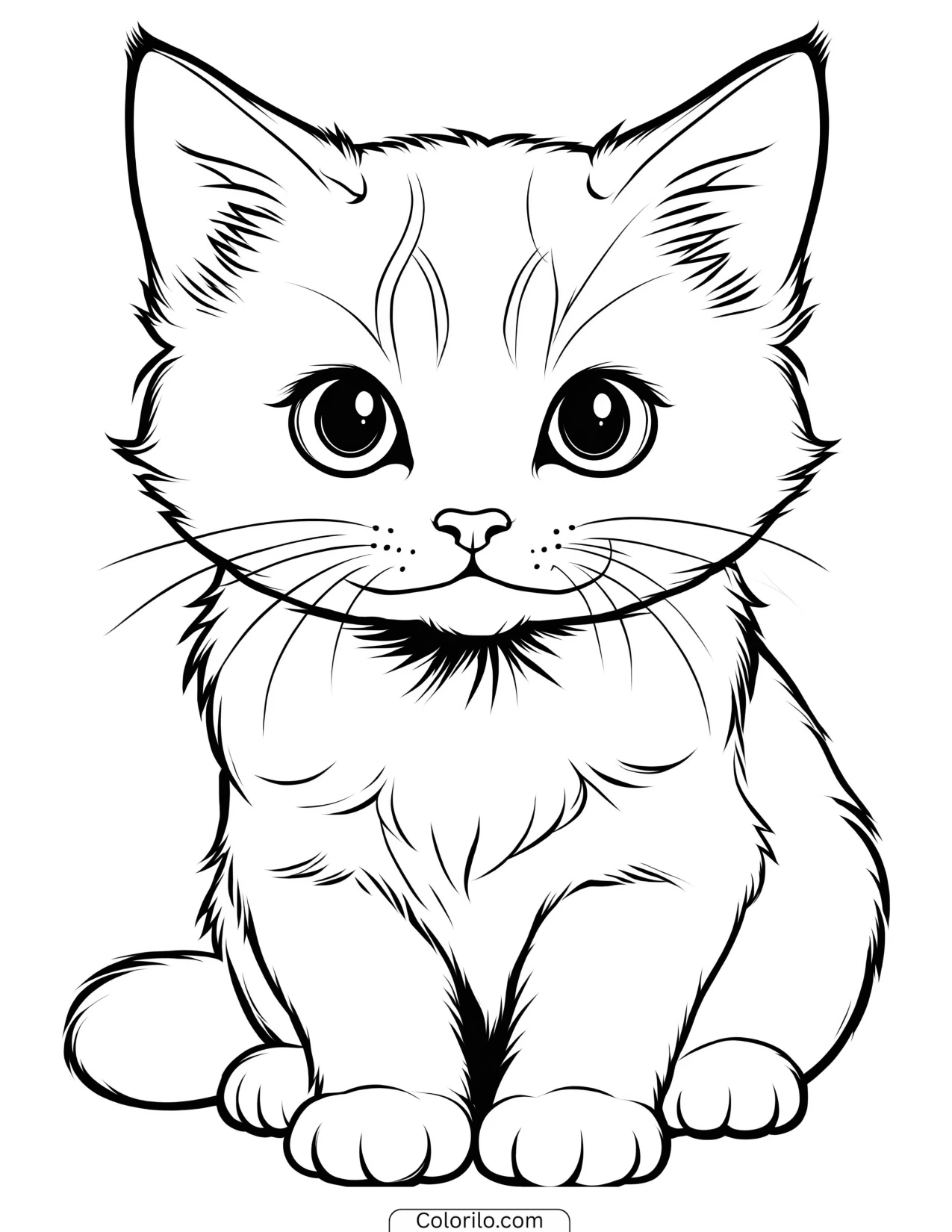
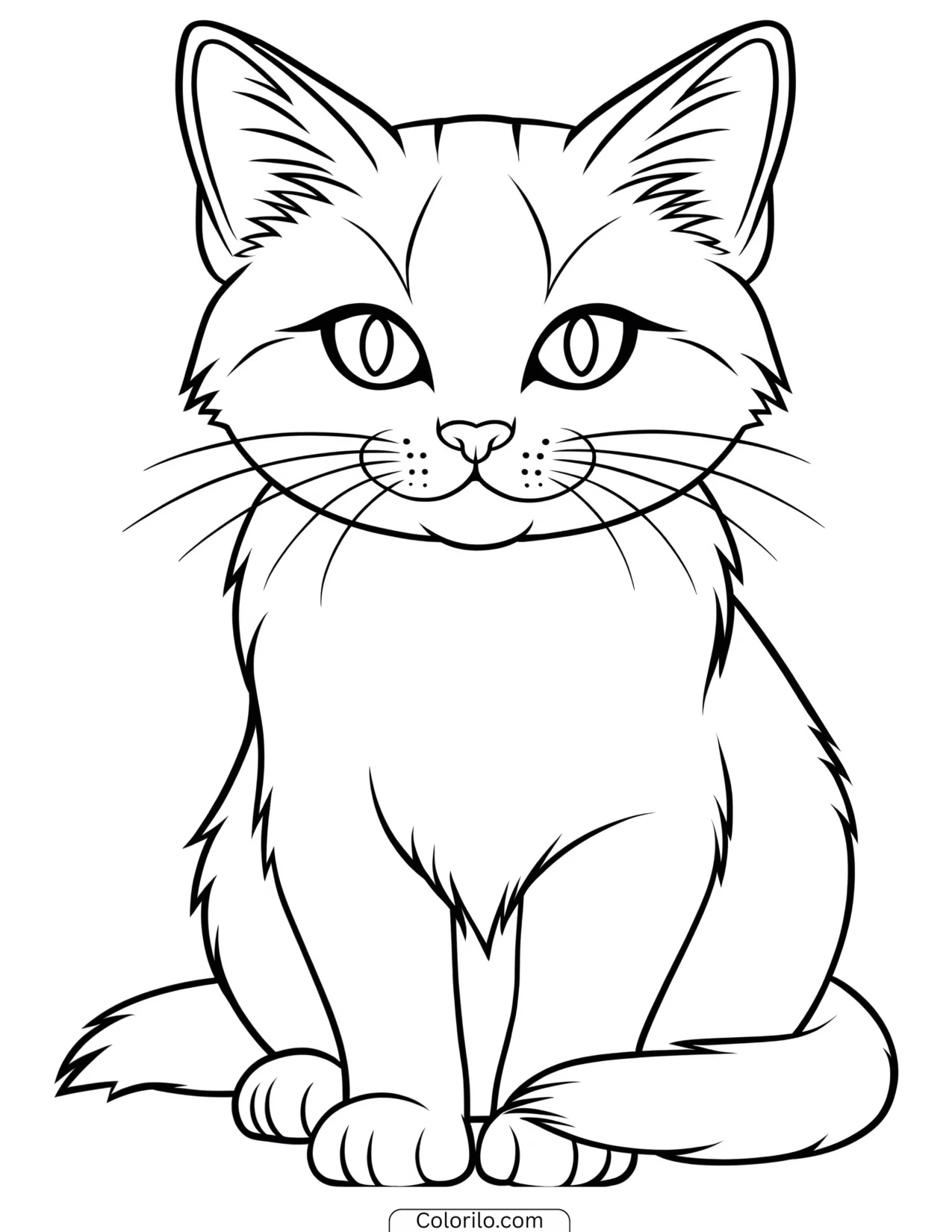
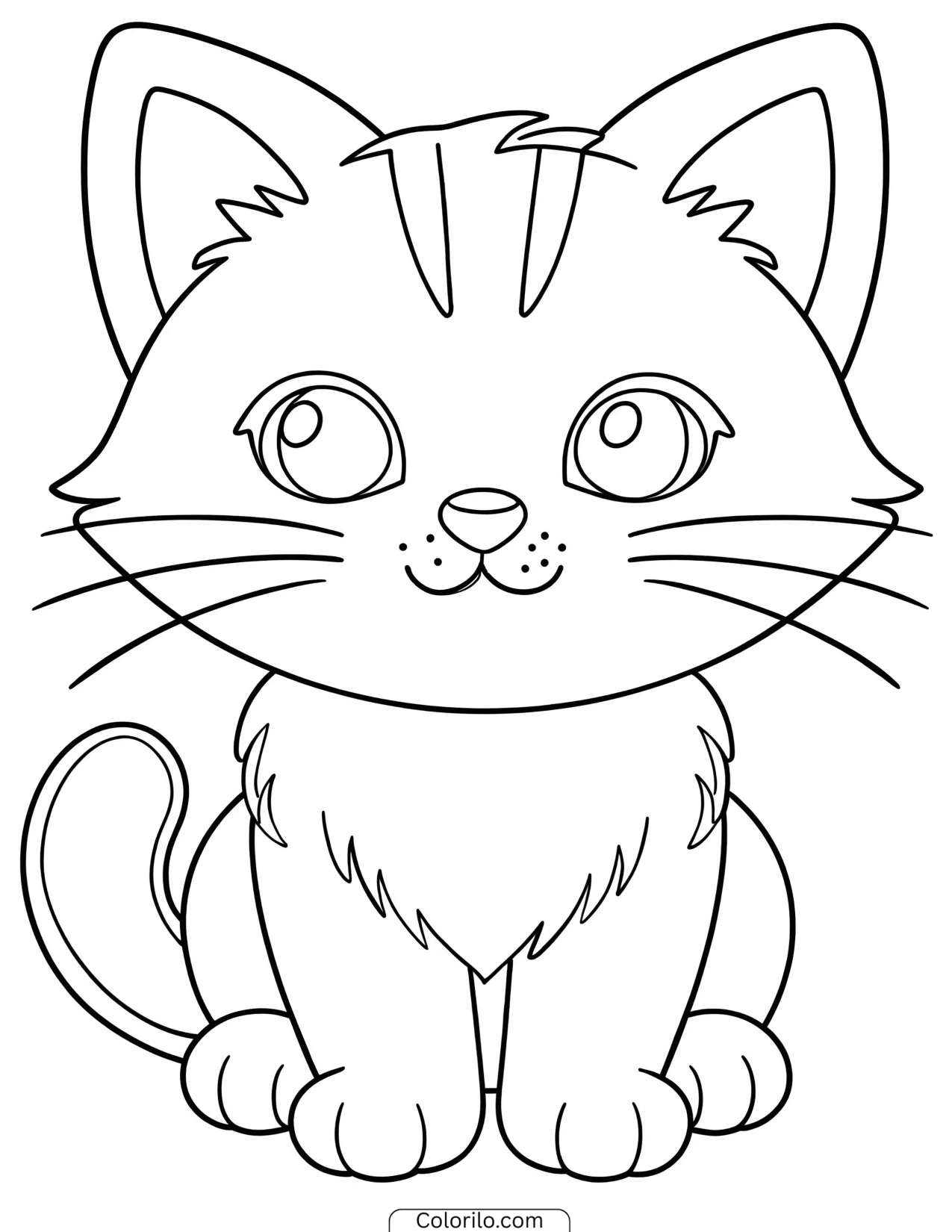
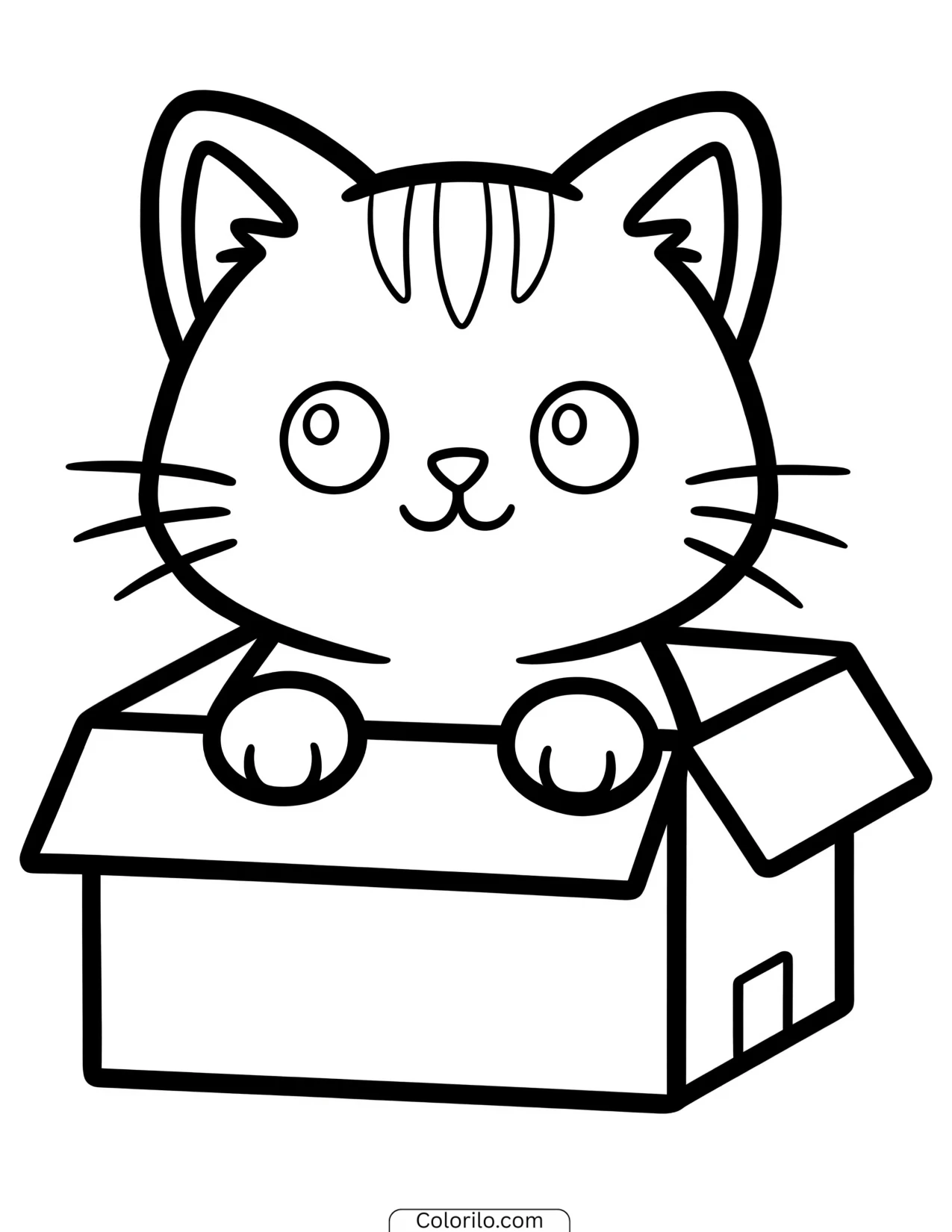
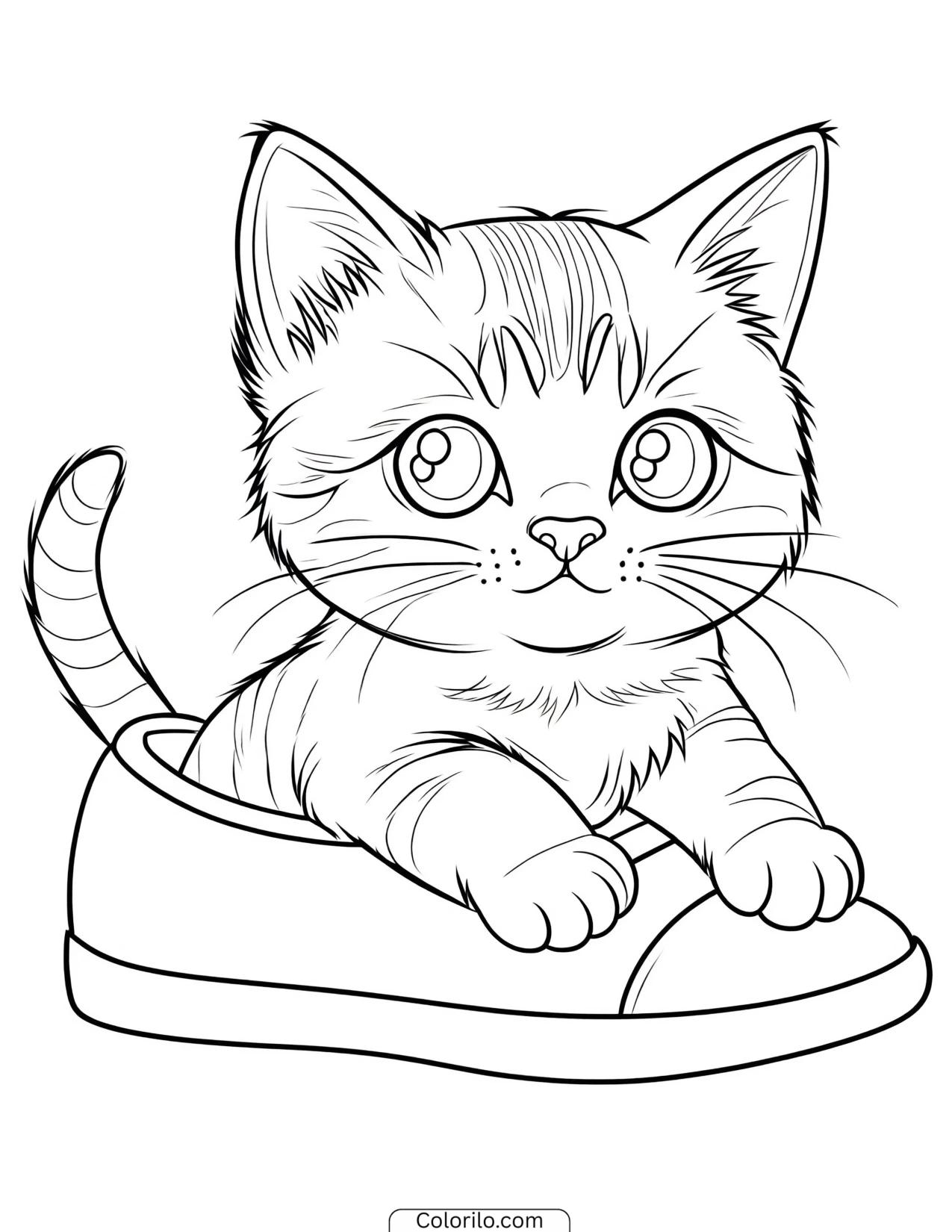
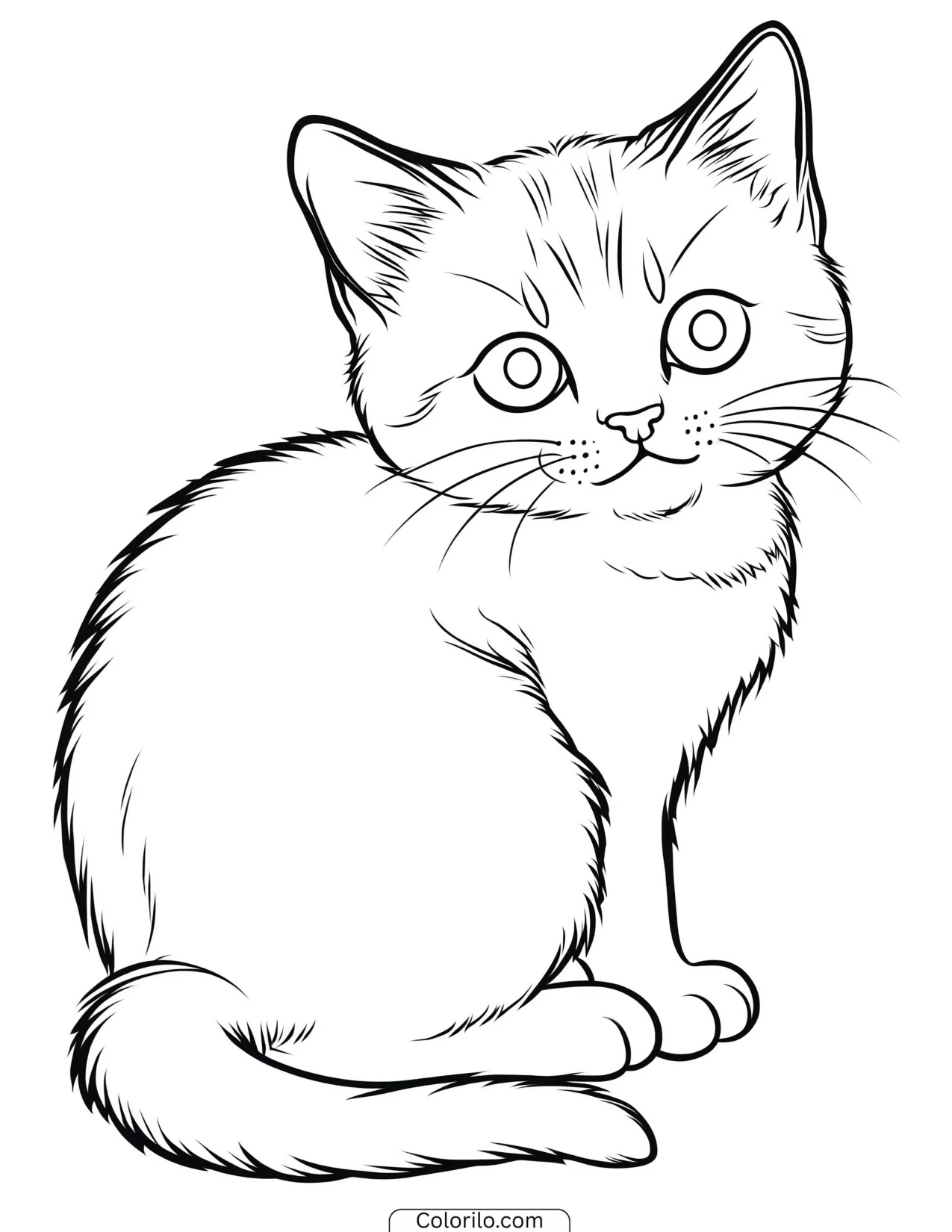
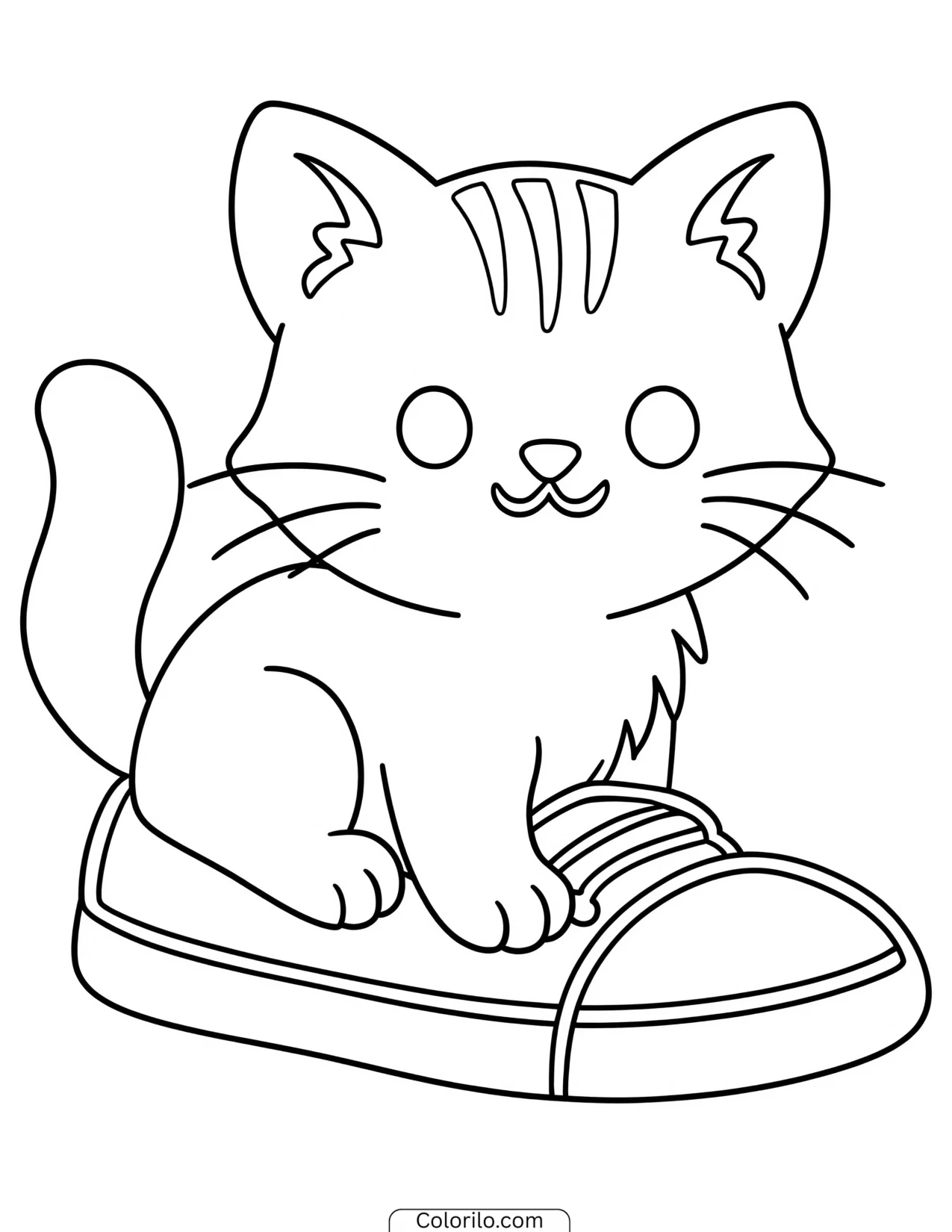
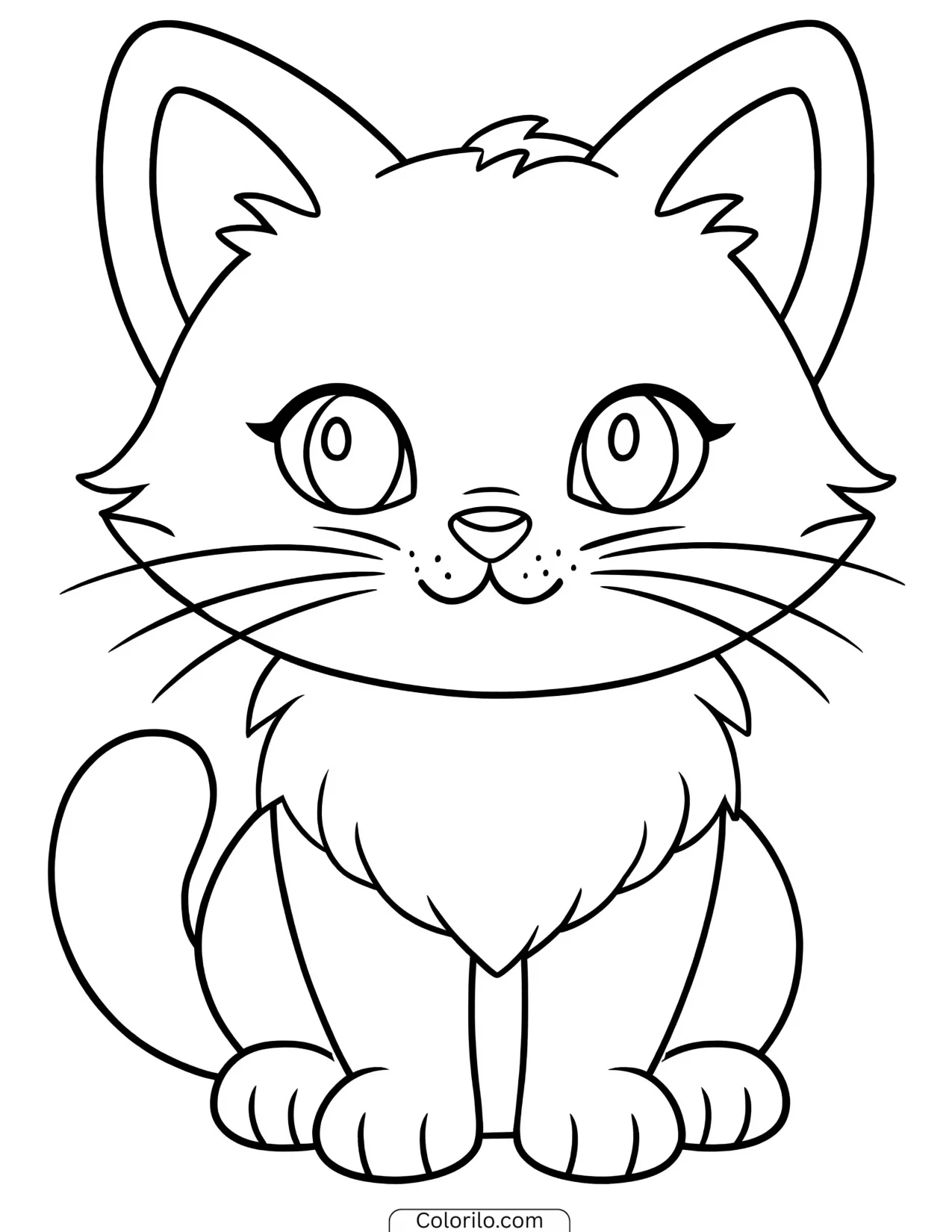
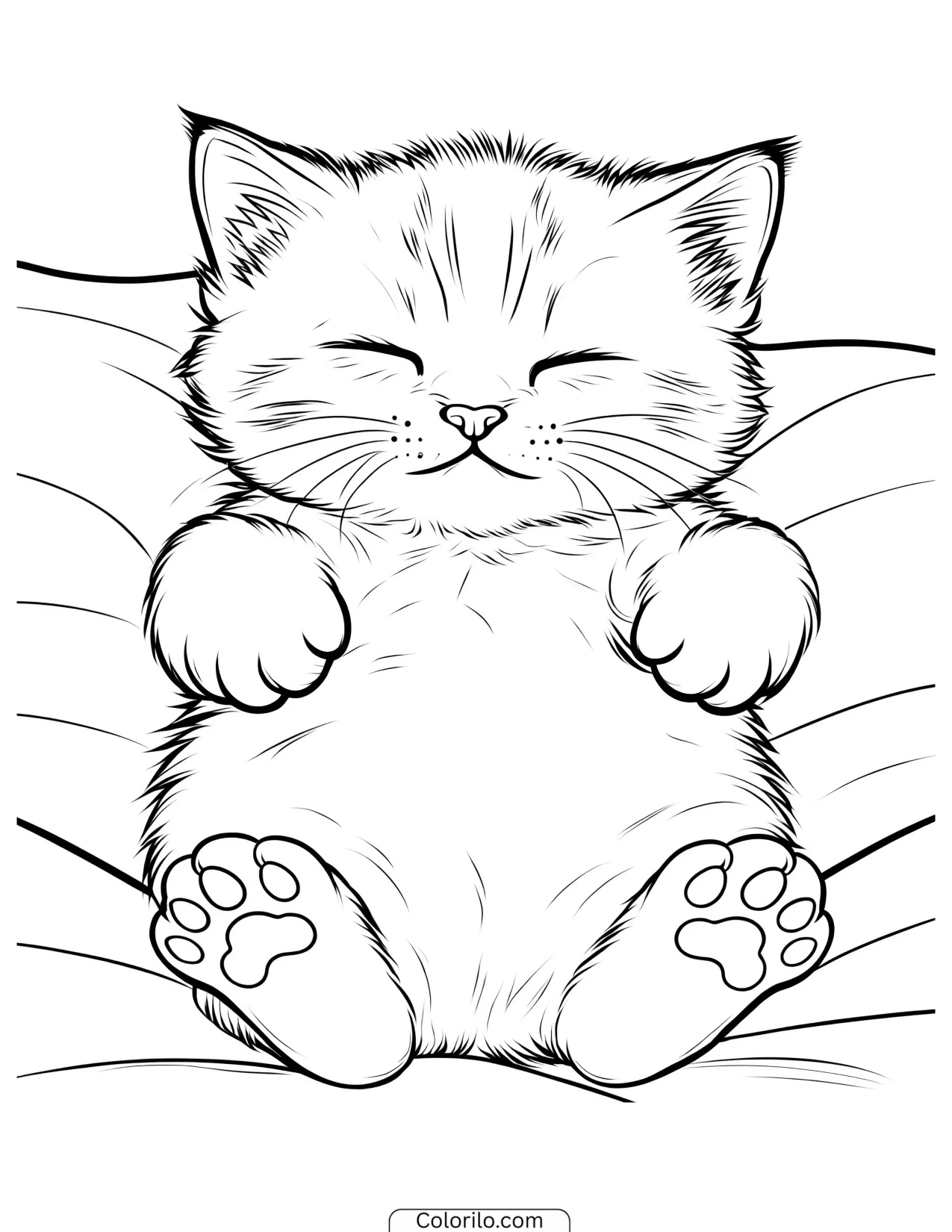
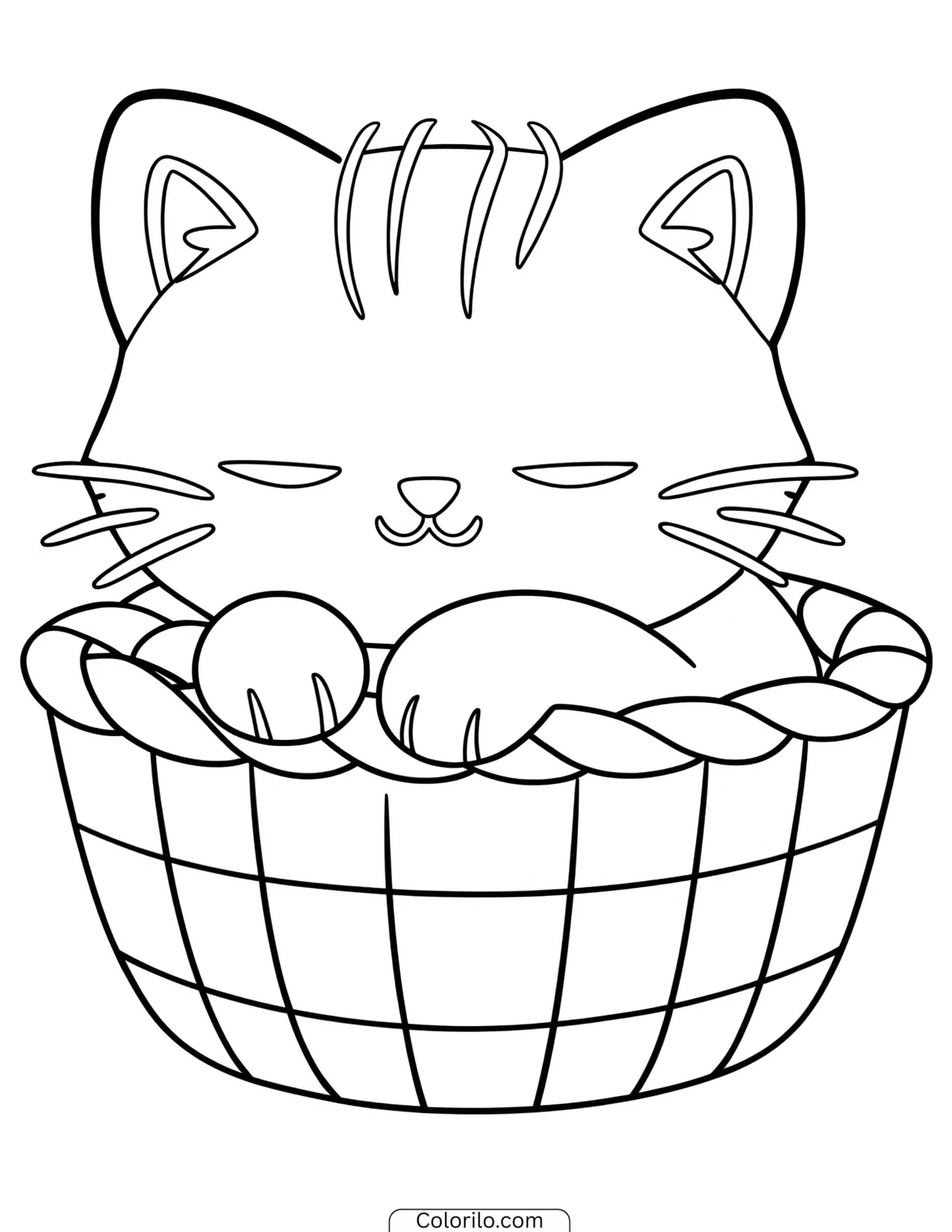
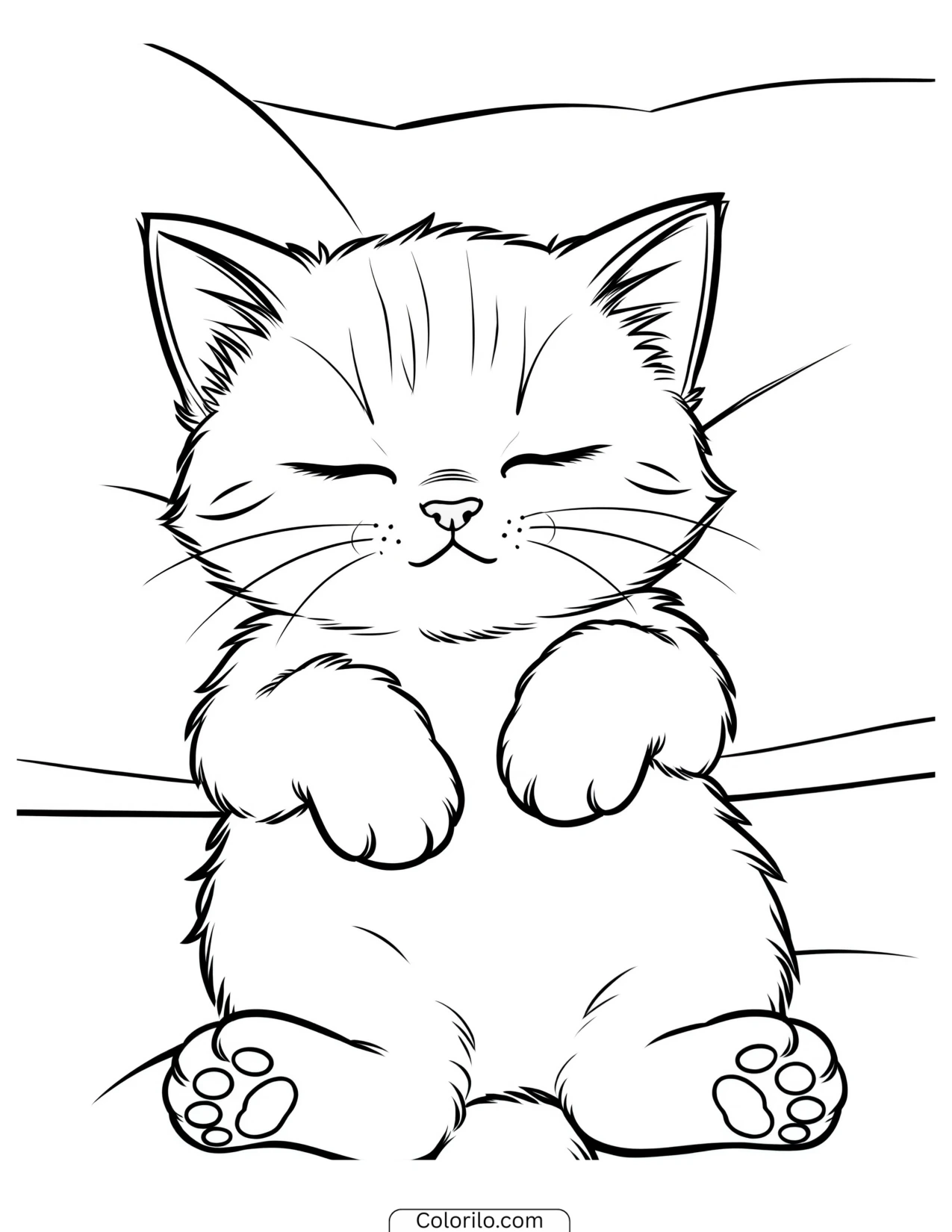
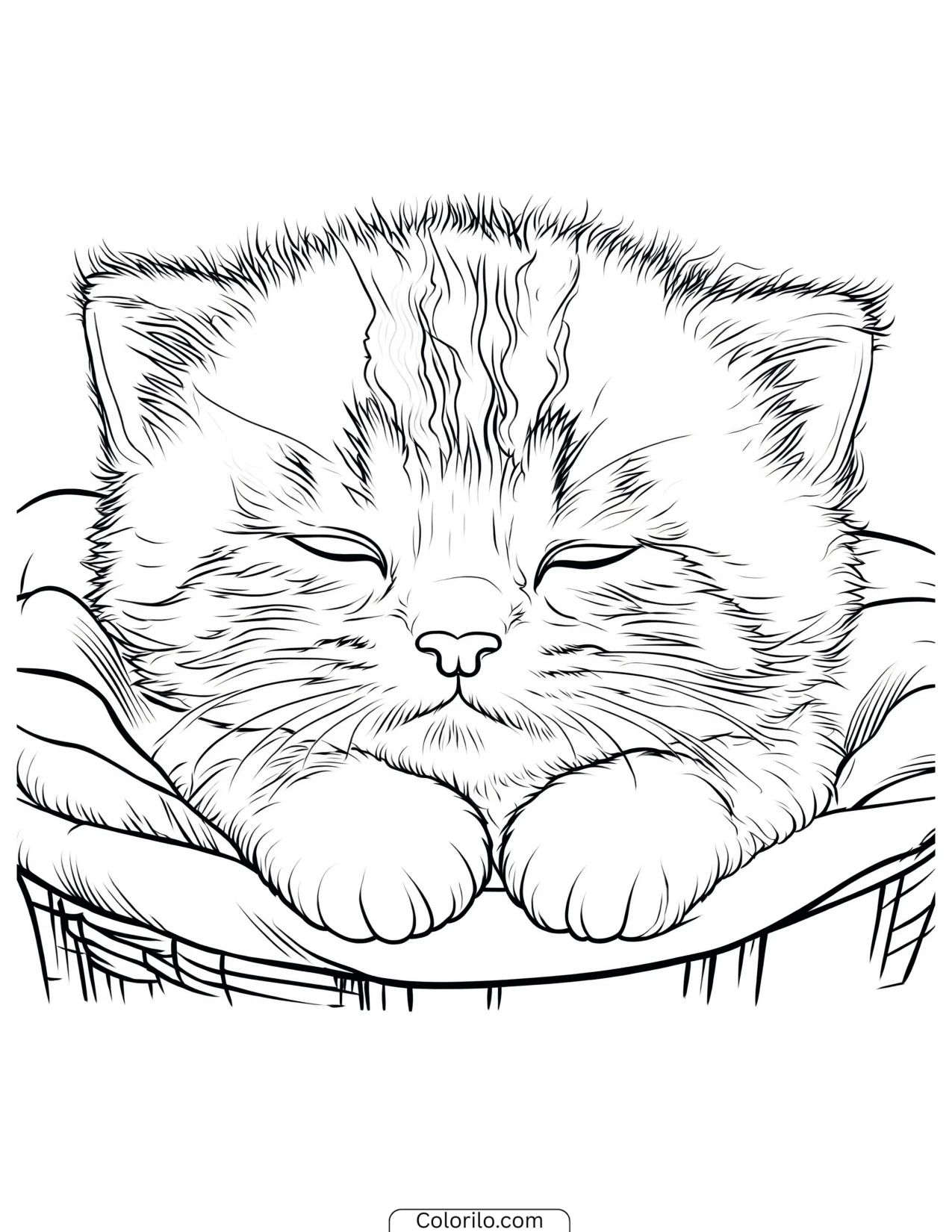
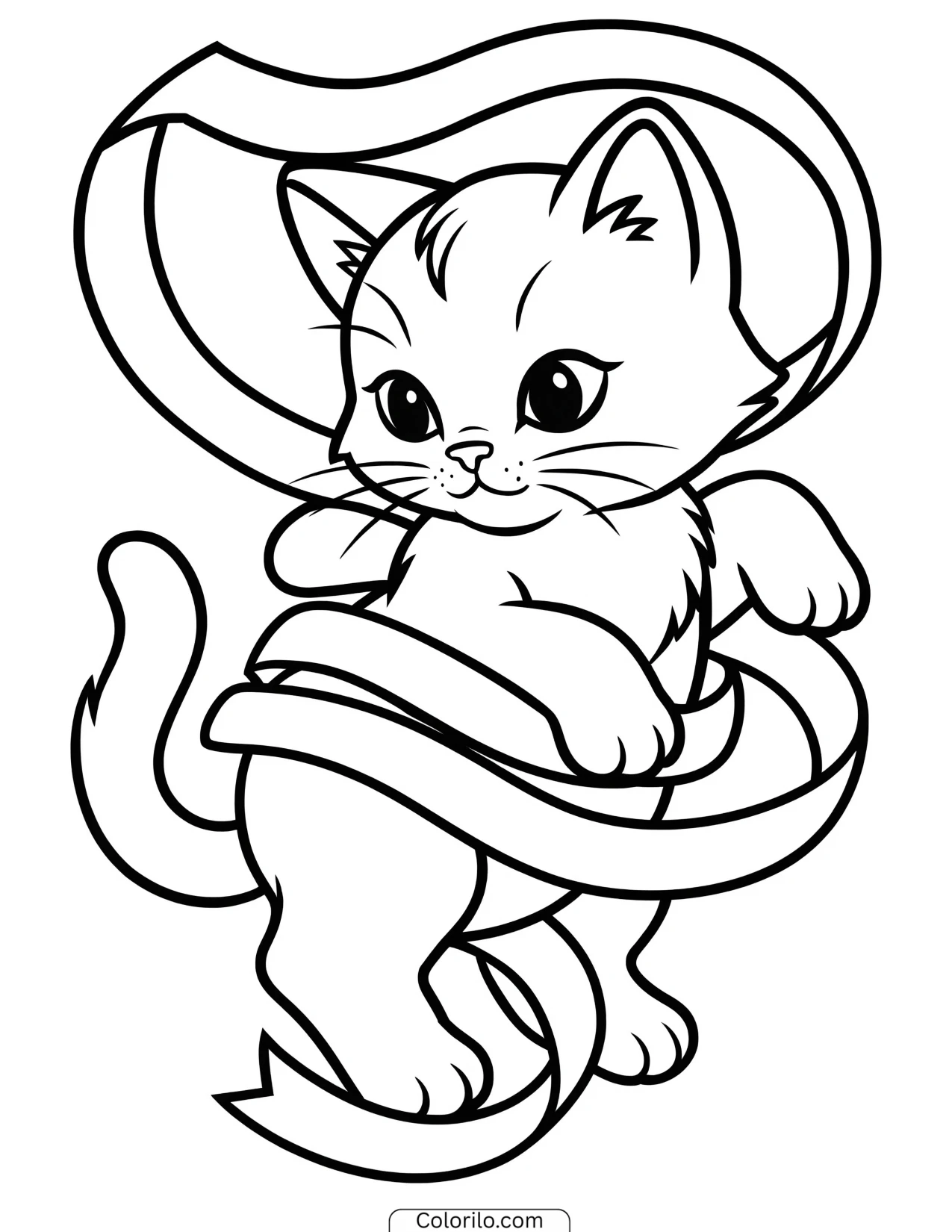
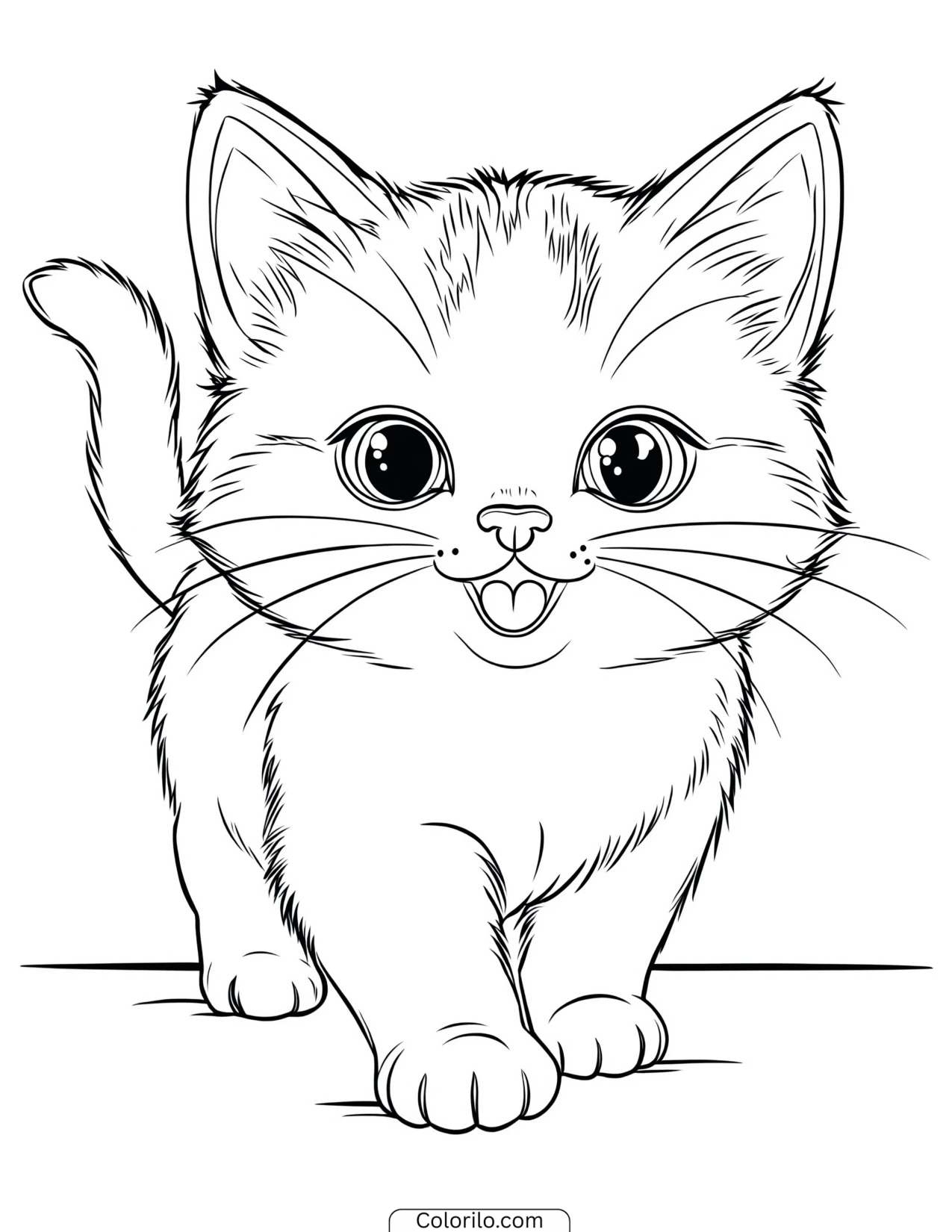
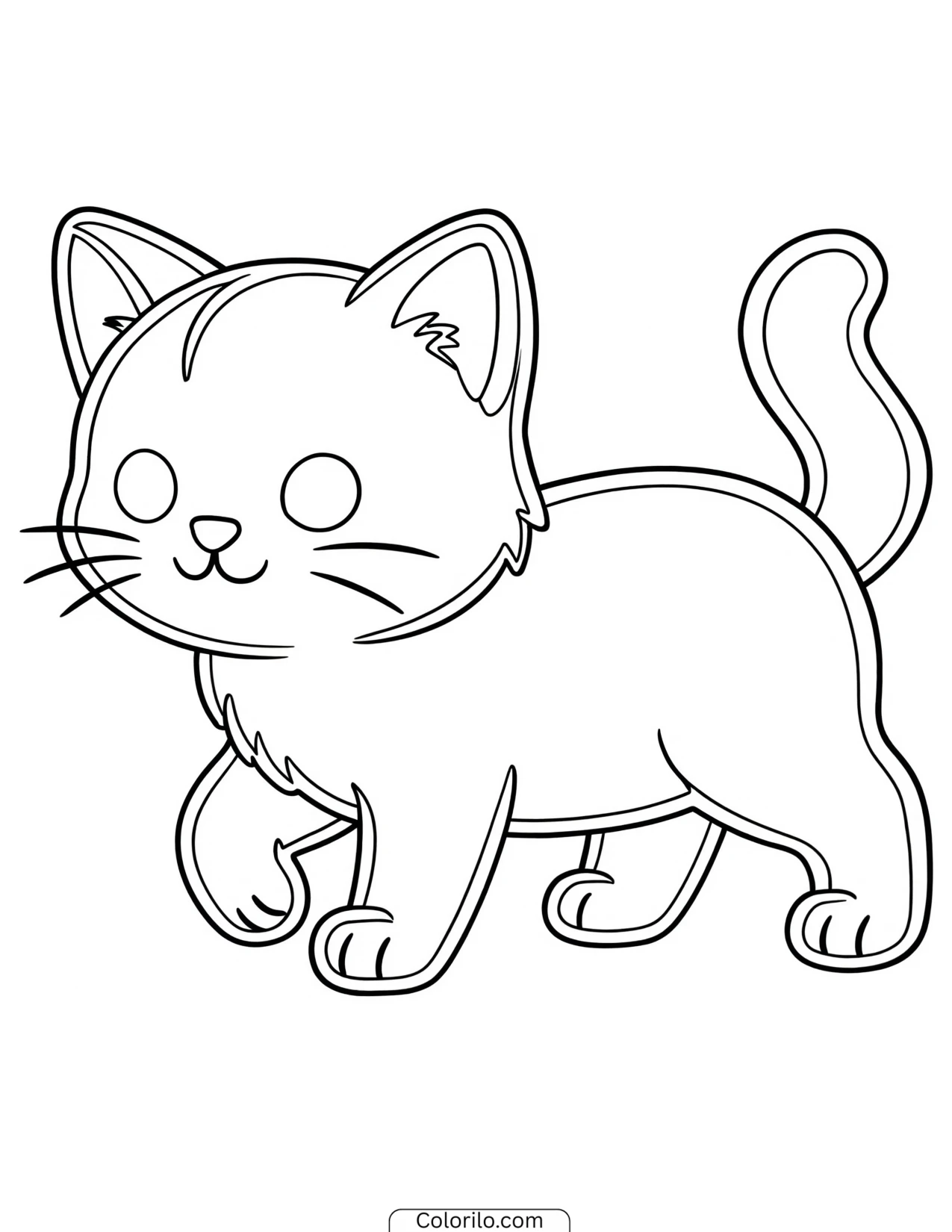
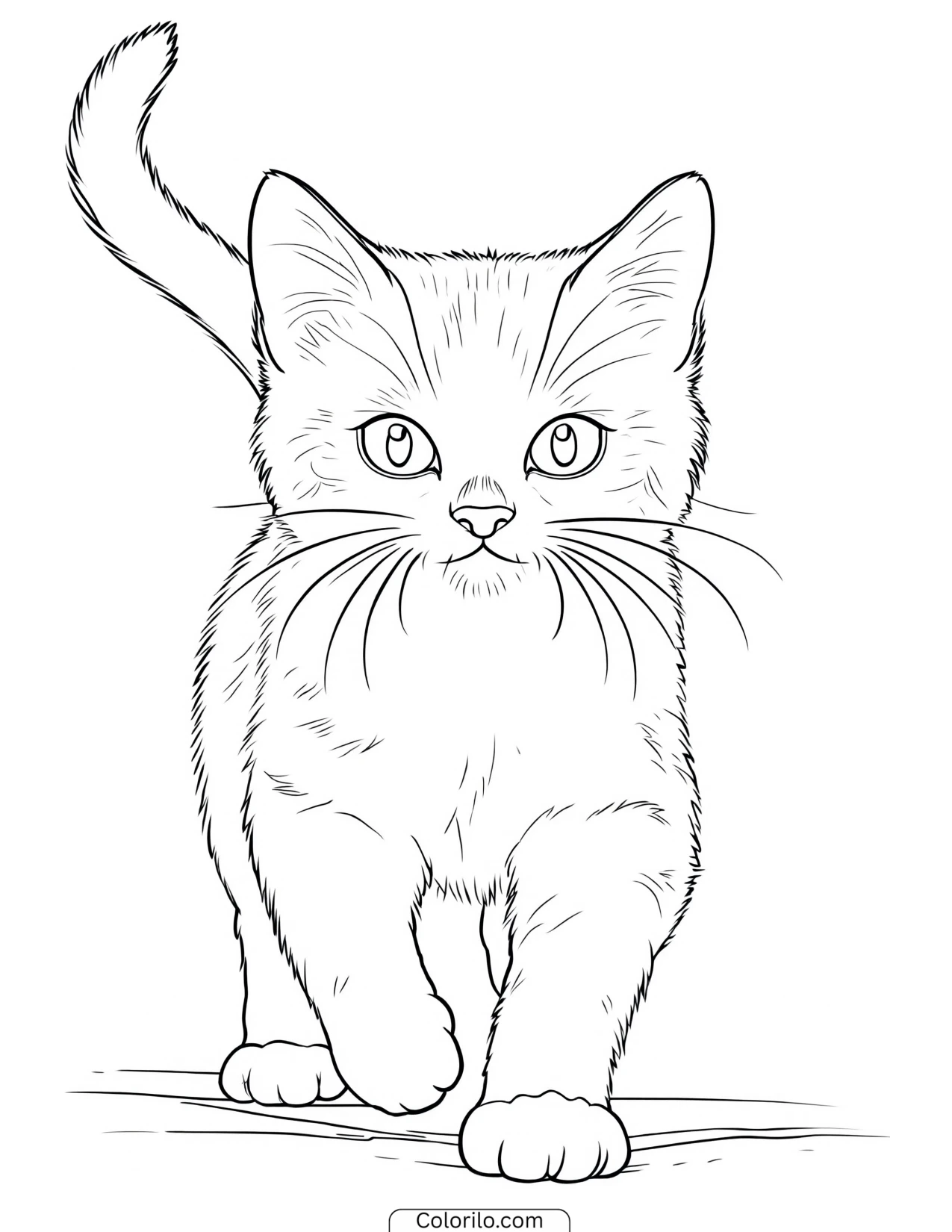
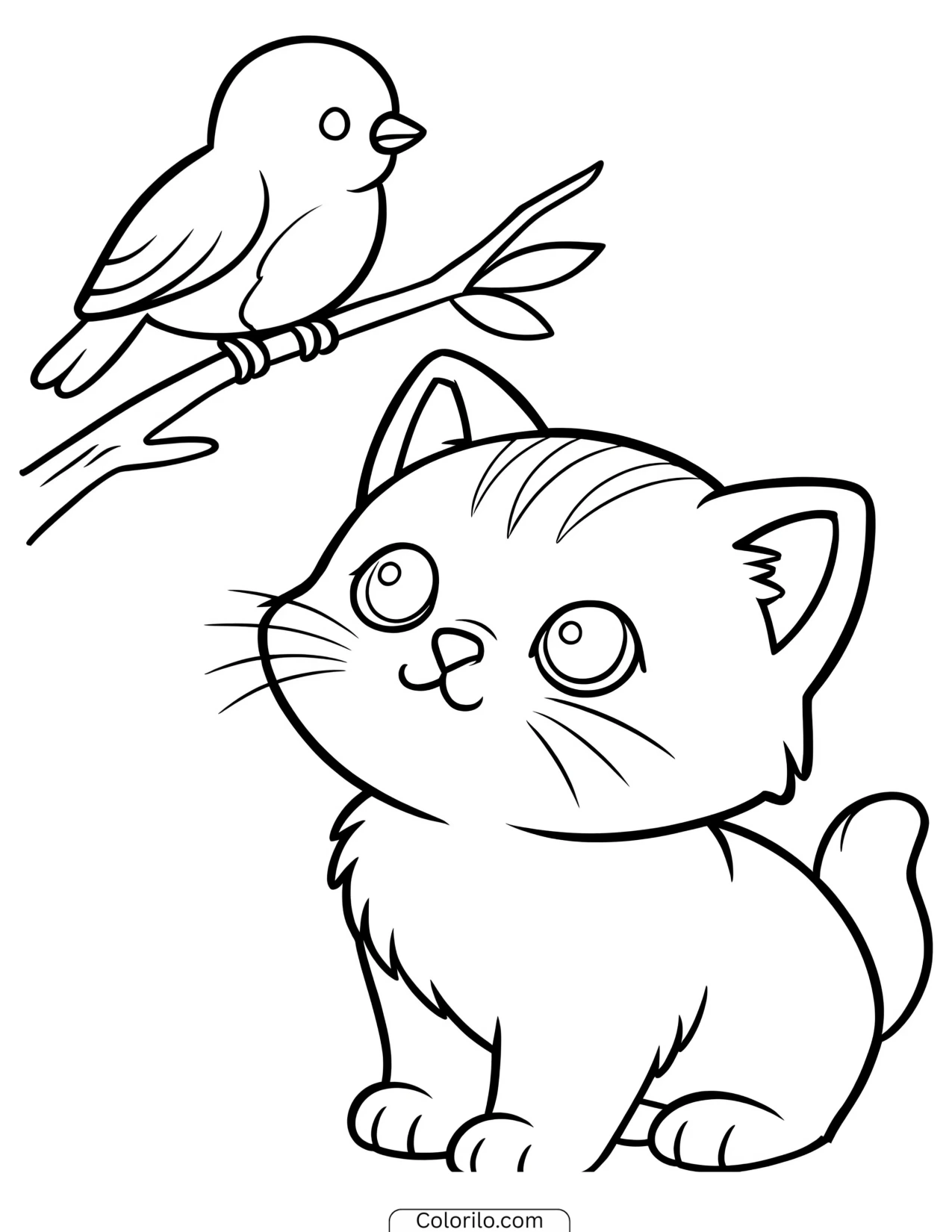
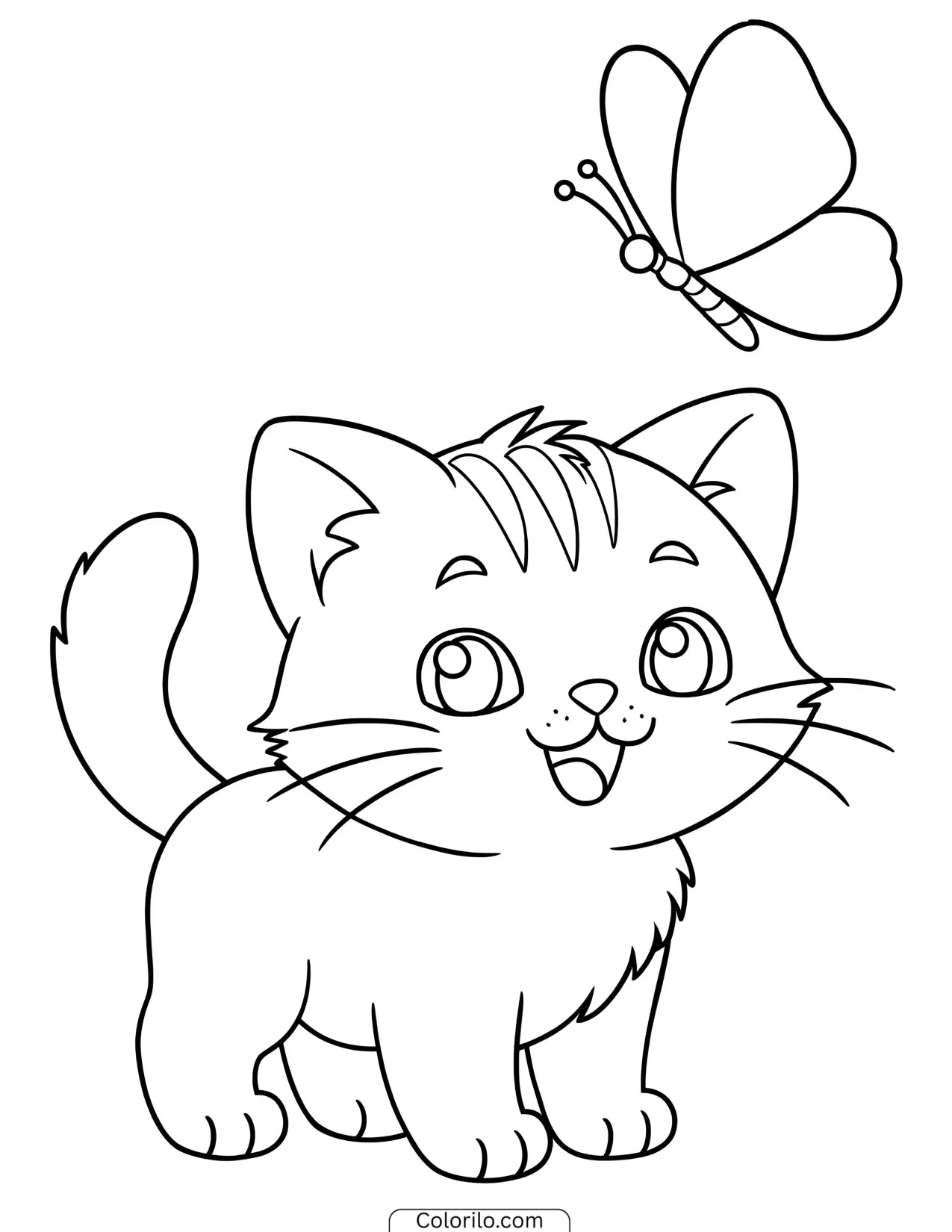
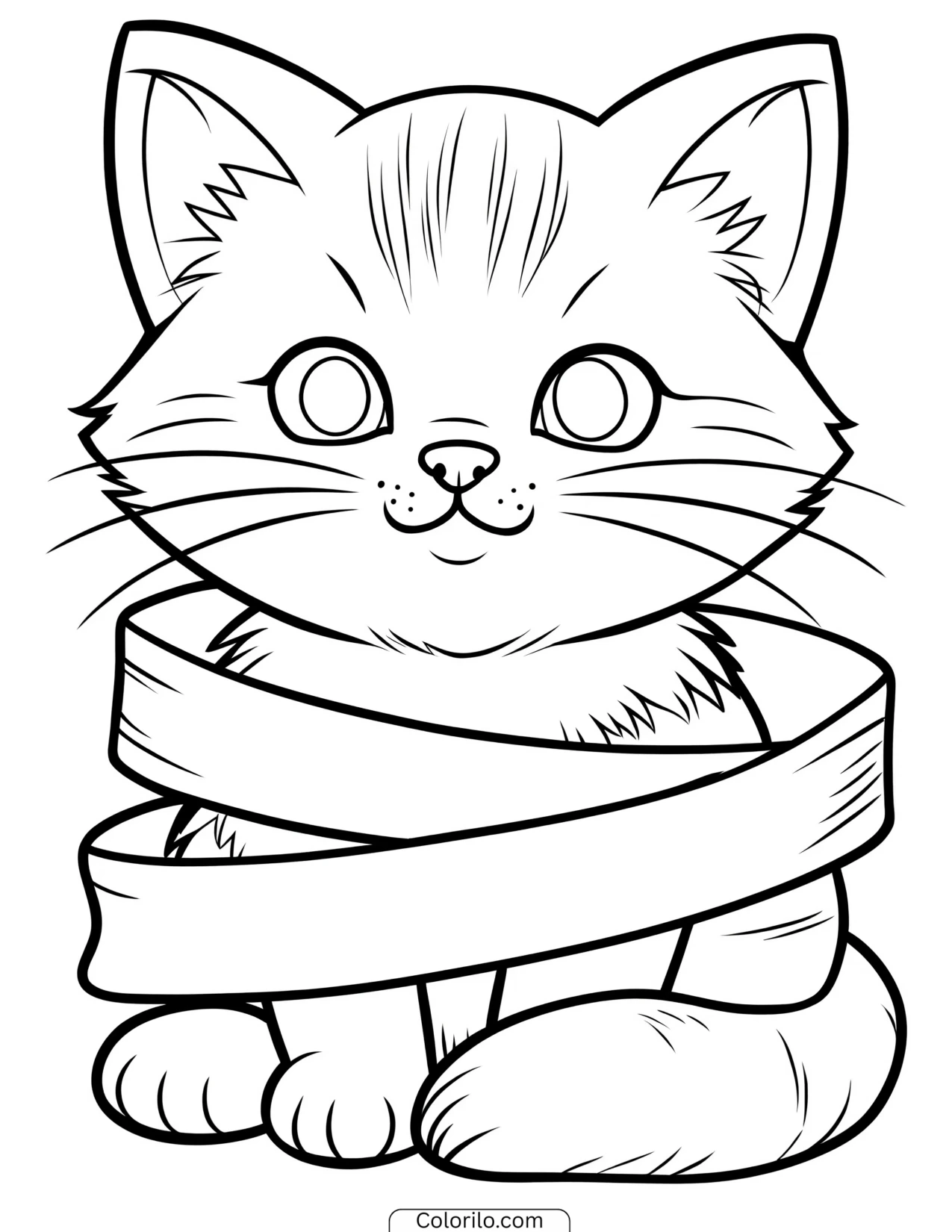
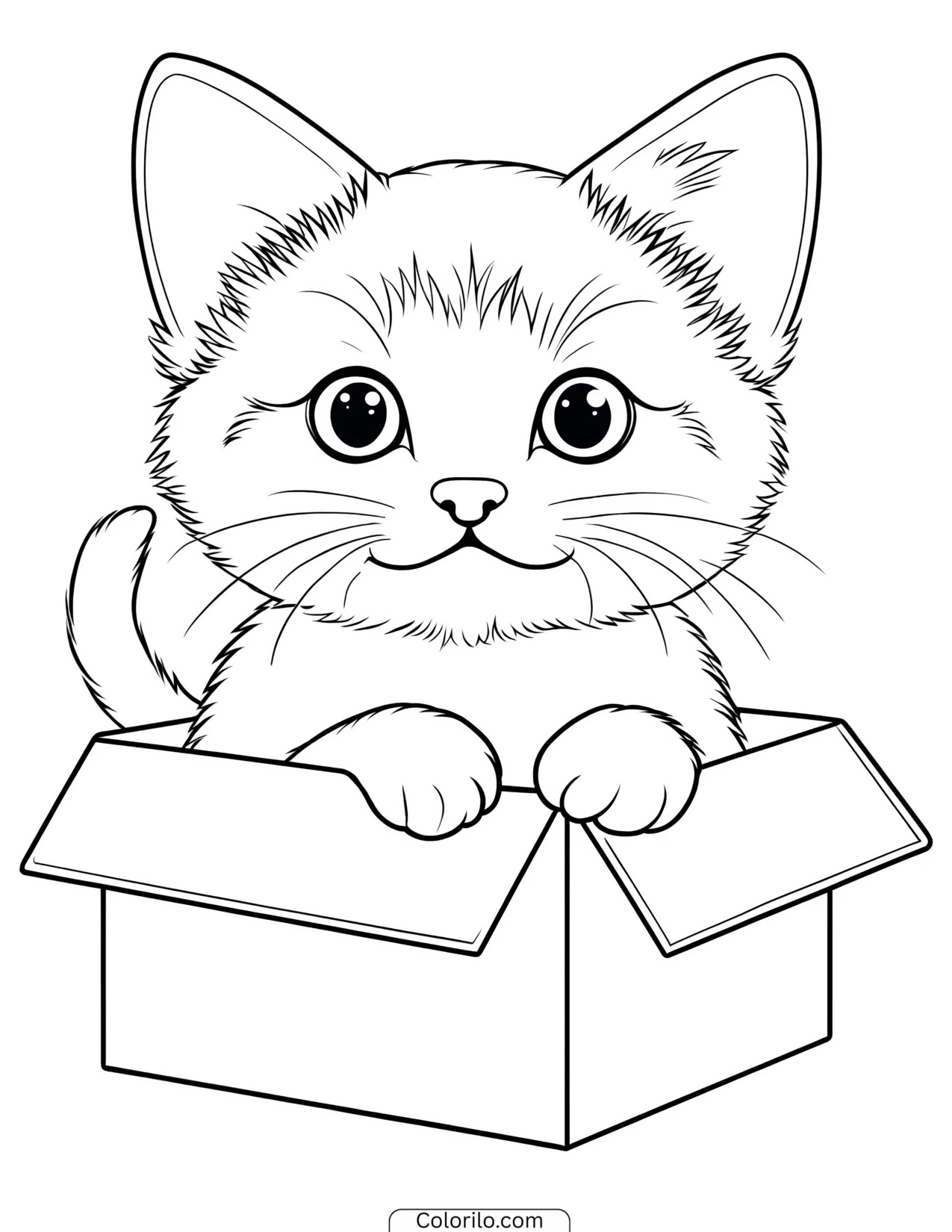
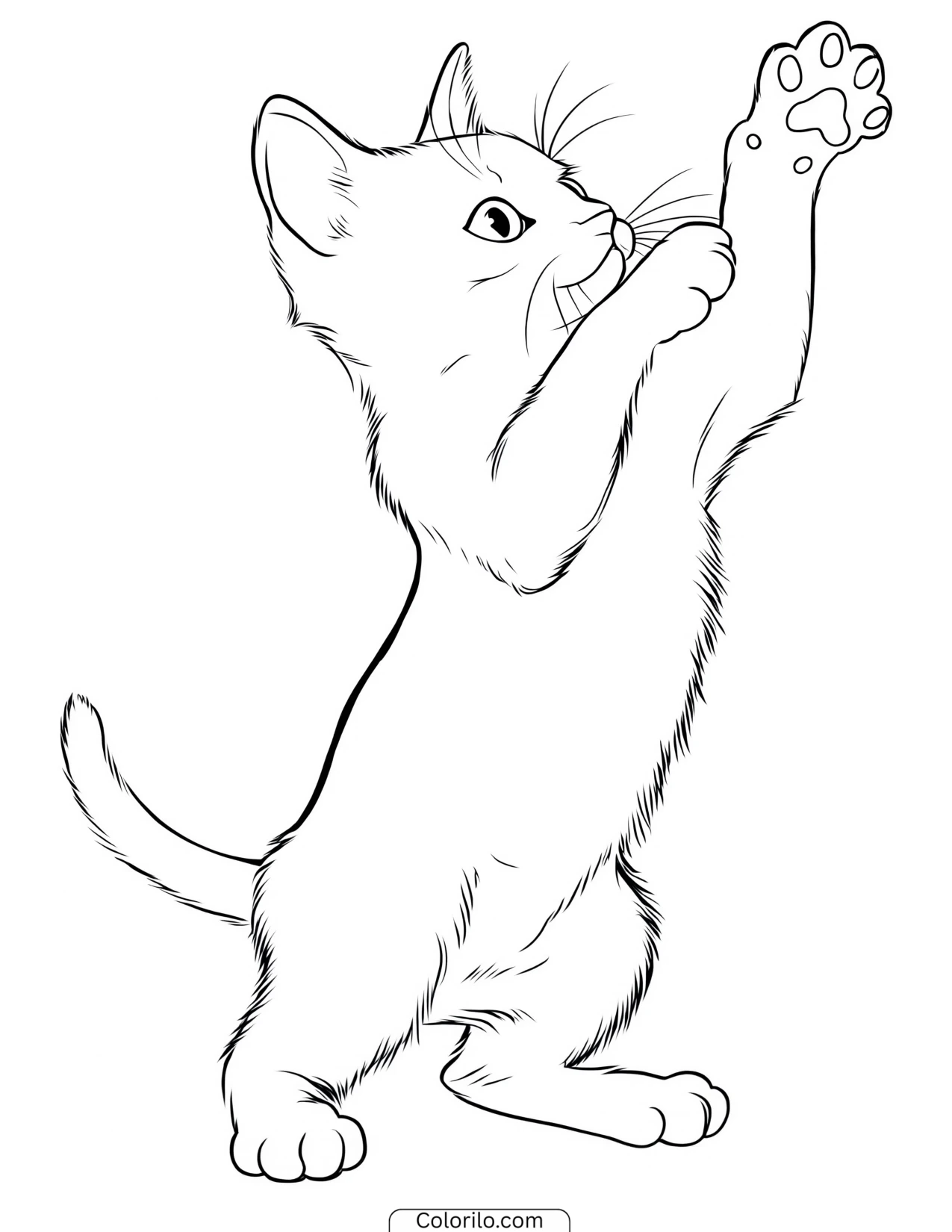
What the Kittens Are Doing
The play pages
Around a dozen designs. Kitten play is practice hunting, which is why every one of these poses maps onto something real: the crouch before a pounce, the sideways prance, the batting paw. Kittens play hardest between about three and six months, and a feather wand works so well because it moves like prey rather than like a toy.
The sleeping pages
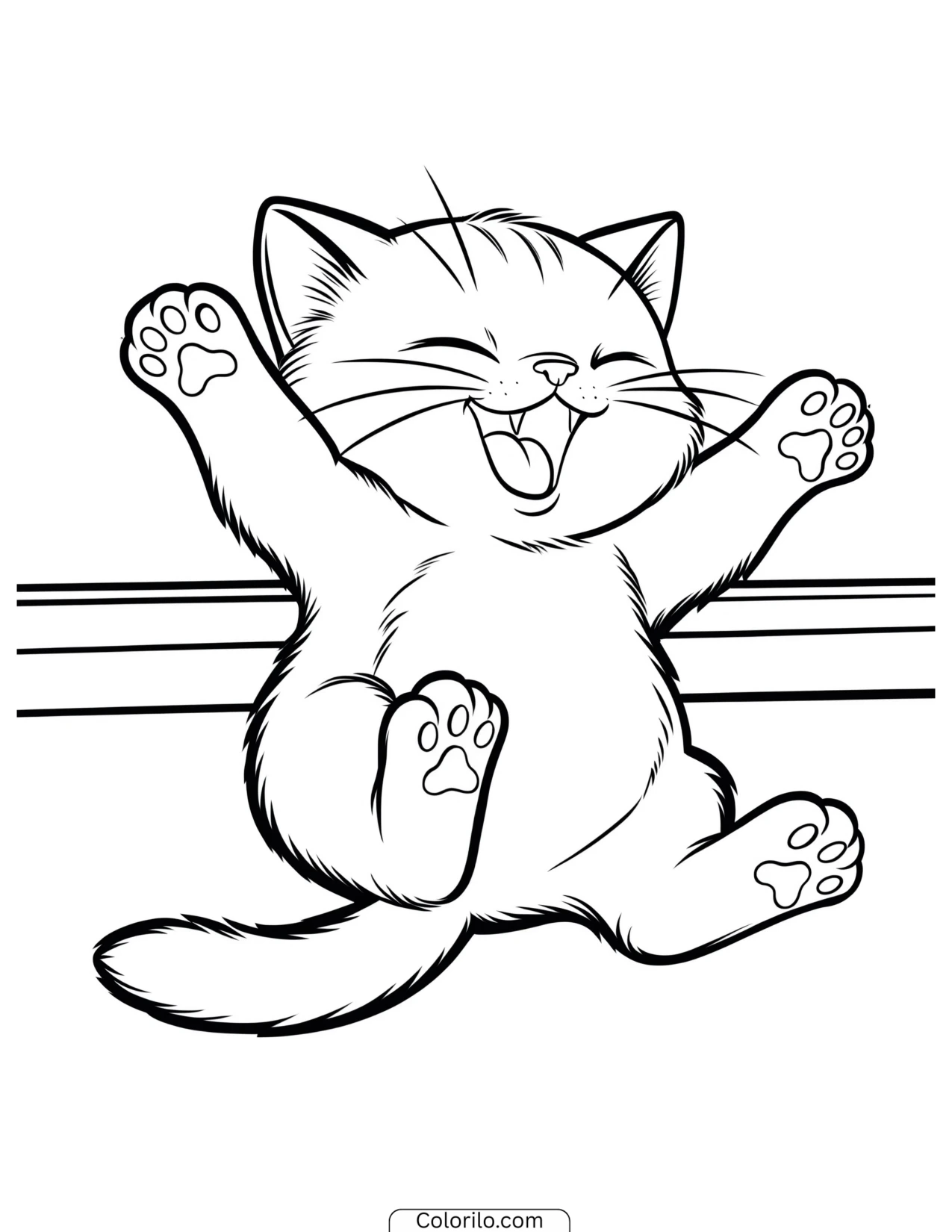
Five designs. Kittens sleep up to twenty hours a day, and most of their growth hormone is released while they do it. The one with its back paws in the air is behaving normally: sleeping fully exposed is a sign a kitten feels completely safe.
The boxes, shoes and pots
Five designs. The box thing is real and studied. Enclosed spaces reduce stress in cats, and there’s research showing shelter cats given a box settle faster than those without one. A shoe or a plant pot works on the same principle.
The grooming pages
Two designs. Cats spend a good part of their waking hours grooming, and kittens learn it from their mother in the first weeks. The barbed tongue that makes it possible is also why cats swallow so much of their own fur.
The watching pages
Four designs, tracking birds and butterflies. That fixed stare with the slightly twitching tail is a hunting posture, and a kitten will hold it far longer than seems reasonable.
Siamese kittens
Three designs. One of the oldest recognised breeds, originally from Siam, now Thailand. Their dark points are the result of a temperature-sensitive enzyme: colour develops only in the cooler parts of the body, which is why the ears, face, paws and tail darken and the rest stays pale. Siamese kittens are born almost entirely white and darken over weeks.
Tabby kittens
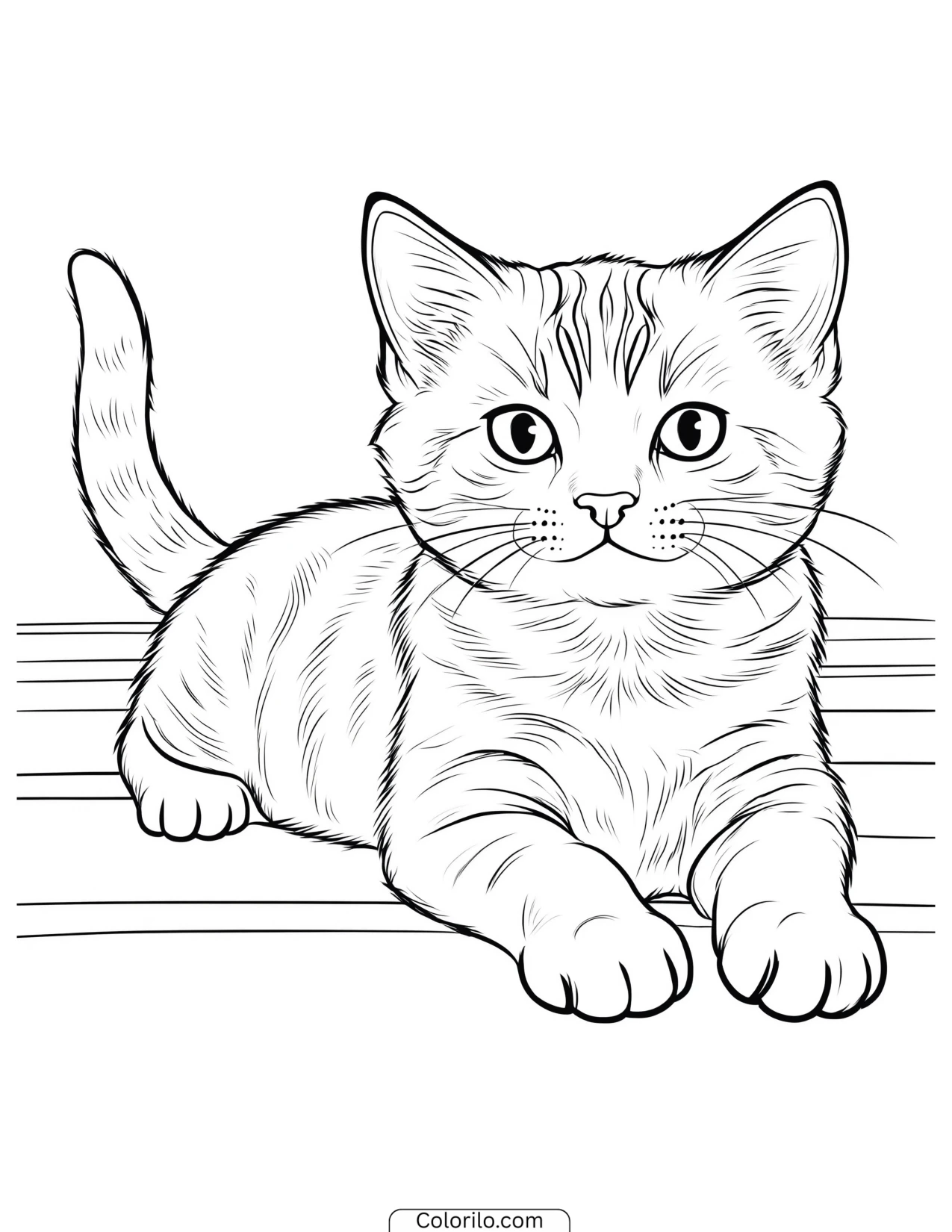
Six designs. Tabby isn’t a breed but a coat pattern, and the most common one in domestic cats. The four main variants are mackerel stripes, classic swirls, spotted, and ticked. The M-shaped marking on the forehead appears in almost every tabby.
Coloring Tips
Tabby stripes should follow the body. Real markings wrap around the form, down the flanks, ringing the legs and tail. Stripes drawn straight across flatten the animal. The M on the forehead is worth including.
Siamese need a soft transition. The dark points fade into the pale body rather than stopping at a line. Building up gradually with a pencil at the edges is what makes it look right.
Leave a highlight in each eye. A small unfilled white spot is the difference between a kitten that looks alive and one that looks flat. Kitten eyes are usually blue at first and change colour by around two months, so blue, green, amber and gold are all correct.
Pink noses and paw pads. Easy to forget, and one of the fastest small touches to make a page feel finished. Same for the inside of the ears.
Try the same kitten as different cats. The generic pages have no fixed coat, so one outline can be a ginger tom, a black-and-white, a calico, or a grey. Printing one page three times is a genuinely good way to spend an afternoon.
Start young children on the sitting and sleeping pages. Those have the simplest linework in the set. Save the face portraits, which need fur texture, for older colorists.
Frequently Asked Questions
Are these kitten coloring pages really free?
Yes, all 65 are free to download and print. Click any design to open the PDF. No account, no email, no payment.
What age are these suitable for?
This is one of the more child-friendly collections here. The seated, sleeping and walking poses suit children from around three. Most of the play scenes work well through primary school. The face portraits and the autumn leaves page have the most detail and suit seven and up.
Which breeds are included?
Siamese and tabby kittens are identified by name. The remaining designs are generic kittens with no fixed coat pattern, which makes them easy to colour as whichever cat a child has in mind.
Can I use these in a classroom?
Yes. They work well for animal-themed lessons, pet care discussions, or simply as a quiet activity, and are free for personal, educational, and classroom use.
Can I print more than one copy?
As many as you like. The plain-coat pages are especially worth repeating in different colours.
Why do kittens love boxes so much?
Enclosed spaces genuinely lower stress in cats, one study at a Dutch shelter found cats given a hiding box adjusted to their new environment noticeably faster than those without one. A box offers a defensible position with only one entrance to watch, which for an animal that is both a predator and small enough to be prey is a comfortable arrangement. It also holds warmth, and cats prefer temperatures a good deal higher than people do.
When do kittens’ eyes change colour?
Almost all kittens are born with blue eyes, because the pigment in the iris hasn’t developed yet. The adult colour comes in gradually between about six and eight weeks, and settles by three or four months. Cats that stay blue-eyed as adults, Siamese among them, do so because the same genetics that restrict their coat colour also limit pigment in the eye.

Leave a Reply